Global Small Business Insurance Market Size, Share, By Insurance Type (General Liability Insurance, Commercial Property Insurance, Workers' Compensation Insurance, Commercial Auto Insurance, Professional Liability Insurance, Cyber Insurance, Commercial Umbrella Insurance, Employment Practices Liability Insurance), By Industry Vertical (Retail & Wholesale, Construction, Healthcare, Professional Services, Manufacturing, Hospitality & Food Services, Transportation & Logistics), By Distribution Channel (Direct Sales, Independent Insurance Agents, Insurance Brokers, Bancassurance, Digital/Online Platforms, Embedded Insurance Partners), Industry Analysis, Growth, Trends, and Forecast, 2026-2033
Report ID
MSI-4872
Published
August 7, 2026
Pages
303 Pages
Format
Market Size 2021
USD 154 Billion
Historical
Market Size 2025
USD 178.7 Billion
Base year
Market Size 2033
USD 246.6 Billion
Forecast
CAGR 2025-2033
4.1%
Forecast period
Report Details
Comprehensive Market Analysis And Insights
Market Overview
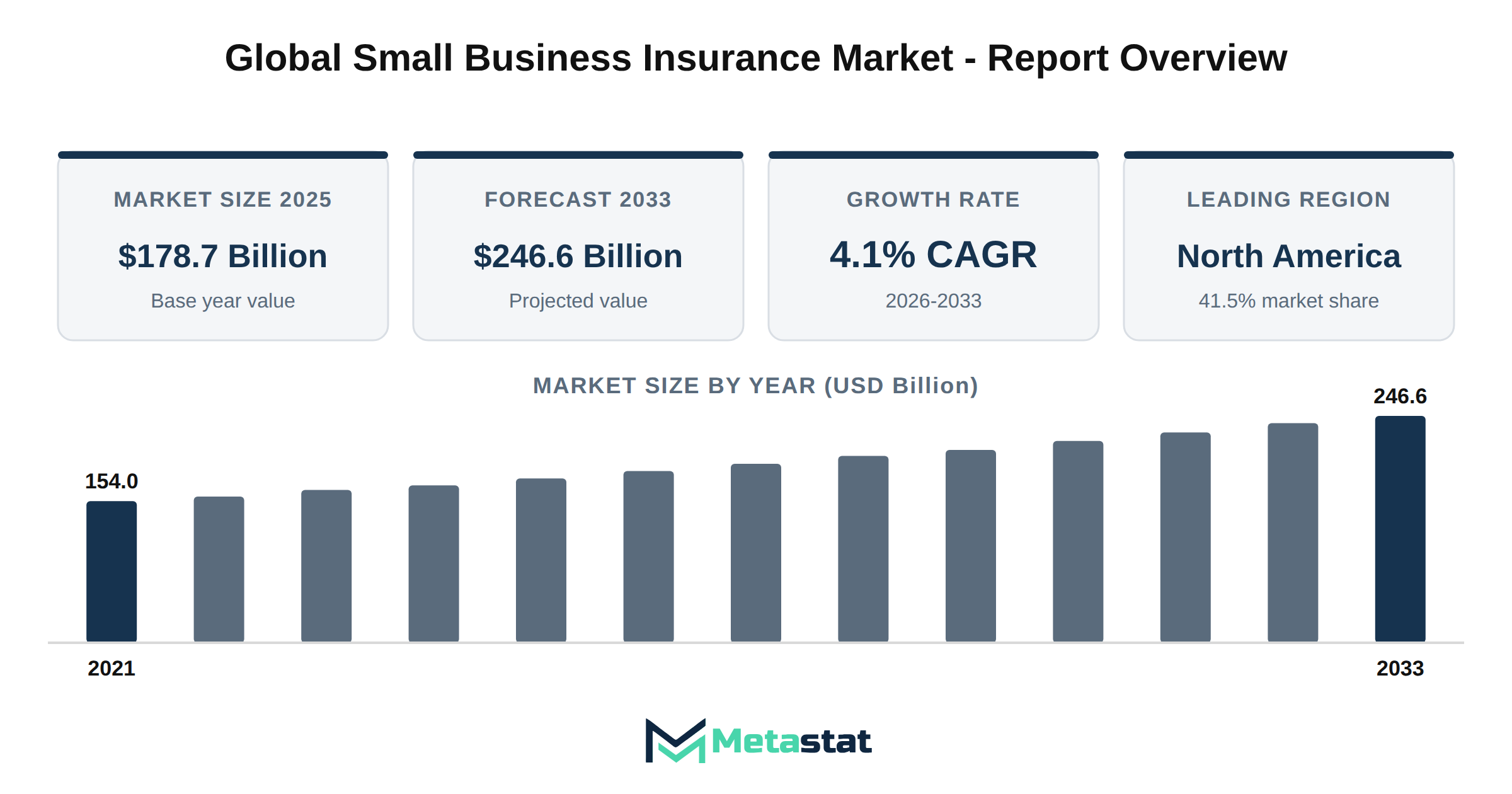
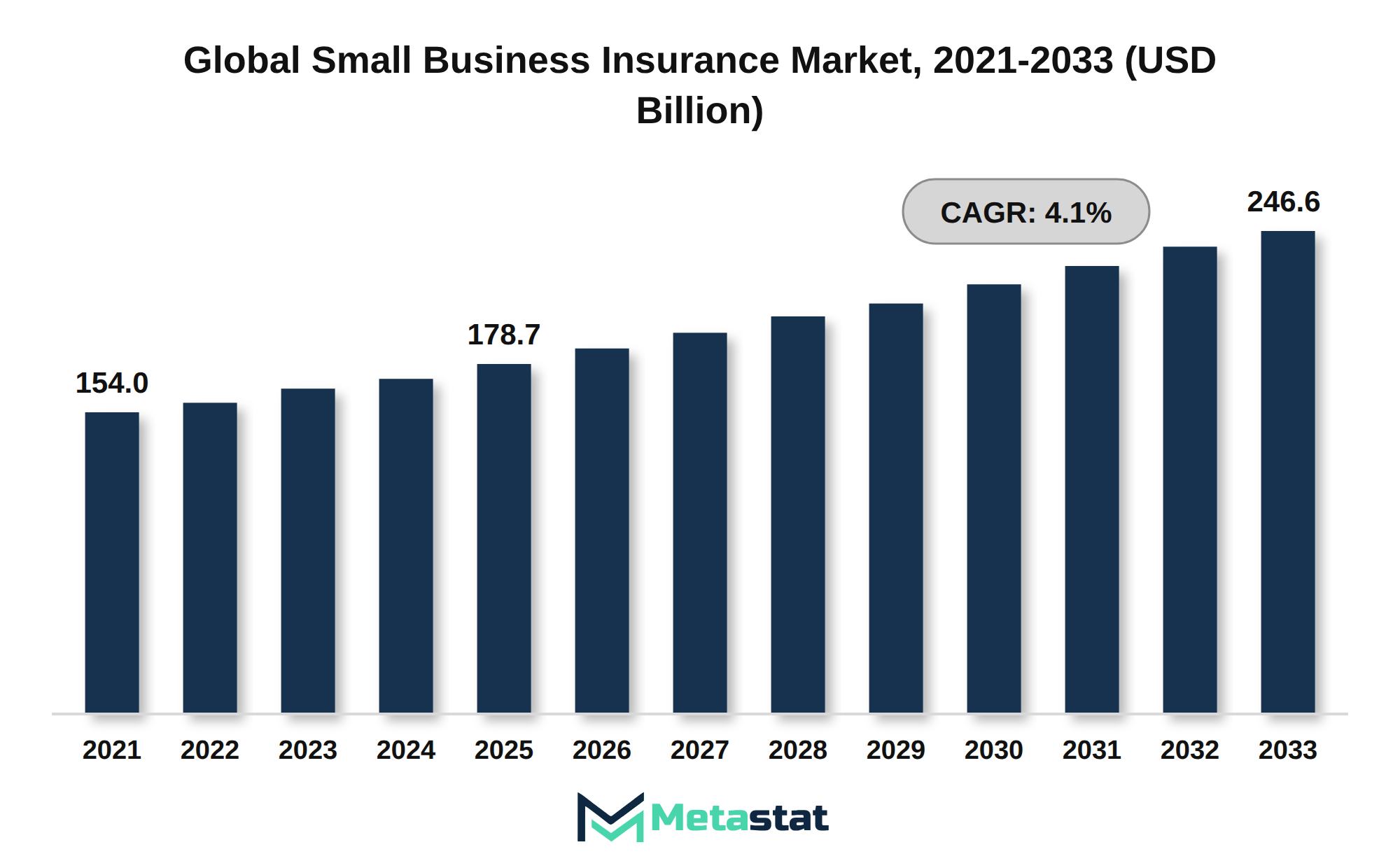
The global Small Business Insurance market was valued at USD 178.7 billion in 2025 and is projected to reach USD 246.6 billion by 2033, growing at a CAGR of 4.1% over the forecast period.
The Small Business Insurance market encompasses a diverse range of insurance products designed to protect small businesses against various risks. This market is projected to grow from USD 178.7 billion in 2025 to USD 246.6 billion by 2033, demonstrating a compound annual growth rate (CAGR) of 4.1%. Historical data shows steady growth from USD 154 billion in 2021 to USD 171.1 billion in 2024, reflecting increasing awareness among small business owners regarding the importance of comprehensive insurance coverage.
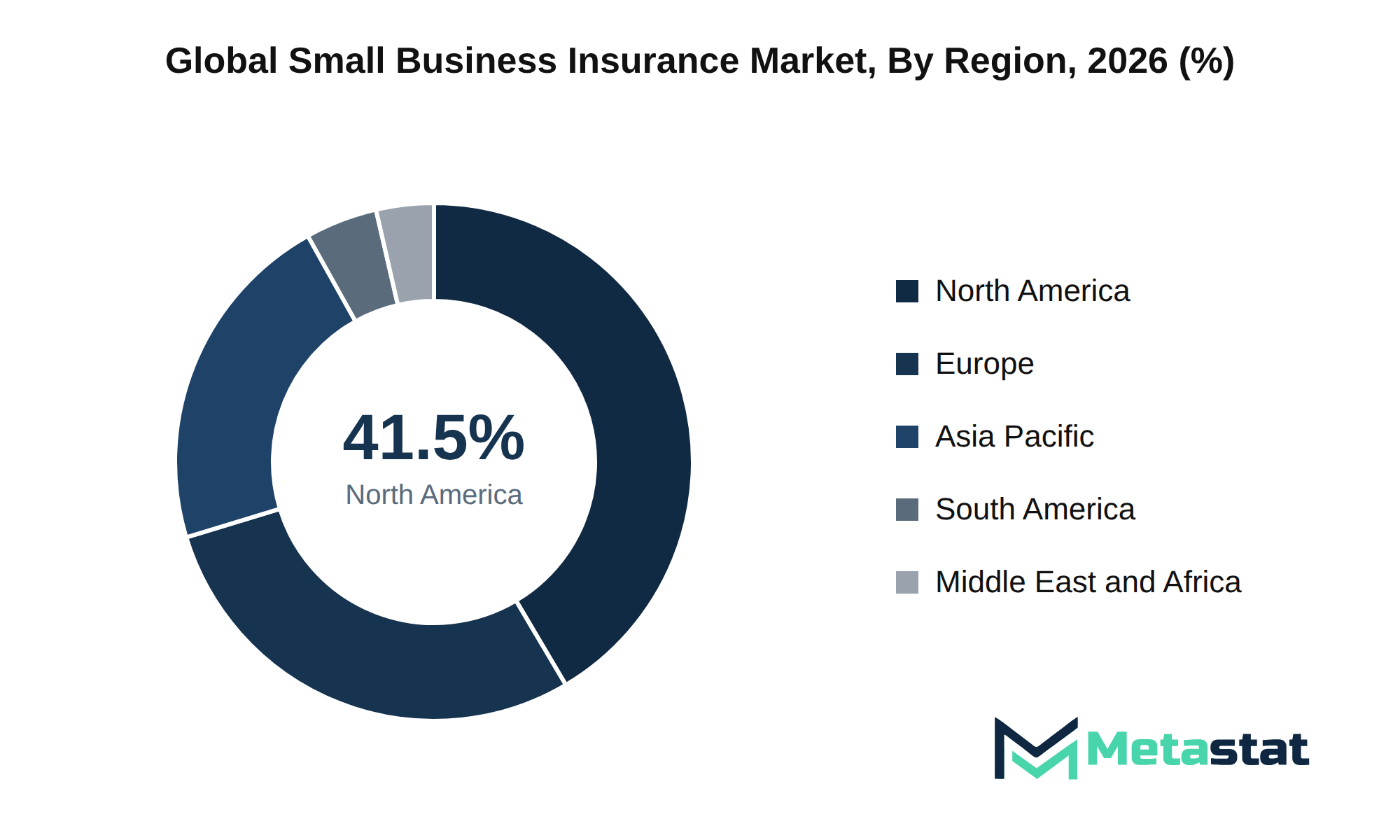
North America holds the largest share of the market at 41.5%, driven by a high number of small enterprises and a strong regulatory framework supporting business insurance. Europe follows with a market share of 28.8%, where diverse industry verticals contribute to demand. The Asia Pacific region accounts for 21.6% of the market, with rapid economic growth and a rising number of startups driving insurance adoption. The remaining share is divided among South America at 4.5% and the Middle East and Africa at 3.6%, where emerging markets present opportunities for growth.
Various segments within the market, including General Liability Insurance, Commercial Property Insurance, and Workers’ Compensation Insurance, cater to specific needs of small businesses. General Liability Insurance is projected to grow from USD 44.6 billion in 2026 to USD 56.4 billion by 2033, while Commercial Property Insurance is anticipated to reach USD 45.9 billion in the same timeframe. The retail and wholesale sector is a significant contributor, projected to expand from USD 37.1 billion in 2026 to USD 47.9 billion by 2033, indicating strong demand for tailored insurance solutions.
Distribution channels, including Direct Sales and Independent Insurance Agents, play a crucial role in market penetration. Direct Sales are projected to grow from USD 47.7 billion in 2026 to USD 56.5 billion by 2033, while Independent Insurance Agents are anticipated to reach USD 59.7 billion. The evolving landscape of digital platforms influences purchasing behavior, with more small businesses seeking accessible insurance options. These factors shape the trajectory of the Small Business Insurance market, highlighting the importance of adaptability and innovation in meeting customer needs.
The regulatory environment surrounding the Small Business Insurance market plays a critical role in shaping operational frameworks. Compliance with evolving regulations directly impacts insurance providers, necessitating strategic adjustments to align with new standards. Insurance companies operating across diverse industries face heightened scrutiny, creating a landscape where adherence to regulations is essential for maintaining market share and customer trust.
Geopolitical risks increasingly influence market dynamics, prompting insurers to adapt their strategies to mitigate exposure. Fluctuating political climates result in varying levels of risk assessment and pricing strategies across regions. Insurers responding to these challenges enhance their risk management frameworks, ensuring stability and resilience in their offerings.
Disruptive technologies are reshaping the competitive environment, driving innovation in product development and delivery models. Insurers leveraging advanced analytics and artificial intelligence optimize underwriting processes, enabling more accurate risk assessment and pricing. This technological evolution enhances operational efficiency and customer experience, resulting in a more agile market response.
Investment in research and development (R&D) is crucial for staying competitive within the Small Business Insurance market. Companies investing in R&D activities focus on developing innovative products that meet evolving customer needs. Enhanced product offerings contribute to increased market penetration and customer retention.
Sustainable transformation initiatives are gaining traction owing to businesses increasingly prioritizing environmentally responsible practices. Insurers adopting sustainable strategies enhance their brand reputation and attract environmentally conscious clients. This trend reflects a broader industry shift toward sustainability, influencing investment decisions and operational practices.
Macroeconomic headwinds, including inflationary pressures and currency volatility, present ongoing challenges for the market. These factors directly impact pricing strategies and operational costs, necessitating careful financial planning. Insurers responding to these pressures focus on optimizing their capital allocation and operational efficiencies to maintain profitability.
The future strategic outlook for the Small Business Insurance market emphasizes adaptability and innovation. Companies prioritizing agile operational models and customer-centric approaches position themselves for sustained growth. High-value recommendations for stakeholders include investing in technology, enhancing regulatory compliance frameworks, and embracing sustainability initiatives to capitalize on emerging opportunities.
Market Dynamics
Macro-economic factors drive Small Business Insurance growth
The Small Business Insurance market experiences significant growth driven by macro-economic factors, including GDP growth, interest rates, and capital investment environments. Economic conditions encourage small businesses to invest in insurance solutions, enhancing their operational security. Increased venture funding and public-private spending power support the market by providing financial resources for startups and expanding enterprises to secure comprehensive insurance coverage.
Shifting demographic patterns and evolving consumer behaviors contribute to the rising demand for small business insurance. An aging population and urbanization trends create a need for new business models, compelling entrepreneurs to seek insurance products that address unique risks. The desire for protection against potential liabilities drives small business owners to prioritize insurance, resulting in expansion in the market.
Operational productivity and cost-efficiency initiatives represent additional growth drivers in the market. Small businesses increasingly recognize the importance of optimizing labor and streamlining processes to remain competitive. This emphasis on efficiency prompts business owners to invest in insurance products that mitigate risks associated with operational disruptions, thereby reinforcing the market's position.
Investment in technological integration drives Small Business Insurance growth
The Small Business Insurance market experiences substantial growth driven by the increasing adoption of advanced technologies including automation, artificial intelligence, and software solutions. Businesses recognize the potential of these technologies to streamline operations, enhance customer engagement, and improve risk management practices. The integration of technology facilitates efficiency, reduces operational costs, and accelerates the digitization of legacy processes within small enterprises.
Small businesses across various sectors, including retail, healthcare, and professional services, actively seek innovative insurance solutions that leverage data analytics and predictive modeling. This shift enables businesses to tailor their insurance policies based on specific risk profiles, leading to improved coverage options and better pricing strategies. Accessing real-time data enables insurers to optimize underwriting processes and enhance service delivery, ultimately benefiting small business clients.
Investment in technology not only supports the operational requirements of small businesses but aligns with broader market trends towards digital transformation. This phenomenon enhances competitive advantages, attracting new customers and retaining existing ones. While the market evolves, the emphasis on technology-driven solutions is expected to drive further growth within the Small Business Insurance market, reflecting a shift in consumer behaviors and preferences.
Regulatory and economic pressures restrain market growth
The Small Business Insurance market faces considerable challenges owing to regulatory tightening and compliance hurdles. Escalating legal mandates require companies to enhance their policy frameworks, increasing operational complexities and costs. These burdens particularly impact small businesses, which often lack the resources to navigate intricate regulatory landscapes effectively.
Macroeconomic headwinds, including inflationary pressures and slow economic growth, contribute to stagnating capital investment. Small businesses encounter rising operating costs, limiting their ability to invest in necessary insurance products. This situation restricts market growth potential, because businesses prioritize immediate financial needs over long-term insurance planning.
Supply chain disruptions and geopolitical instability further exacerbate market constraints. These factors create uncertainty, impacting business operations and investment strategies. Small businesses, particularly in vulnerable sectors, experience heightened risks that discourage the adoption of comprehensive insurance solutions, stalling growth within the market.
Technological obsolescence presents another significant restraint. The rapid pace of technological change in the insurance sector necessitates continuous adaptation. Small businesses often struggle to keep up with evolving standards and innovative offerings, leading to gaps in coverage and increased exposure to risks.
Concerns surrounding data security and privacy add to the challenges faced by the market. Small businesses lacking adequate cybersecurity measures risk potential data breaches, leading to financial losses and reputational damage. Such vulnerabilities deter businesses from fully engaging with insurance products that address these risks, limiting market growth potential.
Geopolitical tensions drive market volatility
Geopolitical fragmentation significantly influences the Small Business Insurance market, leading to unpredictable conditions. Trade deficits and tariff friction create instability in pricing structures, escalating costs for insurance providers. This volatility affects various industries, particularly those reliant on international supply chains, creating an environment where risk assessment becomes increasingly complex.
Technological disruptions further challenge the market by introducing complex research and development integrations that require substantial investment. Firms in sectors including construction and retail face heightened pressure to adapt, diverting resources from core operations and inflating costs. This situation affects revenue generation potential, hindering overall market growth.
Rising input costs and margin pressures restrict profitability for insurance providers. Compliance overhead associated with tightening global regulatory standards complicates operational frameworks, increasing the burden on businesses seeking coverage. Evolving legal liabilities create challenges in tailoring policies that adequately address these risks, driving up premiums in the Small Business Insurance market.
Workforce skill gaps pose another challenge, impacting the ability of insurance providers to deliver comprehensive services. Automation displacements exacerbate this issue, leading to a competitive environment where firms struggle to retain talent. The effects of these dynamics create barriers that hinder effective market penetration and customer acquisition.
Environmental concerns and sustainability demands shape market expectations, pressuring insurers to incorporate sustainability into their offerings. Addressing environmental lifecycle footprints challenges traditional models, compelling firms to innovate. This evolution entails significant investments, delaying the commercial viability of new insurance products.
Strategic consolidation drives market expansion
The Small Business Insurance market presents substantial opportunities through strategic consolidation initiatives. Mergers and acquisitions among key players enhance market reach and operational efficiency, leading to economies of scale. This trend enables companies to offer a broader range of insurance products, thereby attracting diverse clientele across various industry verticals. Enhanced product offerings, coupled with improved service delivery, positively influence customer satisfaction and retention rates.
Geographical expansion further contributes to market opportunities. Increasing demand for tailored insurance solutions in emerging markets necessitates localized strategies to better serve regional customers. Companies that adapt their offerings to meet local needs gain competitive advantages, which supports revenue growth and market penetration. This focus on regional markets is anticipated to drive innovation in product development, driven by firms seeking to address unique risks faced by small businesses in different areas.
Technological disruptions play a critical role in shaping market dynamics. Rapid advancements in digital transformation facilitate the integration of innovative solutions, including automated underwriting and AI-driven risk assessment tools. Companies that leverage these technologies improve operational efficiencies while delivering personalized experiences to customers. This tech-enabled approach is expected to create an environment conducive to growth, driving the overall expansion of the market.
Sustainability imperatives increasingly influence buying behaviors. Small businesses prioritize eco-friendly insurance options that align with their corporate social responsibility goals. Providers that emphasize green transformations and sustainability-driven alignments enhance their appeal within the market. By focusing on environmentally conscious practices, companies differentiate themselves and attract a growing segment of environmentally aware clients.
The next-generation innovations in product integration offer additional growth avenues. Firms exploring niche applications, including cyber insurance for small businesses, create new revenue streams. While cyber threats continue to evolve, demand for specialized coverage rises, prompting insurers to adapt their offerings accordingly. This shift enhances market viability and encourages investment in innovative solutions that address contemporary challenges.
Market Segmentation Analysis
The Global Small Business Insurance market is segmented based on Insurance Type, Industry Vertical, and Distribution Channel.
By Insurance Type, the market is further segmented into:
General Liability Insurance
Commercial Property Insurance
Workers' Compensation Insurance
Commercial Auto Insurance
Professional Liability (Errors & Omissions) Insurance
Valued at USD 44.6 billion in 2026, the General Liability Insurance segment is projected to reach USD 56.4 billion by 2033, reflecting a CAGR of 3.4% during the forecast period. This segment is essential in protecting small businesses from a variety of claims, including bodily injury, property damage, and personal injury, which significantly drives demand among diverse industries including retail, construction, and professional services. The increasing awareness of the importance of liability coverage among small business owners contributes to the segment's growth, driven by businesses recognizing the financial implications of potential risks and lawsuits.
Adoption of General Liability Insurance is supported by regulatory compliance standards that mandate certain levels of coverage, ensuring businesses remain protected against unforeseen circumstances. The evolving nature of customer expectations, coupled with advancements in insurance technology, enhances the segment's appeal, allowing for simplified purchasing processes and tailored policies that meet specific business needs. The market experiences a shift towards next-gen upgrades, with digital platforms facilitating access to these insurance solutions.
Cost structures and pricing volatility exert influence on the General Liability Insurance segment, requiring companies to navigate competitive pricing while maintaining profitability. Margin pressures arise from the necessity to deliver value to customers amid rising operational costs and claims frequency. Strategic opportunity windows emerge because businesses seek to optimize their insurance portfolios, identifying areas where enhanced coverage or innovative products provide a competitive advantage.
The resilience of the supply chain, particularly in the context of service delivery and claims processing, further strengthens the segment's market position. Companies remain vigilant regarding substitution risks posed by alternative insurance solutions, creating an environment that encourages continuous product evolution. While the market progresses, capital investment in technology and service enhancements will significantly shape the future of General Liability Insurance within the broader Small Business Insurance market.
Commercial Property Insurance
Growth in the Commercial Property Insurance segment stems from increasing awareness among small business owners regarding the importance of protecting physical assets. This segment experiences demand from various industries, including retail, construction, and healthcare, all of which are prone to property damage. Rising incidences of natural disasters and technical failures drive the need for comprehensive property insurance coverage.
Adoption of advanced technologies enhances the development of next-generation insurance products. Innovations including IoT devices facilitate real-time monitoring of assets, leading to improved risk management. The integration of digital platforms streamlines the purchasing process, enabling small businesses to acquire policies efficiently.
Commercial property insurance is projected to reach USD 45.9 billion by 2033, at a CAGR of 3.2% during the forecast period. This growth reflects an evolving market shaped by regulatory changes and compliance standards. Insurers adapt to these shifts while managing cost structures and pricing volatility to maintain profitability.
Strategic opportunities arise from the growing need for tailored insurance products that address unique risks in different sectors. Insurers focusing on customization and enhanced customer service position themselves favorably within the Small Business Insurance market. Maintaining competitive advantage requires vigilance in monitoring market trends and customer preferences, ensuring that offerings align with emerging demands.
Workers' Compensation Insurance
Workers' Compensation Insurance addresses the specific needs of employers to protect themselves against employee-related injuries. This segment experiences growth driven by increasing regulatory requirements mandating coverage for employee injuries, enhancing overall workplace safety. While more businesses recognize the financial implications of workplace injuries, demand for comprehensive workers' compensation solutions continues to rise.
Technological advancements in risk assessment and claims management facilitate faster processing and improved service delivery, boosting adoption among small businesses. The ongoing evolution of products and services within this segment addresses varying industry needs, making it an attractive option for diverse sectors including retail, construction, and healthcare. Regulatory compliance consistently influences purchasing decisions, ensuring that businesses remain aligned with mandated standards.
Market analysts project the Workers' Compensation Insurance segment is expected to reach USD 38.4 billion by 2033. This anticipated growth reflects strong demand driven by small business expansion and heightened focus on employee welfare. The evolving landscape of labor laws and increased awareness regarding workplace safety creates an environment conducive to segment expansion, positioning it because a key component of the broader Small Business Insurance market.
Commercial Auto Insurance
Growth in the Commercial Auto Insurance segment reflects increasing demand from businesses requiring vehicle protection for operational use. This demand arises from the rising number of small businesses that transport goods, services, and personnel safely. Enhanced awareness regarding the importance of vehicle coverage contributes to the segment's expansion.
Segment expansion is driven by advancements in technology, enabling insurers to offer more tailored products that meet the specific needs of small businesses. Insurers leverage telematics and data analytics to assess risk more accurately, thus enhancing coverage options for business vehicles. The prevalence of e-commerce has further fueled demand for reliable transportation solutions within various industry verticals.
Regulatory compliance standards and safety regulations compel small businesses to secure appropriate coverage, creating a consistent market for Commercial Auto Insurance. Businesses that adhere to these standards benefit from lower insurance premiums and improved risk management, which creates a competitive environment.
Price volatility remains a challenge. Fluctuating fuel costs and vehicle prices affect overall insurance costs. Insurers strive to maintain competitive pricing while ensuring adequate coverage, which influences profit margins. Despite these pressures, the segment is projected to grow at a CAGR of 3.8% during the forecast period, highlighting its resilience and importance within the Small Business Insurance market.
Professional Liability (Errors & Omissions) Insurance
Professional Liability (Errors & Omissions) Insurance serves because a critical element in the Small Business Insurance market, catering to professionals whose services could result in claims of negligence. Increasing awareness of the importance of professional liability coverage among various industries drives demand. Service-oriented sectors, including healthcare, legal, and consulting, exhibit substantial reliance on this type of insurance to mitigate risks associated with errors or omissions in their professional duties.
Adoption of this insurance type expands due to regulatory compliance standards becoming more stringent across different regions, compelling businesses to safeguard themselves against potential lawsuits. This trend creates a favorable environment for market players to innovate and enhance product offerings. Technological advancements facilitate next-generation upgrades, allowing insurers to provide tailored coverage options that address specific risks faced by professionals.
Consumption shifts towards more comprehensive policies reflect a growing recognition of the financial implications of professional mistakes. Enterprises increasingly prioritize risk management, leading to a shift in purchasing behavior. This evolution signifies a shift from traditional coverage to dynamic policies that adapt to changing business landscapes.
Cost structures associated with Professional Liability (Errors & Omissions) Insurance fluctuate due to various factors, including claims frequency and severity. Insurers monitor pricing volatility closely, adjusting premiums in response to market conditions. This response ensures sustainability while maintaining competitiveness in the market. Margin pressures from increasing claims costs compel providers to seek efficiencies within their operations to optimize profitability.
Strategic opportunity windows appear because businesses seek flexible coverage solutions that evolve with their needs. Insurers that invest in technology and customer engagement strategies position themselves favorably in capturing market share. With a focus on building resilience in the supply chain and sourcing practices, providers enhance their ability to deliver consistent service while navigating potential disruptions.
Overall, the Professional Liability (Errors & Omissions) Insurance segment is essential in shaping the Small Business Insurance market, driven by evolving demands, regulatory influences, and market dynamics.
Cyber Insurance
Growth in the Cyber Insurance segment stems from increasing awareness among small businesses regarding the potential risks associated with cyber threats. This segment benefits from heightened incidents of data breaches and ransomware attacks, compelling businesses to invest in risk mitigation strategies. Companies in sectors including retail, healthcare, and finance experience a pressing need for robust cybersecurity measures, driving demand for tailored cyber insurance policies.
Adoption of cyber insurance is influenced by regulatory compliance frameworks, including the General Data Protection Regulation (GDPR) and the California Consumer Privacy Act (CCPA). These regulations enforce stricter data protection standards, pushing businesses to protect sensitive information and seek insurance solutions. Intensifying regulatory pressures increase demand for cyber insurance products, creating a favorable environment for growth.
Technological advancements play a crucial role in shaping the cyber insurance landscape. Innovations in threat detection, data encryption, and incident response strategies enhance the attractiveness of cyber insurance offerings. Insurers develop comprehensive coverage plans that evolve alongside emerging cyber threats, ensuring that small businesses have access to relevant protection.
Pricing volatility presents a challenge within the cyber insurance market. Fluctuating premiums due to the dynamic nature of cyber risks hinder small businesses from committing to long-term coverage. Consequently, insurers conduct thorough risk assessments to align pricing structures with the evolving threat landscape. This approach aims to balance affordability with adequate coverage.
Strategic opportunity windows arise from the increasing digitization of small businesses. While companies transition to digital platforms, their exposure to cyber risks expands, creating a growing customer base for cyber insurance providers. This shift enables insurers to tailor products that align with the specific needs and vulnerabilities of various industries, enhancing market penetration.
Overall, the Cyber Insurance segment within the Small Business Insurance market evolves rapidly, driven by regulatory demands, technological maturation, and the necessity for businesses to safeguard against cyber threats. These factors converge, presenting significant growth opportunities for insurers who adapt to the changing landscape.
Commercial Umbrella Insurance
Demand for Commercial Umbrella Insurance is driven by the need for small businesses to protect their assets against unforeseen liabilities. This insurance type offers additional coverage above the limits of primary liability policies, ensuring comprehensive risk management. Growing awareness among small business owners regarding the importance of adequate liability protection fuels demand. This segment benefits from increased regulatory scrutiny, compelling businesses to adopt more robust insurance solutions.
Expansion catalysts within the market arise from the evolving business landscape and emerging risks. While small businesses expand their operations, the complexity of potential liabilities increases, necessitating stronger coverage. The trend towards digital transformation among small enterprises further increases the need for tailored insurance solutions that address specific industry challenges. Insurers are innovating their product offerings to meet these demands, leading to advancements in coverage options and policy structures.
Technological maturation influences the market. The integration of advanced data analytics and risk assessment tools enhances underwriting processes, enabling insurers to offer competitive pricing and customized coverage. This evolution supports the growth of the Commercial Umbrella Insurance segment, aligning product offerings with the unique needs of various industries.
Adoption of this insurance type reflects shifts in consumption patterns, with small businesses increasingly prioritizing risk management. The healthcare and construction sectors demonstrate notable interest in Commercial Umbrella Insurance due to their exposure to higher liability risks. Regulatory compliance standards continue to influence adoption, driven by businesses aiming to align with stringent legal requirements while safeguarding their operations.
Pricing volatility and margin pressures exert influence on the segment, with fluctuating claims costs impacting insurer profitability. Insurers are adapting to these challenges by refining their pricing models, striving to maintain competitive rates while ensuring sustainable margins. This dynamic environment leads to strategic opportunity windows for insurers to differentiate their offerings and expand market share.
Capital investment outlook for the Commercial Umbrella Insurance market appears positive, with insurers committing resources to technology and product development. This investment prioritizes enhancing customer experience through streamlined processes and improved service delivery. While companies recognize the critical importance of comprehensive coverage, the market is set to grow, addressing the evolving needs of small businesses.
Employment Practices Liability Insurance
Increasing awareness of employment-related legal risks drives demand for Employment Practices Liability Insurance (EPLI). Small businesses face heightened scrutiny regarding workplace conduct, leading to a greater focus on compliance with regulations concerning discrimination, harassment, and wrongful termination. Industries including retail and healthcare experience significant exposure to these risks, prompting heightened investment in EPLI to mitigate potential legal liabilities.
The evolving regulatory environment enhances adoption of EPLI, aligning with stricter compliance standards and legal frameworks. While jurisdictions implement more stringent employment regulations, small businesses recognize the necessity of protecting themselves against potential lawsuits. This trend creates a growing awareness of the importance of having adequate coverage, particularly among businesses with limited resources to absorb litigation costs.
Technological advancements contribute to the evolution of EPLI products, enabling insurers to offer more tailored solutions. Next-generation upgrades feature enhanced risk assessment tools, allowing small businesses to better understand their exposure and select appropriate coverage. These advancements create strategic opportunity windows for insurers to innovate product offerings, meeting the specific needs of small businesses.
The market experiences consumption shifts influenced by the increasing prioritization of employee welfare and workplace culture. Small businesses recognize the importance of creating a positive work environment, which, in turn, influences their purchasing decisions regarding EPLI. This cultural transformation promotes competitive differentiation among employers, driven by businesses that prioritize employee protection tending to attract and retain top talent.
Regulatory compliance plays a critical role in shaping the demand for EPLI. With ongoing changes in labor laws and regulations, small businesses face the challenge of navigating complex compliance requirements. Insurers that offer regulatory support and guidance alongside EPLI products stand to capture market share, appealing to small businesses seeking comprehensive solutions that address compliance concerns.
Rising awareness of workplace risks drives competition among insurers, encouraging innovative pricing strategies and product offerings. Insurers are compelled to develop flexible pricing models that accommodate the financial constraints of small businesses while providing comprehensive coverage. This competitive pressure creates a dynamic environment, leading to improved product accessibility and affordability for small businesses.
The Employment Practices Liability Insurance segment within the Small Business Insurance market benefits from various drivers, including regulatory compliance, cultural shifts, and technological advancements. These factors create a conducive environment for growth, positioning EPLI because an essential component of risk management strategies for small businesses.
Crime Insurance and Equipment Breakdown Insurance play specific roles in the Small Business Insurance market, addressing distinct risks faced by small businesses. Growing concerns over theft, vandalism, and other criminal activities drive demand for Crime Insurance, particularly among retail and service-oriented businesses. Heightened awareness regarding the potential financial impact of such events pushes operators to seek comprehensive coverage, leading to increased policy adoption across various sectors.
Equipment Breakdown Insurance addresses the financial implications of equipment failures, offering protection against unexpected repair and replacement costs. Industries relying on specialized machinery, including manufacturing and construction, exhibit significant interest in this coverage to mitigate operational disruptions. Technological advancements and increasing reliance on complex equipment intensify the relevance of this insurance type. Businesses invest in policies that safeguard their assets and ensure continuity of operations.
Factors influencing the expansion of the segment include evolving regulatory requirements and the growing emphasis on risk management strategies. Compliance with safety standards and regulations mandates businesses to secure adequate coverage, thereby enhancing the penetration of these insurance types. The market benefits from innovations in policy offerings, with insurers adapting products to meet specific needs, including customizable coverage options tailored to unique business risks.
Overall, the segment demonstrates resilience amid changing market dynamics, driven by the ongoing need for businesses to protect their interests against crime and operational disruptions. Businesses recognize the importance of comprehensive risk management, and the adoption of Crime Insurance and Equipment Breakdown Insurance is expected to expand in the Small Business Insurance market.
By Industry Vertical, the market is further segmented into:
Valued at USD 37.1 billion in 2026, the Retail & Wholesale segment is projected to reach USD 47.9 billion by 2033, at a CAGR of 3.7% during the forecast period. Several factors influence demand within this sub-segment, including an increase in online shopping that drives businesses to seek insurance solutions tailored for e-commerce. The expansion of retail outlets and wholesale distributors necessitates comprehensive coverage options to address various risks associated with inventory management, theft, and liability exposures.
Technological advancements in insurance underwriting and claims processing significantly impact the market, enhancing efficiency and accuracy. Increased adoption of digital platforms facilitates the distribution of insurance products, allowing businesses to access customized policies that cater to their specific needs. Segments including restaurants and retail shops benefit from specialized products designed to mitigate risks unique to their operations, contributing to a robust market environment.
Regulatory compliance standards play a critical role in shaping the insurance landscape for retailers and wholesalers. Frequent changes in local and national regulations create a demand for adaptable insurance solutions that align with evolving legal requirements. The growing emphasis on risk management strategies within the retail sector drives the need for comprehensive insurance coverage, making it an essential component of operational planning.
With projected growth in the Retail & Wholesale segment, companies within the Small Business Insurance market invest strategically in the development of innovative products. This focus on product evolution ensures that offerings remain relevant and effective in addressing emerging risks, enhancing customer satisfaction and retention. Investment in marketing and education surrounding insurance options strengthens the segment's positioning, driving sustained growth in the coming years.
Construction
Significant growth is anticipated in the construction segment of the Small Business Insurance market, with projections estimating it will reach USD 39.4 billion by 2033, at a CAGR of 4% during the forecast period. This expansion stems from increasing construction activities, which enhance the demand for various insurance products tailored to mitigate risks associated with construction projects. The construction industry, characterized by its dynamic nature, requires comprehensive coverage to address liability issues, property damage, and workers' compensation. This requirement contributes to overall market growth.
Adoption of advanced technologies in construction practices drives demand for next-generation insurance solutions. Innovations in project management and safety technology facilitate the implementation of best practices, enhancing risk management strategies. Insurers that offer customizable policies that align with these advancements strengthen their competitive positioning in the market. Regulatory compliance standards push construction companies to invest in appropriate insurance to meet legal requirements, driving market expansion.
Pricing volatility in raw materials affects cost structures within the construction segment, creating a need for insurance products that offer protection against unforeseen price fluctuations. These factors shape the dynamics of the market, influencing both operational strategies and investment decisions among construction businesses. Continued capital investment in infrastructure and construction projects signals strong market potential, ensuring steady demand for small business insurance solutions tailored to this sector.
Healthcare
Increasing focus on patient safety and regulatory compliance drives demand for the healthcare segment within the Small Business Insurance market. The need for comprehensive risk management solutions supports the growth of insurance coverage specific to the healthcare sector. Technological advancements contribute to the evolution of insurance products, enabling better risk assessment and customized solutions for healthcare providers. Regulatory compliance standards impose significant liability on healthcare businesses, necessitating adequate insurance coverage to mitigate legal and financial risks.
Small healthcare providers, including clinics and small practices, experience notable pressures from rising operational costs and the demand for high-quality care. Rising operational costs and the demand for high-quality care influence the adoption of insurance products that address professional liability and workers' compensation needs specifically tailored for the healthcare industry. The segment is projected to reach USD 34.1 billion by 2033, reflecting the ongoing importance of robust insurance solutions in navigating the complexities of the healthcare landscape.
Competitive dynamics within the market include a range of players offering specialized products to meet the unique needs of healthcare businesses. Key industry participants provide a variety of coverage options that cater to the diverse operational challenges faced by healthcare providers. Anticipated growth in this segment encourages strategic investments and partnerships among insurance companies and healthcare organizations, further enhancing market resilience and innovation.
Professional Services
Growth in the Professional Services segment reflects increasing demand for specialized coverage tailored to the unique risks faced by professionals. Factors driving this demand include heightened awareness of liability issues and the necessity for error and omissions protection. While businesses within this segment evolve, the need for comprehensive insurance solutions becomes critical to safeguard against potential legal claims and financial losses.
Investment in technology and the ongoing maturation of insurance products enhance the appeal of professional services insurance. The emergence of next-generation upgrades and product evolution enables insurers to offer customizable solutions that align with the specific requirements of various trades, from legal and accounting firms to consultants and technology service providers. This adaptability supports market expansion and drives overall revenue growth. The Professional Services segment is projected to grow at a CAGR of 4.5% during the forecast period.
Regulatory compliance standards impact the insurance landscape, compelling businesses to invest in adequate coverage to mitigate risks associated with legal and operational liabilities. Organizations recognize that failing to comply with these standards leads to severe penalties and reputational damage. Purchasing trends indicate a shift towards more robust coverage options within the segment, reinforcing the importance of insurance in maintaining operational stability and resilience.
The competitive environment in the market intensifies owing to providers innovating and differentiating their offerings. Players introduce tailored products that address the evolving needs of their clients, thereby capturing a larger share of the market. Strategic opportunities arise for insurers to forge partnerships with technology firms, enhancing service delivery through digital platforms and improving client engagement.
The Professional Services segment's growth trajectory is driven by a convergence of factors, including regulatory pressures, technological advancements, and the need for specialized coverage. This segment represents a significant portion of the overall Small Business Insurance market, with substantial opportunities for insurers to expand their footprint and capitalize on emerging trends.
Manufacturing
Increasing demand for small business insurance in the manufacturing sector stems from the industry's unique challenges and risks, including workplace safety concerns, equipment failures, and liability issues. Manufacturers face stringent regulatory compliance standards, driving the need for comprehensive insurance coverage to mitigate potential financial losses from accidents or legal claims. The evolution of manufacturing processes towards automation and advanced technology necessitates specialized insurance products, ensuring businesses remain protected against emerging risks, including cyber threats and equipment breakdowns.
Investment in next-generation upgrades enhances operational efficiency and influences the need for robust insurance coverage. The manufacturing industry experiences a shift in consumption patterns, focusing on sustainability and resilience in supply chains. This shift highlights the importance of comprehensive risk management strategies, including insurance that addresses unique operational vulnerabilities. Manufacturers prioritize insurance solutions that protect against traditional risks while safeguarding against potential disruptions in production and supply chain logistics.
Strategic opportunity windows arise from changing market dynamics, including partnerships with technology providers and insurers specializing in manufacturing risks. These collaborations lead to the development of tailored insurance products reflecting the specific needs of manufacturers. Cost structures within the manufacturing sector evolve, creating pressures on pricing and margins that influence purchasing decisions regarding insurance coverage. Manufacturers increasingly recognize the value of investing in comprehensive insurance solutions to safeguard against financial uncertainties and operational disruptions.
Overall, the manufacturing segment within the small business insurance market demonstrates a proactive approach to risk management, driven by evolving industry standards and the need for resilient operational frameworks. The commitment to regulatory compliance and the strategic alignment of insurance products with business objectives positions manufacturers for sustained growth and competitiveness in the market.
Hospitality & Food Services
Growing concerns regarding food safety and health regulations drive demand for insurance in the hospitality and food services sector. Restaurant owners, caterers, and other food service providers face unique risks, including foodborne illnesses, property damage, and liability claims. Insurers respond to these challenges by offering tailored coverage options that address specific risks associated with this industry. The ongoing evolution of consumer preferences, with a shift toward organic and locally sourced foods, further influences coverage requirements, compelling businesses to secure protections against potential liabilities related to sourcing and preparation practices.
Technological advancements contribute to the segment's dynamics, driven by businesses adopting new systems for inventory management and food safety to enhance operational efficiency. Insurers often seek to incorporate these innovations into their offerings, promoting policies that cover technological obsolescence. Regulatory compliance poses significant challenges, particularly amid increasing scrutiny from health and safety organizations. Adherence to stringent regulations necessitates comprehensive coverage solutions to mitigate financial repercussions from potential violations.
The competitive environment intensifies due to new entrants and established players striving for market share. Strategic partnerships between insurers and food service businesses support risk management efforts and enhance customer trust. Overall, the hospitality and food services segment within the Small Business Insurance market reflects ongoing adaptation to evolving consumer expectations, regulatory pressures, and technological advancements, all of which shape its insurance landscape.
Transportation & Logistics
Investment in the Transportation & Logistics segment continues to grow owing to increased demand for efficient supply chain solutions. The rise in e-commerce and globalization drives this demand, compelling businesses to seek reliable insurance coverage that protects against potential liabilities and disruptions. Evolving regulatory compliance standards necessitate that companies adopt comprehensive insurance policies to mitigate risks associated with transportation and logistics activities. This sector experiences unique challenges, including cost structures heavily influenced by fuel prices and regulatory fees, which affect overall operational margins. Disruptions, including those caused by natural disasters or geopolitical events, highlight the importance of supply chain resilience, directly impacting the demand for insurance products tailored to transportation and logistics needs. Technological advancements in fleet management and tracking systems enhance operational capabilities, presenting strategic opportunity windows for insurers to develop next-generation products that cater to these advancements. The ongoing evolution in consumer behavior, shifting towards more sustainable and efficient logistics practices, influences the nature of coverage required, introducing new dynamics into the Small Business Insurance market. Companies that adapt to these consumption shifts and offer innovative solutions will likely capture greater market share in this expanding segment.
Demand for small business insurance within the education, agriculture, and nonprofit sectors reflects evolving risk profiles unique to these industries. Educational institutions face increasing scrutiny regarding liability and safety standards, prompting a shift toward comprehensive coverage solutions. Agricultural businesses navigate unpredictable weather patterns and market volatility, resulting in heightened demand for insurance that protects against diverse risks, including crop failure and equipment breakdown.
Nonprofit organizations encounter specific challenges related to liability and funding constraints. The necessity to comply with regulatory requirements drives these organizations to seek tailored insurance products that cater to their unique operational needs. Integration of technological advancements enhances insurance offerings, allowing for more customized coverage options that align with the operational realities of these sectors.
Strategic opportunities exist for players within the small business insurance market to cater to these underserved segments. Innovative insurance solutions that address the specific risks associated with education, agriculture, and nonprofit organizations are likely to drive increased adoption. Understanding the dynamics of these industries enhances the potential for market growth, enabling providers to develop products that protect against risks while supporting the overall mission of these organizations.
The small business insurance market stands poised for growth within the education, agriculture, and nonprofit sectors. Tailored insurance solutions, informed by evolving risk factors and regulatory compliance, will play an important role in shaping the future of coverage in these industries.
By Distribution Channel, the market is further segmented into:
Direct Sales
Independent Insurance Agents
Insurance Brokers
Bancassurance
Digital/Online Platforms
Embedded Insurance Partners
By, the market is further segmented into
Direct Sales
Valued at USD 47.7 billion in 2026, the Direct Sales segment is projected to reach USD 56.5 billion by 2033, growing at a CAGR of 2.5% during the forecast period. This growth is driven by the increasing preference among small businesses for direct engagement with insurers, enhancing customer experience and enabling tailored insurance solutions. The trend towards digital transformation has accelerated the adoption of direct sales channels, enabling insurers to reach a broader clientele without intermediary costs. This channel appeals to various sectors, particularly retail and professional services, where direct engagement builds trust and transparency. Increased competition within the Small Business Insurance market encourages providers to enhance their offerings, creating more attractive pricing models and innovative products. While insurers focus on expanding their direct sales capabilities, the segment is projected to contribute significantly to overall market growth.
Independent Insurance Agents
Valued at USD 59.7 billion by 2033, the Independent Insurance Agents segment is important in the Small Business Insurance market. This growth stems from various primary demand drivers, including the increasing need for customized insurance solutions tailored to small businesses. Independent agents excel in providing personalized services, enhancing customer trust and satisfaction, which strengthens their market position.
Technological maturation contributes significantly to segment expansion, driven by independent agents adopting advanced digital tools for policy management and customer relationship management. These technologies streamline operations, reduce costs, and improve the overall customer experience. The shift towards tech-enabled services aligns with evolving consumer preferences, where digital interactions become increasingly important.
The segment's expansion is further supported by regulatory compliance standards that require small businesses to maintain specific insurance coverage. Compliance often drives small business owners to seek guidance from independent agents, who provide essential knowledge about policy requirements. This aspect highlights the agents' important role in navigating the complexities of insurance regulations.
Pricing volatility remains a consideration in this market segment. Independent insurance agents face challenges related to maintaining competitive pricing while ensuring adequate coverage for their clients. Effective management of cost structures allows these agents to sustain profitable margins while offering valuable services to small businesses.
Due to these factors, the Independent Insurance Agents segment is expected to achieve a compound annual growth rate (CAGR) of 2.8% during the forecast period. Strong growth prospects indicate continued demand for the personalized services provided by independent agents within the broader Small Business Insurance market.
Insurance Brokers
Growth within the Insurance Brokers sub-segment directly correlates with the increasing need for personalized insurance solutions among small businesses. This demand arises from the diverse requirements of various industries, including retail, construction, and healthcare. Insurance brokers facilitate access to tailored coverage options that align with specific operational risks, ensuring businesses remain compliant with regulations. The transition towards comprehensive risk management strategies further boosts the attractiveness of insurance brokers, enhancing their role in the overall distribution of small business insurance. The segment is projected to reach USD 41.3 billion by 2033, reflecting the growing reliance on brokers to navigate complex insurance landscapes.
Market dynamics indicate a shift in consumer preferences toward expert guidance in selecting appropriate insurance products. Businesses recognize the value of brokers in mitigating risks and understanding policy details. The ongoing evolution of regulatory compliance standards necessitates that companies maintain adequate coverage, increasing the demand for brokers who provide insights into relevant policies. Consequently, the market for small business insurance continues to expand, driven by the strategic advantage brokers offer in aligning insurance products with business needs.
Bancassurance
Growth in the Bancassurance segment of the Small Business Insurance market reflects a strategic alliance between banks and insurance companies, enhancing distribution and increasing consumer access to various insurance products. The integration of banking services with insurance streamlines customer experiences, driven by clients' preference for one-stop solutions for their financial needs. This trend is supported by rising financial literacy among small business owners, who increasingly recognize the value of comprehensive insurance coverage combined with their banking services.
Regulatory frameworks in several regions promote the bancassurance model, encouraging partnerships that lead to increased market penetration. This segment is projected to grow at a CAGR of 3.6% during the forecast period, driven by these partnerships and an expanding range of tailored products designed to meet the unique needs of small businesses across different industries.
Advancements in technology enable banks to efficiently offer insurance products through digital platforms, increasing accessibility and appealing to tech-savvy small business owners. This technological maturation increases competition within the market, compelling traditional insurers to innovate their offerings to remain relevant. Overall, the bancassurance segment contributes significantly to the overall growth of the market, with increasing demand for integrated financial services serving because a driving factor for continued expansion.
Digital/Online Platforms
Adoption of digital and online platforms for small business insurance reflects a response to evolving consumer behavior and technological advancements. Increased internet penetration and the proliferation of mobile devices enhance access to insurance products, allowing businesses to compare offerings and facilitate purchases more efficiently. This shift aligns with a growing preference for streamlined processes and instant access to services.
Segment expansion catalysts include the rise of insurtech companies, which leverage technology to offer innovative solutions tailored to the specific needs of small businesses. These platforms often provide personalized quote generation and policy management, improving user experience and attracting a broader customer base. The integration of artificial intelligence and machine learning further optimizes underwriting processes and risk assessment, promoting competitiveness in the market.
End-use dynamics demonstrate that businesses across various sectors, including retail and professional services, increasingly adopt digital platforms for insurance procurement. These platforms support diverse applications, from general liability to specialized coverages, catering to specific industry demands. Regulatory compliance standards influence the segment, driven by online platforms implementing necessary measures to ensure data protection and adherence to local insurance regulations.
Pricing volatility remains a concern within the market, driven by fluctuations in risk assessment and changing regulations. Digital platforms often offer comparative pricing, enabling consumers to make informed decisions, which enhances market transparency. While businesses gain access to multiple options, price competition intensifies, impacting profit margins across the industry.
Investment in next-gen upgrades and technological infrastructure is vital for digital platforms aiming to maintain relevance in a competitive environment. Continuous advancements in cybersecurity measures, user interface design, and customer support systems enhance service delivery and overall customer satisfaction. Strategic opportunity windows exist for companies that effectively employ these technologies, positioning themselves because leaders in the evolving landscape of the small business insurance market.
Embedded Insurance Partners
Embedded insurance partnerships have gained traction within the Small Business Insurance market owing to the increasing adoption of technology and the demand for customer experiences that are easy to navigate. Businesses are integrating insurance offerings into their existing products and services, allowing for more customized solutions that directly address customer needs. This trend aligns with the growing emphasis on digital transformation, where convenience and accessibility remain key factors for small businesses seeking insurance coverage.
Partnerships between insurers and technology platforms enable streamlined processes and improved risk assessment capabilities. These collaborations enhance the efficiency of underwriting and claims management, ultimately benefiting both insurers and policyholders. By leveraging data analytics and artificial intelligence, embedded insurance partners provide tailored policies that reflect individual business risks, leading to better pricing strategies and improved customer satisfaction.
The shift toward embedded insurance is influenced by regulatory compliance requirements. Insurers collaborating with technology partners better navigate complex regulations while providing necessary coverage to small businesses. This adaptability supports the overall growth of the Small Business Insurance market, reflecting the demand for reliable insurance solutions that align with evolving legal standards.
The expansion of this sub-segment signals a strategic opportunity for insurers to enhance their product offerings and capture a broader customer base. By embracing these partnerships, insurers position themselves favorably within the competitive landscape, enabling them to meet the changing expectations of small businesses in a dynamic market environment.
Overall, embedded insurance partnerships are reshaping the Small Business Insurance market, driving innovation in product delivery and addressing the unique needs of small enterprises. While this trend continues to develop, it highlights an important shift toward more integrated and customer-centric insurance solutions.
By, the market is further segmented into
Valued at USD 186.6 billion in 2026, the sub-segment is projected to reach USD 246.6 billion by 2033, at a CAGR of 4.1% during the forecast period. Growth in this segment arises from several primary demand drivers, including increasing awareness of the importance of risk management among small businesses. The adoption of comprehensive insurance solutions, including coverage for liability, property, and workers’ compensation, reflects a strategic response to evolving market dynamics and regulatory requirements.
Segment expansion catalysts encompass ongoing technological maturation that enhances product offerings and operational efficiencies. The integration of digital platforms facilitates easy access to insurance solutions, allowing small businesses to tailor their coverage effectively. Downstream application trends indicate an uptick in demand for specialized insurance products that cater to unique industry needs, reinforcing the relevance of the Small Business Insurance market.
Consumption shifts toward insurance solutions signify an increasing preference for bundled offerings that provide broader coverage options. Regulatory compliance standards further drive demand, compelling small businesses to secure adequate protection against potential liabilities. Cost structures remain dynamic, influenced by pricing volatility but balanced by competitive market strategies that enhance consumer value.
Strategic opportunity windows arise from increasing adoption of innovative insurance models, including embedded insurance, which leverage partnerships with digital platforms. The resilience of supply chains, supported by comprehensive insurance coverage, contributes to business continuity and stability. Overall, these factors position the sub-segment for growth within the Small Business Insurance market, ensuring it meets the evolving demands of diverse industry verticals.
By Region
Based on geography, the Global Small Business Insurance market is divided into North America, Europe, Asia-Pacific, South America, Middle East, and Africa.
North America
North America represents a significant portion of the Small Business Insurance market, accounting for 41.5% of the global share in 2025. The market is set to expand at a CAGR of 4.1% within the forecast period, reaching a market size (TAM) of USD 91.5 billion by the end of 2033. Key demand drivers include a robust entrepreneurial environment, particularly in the United States, where small businesses form a crucial component of the economy.
Regulatory frameworks across the region, particularly in the United States and Canada, support the growth of the market. Compliance mandates for small businesses create a solid foundation for insurance adoption, enhancing the perceived value of coverage among business owners. This trend is evident owing to various industries seeking to mitigate risks associated with operations, reflecting a proactive approach to risk management.
Infrastructure modernization continues to play a role in shaping the market dynamics. Investments in technology and digital platforms facilitate streamlined processes for purchasing insurance, appealing to tech-savvy entrepreneurs in North America. Localized procurement dynamics influence purchasing behaviors. Small businesses increasingly seek tailored insurance solutions that meet specific regional needs.
Emerging market front-runners, particularly in the retail and professional services sectors, drive demand for specialized insurance offerings. The healthcare and construction industries demonstrate a strong need for coverage due to their unique risk profiles, resulting in higher adoption rates of insurance products. These verticals expand and contribute significantly to the overall growth of the market.
Strategic entry barriers exist for new entrants in the North American market, with established players including The Hartford Financial Services Group, Inc., The Travelers Companies, Inc., and Chubb Limited maintaining competitive advantages through brand recognition and extensive distribution networks. This competitive environment influences market dynamics and shapes investment strategies for both existing and prospective insurers.
Europe
The European Small Business Insurance market accounts for USD 1,004.1 million of the global market. The region benefits from diverse economic activities and a robust regulatory framework, encouraging the adoption of small business insurance. Countries including Germany, France, the UK, Italy, and Spain represent key players, each demonstrating unique market dynamics driven by local compliance mandates and cultural nuances in B2B buying behaviors.
Adoption rates vary among industries, with sectors like retail, construction, and healthcare leading in demand for small business insurance. Incremental growth vectors emerge from the increasing emphasis on comprehensive coverage solutions, including General Liability and Workers' Compensation Insurance. The market is expected to expand in distribution channels, including direct sales and independent insurance agents, enhancing accessibility for small businesses.
Infrastructure modernization significantly influences the market, with investments aimed at improving local compliance and expanding coverage options. Geopolitical factors and tariff impacts influence cross-border trade corridors, prompting companies to adapt their offerings. Supply chain regionalization and nearshoring initiatives contribute to the growth of localized manufacturing densities, further supporting the insurance landscape.
The competitive landscape features a mix of domestic market participants including Allianz and AXA, alongside emerging players. Vendor consolidation trends shape the market, promoting strategic partnerships that enhance service delivery and innovation. Overall, the European Small Business Insurance market displays strong potential, driven by evolving customer preferences and regulatory developments.
Asia-Pacific
The Asia-Pacific region captures an increasing share of the Small Business Insurance market. This dynamic market reflects strong demand driven by economic growth and increased awareness of risk management among small businesses in countries like China, Japan, and India. Growth in the region benefits from evolving infrastructure, enabling better access to insurance products and services.
Emerging markets within Southeast Asia and India show substantial opportunities for market penetration, supported by rising entrepreneurial activities and expanding local economies. Increased digitalization enhances the distribution of insurance products, driving greater adoption among small businesses. Regulatory frameworks in countries including Australia and South Korea are evolving to facilitate smoother operations and compliance, further driving market expansion.
Competition within the market intensifies, with vendors striving to capture a larger customer base through tailored solutions and localized offerings. Domestic players, including established firms including Tata AIG General Insurance Company Limited and MSIG Insurance (Singapore) Pte. Ltd., adapt rapidly to meet the unique needs of regional clients. The focus on localized procurement and cultural nuances in B2B buying behaviors informs product development and marketing strategies.
Overall, the Asia-Pacific Small Business Insurance market is poised for sustained growth, fueled by increasing awareness, infrastructure development, and a competitive landscape that encourages innovation and customer-centric solutions.
South America
South America represents a developing market for small business insurance, with a projected share of the global market. Brazil and Argentina emerge because the primary contributors to this market, driven by increasing awareness of risk management and the necessity for comprehensive coverage among small enterprises. The growth in digital platforms facilitates access to insurance products, enhancing adoption rates among businesses that previously lacked adequate coverage.
Investment in local infrastructure modernization supports market expansion, with targeted initiatives aimed at improving service delivery. The Rest of South America continues to show signs of underpenetrated territories, presenting opportunities for insurers to introduce tailored products that meet regional needs. Adoption rates are expected to grow due to domestic businesses recognizing the importance of protecting their operations against various risks.
Regulatory frameworks in each country influence the competitive landscape, ensuring compliance while promoting healthy competition among providers. Domestic market participants strive to consolidate their positions through strategic partnerships and innovative offerings, positioning themselves to capture greater market share. This dynamic creates an environment conducive to growth within the small business insurance market across South America.
Middle East and Africa
The Middle East and Africa represent a growing segment of the Small Business Insurance market. Countries including Saudi Arabia and the UAE exhibit increasing adoption of small business insurance products, driven by the expansion of the entrepreneurial ecosystem and government initiatives aimed at supporting small and medium enterprises. South Africa contributes significantly to this growth, with rising awareness of the importance of comprehensive insurance coverage among small businesses.
Infrastructure modernization in the region enhances insurance accessibility. Efforts to improve regulatory frameworks and compliance mandates create a more conducive environment for insurance providers, facilitating market entry and expansion. The rest of the Middle East and Africa is characterized by underpenetrated territories, presenting opportunities for insurers to introduce tailored products that cater specifically to local needs.
Regional competitive dynamics feature a mix of domestic market participants and international players, highlighting vendor consolidation trends. Companies compete by offering diverse distribution channels, including independent agents and digital platforms, to capture the attention of small business owners. The growing emphasis on localized procurement dynamics and cultural nuances further influences B2B buying behaviors in this region, driving demand for small business insurance solutions.
Investment flows into the small business sector enhance the overall economic resilience of the region, driving demand for small business insurance solutions. Forecasts indicate continued growth through 2033, reflecting an increasing recognition of the value of risk management among small business owners in Saudi Arabia, the UAE, South Africa, and the rest of the Middle East and Africa.
Competitive Landscape and Strategic Insights
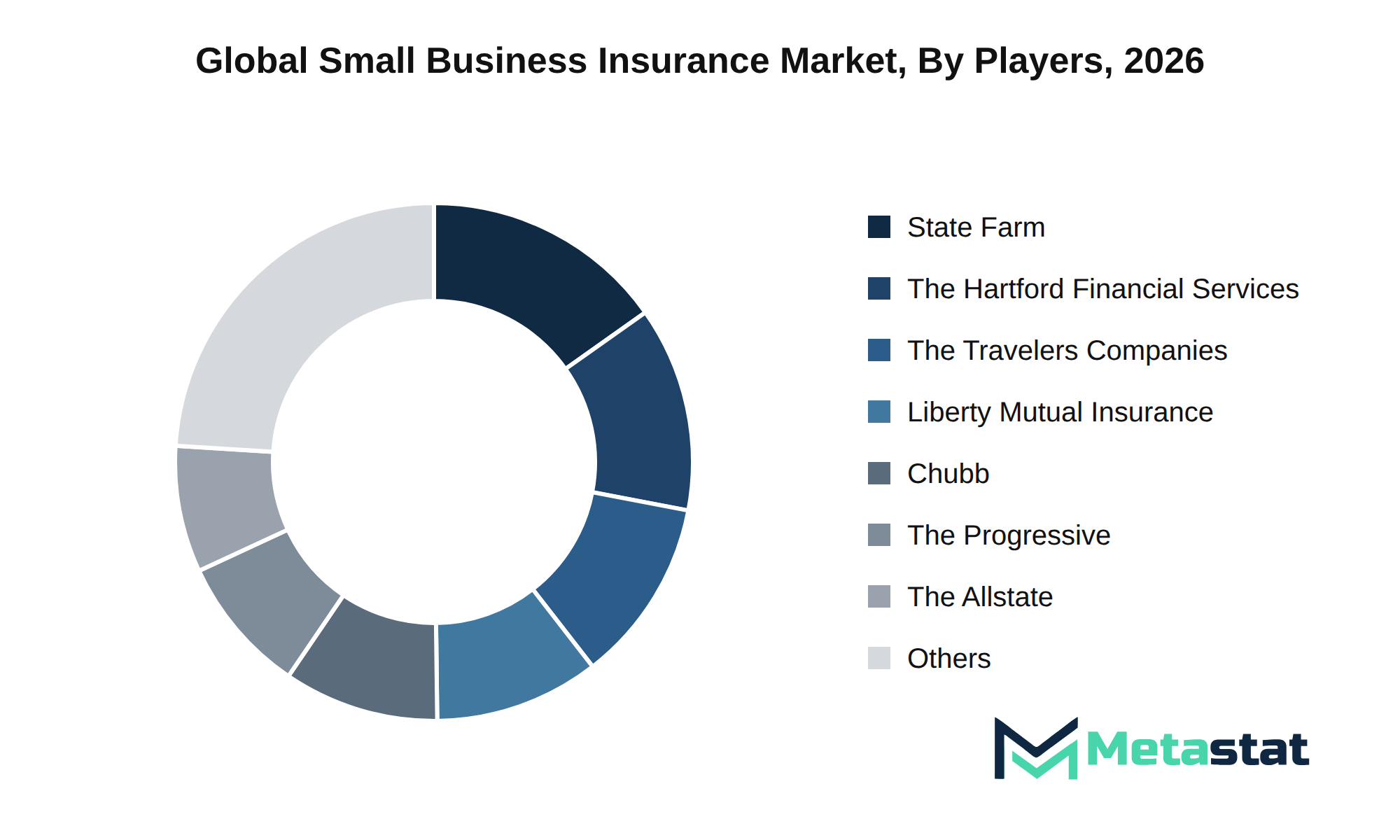
The Small Business Insurance market experiences dynamic competition influenced by mergers and acquisitions, strategic consolidation, and innovative go-to-market strategies. Companies including The Hartford Financial Services Group, Inc., Liberty Mutual Insurance, and The Travelers Companies, Inc. engage in strategic alliances to enhance service offerings and expand market reach. This collaborative approach improves product differentiation and strengthens market positions.
Pricing architectures emerge due to a critical factor, with firms like Chubb Limited and The Progressive Corporation integrating advanced analytics to optimize pricing models, improving competitiveness. The market sees significant investment in R&D pipelines, particularly in areas including cyber insurance and commercial property insurance, with players including Allianz SE and AXA S.A. investing in proprietary technology to establish strong defensive moats.
Barriers to entry remain substantial, particularly owing to established brand equity and customer retention strategies. Companies like State Farm and Nationwide Mutual Insurance Company leverage their reputations to minimize switching costs for clients, further enhancing their positions. The threat of new entrants persists, often driven by startup disruptions that introduce innovative insurance solutions, yet established players maintain robustness through value chain integration and procurement leverage.
The competitive outlook for the Small Business Insurance market indicates a focus on enhancing technological defensibility through intellectual property portfolios. Future strategic growth vectors emphasize collaboration, with firms including Hiscox Ltd. and American Family Mutual Insurance Company, S.I. exploring cross-industry partnerships to expand their service capabilities and offer comprehensive solutions to small businesses.
Forecast and Future Outlook
Market size is forecast to rise from USD 178.7 billion in 2025 to over USD 246.6 billion by 2033, reflecting a compound annual growth rate (CAGR) of 4.1%. This growth trajectory aligns with broader macroeconomic trends that influence the Small Business Insurance market. Increased awareness of risk management, regulatory developments, and technological advancements contribute to rising demand for comprehensive insurance solutions among small businesses.
The bull case suggests stronger demand driven by accelerated R&D commercialization and integration of next-generation technology. Enhanced product life cycles and innovative solutions attract more participants to the market, creating high-growth pockets. Conversely, the bear case highlights potential economic challenges including geopolitical tensions and evolving trade corridors that hinder market expansion.
Strategic capital allocation and infrastructure commitments from key players in the market are crucial for sustaining growth. Increased focus on unmet enterprise needs and the development of defensibility roadmaps position companies to capture emerging white-space opportunities effectively. Understanding these dynamics helps stakeholders navigate the evolving Small Business Insurance market.
Small Business Insurance Market Key Segments
By Insurance Type:
General Liability Insurance
Commercial Property Insurance
Workers' Compensation Insurance
Commercial Auto Insurance
Professional Liability (Errors & Omissions) Insurance
The report strategically identifies and profiles the key market players and analyses their core competencies in each sub-segment of the Small Business Insurance market.
Report Attributes
Details
Study Period
2021-2033
Base Year
2025
Estimated Year
2026
Forecast Period
2026-2033
Historical Period
2021-2025
Growth Rate
CAGR 4.1% from 2026 to 2033
Revenue Unit
USD billion
Segmentation
By Insurance Type, Industry Vertical, Distribution Channel, and Region
By Region
North America (By Insurance Type, Industry Vertical, Distribution Channel, and Country)
United States
Canada
Mexico
Europe (By Insurance Type, Industry Vertical, Distribution Channel, and Country)
Germany
France
UK
Italy
Spain
Russia
Rest of the Europe
Asia Pacific (By Insurance Type, Industry Vertical, Distribution Channel, and Country)
China
Japan
India
South Korea
Australia
Southeast Asia
Rest of Asia Pacific
South America (By Insurance Type, Industry Vertical, Distribution Channel, and Country)
Brazil
Argentina
Rest of South America
Middle East and Africa (By Insurance Type, Industry Vertical, Distribution Channel, and Country)
Saudi Arabia
UAE
South Africa
Rest of Middle East and Africa
WHAT REPORT PROVIDES
Company Market Share, Revenue and Ranking for the Small Business Insurance Market
Key Market Leaders in the Small Business Insurance Sector
Full In-Depth Analysis of the Parent Industry
Industry Statistics and Important Changes in Market Dynamics
Segmentation Details of the Small Business Insurance Market
Find answers to common questions about this report
The Small Business Insurance market size was valued at USD 178.7 billion in 2025, according to the Metastat Insights study.
The Small Business Insurance market is projected to grow at a CAGR of 4.1% during the forecast period from 2026 to 2033.
The North America Small Business Insurance market size is estimated to reach USD 91.5 billion by 2033.
General Liability Insurance leads the Small Business Insurance market, with a projected value of USD 56.4 billion by 2033. This segment's growth reflects a compound annual growth rate of 3.4 percent from 2026 to 2033.
Key drivers for the Small Business Insurance market include macro-economic factors including GDP growth and increased venture funding, which enhance operational security for small businesses. The adoption of advanced technologies and a focus on operational productivity drive demand for innovative insurance solutions tailored to unique risks.
North America holds the dominant share of the Small Business Insurance market, accounting for USD 91.5 billion in 2033, representing 41.5 percent of the total market.
The Small Business Insurance market growth faces restraints from regulatory tightening, escalating operational costs, and compliance hurdles. Small businesses often lack the resources to navigate complex regulations, while macroeconomic pressures, including inflation and slow growth, limit investment in insurance products. supply chain disruptions and geopolitical instability create uncertainty, further stalling market growth.
Factors favoring product adoption in the Small Business Insurance market include robust economic conditions, increased venture funding, and shifting consumer behaviors. Entrepreneurs prioritize insurance solutions to address unique risks and enhance operational security. The integration of advanced technologies facilitates efficiency and improves risk management practices, further driving demand for comprehensive insurance coverage.
The Small Business Insurance market is estimated to reach a valuation of USD 246.6 billion by 2033.
Key players in the Small Business Insurance market include The Hartford Financial Services Group, Inc., The Travelers Companies, Inc., Chubb Limited, Liberty Mutual Insurance, The Progressive Corporation, State Farm, and Nationwide Mutual Insurance Company.
Global Casino market size reached USD 328.6 billion in 2025 and is forecast to hit USD 540 billion by 2033 at a 6.4% CAGR. Segment and regional analysis.
Casino market, Casino Market Size, Casino Market Share, Casino Market Analysis, Casino Market Growth, Casino Market Trends, Casino Market Research Report, Casino Market Forecast, Casino, Casino Market Research, Casino Industry, Casino Industry Report, Casino Market Data, Casino Statistics, Casino Market Statistics, Casino Industry Trends, Casino Market Report, Casino Market Trends, Casino Market News, Casino Forecasts, Casino Market Intelligence Report, Casino market 2033, Casino market outlook, Casino market segmentation, Casino market drivers, Casino market restraints, Casino market opportunities, Casino market CAGR, Casino suppliers, Casino manufacturers, Casino market by region, North America Casino market, Asia Pacific Casino market, Europe Casino market, Casino market competitive landscape, Casino market key players, Land-Based Casino Gaming market, Online Casino Gaming market, Electronic Gaming Machines market, Table Games market, Poker Rooms market, Sports Betting market, Race Wagering market, Bingo & Keno market, Skill-Based & Electronic Table Games market, Dabblers in Casino market, Gambling Enthusiasts in Casino market, Lottery Loyalists in Casino market, Social Exuberant in Casino market, Unengaged Audience in Casino market.
Embedded Finance Solutions market size is valued at USD 139.9 billion in 2025 and projected to reach USD 989.8 billion by 2033, growing at a CAGR of 27.7%.
Australia Parametric Insurance Market Size, Share, Trends, 2033
Australia Parametric Insurance market size is valued at USD 286.4 million in 2025 and is projected to reach USD 720.9 million in 2033, at a CAGR of 12.2% from 2026 to 2033.
Australia Parametric Insurance Market, Australia Parametric Insurance Market Size, Australia Parametric Insurance Market Share, Australia Parametric Insurance Market Analysis, Australia Parametric Insurance Market Growth, Australia Parametric Insurance Market Trends, Australia Parametric Insurance Market Research Report, Australia Parametric Insurance Market Forecast, Australia Parametric Insurance, Australia Parametric Insurance Market Research, Australia Parametric Insurance Industry, Australia Parametric Insurance Industry Report, Australia Parametric Insurance Market Data, Australia Parametric Insurance Statistics, Australia Parametric Insurance Market Statistics, Australia Parametric Insurance Industry Trends, Australia Parametric Insurance Market Report, Australia Parametric Insurance Market Trends, Australia Parametric Insurance Market News, Australia Parametric Insurance Forecasts, Australia Parametric Insurance Market Intelligence Report
Merchant Banking Services market size is valued at USD 68.3 billion in 2025 and is projected to reach USD 260.7 billion in 2033, at a CAGR of 18.3% from 2026 to 2033.