Australia Parametric Insurance Market Size, Share, By Type (Natural Catastrophes Insurance, Specialty Insurance, and Others), By Industry Vertical (Agriculture, Aerospace, Defense, Mining, Construction, Energy, Utilities, Manufacturing, and Others), Industry Analysis, Growth, Trends, and Forecast, 2026-2033
Report ID
MSI-4773
Published
May 26, 2026
Pages
310 Pages
Format
Report Details
Comprehensive Market Analysis And Insights
Market Overview
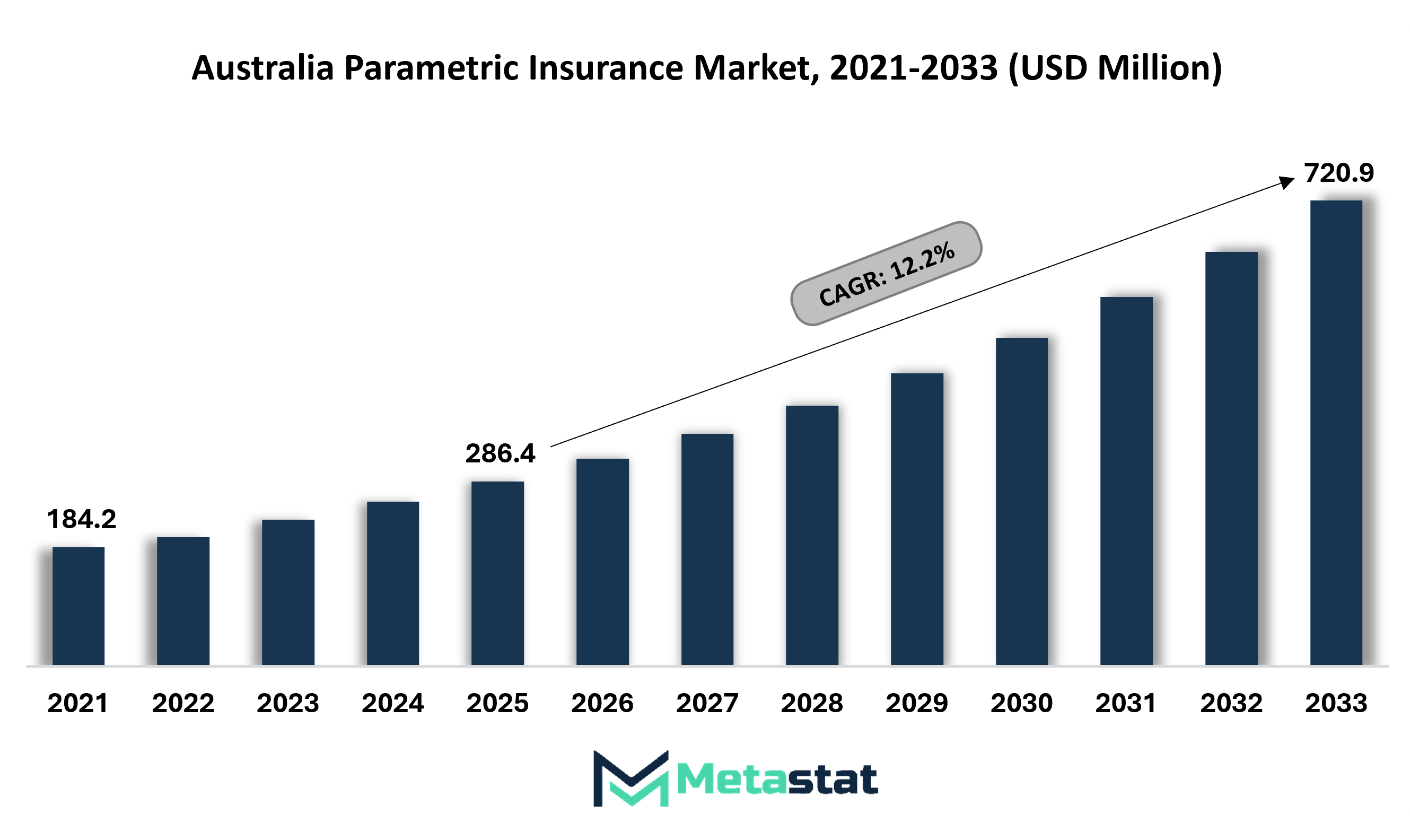
Australia Parametric Insurance market size is valued at USD 286.4 million in 2025 and projected to grow at a CAGR of 12.2% during the forecast period, reaching USD 720.9 million by 2033.
Australia Parametric Insurance Market: Comprehensive Data-Driven Market Analysis and Strategic Outlook
Natural Catastrophes Insurance segment account for a market share of 56.56% in 2025.
Key trends driving growth: Rising frequency and severity of natural disasters increasing demand for rapid payout insurance solutions and Advancements in data analytics, satellite technology, and AI improving trigger accuracy and product adoption.
Opportunities include development of hybrid parametric-indemnity products to address market skepticism and expand adoption and expansion into underserved regions and integration with climate financing and sustainability initiatives.
Key insight: Parametric insurance is transitioning from a niche solution to a mainstream risk management tool in Australia, driven by climate risk intensity and the need for faster claim payouts.
The Australia Parametric Insurance Market is gaining traction owing to rising exposure to weather-related risks and the limitations of traditional indemnity-based insurance models. The market is shaped by increasing occurrences of bushfires, floods, cyclones, and droughts, which create financial uncertainty for businesses, agriculture, and public infrastructure. Parametric insurance addresses these concerns by offering predefined payouts triggered by measurable events such as rainfall levels, wind speeds, temperature thresholds, or cyclone intensity, reducing lengthy claims assessments and enabling faster financial recovery. The model is relevant in Australia, where catastrophe frequency has increased and traditional insurance coverage gaps have widened, pushing private and public stakeholders toward efficient risk-transfer solutions.
The market is also benefiting from advancements in data analytics, satellite monitoring, and climate modeling, which improve trigger accuracy and reduce payout disputes. Growing regulatory support and public-sector interest are encouraging insurers to explore innovative products, while demand from agriculture, energy, infrastructure, mining, and construction continues to rise.
Market Dynamics
Growth Drivers:
Rising frequency and severity of natural disasters increasing demand for rapid payout insurance solutions
Rising frequency and severity of natural disasters continue to influence the Australia parametric insurance market, creating strong demand for rapid payout solutions. Climate volatility, bushfires, floods, and cyclones create urgent financial exposure, encouraging adoption of predefined trigger-based insurance coverage. The outlook indicates wider reliance on automated payout structures that support faster recovery across industries, communities, and public infrastructure.
Advancements in data analytics, satellite technology, and AI improving trigger accuracy and product adoption
Advancements in data analytics, satellite technology, and artificial intelligence are strengthening operational efficiency in the Australia parametric insurance market. Improved trigger accuracy enhances confidence among insurers and policyholders, supporting product innovation. Continuous technological development enables risk modeling, real-time monitoring, and scalable solutions, supporting broader adoption across agriculture, infrastructure, and energy sectors in the coming years.
Market Restraints
Basis risk leading to mismatch between actual losses and payouts, affecting trust in the model
Basis risk remains a critical issue in the Australia parametric insurance market, creating gaps between actual losses and payout outcomes. Mismatch scenarios reduce confidence among potential buyers, limiting adoption potential. Long-term market stability requires improved trigger calibration, stronger transparency, and clear communication to reinforce credibility and ensure consistent user acceptance.
Data limitations and lack of standardization impacting pricing accuracy and product development
Data limitations and lack of standardization remain key restraints in the Australia parametric insurance market. Inconsistent datasets and limited historical loss records affect pricing accuracy and restrict product innovation. Future progress depends on improved data-sharing frameworks, unified measurement standards, and collaboration among insurers, technology providers, and regulatory bodies to strengthen product reliability and scalability.
Opportunities
Development of hybrid parametric-indemnity products to address market skepticism and expand adoption
Hybrid parametric-indemnity products reduce buyer skepticism by balancing fast trigger-based payouts with loss-based assessment mechanisms. Future adoption will increase across sectors requiring flexible coverage, supporting customized risk solutions, improving trust, and strengthening long-term market penetration across diverse economic segments.
Market Segmentation Analysis
The Australia Parametric Insurance market is classified based on Type and Industry Vertical.
By Type, the market is further segmented into:
Natural Catastrophes Insurance
Natural Catastrophes Insurance segment is valued at USD 181.2 million in 2026 and is projected to reach USD 398.6 million by 2033, at a CAGR of 11.9% during the forecast period.
Natural Catastrophes Insurance in the Australia parametric insurance market reflects increasing focus on weather-linked triggers, including cyclones, floods, droughts, and bushfires. Structured payouts based on predefined parameters will enhance claims efficiency. Advanced climate modeling and satellite data integration will strengthen risk prediction, supporting faster financial recovery and improved resilience planning across vulnerable areas.
Specialty Insurance segment is valued at USD 112.7 million in 2026 and is projected to reach USD 261.7 million by 2033, at a CAGR of 12.8% during the forecast period.
Specialty Insurance in the Australia parametric insurance market addresses specific risk exposures across sectors requiring tailored coverage. Parametric structures will enable defined payout conditions linked to operational disruptions, weather thresholds, or performance metrics. Expansion of data analytics and artificial intelligence will refine underwriting practices, encouraging adoption among enterprises seeking predictable and transparent risk-transfer solutions.
Others
Others segment is valued at USD 27.4 million in 2026 and is projected to reach USD 60.6 million by 2033, at a CAGR of 12% during the forecast period.
Other insurance types in the Australia parametric insurance market include emerging applications across travel, events, logistics, and niche commercial activities. Parametric triggers tied to delays, cancellations, or environmental changes will provide simplified claim procedures. Continuous innovation in digital platforms and blockchain-based contracts will enhance trust, accessibility, and scalability across consumer and business segments.
By Industry Vertical, the market is divided into:
Agriculture
Agriculture segment is projected to reach USD 160.6 million by 2033, at a CAGR of 12.7% during the forecast period.
Agriculture sector adoption within the Australia parametric insurance market will increase owing to rising exposure to droughts, rainfall variability, and temperature shifts. Index-based coverage linked to climate data will support timely compensation for crop losses. Integration of remote sensing technology will support accurate monitoring, enhancing financial stability for farmers and encouraging long-term agricultural sustainability.
Aerospace and Defense
Aerospace and Defense segment is projected to reach USD 19.2 million by 2033, at a CAGR of 10.8% during the forecast period.
Aerospace and defense applications in the Australia parametric insurance market will focus on operational disruptions, weather-related delays, and mission-critical risks. Parametric solutions tied to predefined triggers will enable rapid financial support without prolonged assessments. Growing reliance on real-time data systems will support risk evaluation, ensure operational continuity, and improve financial planning across defense-related activities.
Mining
Mining segment is projected to reach USD 149.6 million by 2033, at a CAGR of 12.6% during the forecast period.
Mining sector engagement in the Australia parametric insurance market will expand owing to exposure to environmental risks, including heavy rainfall and extreme temperatures. Parametric coverage linked to measurable conditions will reduce downtime impact. Adoption of predictive analytics and IoT-enabled monitoring systems will enhance risk management strategies, supporting uninterrupted operations and financial protection in resource extraction activities.
Construction
Construction segment is projected to reach USD 125.4 million by 2033, at a CAGR of 12.9% during the forecast period.
Construction industry participation in the Australia parametric insurance market will increase owing to project delays caused by weather disruptions and environmental uncertainties. Parametric insurance tied to rainfall levels or temperature extremes will provide quick payouts. Digital project monitoring tools will align with insurance frameworks, enabling better planning and reducing financial uncertainty across construction projects.
Energy and Utilities
Energy and Utilities segment is projected to reach USD 182.4 million by 2033, at a CAGR of 12.5% during the forecast period.
Energy and utilities sector within the Australia parametric insurance market will benefit from coverage addressing renewable energy variability and infrastructure risks. Parametric triggers based on wind speed, solar irradiation levels, or grid disruptions will support stable revenue streams. Expansion of smart grid technologies will enhance data accuracy, enabling efficient insurance solutions aligned with evolving energy systems.
Manufacturing
Manufacturing segment is projected to reach USD 41.8 million by 2033, at a CAGR of 9.2% during the forecast period.
Manufacturing sector adoption in the Australia parametric insurance market will focus on mitigating supply chain disruptions and operational losses caused by environmental factors. Parametric policies linked to measurable indicators will ensure rapid compensation. Increased use of automation and connected systems will provide reliable data inputs, support efficient risk transfer, and strengthen production continuity.
Others
Others segment is projected to reach USD 41.8 million by 2033, at a CAGR of 10.4% during the forecast period.
Other industry verticals in the Australia parametric insurance market include tourism, logistics, retail, and event management. Parametric solutions addressing event cancellations, transport delays, and environmental disruptions will gain traction. Expansion of digital ecosystems and data-sharing platforms will support customized insurance models, enabling broader market penetration and enhanced financial protection across diverse industries.
Competitive Landscape and Strategic Insights
The Australia Parametric Insurance Market has gained strong attention owing to its transparent structure and faster claims settlement process. Unlike traditional insurance, parametric insurance works through predefined triggers such as weather data, climate thresholds, or natural catastrophe events. When a defined condition is met, payouts are released without lengthy assessments, helping businesses recover quickly. The model supports sectors such as agriculture, energy, mining, construction, infrastructure, and tourism, where sudden losses will affect operations. Rising awareness of climate risks is also driving demand, encouraging insurers to design products that respond to real-time data.
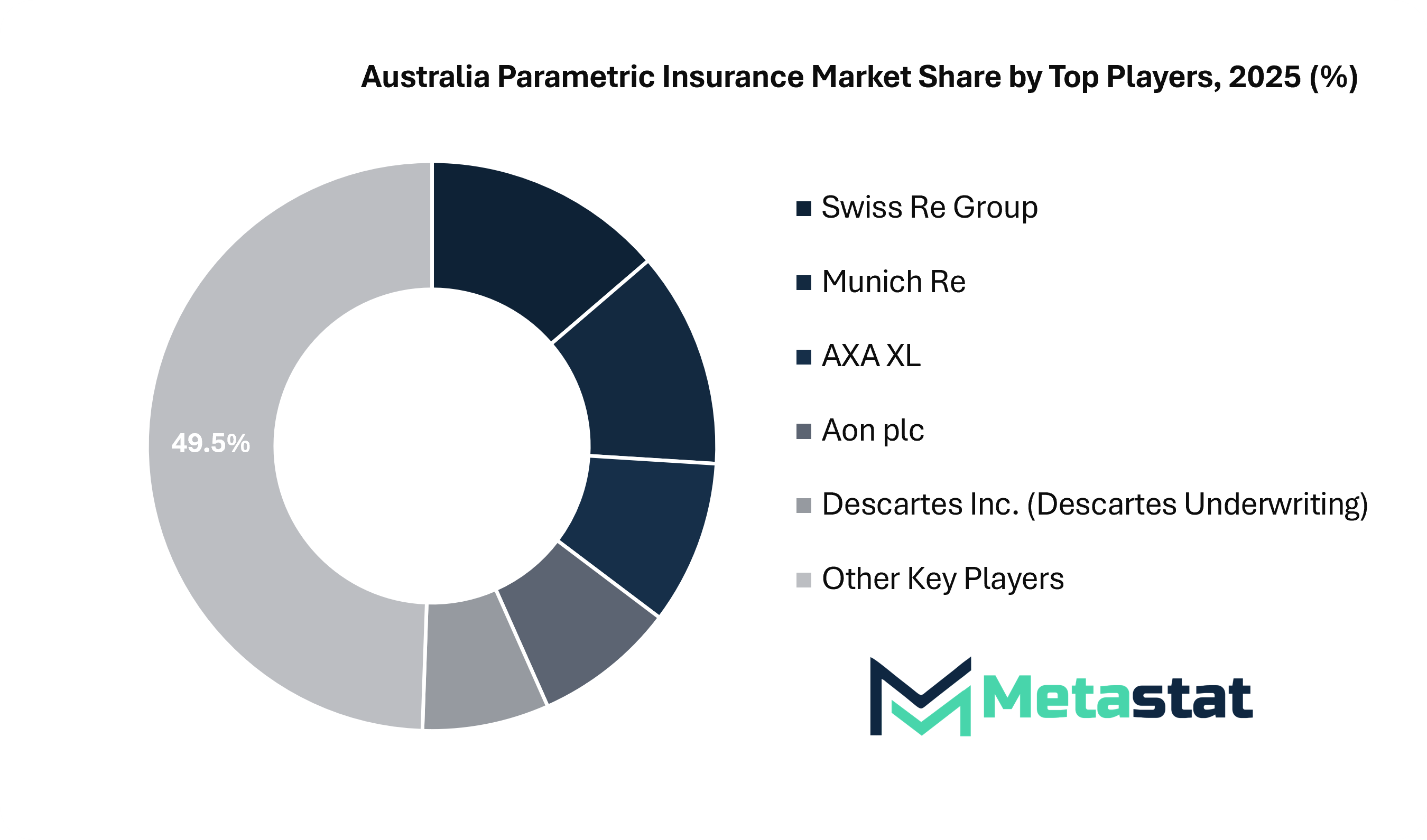
Several companies play a strong role in shaping the market. CelsiusPro brings technical expertise in risk modeling, supporting the design of solutions that match specific risk conditions. Descartes Underwriting specializes in data-driven insurance, offering policies based on advanced analytics and parametric risk modeling. Epsilon Insurance Broking Services Pty Ltd supports clients by connecting them with suitable insurance products, while MSI GuaranteedWeather, LLC provides weather-related coverage that addresses climate-linked risks. These companies continue to build trust by offering clear policy terms and reliable payout mechanisms, helping clients manage uncertainty with greater confidence.
Large global insurers also contribute significantly to market expansion. Swiss Re Group and Munich Re bring deep experience in reinsurance and risk assessment, supporting the development of structured parametric policies. AXA XL and Chubb Limited offer a wide range of insurance solutions, adding parametric options to meet changing customer requirements. Guy Carpenter & Company, LLC plays an advisory role by helping organizations assess risk exposure and identify suitable coverage. Liberty Mutual Insurance and Allianz Group extend their global expertise to support local demand, ensuring that solutions remain practical and efficient for different industries.
Aon plc also stands out by offering risk advisory and brokerage services that guide organizations toward better insurance decisions. The involvement of these companies shows that the market is shifting toward flexible and responsive insurance solutions. Businesses are becoming increasingly aware of how parametric insurance protects them from unexpected disruptions. With ongoing innovation and support from experienced players, the market is projected to expand steadily, providing practical methods to manage risks in a changing climate environment.
Forecast and Future Outlook
Market size is forecast to rise from USD 286.4 million in 2025 to over USD 720.9 million by 2033.
Looking ahead, the market is projected to expand steadily owing to increasing climate volatility, wider adoption across industries, and integration with financial instruments linked to sustainability and resilience. Hybrid models combining parametric and traditional insurance are likely to gain momentum, helping reduce basis risk and attract conservative buyers.
Parametric Insurance Market Key Segments:
By Type:
Natural Catastrophes Insurance
Specialty Insurance
Others
By Industry Vertical:
Agriculture
Aerospace and Defense
Mining
Construction
Energy and Utilities
Manufacturing
Others
Key Australia Parametric Insurance Industry Players
This research report categorizes the Australia Parametric Insurance Market based on key segments and industry verticals, forecasts revenue growth, and analyzes trends across each submarket. The report analyzes key growth drivers, opportunities, and challenges influencing the Australia Parametric Insurance Market. Recent market developments and competitive strategies such as expansion, product launch, partnership, merger, and acquisition have been included to present the competitive landscape of the market.
The report strategically identifies and profiles key market players and analyzes their core competencies across each sub-segment of the Australia Parametric Insurance Market.
Report Attributes
Details
Study Period
2021-2033
Base Year
2025
Estimated Year
2026
Forecast Period
2026-2033
Historical Period
2021-2025
Growth Rate
CAGR 12.2% from 2026 to 2033
Revenue Unit
USD million
Segmentation
By Type and Industry Vertical
WHAT REPORT PROVIDES
Key Company Market Share, Revenue, and Position/Ranking
Key Market Leaders
Full In-Depth Analysis of the Parent Industry
Industry Statistics
Important Changes in Market and Its Dynamics
Segmentation Details of the Market
Historical, On-Going, and Projected Market Analysis
Assessment of Niche Industry Developments
Market Share Analysis
Key Strategies of Major Players
Company Profiles of Key Players
Unique Selling Prepositions of Leading Market Players
Merchant Banking Services market size is valued at USD 68.3 billion in 2025 and is projected to reach USD 260.7 billion in 2033, at a CAGR of 18.3% from 2026 to 2033.
Global Debt Management Solutions market size is valued at USD 41.8 billion in 2025 and is projected to reach USD 72.8 billion in 2033, at a CAGR of 7.2% from 2026 to 2033
Global Corporate Treasury Management Software market size is valued at USD 6,964.9 million in 2025 and is projected to reach USD 10,763.8 million in 2033, at a CAGR of 5.6% from 2026 to 2033
The Global Affordable Housing Finance market size was USD 347.7 billion in 2025 and is projected to reach USD 653.2 billion in 2033, at a CAGR of 8.2% from 2026 to 2033