
LEAD ANALYST
Utkarsh Khirodkar is a Lead Market Research Analyst at MetaStat Insight, specializing in market intelligence, technology sector assessments, and competitive strategy.

Global Vending Machine Market Size, Share, By Machine Type (Packaged Beverage Vending Machines, Hot Beverage Vending Machines, Snack Vending Machines, Combination Snack and Beverage Vending Machines, Prepared Food Vending Machines, Frozen Food and Ice Cream Vending Machines, Non-Food Merchandise Vending Machines and Others), By Technology (Semi-Automatic, Smart Machine and Automatic Machine), By Application (Corporate Offices and Commercial Buildings, Educational Institutions, Healthcare Facilities, Transportation Hubs, Retail and Shopping Centers, Hospitality and Leisure Venues, Manufacturing and Industrial Facilities, Public Spaces and Government Facilities, Residential Buildings and Others), By Payment Configuration (Cash and Cashless Payment Machines, Cashless-Only Machines and Cash-Only Machines), Industry Analysis, Growth, Trends, and Forecast, 2026-2033
Report ID
MSI-3182
Published
October, 2026
Pages
293 Pages
Format
Historical
Base year
Forecast
Forecast period
Report Details
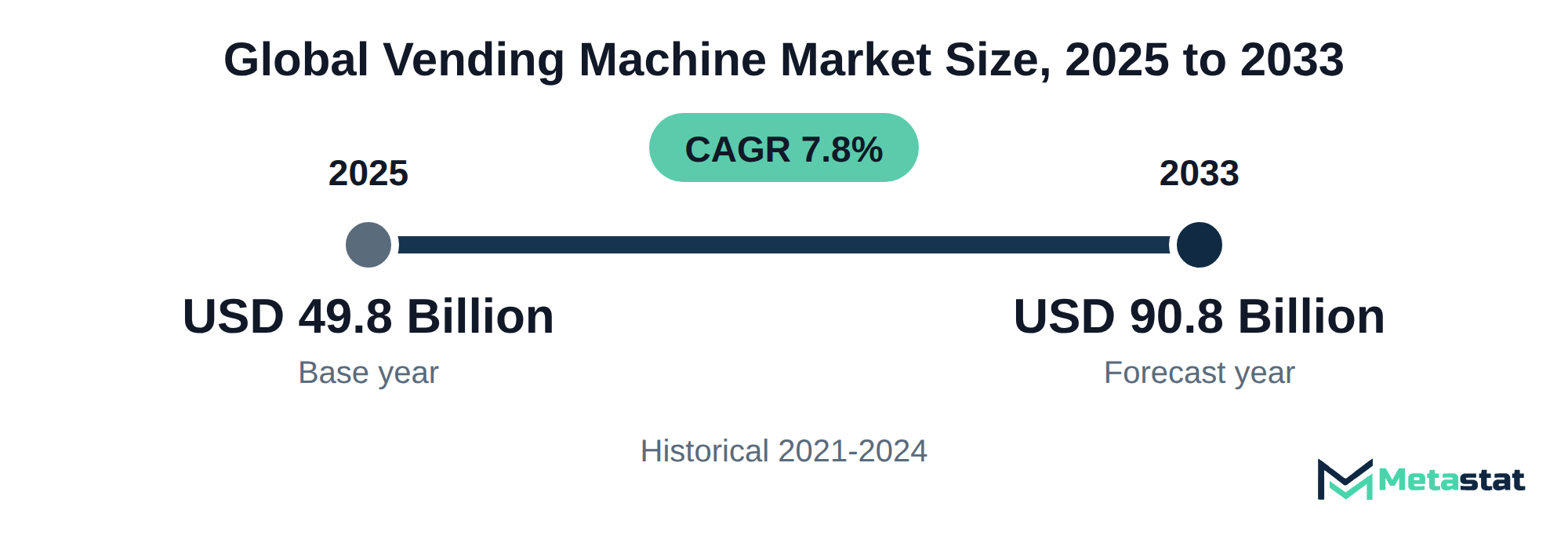
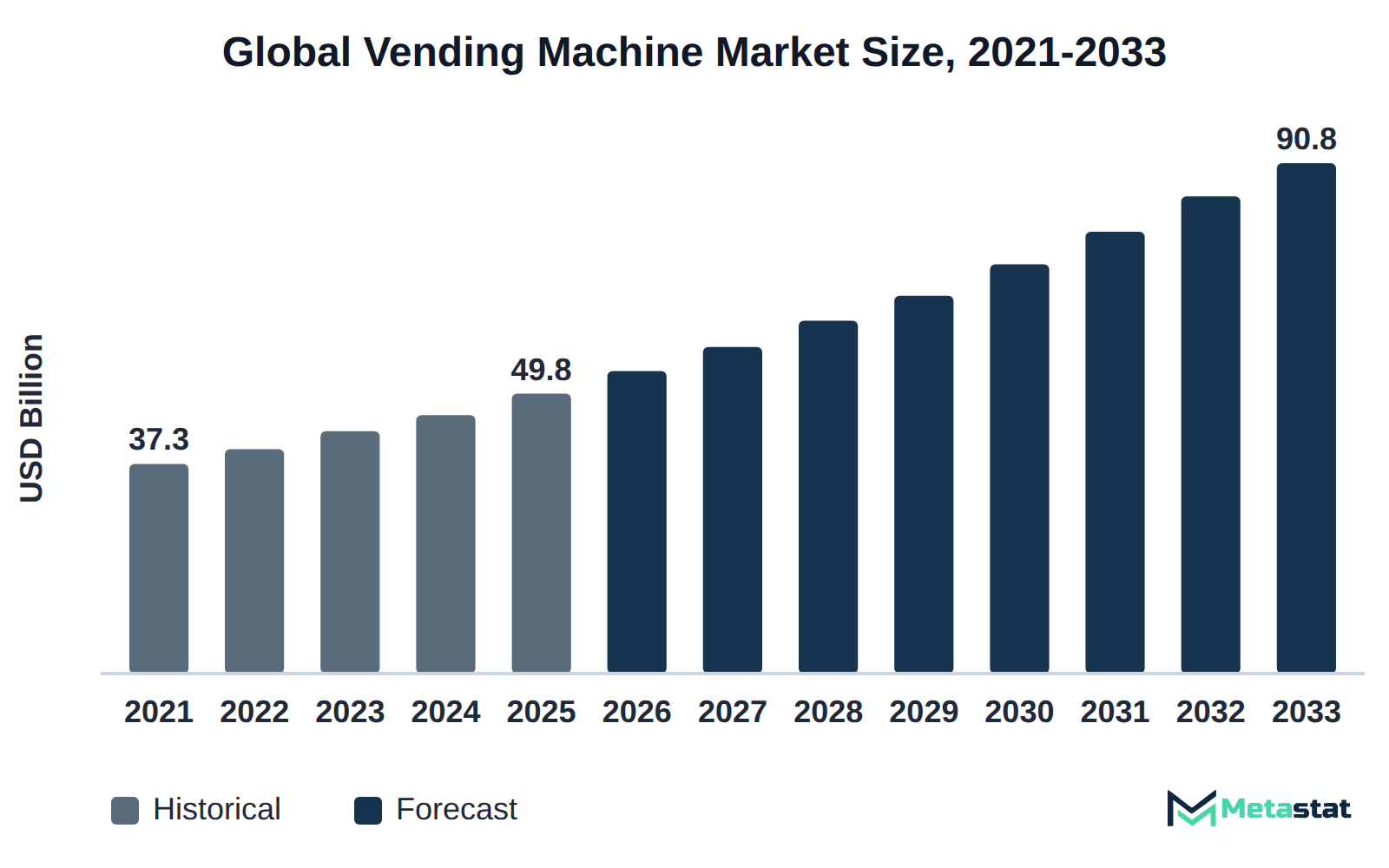
Market Valuation: Valued at $49.8 Billion in 2025, projected to reach $90.8 Billion by 2033 at a 7.8% CAGR.
Dominant Segment: Packaged beverage vending machines lead the market, projected to reach USD 22.4 billion by 2033. This growth is driven by increasing consumer demand for convenient beverage options in high-traffic locations.
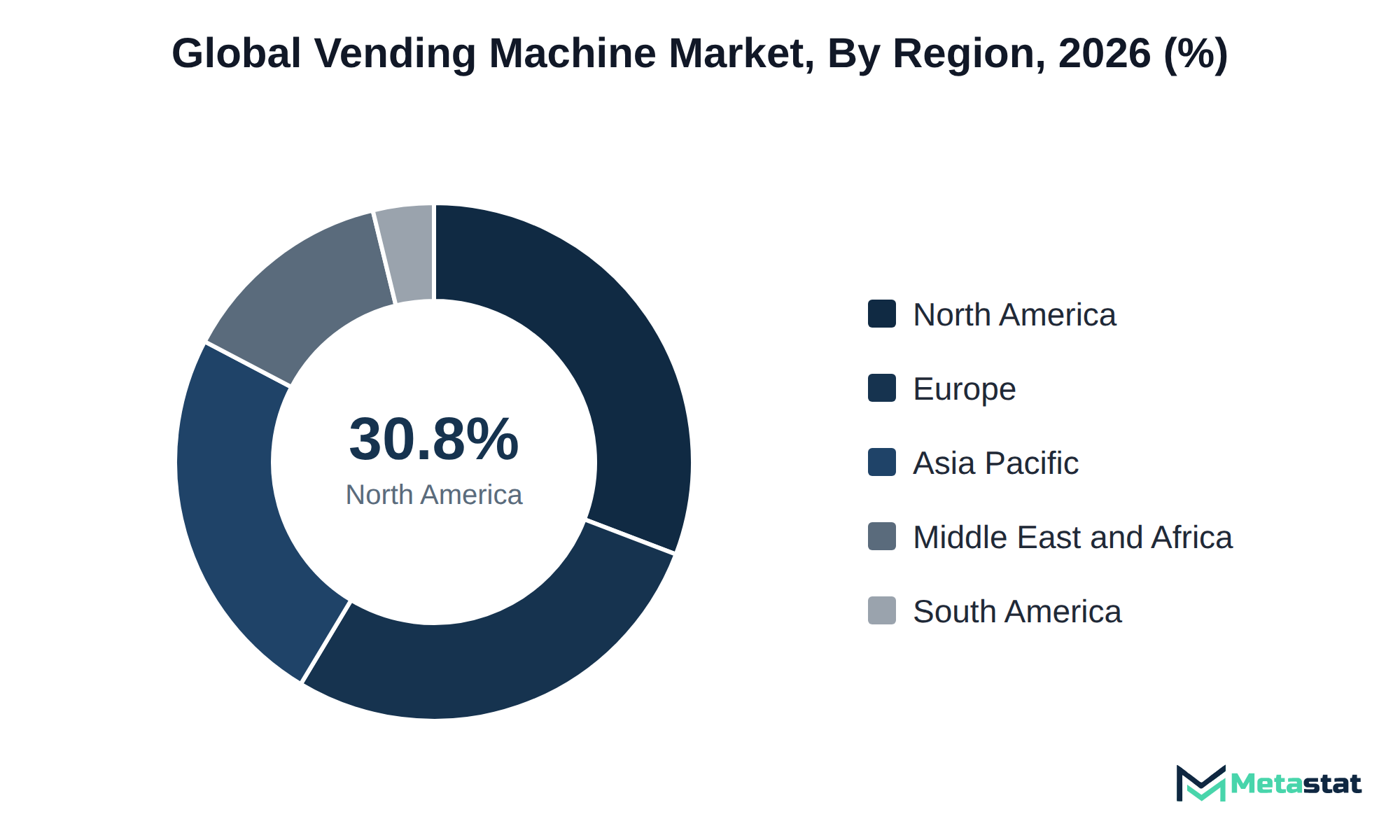
Geographic Lead: North America is the leading region in the vending machine market, holding 30.8% of the market share in 2025. The US is expected to maintain this dominance due to its robust infrastructure and high purchasing power.
What's Inside: The report provides a comprehensive analysis of the global vending machine market, covering segments by machine type, technology, application, and payment configuration, along with competitive insights and growth forecasts through 2033.
Emergence of Smart Machines: Smart vending machines are experiencing rapid growth, projected to reach USD 44.8 billion by 2033. Their advanced features, including cashless payment options and real-time analytics, make them appealing to a wide range of consumers.
Opportunity in Cashless-Only Machines: The cashless-only vending machine segment is expected to grow significantly, reaching USD 36.9 billion by 2033. This trend aligns with consumer preferences for contactless transactions, particularly in urban and high-traffic areas.
Choose Your License
Global Vending Machine Market
The global Vending Machine market was valued at USD 49.8 billion in 2025 and is projected to reach USD 90.8 billion by 2033, growing at a CAGR of 7.8% over the forecast period.
The Vending Machine market encompasses a range of automated machines that dispense products, including beverages, snacks, and prepared foods. Buyers invest in these machines due to their convenience, efficiency, and ability to serve consumers in various settings including corporate offices, educational institutions, and transportation hubs. The increasing demand for quick and accessible food and beverage options drives growth in this sector, highlighting evolving consumer preferences toward on-the-go solutions.
Market dynamics favor significant growth, with smart machines emerging as the primary technology segment, reflecting advancements in automation and consumer engagement. North America holds 30.8% of the market in 2025, with the US leading in 2026. This region benefits from strong infrastructure and high purchasing power, which support its lead over Europe at 27.8% and Asia Pacific at 24.1%. The preference for cash and cashless payment machines serves as a key growth driver, aligning with global trends toward digital transactions.
In terms of market value, packaged beverage vending machines represent the largest segment, projected to expand considerably through 2033. The increasing focus on health-conscious options and premium products further influences consumer choices, prompting manufacturers to innovate their offerings. Competing players strive to enhance product portfolios and optimize user experiences, which shapes the direction of the market.
The Vending Machine market includes various segments catering to consumer preferences, including packaged beverages, snacks, and hot beverages. Buyers invest in this market due to the convenience and efficiency these machines provide, enhancing accessibility to products in public spaces, workplaces, and educational institutions. The demand from corporate offices and commercial buildings significantly contributes to overall market growth, reflecting an increasing reliance on automated solutions for quick service and product availability.
Growth in the market is primarily driven by technological advancements, particularly the rise of smart machines that offer enhanced features, including cashless payment options and inventory management systems. Among the segments, packaged beverage vending machines represent the largest share, with a projected value of USD 22.4 billion by 2033. This regional dominance highlights the significant consumer base and robust infrastructure supporting vending machine operations.
Shifts in consumer behavior, especially the preference for cashless transactions, drive the adoption of modern vending solutions. The market anticipates continued expansion due to ongoing innovations and the growing demand for quick and efficient service across various applications. Enhanced functionalities attract investments from key players, positioning the market for sustained growth in the coming years.
The shift toward cashless vending machines is transforming the Vending Machine market, reflecting broader trends in consumer behavior and payment technology. The demand for cashless payment options is driven by increasing smartphone penetration and the growing preference for contactless transactions. Cashless-only machines are projected to reach USD 36.9 billion by 2033, supporting the transition to more convenient purchasing methods.
This technological advancement caters to a diverse range of consumer preferences, enhancing user experience while improving operational efficiency for vending operators. The integration of mobile and other electronic payment systems allows for efficient transactions, reducing reliance on coins and bills, which often lead to operational challenges including machine jams and maintenance issues. The market benefits from a more streamlined process that appeals to tech-savvy customers, particularly in urban environments where cash usage declines.
The increased adoption of cashless vending machines positions operators to capture a larger market share by attracting younger consumers who favor mobile payment solutions. This trend drives revenue growth for vending companies and shapes the overall trajectory of the market, in line with modern retail practices and consumer expectations.
The integration of IoT telemetry within the vending machine market significantly enhances inventory management and maintenance efficiency. This technology enables real-time monitoring of stock levels, allowing operators to optimize replenishment schedules and minimize downtime. Telemetry can also support predictive maintenance by letting operators schedule servicing before faults interrupt sales. Data from the market indicates that the vending machine sector is projected to reach USD 90.8 billion by 2033, highlighting the increasing importance of technological advancements in driving market growth.
Operators increasingly favor smart machines equipped with telemetry features. The expected value of smart machines is USD 44.8 billion by 2033, reflecting the shift towards automated inventory management systems. This trend results in reduced operational costs and improved service delivery, presenting a competitive advantage for vending machine operators. Pricing models for these machines often include subscription-based contracts, allowing operators to manage costs more effectively while ensuring access to the latest technologies. Such pricing strategies enhance customer satisfaction and loyalty in the long term.
Fresh food vending machines significantly enhance employee well-being and patient satisfaction in offices and healthcare facilities. With the growing emphasis on health and nutrition, businesses increasingly incorporate these machines to provide convenient access to fresh produce and healthy prepared meals. Growing attention to workplace wellness drives this trend, reflecting a broader shift toward healthier lifestyle choices.
In terms of the vending machine market, the segment for corporate offices and commercial buildings is projected to reach USD 20.1 billion by 2033, reflecting a compound annual growth rate of 7%. This growth highlights the increasing demand for solutions that prioritize health and convenience within various environments. By catering to the needs of health-conscious employees and patients, fresh food vending machines create a positive image for organizations, contributing to improved employee morale and patient experiences.
Investing in fresh food vending machines positions companies favorably in a competitive market, aligning with current consumer preferences for nutritious options. These machines meet the demand for healthier food alternatives and help businesses build a culture of wellness, which supports operational success.
Location significantly impacts vending machine profitability, with various factors influencing success in different environments. High foot traffic areas ensure greater sales opportunities, driving revenue for operators. This segment attracts significant investment due to consistent demand for convenient snack and beverage options among working professionals.
Vending machines located in transportation hubs, including airports and train stations, benefit from transient populations, creating a constant flow of potential customers. The CAGR for this application segment stands at 8.8%, illustrating strong growth potential. Strategic placement in locations with high visibility and accessibility leads to increased sales and improved profit margins, driving operational success across the market.
Understanding the dynamics of location and consumer behavior is crucial for maximizing profitability in the vending machine market. Operators evaluating new locations focus on high-traffic areas to enhance revenue opportunities, establishing a competitive advantage in the evolving market.
The increasing preference for cashless payment options drives significant growth in the vending machine market. Corporate offices, educational institutions, and transportation hubs are among the primary purchasers enhancing their service offerings to meet evolving consumer expectations. The convenience and security provided by cashless transactions result in higher transaction volumes and increased consumer engagement. Technology adoption aligns with consumers' shift toward digital payment methods, prompting buyers to replace older cash-only machines. This transformation contributes to a projected increase in the cash and cashless payment machines segment, which is expected to grow from USD 28.8 billion in 2026 to USD 45.2 billion by 2033, at a CAGR of 6.6%. The market continues to expand while businesses enhance customer experiences by integrating advanced payment systems.
Smart vending machines are gaining traction within the market due to their advanced functionalities and enhanced user experiences. These machines incorporate innovative technology, including touchscreens, internet connectivity, and AI algorithms, which allow for personalized interactions and data-driven decision-making. The demand for smart machines largely stems from their ability to track consumer preferences and optimize product offerings based on real-time analytics.
Corporate offices and commercial buildings, educational institutions, and healthcare facilities are increasingly adopting smart vending solutions, drawn by their operational efficiency and the potential for increased revenue. The integration of smart vending machines supports operational agility by minimizing maintenance costs and maximizing product availability. With projected growth rates reaching 11.4%, the segment is expected to significantly contribute to the overall expansion of the Vending Machine market, enhancing competitiveness and driving innovation in the industry.
Price sensitivity presents a significant challenge for the vending machine market, particularly affecting small businesses and educational institutions. These buyer groups operate under tighter budget constraints, leading to slower uptake of new vending solutions. Higher initial investments in advanced vending machines, including smart and combination units, deter potential customers from making purchases. This situation results in smaller orders and delayed replacement cycles, ultimately impacting overall market growth.
In environments like corporate offices or healthcare facilities, where demand for automation and convenience is evident, financial constraints hinder the adoption of state-of-the-art vending solutions. For many buyers, the affordability of machines directly influences purchasing decisions. This price sensitivity stifles innovation and limits the expansion of the vending machine market, particularly in regions with lower disposable income.
Suppliers in the vending machine market face substantial challenges related to rising input costs. Factors contributing to these pressures include fluctuations in raw material prices and increased energy expenses. These conditions impact profitability, particularly for manufacturers of traditional vending machines, where margins remain tight. In response, several suppliers implement cost-reduction strategies, including optimizing supply chains and adopting more efficient production methods. Innovations in machine design and technology contribute to lowering maintenance costs and enhancing energy efficiency. The push for cost-effective solutions drives suppliers to prioritize advanced materials and streamlined processes, which yield long-term savings. Competitive pricing is essential for maintaining market share during challenging conditions. Suppliers are likely to focus on product value and durability to offset rising costs, keeping their offerings attractive to buyers while sustaining profitability.
The increasing adoption of cashless-only machines presents a significant market opportunity, particularly in regions focusing on streamlined consumer experiences. This segment is projected to reach USD 36.9 billion by 2033, reflecting a compound annual growth rate of 12.4%. The growing preference for contactless transactions aligns with consumer trends toward convenience and speed, particularly in urban areas and high-traffic locations. Demand for cashless-only machines stems from a buyer focus on reducing physical cash handling and enhancing operational efficiency. This shift influences suppliers to innovate and enhance their product offerings, resulting in improved revenue streams. The potential for cashless-only machines contributes to overall growth, aligning with emerging payment technologies and changing consumer behaviors.
The Global Vending Machine market is segmented based on Machine Type, Technology, Application, and Payment Configuration.
Packaged Beverage Vending Machines segment is valued at USD 14.5 billion in 2026 and is projected to reach USD 22.4 billion by 2033, at a CAGR of 6.4% during the forecast period. These machines cater to various consumer needs, providing easy access to a range of packaged beverages in locations including offices, schools, and transportation hubs. The demand for convenience and instant access to hydration options such as bottled water is primarily driven by changing consumer lifestyles and preferences. Compared to other segments, including Snack Vending Machines, this category experiences a higher growth rate, attributed to the increasing consumer preference for on-the-go beverage solutions. By 2033, packaged beverage vending machines are expected to capture a larger share as businesses and institutions seek efficient solutions for catering to consumer demands in high-traffic areas.
Hot Beverage Vending Machines segment is estimated to reach USD 19.7 billion by 2033, at a CAGR of 7% during the forecast period. This segment primarily serves locations including corporate offices, educational institutions, and transportation hubs, providing convenient access to a variety of hot drink options such as coffee. The growing trend toward on-the-go consumption fuels demand for these machines, particularly among busy professionals and students. Compared to other segments, hot beverage machines exhibit a moderate growth rate, differentiated by their unique offerings of hot drinks, which attract specific buyer demographics. While snack vending machines and packaged beverage machines experience varied growth patterns, the focused demand for hot beverages supports a stable trajectory for this segment. Features including user-friendly interfaces and cashless payment options further enhance appeal, promoting widespread adoption in diverse environments, including healthcare facilities where hot beverages contribute to patient satisfaction.
Snack Vending Machines segment is expected to reach USD 14.9 billion by 2033. These machines cater primarily to consumers seeking convenient access to snacks in various settings, including workplaces, schools, and transportation hubs. Key drivers of growth in this segment include increasing consumer demand for on-the-go snack options and the rising trend toward healthy snacks and other health-conscious selections. Compared to other segments, including Hot Beverage Vending Machines, which is projected to grow at a CAGR of 7%, snack vending machines exhibit a slightly more dynamic growth rate. The snack vending segment experiences a CAGR of 9.3%, indicating a strong preference for diverse snack offerings. This segment’s unique focus on convenience and variety positions it favorably against other vending machine categories, enhancing its appeal among busy consumers seeking quick and easy snack solutions.
Combination Snack and Beverage Vending Machines segment is projected to grow at a CAGR of 9.3% during the forecast period. These machines provide a versatile solution for consumers seeking both snack and beverage options in a single location, catering to various environments including corporate offices, educational institutions, and transportation hubs. The appeal of this segment lies in its ability to meet diverse consumer demands efficiently, attracting buyers who value convenience. The growing emphasis on healthy snacking and beverage choices further strengthens this segment, distinguishing it from others with slower growth rates. In particular, the demand for convenient food options within busy urban settings contributes significantly to its expansion. Unlike traditional snack or beverage vending machines, combination units offer a broader product range, thus enhancing the user experience and increasing potential sales revenue.
Prepared Food Vending Machines dispense a variety of ready-to-eat meals, snacks, and beverages in convenient locations. These machines cater to various settings, including corporate offices, educational institutions, and healthcare facilities. Demand for this segment arises from the increasing need for quick meal solutions among busy professionals and students. An emphasis on convenience and time-saving options drives growth, especially in locations with high foot traffic. Compared to other segments, the prepared food category requires higher investment due to the complexity of commercial refrigeration and food safety compliance. This segment features a different buyer profile, appealing primarily to operators aiming to enhance service offerings in environments where customers value quality and freshness over traditional vending options. This focus on food quality positions the prepared food segment distinctly within the market.
Frozen Food and Ice Cream Vending Machines focus on dispensing frozen products, including ice creams and frozen meals, targeting consumers seeking convenient food options. These machines find application in various settings, including recreational areas, festivals, and high-traffic locations where quick access to frozen treats is crucial. Demand for these machines rises due to shifts in consumer preferences toward on-the-go frozen snacks such as impulse ice cream, particularly among younger demographics. This segment differs from others in the market due to the specific product offerings and the need for temperature control, which leads to higher operational costs compared to standard vending machines. Growth trajectory in this segment often aligns with seasonal trends, presenting unique opportunities during warmer months when frozen food sales increase significantly.
Non-Food Merchandise Vending Machines provide a convenient solution for dispensing various non-food items, including electronics, personal care products, and other merchandise. Educational institutions, corporate offices, and public spaces often use this segment to provide easy access to essential items for students, employees, and visitors. A significant factor influencing the segment's growth involves the increasing demand for automated, smart retail solutions that cater to a variety of consumer needs. This trend reflects a broader shift in retail, focusing on convenience and immediacy. Compared to other segments, including hot and packaged beverage vending machines, the Non-Food Merchandise segment experiences unique challenges related to inventory management and product selection, which affect its growth trajectory. Adoption of advanced technologies, including smart vending machines, is expected to enhance consumer engagement and streamline the purchasing process, ultimately supporting the segment's development. This market expansion offers opportunities for suppliers targeting a diverse range of consumer preferences.
Others (Bulk Confectionery, Ice, Purified Water) encompasses a range of vending machine offerings that provide bulk items, including candies, ice, and drinking water. This segment serves various environments including schools, workplaces, and recreational areas, responding to consumer preferences for convenient and readily accessible refreshments. The demand for bulk confectionery and purified water aligns with growing health and wellness trends, where consumers increasingly seek healthier options alongside traditional snacks. This segment typically experiences slower growth compared to more specialized vending machine types like Packaged Beverage or Snack Vending Machines, which benefit from higher consumer engagement and technology integration. Price sensitivity influences purchasing patterns within this segment, with consumers weighing costs against convenience and availability, impacting overall sales dynamics in the vending machine market.
Semi-Automatic segment is valued at USD 6.6 billion in 2026 and is projected to reach USD 7.8 billion by 2033, at a CAGR of 2.5% during the forecast period. These machines find application in various settings, including corporate offices and educational institutions, catering to users seeking a balance between convenience and operational efficiency. The development of semi-automatic machines is driven by demand for user-friendly solutions that reduce operational complexity while offering essential functionalities. Compared to smart machines, which are anticipated to reach USD 44.8 billion by 2033 at a CAGR of 11.4%, the growth of semi-automatic machines is slower. This segment serves businesses focused on providing essential snacks and beverages without significant investment in advanced technology. The market supports diverse payment configurations, enhancing the appeal of semi-automatic machines across various sectors.
Smart vending machines provide advanced features, including touchscreen interfaces and remote monitoring, appealing to locations with high foot traffic including shopping malls, corporate offices, and educational institutions. Enhanced functionality attracts buyers seeking improved operational efficiency and user experience. Demand for smart machines is driven by the increasing integration of technology in vending, reflecting a market trend toward automation and convenience. This segment experiences faster growth compared to others due to its innovative capabilities, setting it apart from traditional vending machines, which face slower adoption rates and lack the same level of technological engagement. The ongoing transition toward automated solutions positions the smart machine segment for continued expansion in the evolving vending machine market.
Automatic machines, which provide fully automated dispensing capabilities, are projected to reach USD 38.2 billion by 2033. These machines serve various applications, including educational institutions, corporate offices, and healthcare facilities. The growing preference for contactless transactions drives demand for automatic machines, enhancing convenience for users. This segment experiences higher growth potential compared to semi-automatic machines, with a significant CAGR of 11.4%. Automatic machines allow for a wider range of functionalities, appealing to tech-savvy consumers who favor efficient experiences. In contrast to other segments, automatic machines are positioned to capture a more substantial share of the market due to their advanced capabilities and consumer-friendly features.
This segment primarily serves corporate environments, providing employees with convenient access to beverages and snacks during work hours. The demand for these vending machines grows due to increasing emphasis on workplace efficiency and employee satisfaction. Companies seek to enhance their facilities with automated solutions that offer quick refreshments without the need for extensive staffing. Compared to other segments, including Educational Institutions, this segment experiences a steadier growth trajectory, reflecting higher budgets and a greater willingness to invest in employee amenities. The continued rise of health-conscious choices in vending options is expected to further influence consumer preferences in this segment, creating opportunities for operators to enhance their offerings and attract a broader clientele.
Educational Institutions segment is estimated to reach USD 10.4 billion by 2033, at a CAGR of 6.8% during the forecast period. This segment primarily serves schools, colleges, and universities, providing convenient access to snacks, beverages, and essential supplies for students and staff. The increasing demand for quick and accessible food options within educational settings drives growth in this segment. Educational Institutions differ from other segments, including Corporate Offices and Commercial Buildings, which have higher market valuations and different purchasing dynamics. While Corporate Offices are projected to grow at a CAGR of 7%, the Educational Institutions segment is characterized by a growing focus on promoting healthier snack options and convenience. This shift reflects broader trends toward enhancing student well-being and productivity.
Healthcare Facilities segment is expected to reach USD 10.6 billion by 2033. These machines provide quick access to snacks, beverages, and essential health-related items for patients, staff, and visitors in hospitals and clinics. Increased demand for convenient food and beverage options drives growth in this segment, particularly in urban healthcare settings where time efficiency is critical. The focus on enhancing patient experience through on-site vending solutions distinguishes this segment from others, including Corporate Offices and Commercial Buildings, which cater to different consumer needs. Compared to the projected CAGR of 7% for Corporate Offices and Commercial Buildings, this segment experiences a similar growth trajectory, reflecting the rising emphasis on accessibility and convenience in healthcare environments. While the market evolves, advancements in technology, including smart vending solutions, are expected to continue reshaping the offerings for healthcare facilities, enhancing operational efficiency.
Transportation Hubs segment is projected to grow at a CAGR of 8.8% during the forecast period. This segment serves travelers in airports, train stations, and bus terminals, providing convenient access to snacks and beverages during transit. Increasing foot traffic in these locations drives demand for vending machines, enhancing consumer convenience. This segment differs from others in the market due to its rapid growth rate and the high volume of impulse purchases made by consumers in transit. Factors including the growing preference for quick service and the expansion of transportation networks contribute to this trend. The Transportation Hubs segment benefits from technological advancements in vending machines, including cashless payment systems, which enhance user experience and operational efficiency.
Retail and Shopping Centers focus on providing convenience and quick access to snacks and beverages for shoppers. This segment serves consumers frequenting retail environments, where instant gratification drives purchases. Increasing foot traffic in retail locations fuels growth within this segment. The integration of smart machines enhances the customer experience by offering a wider variety of products and payment options, leading to higher transaction values compared to other applications. Unlike other segments, Retail and Shopping Centers emphasize immediate accessibility and flexibility, catering to consumers seeking quick refreshments while shopping.
Hospitality and Leisure Venues encompass a diverse range of locations, including hotels, resorts, entertainment venues, and recreational facilities, where vending machines provide convenient access to refreshments and snacks. These vending solutions cater primarily to tourists and visitors seeking quick and accessible options while enjoying leisure activities. Growth in this segment is driven by the increasing emphasis on customer convenience and the demand for quick service in high-traffic areas. Unlike other applications, this segment often experiences higher pricing due to the premium nature of offerings, including gourmet snacks and beverages. The integration of smart machines in hospitality settings enhances user experience through cashless payment options and personalized product recommendations, positioning this sub-segment for significant expansion within the market.
Manufacturing and Industrial Facilities focus on providing essential goods and services to employees in various industrial settings, enhancing productivity and convenience. Sectors including automotive, electronics, and heavy machinery rely on these vending solutions to support their workforce's needs for meals, beverages, and snacks during shifts. Demand growth in this segment is driven by a rising emphasis on employee welfare and efficiency in manufacturing environments. Compared to other applications, including Corporate Offices and Commercial Buildings which experience higher growth rates, Manufacturing and Industrial Facilities exhibit relatively steady demand patterns, aligning with operational hours and employee schedules. Increased investments in automation and smart technology within the vending machine market create opportunities for enhanced service delivery, ultimately improving employee satisfaction and operational efficiency.
Public Spaces and Government Facilities include venues such as parks, libraries, and municipal buildings, where vending machines provide convenient access to snacks, beverages, and essential items for visitors and staff. These installations serve diverse user groups, from community members seeking refreshments to government employees requiring quick meal options. The segment experiences growth driven by increasing foot traffic in urban areas and a focus on enhancing visitor experiences. Demand is supported by evolving consumer preferences for convenience and self-service options. Compared to other segments, this area faces unique challenges, including maintaining product variety and operational efficiency in high-traffic locations. The increasing foot traffic and focus on visitor experiences support the market, ensuring that vending solutions remain relevant and accessible to the public.
Residential Buildings provide vending machines to offer convenience and accessibility for residents seeking snacks, beverages, and essential goods without needing to leave their premises. This segment primarily appeals to property managers and owners looking to enhance amenities for tenants. A significant driver of demand in this segment stems from the increasing trend of urban living, where residents prefer on-site solutions that save time and effort. Unlike other segments, including Corporate Offices, which experience higher growth due to larger foot traffic and diverse consumer bases, Residential Buildings face slower adoption rates due to lower daily visitor numbers. However, the shift toward cashless payment options contributes to expanding interest, driven by technological advancements in consumer preferences. The vending machine market sees evolving dynamics while this segment adapts to meet the specific needs of residential consumers.
Military and Remote Worksites provide vending machines to offer essential goods and services in challenging locations. These machines cater to personnel in military bases and remote job sites, offering a convenient solution for accessing food and beverages where traditional stores may not be available. Demand for this segment is driven by the need for quick access to consumables in environments that require operational efficiency and convenience. This segment differs from others in its group, focusing on specialized offerings tailored to the unique needs of military and remote workers. Unlike segments targeting corporate or educational environments, this segment experiences distinct purchasing patterns due to its unique operational context and the specific needs of its users. Consequently, the market continues to evolve, adapting to the requirements of these specialized applications.
This segment serves various environments including corporate offices, educational institutions, and healthcare facilities, providing quick access to snack and beverage options. Key drivers include the growing consumer preference for cashless transactions and the demand for convenience in purchasing. This segment experiences a higher growth rate compared to Cash-Only Machines due to increasing adoption of advanced payment technologies. The shift toward cashless solutions influences the segment significantly, aligning with trends in digital payment preferences. The ongoing evolution in payment technology and consumer behavior contributes to expanding demand in the vending machine market.
Cashless-Only Machines segment is estimated to reach USD 36.9 billion by 2033, at a CAGR of 12.4% during the forecast period. This segment is increasingly applied in high-traffic environments, including corporate offices, educational institutions, and transportation hubs, where customers prefer contactless transactions. The growing preference for cashless payment methods drives this segment's expansion, fueled by technological advancements in payment solutions. Compared to other segments, Cashless-Only Machines typically command a higher price point due to their advanced technology and features, catering to a market that values convenience and efficiency. This segment's faster growth rate, driven by shifting consumer behaviors, positions it favorably against cash and cashless payment machines, which exhibit a CAGR of 6.6% during the same forecast period. The market increasingly adapts to these trends, reflecting broader shifts in consumer purchasing preferences.
Cash-Only Machines segment is expected to reach USD 8.8 billion by 2033. These machines facilitate transactions solely through cash payments, appealing to buyers who prefer traditional payment methods. Typically found in locations where customers lack access to digital payment options, this segment is particularly popular in educational institutions and lower-income areas. Demand for Cash-Only Machines is driven by the need for easy access to vending services without reliance on electronic payment systems. While this segment experiences slower growth compared to Cash and Cashless Payment Machines, which are projected to reach USD 45.2 billion by 2033, it offers a stable market presence for those focused on cash transactions. This distinct positioning emphasizes a customer base valuing the convenience of cash payments, differentiating it from the rapid advancements in cashless technologies reshaping the vending machine market.
Based on geography, the Global Vending Machine market is divided into North America, Europe, Asia-Pacific, South America, Middle East, and Africa.
Demand for vending machines in North America benefits from a strong presence in corporate offices and commercial buildings. The high concentration of businesses seeking convenient snack and beverage options drives significant sales in this sector. Educational institutions represent another key buyer group, focusing on providing accessible refreshments to students and staff. By 2033, North America is projected to reach USD 27.2 billion. The market experiences growth supported by advancements in smart technology, which enhance user experience and operational efficiency. The increasing acceptance of cashless payment options further supports market expansion, catering to the evolving preferences of consumers in the United States, Canada, and Mexico. While the market develops, competition intensifies among suppliers aiming to innovate and capture a larger share.
In Europe, the vending machine market experiences strong demand, driven by the growing prevalence of automated solutions in corporate offices and educational institutions. Countries like Germany, France, and the UK prioritize technological advancements, resulting in increased investment in smart vending machines that enhance operational efficiency. The market focuses on cashless payment configurations, reflecting consumer preferences for convenience and contactless transactions. The healthcare sector shows rising adoption of vending machines that provide essential goods in hospitals and clinics. With a notable market share of 27.8% in 2025, Europe stands out for its integration of vending solutions into diverse environments, highlighting the ongoing transition toward automated retailing.
Asia-Pacific holds a 24.1% share of the global vending machine market in 2025. The region benefits from rising urbanization and a growing middle-class population, which drives demand for convenient retail solutions. Countries like China and India exhibit strong growth potential due to increasing disposable incomes and busy lifestyles. Smart machine technology is gaining traction in this region, aligning with consumer preferences for cashless transactions and enhanced user experiences. Corporate offices and educational institutions frequently invest in vending machines to provide employees and students with quick access to refreshments. Expansion in transportation hubs across South Korea and Japan further contributes to the market's growth, catering to the needs of travelers seeking convenient food and beverage options.
In South America, the market experiences growth driven by rising demand for vending machines in urban areas, particularly in Brazil and Argentina. The focus on convenience and accessibility leads to increased installations in corporate environments, educational institutions, and transportation hubs. Local initiatives and investments in infrastructure support the expansion of vending services, enhancing the user experience. The region reflects evolving consumption patterns. Consumer preferences shift toward quick service options, prompting the vending machine market to address these needs through innovative solutions and diverse product offerings.
In the Middle East and Africa, the market experiences unique dynamics driven by rapid urbanization and increasing disposable incomes. The demand for vending machines finds strong support in Saudi Arabia and the UAE, where retail and hospitality sectors expand significantly. South Africa contributes to growth with a rising trend in automated retail solutions. Infrastructure improvements in these regions enable enhanced accessibility to vending machines, particularly in urban centers. The share of the global market in 2025 stands at 13.5%. Investment in technology-driven solutions, including smart vending machines, aligns with consumer preferences for convenience and innovation. The vending machine market's future in this region reflects a blend of traditional retail values with modern automated convenience.
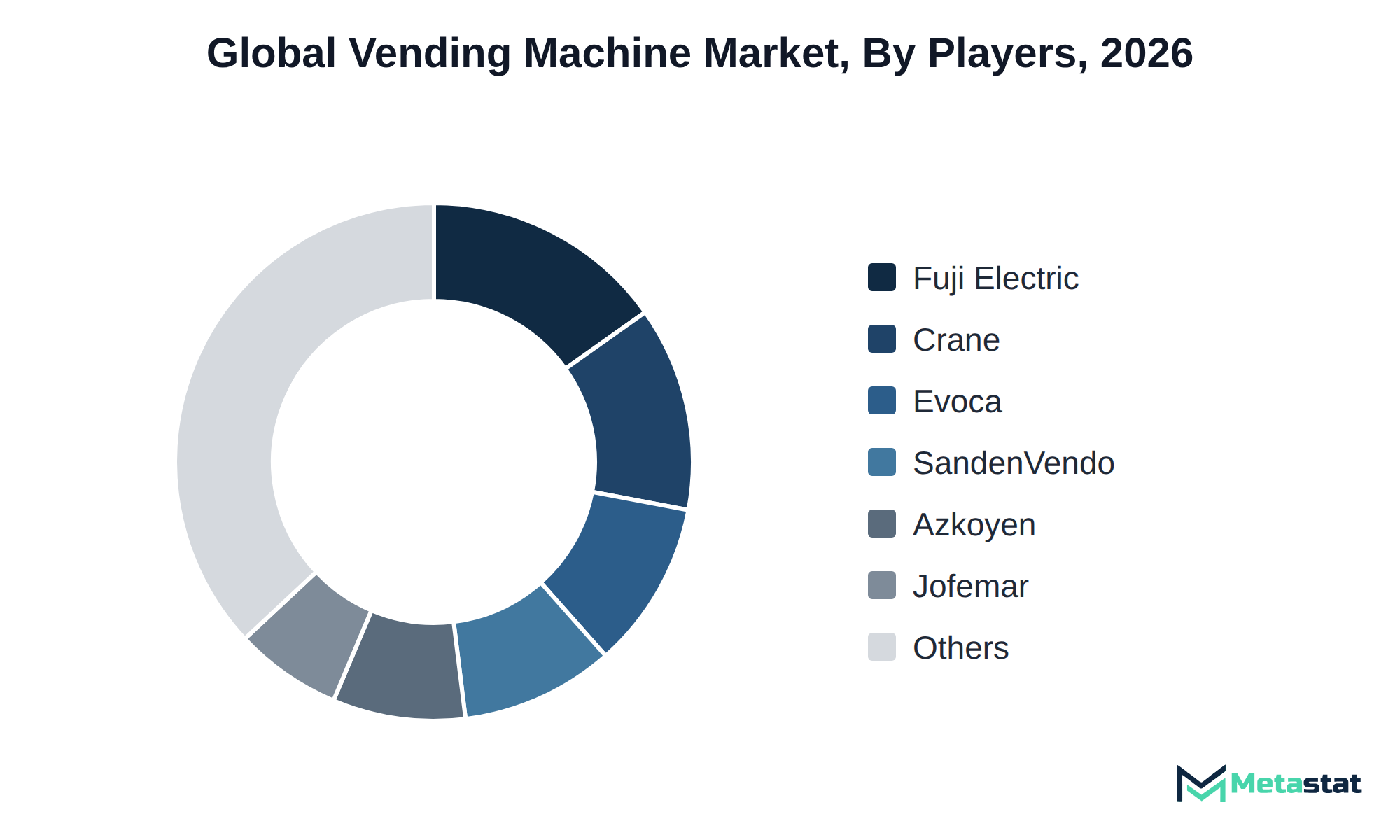
Competition within the Vending Machine market involves various strategies among the leading companies, each focusing on distinct technological advancements and market segments. The primary factors influencing buyer decisions include price, customization, service quality, and overall ecosystem compatibility.
Companies like Fuji Electric Co., Ltd. emphasize the integration of smart technology into their vending machines, positioning themselves to cater to the growing demand for automated and efficient solutions. Evoca Group focuses on refining user experience through innovative designs and user-friendly interfaces, enhancing customer engagement at vending locations. Crane Co. specializes in providing a wide range of payment configurations, appealing to diverse consumer preferences for cash and cashless transactions.
Other players, including Sielaff GmbH & Co. KG Automatenbau and SandenVendo GmbH, enhance their offerings by implementing customized solutions tailored to specific industry needs, catering to environments ranging from corporate offices to educational institutions. The competitive landscape illustrates a dynamic adaptation to consumer preferences, driven by technological advancements and the quest for enhanced service delivery.
Growth in the vending machine market depends primarily on three key developments. First, the rise in smart machine technology, expected to reach USD 44.8 billion by 2033, will enhance operational efficiency and customer experience, driving adoption across various sectors. Second, the transition towards cashless payment systems will influence consumer preferences, with cashless-only machines projected to capture significant market share. Third, growth in corporate offices and commercial buildings will create demand for vending solutions, with revenues anticipated to increase from USD 12.5 billion in 2026 to USD 20.1 billion by 2033.
However, risks exist that could impede market growth. Economic downturns or shifts in consumer spending behavior hinder the expansion of vending machine installations, particularly in regions including South America, where economic factors heavily influence purchasing decisions. A decline in investment in new technologies or infrastructure could slow down the anticipated growth trajectory. Overall, although the vending machine market is positioned for growth, stakeholders should monitor these factors closely.
By Machine Type: Packaged Beverage Vending Machines, Hot Beverage Vending Machines, Snack Vending Machines, Combination Snack and Beverage Vending Machines, Prepared Food Vending Machines, Frozen Food and Ice Cream Vending Machines, Non-Food Merchandise Vending Machines, Others (Bulk Confectionery, Ice, Purified Water)
By Technology: Semi-Automatic, Smart Machine, Automatic Machine
By Application: Corporate Offices and Commercial Buildings, Educational Institutions, Healthcare Facilities, Transportation Hubs, Retail and Shopping Centers, Hospitality and Leisure Venues, Manufacturing and Industrial Facilities, Public Spaces and Government Facilities, Residential Buildings, Others (Military and Remote Worksites)
By Payment Configuration: Cash and Cashless Payment Machines, Cashless-Only Machines, Cash-Only Machines
The report strategically identifies and profiles the key market players and analyses their core competencies in each sub-segment of the Vending Machine market.
|
Report Attributes |
Details |
|
Study Period |
2021-2033 |
|
Base Year |
2025 |
|
Estimated Year |
2026 |
|
Forecast Period |
2026-2033 |
|
Historical Period |
2021-2025 |
|
Growth Rate |
CAGR 7.8% from 2026 to 2033 |
|
Revenue Unit |
USD billion |
|
Segmentation |
By Machine Type, Technology, Application, Payment Configuration, and Region |
|
By Region |
North America (By Machine Type, Technology, Application, Payment Configuration, and Country)
|
|
Europe (By Machine Type, Technology, Application, Payment Configuration, and Country)
|
|
|
Asia Pacific (By Machine Type, Technology, Application, Payment Configuration, and Country)
|
|
|
South America (By Machine Type, Technology, Application, Payment Configuration, and Country)
|
|
|
Middle East and Africa (By Machine Type, Technology, Application, Payment Configuration, and Country)
|
Find answers to common questions about this report
The Vending Machine market size was valued at USD 49.8 billion in 2025.
The market is projected to grow at a CAGR of 7.8% during the forecast period from 2026 to 2033.
The North America Vending Machine market size is estimated to reach USD 27.2 billion by 2033.
Packaged Beverage Vending Machines lead the market with a projected value of USD 22.4 billion by 2033, reflecting significant demand compared to other segments.
The increasing preference for cashless payment options drives significant growth in the market. The demand for smart vending machines stems from their operational efficiency and the ability to track consumer preferences, enhancing user experiences.
North America holds the dominant share of the Vending Machine market, with a value of USD 27.2 billion in 2033, representing 30.8 percent of the total market.
Price sensitivity and rising input costs restrain growth in the vending machine market. Small businesses and educational institutions face tighter budget constraints, while fluctuations in raw material prices and increased energy expenses impact profitability for manufacturers. These factors contribute to slower adoption of new vending solutions.
The increasing preference for cashless payment options and the demand for smart vending machines significantly favor adoption in the vending machine industry. These trends enhance operational efficiency and align with consumer expectations for convenience and speed, particularly in high-traffic locations.
The Vending Machine market is estimated to reach a valuation of USD 90.8 billion by 2033.
Key players operating in the Vending Machine market include Fuji Electric Co., Ltd., Evoca Group, Crane Co., TCN (Zhonggu Technology), Azkoyen Group, Bianchi Industry S.p.A., Sielaff GmbH & Co. KG Automatenbau, SandenVendo GmbH, and Jofemar S.A.
The analysts below cover Consumer Goods research at Metastat Insights.
LEAD ANALYST
Utkarsh Khirodkar is a Lead Market Research Analyst at MetaStat Insight, specializing in market intelligence, technology sector assessments, and competitive strategy.
Tracking ceramic matrix composite adoption in high-bypass aero engines requires strict attention to material qualification cycles and FAA airworthiness testing milestones. The MetaStat Insight team provided a detailed timeline of silicon carbide fiber manufacturing capacity and commercial foundry lead times. Having clear visibility into upstream thermal barrier coating supply helped us stress-test our long-term component procurement strategy.
Transitioning ultra-class mining haul trucks to alternative power requires concrete data on remote hydrogen refueling infrastructure economics. The report evaluated megawatt-scale electrolyzer installation expenses, onsite storage safety mandates, and heavy-duty fuel cell stack degradation under continuous duty cycles. That technical rigor helped our engineers benchmark realistic total operating cost horizons for off-highway fleet decarbonization.
Enterprise zero-trust network rollouts are often slowed down by multi-cloud transit latency and proprietary hardware retirement schedules. This study provided realistic total cost of ownership models comparing cloud-delivered security edge solutions against traditional hardware refreshes. The analysis of contract renewal lengths and software maintenance fees gave us clear visibility into enterprise replacement cycles over the next three to five years.
Explore related market intelligence reports worth reading alongside this one.