Sustainable Aviation Fuel Market Size, Share, By Fuel Type (Biofuel, Hydrogen Fuel, Power to Liquid Fuel, and Gas-to-Liquid), By Aircraft Type (Fixed Wings, Rotorcraft, and Others), By Platform (Commercial Aviation, Military Aviation, Business & General Aviation, and Unmanned Aerial Vehicle), Industry Analysis, Growth, Trends, and Forecast, 2026-2033
Report ID
MSI-2284
Published
February 2, 2026
Pages
309 Pages
Format
Market Size 2026
Leadership Strategies
Key Trends
Market Size 2033
Report Details
Comprehensive Market Analysis And Insights
Market Overview
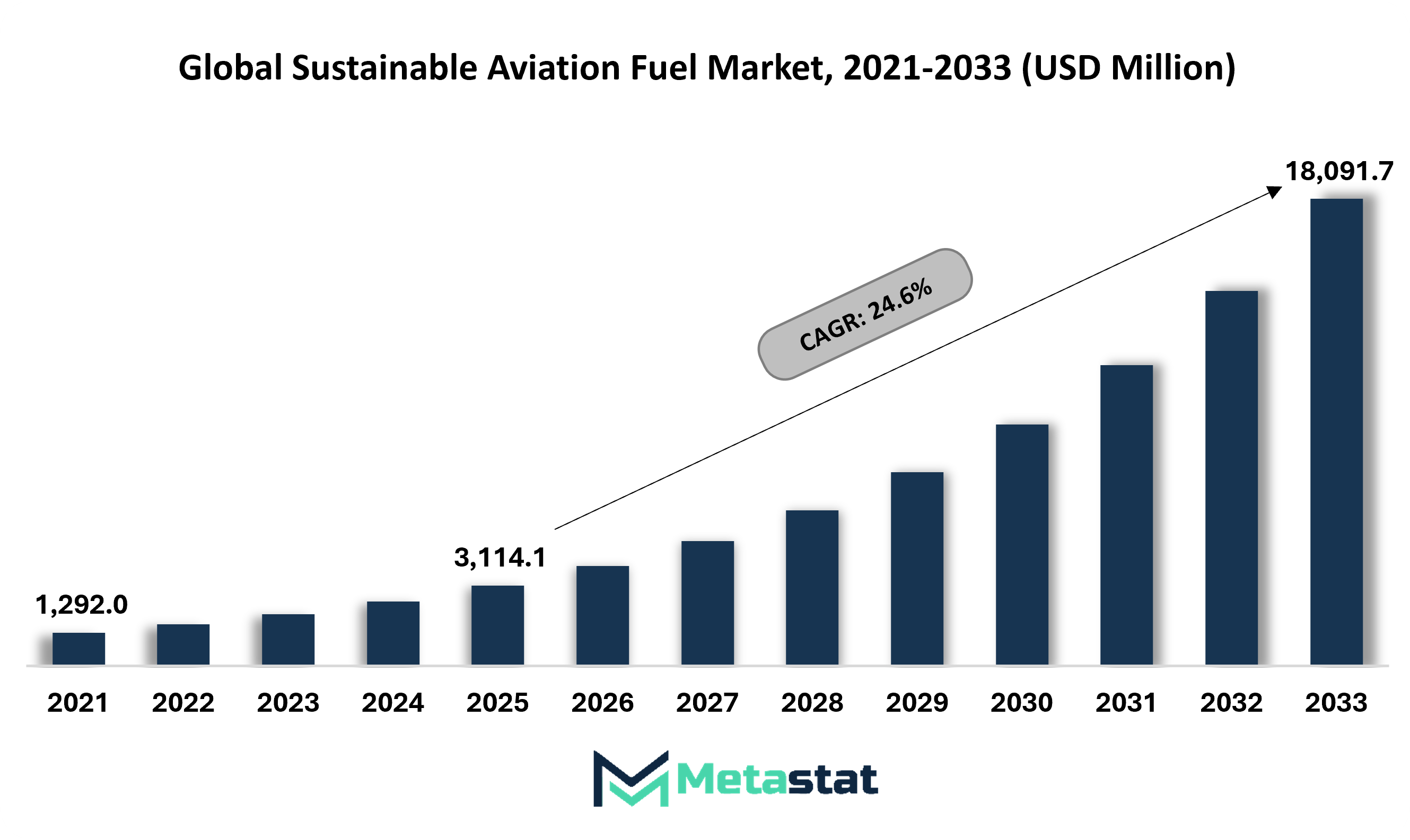
Global Sustainable Aviation Fuel market size is valued at USD 3114.1 million in 2025 and projected to grow at a CAGR of 24.6% during the forecast period, reaching USD 18091.7 million by 2033.
Sustainable Aviation Fuel market was valued at 92.8 million US$ in 2022 and is projected to reach 604.6 million US$ by 2030, at a CAGR of 26.4% during the forecast period. Sustainable aviation fuel (SAF) is a type of fuel that is produced from renewable feedstocks and has a lower carbon footprint than traditional fossil fuels. It is designed to be used in aircraft in place of jet fuel and can be made from a variety of feedstocks, including plant oils, agricultural waste, and forestry residues. SAF is considered a key technology for reducing the environmental impact of aviation, as it has the potential to significantly reduce greenhouse gas emissions from aircraft. It can be used in a blend with traditional jet fuel or as a standalone fuel, and is compatible with existing aircraft and infrastructure. However, SAF is currently more expensive to produce than traditional jet fuel, which may be a barrier to its wider adoption.
Market Dynamics
The growing number of airline passengers and increase in air transportation are some of the key driving factors of the market. The number of airline passengers has grown significantly in recent years, driven by factors such as increased global travel, economic growth, and the expansion of low-cost carriers. The robust growth in the number of airline passengers is expected to continue, which would act as a stimulating factor for uplifting demand and sale prospects of sustainable aviation fuel. In addition, the increase in air transportation owing to higher affordability and introduction of low-cost carriers would spur heightened demand for sustainable aviation fuel in the upcoming period, propelling market growth during the forecast period. However, fluctuations in crude oil prices and contamination of lubricants might hamper the market growth. The growing enviromental concerns amongst majority of the countries and wider search for eco-friendly alternatives would provide lucrative opportunities for the Sustainable Aviation Fuel market in the coming years, as a general rise in awareness regarding use of sustainable aviation fuel amongst the global population and federal bodies compel airlines to shift towards such eco-friendly variants.
Market Segmentation
The global Sustainable Aviation Fuel market is mainly classified based on Fuel Type, Aircraft Type, and Platform.
Fuel Type is further segmented into Biofuel, Hydrogen Fuel, Power to Liquid Fuel, and Gas-to-Liquid.
Biofuel segment is valued at USD 2753.8 million in 2026 and is projected to reach USD 11940.5 million by 2033, at a CAGR of 23.3% during the forecast period.
By Aircraft Type the market is divided into Fixed Wings, Rotorcraft, and Others. The Fixed Wings segment is expected to witness a robust growth in demand for sustainable aviation fuel owing to a rise in the number of fixed wing aircrafts operating around the globe and upsurge in demands to reduce carbon footprint of such aircrafts.
Fixed Wings segment is projected to reach USD 15377.9 million by 2033, at a CAGR of 24.1% during the forecast period.
By Platform the market is further divided into Commercial Aviation, Military Aviation, Business & General Aviation, and Unmanned Aerial Vehicle.
Commercial Aviation segment is projected to reach USD 12664.2 million by 2033.
Regional Analysis
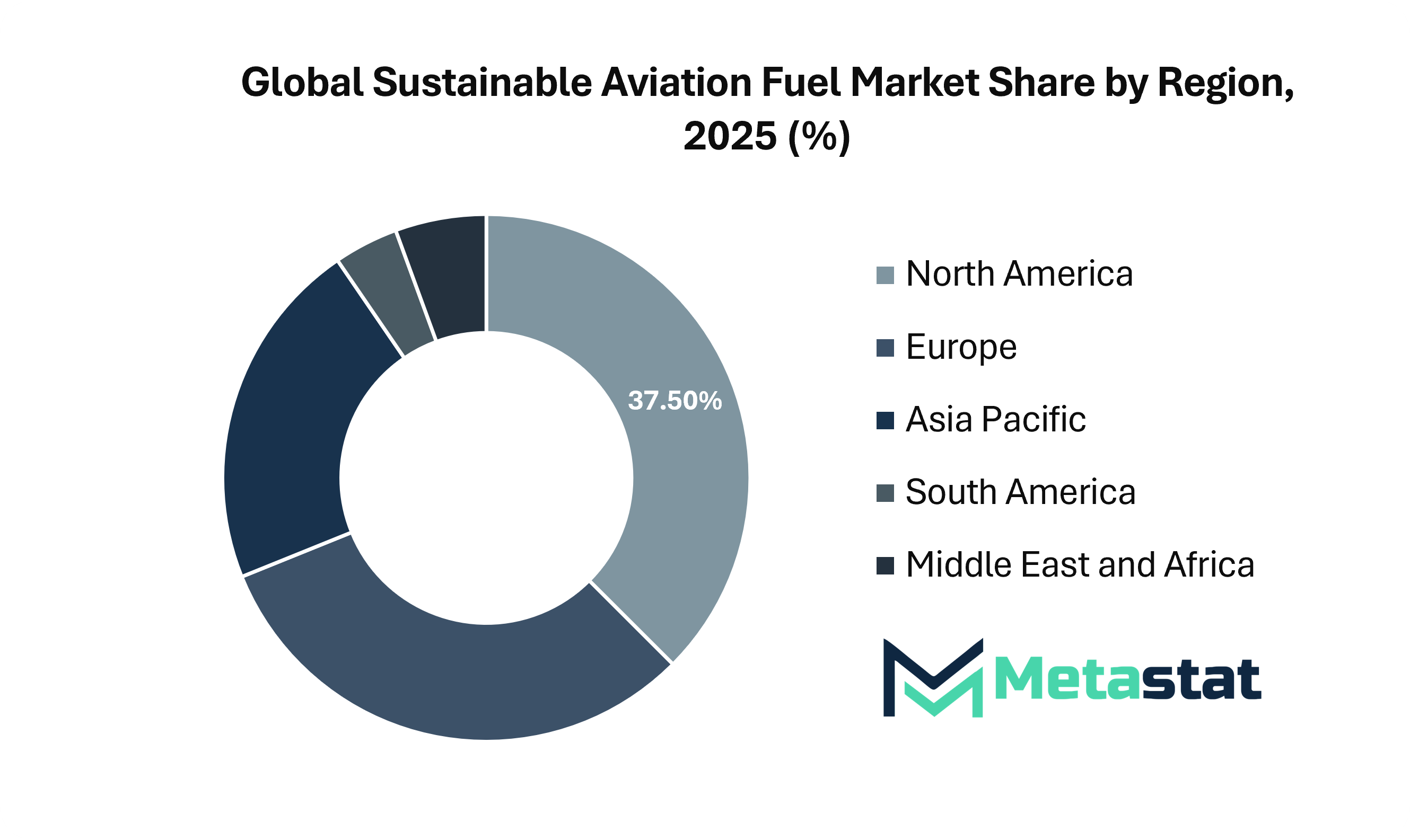
Based on geography, the global Sustainable Aviation Fuel market is divided into North America, Europe, Asia-Pacific, South America, and Middle East & Africa. North America is further divided in the U.S., Canada, and Mexico, whereas Europe consists of the UK, Germany, France, Italy, and Rest of Europe. Asia-Pacific is segmented into India, China, Japan, South Korea, and Rest of Asia-Pacific. The South America region includes Brazil, Argentina, and the Rest of South America, while the Middle East & Africa is categorized into GCC Countries, Egypt, South Africa, and Rest of Middle East & Africa.
North America would remain a lucrative region for the broad adoption and sale of sustainable aviation fuel owing to the rapid escalation in expansion of airline routes and huge passenger traffic amongst key countries of the region, along with the implementation of federal directives monitoring hazardous carbon emissions from the regional airline industry.
Asia-Pacific is expected to witness a vigorous growth in demand for sustainable aviation fuel in view of the considerable rise in air traffic with an upliftment in individuals opting to travel by air and a general tendency amongst regional airline operators to adopt environment friendly fuel sources from an early stage.
Competitive landscape
The Sustainable Aviation Fuel Market is marked by a high degree of innovation and technological development by key market players so as to gain a competitive advantage through quick commercialization of effective products and capturing of substantial market share in the ensuing period.
Key players operating in the Sustainable Aviation Fuel industry include Aemetis Inc., Avfuel Corporation, Fulcrum Bioenergy, Gevo, Lanzatech, Neste, Northwest Advanced Biofuels, Preem AB, Red Rock Biofuels, Sasol, SkyNRG, Totalenergies, Velocys, and World Energy.
North America (By Fuel Type, Aircraft Type, Platform, and Country)
United States
Canada
Mexico
Europe (By Fuel Type, Aircraft Type, Platform, and Country)
Germany
France
UK
Italy
Spain
Russia
Rest of the Europe
Asia Pacific (By Fuel Type, Aircraft Type, Platform, and Country)
China
Japan
India
South Korea
Australia
Southeast Asia
Rest of Asia Pacific
South America (By Fuel Type, Aircraft Type, Platform, and Country)
Brazil
Argentina
Rest of South America
Middle East and Africa (By Fuel Type, Aircraft Type, Platform, and Country)
Saudi Arabia
UAE
South Africa
Rest of Middle East and Africa
What Report Provides
Key Company Market Share, Revenue, and Position/Ranking
Key Market Leaders
Full In-Depth Analysis of the Parent Industry
Industry Statistics
Important Changes in Market and Its Dynamics
Segmentation Details of the Market
Historical, On-Going, and Projected Market Analysis
Assessment of Niche Industry Developments
Market Share Analysis
Key Strategies of Major Players
Company Profiles of Key Players
Unique Selling Prepositions of Leading Market Players
Emerging Segments and Regional Growth Potential
Key Strategic Recommendations
Competitive Benchmarking
Import Export Trade Statistics
End of Report Overview
Frequently Asked Questions
Find answers to common questions about this report
Top players operating in the Sustainable Aviation Fuel industry includes Aemetis Inc., Avfuel Corporation, Fulcrum Bioenergy, Gevo, Lanzatech, Neste, Northwest Advanced Biofuels, Preem AB, Red Rock Biofuels, Sasol, SkyNRG, Totalenergies, Velocys, World Energy.
According to Metastat Insights analysis, the North America Sustainable Aviation Fuel market size is estimated to reach USD 6.3 billion by 2033.
The Sustainable Aviation Fuel market is projected to grow at a CAGR of 24.6% during the forecast period from 2026 to 2033.
The Sustainable Aviation Fuel market is estimated to reach a valuation of USD 18.1 billion by 2033.
The Metastat Insights study reveals that the Sustainable Aviation Fuel market size was valued at USD 3.1 billion in 2025.
Hydrocarbon market size is valued at USD 447.7 billion in 2025 and projected to reach USD 641.7 billion by 2033, growing at a CAGR of 4.6% from 2026 to 2033.
Hydrocarbon market, Hydrocarbon Market Size, Hydrocarbon Market Share, Hydrocarbon Market Analysis, Hydrocarbon Market Growth, Hydrocarbon Market Trends, Hydrocarbon Market Research Report, Hydrocarbon Market Forecast, Hydrocarbon, Hydrocarbon Market Research, Hydrocarbon Industry, Hydrocarbon Industry Report, Hydrocarbon Market Data, Hydrocarbon Statistics, Hydrocarbon Market Statistics, Hydrocarbon Industry Trends, Hydrocarbon Market Report, Hydrocarbon Market Trends, Hydrocarbon Market News, Hydrocarbon Forecasts, Hydrocarbon Market Intelligence Report, Hydrocarbon market 2033, Hydrocarbon market outlook, Hydrocarbon market segmentation, Hydrocarbon market drivers, Hydrocarbon market restraints, Hydrocarbon market opportunities, Hydrocarbon market CAGR, Hydrocarbon suppliers, Hydrocarbon manufacturers, Hydrocarbon market by region, North America Hydrocarbon market, Asia Pacific Hydrocarbon market, Europe Hydrocarbon market, Hydrocarbon market competitive landscape, Hydrocarbon market key players, Aliphatic Hydrocarbon market, Aromatic Hydrocarbon market, Fuel and Combustion Hydrocarbon market, Petrochemical and Chemical Feedstock Hydrocarbon market, Lubricants and Functional Fluids Hydrocarbon market, Solvents and Industrial Process Fluids Hydrocarbon market, Asphalt and Bitumen Production Hydrocarbon market, Transportation and Mobility Hydrocarbon market, Petrochemicals and Chemicals Hydrocarbon market, Power Generation and Utilities Hydrocarbon market, Industrial Manufacturing and Processing Hydrocarbon market, Construction and Infrastructure Hydrocarbon market, Mining Hydrocarbon market.
Asset Integrity Management market size is valued at USD 26.1 billion in 2025 and projected to reach USD 40.6 billion by 2033, growing at a CAGR of 5.7%.
Energy Harvesting Module Market Size, Share, Trends, 2033
Energy Harvesting Module market was valued at USD 707.9 million in 2025 and is projected to reach USD 1,727.8 million by 2033, growing at a CAGR of 11.8%.
Energy Harvesting Module market, Energy Harvesting Module Market Size, Energy Harvesting Module Market Share, Energy Harvesting Module Market Analysis, Energy Harvesting Module Market Growth, Energy Harvesting Module Market Trends, Energy Harvesting Module Market Research Report, Energy Harvesting Module Market Forecast, Energy Harvesting Module, Energy Harvesting Module Market Research, Energy Harvesting Module Industry, Energy Harvesting Module Industry Report, Energy Harvesting Module Market Data, Energy Harvesting Module Statistics, Energy Harvesting Module Market Statistics, Energy Harvesting Module Industry Trends, Energy Harvesting Module Market Report, Energy Harvesting Module Market Trends, Energy Harvesting Module Market News, Energy Harvesting Module Forecasts, Energy Harvesting Module Market Intelligence Report, Energy Harvesting Module market 2033, Energy Harvesting Module market outlook, Energy Harvesting Module market segmentation, Energy Harvesting Module market drivers, Energy Harvesting Module market restraints, Energy Harvesting Module market opportunities, Energy Harvesting Module market CAGR, Energy Harvesting Module suppliers, Energy Harvesting Module manufacturers, Energy Harvesting Module market by region, North America Energy Harvesting Module market, Asia Pacific Energy Harvesting Module market, Europe Energy Harvesting Module market, Energy Harvesting Module market competitive landscape, Energy Harvesting Module market key players, Photovoltaic and Light Energy Harvesting market, Thermoelectric and Heat Energy Harvesting market, Piezoelectric and Vibration Energy Harvesting market, Industrial IoT and Condition Monitoring market, Smart Buildings and Home Automation market
Concentrated Solar Power Market Size, Share, Trends, 2033
Concentrated Solar Power market size is valued at USD 7.5 billion in 2025 and is projected to reach USD 17.3 billion in 2033, at a CAGR of 11.1% from 2026 to 2033.
Concentrated Solar Power Market, Concentrated Solar Power Market Size, Concentrated Solar Power Market Share, Concentrated Solar Power Market Analysis, Concentrated Solar Power Market Growth, Concentrated Solar Power Market Trends, Concentrated Solar Power Market Research Report, Concentrated Solar Power Market Forecast, Concentrated Solar Power, Concentrated Solar Power Market Research, Concentrated Solar Power Industry, Concentrated Solar Power Industry Report, Concentrated Solar Power Market Data, Concentrated Solar Power Statistics, Concentrated Solar Power Market Statistics, Concentrated Solar Power Industry Trends, Concentrated Solar Power Market Report, Concentrated Solar Power Market Trends, Concentrated Solar Power Market News, Concentrated Solar Power Forecasts, Concentrated Solar Power Market Intelligence Report