
LEAD ANALYST
Utkarsh Khirodkar is a Lead Market Research Analyst at MetaStat Insight, specializing in market intelligence, technology sector assessments, and competitive strategy.

Global Picosecond Laser Marking Machine Market Size, Share, By Laser Wavelength (Infrared, Green, Ultraviolet), By Machine Configuration (Standalone Marking Workstations, Inline Marking Systems, OEM-Integrable Marking Units), By Marking Application (Product Identification and Traceability, Branding and Decorative Marking, Functional Markings and Graduations), By End-Use Industry (Electronics and Semiconductors, Medical Device Manufacturing, Automotive and Aerospace, Jewelry and Luxury Goods), Industry Analysis, Growth, Trends, and Forecast, 2026-2033
Report ID
MSI-2431
Published
November, 2026
Pages
308 Pages
Format
Historical
Base year
Forecast
Forecast period
Report Details
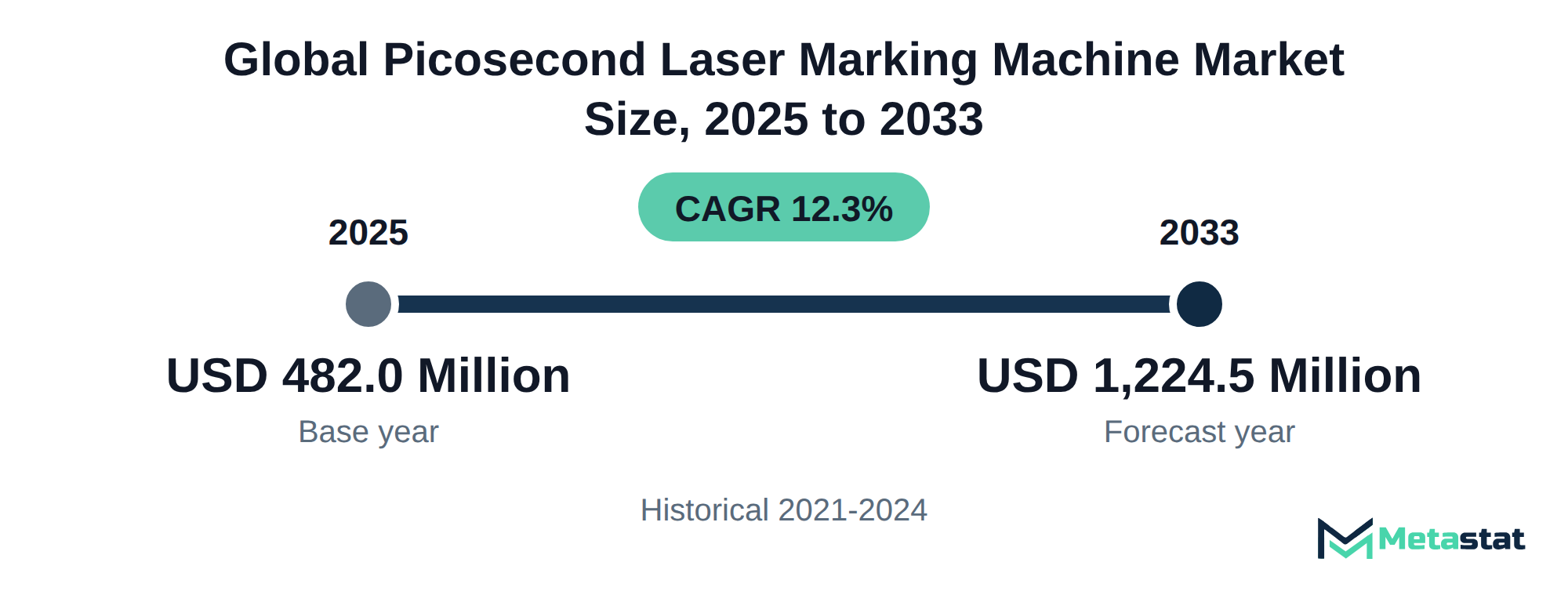
Market Valuation: Valued at $482 Million in 2025, projected to reach $1,224.5 Million by 2033 at a 12.3% CAGR.
Dominant Segment: The Electronics and Semiconductors segment leads the market, driven by the increasing demand for precise markings essential for product identification and traceability.
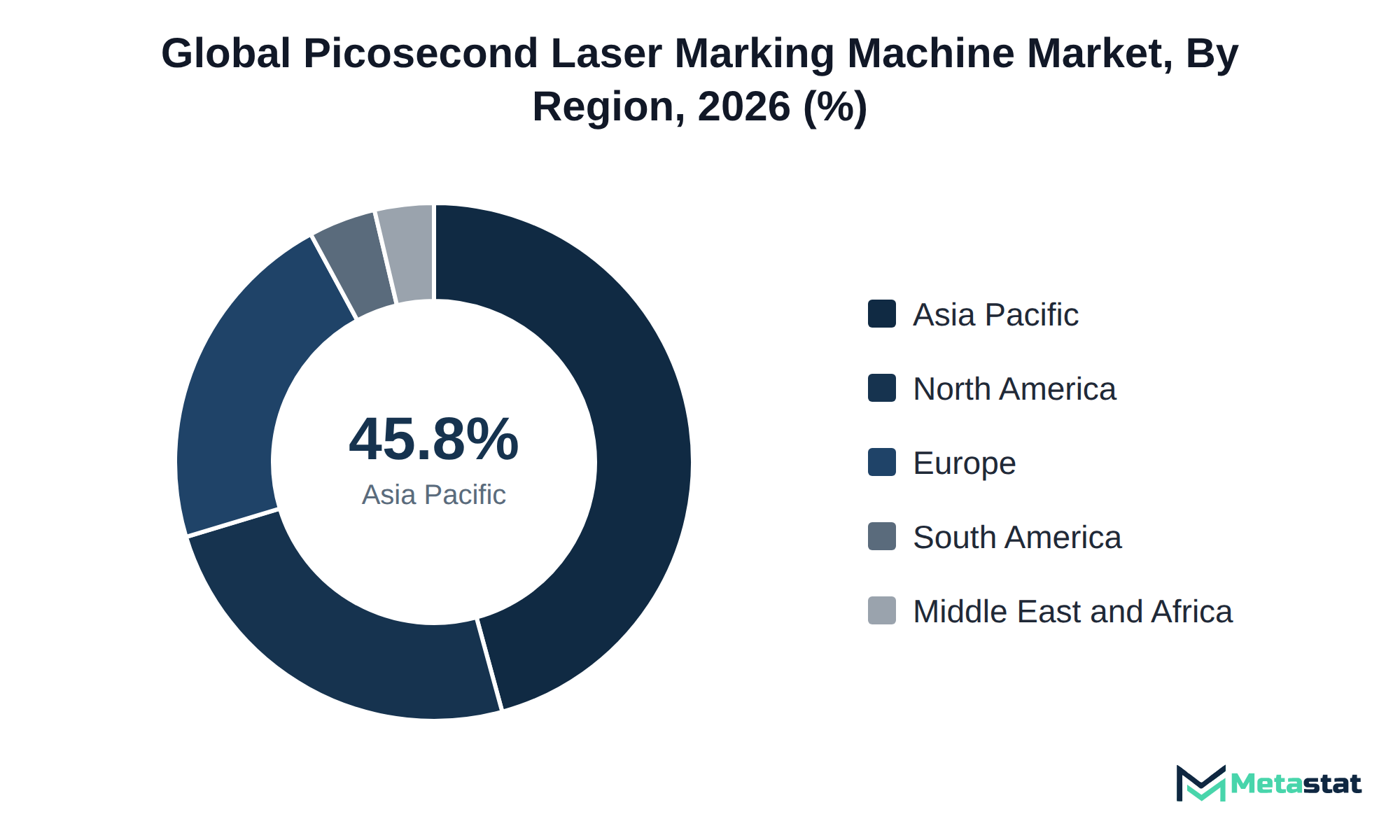
Geographic Lead: Asia Pacific dominates the market with a 45.8% share in 2025, attributed to its robust manufacturing base and rapid technological advancements.
What's Inside: The report includes comprehensive competitive coverage, detailed analyses of market dynamics, and forecasts extending from 2026 to 2033.
Emerging Technologies: Advancements in laser technologies are enhancing marking efficiency, particularly within inline marking systems, which are projected to grow significantly in high-throughput environments.
Price Sensitivity: High costs of picosecond laser marking machines pose a challenge for small and medium-sized enterprises, impacting their ability to invest in advanced technologies.
Choose Your License
Global Picosecond Laser Marking Machine Market
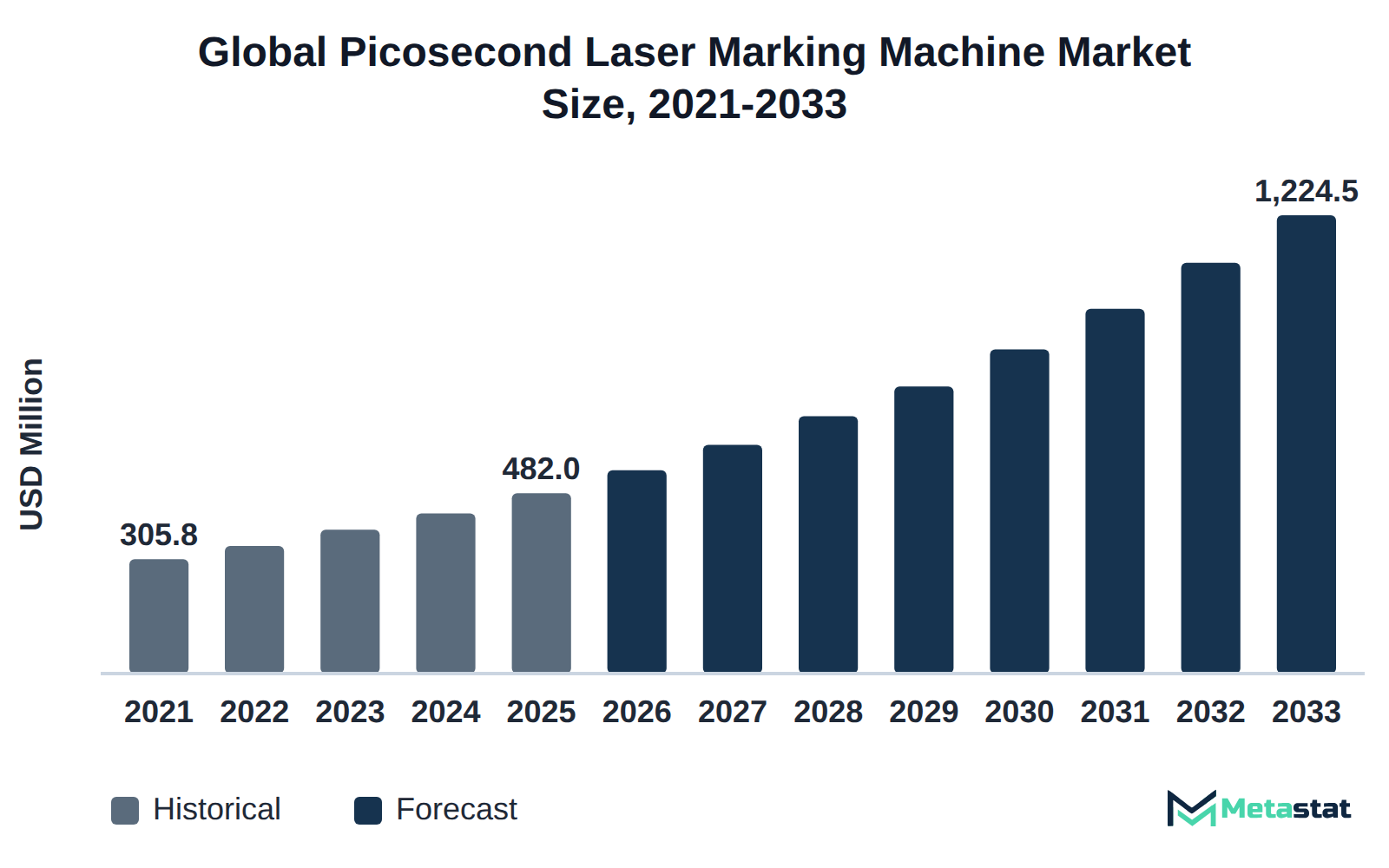
The global Picosecond Laser Marking Machine market was valued at USD 482 million in 2025 and is projected to reach USD 1,224.5 million by 2033, growing at a CAGR of 12.3% over the forecast period.
The Picosecond Laser Marking Machine market encompasses advanced equipment used for precise and high-speed marking applications in various industries. Buyers invest in these machines to enhance product identification, branding, and traceability through high-quality laser markings. The technology outperforms traditional marking methods, and demand is driven by the need for accuracy and efficiency in manufacturing processes.
Growth in the market is influenced by increasing adoption across diverse sectors, particularly in the electronics and semiconductor industry, which represents the largest segment. North America holds 24.6% of the market in 2025, with the US leading in 2026. The Asia Pacific region captures the largest share at 45.8%, reflecting its robust manufacturing base and technological advancements.
A key driver of market growth is rising demand for high-precision industrial applications. This demand leads to the development of innovative solutions that cater to evolving customer requirements. The market's projected compound annual growth rate of 12.3% from 2025 to 2033 indicates significant opportunities for manufacturers and suppliers in this sector.
The Picosecond Laser Marking Machine market addresses the demand for high-precision marking solutions across multiple sectors, including electronics, medical devices, automotive, and luxury goods. Buyers invest in these machines due to their ability to deliver superior marking quality, enhance product traceability, and comply with stringent industry regulations. Demand for advanced marking technologies continues to rise, driven by the increasing complexity of products and the need for clear, durable markings.
Growth in the market is primarily fueled by the expanding electronics and semiconductors sector, which holds the largest share in terms of revenue. This segment benefits from the ongoing miniaturization of components and the requirement for precise identification. In terms of regional performance, Asia Pacific dominates the market, accounting for 45.8% of the market. North America is projected to maintain a significant share, with strong contributions from the US market.
Technological advancements in laser marking methods significantly contribute to market expansion. Innovation in machine configurations, including inline marking systems, supports faster production rates and increased operational efficiency. Continuous improvement of laser wavelengths enhances the versatility of applications, further driving adoption across various industries.
The demand for picosecond laser marking technology in semiconductor package traceability continues to grow due to its precision and efficiency in marking components. This technology enables manufacturers to identify and track semiconductor packages throughout the supply chain, which is essential for quality assurance and regulatory compliance. The rising complexity of semiconductor devices and the increasing focus on product authenticity drive the adoption of advanced marking solutions.
In the picosecond laser marking machine market, the segment dedicated to Electronics and Semiconductors is projected to reach USD 609.9 million by 2033, illustrating the significant investment in marking technologies that enhance traceability. Semiconductor manufacturers require distinct markings for each package, ensuring that products are traced back to their origin for safety and performance validation. This investment supports compliance with industry standards and complements anti-counterfeiting solutions by reducing the risk of counterfeit products infiltrating the market.
As the semiconductor industry evolves, efficient marking solutions become more important. The incorporation of picosecond laser marking technology offers a competitive advantage, enabling manufacturers to streamline operations while maintaining quality. Commercially, this builds trust and satisfaction among end-users, which drives growth within the market.
Pricing models in the Picosecond Laser Marking Machine market increasingly reflect the specialized needs of the medical device sector, particularly for corrosion-resistant applications. Buyers require marking solutions that ensure durability and compliance with stringent industry standards. The projected growth of the market, expected to reach USD 1,224.5 million by 2033, highlights the increasing demand for high-quality marking technologies.
Many suppliers adopt tiered pricing structures that align with the complexity of the marking processes involved. For instance, standalone marking workstations, which account for a growing portion of the market, have a base price that varies based on customization options and throughput capabilities. Inline marking systems, known for their efficiency in high-volume scenarios, often involve contracts that include maintenance and support services, reflecting the critical nature of consistent operational performance in medical device manufacturing.
Such pricing strategies influence procurement decisions among manufacturers, who prioritize long-term value over initial costs. The increasing emphasis on product identification and traceability, projected to grow from USD 300.9 million in 2026 to USD 724.4 million by 2033, reinforces the necessity for reliable marking solutions that sustain compliance and enhance brand integrity. Buyers investing in these advanced technologies position themselves to meet regulatory requirements while optimizing operational efficiency.
Inline picosecond laser marking systems are central to high-throughput production environments, particularly in industries that require rapid marking. This demand arises from manufacturers seeking to improve operational efficiency while maintaining product quality. The market for inline marking systems is projected to reach USD 427.5 million by 2033, reflecting a compound annual growth rate of 14.8%.
Inline marking systems enable integration into existing production lines, allowing for continuous operation without interruptions. Industries including electronics, automotive, and packaging are increasingly adopting this technology to enhance traceability and branding efforts. The need for consistent and high-speed marking solutions aligns with the evolving requirements of product identification and traceability. In this context, the adoption of inline picosecond laser marking systems directly translates into reduced production time and improved throughput.
Investing in inline picosecond laser marking systems significantly enhances a company's competitive edge within the market. The ability to produce high-quality marks at speed ensures that manufacturers keep pace with growing consumer expectations and regulatory demands. Companies that prioritize this technology position themselves for sustained growth and a stronger market presence in the coming years.
Wavelength significantly influences the effectiveness of picosecond laser marking on glass. Different wavelengths interact with glass materials in varying ways, impacting the quality and precision of the markings produced. For instance, ultraviolet (UV) lasers provide a high degree of precision and are ideal for creating intricate designs and markings. The market anticipates a move towards UV lasers, with projections indicating a value of USD 350.8 million by 2033. This established demand reflects the advantages of UV lasers in applications requiring fine details, including branding and decorative marking.
The choice of wavelength affects marking quality, operational efficiency, and cost. Infrared lasers, projected to have a value of USD 473.2 million by 2033, serve effectively for general marking but do not achieve the same precision as UV lasers. Businesses seeking to optimize their marking processes select wavelengths based on specific application requirements, ensuring that the markings meet industry standards while maintaining cost-effectiveness. This strategic selection drives growth opportunities within the Picosecond Laser Marking Machine market, influencing investments in targeted technologies that align with market demands.
Increased demand for high-precision applications drives investments in picosecond laser marking technology. Industries including electronics and medical device manufacturing focus on enhanced reliability and traceability, prompting a shift in purchasing behavior. Manufacturers prioritize equipment that offers superior accuracy and speed, essential for meeting stringent regulatory requirements and customer expectations. Advancements in technology and growing recognition of the advantages of picosecond laser marking expand this demand significantly. The market reflects a compound annual growth rate of 12.3% from 2025 to 2033, indicating strong growth potential. Buyers seeking to improve operational efficiency and product quality influence this upward trend in the market.
Advancements in laser technologies significantly enhance the efficiency of marking processes. Innovations across various machine configurations allow for improved integration within production lines, aligning with the increasing focus on automation in manufacturing. These improvements raise throughput and reduce operational costs for industries adopting these solutions. The integration of such technologies streamlines production workflows, particularly in sectors requiring precision, including electronics and medical device manufacturing.
Increased performance from newer laser wavelengths further contributes to market growth, offering benefits including reduced heat-affected zones and improved material compatibility. These improvements position manufacturers to address complex marking requirements effectively. The Picosecond Laser Marking Machine market stands to benefit from the rising trend of high-speed, high-precision marking applications. Enhanced capabilities ultimately attract investments and drive demand across multiple end-use industries, strengthening the market's competitive landscape.
High costs associated with picosecond laser marking machines present a significant restraint for various buyer groups, particularly small and medium-sized enterprises. Budget constraints hinder their ability to invest in advanced marking technology, resulting in slower uptake and smaller order volumes. These enterprises prioritize cost-effectiveness, often opting for lower-priced alternatives that do not offer the same precision and operational efficiency. In industries including electronics and automotive, demand for top-tier marking solutions remains strong. However, limited financial resources restrict the capacity of smaller enterprises to move from traditional methods to advanced laser technologies. This price sensitivity among key buyer segments therefore dampens overall market growth and weighs on long-term adoption rates. Balancing the need for high-quality marking solutions with budget limitations remains a challenge for these enterprises, influencing their purchasing decisions.
Rising input costs significantly challenge profitability within the Picosecond Laser Marking Machine market. Suppliers face increasing expenses related to raw materials and components required for manufacturing these machines. These rising costs directly impact pricing strategies, forcing manufacturers to maintain competitive pricing while ensuring profit margins remain viable. In response to these challenges, suppliers explore cost-effective sourcing strategies and invest in technological advancements that enhance production efficiency. Companies increasingly focus on optimizing their supply chains to mitigate cost fluctuations, allowing them to maintain operational competitiveness. This approach addresses immediate cost pressures and positions suppliers for sustained growth in high-precision marking applications. Collaborative partnerships with component manufacturers aim to stabilize input costs over the long term, enabling suppliers to deliver high-quality products without compromising profit margins.
The inline marking systems segment exhibits significant growth potential, with a projected compound annual growth rate (CAGR) of 14.8% through 2033. This growth results from increasing demand for high-speed and automated marking solutions, particularly within manufacturing sectors that emphasize efficiency and throughput. Industries including electronics and automotive are major buyers, seeking to streamline processes and reduce production time. Inline marking systems offer advantages in integration with existing production lines, leading to enhanced operational flow and minimized downtime. The expected value in this segment will reach USD 427.5 million by 2033, reflecting the transition towards more automated and efficient manufacturing practices. Adoption of these systems aligns with broader trends in automation and the Industry 4.0 shift toward digital manufacturing, positioning the market for inline marking systems as a key area of opportunity for growth and investment.
The Global Picosecond Laser Marking Machine market is segmented based on Laser Wavelength, Machine Configuration, Marking Application, and End-Use Industry.
Infrared segment is valued at USD 223.7 million in 2026 and is projected to reach USD 473.2 million by 2033, at a CAGR of 11.3% during the forecast period. This segment finds extensive application in industries requiring high precision, including electronics and medical devices. Demand for infrared marking technology primarily stems from the need for product identification and traceability. The segment shows steady growth, driven by technological advancements and increasing adoption of high-precision marking solutions. Compared to other segments, including the Green segment with a CAGR of 12.5%, infrared marking experiences slower growth; however, its established presence in critical applications ensures a consistent revenue stream. The focus on quality and efficiency in marking processes supports the segment's expansion, making it a crucial component of the overall market for picosecond laser marking machines.
Green marking technology is projected to reach USD 400.5 million by 2033, at a CAGR of 12.5% during the forecast period. This segment finds applications in branding and decorative marking, frequently used by industries focused on aesthetics and visibility. The segment experiences growth driven by the increasing emphasis on product differentiation and brand identity. Green lasers offer advantages in terms of versatility and precision, appealing to manufacturers in sectors including electronics and luxury goods. Compared to other wavelengths, the green segment benefits from a higher CAGR than the infrared segment, which stands at 11.3%. This difference in growth rates reflects the unique positioning of green lasers in enhancing visual appeal and marking accuracy while meeting the specific needs of distinct buyer groups.
Ultraviolet marking technology is projected to reach USD 350.8 million by 2033. This technology finds extensive application in industries requiring high-precision marking for product identification, including electronics and medical devices. Growth within this segment is driven by the demand for high-quality and durable markings that withstand various environmental conditions. Compared to other wavelengths, ultraviolet marking exhibits a significant growth trajectory, with a compound annual growth rate (CAGR) of 12.5%. This pace surpasses that of the infrared segment, which has a CAGR of 11.3%. Increased adoption of ultraviolet laser marking solutions reflects a trend toward enhanced marking capabilities, aligning with the evolving needs of buyers who prioritize precision and legibility in their product applications.
Standalone Marking Workstations segment is valued at USD 292.8 million in 2026 and is projected to reach USD 596.1 million by 2033, at a CAGR of 10.7% during the forecast period. This segment serves industries requiring precision marking solutions, including electronics, medical devices, and luxury goods. The growing focus on product traceability drives demand for these workstations, reflecting the need for accurate and efficient marking processes. Compared to other configurations, including Inline Marking Systems, which exhibit a higher CAGR of 14.8%, Standalone Marking Workstations appeal to buyers seeking flexibility and customization in marking applications. Despite slower growth, these workstations maintain a notable presence in the market due to their adaptability and specialized usage in various applications.
This configuration is widely used for high-speed, high-volume marking applications in various industries, including electronics and automotive manufacturing. The growth of this segment is driven by increasing demand for efficient production processes that require precise identification and traceability of components. In contrast to other machine configurations, including Standalone Marking Workstations, Inline Marking Systems offer faster integration into existing production lines, enabling manufacturers to maintain operational efficiency while reducing downtime. The unique capabilities of Inline Marking Systems cater to industries with stringent quality control standards, enhancing the overall value proposition in the Picosecond Laser Marking Machine market.
OEM-Integrable Marking Units segment is expected to reach USD 200.9 million by 2033. This configuration allows integration into various manufacturing systems, particularly appealing to industries like electronics and medical device manufacturing. These marking units find applications in processes requiring precise identification and traceability, which are crucial for maintaining quality standards. Driving factors for this segment include the growing demand for automation in manufacturing environments and the need for efficient production systems. With a compound annual growth rate (CAGR) of 12.5%, this segment exhibits faster growth compared to other configurations, reflecting robust interest from manufacturers seeking to enhance operational efficiency. The focus on integrating marking solutions directly into production lines distinguishes this segment, setting it apart from standalone marking workstations and inline marking systems.
This segment serves critical functions in industries that require precise tracking of products, including electronics, pharmaceuticals, and food and beverage sectors. Increased regulatory compliance and quality assurance measures significantly drive demand for advanced marking solutions. These durable marks also carry the product identifiers used by automatic identification and data capture systems. Compared to other marking applications, this segment exhibits stronger growth potential due to rising investments in traceability technologies. The 13.4% CAGR reflects heightened emphasis on maintaining product integrity and consumer safety, positioning this segment as a key area of expansion within the Picosecond Laser Marking Machine market.
Branding and Decorative Marking segment is estimated to reach USD 262.2 million by 2033, at a CAGR of 10.7% during the forecast period. This segment serves industries focused on aesthetic enhancements and brand identification, including consumer goods and luxury items. Increased emphasis on unique branding drives demand for intricate designs and logos, promoting investment in advanced marking technologies. This segment grows at a more moderate rate than Product Identification and Traceability, which has a CAGR of 13.4%. Branding and Decorative Marking typically involves lower price points than high-precision applications, making it accessible for a broader range of businesses. Investment in personalized products and consumer engagement expands opportunities within the segment, supporting adoption among various buyers in competitive markets. The market shows potential for sustained growth driven by evolving consumer preferences and technological advancements in marking processes.
Functional Markings and Graduations segment is expected to reach USD 237.9 million by 2033. This segment focuses on precise markings for applications including measurements, calibrations, and identification in various industries, including electronics and automotive. Strong demand arises from the need for accuracy and durability in markings, driving investments in advanced laser technologies. This segment exhibits a compound annual growth rate (CAGR) of 10.7%, indicating slower growth compared to related applications like Product Identification and Traceability, which anticipates a CAGR of 13.4%. The slower growth in Functional Markings and Graduations is attributed to its more specialized applications, which limit its market size relative to broader applications. Consequently, companies within the Picosecond Laser Marking Machine market targeting this segment focus on providing tailored solutions that meet the specific requirements of industries requiring high precision in markings.
The Electronics and Semiconductors segment is valued at USD 256.8 million in 2026 and is projected to reach USD 609.9 million by 2033, at a CAGR of 13.2% during the forecast period. This segment finds extensive use in manufacturing components requiring precise markings, including printed circuit boards and semiconductor devices. The expanding need for traceability and quality assurance within the electronics industry drives growth in this segment. Compared to other segments, the Electronics and Semiconductors sub-segment experiences substantial growth driven by technological advancements and increased automation in manufacturing. The focus on integrating advanced marking solutions enhances production efficiency and product identification. With a CAGR of 13.2%, this sub-segment shows a stronger growth trajectory than others in the overall market.
Medical Device Manufacturing segment is estimated to reach USD 295.4 million by 2033, at a CAGR of 13.1% during the forecast period. This segment is essential in producing high-quality medical devices requiring precise identification and traceability. Manufacturers in this sector prioritize laser marking for its ability to provide durable and clear markings on various materials. The growing focus on patient safety and regulatory compliance drives demand for advanced marking technologies. Compared to other segments, this sector experiences a strong growth trajectory, reflecting heightened demand for advanced medical solutions. The need for stringent regulatory standards and high-quality production processes sets this segment apart, positioning it for significant expansion in the coming years. Growth in the market is underpinned by increasing prevalence of minimally invasive surgical procedures and innovations in medical technology.
The Automotive and Aerospace segment is expected to reach USD 218.2 million by 2033. This segment primarily serves manufacturers in the automotive and aerospace industries, focusing on marking components for traceability, safety, and compliance with industry standards. Demand for high-precision marking solutions drives investments, particularly in the context of stringent regulatory requirements. The segment's growth aligns with technological advancements, leading to a compound annual growth rate (CAGR) of 10.7% during the forecast period. Compared to other segments in the End-Use Industry category, Automotive and Aerospace exhibits a relatively slower growth rate, reflecting the complexities and high standards associated with these industries. Specific requirements for aerospace materials often lead to higher pricing for laser marking solutions. This segment's focus on compliance and precision distinctly sets it apart from others, emphasizing reliability and quality in production processes.
Jewelry and Luxury Goods segment is projected to grow at a CAGR of 8.3% during the forecast period. This segment primarily focuses on high-value products requiring intricate marking for identification and traceability. Manufacturers in this area apply picosecond laser marking technology to enhance the aesthetics of products while ensuring precision in branding and decorative applications. Demand is driven by increasing consumer preference for personalized luxury goods, prompting manufacturers to invest significantly in advanced marking solutions. Compared to other segments, this sub-segment experiences slower growth, partly due to higher price sensitivity associated with luxury goods. The distinct nature of this market creates a unique buyer landscape, emphasizing the importance of quality and craftsmanship in the final product.
This sub-segment encompasses various applications related to industrial tooling and packaging processes. Users in sectors including manufacturing and production leverage picosecond laser marking for precise engravings, coding, and branding on products and packaging materials. The demand for enhanced traceability and compliance with industry regulations drives growth in this area, reflecting a growing focus on quality assurance and product authenticity. Compared to other sub-segments, the industrial tooling and packaging applications experience steady demand, influenced by technological advancements that improve marking efficiency and accuracy. This segment stands distinct due to its diverse applications across multiple industries, catering to businesses seeking reliable and high-speed marking solutions. Evolving packaging requirements, driven by innovation and the sustainability goals behind green packaging, further fuel investment in advanced marking technologies. The market adapts to changing consumer preferences, emphasizing the importance of effective branding and information dissemination.
Based on geography, the Global Picosecond Laser Marking Machine market is divided into North America, Europe, Asia-Pacific, South America, Middle East, and Africa.
Strong growth in the market is driven by demand from the electronics and medical device sectors within North America. The focus on high-precision marking applications necessitates advanced technologies that picosecond lasers provide. Product identification and traceability applications evolve rapidly, with manufacturers seeking solutions that enhance efficiency and accuracy. This region's commitment to innovation is evidenced by significant investments in research and development, particularly in the United States, Canada, and Mexico. North America is projected to reach USD 291.7 million by the end of 2033, indicating robust expansion opportunities. This growth trajectory aligns with the overall trends observed in the Picosecond Laser Marking Machine market.
Demand for the Picosecond Laser Marking Machine market in Europe derives from diverse industries, including electronics, automotive, and medical devices. Countries including Germany and France exhibit strong investments in advanced manufacturing technologies, driving growth in marking applications. The presence of established players within the region enhances competitive dynamics, driving innovation and product development. Programs aimed at improving manufacturing efficiency contribute to the market's expansion, ensuring a focus on quality and precision. Regulatory frameworks governing manufacturing standards further influence purchasing decisions, emphasizing the importance of traceability and compliance. By 2025, Europe is projected to hold a market share of 21.8%, reflecting its significance in the global market.
Asia-Pacific represents a significant portion of the Picosecond Laser Marking Machine market, accounting for 45.8% of the global share in 2025. The region's demand is primarily driven by industries including electronics, semiconductors, and medical device manufacturing, where precision and efficiency are critical. China and Japan lead in technology adoption, supported by robust manufacturing bases and a strong emphasis on innovation. Infrastructure development in India and South Korea enhances the capacity for advanced manufacturing processes. Investment in automation and smart manufacturing further advances the market, reflecting growing interest in high-speed marking solutions. The market is projected to experience significant growth, driven by the increasing need for traceability and product identification across various sectors.
The Picosecond Laser Marking Machine market in South America accounts for a 4.2% share of the global market in 2025. Demand primarily stems from the electronics and automotive sectors, with Brazil and Argentina leading in usage. The presence of growing manufacturing sectors in these countries drives the adoption of advanced marking technologies. Limited infrastructure investments in certain areas create challenges for market penetration, but ongoing enhancements in local production capabilities promote growth. Regulations focusing on product traceability and quality assurance further support the uptake of innovative marking solutions. The overall outlook for the region is steady growth, driven by the need for precision marking in various applications.
Demand for the Picosecond Laser Marking Machine market in the Middle East and Africa derives from industries including electronics and medical device manufacturing. Rapid growth in this region results from increasing investments in technology and infrastructure development. Saudi Arabia and the UAE stand out due to their focus on advancing manufacturing capabilities and promoting innovation. South Africa's growing industrial base contributes significantly to market expansion, reflecting a rising need for efficient marking solutions. This region has potential for future growth driven by diverse applications in product identification and traceability, alongside branding and decorative marking efforts. This evolving landscape creates opportunities for suppliers aiming to meet local needs.
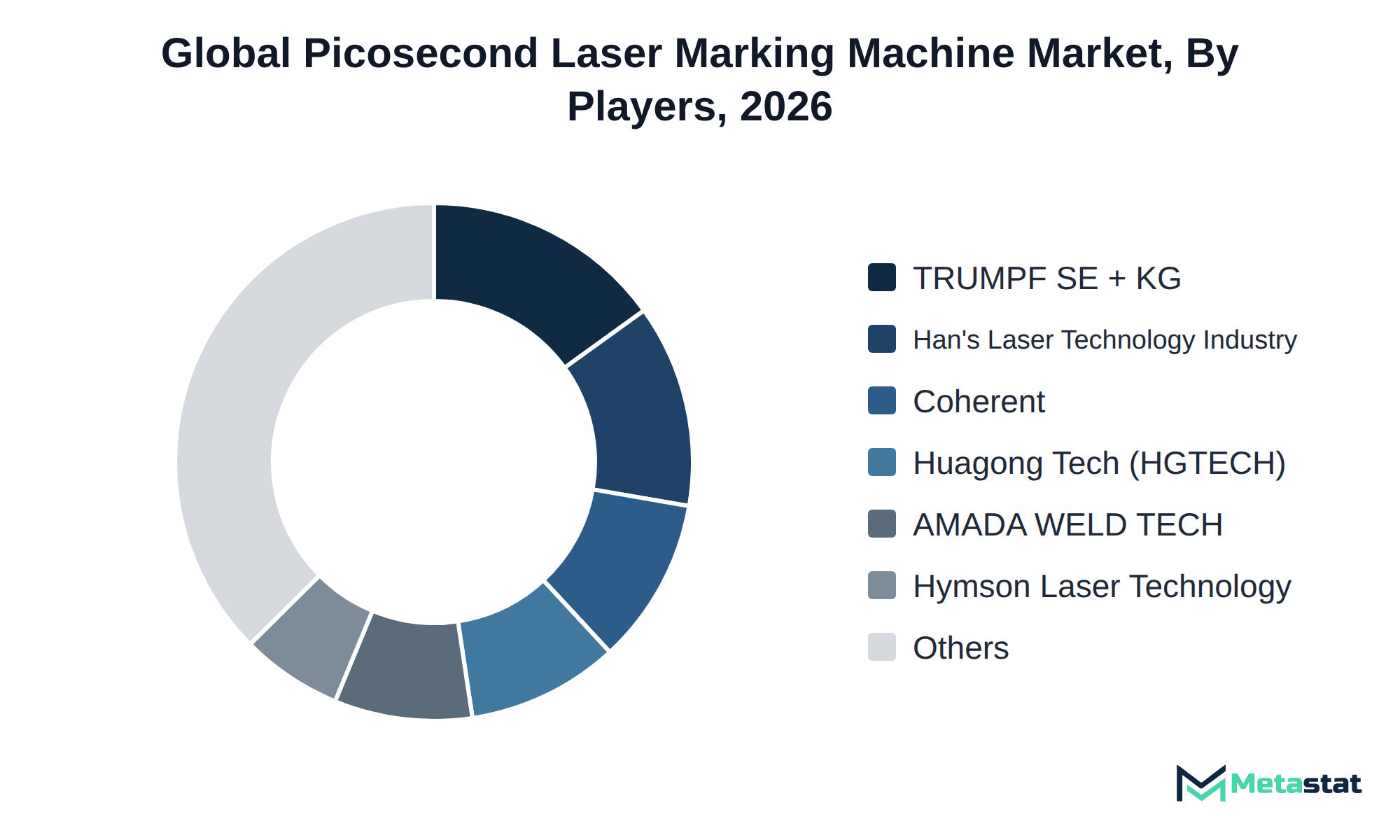
Competition in the Picosecond Laser Marking Machine market is defined by players pursuing distinct strategies and customer needs. Companies compete on factors including pricing, customization, certification, and service quality, which influence buyer decisions significantly. Firms leverage their technological capabilities and customer service to differentiate themselves in the market.
Han's Laser Technology Industry Group Co., Ltd. and Huagong Tech Company Limited (HGTECH) emphasize strong product portfolios with extensive customization options, addressing specific buyer requirements across various industries. TRUMPF SE + Co. KG and Coherent Corp. focus on advanced technology integration to enhance operational efficiency for their clients.
AMADA WELD TECH Inc. and Hymson Laser Technology Group Co., Ltd. prioritize high-quality service and support, catering to sectors including electronics and medical device manufacturing. Meanwhile, companies like LASIT S.p.A. and ALLTEC Angewandte Laserlicht Technologie GmbH (FOBA) explore innovative marking applications, particularly in branding and decorative marking, which set them apart within the competitive landscape.
This growth relies on several key developments, including advancements in infrared and green laser wavelengths, which are projected to enhance product identification and traceability applications in the electronics and semiconductors industry. The adoption of inline marking systems is essential for improving production efficiency, particularly in high-demand sectors including automotive and aerospace. Expansion in the Asia Pacific region, which accounts for 45.8% of the market share, will play a significant role in driving revenue growth. However, potential risks including fluctuating raw material costs and technological challenges could hinder market progress. The market's path towards USD 1,224.5 million depends on integrating these developments successfully and managing the associated risks. Continued investments in research and development will further support innovations that appeal to diverse end-use industries, ensuring strong performance in the Picosecond Laser Marking Machine market.
By Laser Wavelength: Infrared, Green, Ultraviolet
By Machine Configuration: Standalone Marking Workstations, Inline Marking Systems, OEM-Integrable Marking Units
By Marking Application: Product Identification and Traceability, Branding and Decorative Marking, Functional Markings and Graduations
By End-Use Industry: Electronics and Semiconductors, Medical Device Manufacturing, Automotive and Aerospace, Jewelry and Luxury Goods, Others (Industrial Tooling, Packaging)
The report strategically identifies and profiles the key market players and analyses their core competencies in each sub-segment of the Picosecond Laser Marking Machine market.
|
Report Attributes |
Details |
|
Study Period |
2021-2033 |
|
Base Year |
2025 |
|
Estimated Year |
2026 |
|
Forecast Period |
2026-2033 |
|
Historical Period |
2021-2025 |
|
Growth Rate |
CAGR 12.3% from 2026 to 2033 |
|
Revenue Unit |
USD million |
|
Segmentation |
By Laser Wavelength, Machine Configuration, Marking Application, End-Use Industry, and Region |
|
By Region |
North America (By Laser Wavelength, Machine Configuration, Marking Application, End-Use Industry, and Country)
|
|
Europe (By Laser Wavelength, Machine Configuration, Marking Application, End-Use Industry, and Country)
|
|
|
Asia Pacific (By Laser Wavelength, Machine Configuration, Marking Application, End-Use Industry, and Country)
|
|
|
South America (By Laser Wavelength, Machine Configuration, Marking Application, End-Use Industry, and Country)
|
|
|
Middle East and Africa (By Laser Wavelength, Machine Configuration, Marking Application, End-Use Industry, and Country)
|
Find answers to common questions about this report
The Picosecond Laser Marking Machine market size was valued at USD 482 million in 2025.
The market is projected to grow at a CAGR of 12.3% during the forecast period from 2026 to 2033.
The North America Picosecond Laser Marking Machine market size is estimated to reach USD 291.7 million by 2033.
The leading segment in the Picosecond Laser Marking Machine market is the Infrared wavelength, with a projected value of USD 473.2 million by 2033. This segment outpaces others in growth potential, driven by its applications across various industries.
Increased demand for high-precision applications drives investments in picosecond laser marking technology. Advancements in laser technologies enhance the efficiency of marking processes, promoting higher throughput and reduced operational costs for industries adopting these solutions.
High costs associated with picosecond laser marking machines present a significant restraint, particularly for small and medium-sized enterprises. Rising input costs challenge profitability, impacting pricing strategies and forcing manufacturers to balance competitive pricing with viable profit margins.
Increased demand for high-speed and automated marking solutions significantly influences adoption in the industry. The inline marking systems segment, projected to grow at a CAGR of 14.8 percent through 2033, reflects the emphasis on efficiency and integration within manufacturing processes.
The Picosecond Laser Marking Machine market is estimated to reach a valuation of USD 1,224.5 million by 2033.
Key players operating in the Picosecond Laser Marking Machine market include Han's Laser Technology Industry Group Co., Ltd., Huagong Tech Company Limited (HGTECH), TRUMPF SE + Co. KG, Coherent Corp., AMADA WELD TECH Inc., Hymson Laser Technology Group Co., Ltd., and LASIT S.p.A.
The inline marking systems segment exhibits a projected compound annual growth rate of 14.8% through 2033, driven by the demand for high-speed and automated marking solutions.
The analysts below cover Machinery & Equipment research at Metastat Insights.
LEAD ANALYST
Utkarsh Khirodkar is a Lead Market Research Analyst at MetaStat Insight, specializing in market intelligence, technology sector assessments, and competitive strategy.

INDUSTRY CONSULTANT - CHEMICALS & ADVANCED MATERIALS
Chemicals and Materials · Machinery & Equipment · Packaging
Amit Gadhekar Consultant for Chemicals and Materials at MetaStat Insight, directing sector-specific intelligence, research, and strategic consulting across global chemical and processing markets.

PRINCIPAL CONSULTANT - QUALITY SYSTEMS & COMPLIANCE
Electronics and Semiconductor · Machinery & Equipment · Professional Services
Omkar Phadtare is an Industry Consultant at MetaStat Insight, specializing in quality systems, regulatory compliance, and standards benchmarking to drive data-driven market intelligence and strategic industry research.

ENERGY & INFRASTRUCTURE INDUSTRY CONSULTANT
Automotive and Transportation · Electronics and Semiconductor · Energy and Power · Machinery & Equipment
Saurabh Vasant Ganvir consults for Energy & Infrastructure Industry at MetaStat Insight, specializing in renewable energy, solar EPC, and electric vehicle (EV) infrastructure markets.

LEAD CONSULTANT - COMMUNICATION, TELECOM, AND IT
Electronics and Semiconductor · Information & Technology · Machinery & Equipment · Professional Services
Ravindra Sathe Consultants for Communication, Telecom, and IT at MetaStat Insight. He leads the firm's industry research initiatives across telecommunications infrastructure, digital connectivity, enterprise networking, and emerging information technology domains.
Enterprise zero-trust network rollouts are often slowed down by multi-cloud transit latency and proprietary hardware retirement schedules. This study provided realistic total cost of ownership models comparing cloud-delivered security edge solutions against traditional hardware refreshes. The analysis of contract renewal lengths and software maintenance fees gave us clear visibility into enterprise replacement cycles over the next three to five years.
Scaling antibody-drug conjugate manufacturing hinges on contract manufacturing availability for high-potency active ingredients. The MetaStat Insight analysis looked closely at global cleanroom slot constraints, bioconjugation batch failure rates, and supply chain redundancies between the US, Europe, and India. The supplier capability matrix proved genuinely useful for our team when mapping secondary source options across our clinical pipeline.
Floating offshore wind feasibility relies heavily on specialized installation vessel availability and port crane limits, which most broad renewable energy forecasts ignore. The report delivered a thorough analysis of dry dock capacity, mooring chain supply constraints, and raw material pricing trends for deepwater anchor installations. It served as a solid independent sanity check for our offshore project capital expenditure assumptions.
Explore related market intelligence reports worth reading alongside this one.