
LEAD ANALYST
Utkarsh Khirodkar is a Lead Market Research Analyst at MetaStat Insight, specializing in market intelligence, technology sector assessments, and competitive strategy.

Injectable Drug Delivery Market By Type (Injectable Drug Delivery Devices, Injectable Drug Delivery Formulation), By Therapeutic Application (Autoimmune Diseases, Hormonal Disorders, Orphan Diseases, Others), By Usage Pattern (Curative Care, Immunization, Others), By End-User (Hospitals & Clinics, Home Care Settings, Ambulatory Care Settings, Pharmaceutical & Biotechnology Companie), Industry Analysis, Size, Share, Growth, Trends, and Forecasts 2025-2032
Report ID
MSI-3861
Published
June, 2025
Pages
257 Pages
Format
Report Details
Choose Your License
Injectable Drug Delivery Market
The global injectable drug delivery market is one of complex and dimensional story told by subtle changes in healthcare practices, the development of treatment aspirations, and the general rewriting of pharmaceutical delivery strategies. What comes into view is a vision not of abrupt revolution but of continuous refinement, in which technological accuracy, patient need, and regulatory subtlety move slowly together to determine the delivery of therapies. The reforms are not sudden or reducible to tidy dichotomies; rather, they percolate through policies, infrastructure, and manufacturing strategies with subtle but profound effect
A key driver at the center of the transformation is a shift of delivery modalities towards enhanced therapeutic accuracy. Injectable products, traditionally considered through hospital-based delivery, have gradually gained ground. Although conventional delivery channels previously held sway due to ease and convenience, the growing visibility of injectables in complicated regimens has redrawn expectations. The trend is gradually pushing the industry toward decentralisation as boundaries between clinical settings blur and procedures previously restricted to sterile settings now find room in homes, clinics, and even in mobile care units. This migration says much about changing health system dynamics, highlighting the adaptive skills of providers and patients alike.
The global injectable drug delivery market has not taken a straight line. Rather, its path reflects the nuanced realignment of value in healthcare delivery. Decision-makers are no longer interested in pharmacological strength alone; they also consider the convenience, safety, and flexibility of administration. Here, devices that are part of injectable therapies be it auto-injectors, or advanced infusion systems are now as essential as the medicine itself. This blending of drug and device is a clear move away from discreet silo thinking toward a more integrated therapeutic interaction model. It's not simply about getting compounds into the blood but making sure that the mechanism of delivery is such that it raises the level of overall treatment.
In addition, as expectations change among stakeholders, manufacturers are also adjusting their approach to accommodate more precise and localized requirements. The market does not grow in a uniform manner. Rather, markets differ in the way they embrace and adopt injectable solutions, influenced by divergent healthcare structures, population requirements, and economic conditions. The consequences are considerable. Firms are adapting their products not only to meet regulatory standards but to fit cultural sensitivities, clinical practice, and logistical restrictions. This localisation, though subtle, adds a richness to the global injectable drug delivery market that is sometimes lost in general overviews.
It would be remiss to discuss this topic without considering the contribution of innovation not as a catchphrase, but as a tempered and situational response to present challenge. Innovation here is less about the splashy revelation of new molecules and more about optimizing formulation for stability, making delivery devices more ergonomically friendly, and maximizing shelf-life in various environmental conditions. This low-key realignment enables injectables to flourish in both high-resource settings and environments where infrastructure is limited. It's not about revolutionary changes but incremental improvement that makes delivery safer, more user-friendly, and more responsive.
There is yet another complexity introduced by the logistical infrastructure that underpins this market. Cold chain dependability, packaging integrity, and traceability are ever-more examined, not as an afterthought but as integral to product integrity. Consequently, the supply chain now occupies equal ground with research studies and clinical trials in determining outcomes. The power to preserve therapeutic integrity from production point to administration point is not only a technical imperative; it is a driver of patient trust and system believability.
What also becomes clear is how the boundaries between therapeutic categories are in the process of being redrawn. Injectable drug delivery is no longer the exclusive realm of acute or specialized therapy. It is increasingly being used for chronic disease management, preventive interventions, and even wellness programs, blurring the lines between classical pharmaceutical spheres. This extension of use goes beyond one of scale; it represents a change in how these therapies are imagined in the larger context of care.
One observes, via the prism provided by the in-depth presentation of Metastat Insight, not simply a part of the pharmaceutical sector but rather a microcosm of changes taking place in health systems overall. The global injectable drug delivery market is more than technology or trade it is the subtle dance between clinical aspiration, patient preference, and systems ability. It is not being motivated by a single force but being influenced through the interdependence of various, commonly unseen, factors converging together.
As the discourse regarding therapeutic accessibility, safety, and personalisation continues to grow, the structural integrity and orientation of the global injectable drug delivery market will continue to be constantly refined. Drawing conclusions from the trends, approaches, and insights derived from the comprehensive report presented by Metastat Insight, it is evident that this sector is not merely conforming to modern-day expectations it is actually transforming them. Neither complacent nor seeking novelty to the point of vanity, the marketplace proceeds with measured intention, informed by a keen awareness of its position within a larger and growingly integrated care system.
Global injectable drug delivery market is estimated to reach $976,237.96 Million by 2032; growing at a CAGR of 8.7% from 2025 to 2032.
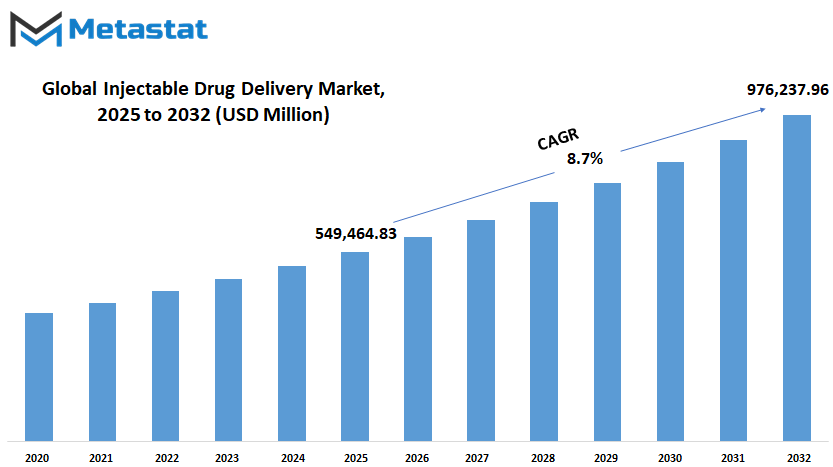
The global injectable drug delivery market is expected to see notable growth in the future due to several important factors shaping healthcare trends. One of the main drivers behind this expected growth is the rising number of people living with chronic diseases. Conditions such as diabetes, cancer, and autoimmune disorders are becoming more common around the world. Many of these conditions require long-term treatment with biologics and targeted therapies, which are often delivered through injections. Because these treatments tend to be more effective when delivered directly into the body, injectable drug delivery continues to be a key part of patient care.
Another important factor influencing the growth of this market is the shift toward more personalized and convenient healthcare. With many people now seeking treatment from the comfort of their own homes, self-injectable devices are becoming more popular. These devices allow patients to manage their conditions without the need for frequent hospital visits, which is especially valuable for those with mobility issues or those living in remote areas. The growing preference for home-based care is helping to drive demand for easy-to-use, safe, and reliable self-injection systems.
However, some challenges may slow down this growth. One of the major concerns is the risk of infection and pain that can come with using injectable devices. Patients might feel uncomfortable using them or may not follow proper procedures, leading to complications. Another factor is patient non-compliance. Even with user-friendly devices, some individuals may forget doses or stop treatment early, reducing the overall effectiveness. On top of that, there are strict regulations in place for both the devices and the drugs they deliver. Gaining approval from regulatory bodies can be a long and costly process, which may discourage smaller companies from entering the market.
Despite these concerns, the future holds strong potential. Technology is steadily advancing, and new types of delivery methods are being developed. Wearable injectors that allow for continuous or timed dosing, as well as needle-free delivery systems that reduce discomfort, could change how injectable drugs are administered. These advancements are likely to attract both healthcare providers and patients, opening up new opportunities for companies involved in this field.
Overall, the global injectable drug delivery market is expected to expand in the coming years. While there are hurdles to overcome, the push for better, more convenient care options and the continuous rise in chronic health conditions will keep driving innovation and demand forward.
The global injectable drug delivery market is gradually transforming how treatments are given, bringing in new possibilities for the future of healthcare. With rising interest in fast, efficient, and patient-friendly methods, this market is likely to continue growing over the coming years. People across the world are demanding better access to care, and one of the most direct ways to provide it is through injectable treatments. These allow medications to work quickly and with high accuracy, which makes them vital for both emergency care and long-term disease management.
Looking at how the market is organized, it is separated by type into two main parts: Injectable Drug Delivery Devices and Injectable Drug Delivery Formulation. Devices include tools like syringes, auto-injectors, and pens that are used to deliver the drugs. These are being improved to become easier and safer to use, not just for healthcare workers but also for patients who need to take medicine on their own. Over time, these devices are expected to become even more user-friendly and reliable, especially for those who need regular injections at home. Innovations in this space will likely focus on improving comfort and reducing the chance of errors.
On the other hand, formulations refer to how the drugs are made to be injected. This includes the substance itself whether it's a liquid, suspension, or gel and how it reacts inside the body. Companies are working on creating long-acting formulations so patients don’t need to take injections as often. This not only improves convenience but also helps people stick to their treatment plans better. In the future, we may even see personalized formulations that match each person’s body and condition more closely, allowing for better results with fewer side effects.
As more health conditions are managed with injectable drugs, the need for better devices and formulations will keep rising. Both hospitals and home-care settings will rely on smarter tools and better-designed drugs to meet growing demands. The move toward digital tools might also play a role, with connected devices that can track doses and alert users or doctors when it's time for the next injection.
Overall, the global injectable drug delivery market is expected to shape the future of treatment by making medication delivery more precise, more comfortable, and more effective. With improvements in both devices and formulations, this market is set to support better health outcomes worldwide.
The global injectable drug delivery market is steadily becoming a central part of how treatments are given to patients across different medical conditions. As more people deal with long-term illnesses, the need for faster and more effective drug delivery methods has grown. In the future, this market will likely see major progress due to the rising focus on personal health, the use of technology in healthcare, and the growing preference for treatments that reduce hospital visits. More patients and healthcare providers are leaning towards injectable methods because they offer better control over dosages and often work faster than other types of treatments.
When looking at the market based on therapeutic applications, several categories stand out. Autoimmune diseases, for example, are increasing globally. These conditions often require ongoing treatment, and injectables provide a reliable way to manage them. With newer biologic drugs being developed, injectables are expected to remain the preferred choice for patients who need long-term care. As more research is done, injections could become even more targeted, reducing side effects and improving results.
Hormonal disorders are another key area where injectable treatments are essential. Conditions like diabetes and growth hormone issues often depend on precise hormone replacement. Looking ahead, we can expect devices that offer more comfort and are easier to use, helping patients stick to their treatment plans more easily. There’s also growing interest in smart injectors that can track when and how much medication is given, which will be helpful in managing these conditions better.
Orphan diseases, which affect a smaller number of people, have seen more attention in recent years. Since these conditions usually don’t have many treatment options, injectables have become a promising way to get the right medication directly into the patient’s system. With more investment in rare disease research, injectable drug delivery systems will likely be used more widely for these treatments.
There are also other conditions not included in these main categories that still benefit from injectable solutions. From pain relief to emergency medicine, the use of injectable drugs will continue to grow. New materials, better packaging, and digital tracking will shape the future of this market, making treatments safer and more effective. As medical needs change and technology improves, the global injectable drug delivery market will keep finding better ways to meet those needs.
The global injectable drug delivery market is growing steadily and is expected to keep expanding in the years to come. As medical treatments become more advanced, the need for quicker, more effective drug delivery methods becomes even more important. Injectable drug delivery plays a big role in this shift, especially because it allows medicine to work faster by entering the body directly. This method is already widely used, and with new technology, it will likely become even more common.
One way to look at the market is by usage pattern. It can be split into curative care, immunization, and others. Curative care is focused on treating illnesses or health problems once they have already appeared. In this part of the market, injections are often used in hospitals and clinics to manage serious conditions such as infections, chronic diseases, or pain. As people live longer and health conditions like diabetes and cancer become more common, the need for injectable treatments in curative care will likely grow. New forms of medicine, including biologics, often require injection, and this will continue to drive demand.
Immunization is another important part of this market. Vaccines are often given through injections, and with global efforts to prevent outbreaks and improve public health, this area will stay strong. The recent focus on global health emergencies has shown how important it is to have fast, reliable ways to deliver vaccines to large populations. The global injectable drug delivery market will continue to support these needs by developing safer, easier-to-use delivery tools that make immunization more accessible.
The category labeled “others” includes things like long-term hormone therapy, emergency treatments, and cosmetic uses. As more people seek convenient and fast-acting treatments in various areas of health and wellness, this segment will likely see continued development. In the future, smart injection devices may be used to track doses and give more control to both doctors and patients. This will help improve treatment results and reduce errors.
Overall, the future of the global injectable drug delivery market looks promising. Advances in design, materials, and medical knowledge will lead to more personalized and patient-friendly options. As the demand for quicker and more reliable drug delivery continues, injectable systems will remain a key part of modern healthcare around the world.
The global injectable drug delivery market is expected to see major growth in the years ahead. This change will be shaped by the rising demand for quicker, safer, and more effective ways to give medicine, especially through injections. As healthcare systems shift to focus more on patient comfort, self-care, and better outcomes, injectable drug delivery is becoming a top choice. The market is shaped by the needs of several end-users: hospitals and clinics, home care settings, ambulatory care centers, and pharmaceutical and biotechnology companies. Each of these groups plays a unique role in how this market is growing and where it may go in the future.
Hospitals and clinics have long been the core of medical treatment, and they continue to rely heavily on injectable drugs. These settings benefit from trained staff and immediate access to emergency care. Over the next few years, hospitals are likely to adopt more advanced injectables that work faster and cause fewer side effects. They will also continue to be a testing ground for new drugs, making them key players in this field.
Home care settings are gaining importance as more people look for treatments they can manage on their own. As technology improves, it will be easier for patients to give themselves injections at home. Devices will become smaller, easier to use, and more reliable. This shift is expected to improve treatment for people with chronic conditions, who often need regular injections. The home care trend will likely drive companies to create solutions that balance ease of use with safety.
Ambulatory care centers, which offer treatments without the need for overnight stays, will also shape how injectable drugs are used. These centers are growing fast because they cut costs and save time for patients. The use of injectables in such places will increase, especially for quick treatments that do not require long observation periods. In the coming years, these centers may become key points for drug trials and rollout of new delivery systems.
Pharmaceutical and biotechnology companies will continue to push research and development in this area. They will focus on making injectables more targeted and less painful. As newer diseases appear and older ones become harder to treat, these companies will need to stay ahead by offering better solutions. Their work will not only affect how drugs are made but also how they are delivered.
Overall, the global injectable drug delivery market is on track for strong expansion, shaped by changing healthcare habits and improving technology. Each type of end-user will guide this change in different ways, helping make treatment more effective and easier for patients.
|
Forecast Period |
2025-2032 |
|
Market Size in 2025 |
$549,464.83 million |
|
Market Size by 2032 |
$976,237.96 Million |
|
Growth Rate from 2025 to 2032 |
8.7% |
|
Base Year |
2024 |
|
Regions Covered |
North America, Europe, Asia-Pacific Green, South America, Middle East & Africa |
The global injectable drug delivery market is moving forward with new developments that are expected to shape the future of healthcare in powerful ways. As more people around the world seek faster, more effective treatment options, this market will continue to grow. Injectable drug delivery methods are known for their ability to provide accurate doses directly into the body, which helps improve treatment results. Looking ahead, advances in medical technology and materials will help make these systems even safer and easier to use. New ideas such as self-injection devices and smart injectors that track doses are already in the early stages and will likely become more common in the coming years.
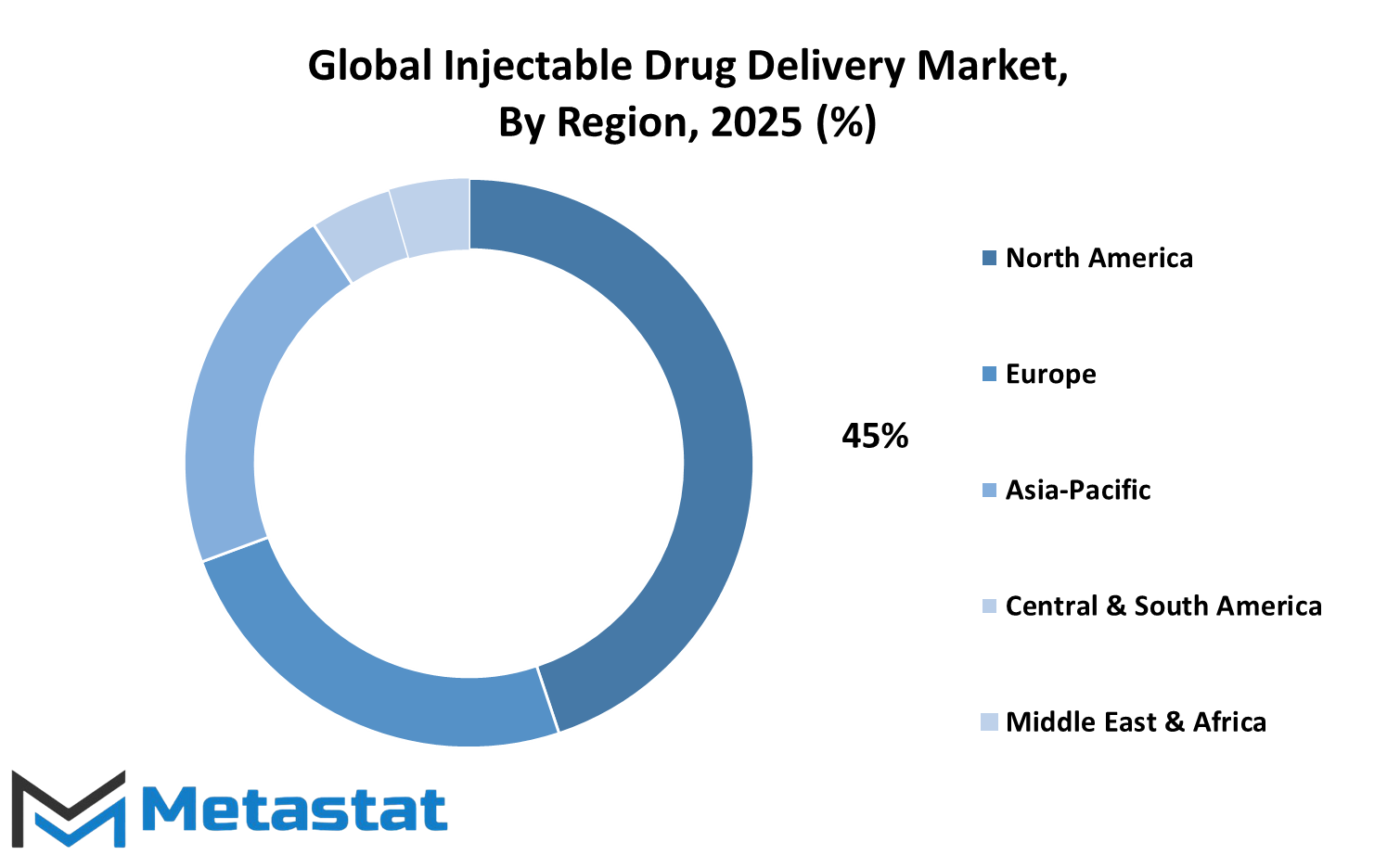
When looking at geography, the global injectable drug delivery market is split into different regions, each with its own trends and needs. North America, especially the U.S., has led the way thanks to its strong healthcare system and early acceptance of new drug delivery tools. Canada and Mexico also play a part in this, showing steady progress in the use of injectable drugs. Europe, including the UK, Germany, France, and Italy, continues to focus on patient safety and modern medical systems. These countries are seeing rising demand for more personalized treatment options.
In Asia-Pacific, countries such as India, China, Japan, and South Korea are expected to show the fastest growth. Their large populations and rising healthcare investments are helping to expand the use of injectable drug delivery systems. As these nations build better healthcare infrastructure, the demand for reliable, quick drug delivery options will rise even further. South America, led by Brazil and Argentina, is also catching up. Improvements in public health awareness and growing access to treatments are driving demand.
Meanwhile, the Middle East & Africa region, including GCC countries, Egypt, and South Africa, is beginning to show real promise. Government support and private sector investment are helping bring newer drug delivery technologies to these areas. As these regions continue to build better healthcare services, their need for effective and simple delivery systems will increase.
The global injectable drug delivery market will likely keep expanding as people expect faster relief and more convenient care. With continued innovation and regional growth, the future will bring better, more comfortable ways to manage health across the world. This shift will not only help patients get the care they need but also push the healthcare industry toward safer, more user-friendly methods.
The global injectable drug delivery market is expected to see steady growth in the coming years due to increasing demand for advanced treatment options and the rising prevalence of chronic illnesses. This method of delivering drugs directly into the body ensures fast and effective results, which is why it continues to gain preference among healthcare professionals and patients. As the population ages and the need for long-term treatment increases, injectable drug systems will likely become even more common in medical practice. These systems offer a reliable way to deliver medications with high precision, reducing the chances of dosage errors and improving patient outcomes.
A noticeable shift is taking place in the industry as companies focus on creating more user-friendly and safe delivery systems. Many patients today are managing conditions from home, and this trend is pushing manufacturers to design self-injection devices that are simple, effective, and safe. Technologies that allow patients to inject themselves without needing help from medical staff are becoming essential. These changes show that the global injectable drug delivery market will continue to move toward more personalized and convenient care options.
Key players in the industry are working on improving both the delivery devices and the medicines themselves. Companies such as Pfizer Inc., Sanofi, and Novo Nordisk A/S are among those investing in new technologies that make injections less painful and more efficient. Becton, Dickinson and Company (BD) and West Pharmaceutical Services, Inc. are focusing on advanced packaging and delivery systems that ensure sterility and reduce contamination risks. Innovations by firms like Ypsomed Holding AG and Gerresheimer AG are setting new standards in terms of safety and usability. Their efforts will help shape a future where injections are more accessible and less intimidating, especially for patients managing their own treatments.
Looking ahead, the global injectable drug delivery market will likely benefit from advances in biotechnology and digital health. For example, devices that can connect with apps to track dosage or remind patients when to take their medication are already in development. The combination of digital tools with traditional drug delivery methods could lead to higher treatment success rates. As companies such as AstraZeneca, Boehringer Ingelheim, Merck & Co., Inc., Bayer AG, and Biogen Inc. continue to research better methods and materials, the market is set to expand. With healthcare systems under pressure to improve efficiency, injectable solutions will remain a vital part of the future of medicine.
Find answers to common questions about this report
Global Injectable Drug Delivery market is valued at $549,464.83 million in 2025.
Global Injectable Drug Delivery market is estimated to grow with a CAGR of 8.7% from 2025 to 2032.
Global Injectable Drug Delivery market is estimated to reach $976,237.96 million by 2032.
Top players operating in the Injectable Drug Delivery industry includes Pfizer Inc., Schott AG, Novo Nordisk A/S, Sanofi, Merck & Co., Inc., Ypsomed H
The analysts below cover Medical Devices research at Metastat Insights.
LEAD ANALYST
Utkarsh Khirodkar is a Lead Market Research Analyst at MetaStat Insight, specializing in market intelligence, technology sector assessments, and competitive strategy.

LEAD PRINCIPAL ANALYST, PHARMA AND HEALTHCARE
Food and Beverages · Healthcare · Healthcare IT · Medical Devices
Ajay Devgire is the Lead Healthcare Analyst at MetaStat Insight, leading strategic research and market intelligence initiatives across the global healthcare domain.

SENIOR RESEARCH ANALYST
Biotechnology · Food and Beverages · Medical Devices · Packaging
Snehal Pasalkar is a Research Analyst at MetaStat Insight, operating at the intersection of life sciences research, competitive strategy, and market intelligence.
The technical breakdown of ISO 20022 migration readiness across correspondent banking corridors was remarkably thorough. Rather than treating cross-border corporate payments as a single block, the report drew a useful distinction between multilateral netting platforms and domestic instant payment rails across ASEAN economies. MetaStat Insight highlighted regulatory constraints on foreign exchange liquidity management that many publications gloss over. The research material offered practical clarity for our platform development roadmap.
Our group needed clearer visibility into out-of-autoclave processing timelines for high-temperature thermoplastic composites. MetaStat Insight delivered an objective assessment that contrasted automated fiber placement scrap rates with traditional thermoset prepreg layup cycles. The supplier landscape mapped out primary resin suppliers and tape slitting capacity across France, Germany, and Japan with solid technical accuracy. Their analyst handled our questions on precursor supply risks during an unscheduled inquiry call, providing clear, unembellished context.
Evaluating sensor fusion reliability across harsh operating environments can be tricky without field-validated data. The study on agricultural autonomous guidance systems clearly separated stereo vision setups from automotive-grade solid-state LiDAR. We appreciated the regional infrastructure analysis, specifically around RTK network density across North America and South America. During our follow-up consultation, the MetaStat Insight team walked through tier-two perception software partnerships, giving our engineering leads a practical basis for vendor shortlisting.
Explore related market intelligence reports worth reading alongside this one.