India High Protein Atta Market Size, Share, By Product Type (High-protein Whole Wheat Atta, High-protein Multigrain Atta, Gluten-free High Protein Atta, and Others), By Nature (Conventional and Organic), By Distribution Channel (Supermarkets, Hypermarkets, Traditional Grocery Stores, Online Retail Platforms, Direct-to-consumer Brand Websites, and Others), By End User (Household Consumers, Fitness Consumers, Gym-focused Consumers, Diabetic Consumers, Health-conscious Consumers, and Others), Industry Analysis, Growth, Trends, and Forecast, 2026-2033
Report ID
MSI-4640
Published
April 17, 2026
Pages
320 Pages
Format
Report Details
Comprehensive Market Analysis And Insights
Market Overview
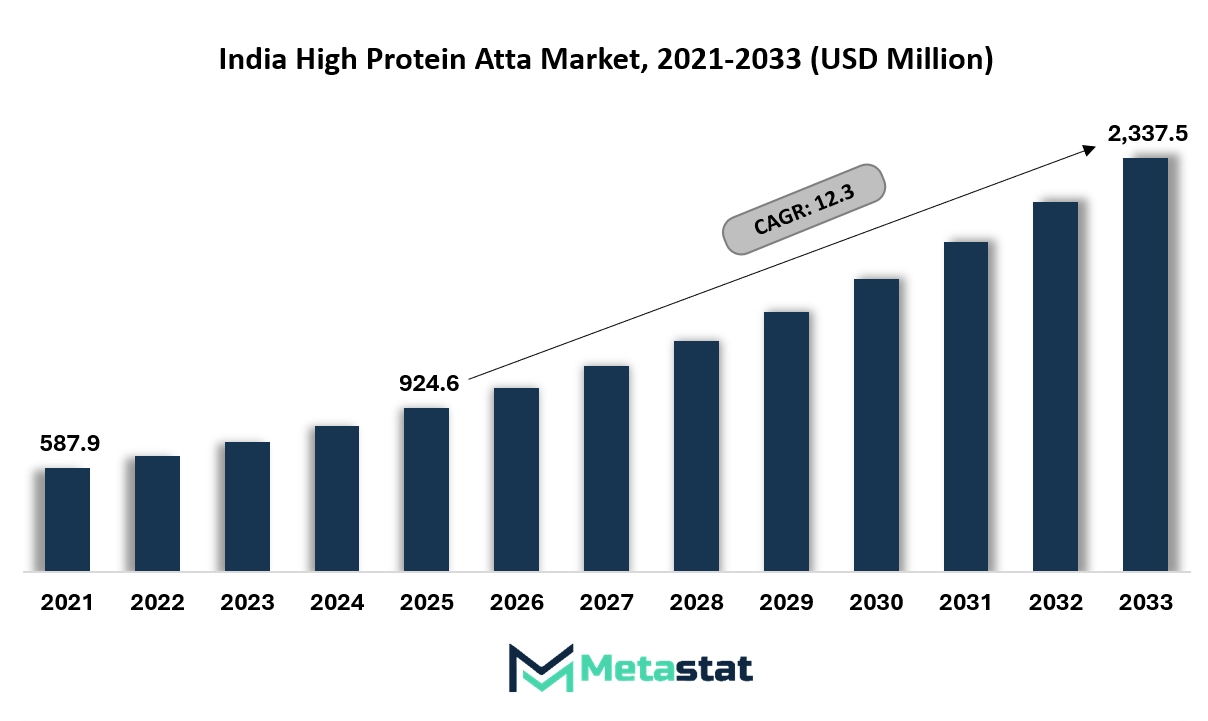
India High Protein Atta market size is valued at USD 924.6 million in 2025 and projected to grow at a CAGR of 12.3% during the forecast period, reaching USD 2,337.5 million by 2033.
India High Protein Atta Market: Comprehensive Data-Driven Market Analysis and Strategic Outlook
High-protein Whole Wheat Atta segment accounts for a market share of 47.4% in 2025.
Key trends driving growth: Rising Protein Awareness and Everyday Nutrition Upgradation, Shift Toward Functional Staple Foods in Urban India.
Opportunities include premiumization through clean-label, Low-GI, and personalized protein atta formats.
Key insight: India High Protein Atta market is gaining traction owing to rising protein deficiency awareness and a shift toward functional staple foods.
The India High Protein Atta Market reflects changing nutritional behavior, with consumers actively seeking healthier alternatives to conventional wheat flour. Rising awareness of balanced nutrition and protein intake is influencing purchasing patterns across urban and semi-urban households. Consumers are steadily shifting from regular atta toward fortified and protein-enriched variants that support fitness goals, weight management, and overall well-being.
Food consumption patterns in India continue to evolve with the growing influence of health-conscious lifestyles, fitness culture, and preventive healthcare awareness. High protein atta products are gaining space in daily diets, particularly among working professionals and younger consumers seeking convenient nutrition without major dietary changes. Rotis and chapatis remain staple foods, allowing easy integration of protein-enriched flour without disrupting traditional eating habits.
Market Dynamics
Growth Drivers:
Rising Protein Awareness and Everyday Nutrition Upgradation.
The India High Protein Atta market will witness steady momentum driven by growing emphasis on balanced diets across urban and semi-urban populations. Rising fitness awareness, preventive healthcare focus, and nutrition-led purchasing behavior will support demand. The shift of everyday staples toward protein-rich alternatives will gain wider acceptance among households seeking long-term nutritional improvement.
Shift Toward Functional Staple Foods in Urban India
The India High Protein Atta market will benefit from evolving consumption patterns in metropolitan areas where functional foods are gaining strong traction. Busy lifestyles are encouraging adoption of multi-benefit staples that combine protein enrichment with convenience. Retail shelves are expanding with differentiated variants targeted at health-conscious consumers seeking smarter carbohydrate sources in daily meals.
Restraints and Challenges:
Price Premium Over Regular Atta
The India High Protein Atta market will face resistance owing to higher pricing compared to traditional wheat flour alternatives. Price-sensitive segments will restrict faster penetration across tier 2 and rural regions. The value perception gap will continue unless manufacturers align pricing strategies with consumer affordability and communicate nutritional benefits in a clearer and more accessible manner.
Taste, Texture, and Digestibility Trade-Offs
The India High Protein Atta market will encounter limitations related to sensory appeal, including variations in softness, taste, and digestibility. Traditional taste preferences will influence repeat purchase behavior. Product innovation will need to address consistency and mouthfeel challenges to ensure better alignment with expectations associated with regular atta consumption.
Opportunities:
Premiumization Through Clean-Label, Low-GI, and Personalized Protein Atta Formats
The India High Protein Atta market will create opportunities for premium offerings focused on clean-label ingredients, low glycemic index positioning, and customized nutrition blends. Brands will introduce targeted formulations for fitness-focused consumers, diabetic-friendly diets, and age-specific needs. Innovation in packaging, ingredient sourcing, and health communication will support long-term market expansion.
Market Segmentation Analysis
The India High Protein Atta market is classified based on Product Type, Nature, Distribution Channel, and End User.
By Product Type, the market is further segmented into:
High-protein Whole Wheat Atta
High-protein Whole Wheat Atta segment is valued at USD 491.8 million in 2026 and is projected to reach USD 1,058.7 million by 2033, at a CAGR of 11.6% during the forecast period.
High-protein Whole Wheat Atta will gain traction owing to the growing preference for nutrient-dense staples. Future consumption patterns will reflect a stronger inclination toward balanced diets supported by protein enrichment, where traditional wheat flour enhanced with protein content helps daily nutritional needs across urban and semi-urban populations.
High-protein Multigrain Atta
High-protein Multigrain Atta segment is valued at USD 356.4 million in 2026 and is projected to reach USD 846.9 million by 2033, at a CAGR of 13.2% during the forecast period.
High-protein Multigrain Atta will expand with rising demand for diverse grain blends offering added nutritional value. Consumer awareness regarding fiber, minerals, and protein combinations will strengthen adoption, while product innovation will improve texture and flavor profiles in line with evolving dietary expectations.
Gluten-unfastened High Protein Atta
Gluten-free High Protein Atta segment is valued at USD 66.8 million in 2026 and is projected to reach USD 178.6 million by 2033, at a CAGR of 15.1% during the forecast period.
Gluten-free High Protein Atta will witness steady growth driven by dietary restrictions and sensitivity concerns. Future product development will focus on alternative grains such as millet and pulses, ensuring protein enrichment while maintaining digestibility and supporting niche demand among specialized dietary segments.
Others
Others segment is valued at USD 122.3 million in 2026 and is projected to reach USD 253.4 million by 2033, at a CAGR of 11% during the forecast period.
Other product variants will include customized blends targeting specific nutritional needs. Future offerings will cater to regional taste preferences and functional health benefits, with manufacturers focusing on innovation, fortification, and convenience to maintain a competitive position in an increasingly diversified product landscape.
By Nature, the market is divided into:
Conventional
Conventional segment is projected to reach USD 1,808.1 million by 2033, at a CAGR of 11.6% during the forecast period.
The conventional segmen will maintain a dominant presence owing to affordability and wide accessibility. Future growth will depend on gradual improvements in protein enrichment techniques, ensuring cost-effective solutions while meeting rising nutritional awareness among mass consumers across different income groups.
Organic
Organic segment is projected to reach USD 529.4 million by 2033, at a CAGR of 14.9% during the forecast period.
The organic segment will expand with rising preference for chemical-free food options. Future trends will reflect stronger demand for certified organic grains combined with protein fortification, driven by health-focused consumers seeking purity, sustainability, and traceability in everyday food products.
By Distribution Channel, the market is further divided into:
Supermarkets and Hypermarkets
Supermarkets and Hypermarkets segment is projected to reach USD 610.3 million by 2033.
Supermarkets and hypermarkets will remain important distribution hubs owing to strong product visibility and organized retail expansion. Future retail strategies will emphasize shelf positioning, promotional campaigns, and in-store awareness to influence purchasing decisions among urban consumers.
Traditional Grocery Stores
Traditional Grocery Stores segment is projected to reach USD 884.5 million by 2033.
Traditional grocery stores will remain important in the India High Protein Atta market, particularly across rural and semi-urban areas. Future supply chains will strengthen distribution efficiency, ensuring availability of protein-enriched atta while maintaining affordability and trust built through long-standing retailer-consumer relationships.
Online Retail Platforms
Online Retail Platforms segment is projected to reach USD 511 million by 2033.
Online retail platforms will witness rapid growth supported by digital adoption. Future shopping behavior will shift toward convenience, subscription-based models, and personalized recommendations, enabling brands to reach wider audiences and improve consumer engagement through targeted marketing.
Direct-to-consumer Brand Websites
Direct-to-consumer Brand Websites segment is projected to reach USD 235.9 million by 2033.
Direct-to-consumer brand websites will gain importance through brand-controlled experiences. Future strategies will include detailed product information, subscription offerings, and exclusive options, allowing producers to build direct relationships with consumers while improving margins and brand loyalty.
Others
Others segment is projected to reach USD 95.8 million by 2033.
Other distribution channels will include institutional sales and specialty health stores. Future expansion will depend on partnerships and niche targeting, ensuring availability of specialized high-protein variants tailored to specific nutritional needs and professional use environments.
By End User, the India High Protein Atta market is divided as:
Household Consumers
Household Consumers segment is projected to grow at a CAGR of 10.2% during the forecast period.
Household consumers will generate steady demand owing to daily consumption patterns. Future adoption will increase with growing awareness of protein intake, leading to gradual replacement of regular atta with fortified alternatives in routine meal preparation across diverse demographic groups.
Fitness and Gym-focused Consumers
Fitness and Gym-focused Consumers segment is projected to grow at a CAGR of 15.7% during the forecast period.
Fitness and gym-focused consumers will contribute to premium segment expansion. Future demand will align with high-protein diets that support muscle development and active lifestyles, encouraging manufacturers to position products with performance-oriented benefits and nutritional transparency.
Diabetic and Health-aware Consumers
Diabetic and Health-conscious Consumers segment is projected to grow at a CAGR of 14.4% during the forecast period.
Diabetic and health-conscious consumers will seek controlled carbohydrate intake combined with higher protein levels. Future product development will focus on low glycemic index formulations, supporting dietary management while maintaining taste and usability for everyday consumption.
Others
Others segment is projected to grow at a CAGR of 9.2% during the forecast period.
Other end users will include institutional buyers and specialized dietary segments. Future growth will depend on customized formulations catering to specific nutritional requirements, ensuring broader application across healthcare facilities, wellness programs, and targeted nutrition initiatives.
Competitive Landscape and Strategic Insights
The India High Protein Atta market will witness steady growth as consumers increasingly focus on healthier eating habits and balanced nutrition. Greater attention to daily food choices is driving interest in wheat flour enriched with protein, owing to its easy integration into regular diets. Instead of making major dietary changes, households are choosing options that improve nutritional intake without altering traditional cooking practices. This shift is creating strong opportunities for brands to offer familiar products with added health value.
Growing awareness of health and overall wellness is playing an important role in shaping market demand. Many consumers, particularly in urban areas, are looking for simple ways to increase protein intake without depending entirely on supplements. High protein atta fits well into this requirement since it is already a staple in many households. Over time, adoption of high protein atta will expand beyond fitness-focused buyers and reach a broader consumer base, including working professionals and older age groups.
At the same time, companies are focusing on improving taste, texture, and affordability so these products can compete effectively with traditional flour. Price sensitivity remains an important challenge, and brands will need to balance quality with value to encourage repeat purchases. Packaging, clear labeling, and transparent communication will also influence buying decisions, with consumers showing increased preference for ingredient clarity and nutritional credibility.
The presence of both established and emerging manufacturers is intensifying competition in the market. Key India High Protein Atta industry players such as ITC Limited (Aashirvaad), MillD, BeastLife, TransVeda, Arvita, Vyom Avtar Foods, GoodGrains, MaaDico, Chakki Peesing, Possible, Lo! Foods, Protein Chef, Manna Foods, Right Shift, Better Nutrition, Two Brothers Organic Farms, Taste for Life, GreenDNA, OPG Agro Farms Private Limited (Svarn Foods), Naario, 10on10 Foods, and Farm-Star are introducing differentiated blends and formulations to meet evolving consumer preferences. Each brand is striving to strengthen its position through product quality, sourcing, and added nutritional benefits.
Looking ahead, the market will witness continued innovation in ingredients and processing techniques. Manufacturers will explore the inclusion of plant-based proteins and improved shelf-life solutions without compromising taste. With awareness continuing to rise, demand is projected to move gradually from niche consumption toward mainstream adoption, creating long-term opportunities for both new entrants and established competitors.
Forecast and Future Outlook
Market size is forecast to rise from USD 924.6 million in 2025 to over USD 2,337.5 million by 2033.
Manufacturers are focusing on ingredient innovation by blending wheat with pulses, soy, millets, and plant-based protein sources. This approach helps enhance nutritional value while maintaining familiar taste and texture. Retail shelves are gradually expanding with branded high protein atta offerings that highlight functional benefits, clean labeling, and fortified nutrition claims, supporting the steady growth of the India High Protein Atta Market.
This research report categorizes the India High Protein Atta market based on key segments, forecasts revenue growth, and analyses trends in each submarket. The report analyses the key growth drivers, opportunities, and challenges influencing the India High Protein Atta market. Recent market developments and competitive strategies such as expansion, product launch, partnership, merger, and acquisition have been included to draw the competitive landscape in the market.
The report strategically identifies and profiles the key market players and analyses their core competencies in each sub-segment of the India High Protein Atta market.
Report Attributes
Details
Study Period
2021-2033
Base Year
2025
Estimated Year
2026
Forecast Period
2026-2033
Historical Period
2021-2025
Growth Rate
CAGR 12.3% from 2026 to 2033
Revenue Unit
USD million
Sales Volume Unit
Tons
Segmentation
By Product Type, Nature, Distribution Channel and End User
By Product Type
High-protein Whole Wheat Atta
High-protein Multigrain Atta
Gluten-free High Protein Atta
Others
By Nature
Conventional
Organic
By Distribution Channel
Supermarkets and Hypermarkets
Traditional Grocery Stores
Online Retail Platforms
Direct-to-consumer Brand Websites
Others
By End User
Household Consumers
Fitness and Gym-focused Consumers
Diabetic and Health-conscious Consumers
Others
WHAT REPORT PROVIDES
Key Company Market Share, Revenue, and Position/Ranking
Key Market Leaders
Full In-Depth Analysis of the Parent Industry
Industry Statistics
Important Changes in Market and Its Dynamics
Segmentation Details of the Market
Historical, On-Going, and Projected Market Analysis
Assessment of Niche Industry Developments
Market Share Analysis
Key Strategies of Major Players
Company Profiles of Key Players
Unique Selling Prepositions of Leading Market Players
Kazakhstan Frozen Potato Products market size is valued at USD 26.4 million in 2025 and is projected to reach USD 53.0 million in 2033, at a CAGR of 9.0% from 2026 to 2033.
Switzerland Poke Food market size is valued at USD 29.2 million in 2025 and is projected to reach USD 44.5 million in 2033, at a CAGR of 5.5% from 2026 to 2033.
Netherlands Food and Beverages QA, QC, and Compliance Software Solutions Market Size, Share, Trends, 2033
Netherlands F&B QA, QC, and Compliance Software Solutions market size is valued at USD 272.5 million in 2025 and is projected to reach USD 421.3 million in 2033, at a CAGR of 5.6% from 2026 to 2033.
Netherlands F&B QA, QC, and Compliance Software Solutions Market, Netherlands F&B QA, QC, and Compliance Software Solutions Market Size, Netherlands F&B QA, QC, and Compliance Software Solutions Market Share, Netherlands F&B QA, QC, and Compliance Software Solutions Market Analysis, Netherlands F&B QA, QC, and Compliance Software Solutions Market Growth, Netherlands F&B QA, QC, and Compliance Software Solutions Market Trends, Netherlands F&B QA, QC, and Compliance Software Solutions Market Research Report, Netherlands F&B QA, QC, and Compliance Software Solutions Market Forecast, Netherlands F&B QA, QC, and Compliance Software Solutions, Netherlands F&B QA, QC, and Compliance Software Solutions Market Research, Netherlands F&B QA, QC, and Compliance Software Solutions Industry, Netherlands F&B QA, QC, and Compliance Software Solutions Industry Report, Netherlands F&B QA, QC, and Compliance Software Solutions Market Data, Netherlands F&B QA, QC, and Compliance Software Solutions Statistics, Netherlands F&B QA, QC, and Compliance Software Solutions Market Statistics, Netherlands F&B QA, QC, and Compliance Software Solutions Industry Trends, Netherlands F&B QA, QC, and Compliance Software Solutions Market Report, Netherlands F&B QA, QC, and Compliance Software Solutions Market Trends, Netherlands F&B QA, QC, and Compliance Software Solutions Market News, Netherlands F&B QA, QC, and Compliance Software Solutions Forecasts, Netherlands F&B QA, QC, and Compliance Software Solutions Market Intelligence Report
Global Antibiotic-Free Pork market size is valued at USD 25,430.6 million in 2025 and is projected to reach USD 42,528 million in 2033, at a CAGR of 6.6% from 2026 to 2033