Switzerland Poke Food Market Size, Share, By Type (Tuna, Shellfish, Salmon, Octopus, and Others), By End-Use (Commercial and Household), Industry Analysis, Growth, Trends, and Forecast, 2026-2033
Report ID
MSI-4798
Published
June 8, 2026
Pages
309 Pages
Format
Report Details
Comprehensive Market Analysis And Insights
Market Overview
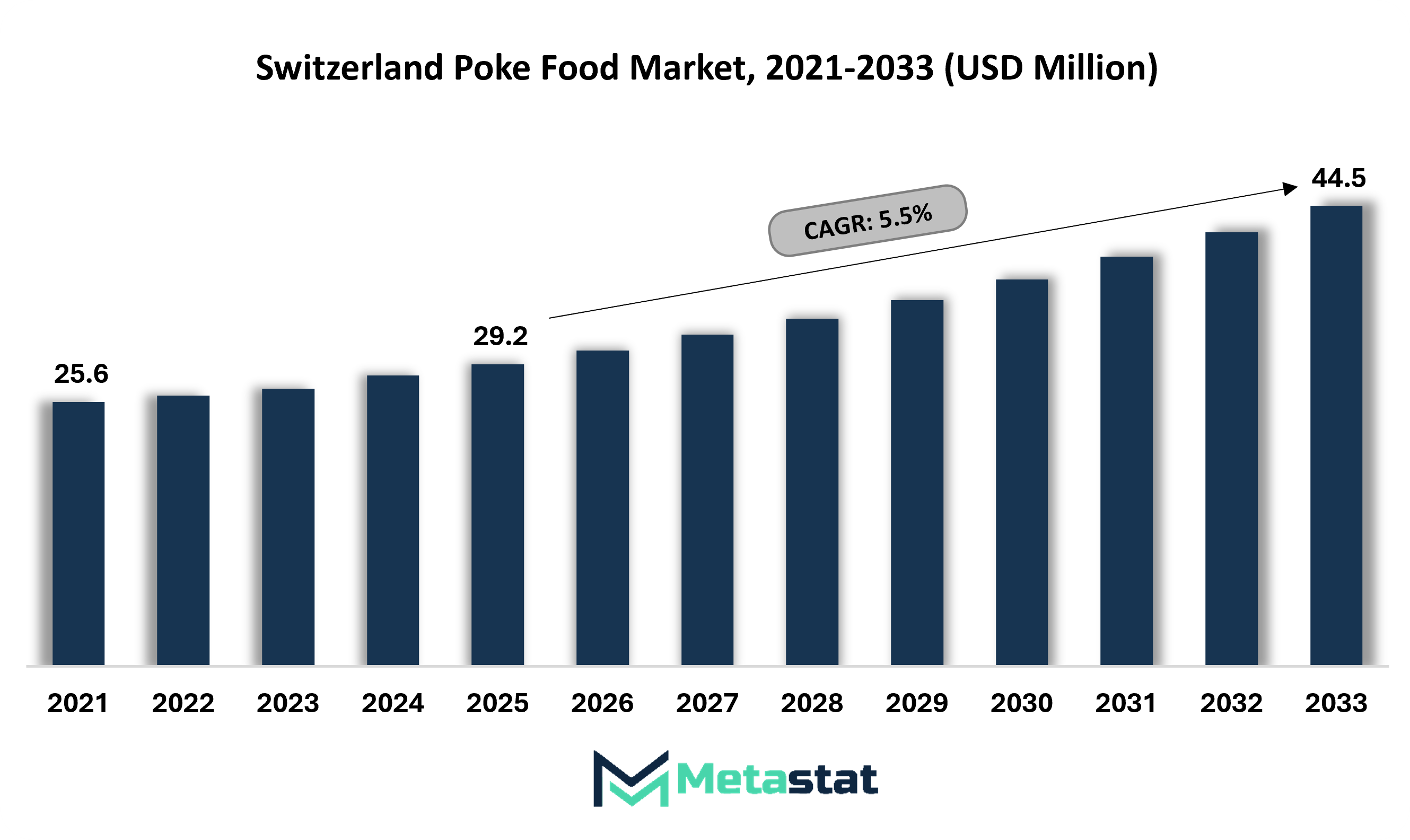
Switzerland Poke Food market size is valued at USD 29.2 million in 2025 and projected to grow at a CAGR of 5.5% during the forecast period, reaching USD 44.5 million by 2033.
Switzerland Poke Food Market: Comprehensive Data-Driven Market Analysis and Strategic Outlook
The tuna segment accounted for 40.76% market share in 2025.
Key trends driving growth: Rising demand for nutritious, protein-rich meals among urban consumers and increasing adoption of customizable and convenient fast-casual dining formats.
Opportunities include expansion of plant-based and vegan poke options and growth of delivery platforms and ghost kitchen models in urban areas.
Key insight: High-quality, health-focused positioning keeps poke a premium niche in Switzerland.
The Switzerland poke food market represents a niche yet steadily expanding segment within the country’s premium fast-casual dining landscape. Urban centers such as Zurich, Geneva, and Basel are witnessing gradual growth in poke bowl outlets, supported by consumers who value clean eating, high-quality ingredients, and customizable meals. Swiss food culture, known for its emphasis on freshness and quality, aligns strongly with poke’s core proposition of raw fish, grains, vegetables, and fresh toppings. Consumption is particularly strong among young professionals and health-conscious consumers who prefer protein-rich, balanced meals that align with active lifestyles. Rising exposure to international cuisines, supported by travel, social media, and digital food platforms, has further introduced Hawaiian-inspired dishes such as poke into the Swiss market.
At the same time, the market remains highly premium and selective owing to Switzerland’s high cost of living and strict food quality standards. Operators often position poke bowls as high-end healthy meals rather than mass-market fast-food alternatives, resulting in higher pricing compared with several other European markets. Innovation in menu offerings, including vegan poke bowls, plant-based proteins, sustainable seafood, and fusion flavors, is helping brands attract a wider audience while maintaining differentiation. Digital ordering, takeaway models, and ghost kitchens are supporting scalability in dense urban pockets, allowing new entrants to test the market with lower operating costs. However, expansion remains concentrated across metropolitan areas, with limited penetration in smaller towns.
Urban consumers are showing stronger preference for balanced meals with high protein content, supported by rising health awareness and active lifestyles. The Switzerland Poke Food Market benefits from growing inclination toward fresh fish, grains, vegetables, and customizable toppings. Preference for clean-label offerings encourages operators to highlight ingredient quality, nutritional value, and transparent sourcing practices.
Increasing adoption of customizable and convenient fast-casual dining formats.
Flexible dining formats are gaining traction as busy consumers prefer quick-service meals without compromising ingredient quality. The Switzerland Poke Food Market aligns with this trend through build-your-own bowl concepts, enabling ingredient selection based on taste, dietary preference, and nutrition goals. Fast-casual environments support efficient service, digital ordering, and takeaway options, strengthening customer engagement and repeat visits.
Market Restraints
High cost of seafood and ingredients impacting pricing and margins.
Premium seafood such as salmon and tuna involves high procurement costs, influenced by supply conditions, cold-chain requirements, and import dependency. The Switzerland Poke Food Market faces pricing pressure, leading to higher menu prices. Elevated costs reduce accessibility for broader consumer groups and create challenges in maintaining stable profit margins for operators.
Limited mass-market adoption owing to premium positioning.
Premium dining positioning restricts wider acceptance among price-sensitive consumer groups. The Switzerland Poke Food Market largely attracts niche consumer segments focused on health, convenience, and lifestyle-driven food trends. Limited affordability slows penetration into smaller cities and suburban areas, where traditional fast-food options remain attractive owing to lower pricing structures.
Rising interest in plant-based diets is opening new growth avenues for the Switzerland Poke Food Market. Innovative use of tofu, tempeh, plant-based seafood alternatives, and vegetable-forward toppings supports menu diversification. Vegan offerings attract environmentally conscious consumers, encourage menu experimentation, and enhance brand perception, creating potential for wider customer reach and long-term market expansion.
Market Segmentation Analysis
The Switzerland Poke Food Market is segmented by Type and End-Use.
By Type, the market is further segmented into:
Tuna
Tuna segment is valued at USD 12.4 million in 2026 and is projected to reach USD 18.0 million by 2033, at a CAGR of 5.4% during the forecast period.
Tuna holds a strong position in the Switzerland Poke Food Market owing to sustained preference for lean protein options and clean eating patterns. Future expansion will align with sustainable sourcing practices, improved cold-chain systems, and premium-grade seafood offerings. Expansion across urban foodservice chains indicates rising consumer inclination toward nutrient-focused meal formats.
Shellfish
Shellfish segment is valued at USD 3.5 million in 2026 and is projected to reach USD 5.1 million by 2033, at a CAGR of 5.6% during the forecast period.
Shellfish continues to attract interest in the Switzerland Poke Food Market owing to its diverse texture profile, rich mineral content, and premium seafood appeal. Advancements in aquaculture technology and sourcing practices will support consistent supply and quality standards. Upscale dining formats could introduce innovative combinations, strengthening appeal among consumers seeking variety, freshness, and culinary experimentation in daily consumption habits.
Salmon
Salmon segment is valued at USD 8.8 million in 2026 and is projected to reach USD 13.1 million by 2033, at a CAGR of 5.8% during the forecast period.
Salmon remains a major segment in the Switzerland Poke Food Market owing to strong consumer acceptance, taste appeal, omega-rich content, and versatility across customized bowl formats. Future outlook indicates expansion through traceability standards, sustainable sourcing, organic positioning, and premium packaging formats. Retail expansion and ready-to-eat meal solutions will strengthen salmon-based poke offerings across urban and semi-urban areas.
Octopus
Octopus segment is valued at USD 1.6 million in 2026 and is projected to reach USD 2.2 million by 2033, at a CAGR of 5.3% during the forecast period.
Octopus represents a niche yet developing segment in the Switzerland Poke Food Market, supported by growing interest in distinctive seafood options. Culinary innovation and fusion-based menus could improve adoption across specialty dining formats. Increased awareness of preparation techniques and texture-enhancement methods will support gradual expansion across specialty food outlets and premium dining spaces.
Others
Others segment is valued at USD 4.3 million in 2026 and is projected to reach USD 6.1 million by 2033, at a CAGR of 5.3% during the forecast period.
Other seafood types and alternative proteins contribute to the Switzerland Poke Food Market through menu diversification and evolving taste preferences. Ingredients such as tofu, plant-based proteins, and mixed seafood blends will shape future offerings. Market participants could explore customization options to attract health-focused consumers and customers seeking unique flavor combinations.
By End-Use, the market is divided into:
Commercial
Commercial segment is projected to reach USD 35.5 million by 2033, at a CAGR of 5.3% during the forecast period.
The commercial segment drives the Switzerland Poke Food Market through restaurant chains, cloud kitchens, quick-service outlets, takeaway counters, and delivery platforms. Expansion strategies will include digital ordering systems, efficient supply-chain integration, and menu innovation. Growing urbanization and busy lifestyles will strengthen reliance on convenient, nutritious meal options provided by organized foodservice operators.
Household
Household segment is projected to reach USD 9.0 million by 2033, at a CAGR of 6.3% during the forecast period.
Household consumption in the Switzerland Poke Food Market indicates gradual expansion, supported by rising awareness of balanced diets and home-prepared meals. Availability of pre-cut ingredients, meal kits, ready sauces, and packaged toppings will simplify preparation. Future expansion will connect with online grocery platforms, enabling easier access to fresh seafood, vegetables, grains, and customized poke combinations for daily consumption.
Competitive Landscape and Strategic Insights
Switzerland’s food culture has witnessed a noticeable shift in recent years, with consumers showing increased interest in fresh, colorful, and balanced meals. Among fast-casual dining trends, poke bowls have gained strong attention owing to their mix of healthy ingredients, simple presentation, and wide flavor options. The Switzerland Poke Food Market has grown steadily as consumers increasingly prefer meals that are quick, filling, and customizable. Busy lifestyles in cities such as Zurich, Geneva, and Basel have encouraged preference for ready-to-eat options prepared with fresh vegetables, seafood, rice, sauces, and toppings. Young professionals and students are drawn toward customizable meals that match personal taste and dietary habits. Restaurants offering Hawaiian-inspired bowls have also benefited from rising awareness of healthy eating, protein-rich diets, and clean-label food options. Many outlets continue to expand menus with vegan, vegetarian, and gluten-free options to attract a broader consumer base.
Competition among restaurants continues to intensify as diners look for quality ingredients, unique combinations, and a refined dining experience. Many operators have started using digital ordering platforms and delivery services to improve customer convenience. The Switzerland Poke Food Market has also gained support from tourism and urban food culture, where international cuisines receive strong appreciation. Several food chains are introducing seasonal ingredients and locally sourced produce to create a stronger connection with Swiss consumers. Restaurants are also focusing on sustainable packaging and responsible sourcing practices, which have become important purchase factors for many customers.
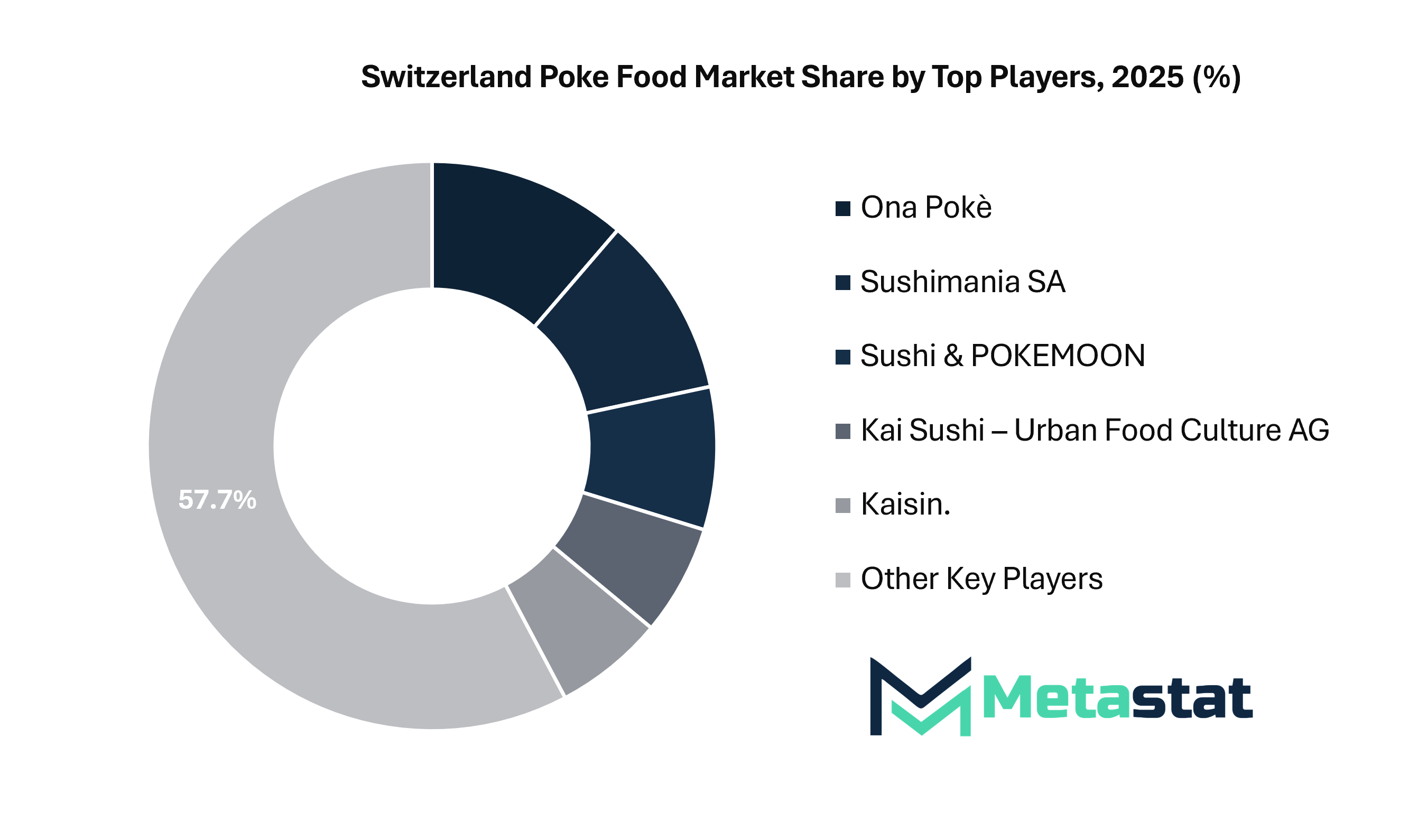
Key Switzerland Poke Food Market players include Ona Pokè, Kaisin., Sushi & POKEMOON, Noohn Basel, Malibu Nation, Hum Kitchen Lobsang GmbH, Sushimania SA, Kai Sushi- Urban Food Culture AG, The Little Kitchen, and Sanuki. These companies continue building consumer loyalty through diverse menu options, premium ingredients, fresh toppings, and creative recipes. Many brands focus on combining traditional poke elements with local flavors to match regional preferences. Some operators function through dine-in outlets, while others rely heavily on takeaway and app-based delivery platforms. Expansion strategies often include partnerships with food delivery platforms, promotional meal deals, and new store openings in high-footfall areas. Restaurants are also investing in interior design and customer experience to create a comfortable and modern atmosphere that appeals to local residents and international visitors.
The outlook for the industry remains positive, supported by changing food habits and rising interest in nutritious meal options. Preference for convenient dining solutions will increase further, especially in metropolitan locations where consumers are seeking healthier alternatives to traditional fast food. Businesses will experiment with new ingredients, fusion flavors, and sustainable operations to remain competitive. Growth in online food delivery services and digital payment systems will support market expansion over the coming years. Consumer awareness regarding nutrition and ingredient transparency will encourage restaurants to maintain high-quality standards. With steady urban consumption, menu innovation, and rising acceptance of international food trends, the Switzerland Poke Food Market will maintain steady progress during the forecast period.
Forecast and Future Outlook
Market size is forecast to rise from USD 29.2 million in 2025 to over USD 44.5 million by 2033.
Looking ahead, the Switzerland Poke Food Market is expected to grow steadily, supported by rising health awareness, preference for sustainable seafood, and expansion of convenient dining formats. The shift toward ethically sourced ingredients, transparent supply chains, and plant-based alternatives will become a decisive factor in consumer choice.
This research report categorizes the Switzerland Poke Food market based on key segments and regions, forecasts revenue growth, and analyses trends in each submarket. The report analyses the key growth drivers, opportunities, and challenges influencing the Switzerland Poke Food market. Recent market developments and competitive strategies such as expansion, product launch, partnership, merger, and acquisition have been included to draw the competitive landscape in the market.
The report strategically identifies and profiles the key market players and analyses their core competencies in each sub-segment of the Switzerland Poke Food market.
Report Attributes
Details
Study Period
2021-2033
Base Year
2025
Estimated Year
2026
Forecast Period
2026-2033
Historical Period
2021-2025
Growth Rate
CAGR 5.5% from 2026 to 2033
Revenue Unit
USD million
Segmentation
By Type, End-Use, and Region
WHAT REPORT PROVIDES
Key Company Market Share, Revenue, and Position/Ranking
Key Market Leaders
Full In-Depth Analysis of the Parent Industry
Industry Statistics
Important Changes in Market and Its Dynamics
Segmentation Details of the Market
Historical, On-Going, and Projected Market Analysis
Assessment of Niche Industry Developments
Market Share Analysis
Key Strategies of Major Players
Company Profiles of Key Players
Unique Selling Prepositions of Leading Market Players
Kazakhstan Frozen Potato Products market size is valued at USD 26.4 million in 2025 and is projected to reach USD 53.0 million in 2033, at a CAGR of 9.0% from 2026 to 2033.
Netherlands Food and Beverages QA, QC, and Compliance Software Solutions Market Size, Share, Trends, 2033
Netherlands F&B QA, QC, and Compliance Software Solutions market size is valued at USD 272.5 million in 2025 and is projected to reach USD 421.3 million in 2033, at a CAGR of 5.6% from 2026 to 2033.
Netherlands F&B QA, QC, and Compliance Software Solutions Market, Netherlands F&B QA, QC, and Compliance Software Solutions Market Size, Netherlands F&B QA, QC, and Compliance Software Solutions Market Share, Netherlands F&B QA, QC, and Compliance Software Solutions Market Analysis, Netherlands F&B QA, QC, and Compliance Software Solutions Market Growth, Netherlands F&B QA, QC, and Compliance Software Solutions Market Trends, Netherlands F&B QA, QC, and Compliance Software Solutions Market Research Report, Netherlands F&B QA, QC, and Compliance Software Solutions Market Forecast, Netherlands F&B QA, QC, and Compliance Software Solutions, Netherlands F&B QA, QC, and Compliance Software Solutions Market Research, Netherlands F&B QA, QC, and Compliance Software Solutions Industry, Netherlands F&B QA, QC, and Compliance Software Solutions Industry Report, Netherlands F&B QA, QC, and Compliance Software Solutions Market Data, Netherlands F&B QA, QC, and Compliance Software Solutions Statistics, Netherlands F&B QA, QC, and Compliance Software Solutions Market Statistics, Netherlands F&B QA, QC, and Compliance Software Solutions Industry Trends, Netherlands F&B QA, QC, and Compliance Software Solutions Market Report, Netherlands F&B QA, QC, and Compliance Software Solutions Market Trends, Netherlands F&B QA, QC, and Compliance Software Solutions Market News, Netherlands F&B QA, QC, and Compliance Software Solutions Forecasts, Netherlands F&B QA, QC, and Compliance Software Solutions Market Intelligence Report
Global Probiotics market size is valued at USD 117.7 billion in 2025 and is projected to reach USD 343.6 billion in 2033, at a CAGR of 14.3% from 2026 to 2033
Global Antibiotic-Free Pork market size is valued at USD 25,430.6 million in 2025 and is projected to reach USD 42,528 million in 2033, at a CAGR of 6.6% from 2026 to 2033