Global Home Organization Products Market Size, Share, By Material Type (Metal, Plastic and Resin, Wood and Engineered Wood, Fabric and Nonwoven Textiles, Bamboo and Natural Fibers, Glass and Acrylic, Composite and Mixed Materials), By Product Type (Storage Bins, Baskets and Boxes, Shelving and Racking Systems, Closet and Wardrobe Organization Systems, Cabinet and Drawer Organizers, Hooks, Hangers and Over-the-Door Organizers, Laundry Hampers and Sorting Systems, Utility Carts and Mobile Organizers, Dish-Drying and Countertop Organizers), By Application Area (Kitchen and Pantry, Bedroom and Closet, Bathroom, Laundry and Utility Room, Living Room and Entryway, Home Office and Study, Garage and Basement, Children's Room and Playroom), By Distribution Channel (Online Retail, Specialty Stores), Industry Analysis, Growth, Trends, and Forecast, 2026-2033
Report ID
MSI-4849
Published
August 4, 2026
Pages
299 Pages
Format
Market Size 2021
USD 12.3 Billion
Historical
Market Size 2025
USD 14.4 Billion
Base year
Market Size 2033
USD 20.4 Billion
Forecast
CAGR 2025-2033
4.4%
Forecast period
Report Details
Comprehensive Market Analysis And Insights
Market Overview
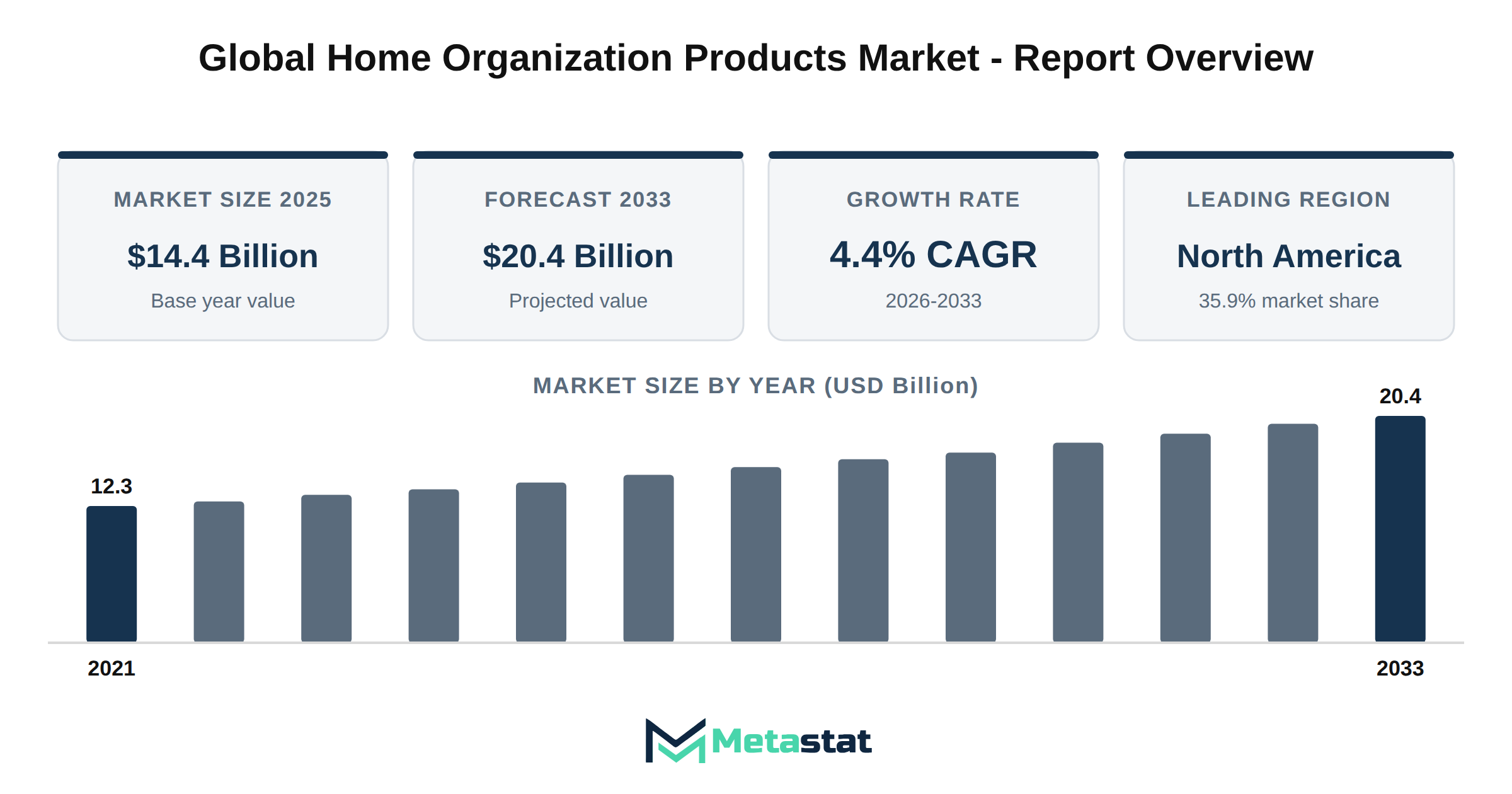
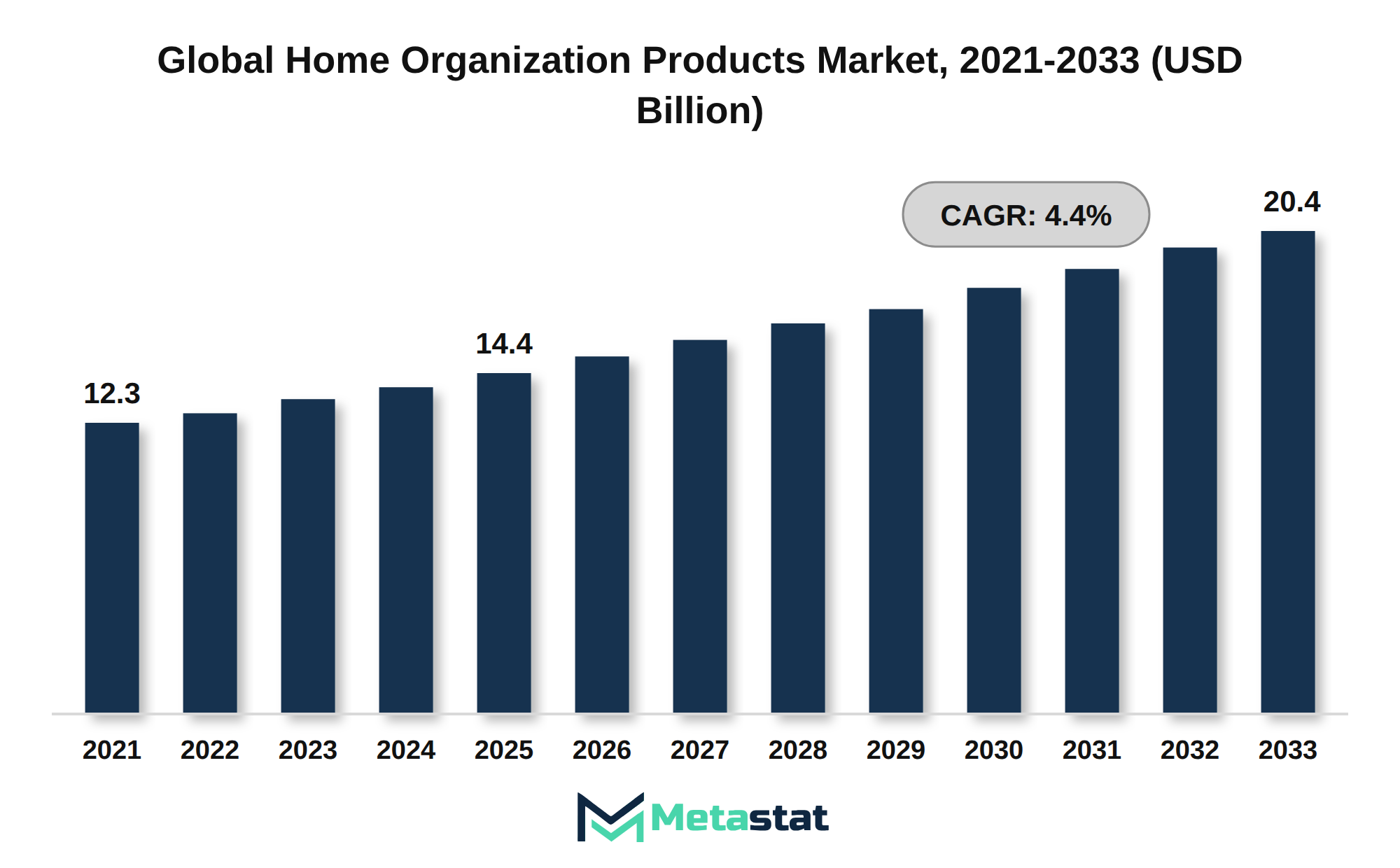
The global Home Organization Products market was valued at USD 14.4 billion in 2025 and is projected to reach USD 20.4 billion by 2033, growing at a CAGR of 4.4% over the forecast period.
The Home Organization Products market reached a valuation of USD 14.4 billion in 2025, with a steady growth trajectory anticipated. By 2033, the market is projected to achieve a value of USD 20.4 billion, reflecting a compound annual growth rate (CAGR) of 4.4% during the forecast period from 2026 to 2033. Historical data indicates a gradual increase, starting from USD 12.3 billion in 2021 and rising to USD 13.8 billion in 2024.
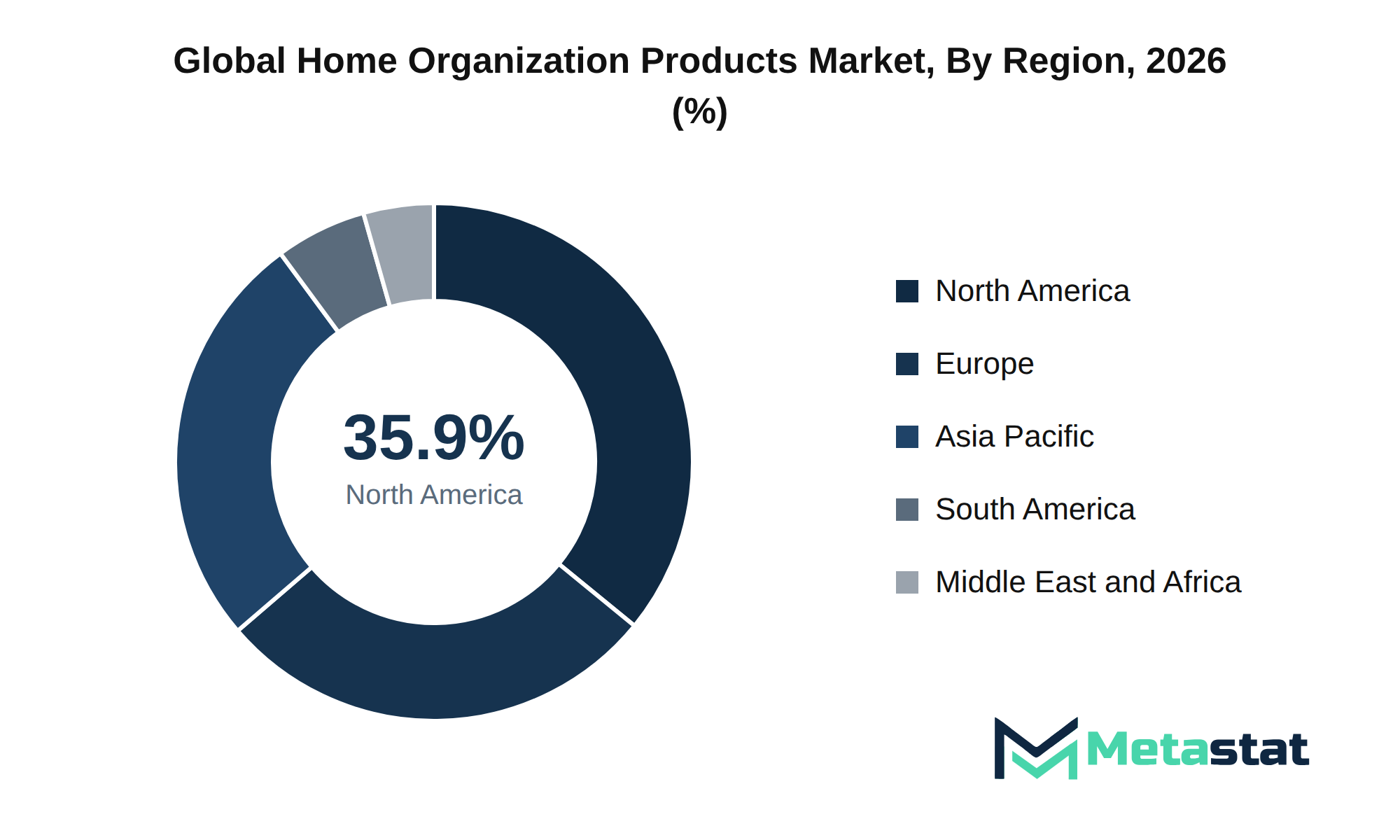
North America contributes significantly to the market, holding a share of 35.9% in 2025. This region is expected to maintain its position, with a projected market value of USD 6.8 billion by 2033, growing at a CAGR of 4.4%. Europe follows with a 27.8% share, reflecting strong demand for home organization solutions, while Asia Pacific accounts for 26.2%. The remaining shares belong to South America at 5.7% and the Middle East and Africa at 4.4%.
Segment analysis indicates diverse material preferences within the market, with plastic and resin dominating by 2033, reaching a value of USD 6.6 billion. Metal products are projected to grow from USD 3.3 billion in 2026 to USD 4.2 billion in 2033, while wood and engineered wood products are expected to achieve a total value of USD 3.8 billion. Fabric and nonwoven textiles are anticipated to experience a CAGR of 4.6%, reflecting evolving consumer preferences for sustainable materials.
The product type segment highlights storage bins, baskets, and boxes, which are set to increase from USD 3.6 billion in 2026 to USD 4.5 billion by 2033. Shelving and racking systems and closet organization systems are projected to reach values of USD 3.3 billion by 2033. Growth is evident in cabinet and drawer organizers, showing a robust CAGR of 5.2%.
Application areas including kitchens and pantries are expected to see substantial growth, increasing from USD 3.6 billion in 2026 to USD 4.9 billion in 2033, supported by a CAGR of 4.7%. The bedroom and closet segment is projected to grow, reaching USD 4.3 billion by 2033. Demand for home organization products reflects changing consumer lifestyles and an increasing focus on decluttering and efficiency in living spaces.
The regulatory environment surrounding the Home Organization Products market influences compliance strategies for manufacturers and distributors. Adherence to safety standards ensures product reliability and consumer trust, impacting sales and brand reputation. Regulatory frameworks in various regions necessitate investments in quality assurance processes, potentially increasing operational costs but enhancing market credibility.
Geopolitical risks have introduced uncertainties into supply chain operations, affecting sourcing and logistics. Fluctuations in trade policies and tariffs disrupt material availability, leading to price volatility. The market adapts through diversified sourcing strategies, mitigating risks while maintaining competitive pricing structures.
Research and development trajectories focus on innovation within product design and functionality. Companies invest in advanced materials and smart organizational solutions to meet evolving consumer preferences. This emphasis on innovation creates a competitive environment, driving market growth and expanding consumer choices.
Sustainable transformation remains a priority, with an increasing emphasis on decarbonization and circular economy principles. Brands are incorporating eco-friendly materials and practices into their operations to appeal to environmentally conscious consumers. This shift not only enhances brand loyalty but aligns with global sustainability goals, promoting long-term market viability.
The supply chain reflects a trend towards greater efficiency and transparency. Logistics architecture is evolving with technology integration, optimizing distribution channels. Enhanced tracking and management systems facilitate smoother operations, ultimately benefiting the customer journey.
Market fragmentation presents challenges and opportunities for players within the Home Organization Products market. A diverse range of competitors offers varied products, catering to niche segments. This fragmentation encourages innovation and differentiation, essential for capturing market share and driving consumer engagement.
Capital allocation strategies are crucial for companies looking to expand market presence. Investments in infrastructure and technology support growth initiatives and improve operational efficiency. While competition intensifies, effective capital management becomes essential for sustaining profitability and market relevance.
Macroeconomic headwinds, including inflationary pressures and currency volatility, impact consumer purchasing behavior. These factors necessitate agile pricing strategies and cost management approaches to maintain competitiveness. The market's resilience is tested owing to companies navigating these economic challenges while striving for growth.
The future strategic outlook for the Home Organization Products market remains positive, driven by ongoing consumer demand for organization solutions that enhance living spaces. Corporate imperatives focus on sustainability, innovation, and adaptability to market trends, ensuring long-term success in the industry.
Market Dynamics
Increased consumer focus on organization solutions
The Home Organization Products market experiences growth driven by heightened consumer focus on efficient organization solutions. Factors including urbanization, increased living space constraints, and evolving lifestyle preferences stimulate demand for products that facilitate organization within homes. Consumers increasingly prioritize functional and aesthetically pleasing storage options, leading to a surge in interest across various demographics, particularly among younger generations and urban dwellers.
This shift toward organization stems from changing consumer behaviors and the need for improved space management in smaller living environments. The rise of home improvement trends, driven by social media and influencer culture, encourages consumers to seek innovative products that enhance organization in their everyday lives. Consequently, manufacturers in the Home Organization Products market invest in developing functional designs and versatile solutions that cater to these evolving consumer preferences.
The impact on the market includes a notable increase in revenue, with projections indicating growth from USD 14.4 billion in 2025 to USD 20.4 billion by 2033, representing a CAGR of 4.4%. This growth trajectory reflects sustained demand for home organization products, fueled by consumer commitment to creating efficient and organized living spaces.
Technological integration drives market growth
Technological integration significantly influences the Home Organization Products market by enhancing product functionality and improving user experience. Rapid advancements in automation, artificial intelligence, and software solutions facilitate the development of innovative organizational products that cater to diverse consumer needs. Increased adoption of smart home technologies contributes to demand for products that seamlessly integrate with digital ecosystems.
The integration of advanced technologies allows manufacturers to streamline production processes, reduce costs, and enhance operational efficiency. Automation in manufacturing enables quicker turnaround times and improved consistency in product quality. Software adoption assists in digitizing legacy processes, improving inventory management and customer engagement strategies.
Consumers prioritize convenience and efficiency, driving demand for technologically advanced home organization solutions. Buyers increasingly seek products that offer smart features, including app-controlled storage systems or voice-activated organization tools. The evolution of consumer behaviors toward digital solutions enhances the competitive environment, encouraging suppliers to innovate continuously.
The projected growth of the Home Organization Products market highlights the potential for expanded investment in research and development. Companies focusing on technological advancements and product diversification are likely to capture greater market share. Leveraging technological integration allows businesses to enhance their offerings, leading to increased consumer satisfaction and loyalty.
Inflationary pressures impact consumer spending
Inflationary pressures exert a notable restraint on the Home Organization Products market by increasing the cost of raw materials and finished goods. Rising prices for essential commodities lead to a reduction in disposable income for consumers, limiting spending on non-essential items, including home organization solutions. This phenomenon affects various market segments, particularly those targeting mid- to high-income households prioritizing budget management during inflationary periods.
Increased operational costs for manufacturers further complicate market dynamics. Suppliers face challenges in maintaining profitability due to high production costs, resulting in higher prices for consumers. This cycle of rising costs and decreasing consumer spending power creates a challenging environment for market growth, ultimately leading to a slowdown in overall demand for home organization products.
The combination of inflationary pressures and rising operational costs leads to a more cautious approach from both consumers and retailers. Shifts in purchasing behavior alter the competitive environment, compelling manufacturers to innovate and improve value propositions to maintain market share. Without addressing these constraints, the potential for growth in the Home Organization Products market remains limited.
Geopolitical fragmentation and trade instability
The Home Organization Products market faces significant challenges owing to geopolitical fragmentation and trade instability. Factors including tariff friction and shifting trade policies disrupt supply chains, affecting sourcing and pricing strategies across regions. Manufacturers experience increased operational costs, which influence product pricing and ultimately impact consumer demand.
Supply chain instability results from rising feedstock and component volatility, creating unpredictability in production schedules. This volatility necessitates agile inventory management and strategic sourcing to mitigate disruptions. Stakeholders across the market, from producers to retailers, encounter challenges in maintaining profitability with fluctuating input costs.
Technological disruptions further complicate the market. Rapid advancements in automation and digital solutions require substantial investment in workforce upskilling and integration. Companies face talent retention pressures, driven by skilled labor becoming essential to leveraging new technologies effectively.
Environmental considerations contribute to market challenges. Increasing consumer demand for sustainability drives the need for eco-friendly products, placing additional pressure on manufacturers to innovate while managing costs. Compliance with tightening global regulatory standards introduces further complexities, requiring companies to allocate resources for legal oversight and compliance measures.
Market saturation and changing downstream demands pose additional hurdles. Companies differentiate their offerings to capture market share in a competitive landscape. These challenges require strategic adaptations to maintain growth in the Home Organization Products market, because businesses navigate an evolving environment marked by instability and rapid change.
Emerging regional demands drive market growth
Significant opportunities exist within the Home Organization Products market due to emerging regional demands. Increasing urbanization and a focus on efficient space utilization drive consumers in various regions to seek innovative organization solutions. The demand spans across North America, Europe, and Asia Pacific, where consumers prioritize organization products that enhance living spaces and create a sense of order.
Infrastructure modernization plays a crucial role in shaping the market landscape. Regions investing in infrastructure, including residential developments and urban renewal projects, create additional avenues for growth. The integration of modern designs, efficient layouts, and smart home technologies enhances the appeal of home organization products.
Technological disruptions and digital transformation are vital factors fueling market expansion. Advances in e-commerce platforms facilitate easier access to a wide range of organization solutions, allowing consumers to make informed purchasing decisions. This trend encourages cross-industry mergers and acquisitions. Companies strive to integrate complementary products and services, optimizing their market presence.
Sustainability imperatives and green transformations significantly influence purchasing behaviors. Consumers express a growing preference for eco-friendly products, prompting manufacturers to innovate with sustainable materials and processes. Alignment with Environmental, Social, and Governance (ESG) principles attracts environmentally conscious buyers and enhances brand loyalty, supporting long-term market growth.
Finally, evolving buying behaviors and digital procurement shifts highlight the importance of adapting to changing consumer preferences. The rise of online retail channels allows for a more personalized shopping experience, enabling consumers to explore niche applications and tailored solutions. Focusing on these trends enables stakeholders in the Home Organization Products market to capitalize on emerging opportunities and drive future growth.
Market Segmentation Analysis
The Global Home Organization Products market is segmented based on Material Type, Product Type, Application Area, and Distribution Channel.
By Material Type, the market is further segmented into:
Metal
Plastic and Resin
Wood and Engineered Wood
Fabric and Nonwoven Textiles
Bamboo and Natural Fibers
Glass and Acrylic
Composite and Mixed Materials
Metal
Valued at USD 3.3 billion in 2026, the metal segment is projected to reach USD 4.2 billion by 2033, achieving a CAGR of 3.7% during the forecast period. Increased consumer preference for durable and aesthetically appealing products drives demand for metal in home organization applications. The segment benefits from a trend towards sustainable materials, driven by metal products often exhibiting longevity and recyclability, aligning with environmentally conscious consumer attitudes.
Technological advancements enhance the appeal of metal products through innovative designs and improved manufacturing techniques, contributing to segment growth. The evolution of versatile organizational solutions that integrate metal into various home environments supports increased adoption among consumers, particularly in kitchen and garage applications.
Market dynamics indicate a shift towards online retail channels, enabling consumers to access a wider range of metal home organization products. This shift in distribution aligns with consumer behaviors favoring convenience and variety. The enhancing online presence of key suppliers facilitates greater market penetration.
Cost structures associated with raw material sourcing and manufacturing processes affect pricing strategies within the metal segment. Fluctuations in metal prices influence overall profitability for manufacturers, prompting them to adopt innovative sourcing strategies to mitigate risks. Regulatory compliance related to safety and sustainability will continue to shape product development in the metal segment, ensuring adherence to evolving industry standards.
Overall, the metal segment within the Home Organization Products market demonstrates strong potential for growth driven by customer demand for durable solutions and strategic marketing efforts by manufacturers. Continued investment in product innovation and supply chain resilience will support the segment's expansion through 2033.
Plastic and Resin
Plastic and resin products represent a significant segment within the Home Organization Products market, driven primarily by their versatility and affordability. The lightweight and durable nature of plastic materials makes them popular for various applications, including storage bins, organizing systems, and shelving solutions. Consumer preferences for cost-effective, easy-to-clean products contribute to the increasing adoption of plastic and resin items, particularly in households seeking efficient organization solutions.
Technological maturation has enabled the development of advanced plastic formulations, enhancing the performance characteristics of these products. Innovations in recycling processes and the use of recycled materials further strengthen the segment's appeal, aligning with growing consumer demand for sustainable options. This evolution in product design facilitates expansion opportunities, allowing manufacturers to introduce next-generation upgrades that cater to evolving consumer preferences.
Downstream applications of plastic and resin products span various end-use dynamics, particularly in kitchen and pantry organization, which is projected to experience strong growth. The integration of smart technology into organizing solutions opens new avenues for product evolution, enhancing functionality and user experience. Regulatory compliance and sustainability certifications increasingly influence purchasing decisions, with consumers favoring products that meet established environmental standards.
Pricing volatility associated with raw material sourcing presents challenges for manufacturers, impacting overall cost structures and margins. Strategic opportunity windows arise through investments in supply chain resilience, enabling companies to mitigate risks and optimize production efficiencies. The Plastic and Resin segment is projected to reach USD 6.6 billion by 2033, at a CAGR of 3.6% during the forecast period, reflecting sustained growth within the broader market.
Wood and Engineered Wood
Growth within the Wood and Engineered Wood segment stems from rising consumer interest in sustainable and eco-friendly products. Increased awareness regarding environmental impact drives demand for these materials in the Home Organization Products market. This segment benefits from robust demand across various end-use applications, including furniture and storage solutions, which highlight the aesthetic and functional advantages of wood.
Technological advancements contribute to improvements in the quality and durability of engineered wood products. Innovations including enhanced coatings and manufacturing processes facilitate the production of longer-lasting and more resilient items. These developments align with consumer preferences for high-performance and attractive home organization solutions.
Market dynamics reflect a shift towards customization, with end-users seeking products tailored to their specific needs. This trend opens avenues for manufacturers to offer personalized solutions that incorporate wood and engineered wood, enhancing customer satisfaction and loyalty. Consumers increasingly prioritize unique designs, and the segment is projected to reach USD 3.8 billion by 2033.
Pricing stability within the Wood and Engineered Wood segment is essential for maintaining competitive advantage. Firms face pressure to balance production costs with market pricing, influenced by raw material availability and manufacturing expenses. Efficient supply chain management is critical to mitigate potential disruptions and maintain profitability in this segment.
Investment in sustainability and product evolution presents strategic opportunities for growth. Companies emphasizing eco-friendly sourcing and production processes are likely to capture a larger market share. This alignment with consumer values contributes to overall market resilience, supporting continued expansion within the Home Organization Products market.
Fabric and Nonwoven Textiles
Growth in the Fabric and Nonwoven Textiles segment is driven by increasing consumer preference for lightweight, durable, and versatile storage solutions. These materials offer advantages including ease of maintenance and a wide range of design options, appealing to diverse consumer needs across multiple home organization applications. The market benefits from innovations in textile technology, which enhance the performance characteristics of these materials, making them more attractive for end-users seeking efficient home organization products.
Growing adoption of eco-friendly practices fuels the shift towards sustainable fabric and nonwoven textiles. Consumers increasingly demand products made from recycled or biodegradable materials, pushing manufacturers to develop environmentally responsible options. This trend drives market expansion by attracting environmentally conscious consumers and creating new product opportunities.
The segment is projected to grow at a CAGR of 4.6% during the forecast period. This expansion reflects the incorporation of fabric and nonwoven textiles into various product categories, including storage bins, baskets, and shelving solutions. While the market evolves, increased investment in design and functionality enhances the appeal of these products, driving further consumer interest.
Challenges related to raw material sourcing and pricing volatility impact manufacturing costs. Disruptive alternatives, including hard plastic or metal products, pose competition, compelling textile manufacturers to emphasize unique selling propositions, including comfort and aesthetic value. Market players navigate these dynamics to sustain growth and maintain competitive positioning.
Increased capital investment in production capabilities and marketing strategies is anticipated to further strengthen the market. Companies actively pursuing strategic partnerships and collaborations leverage shared resources and expertise, facilitating innovation and expanding product offerings. The overall outlook for the Fabric and Nonwoven Textiles segment within the Home Organization Products market remains positive, with strong potential for growth and market penetration.
Bamboo and Natural Fibers
Consumer preference for sustainable and eco-friendly products significantly influences the Bamboo and Natural Fibers segment within the Home Organization Products market. Increased awareness of environmental issues drives demand for materials that reduce ecological impact, enhancing the attractiveness of bamboo and natural fibers over synthetic alternatives. This trend attracts environmentally conscious consumers, particularly millennials and Generation Z, who prioritize sustainability in their purchasing decisions.
Innovative product designs leveraging bamboo and natural fibers expand opportunities in various applications. Manufacturers introduce aesthetically pleasing and functional designs that appeal to modern consumers, aligning with contemporary home decor trends. This evolution leads to heightened competition among providers, driving continuous product improvements and overall growth within the segment.
Regulatory compliance standards regarding sustainable materials further support segment expansion. Governments worldwide implement stricter regulations on materials used in consumer products, pushing manufacturers to adopt environmentally friendly options including bamboo. Compliance with these standards satisfies regulatory requirements and enhances brand reputation among consumers.
Consumption shifts toward minimalist and clutter-free lifestyles increase demand for bamboo and natural fiber products. Consumers increasingly seek organizational solutions that emphasize simplicity and functionality, leading to higher adoption rates for products made from these materials. This behavioral change creates strategic opportunities for manufacturers to develop products that cater to evolving consumer preferences.
Supply chain resilience in sourcing bamboo and natural fibers impacts production stability. Access to reliable raw material sources ensures consistent product availability, influencing pricing strategies within the market. This resilience enhances manufacturers' ability to meet growing demand while managing cost structures effectively.
Glass and Acrylic
Growing consumer awareness surrounding sustainable and aesthetically pleasing home organization solutions drives demand for glass and acrylic products. These materials offer clarity, durability, and a modern aesthetic, appealing to consumers seeking stylish and functional organization options. The shift towards eco-friendly materials influences manufacturers to innovate with glass and acrylic, introducing products that align with sustainability objectives.
Widespread adoption of glass and acrylic products results from their versatility in various applications. From kitchen organization to decorative storage solutions, these materials serve multiple end-use dynamics, enhancing their attractiveness to buyers. Increased focus on home aesthetics, particularly in urban living spaces, boosts the trend towards stylish organization products, further boosting the market.
Competition intensifies within the market due to brands innovating to capture consumer attention. Manufacturers invest in new designs and functionalities, integrating next-generation upgrades tailored to consumer preferences. This drive for innovation creates a dynamic segment, compelling companies to expand their product offerings in glass and acrylic, thereby enhancing market penetration.
Economic factors including pricing volatility influence purchasing decisions in the home organization products market. Fluctuations in raw material costs affect pricing strategies for glass and acrylic products, prompting manufacturers to assess their cost structures and adjust pricing accordingly. Effective management of these economic pressures is vital for maintaining competitiveness within the segment.
Strategic opportunity windows emerge owing to consumer preferences shifting towards personalized and customizable organization solutions. Glass and acrylic products provide an ideal canvas for customization, allowing brands to cater to unique consumer needs. This aspect positions manufacturers to capitalize on trends favoring bespoke home organization solutions, improving their market positioning.
Composite and Mixed Materials
Demand for composite and mixed materials within the Home Organization Products market aligns with a growing preference for versatile and durable products. These materials combine different substances to enhance functionality, offering properties including strength, flexibility, and aesthetic appeal that cater to diverse consumer needs.
Factors driving adoption include a shift toward multifunctional home organization solutions, allowing consumers to maximize space and efficiency. Increased emphasis on design and personalization pushes manufacturers to innovate continuously, resulting in products that integrate various materials to meet consumer preferences.
Technological maturation in material science has led to improved production techniques. Manufacturers develop composite and mixed materials that are both lightweight and robust. This evolution supports product evolution, allowing for unique designs that cater to modern consumer aesthetics and functional needs.
End-use dynamics play a significant role in this segment, driven by consumers increasingly seeking products suitable for various applications, from kitchens to home offices. Regulatory compliance standards surrounding material safety and environmental impact influence product development, compelling manufacturers to adopt eco-friendly practices in sourcing and production.
Pricing volatility and margin pressures in raw material sourcing impact the overall cost structure of composite and mixed materials. Companies within this segment face challenges related to supply chain resilience, navigating fluctuating costs while maintaining product quality and affordability for consumers.
Strategic opportunity windows arise from innovations in sustainable materials and practices. Consumer environmental consciousness drives demand for products using eco-friendly composite materials, presenting avenues for market expansion and investment. Identifying white-space opportunities in this evolving landscape becomes crucial for stakeholders aiming to capitalize on emerging trends.
By Product Type, the market is further segmented into:
Valued at USD 3.6 billion in 2026, the Storage Bins, Baskets and Boxes segment is projected to reach USD 4.5 billion by 2033, at a CAGR of 3.4% during the forecast period. Demand for storage solutions arises from increasing urbanization and smaller living spaces, compelling consumers to optimize available areas for storage. Rising awareness of home organization benefits drives consumer interest, leading to enhanced sales across this segment.
Technological advancements enhance product design and functionality, enabling manufacturers to introduce innovative solutions that meet diverse consumer needs. Smart storage options, including bins with built-in organization systems, illustrate this trend. Evolving consumption patterns among consumers, prioritizing efficiency and functionality, contribute to growth within the segment.
End-use dynamics significantly shape demand, particularly in urban areas where space constraints necessitate versatile storage solutions. The market observes increasing applications in various settings, including kitchens, bedrooms, and utility areas, further driving segment expansion. Retail channels, particularly online platforms, play a crucial role in facilitating consumer access to these products, with online retail expected to experience strong growth.
Market players focus on strategic investments and product diversification to capture a larger share of the market. Companies enhance supply chain resilience and explore sustainable sourcing options to mitigate raw material price volatility. Regulatory compliance standards promote the use of eco-friendly materials, influencing product evolution and aligning with growing consumer preferences.
Shelving and Racking Systems
Growth in the Shelving and Racking Systems segment is driven by increasing demand for efficient storage solutions across various sectors, including residential, commercial, and industrial applications. Urbanization leads to smaller living spaces, while a rising focus on organization and decluttering supports this demand. Consumers seek customizable and versatile storage options that maximize space utilization.
Technological advancements influence product development, resulting in innovative designs and materials that enhance functionality and aesthetics. Manufacturers integrate smart technologies into shelving systems, allowing users to manage their storage more effectively. These next-generation upgrades increase consumer interest and drive market expansion.
The segment is projected to reach USD 3.3 billion by 2033, at a CAGR of 4% during the forecast period. Increasing awareness regarding the benefits of organized living spaces fuels growth within the market. Retailers expand their offerings through online platforms and specialty stores, providing consumers with easier access to a variety of shelving and racking solutions.
Evolving end-use dynamics highlight the necessity for adaptable storage systems in different environments, including kitchens, garages, and offices. Compliance with safety and quality standards enhances consumer confidence in purchasing these products. Consequently, investment in this segment is expected to continue, driven by consumer preferences for functionality, style, and sustainability.
Closet and Wardrobe Organization Systems
Growth in the Closet and Wardrobe Organization Systems segment aligns with increasing consumer focus on maximizing space efficiency and improving home aesthetics. Rising urbanization and smaller living spaces increase the demand for innovative storage solutions that enhance organization and accessibility. Consumers seek products that fulfill functional requirements and contribute to the overall décor of their homes. This trend influences manufacturers to invest in design and technology that promote integration of closet systems into various home environments.
Technological advancements facilitate the development of customizable and modular organization systems. Enhanced manufacturing processes enable the production of lightweight yet durable materials, appealing to a broader consumer base. Sustainability concerns influence product development, with companies incorporating eco-friendly materials into their designs. These innovations support market players in capturing emerging consumer preferences and expanding their product offerings.
Pricing volatility remains a significant factor in the segment, impacting both suppliers and consumers. Fluctuations in raw material costs influence product pricing, potentially affecting consumer purchase decisions. Market players actively manage these cost structures to maintain competitive pricing while ensuring quality. Strategic partnerships with suppliers enhance supply chain resilience, allowing for better management of raw material sourcing and mitigating logistics vulnerabilities.
Consumer behavior shifts towards online shopping platforms have transformed distribution strategies. E-commerce has emerged because a vital channel for reaching customers, leading to investments in digital marketing and enhanced online retail experiences. This change in purchasing habits drives competition among suppliers, because they strive to improve their online presence and customer engagement. The Closet and Wardrobe Organization Systems segment is projected to reach USD 3.3 billion by 2033, reflecting significant growth in response to evolving consumer demands and market dynamics.
Cabinet and Drawer Organizers
Growth in the Cabinet and Drawer Organizers segment is driven by increasing consumer demand for efficient storage solutions in residential spaces. Factors contributing to this demand include the rising trend of minimalism and urban living, where space is often limited. The market benefits from a shift in consumer preferences towards products that enhance organization and functionality in kitchens and bedrooms.
Technological advancements play a critical role in segment expansion, with manufacturers introducing innovative designs and materials that provide improved durability and aesthetics. Enhanced product features, including adjustable compartments and eco-friendly materials, attract a broader customer base. The segment is projected to grow at a CAGR of 5.2% during the forecast period, reflecting the increasing focus on home organization products.
Consumer awareness regarding the benefits of organized living influences purchasing decisions, prompting investments in high-quality organizers that improve home efficiency. The expansion of online retail channels facilitates easier access to a wide range of products, enhancing customer convenience. The Home Organization Products market experiences growth driven by more consumers prioritizing optimal use of their living spaces, reaffirming the significance of cabinet and drawer organizers.
Competition within the market intensifies owing to key players developing targeted marketing strategies aimed at specific demographics. Companies increasingly invest in product innovation and differentiated offerings to capture market share. This competitive environment drives continuous improvement and adaptation, further propelling growth within the Cabinet and Drawer Organizers segment.
Hooks, Hangers and Over-the-Door Organizers
Growing demand for efficient storage solutions drives interest in hooks, hangers, and over-the-door organizers. These products facilitate optimal use of vertical space, particularly in smaller living environments, where maximizing every square inch is crucial. Urbanization trends, particularly in densely populated cities, cause consumers to seek innovative ways to organize their homes, leading to increased adoption of these organizational tools.
Technological advancements enhance product usability, with many hooks and hangers incorporating user-friendly designs and materials that ensure durability. The evolution of these products reflects a shift towards multifunctionality, where items serve multiple purposes. This appeal prioritizes versatility in home organization solutions. This evolution supports the segment's expansion, driven by retailers and manufacturers adapting to changing consumer preferences.
End-use dynamics show significant adoption in various areas of the home, especially kitchens and closets, contributing to the growth of the Home Organization Products market. Homeowners increasingly seek solutions that organize and complement interior aesthetics, pushing manufacturers to innovate designs that align with current home decor trends. The emphasis on style alongside functionality enhances the appeal of hooks, hangers, and over-the-door organizers, ensuring sustained demand.
Pricing strategies within this segment remain competitive, with manufacturers balancing quality and affordability. This careful management of cost structures enables companies to maintain margins while responding to shifts in consumer purchasing power. The market continues to witness pricing volatility due to fluctuations in raw material costs, impacting overall segment profitability.
Strategic opportunity windows arise owing to manufacturers exploring eco-friendly materials, aligning with growing consumer preferences for sustainability. Innovations in sourcing and production processes contribute to greater environmental compliance, appealing to environmentally conscious consumers. This trend enhances brand reputation and opens new avenues for investment in sustainable product lines.
Resilience in supply chains has become increasingly important, ensuring consistent availability of raw materials for production. Manufacturers focus on diversifying sourcing strategies to mitigate risks associated with disruptions, thereby maintaining product availability. This resilience supports long-term growth prospects for the hooks, hangers, and over-the-door organizers segment, reinforcing its role within the broader Home Organization Products market.
Laundry Hampers and Sorting Systems
Demand for laundry hampers and sorting systems correlates with the increasing focus on home organization and cleanliness. Consumers actively seek efficient solutions to manage laundry tasks, facilitating a structured and aesthetically pleasing environment. This trend highlights the significance of functionality and design in product offerings.
Technological maturation supports advancements in materials and designs, enhancing the usability of laundry hampers. Innovations including collapsible designs and integrated sorting features appeal to consumers prioritizing space efficiency and convenience. Product evolution aligns with contemporary consumer preferences for both practicality and visual appeal.
Downstream applications highlight the need for laundry hampers in various settings, including residential homes, hotels, and laundromats. Each end-use scenario emphasizes different features, including durability for commercial settings versus aesthetics for home use. This differentiation drives manufacturers to tailor their products accordingly.
Consumption shifts toward sustainable materials influence the market, with eco-friendly options gaining popularity among environmentally conscious consumers. Regulatory compliance standards regarding material safety and environmental impact further shape product development strategies within the sector. Manufacturers invest in sustainable sourcing and production processes to align with these expectations.
Pricing volatility remains a challenge, with raw material costs affecting profit margins. Fluctuations in the prices of fabric, plastics, and metal components create uncertainties for producers, compelling them to optimize their supply chains. Effective supply chain resilience is critical in mitigating these risks and ensuring steady production flows.
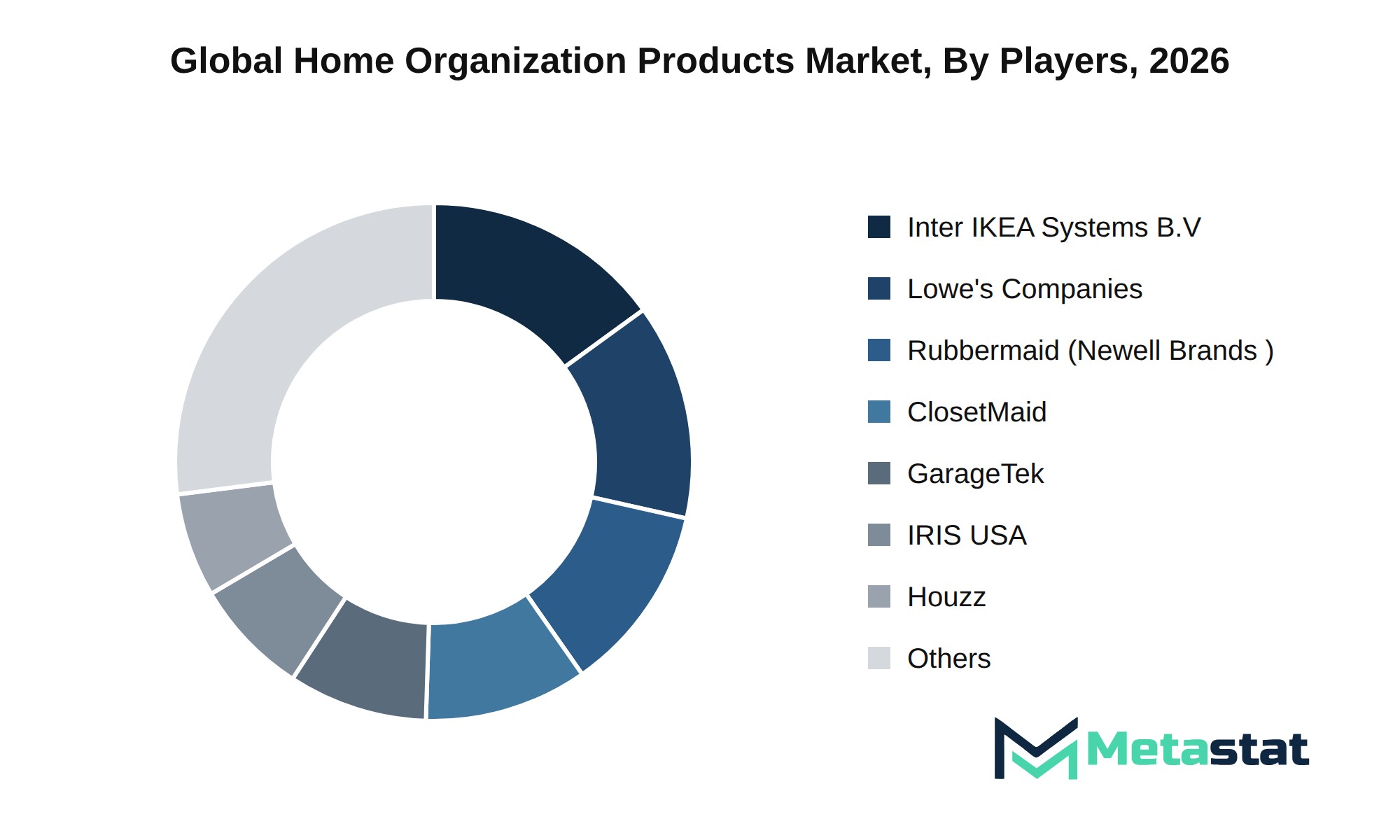
The presence of various players, including ClosetMaid Corporation, Rubbermaid, and Sterilite Corporation, intensifies competition within the market. Strategic opportunity windows exist for new entrants focusing on niche markets, including customized laundry solutions or multifunctional products that cater to the evolving needs of consumers. This competitive dynamic emphasizes the importance of innovation and differentiation in capturing market share.
Investment outlook remains positive, driven by an increasing demand for smart home products that incorporate technology into everyday tasks. Companies leveraging next-gen upgrades, including app connectivity for laundry management, strengthen their market presence and appeal to tech-savvy consumers within the Home Organization Products market.
Utility Carts and Mobile Organizers
Utility carts and mobile organizers experience significant demand driven by the increasing need for versatile storage solutions in various settings, including homes, offices, and commercial spaces. Consumers increasingly prioritize products that provide efficiency and ease of use, enhancing organization and accessibility. The rise in urban living, characterized by smaller living spaces, fuels the necessity for compact, multifunctional organizing products.
Technological advancements contribute to the evolution of utility carts and mobile organizers, with innovations focused on design, material durability, and functionality. Enhanced features including collapsibility, adjustable heights, and integrated storage compartments support diverse applications, from domestic settings to professional environments. This evolution aligns with consumer preferences for products that enhance mobility and convenience.
End-use dynamics reflect a shift in consumer behaviors, with heightened interest in home organization products that facilitate decluttering and optimized space utilization. Home organization products market growth is supported by increased investment in home improvement and interior design. Retailers emphasize the importance of utility carts and mobile organizers in promoting efficient storage solutions, responding to the heightened demand from consumers prioritizing space-saving products.
Regulatory compliance standards and certifications regarding materials and safety are becoming increasingly relevant. These standards influence product development, ensuring that utility carts and mobile organizers meet safety requirements while promoting sustainability. This trend aligns with consumer expectations for eco-friendly materials and responsible sourcing practices.
Cost structures and pricing volatility impact the market landscape, driven by manufacturers seeking to balance quality with affordability. Rising raw material costs lead to increased pricing pressures, necessitating strategic adjustments in product offerings. Supply chain resilience is essential for maintaining product availability, with manufacturers focusing on efficient logistics and sourcing strategies to mitigate vulnerabilities.
Strategic opportunity windows emerge for manufacturers and retailers within the utility carts and mobile organizers sub-segment. Market players leveraging innovative designs and sustainable practices position themselves favorably in a competitive landscape. Capital investment in research and development enhances product differentiation, catering to evolving consumer preferences and strengthening brand loyalty in the home organization products market.
Dish-Drying and Countertop Organizers
Interest in dish-drying and countertop organizers reflects the growing focus on efficient kitchen management. Increased consumer awareness around maximizing kitchen space drives demand for products that enhance functionality and aesthetics. The trend towards smaller living spaces, especially in urban areas, contributes to the rising popularity of compact and multi-functional organizers. This sub-segment appeals to various consumers, including those seeking solutions for limited countertop space.
Technological maturation supports advancements in materials and design for dish-drying and countertop organizers. Innovations in materials improve durability and convenience, influencing purchasing decisions. Next-gen upgrades focus on ergonomic designs and optimal space utilization, enabling consumers to organize their kitchens more effectively. Product evolution includes features including collapsible designs and integrated drying solutions, making these products attractive to a wider audience.
Consumption shifts towards sustainable and eco-friendly materials impact the dish-drying and countertop organizers sub-segment. Consumers increasingly prioritize products made from recyclable or renewable resources, prompting manufacturers to adapt their offerings. Compliance with regulatory standards regarding material safety and environmental impact influences product development. These dynamics promote a competitive environment where brands strive to meet evolving consumer preferences.
Pricing volatility linked to raw material sourcing influences market strategies for dish-drying and countertop organizers. Fluctuations in the costs of materials, including bamboo or recycled plastics, affect profit margins and pricing strategies. Companies in this sub-segment focus on supply chain resilience to mitigate risks associated with logistics vulnerabilities and materials procurement. Strategic opportunity windows exist for brands to invest in sustainable materials, enhancing their market positioning.
Disruptive alternatives, including digital kitchen organization tools, challenge traditional dish-drying and countertop organizers. Competition from innovative solutions requires established brands to adapt swiftly or risk losing market share. Ongoing capital investment in research and development will define the future landscape. Overall, the dish-drying and countertop organizers sub-segment holds strong potential within the broader Home Organization Products market, driven by consumer demand for efficiency, innovation, and sustainability.
Consumer trends increasingly favor multifunctional home organization products. The demand for shoe racks, jewelry organizers, and specialty holders grows significantly owing to rising interest in home aesthetics and efficient space utilization. These products enhance personal living spaces while providing practical storage solutions, aligning with consumer desires for organized and visually appealing environments.
Shifts in consumer behavior demonstrate a preference for personalized organization solutions. Customers actively seek products that reflect individual style and meet specific needs. This trend drives innovations in design and functionality within the segment, leading to a broader range of options for consumers in the Home Organization Products market.
Technological advancements play a role in enhancing product features and usability. Manufacturers are adopting new materials and designs, resulting in improved durability and functionality. The incorporation of sustainable materials aligns with eco-conscious consumer interests, contributing to the market's expansion.
Competitive dynamics shape the segment. Established brands and new entrants strive to differentiate their offerings through unique designs and marketing strategies. The ongoing focus on customization and personalization creates opportunities for growth, attracting diverse consumer demographics.
Pricing strategies impact market accessibility and consumer adoption. While premium products cater to affluent consumers, budget-friendly options ensure that a wider audience engages with the segment. This dual approach supports a balanced market growth trajectory, meeting various consumer preferences.
Overall, innovations in product design, consumer-centric marketing strategies, and a focus on sustainability contribute to the continued evolution of the Others (Shoe Racks, Jewelry Organizers, Specialty Holders) segment within the Home Organization Products market. These factors collectively drive demand, stimulate competition, and create strategic opportunities for market players.
By Application Area, the market is further segmented into:
Kitchen and Pantry
Bedroom and Closet
Bathroom
Laundry and Utility Room
Living Room and Entryway
Home Office and Study
Garage and Basement
Children's Room and Playroom
Others (Outdoor and Garden, Pet Areas)
Kitchen and Pantry
Valued at USD 3.6 billion in 2026, the Kitchen and Pantry segment is projected to reach USD 4.9 billion by 2033, at a CAGR of 4.7% during the forecast period. Rising consumer demand for organized and efficient kitchen spaces drives growth in this segment. Increased focus on meal preparation and home cooking trends influences purchasing decisions, leading to heightened interest in diverse storage solutions. The integration of multifunctional products enhances consumer appeal by addressing space constraints and improving kitchen aesthetics.
Technological advancements in materials and design facilitate the development of innovative kitchen organization products. This evolution includes a shift towards sustainable materials, aligning with consumer preferences for eco-friendly options. The incorporation of smart technologies into kitchen organization items further attracts tech-savvy buyers, offering increased functionality and convenience.
End-use dynamics reflect a shift towards online retail channels, allowing consumers easier access to a wide range of products. Specialty stores continue to play a significant role in presenting premium options, catering to consumers who prioritize quality over cost. Pricing volatility is influenced by fluctuations in raw material costs, impacting manufacturers' margins and requiring strategic pricing adjustments to maintain competitiveness.
Strategic opportunity windows emerge from evolving consumer lifestyles, particularly those favoring convenience and organization. Increased urbanization contributes to smaller living spaces, necessitating efficient storage solutions. The Home Organization Products market experiences sustained growth driven by businesses capitalizing on these trends, leading to increased competition among key players.
Bedroom and Closet
Increasing interest in organized living spaces drives demand for the Bedroom and Closet segment within the Home Organization Products market. Factors contributing to this trend include rising consumer awareness regarding efficient use of space and the aesthetic appeal of well-organized bedrooms and closets. This segment is projected to reach USD 4.3 billion by 2033, at a CAGR of 3.8% during the forecast period. Innovations in storage solutions, including modular systems and customizable organizers, help address diverse consumer needs, supporting market growth.
Technological advancements in materials and design play a crucial role in segment expansion. Consumers increasingly prefer products that not only provide functionality but enhance the visual appeal of their living spaces. The incorporation of eco-friendly materials influences purchasing decisions, aligning with a broader trend towards sustainability in home organization products. While more consumers prioritize environmental considerations, manufacturers that focus on sustainable practices gain market share.
Shifts in lifestyle, including remote working and the rise of minimalism, further impact demand dynamics. These lifestyle changes lead to a growing emphasis on decluttering and optimizing home environments, resulting in increased sales of storage solutions specifically designed for bedrooms and closets. The market experiences heightened competition driven by numerous players striving to innovate and provide tailored solutions that meet the evolving preferences of consumers.
The growing influence of online retail channels facilitates broader accessibility to a range of products within the Bedroom and Closet segment. Consumers benefit from the convenience of shopping from home, driving sales and encouraging competition among brands. This shift highlights the importance of an effective online presence for manufacturers and retailers in the market.
Overall, the Bedroom and Closet segment stands poised for continued growth, propelled by evolving consumer preferences, innovative products, and strategic marketing approaches within the Home Organization Products market.
Bathroom
Interest in the Bathroom segment of the Home Organization Products market reflects a growing trend towards personal wellness and organization in domestic spaces. Consumers increasingly prioritize comfortable and functional bathroom environments, driving demand for various organizational products. The ongoing shift towards minimalist designs and efficient use of space enhances the adoption of innovative storage solutions, boosting the appeal of this segment.
While the segment evolves, next-gen upgrades in materials and design improve durability and aesthetic appeal. Technological maturation enables the introduction of smart storage solutions, including integrated lighting and motion-sensor features, which further enhance user experience. Regulatory compliance standards related to safety and environmental impact influence product design and manufacturing processes, promoting sustainable practices in the industry.
By 2033, the Bathroom segment is projected to reach USD 2.4 billion, reflecting consistent growth driven by rising consumer expenditure on home improvement and a heightened focus on personal hygiene. This growth presents strategic opportunity windows for manufacturers and retailers aiming to capture a larger market share through innovative product offerings and effective marketing strategies. Consumption shifts towards multifunctional and space-saving designs will reshape product development within the segment.
Strategic partnerships among players in the market support supply chain resilience, ensuring the availability of raw materials and efficient distribution channels. Competitive pressures drive companies to optimize pricing structures while maintaining product quality, balancing cost pressures with profit margins. Overall, the Bathroom segment remains a vital component of the Home Organization Products market, driven by dynamic consumer preferences and ongoing innovations.
Laundry and Utility Room
Growth in the Laundry and Utility Room segment is projected to grow at a CAGR of 4.8% during the forecast period. Increasing consumer awareness regarding organized living spaces drives demand for innovative storage solutions. Households increasingly integrate laundry and utility rooms due to multifunctional spaces leading to a higher focus on efficient organization products. The adoption of versatile and space-saving designs enhances the appeal of products within this segment. Demand from urban dwellers for products that maximize storage and utility in smaller living environments significantly influences market dynamics.
The integration of smart technology and next-generation upgrades in laundry and utility organization products has gained traction. Features including sensor-based sorting systems and energy-efficient designs attract environmentally conscious consumers, positioning these products favorably in the market. Rising disposable income levels and shifting consumer preferences towards home improvement projects further support segment growth. While the market evolves, investment in product innovation aimed at enhancing user experience and convenience remains crucial.
Regulatory compliance and sustainability certifications increasingly impact product development strategies. Manufacturers focusing on eco-friendly materials and production processes align with growing consumer expectations. This shift towards sustainability opens strategic opportunity windows for companies seeking to differentiate their offerings. Overall, the Laundry and Utility Room segment's expansion contributes significantly to the overall Home Organization Products market, reflecting changing consumer lifestyles and preferences.
Living Room and Entryway
Interest in stylish and functional living spaces drives demand for home organization products tailored for the living room and entryway. Consumers increasingly seek solutions that optimize space while enhancing aesthetics. This shift reflects broader trends in interior design, emphasizing a blend of practicality and visual appeal. Key drivers include rising urbanization, where smaller living spaces necessitate innovative organization solutions that maximize limited space. Products designed for this segment often include multi-functional furniture, decorative storage options, and aesthetically pleasing organizers.
The growth of e-commerce platforms facilitates access to a wider range of organization products, enhancing visibility for brands operating in the market. Online shopping trends contribute to heightened competition among suppliers, prompting them to innovate continuously. Product evolution remains critical, with an emphasis on sustainability, quality materials, and ergonomic designs. Advances in technology support the development of next-generation organizational solutions, further attracting consumers looking for functional yet stylish options.
Societal shifts towards minimalism and clutter-free living spaces influence purchasing behavior, with consumers prioritizing products that enhance the overall ambiance of their homes. The living room and entryway segments benefit from this trend owing to their function because high-traffic areas where aesthetics and organization intersect. Understanding these dynamics allows companies to tailor their offerings to meet the evolving preferences of consumers, positioning themselves for growth in the competitive landscape of the home organization products market.
Home Office and Study
Increasing reliance on remote work and flexible study arrangements fuels demand for efficient organization solutions in home office and study environments. This shift towards remote work enhances the importance of creating functional yet aesthetically pleasing workspaces, which drives consumer interest in home organization products that optimize space and improve productivity. Trends in minimalism and decluttering influence consumers to prioritize versatile and stylish organization solutions, making them essential in home office settings. Factors including rising home ownership and increased investment in home improvement projects contribute to this segment's growth, attributed to homeowners seeking to create personalized and productive work areas.
Technological advancements play a significant role in the evolution of home office and study products. Innovations in materials and design enhance the functionality and durability of storage solutions, aligning with consumer preferences for high-quality products. Adoption of smart storage solutions, equipped with digital features for efficiency, supports market expansion in this sub-segment. The trend towards multifunctional furniture that combines storage with workspace drives product evolution, catering to the needs of consumers seeking space-saving solutions.
Regulatory compliance and sustainability concerns influence product development in this segment. Manufacturers increasingly focus on eco-friendly materials and sustainable practices to align with consumer values. This commitment to sustainability enhances brand reputation and drives consumer loyalty, contributing to competitive advantage. Pricing volatility in raw materials poses challenges for manufacturers, impacting cost structures and profit margins. Strategic sourcing and supply chain optimization become critical for maintaining competitive pricing while ensuring product quality.
Investment in marketing strategies that emphasize the benefits of organized living spaces enhances consumer engagement. Brands that effectively communicate the emotional and functional benefits of their products capture market share and drive demand. Opportunities exist for brands to explore partnerships with influencers and home improvement platforms, expanding their reach to potential consumers. The home organization products market, particularly in the home office and study sub-segment, evolves, driven by changing consumer preferences and market dynamics.
Garage and Basement
Demand for garage and basement organization products reflects a growing emphasis on maximizing storage capacity and maintaining order in multifunctional spaces. Homeowners increasingly recognize the importance of using underused areas for storage, particularly in urban environments where space is limited. This trend influences the adoption of innovative storage solutions that enhance accessibility and organization.
Technological advancements contribute to the evolution of products within this segment. Manufacturers introduce modular and customizable systems that cater to various consumer preferences. Enhanced materials and designs improve durability and aesthetic appeal, attracting a broader customer base. The shift towards environmentally friendly materials continues to influence product development, aligning with consumer values regarding sustainability.
Consumer preferences indicate a significant shift towards multifunctional products designed for diverse applications. Items that serve multiple purposes, including workspaces that transition into storage areas, experience increased popularity. This trend influences purchasing decisions, with customers seeking solutions that offer flexibility and efficiency.
Regulatory compliance regarding safety and sustainability influences product offerings. Manufacturers implement certifications and standards to enhance product credibility and consumer trust. Compliance with these regulations ensures products meet quality expectations, impacting market dynamics and consumer perceptions.
Pricing strategies remain a crucial aspect of the market. Fluctuations in raw material costs influence pricing strategies, directly affecting margins. Manufacturers focus on optimizing supply chains to mitigate risks and stabilize costs while maintaining competitive pricing.
Strategic opportunities arise from the increasing demand for innovative storage solutions. Market players capitalize on gaps in the current offerings, enabling the introduction of niche products that cater to specific consumer needs. This proactive approach drives market growth, enhancing investment prospects and expanding product portfolios.
The Home Organization Products market experiences resilience in supply chain management, vital for meeting consumer demands effectively. Manufacturers assess sourcing strategies to navigate potential vulnerabilities, ensuring a steady flow of raw materials and minimizing disruptions. This resilience supports consistent product availability, essential for maintaining customer satisfaction in a competitive environment.
Children's Room and Playroom
Children's rooms and playrooms increasingly emphasize organization to support children’s development and enhance play. The rise in awareness regarding the importance of organized spaces for creativity and learning drives demand for products specifically tailored for these environments.
A growing focus on safety and accessibility underpins product design within this sub-segment. Manufacturers prioritize materials that are both child-friendly and sustainable, reflecting changing consumer preferences toward eco-conscious choices. This shift enhances the appeal of storage solutions that blend functionality with aesthetic appeal.
Segment expansion correlates with increased urbanization and smaller living spaces, prompting families to seek compact and multifunctional storage options. Innovations in product design, including modular and stackable units, address the need for flexible solutions that adapt to changing requirements.
Adoption of technology within home organization products influences the children’s room and playroom segment. Smart storage solutions that integrate with home automation systems support convenience and enhance user experience. Features like built-in labeling systems further streamline organization for busy households.
Pricing strategies play a significant role in market dynamics. Competitive pricing, alongside unique product features, attracts value-driven consumers looking to enhance their children's spaces affordably. This trend supports a diverse range of products appealing to various consumer segments within the market.
Supply chain resilience remains critical, particularly concerning raw material sourcing. Manufacturers focus on securing sustainable supply chains to mitigate risks associated with price volatility and fluctuating availability of materials. This strategy enhances market stability and strengthens long-term partnerships.
The competitive landscape features key players including ClosetMaid Corporation, Rubbermaid (Newell Brands Inc.), and Houzz Inc., which invest in product innovation and market expansion. Their efforts contribute to a robust market environment, characterized by the introduction of new designs and improved functionality tailored to children's needs. This environment supports ongoing competition and investment in the segment.
Overall, the children's room and playroom sub-segment reflects broader trends within the Home Organization Products market, with a clear emphasis on safety, sustainability, and adaptability in product offerings.
Others (Outdoor and Garden, Pet Areas)
Demand for outdoor and garden organization products reflects increasing interest in enhancing outdoor living spaces. Homeowners seek solutions that promote functionality and aesthetic appeal in their gardens and patios. This trend aligns with a broader consumer preference for organized and visually pleasing environments.
Pet area organization products have gained traction due to rising pet ownership globally. With more households integrating pets into their lifestyles, the demand for specialized storage solutions that accommodate pet supplies continues to expand. This focus on pet-friendly organization directly influences purchasing behavior in the Home Organization Products market.
Consumers prioritize sustainable materials and multifunctional products, driving innovation within the outdoor and garden, and pet areas sub-segment. Brands that offer eco-friendly options or adaptable designs benefit from heightened consumer awareness regarding environmental sustainability. This shift presents opportunities for companies looking to expand their product offerings.
Outdoor living spaces become an extension of the home, making effective organization solutions tailored for these environments essential. In addition to aesthetics, convenience plays a critical role in purchasing decisions, resulting in a preference for products that streamline outdoor activities.
Regulatory compliance standards, particularly regarding materials and safety, influence product offerings in this market. Companies ensure adherence to these standards while innovating to meet consumer expectations. This dynamic environment necessitates ongoing investment in research and development, enabling brands to maintain competitiveness and relevance in the Home Organization Products market.
Strategic opportunities exist for companies that identify and address specific consumer needs within the outdoor, garden, and pet areas segment. By focusing on evolving consumer preferences, brands enhance their market position and capture a greater share of the growing demand for home organization solutions.
By Distribution Channel, the market is further segmented into:
Online Retail
Specialty Stores
Others (Warehouse Clubs, Catalog Retailers)
Online Retail
Valued at USD 5.9 billion in 2026, the Online Retail segment is projected to reach USD 8.9 billion by 2033, at a CAGR of 6% during the forecast period. Growth in this segment is driven by the increasing consumer preference for the convenience of online shopping, particularly amid the rise of e-commerce platforms that provide easy access to home organization products. The market benefits from a diverse range of offerings available online, which enhances product visibility and consumer choice.
Technological advancements in logistics and supply chain management boost the efficiency of online retail channels. Retailers leverage data analytics to understand consumer behavior and tailor their marketing strategies accordingly. Enhanced user experiences on e-commerce platforms contribute significantly to customer retention and loyalty, driving repeat purchases in the home organization products market.
Shifts in consumer behavior towards home improvement and organization reflect broader trends in lifestyle changes. Increased home renovations and décor projects during the pandemic period raised the demand for home organization products, resulting in higher sales through online channels. While consumers invest in creating organized and functional spaces, online retail emerges because a primary channel for acquiring these products.
Players in the Online Retail segment, including ClosetMaid Corporation and Rubbermaid (Newell Brands Inc.), adapt their strategies to include comprehensive online platforms, ensuring a smooth shopping experience. The competitive environment prompts continuous innovation and the introduction of new products, expanding the overall market in both reach and revenue.
Anticipated growth in the Online Retail segment aligns with the overall trajectory of the home organization products market. While consumer preferences evolve, investment in digital marketing and online infrastructure becomes crucial for capturing market share. The segment's expansion speaks to the increasing importance of digital channels in accessing essential home organization solutions.
Specialty Stores
Growing consumer interest in personalized solutions for home organization significantly drives the Specialty Stores segment. These stores frequently offer a curated selection of products tailored to specific consumer needs, enhancing their appeal among shoppers seeking unique organizational items. The rise of home improvement trends, alongside increased focus on maximizing space efficiency, increases demand for specialty products. Consumers increasingly prefer shopping at specialty stores due to knowledgeable staff and the option to see products in use, which promotes informed purchasing decisions.
Product evolution within the market introduces innovative designs and materials, responding to consumers' demands for aesthetically pleasing and functional items. Specialty Stores benefit from advancements in technology that streamline inventory management, allowing for better stock availability and customer satisfaction. The segment is projected to reach USD 7.4 billion by 2033, at a CAGR of 3.2% during the forecast period, reflecting ongoing growth driven by these consumer behaviors and market dynamics.
Investment in marketing strategies targeting niche segments plays a critical role in driving sales within specialty stores. Understanding the preferences of specific demographics enables retailers to tailor their offerings effectively, enhancing customer loyalty and driving repeat business. While the market continues to expand, these strategies play an essential role in maintaining a competitive advantage within the Home Organization Products market.
Others (Warehouse Clubs, Catalog Retailers)
Growth in the Others (Warehouse Clubs, Catalog Retailers) segment is driven by increasing consumer preference for bulk purchasing and cost-effective solutions. Warehouse clubs provide a variety of home organization products at competitive prices, attracting budget-conscious consumers. Catalog retailers enhance accessibility, allowing customers to browse extensive product selections without the constraints of physical store limitations. This segment is projected to reach USD 4.1 billion by 2033, reflecting strong demand dynamics within the market.
Adoption of innovative storage solutions contributes to segment expansion. Increased focus on home organization trends encourages consumers to invest in effective storage options, making products from warehouse clubs and catalog retailers appealing choices. E-commerce integration enables these retailers to offer a convenient shopping experience, enhancing consumer engagement and satisfaction.
Technological advancements influence product evolution, with continual improvements in design and functionality. Enhanced product features attract consumers seeking tailored solutions for their organization needs. Positive shifts in consumer behavior, driven by the desire for organized living spaces, create growth opportunities for this segment.
By Region
Based on geography, the Global Home Organization Products market is divided into North America, Europe, Asia-Pacific, South America, Middle East, and Africa.
North America
Demand for home organization products in North America reflects a growing emphasis on efficient living environments. Key factors driving this trend include lifestyle changes that prioritize organization and functionality within homes, influenced by social media displaying organized spaces. The United States, Canada, and Mexico represent the primary markets in this region, with the United States holding the largest share.
The North America Home Organization Products market is projected to expand at a CAGR of 4.4% within the forecast period, reaching a market size (TAM) of USD 6.8 billion by the end of 2033. This growth is supported by a robust consumer preference for products that enhance home aesthetics and utility, leading to significant investment in innovative solutions across various segments.
Regional infrastructure modernization contributes to the accessibility and availability of these products, with increasing retail presence and online platforms facilitating consumer access. Online retail sales, in particular, exhibit rapid growth, expected to reach USD 8.9 billion by 2033, indicating a continued shift toward e-commerce channels in the home organization products market.
Market players, including ClosetMaid Corporation and Rubbermaid (Newell Brands Inc.), implement strategies to capture growing consumer interest. The competitive landscape features a mix of established brands and newer entrants, with ongoing efforts toward product differentiation to meet diverse consumer preferences.
While the market matures, replacement cycles for existing home organization products drive incremental growth. Consumers increasingly seek high-quality and sustainable materials, influencing purchasing decisions and shaping product development within the home organization products market.
Europe
Growing interest in home organization drives market expansion throughout Europe. Key factors include rising urbanization, increasing disposable income, and a shift toward optimized living spaces. Germany and the UK rank among the largest markets, driven by consumer preference for quality products that enhance home aesthetics and functionality.
In France and Italy, a focus on stylish organization solutions contributes to steady growth. Spanish consumers emphasize practical storage solutions, while Russia's market is characterized by a growing demand for durable products suitable for larger living spaces. The Rest of Europe segment demonstrates potential, with several nations prioritizing home improvement initiatives and enhanced organizational products.
Modernization of retail channels, particularly through online platforms, enhances access to diverse home organization products. Digital channels enable local procurement dynamics, improving consumer engagement. Regional players leverage localized manufacturing densities to cater to specific market demands, aligning product offerings with cultural preferences.
Several domestic players operate in the competitive landscape, including ClosetMaid Corporation and Rubbermaid (Newell Brands Inc.), which strengthen their positions through innovation and strategic partnerships. This competitive environment creates a dynamic market that supports incremental growth and robust replacement cycles for home organization products.
Asia-Pacific
The Asia-Pacific region accounts for 26.2% of the global Home Organization Products market by 2025. Strong economic growth in countries like China and India drives increased disposable income, supporting demand for innovative home organization solutions. Urbanization trends fuel the need for efficient storage solutions in densely populated cities, while cultural shifts toward organized living enhance market penetration.
Online retail channels are expanding rapidly, providing convenient access to a variety of home organization products for consumers across the region. Local players, including ClosetMaid Corporation and Rubbermaid (Newell Brands Inc.), enhance competition through tailored offerings that meet specific consumer preferences. Foreign direct investment flows into the region support localized manufacturing, enabling companies to respond swiftly to market demands and preferences.
In Southeast Asia, underpenetrated markets present opportunities for growth. Consumers increasingly prioritize organization in their living spaces. Rising urban construction projects contribute to demand for organizational solutions designed for new homes and apartments. High-value replacement cycles for aging products drive recurring sales within mature markets like Japan and South Korea.
Competitive dynamics shape the market, with domestic leaders leveraging their insights into local consumer behavior to fortify their market positions. Cultural nuances influence purchasing patterns, resulting in distinct preferences for product types and materials. Strategic entry barriers remain manageable for international brands, facilitating access to the growing demand within the Home Organization Products market.
South America
The Home Organization Products market in South America reflects various dynamics that shape consumer behavior and market growth. Brazil and Argentina serve because the primary players in this region, both experiencing increasing demand for home organization solutions. Factors including urbanization trends, rising disposable incomes, and a growing interest in home improvement activities significantly influence market dynamics.
In Brazil, a robust middle-class population drives adoption rates for home organization products, with consumers seeking efficient solutions to maximize space in their homes. The market experiences a shift towards online retail channels, which cater to the growing preference for convenience and accessibility. Argentina, while smaller in comparison, shows similar trends, with a notable emphasis on kitchen and pantry organization products that reflect changing lifestyle preferences.
The regional share of the global market reflects a steady growth trajectory influenced by modernization efforts across urban sectors. Infrastructure developments contribute to the availability of home organization products, enhancing consumer access and driving sales. Emerging brands and local manufacturers are increasingly present, focusing on unique designs tailored to regional cultural nuances.
The competitive landscape features a mix of established players and innovative startups, each vying for market share through differentiated product offerings. Domestic market participants capitalize on localized procurement dynamics, ensuring product availability that meets consumer demands. Overall, the Home Organization Products market in South America is expected to experience gradual expansion, driven by evolving consumer preferences and enhanced product accessibility.
Middle East and Africa
The Middle East and Africa represent a developing segment within the Home Organization Products market, characterized by a growing share of the global market in 2025. Growth in this region arises from increasing urbanization and rising disposable incomes, particularly in countries like Saudi Arabia and the UAE. Rising urbanization and increasing disposable incomes drive consumer interest in home organization solutions that enhance living spaces and improve efficiency.
Saudi Arabia and UAE lead the region in adopting innovative home organization products, supported by a growing trend of home improvement projects. Increasing consumer awareness regarding the benefits of organized spaces contributes to market expansion. South Africa shows potential due to a rising middle class eager to invest in home organization products, while the Rest of Middle East and Africa continues to explore opportunities for growth in this sector.
Infrastructure modernization enhances retail capabilities across the region, facilitating the entry of various distribution channels. Online retail emerges due to a key player, with e-commerce platforms expanding product availability and consumer access. Local compliance mandates and cultural nuances influence procurement dynamics, shaping how products are marketed and sold.
The competitive landscape features several domestic and international players, including ClosetMaid Corporation and Rubbermaid (Newell Brands Inc.), who are expanding their presence through strategic partnerships and localized manufacturing. The market continues to evolve, driven by innovations that capture diverse consumer needs and preferences in the region.
Competitive Landscape and Strategic Insights
The competitive environment within the Home Organization Products market is characterized by strategic consolidations and collaborative approaches among key players. Companies including ClosetMaid Corporation, GarageTek Inc., and Inter IKEA Systems B.V. engage in mergers and acquisitions to strengthen market positioning and enhance product offerings. This trend enables the development of comprehensive solutions that cater to diverse customer requirements.
Strategic alliances and partnerships play a crucial role in expanding distribution channels and enhancing brand visibility. Platforms like Houzz Inc. and IRIS USA, Inc. leverage their technological capabilities and consumer reach to create synergies in product promotion and customer engagement. Companies including Rubbermaid (Newell Brands Inc.) and Myers Industries, Inc. (Akro-Mils) focus on product differentiation, emphasizing unique features and functionalities to attract a broader customer base.
Pricing strategies within the market reflect a competitive approach, with players like Lowe's Companies, Inc. and Staples, Inc. employing various pricing architectures to enhance customer retention and loyalty. These strategies help mitigate switching costs, ensuring sustained brand equity. Companies with robust intellectual property portfolios, including Rev-A-Shelf LLC and Honey-Can-Do International LLC, establish technological defensibility, which adds a layer of security against new entrants.
The future competitive outlook indicates ongoing investment in research and development to drive innovation within the Home Organization Products market. Companies including Sterilite Corporation and Keter Group prioritize advancements in materials and design, ensuring alignment with evolving consumer preferences and sustainability trends. This proactive stance positions them favorably against potential disruptions and startup dynamics.
Forecast and Future Outlook
Market size is forecast to rise from USD 14.4 billion in 2025 to over USD 20.4 billion by 2033 at a 4.4% CAGR. This growth is attributed to various factors, including macroeconomic influences and evolving consumer preferences. The integration of next-generation technologies and the maturation of core industry segments drives innovation, leading to increased product offerings in the Home Organization Products market.
Geopolitical realignments and changing trade corridors impact supply chains, influencing distribution strategies. Strategic capital allocation directives and infrastructure commitments support market expansion, addressing unmet enterprise needs and high-growth pockets. Regulatory evolution and compliance milestones necessitate adaptation by market participants, shaping future operational strategies.
The market outlook indicates a continued focus on R&D commercialization timelines, which enhances product life cycles. Companies investing in innovative solutions and customer-centric designs are positioned to capture market share effectively. Overall, the Home Organization Products market exhibits robust potential, driven by dynamic consumer demands and strategic investments in technology and infrastructure.
The report strategically identifies and profiles the key market players and analyses their core competencies in each sub-segment of the Home Organization Products market.
Report Attributes
Details
Study Period
2021-2033
Base Year
2025
Estimated Year
2026
Forecast Period
2026-2033
Historical Period
2021-2025
Growth Rate
CAGR 4.4% from 2026 to 2033
Revenue Unit
USD billion
Segmentation
By Material Type, Product Type, Application Area, Distribution Channel, and Region
By Region
North America (By Material Type, Product Type, Application Area, Distribution Channel, and Country)
United States
Canada
Mexico
Europe (By Material Type, Product Type, Application Area, Distribution Channel, and Country)
Germany
France
UK
Italy
Spain
Russia
Rest of the Europe
Asia Pacific (By Material Type, Product Type, Application Area, Distribution Channel, and Country)
China
Japan
India
South Korea
Australia
Southeast Asia
Rest of Asia Pacific
South America (By Material Type, Product Type, Application Area, Distribution Channel, and Country)
Brazil
Argentina
Rest of South America
Middle East and Africa (By Material Type, Product Type, Application Area, Distribution Channel, and Country)
Saudi Arabia
UAE
South Africa
Rest of Middle East and Africa
WHAT REPORT PROVIDES
Key Company Market Share, Revenue and Ranking for the Home Organization Products Market
Key Market Leaders in the Home Organization Products Industry
Full In-Depth Analysis of the Home Organization Products Market
Industry Statistics and Trends Affecting Home Organization Products
Important Changes in Market Dynamics for Home Organization Products
Segmentation Details of the Home Organization Products Market
Historical, Ongoing, and Projected Market Analysis for Home Organization Products
Key Strategies of Major Players in the Home Organization Products Market
Find answers to common questions about this report
The Home Organization Products market size was valued at USD 14.4 billion in 2025, according to the Metastat Insights study.
The Home Organization Products market is projected to grow at a CAGR of 4.4% during the forecast period from 2026 to 2033.
The North America Home Organization Products market size is estimated to reach USD 6.8 billion by 2033.
The segment "Plastic and Resin" leads the Home Organization Products market with a projected value of USD 6.6 billion by 2033. This figure surpasses other material types in the market.
The Home Organization Products market experiences growth driven by heightened consumer focus on efficient organization solutions, urbanization, and evolving lifestyle preferences. The demand for functional and aesthetically pleasing storage options is particularly strong among younger generations and urban dwellers, leading to increased investment in innovative organizational products.
North America holds the dominant share of the Home Organization Products market, with a value of USD 6.8 billion projected for 2033, representing 35.9 percent of the total market.
Inflationary pressures and rising operational costs significantly restrain growth in the Home Organization Products market. Increased prices for raw materials reduce consumer disposable income, limiting spending on non-essential items. geopolitical fragmentation and trade instability disrupt supply chains, further complicating pricing strategies and impacting overall demand.
Heightened consumer focus on efficient organization solutions, driven by urbanization and evolving lifestyle preferences, favors product adoption in the Home Organization Products market. The demand for functional and aesthetically pleasing storage options, particularly among younger generations and urban dwellers, supports market growth because consumers seek innovative solutions for improved space management.
The Home Organization Products market is estimated to reach a valuation of USD 20.4 billion by 2033.
Key players operating in the Home Organization Products market include ClosetMaid Corporation, GarageTek Inc., Inter IKEA Systems B.V., Lowe's Companies, Inc., Rubbermaid (Newell Brands Inc.), Sterilite Corporation, and Tupperware Brands Corporation.
India Naruto Merchandise Market Size, Share, Trends, 2033
India Naruto Merchandise market size is valued at USD 25.3 million in 2025 and is projected to reach USD 61.8 million in 2033, at a CAGR of 11.8% from 2026 to 2033.
India Naruto Merchandise Market, India Naruto Merchandise Market Size, India Naruto Merchandise Market Share, India Naruto Merchandise Market Analysis, India Naruto Merchandise Market Growth, India Naruto Merchandise Market Trends, India Naruto Merchandise Market Research Report, India Naruto Merchandise Market Forecast, India Naruto Merchandise, India Naruto Merchandise Market Research, India Naruto Merchandise Industry, India Naruto Merchandise Industry Report, India Naruto Merchandise Market Data, India Naruto Merchandise Statistics, India Naruto Merchandise Market Statistics, India Naruto Merchandise Industry Trends, India Naruto Merchandise Market Report, India Naruto Merchandise Market Trends, India Naruto Merchandise Market News, India Naruto Merchandise Forecasts, India Naruto Merchandise Market Intelligence Report
Australia Cat Litter Market Size, Share, Trends, 2033
Australia Cat Litter market size is valued at USD 361.1 million in 2025 and is projected to reach USD 671.8 million in 2033, at a CAGR of 7.3% from 2026 to 2033
Australia Cat Litter Market, Australia Cat Litter Market Size, Australia Cat Litter Market Share, Australia Cat Litter Market Analysis, Australia Cat Litter Market Growth, Australia Cat Litter Market Trends, Australia Cat Litter Market Research Report, Australia Cat Litter Market Forecast, Australia Cat Litter, Australia Cat Litter Market Research, Australia Cat Litter Industry, Australia Cat Litter Industry Report, Australia Cat Litter Market Data, Australia Cat Litter Statistics, Australia Cat Litter Market Statistics, Australia Cat Litter Industry Trends, Australia Cat Litter Market Report, Australia Cat Litter Market Trends, Australia Cat Litter Market News, Australia Cat Litter Forecasts, Australia Cat Litter Market Intelligence Report
UK Pilates Reformer Market Size, Share, Trends, 2033
UK Pilates Reformer market size is valued at USD 141.1 million in 2025 and is projected to reach USD 260.3 million in 2033, at a CAGR of 7.5% from 2026 to 2033.
UK Pilates Reformer Market, UK Pilates Reformer Market Size, UK Pilates Reformer Market Share, UK Pilates Reformer Market Analysis, UK Pilates Reformer Market Growth, UK Pilates Reformer Market Trends, UK Pilates Reformer Market Research Report, UK Pilates Reformer Market Forecast, UK Pilates Reformer, UK Pilates Reformer Market Research, UK Pilates Reformer Industry, UK Pilates Reformer Industry Report, UK Pilates Reformer Market Data, UK Pilates Reformer Statistics, UK Pilates Reformer Market Statistics, UK Pilates Reformer Industry Trends, UK Pilates Reformer Market Report, UK Pilates Reformer Market Trends, UK Pilates Reformer Market News, UK Pilates Reformer Forecasts, UK Pilates Reformer Market Intelligence Report