
LEAD ANALYST
Utkarsh Khirodkar is a Lead Market Research Analyst at MetaStat Insight, specializing in market intelligence, technology sector assessments, and competitive strategy.

Global Collection Agency Services Market Size, Share, By Service Model (Third-Party Collection Services, First-Party Collection Services, Debt Purchase and Servicing, Legal Collection and Enforcement), By Debt Type (Consumer Debt, Commercial Debt, Government and Public-Law Debt), By Collection Stage (Pre-Delinquency and Early-Stage Collection, Late-Stage, Post-Charge-off and NPL Collection, Legal Recovery and Enforcement, Debt Purchase and Portfolio Servicing), By Creditor Industry (Banking and Consumer Financial Services, Healthcare and Medical, Telecom and Utilities, Government and Public Sector, Retail and E-Commerce, Education and Student Lending), Industry Analysis, Growth, Trends, and Forecast, 2026-2033
Report ID
MSI-2438
Published
November, 2026
Pages
250 Pages
Format
Historical
Base year
Forecast
Forecast period
Report Details
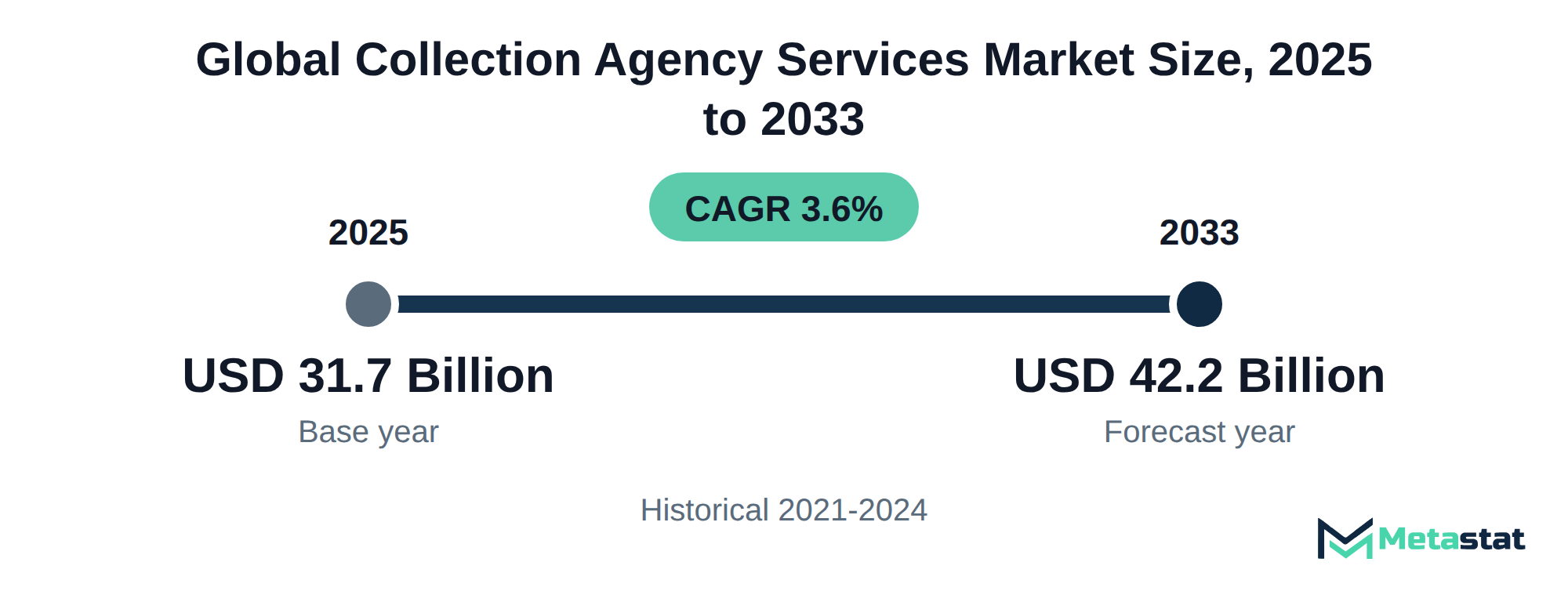
Market Valuation: Valued at $31.7 Billion in 2025, projected to reach $42.2 Billion by 2033 at a 3.6% CAGR.
Dominant Segment: Third-Party Collection Services lead the market, driven by their effectiveness in recovering debts while maintaining client relationships. This segment is projected to reach USD 19 billion in 2026 and grow to USD 24 billion by 2033.
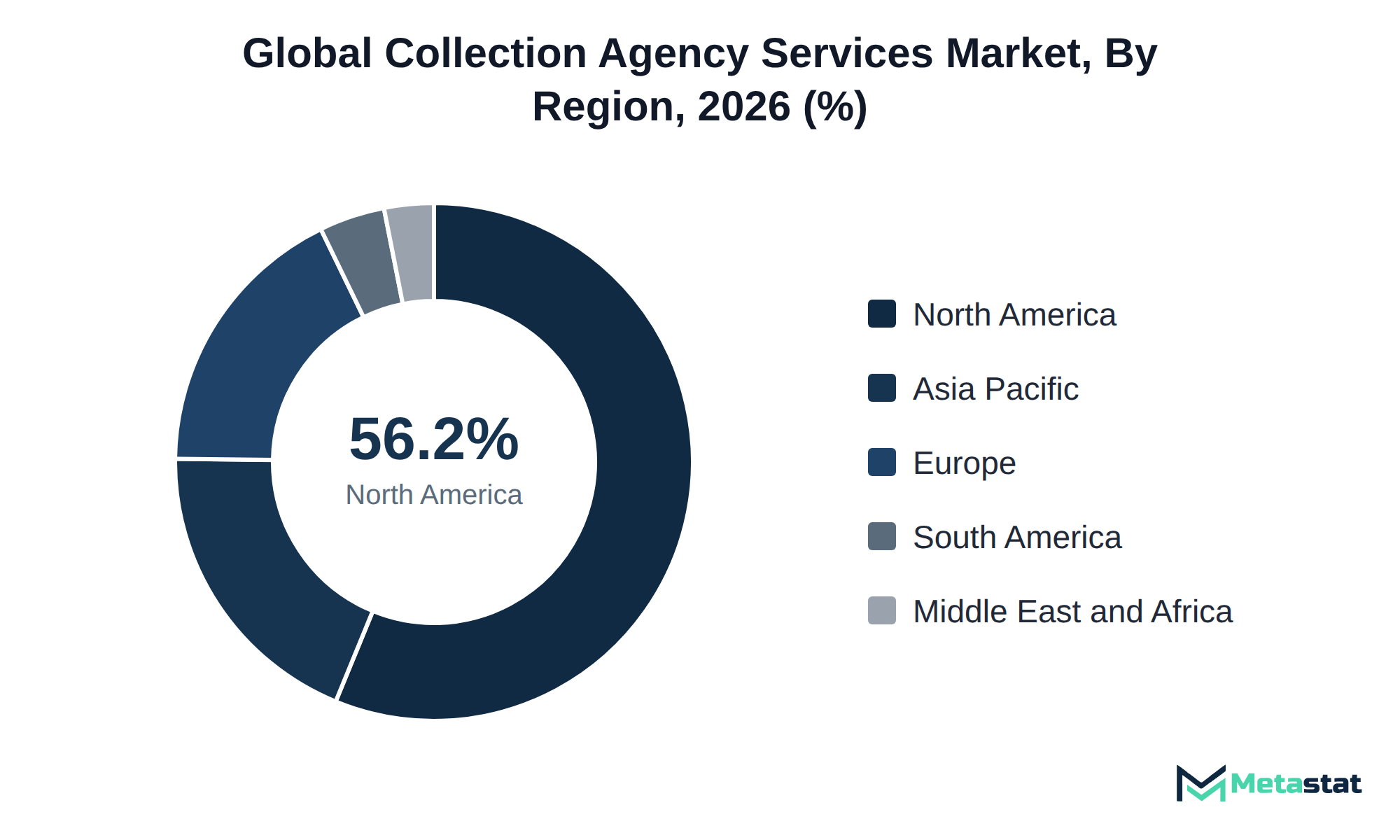
Geographic Lead: North America is the leading region, accounting for 56.2% of the market in 2025, with the US expected to maintain this dominance due to a high volume of outstanding debts.
What's Inside: The report provides a comprehensive analysis of the competitive landscape, including detailed segments by service model, debt type, collection stage, and creditor industry, along with growth forecasts from 2026 to 2033.
Opportunities in Consumer Debt: The consumer debt collection segment shows significant growth potential, projected to reach USD 28.1 billion by 2033, driven by rising consumer credit levels and increasing reliance on specialized collection services.
Technological Advancements: Innovations in data analytics and digital collections are enhancing operational efficiency, enabling agencies to tailor strategies and improve recovery rates, which is crucial for adapting to evolving market demands.
Choose Your License
Global Collection Agency Services Market
The global Collection Agency Services market was valued at USD 31.7 billion in 2025 and is projected to reach USD 42.2 billion by 2033, growing at a CAGR of 3.6% over the forecast period.
The Collection Agency Services market encompasses various debt recovery solutions provided by specialized firms, focusing on recovering unpaid debts for clients across multiple sectors. Buyers engage these services to enhance cash flow, reduce financial losses, and improve overall operational efficiency. Significant investments in this market reflect a growing recognition of the importance of effective debt management in maintaining financial stability.
Growth in the market is driven by the increasing volume of outstanding debts, including consumer debt, which is projected to expand significantly. North America holds 56.2% of the market in 2025, with the US leading in 2026. The competitive landscape includes several service models, with third-party collection services generating the highest revenue. This segment attracts investment due to its effectiveness in recovering debts while maintaining client relationships.
The demand for these services experiences robust support from the healthcare and telecommunications industries, which frequently encounter challenges in debt collection. Efficient debt recovery strategies contribute to improved financial health for these sectors, reinforcing the significance of collection agency services. Innovations in technology and service delivery are expected to further improve performance and client satisfaction.
The services offered in the Collection Agency Services market extend to various sectors, where buyers seek effective solutions for managing and recovering debts. Key buyers include businesses in banking, healthcare, and telecommunications, all of which face increasing pressure to maintain cash flow and reduce outstanding receivables. The need for efficient debt recovery strategies drives spending, ensuring that firms mitigate financial losses while improving their overall liquidity.
Growth in the market is propelled by increasing consumer debt levels, particularly in regions with strong economic activity. Among the segments, Third-Party Collection Services generate the highest revenue, reflecting a strong preference for outsourcing debt recovery efforts. This trend highlights the operational efficiency and expertise offered by specialized collection firms, which enhance recovery rates for their clients.
Technological advancements shape market dynamics by helping agencies improve recovery strategies and streamline processes. This technological integration allows for improved data analytics and customer engagement, ultimately supporting higher recovery rates. Competition intensifies, and agencies that adopt innovative solutions will position themselves strategically within the market, thus influencing overall industry growth.
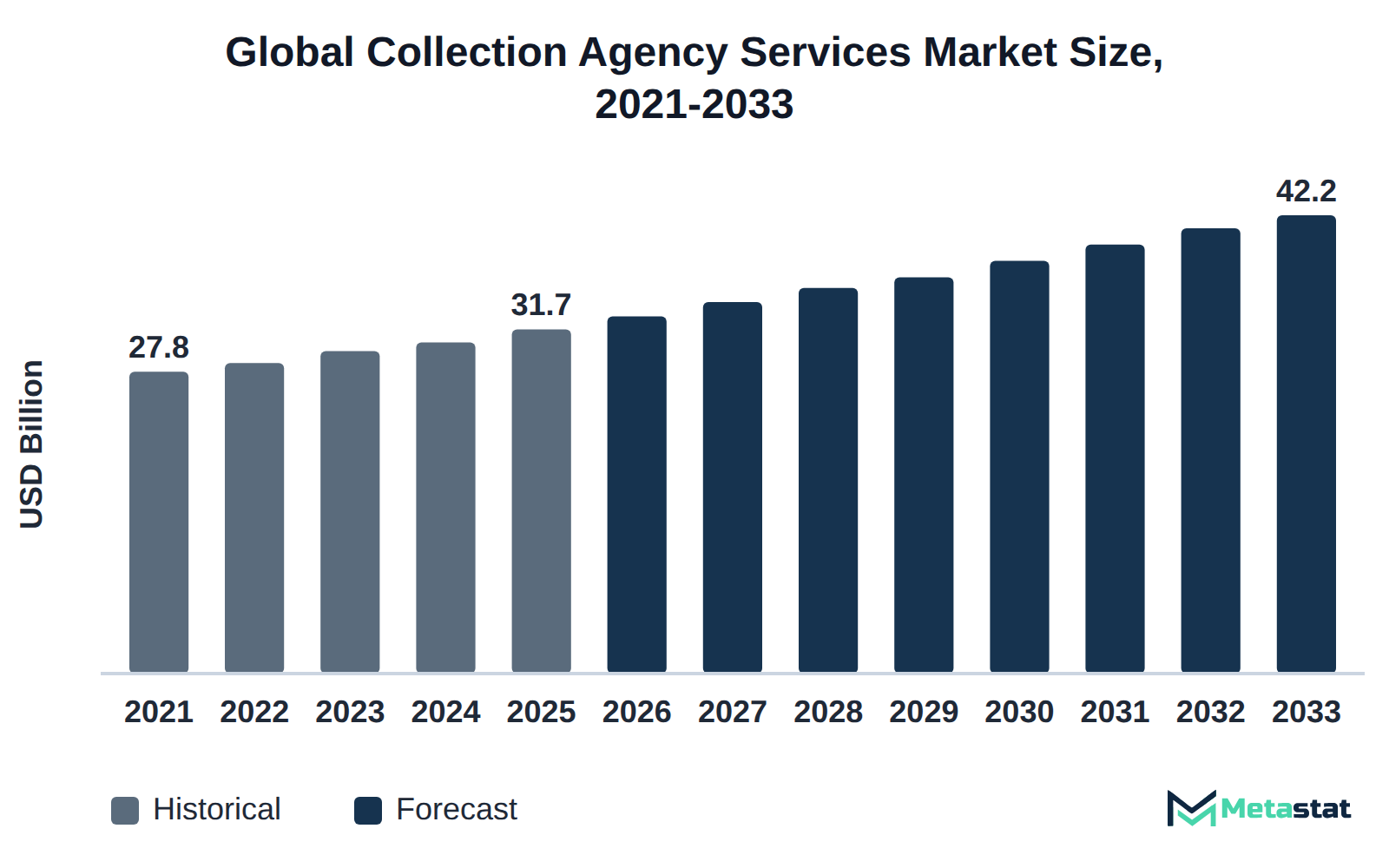
The integration of digital collections and enterprise artificial intelligence (AI) significantly transforms recovery operations within the Collection Agency Services market. By automating various collection processes, agencies enhance efficiency and reduce operational costs. In 2026, the Third-Party Collection Services segment is projected to reach USD 19 billion, reflecting the growing reliance on these technologies to streamline operations.
AI tools analyze vast amounts of data, allowing agencies to tailor collection strategies based on consumer behavior and payment patterns. This personalized approach increases the likelihood of successful recoveries while minimizing resource expenditure. Digital collections platforms offer real-time communication with debtors, improving engagement and recovery rates. The adoption of these technologies optimizes the efficiency of recovery efforts, strengthens client relationships, and enhances customer satisfaction.
While the Collection Agency Services market evolves, the continued implementation of digital solutions and AI will shape operational capabilities. Agencies that invest in these technologies strengthen their competitive position and adaptability.
The decision-making process for purchasing Collection Agency Services relies heavily on the specific needs of different industries, especially healthcare, consumer finance, and utilities. Each sector adopts distinct pricing models that reflect their operational requirements and client management strategies. Third-party collection services represent a significant segment within the market, growing from USD 19 billion in 2026 to USD 24 billion by 2033, indicating a compound annual growth rate of 3.4%.
In healthcare, contracts often include performance-based pricing, where agencies receive compensation based on the amount collected. This approach aligns incentives between healthcare providers and collection agencies, ensuring that both parties work towards successful debt recovery without compromising the quality of patient care. In consumer finance, flat fee arrangements are common, allowing financial institutions to manage their budgets effectively while outsourcing collection efforts.
Utilities frequently rely on a tiered pricing structure depending on the volume of debt being collected. This flexibility enables utility companies to adapt their collection strategies in response to fluctuating consumer demand and economic conditions. The choice of payment models directly influences the operational efficiency of agencies and determines their competitive positioning within the Collection Agency Services market.
Healthcare and medical organizations represent a significant buyer group within the Collection Agency Services market, driven by unique compliance requirements and customer engagement needs. These entities require adherence to strict regulations while managing outstanding debts, which complicates traditional recovery approaches. By using omnichannel strategies, including automated calls, emails, and texts, collection agencies enhance interaction with patients while maintaining compliance with healthcare regulations.
The segment focused on healthcare and medical debt recovery is projected to reach USD 9.2 billion by 2033, reflecting a compound annual growth rate of 4.4%. This growth illustrates the increasing necessity for tailored collection strategies that cater specifically to the healthcare sector. Ensuring compliance through these diverse channels builds customer trust and improves recovery rates, enabling healthcare providers to maintain financial health. Compliance-led omnichannel engagement helps collection agencies meet the distinct needs of this buyer group and drives revenue growth in the market.
Collection agencies implement various strategies to enhance recovery rates while maintaining positive customer relationships. A key approach involves engaging with debtors using a customer-oriented mindset through First-Party Collection Services. This segment is projected to reach USD 8.1 billion by 2033, reflecting a commitment to balance effective debt recovery and customer satisfaction. By prioritizing communication and understanding the debtor's circumstances, agencies create goodwill and increase the likelihood of recovery.
Strategies include offering flexible payment plans and educating debtors on repayment options. Such measures build trust and transform a potentially adversarial situation into a cooperative effort. The emphasis on empathy and transparency helps prevent damaging client relationships, which is critical for industries including Banking and Consumer Financial Services, where customer loyalty significantly impacts profitability.
Enhanced recovery rates achieved through these methods contribute positively to the financial stability of agencies operating in the Collection Agency Services market, ultimately leading to increased investment in customer relationship management tools and training. This investment forms a cycle of improved recovery performance and sustained client satisfaction.
Changing demographics among consumers influence spending patterns in the Collection Agency Services market. Younger consumers, particularly millennials and Gen Z, increasingly face financial challenges leading to higher instances of unpaid debts. Private consumer debt relief and restructuring services respond to the same repayment pressures. This shift compels businesses across various sectors to engage collection agencies for effective debt recovery solutions. While these demographics become more prominent, agencies adapt strategies to cater to their specific needs, enhancing customer experience while recovering debts. The increasing reliance on collection services is evidenced by the projected growth in consumer debt collection services, expected to reach USD 28.1 billion by 2033, reflecting a compound annual growth rate (CAGR) of 3.3%. Adapting to these demographic trends positions agencies to better serve clients and optimize recovery rates.
Growing demand for tailored services creates opportunities for providers to innovate and expand their offerings in the market. Changing buyer demographics drive more competition and investment in new technologies, which will shape the future direction of collection agency services.
The growing implementation of advanced data analytics tools streamlines operations within the market, increasing recovery rates and operational efficiency. These technologies enable data-driven decision-making, allowing agencies to assess debtor profiles more accurately and identify optimal collection strategies. Enhanced algorithms enable more effective segmentation of debtors, ensuring tailored communication that aligns with specific consumer behaviors. Improved technology reduces operational costs and improves customer interactions, which supports long-term relationships.
Agencies leveraging innovative technology align with the shifting expectations of clients across various sectors, including healthcare, finance, and utilities. These sectors rely on effective collection strategies to manage their financial health while maintaining a positive customer experience. The resulting increased efficiency among collection agencies contributes to overall market growth, with projected revenue expanding from USD 31.7 billion in 2025 to USD 42.2 billion by 2033. Advanced technology shapes competitive advantages within the Collection Agency Services market and drives demand for sophisticated solutions.
Price sensitivity represents a significant restraint within the Collection Agency Services market, particularly among smaller businesses and new entrants. These buyers experience financial constraints that lead to slower uptake of debt recovery solutions. Many organizations hesitate to invest in third-party collection services due to perceived high costs, resulting in a preference for in-house collection efforts. This approach delays effective debt recovery, impacting overall cash flow and operational efficiency. Smaller entities frequently face challenges accessing flexible payment structures offered by collection agencies, which further constrains their ability to adopt these services. The impact of this price sensitivity shows up in smaller orders and reduced engagement with service providers, limiting growth opportunities for firms focused on expanding their client base. Consequently, the market experiences slower growth rates, particularly in segments catering to consumer debt and small business collections, where the demand for cost-effective solutions is critical.
The rising costs associated with skilled personnel in the Collection Agency Services market create significant challenges for service providers. Increased competition for qualified professionals drives talent costs higher, impacting operational margins. Suppliers balance competitive salaries with the need for profitability, leading to a strain on financial resources. This challenge is particularly pronounced in regions with high demand for skilled debt recovery specialists, where workforce shortages exacerbate the issue.
In response, companies invest in training programs to enhance employee skills and increase retention rates. Many organizations leverage technology to automate routine tasks, enabling staff to focus on more complex recovery efforts, thus improving efficiency. By optimizing workforce utilization, suppliers aim to mitigate rising talent costs while maintaining service quality. This strategic approach addresses immediate cost pressures and positions players in the market for long-term success while facing increasing operational challenges.
The segment focusing on consumer debt exhibits significant growth potential, driven by increasing reliance on third-party collection services. This segment is projected to achieve a compound annual growth rate (CAGR) of 3.3% from 2026 to 2033, reaching a value of USD 28.1 billion by the end of the forecast period. Factors including rising consumer credit levels and the growing prevalence of delinquent accounts compel creditors to seek specialized collection services. The market benefits greatly from innovations in digital collections, which enhance efficiency and recovery rates. This trend positions consumer debt recovery as a primary opportunity within the Collection Agency Services market, attracting investment from agencies seeking to expand their service offerings in response to evolving creditor needs.
The Global Collection Agency Services market is segmented based on Service Model, Debt Type, Collection Stage, and Creditor Industry.
This segment focuses on debt recovery operations carried out by external agencies on behalf of creditors. Financial institutions, healthcare providers, and utility companies engage these services to recover outstanding payments efficiently. Factors driving demand include the increasing volume of overdue accounts and the need for specialized expertise in debt recovery. Compared to First-Party Collection Services, Third-Party Collection Services typically encounter a higher volume of accounts while facing lower recovery rates. The segment's growth aligns with broader trends in consumer debt, specifically the rising reliance on outsourced recovery solutions by various industries. Strategic partnerships between creditors and collection agencies help enhance recovery rates.
First-Party Collection Services segment is estimated to reach USD 8.1 billion by 2033, at a CAGR of 3.3% during the forecast period. This segment primarily focuses on debt recovery efforts conducted by original creditors, including banks and healthcare institutions, which manage their own collection processes. Buyers leveraging first-party services include organizations aiming to maintain direct relationships with their customers while recovering debts. The growth of this segment is driven by the increasing emphasis on customer relationship management, alongside a growing trend of companies preferring to retain control over collection activities. Compared to Third-Party Collection Services, which experience a CAGR of 3.4%, First-Party Collection Services demonstrate a slightly slower growth trajectory. This positioning reflects a strategic decision by many businesses to prioritize in-house solutions, ensuring more personalized interactions with customers while managing debt recovery.
Debt Purchase and Servicing segment is expected to reach USD 6.2 billion by 2033. This segment focuses on purchasing debts from creditors, allowing agencies to take on the risk of collecting those debts directly. Typical buyers include financial institutions and corporations seeking to offload non-performing assets for immediate liquidity. The growing reliance on outsourcing debt collection operations drives demand for this segment, reflecting a trend toward risk mitigation. With a compound annual growth rate (CAGR) of 4.0%, this segment demonstrates stronger growth compared to others, including First-Party Collection Services, which has a CAGR of 3.3%. The increasing prevalence of commercial debt contributes to this growth, with businesses looking to specialized agencies to manage collections efficiently, ensuring that financial resources are focused on core operations. Enhanced data analytics and technology adoption within this segment further support improved collection outcomes, differentiating it from other segments in the market.
Legal Collection and Enforcement segment is projected to grow at a CAGR of 4.1% during the forecast period. This segment focuses on the recovery of debts through legal channels, including litigation and court actions, primarily by creditors seeking to enforce their claims. Clients including financial institutions, healthcare providers, and government entities frequently engage legal collection services to recover outstanding amounts. The rising complexity of debt recovery, particularly in consumer finance, drives demand for legal enforcement solutions. Unique to this segment, the higher level of specialization required for legal processes differentiates it from other segments, leading to potentially higher pricing for services rendered. The Third-Party Collection Services segment is expected to grow at a CAGR of 3.4%. This segment grows faster, reflecting the increasing reliance on legal proceedings in debt recovery efforts. This shift represents a critical evolution in the strategies employed for managing unpaid debts within the market.
Special servicing and skip tracing include services focused on locating debtors and managing challenging recovery situations. These services are essential for creditors, especially in cases where traditional collection methods fail. Industries including banking and consumer financial services primarily engage this segment to enhance recovery rates, particularly when dealing with elusive debtors. Demand for these services increases due to rising consumer debt levels, driving creditors to seek effective solutions for recovering outstanding amounts. This segment differs from others, including third-party collection services, by targeting more complex cases that require specialized techniques and expertise. Growth potential in this area stems from evolving consumer behaviors and increasing use of digital tools to enhance debtor engagement and recovery efficiency. Specialized knowledge and innovative methods play a significant role in the adoption of skip tracing services, making them vital to the operational strategies of firms aiming to improve recovery outcomes.
This segment primarily focuses on outstanding personal loans, credit card debts, and other forms of consumer financing. Financial institutions and retail companies employ these services to recover unpaid debts efficiently. Increasing consumer spending and access to credit drive demand in this segment, highlighting a growing reliance on credit among consumers. Buy now pay later services are one example of expanding access to consumer credit. In comparison to other segments, Consumer Debt demonstrates a moderate growth rate, with a CAGR of 3.3%, slower than the 4.1% projected for Commercial Debt. The distinct dynamics within this segment cater to specific buyer needs, reflecting variations in recovery strategies and approaches tailored to individual consumers.
Commercial Debt segment is estimated to reach USD 10.3 billion by 2033, at a CAGR of 4.1% during the forecast period. This segment focuses on the collection services related to debts incurred by businesses, often involving overdue invoices and unpaid loans. Commercial entities, including suppliers and service providers, use these services to recover outstanding payments effectively. Rising economic activities and business transactions contribute to the demand for commercial debt collection, enhancing cash flow for companies. This segment differs from consumer debt collection, which primarily targets individual borrowers. Commercial debt typically involves higher transaction values and longer collection periods, thus necessitating specialized strategies for effective recovery. With a CAGR of 4.1%, the growth rate for this segment is projected to surpass that of other segments, reflecting increasing reliance on professional collection services among businesses.
Government and Public-Law Debt segment is expected to reach USD 2.7 billion by 2033. This segment includes debts owed to government entities and public institutions, primarily used by federal, state, and local governments for the collection of unpaid taxes, fines, and other public dues. The driving force for this segment involves regulatory compliance, which mandates efficient collections to maintain public service funding. Compared to other debt types, Government and Public-Law Debt exhibits slower growth due to the complexity of legislative frameworks and the often lengthy processes involved in debt recovery. Reliance on legal enforcement mechanisms further differentiates this segment from others, including consumer or commercial debt, which typically experience more direct collection strategies. Revenue from this segment remains vital for governmental operations, influencing investment in collection strategies within the market.
Projected growth for the Others (Estate and Cross-Border Claims) segment aligns with a CAGR of 4% during the forecast period. This segment encompasses the recovery of debts that arise from estate settlements and cross-border transactions, appealing primarily to financial institutions, estate planners, and legal entities seeking to recover outstanding amounts from international or complex cases. Unique challenges in this area include navigating different jurisdictions and varying legal frameworks, which often complicate recovery efforts. The need for specialized knowledge in international collections differentiates this segment from others, leading to distinct pricing strategies and operational complexities. Compared to traditional consumer and commercial debt recovery, this segment experiences slower growth, reflecting its niche nature and the specific expertise required for effective management.
Pre-Delinquency and Early-Stage Collection segment is valued at USD 8 billion in 2026 and is projected to reach USD 10.8 billion by 2033, at a CAGR of 4.4% during the forecast period. This segment primarily focuses on collecting debts before they become delinquent, serving creditors including banks, credit card companies, and utility providers. Increased consumer debt levels drive demand for this segment, prompting creditors to engage early-stage collections to prevent accounts from becoming unmanageable. Unlike other collection stages, including Late-Stage or Legal Recovery, this segment benefits from proactive engagement strategies, enabling creditors to recover debts while maintaining customer relationships. The emphasis on maintaining goodwill with consumers highlights the distinct nature of this segment, which contrasts with the more adversarial approaches often seen in later stages of collection processes. Growth in this segment is expected to remain strong, supporting the Collection Agency Services market.
Late-Stage, Post-Charge-off and NPL Collection segment is estimated to reach USD 19.1 billion by 2033, at a CAGR of 3% during the forecast period. This segment primarily addresses the recovery of debts that have defaulted and are no longer actively managed by the original creditor. Financial institutions and service providers engage this segment to recover funds from non-performing loans. The increasing prevalence of financial distress among consumers and businesses drives demand, resulting in a greater need for specialized recovery strategies. Unlike other segments, this particular segment experiences slower growth due to the complex nature of the recovery process and heightened regulatory scrutiny. Service providers focusing on this segment face unique challenges, including the need for advanced legal strategies and compliance measures. The distinct characteristics of Late-Stage, Post-Charge-off and NPL Collection set it apart from other recovery methods, making it a crucial component of the Collection Agency Services market.
Legal Recovery and Enforcement segment is expected to reach USD 6.2 billion by 2033. This segment provides services to recover debts through legal means, often involving litigation processes. Financial institutions, healthcare providers, and utility companies use these services to recover outstanding debts that have reached advanced stages of delinquency. A rise in defaults and an increasing focus on compliance and regulatory requirements drive the demand for legal recovery services. With a CAGR of 4.1%, this segment demonstrates stronger growth compared to First-Party Collection Services, which grows at 3.3%. Legal Recovery and Enforcement involves higher costs associated with legal proceedings, distinguishing it from segments focused on initial collection efforts. Its importance in ensuring recoveries from hard-to-reach debtors underlines its value within the Collection Agency Services market.
Debt Purchase and Portfolio Servicing segment is projected to grow at a CAGR of 3.5% during the forecast period. This segment facilitates the acquisition of debt portfolios by collection agencies, enabling them to manage and recover debts on behalf of creditors. Common users include financial institutions and private equity firms that seek to maximize recovery rates on non-performing loans. The growth of this segment is influenced by the increasing rate of delinquencies across various sectors, particularly in consumer debt, which is expected to reach USD 28.1 billion by 2033. Compared to other segments, this area experiences slower growth due to high competition and pricing pressures, impacting profit margins. Regulatory changes aiming to protect consumers further drive the complexity of transactions in this segment, creating additional operational challenges for collection agencies. This segment holds significance within the Collection Agency Services market, particularly in managing distressed assets.
This segment includes services focused on recovering probate and dormant debt, catering to specific recovery needs within financial institutions and legal entities. Clients in the banking, healthcare, and legal sectors engage this segment to manage complex cases involving deceased estates or inactive accounts. Growth in this area is driven by rising awareness of asset recovery opportunities and an increase in estate management complexities. Unlike other segments, which experience faster growth rates, this segment operates at a steadier pace due to longer resolution timelines and regulatory considerations. The demand for thorough strategies in navigating probate regulations differentiates this segment, positioning it uniquely within the broader market context.
Banking and Consumer Financial Services segment is valued at USD 12.3 billion in 2026 and is projected to reach USD 15.1 billion by 2033, at a CAGR of 3% during the forecast period. This segment serves financial institutions, including banks and credit unions, that rely on collection agency services to recover unpaid debts. Factors influencing this segment include the growing demand for effective debt recovery solutions driven by increasing default rates among consumers and businesses. Compared to other segments, the growth rate for this segment remains moderate, reflecting the steady nature of the banking sector. In contrast, segments like Commercial Debt experience a higher growth rate, attributed to the dynamic nature of business-to-business transactions and economic fluctuations. Increased regulatory scrutiny within the financial services sector impacts operational practices, leading institutions to seek more efficient collection strategies.
This segment primarily serves healthcare providers and organizations seeking to recover outstanding medical debts from patients and insurance companies. The growing burden of healthcare costs and the increasing prevalence of unpaid medical bills drive demand within this segment. Compared to other creditor industries, this segment exhibits a higher growth rate due to rising healthcare expenses and the increasing complexity of billing processes. Healthcare RCM outsourcing supports providers with billing and collection tasks. With a focus on compliance and sensitive communication, agencies in this segment prioritize maintaining patient relationships while recovering debts, distinguishing it from other segments where approaches differ significantly. The increasing emphasis on healthcare access and affordability further influences market dynamics.
The Telecom and Utilities segment is expected to reach USD 5.8 billion by 2033. This segment primarily serves telecommunications and utility companies by providing collection services for outstanding bills and debts. Demand for these services is driven by increasing consumer reliance on telecommunications and utility services, leading to higher delinquency rates. The growth of smart technologies and digital billing solutions within the sector further influences collection strategies. Compared to other segments, Telecom and Utilities experiences a higher growth rate due to its essential role in maintaining service continuity and revenue flow for providers. This segment differentiates itself through its specialized focus on utility and telecom-specific debt recovery, which presents unique challenges in customer engagement and payment negotiations. Overall, the growth of the Telecom and Utilities segment contributes significantly to the evolving dynamics of the Collection Agency Services market.
Government and Public Sector segment is projected to grow at a CAGR of 4.4% during the forecast period. This segment includes services focused on collecting dues owed to government entities and public sector organizations, often used by local, state, and federal agencies. Increased public spending and the need for efficient debt recovery mechanisms drive demand for these services. Unique regulatory requirements governing public sector collections differentiate this segment from others in the market, leading to a distinct operational approach. Other segments, including Consumer Debt, experience slightly different growth dynamics due to varying demand drivers. While both segments focus on recovery, the government sector emphasizes compliance with stricter regulations and public accountability, influencing the collection strategies adopted.
Retail and E-Commerce involves the recovery of debts related to consumer purchases, subscriptions, and services offered by retail businesses. This sub-segment serves a variety of creditors, including online platforms, brick-and-mortar stores, and service providers that extend credit to customers. Increasing e-commerce activities drive demand for collection services, with the volume of consumer debt rising alongside retail transaction growth. Compared to other segments, including Banking and Consumer Financial Services, Retail and E-Commerce faces unique challenges, including managing a diverse customer base and fluctuating consumer spending habits. The market experiences pressure from regulatory requirements related to consumer protection, which affects collection strategies and operational practices. Such dynamics distinguish this sub-segment from others, contributing to its unique position within the broader market.
Education and Student Lending services focus on recovering debts related to educational expenses and student loans. Higher education institutions, including universities and colleges, apply these services to manage unpaid tuition and related fees effectively. The rising cost of education and student loans contributes to the growing demand for these services, with more graduates facing financial challenges in repaying their debts. This area experiences slower growth due to the regulatory environment and unique borrower profiles. Compared to segments including Banking and Consumer Financial Services, which have a projected CAGR of 3%, the Education and Student Lending segment represents a distinct market dynamic driven by specific borrower needs and regulatory considerations. The enhanced focus on a tailored approach for education-related debt recovery differentiates this segment within the broader Collection Agency Services market.
This sub-segment encompasses services related to insurance, travel, and memberships, targeting specific recovery needs within these industries. Clients in this segment include insurance companies, travel agencies, and membership organizations looking to recover unpaid dues or claims efficiently. Growth in the segment is driven by increasing consumer debt levels, affecting all sectors, including insurance and travel. The demand for timely collection services remains critical, enhancing financial stability for these businesses. Compared to other creditor industries, this segment typically experiences slower growth due to the specialized nature of claims management and the necessity for tailored approaches. The Collection Agency Services market continues to adapt, ensuring that these particular needs are met amid evolving consumer behaviors and economic conditions.
Based on geography, the Global Collection Agency Services market is divided into North America, Europe, Asia-Pacific, South America, Middle East, and Africa.
Demand within the Collection Agency Services market in North America stems from multiple industries, with significant contributions from banking, healthcare, and utilities. Regulatory frameworks and consumer protection laws shape operational practices, ensuring compliance and building trust. The region's strong financial infrastructure supports efficient collection processes and helps agencies handle diverse debt types effectively. North America holds a dominant share of 56.2% in the global market, reflecting its essential role in shaping industry standards and practices. By 2033, the market is projected to reach USD 22.5 billion, driven by increasing emphasis on debt recovery strategies and technological advancements in collection methodologies.
In Europe, demand for the Collection Agency Services market is driven by various sectors, particularly banking, healthcare, and telecommunications. The healthcare and medical segment shows significant growth potential, with a projected value of USD 9.2 billion by 2033, reflecting the increasing prevalence of unpaid medical bills. Regulatory frameworks in countries like Germany and France emphasize consumer protection, impacting how collection agencies operate. Market share in Europe accounts for 17.6% of the global total in 2025, influenced by diverse economic environments across Germany, France, the UK, Italy, Spain, and Russia. These market dynamics highlight a growing need for effective debt recovery solutions, further enhancing collection agency capabilities.
Demand in the Asia-Pacific region for the Collection Agency Services market derives primarily from increasing levels of consumer and commercial debt. Countries including China, Japan, and India demonstrate high demand driven by the expansion of urban populations and rising consumer spending. South Korea and Australia contribute significantly to the market through robust financial services and healthcare sectors that require effective debt recovery solutions. Evolving regulatory frameworks in these countries facilitate more efficient collection practices, enhancing operational efficiencies for agencies. The market share in Asia-Pacific reached 19.0% in 2025, reflecting the region's growing importance in the global landscape of collection agency services. Continued growth is anticipated, with an emphasis on adapting collection strategies to the unique needs of diverse creditor industries.
The Collection Agency Services market in South America experiences demand driven largely by the banking and consumer financial services sector, particularly in Brazil and Argentina. High levels of consumer debt, alongside economic fluctuations, create a sustained need for collection agency services in these countries. Regulatory environments in South America require compliance with local laws governing debt collection practices, influencing operational approaches for agencies. The region is projected to hold a notable share of the global market in 2025. The healthcare sector contributes significantly, with increasing medical debt requiring recovery services. Rising awareness of financial management among consumers leads to enhanced service adoption, further boosting market growth in South America.
In the Middle East and Africa, demand for the Collection Agency Services market is influenced by factors including increasing consumer debt levels, particularly in Saudi Arabia and South Africa. The region's economic diversification strategies, especially in the UAE, drive growth in various sectors, leading to higher demand for collection services. Regulatory frameworks focused on financial transparency and consumer protection contribute to a more structured environment for debt recovery. The market's share within the global context stands at 3.1% in 2025, with projected growth anticipated through 2033. Emerging trends in digital payment solutions and financial technology initiatives create opportunities for collection agencies to enhance their service offerings, enabling better recovery rates and improved client relationships.
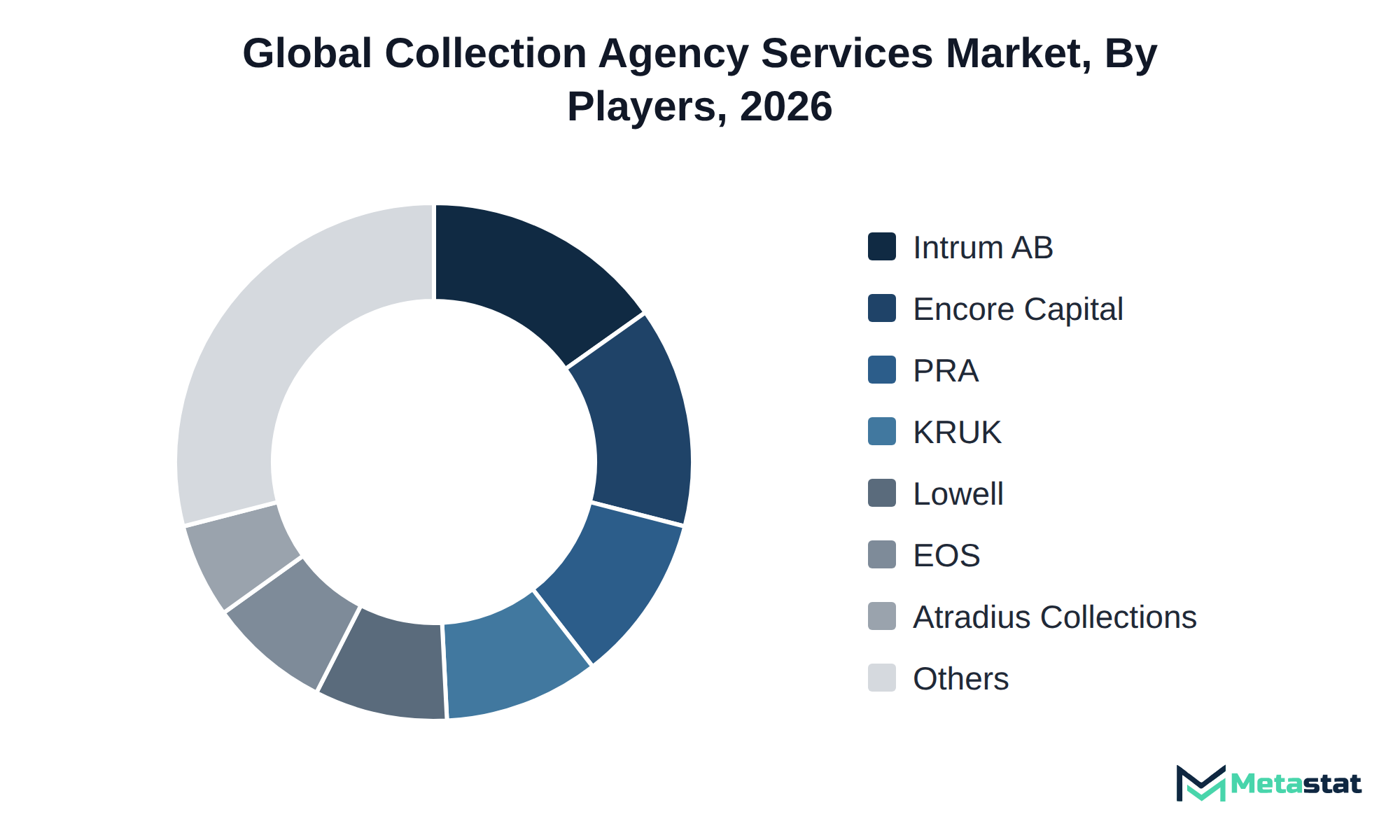
The Collection Agency Services market features various players focusing on distinct service models, including third-party collection services, first-party collection services, debt purchase and servicing, and legal collection and enforcement. Companies including Intrum AB and PRA Group, Inc. concentrate on third-party collection services, using their extensive networks and expertise to manage debt recovery effectively. Other firms like Encore Capital Group, Inc. and KRUK S.A. engage in debt purchase and servicing, facilitating direct ownership and management of debt portfolios.
Buyers in the market prioritize factors including pricing, customization, and service quality when selecting collection agency services. Organizations often seek vendors demonstrating strong compliance with regulations and possessing relevant certifications, which enhances trust and ensures effective debt recovery processes. For instance, companies like Alorica Inc. and iQor Holdings Inc. focus on delivering tailored solutions for diverse industries, including healthcare and financial services, enhancing their competitive edge in attracting clients.
This growth relies on several critical developments within the Collection Agency Services market. Another vital aspect involves the expansion of commercial debt collection, which anticipates growth to USD 10.3 billion by 2033, driven by heightened economic activity across various sectors. The geographical landscape contributes to this outlook, particularly in North America, where the market is projected to reach USD 22.5 billion by 2033. However, risks exist that could impede this growth trajectory. Economic downturns or regulatory changes impacting debt recovery processes slow the expansion of the market. The ability to adapt to these challenges while sustaining operational efficiencies will determine the market's capacity to achieve the projected figures. Managing these factors will be essential for the market to reach the USD 42.2 billion milestone by 2033.
By Service Model: Third-Party Collection Services, First-Party Collection Services, Debt Purchase and Servicing, Legal Collection and Enforcement, Others (Special Servicing and Skip Tracing)
By Debt Type: Consumer Debt, Commercial Debt, Government and Public-Law Debt, Others (Estate and Cross-Border Claims)
By Collection Stage: Pre-Delinquency and Early-Stage Collection, Late-Stage, Post-Charge-off and NPL Collection, Legal Recovery and Enforcement, Debt Purchase and Portfolio Servicing, Others (Probate and Dormant Debt Recovery)
By Creditor Industry: Banking and Consumer Financial Services, Healthcare and Medical, Telecom and Utilities, Government and Public Sector, Retail and E-Commerce, Education and Student Lending, Others (Insurance, Travel and Memberships)
The report strategically identifies and profiles the key market players and analyses their core competencies in each sub-segment of the Collection Agency Services market.
|
Report Attributes |
Details |
|
Study Period |
2021-2033 |
|
Base Year |
2025 |
|
Estimated Year |
2026 |
|
Forecast Period |
2026-2033 |
|
Historical Period |
2021-2025 |
|
Growth Rate |
CAGR 3.6% from 2026 to 2033 |
|
Revenue Unit |
USD billion |
|
Segmentation |
By Service Model, Debt Type, Collection Stage, Creditor Industry, and Region |
|
By Region |
North America (By Service Model, Debt Type, Collection Stage, Creditor Industry, and Country)
|
|
Europe (By Service Model, Debt Type, Collection Stage, Creditor Industry, and Country)
|
|
|
Asia Pacific (By Service Model, Debt Type, Collection Stage, Creditor Industry, and Country)
|
|
|
South America (By Service Model, Debt Type, Collection Stage, Creditor Industry, and Country)
|
|
|
Middle East and Africa (By Service Model, Debt Type, Collection Stage, Creditor Industry, and Country)
|
Find answers to common questions about this report
The Collection Agency Services market size was valued at USD 31.7 billion in 2025.
The market is projected to grow at a CAGR of 3.6% during the forecast period from 2026 to 2033.
The North America Collection Agency Services market size is estimated to reach USD 22.5 billion by 2033.
Third-Party Collection Services leads the market with a projected value of USD 24 billion by 2033, reflecting its significant share compared to other segments.
Changing demographics among consumers drive increased reliance on collection agencies, particularly as younger consumers face financial challenges leading to higher unpaid debts. The growing implementation of advanced data analytics tools enhances operational efficiency and recovery rates, positioning agencies to better serve clients.
North America holds the dominant share of the Collection Agency Services market, accounting for USD 22.5 billion in 2033, which represents 56.2 percent of the total market. This figure significantly exceeds the shares of other regions.
Price sensitivity represents a significant restraint, particularly among smaller businesses that experience financial constraints, leading to slower uptake of debt recovery solutions. Rising costs associated with skilled personnel create challenges for service providers, impacting operational margins and straining financial resources.
Increasing reliance on third-party collection services, particularly in the consumer debt segment, favors adoption in the industry. Innovations in digital collections enhance efficiency and recovery rates, attracting investment from agencies to expand their offerings in response to evolving creditor needs.
The Collection Agency Services market is estimated to reach a valuation of USD 42.2 billion by 2033.
Key players operating in the Collection Agency Services market include Intrum AB, PRA Group, Inc., Encore Capital Group, Inc., KRUK S.A., Lowell Group, EOS Group, and Weltman, Weinberg & Reis Co., L.P.A..
The analysts below cover Banking & Finance research at Metastat Insights.
LEAD ANALYST
Utkarsh Khirodkar is a Lead Market Research Analyst at MetaStat Insight, specializing in market intelligence, technology sector assessments, and competitive strategy.

PRINCIPAL CONSULTANT - ENTERPRISE AI & EMERGING TECHNOLOGIES
Banking & Finance · Electronics and Semiconductor · Energy and Power · Healthcare IT · Information & Technology · Professional Services
Vijay Gunti is a Principal Consultant at MetaStat Insight, bringing over two decades of experience across enterprise digital transformation, technology strategy, and intelligent systems.
Standard industry briefs frequently blur the operational distinctions between isobaric pressure exchangers and centrifugal turbines. In this study, MetaStat Insight categorized mega-scale desalination tenders across the GCC and Mediterranean basins by membrane replacement frequencies and salinity tolerances. Their primary research helped us evaluate local content requirements in Saudi Arabia and the UAE without relying on marketing literature. We found the segment-level equipment replacement estimates grounded and well-reasoned throughout.
The technical breakdown of ISO 20022 migration readiness across correspondent banking corridors was remarkably thorough. Rather than treating cross-border corporate payments as a single block, the report drew a useful distinction between multilateral netting platforms and domestic instant payment rails across ASEAN economies. MetaStat Insight highlighted regulatory constraints on foreign exchange liquidity management that many publications gloss over. The research material offered practical clarity for our platform development roadmap.
Our group needed clearer visibility into out-of-autoclave processing timelines for high-temperature thermoplastic composites. MetaStat Insight delivered an objective assessment that contrasted automated fiber placement scrap rates with traditional thermoset prepreg layup cycles. The supplier landscape mapped out primary resin suppliers and tape slitting capacity across France, Germany, and Japan with solid technical accuracy. Their analyst handled our questions on precursor supply risks during an unscheduled inquiry call, providing clear, unembellished context.
Explore related market intelligence reports worth reading alongside this one.