

 Agriculture
 Aerospace and Defense
 Professional Services
 Automotive and Transportation
 Banking & Finance
 Biotechnology
1.png) Chemicals and Materials
Chemicals and Materials Consumer Goods
 Energy and Power
 Food and Beverages
 Healthcare IT
 Information & Technology
 Machinery & Equipment
 Packaging
 Healthcare
 Electronics and Semiconductor
 Medical Devices
10.png)
Market Overview
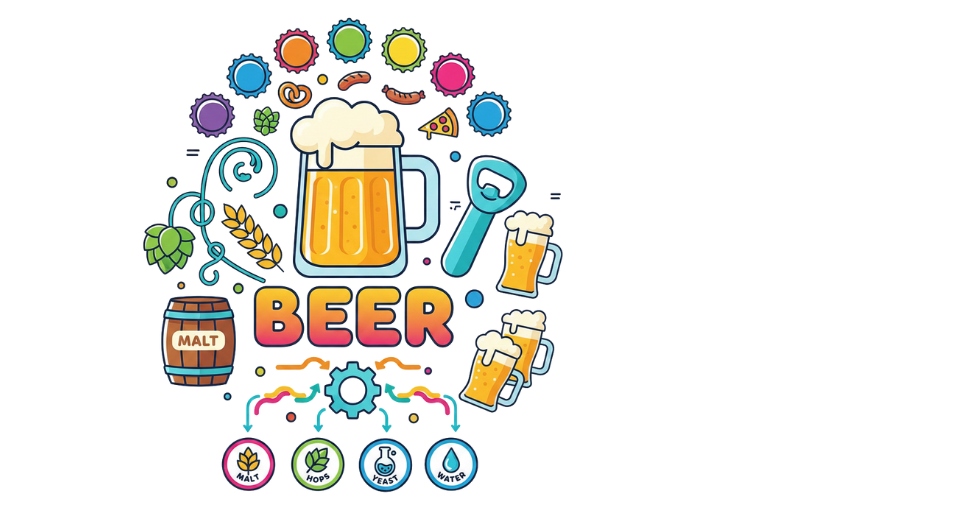
The global Beer market size was valued at USD 804 billion in 2025. The market is projected to grow from USD 838.5 billion in 2026 to USD 1,134 billion by 2033, exhibiting a CAGR of 4.4% during the forecast period.
The global Beer market is set to remain a central pillar of the alcoholic beverages industry, underpinned by profound cultural relevance, wide availability, and broad appeal across age groups and income segments within legal drinking limits. The market today is characterized by a well-balanced mix of mainstream, premium, and emerging craft offerings aimed at everyday refreshment, socializing, and special occasions. In the near future, the discussion will increasingly focus on how beer portfolios will adapt to changing consumer preferences for flavor, alcohol content, price, and health consciousness. As brewers and retailers employ better data, modern retail formats, and digital touchpoints, the industry is poised for more targeted offerings focused on consistent quality, responsible consumption, and stronger brand relationships.
This evolution will encourage producers to look beyond purely volume-led strategies and invest more in differentiation across styles, flavours, packaging, and channels. In turn, there will be a greater focus on expanding low- and no-alcohol options, upgrading premium and craft segments, and tailoring products toward local tastes and occasions in both developed and emerging markets. Meanwhile, the market is opening more space for e-commerce, home consumption packs, and sustainability-focused initiatives such as returnable bottles and lightweight packaging. Together, these shifts will guide companies toward portfolios that are better aligned with modern lifestyles while preserving beer's established role in global beverage consumption.
Global Beer Market - Comprehensive Data-Driven Market Analysis & Strategic Outlook
- The global beer market is valued at USD 804 Billion in 2025, growing at a CAGR of around 4.4% through 2033, with potential to exceed USD 1,134 billion.
- North America holds 19.4% in 2025, with the US leading the market share in 2026.
- The lager segment accounts for 64.1% of the market share in 2025, driving innovation and expanding applications through intensive research.
- Key trends driving growth: The social acceptance of alcoholic beverages among younger consumers, and increased product innovation, including craft, flavored, and low-alcohol beer variants.
- Opportunities include growth in non-alcoholic and premium craft beer segments across emerging markets.
- Key insight: Volume-led growth is slowly paving the way to value-led premiumization, with consumers trading up to craft, flavored, and low-/no-alcohol variants that better fit evolving lifestyle and taste preferences.
Market Dynamics
Growth Drivers:
Rising urbanization and social acceptance of alcoholic beverages among younger consumers.
Rising urbanization is concentrating younger populations in cities where higher disposable incomes, dense social settings, and modern retail/HoReCa channels make beer more accessible and acceptable as part of everyday leisure. Increasing social acceptance of moderate drinking, driven by changing cultural norms, global brand influence, and experiential on-trade venues, is encouraging trial and repeat consumption, shaping future demand patterns in the global beer market.
Increasing product innovation with craft, flavored, and low-alcohol beer variants.
The continuous introduction of craft, flavored, and low-alcohol beer variants enables brewers to address diverse taste profiles, occasions, and health-conscious preferences while supporting premium pricing and brand differentiation. Broader retail and on-trade adoption, faster portfolio rotations, and improved cold-chain and packaging formats are paving the way for broader use of these innovative offerings, which will underpin long-term value growth across multiple segments of the global beer market.
Restraints & Challenges:
Stringent government regulations and taxation on alcohol production and sales.
Stringent government regulations and higher excise taxation on alcohol production and sales increase compliance and operating costs, constraining affordability in price-sensitive markets and tempering overall consumption growth. Divergent policy frameworks, advertising restrictions, and licensing norms across regions continue to fragment market access and route-to-consumer models; as a result, many brewers are seeking more cost-effective compliance strategies, portfolio recalibration, and a greater mix of low-/no-alcohol offerings to sustain growth more sustainably.
Health concerns and rising trend of moderation reducing alcohol consumption.
Growing awareness of alcohol-related health risks, lifestyle diseases, and calorie intake is prompting many consumers, especially younger, urban cohorts to limit beer consumption or switch to lower-strength options consciously. Evolving preferences for moderation, mindful drinking, and wellness-oriented routines are creating natural brakes on per-capita volumes, pushing brewers to rethink portfolios, communication, and formats to remain relevant without relying on heavy consumption.
Opportunities:
Growing opportunity in non-alcoholic and premium craft beer segments across emerging markets.
Growing investment and product development in non-alcoholic and premium craft beer are unlocking fresh demand in emerging markets, where rising middle-class incomes, urban lifestyles, and exposure to global trends are reshaping taste preferences beyond mainstream lagers. Expanding local brewing capacity, collaborations between international and regional players, and heightened retailer and HoReCa interest in differentiated, higher-margin Stock Keeping Unit (SKUs) are collectively nurturing future growth trajectories that could materially reposition these segments at the core of long-term market expansion.
Market Segmentation Analysis
The global Beer market is mainly classified based on Type, Category, Packaging Type, and Distribution Channel.
By Type, the market is further segmented into:
- Lager
Lager will remain the anchor of the global beer category, with its clean taste profile and high drinkability supporting strong on-trade and off-trade volumes across both mature and emerging markets. Ongoing innovation in premium, craft, and low/non-alcohol lager styles will help brewers defend share against alternatives, while enabling them to tap into health-conscious, younger, and occasion-driven consumption trends without diluting the core proposition.
- Ale
Ale will continue to gain visibility as a differentiated, flavour-forward segment, supported by the rise of craft breweries and consumers seeking bolder, more experimental taste profiles across IPAs, pale ales, and specialty variants. As brewers expand seasonal and limited-edition ale portfolios, this segment will increasingly serve as a premium and innovation platform, enabling higher margins, stronger brand loyalty, and closer engagement with urban, affluent, and enthusiast consumer niches.
- Stout
Stout will sustain its position as a niche but influential segment, appealing to consumers who prefer richer, roasted flavours and fuller-bodied beer experiences, particularly in colder climates and mature beer markets. Growing interest in craft-driven variants such as coffee, chocolate, and barrel-aged stouts will help brewers use this Category as a high-margin, specialty proposition that strengthens brand image and supports taproom, seasonal, and limited-release strategies.
- Pilsner
Pilsner will remain a cornerstone of the global beer portfolio, leveraging its crisp, refreshing profile and broad consumer appeal to drive high-volume sales in both mainstream and premium segments. As brewers refine hop profiles and experiment with regional and craft-inspired pilsner variants, this segment will increasingly act as a bridge between traditional lager drinkers and more discerning consumers, supporting premiumization, trade-up opportunities, and stronger positioning in restaurant, bar, and retail channels.
- Wheat Beer
Wheat beer will continue to carve out a distinctive, higher-margin niche, benefiting from its smooth mouthfeel, fruity and spicy notes, and strong association with refreshment and social occasions, especially in urban and tourist-centric markets. As brewers promote unfiltered, flavoured, and seasonal wheat variants, this segment will increasingly attract younger, experimental, and premium-seeking consumers, reinforcing its role as a lifestyle-led, differentiating pillar within diversified beer portfolios.
- Others
The Others segment includes specialty, hybrid, sour, fruit-infused, and experimental beers that will expand as consumers seek novel, occasion-specific experiences beyond traditional styles. This cluster will act as an innovation sandbox for brewers, enabling rapid concept testing, cross-category collaborations, and higher-value limited releases that strengthen brand differentiation and keep portfolios aligned with fast-evolving taste and lifestyle trends.
By Category, the market is divided into:
- Standard
The standard beer category will remain the volume backbone of the market, anchored in affordability, familiarity, and wide retail and on-trade penetration across both urban and rural areas. While it faces growing pressure from premium and craft segments, incremental packaging upgrades, mild recipe refinements, and targeted promotions will help brewers defend share, using standard beers as the core traffic driver that supports scale efficiencies and stabilizes overall portfolio performance.
- Premium
The premium beer category will continue to outpace the mainstream in value growth, driven by consumers trading up for better taste, brand image, and experiential cues linked to status and lifestyle. Breweries will increasingly use premium lines that are often backed by heritage stories, differentiated ingredients, and sleek packaging, as key levers for margin expansion, positioning them firmly in modern retail, HoReCa, and occasion-led consumption such as celebrations and social gatherings.
By Packaging Type, the market is further divided into:
- Bottles
Bottled beer will remain a core packaging format, closely associated with quality perception, heritage branding, and premium or occasion-based consumption in both on-trade and off-trade channels. As brewers refine bottle design, lightweight glass, and returnable systems, this segment will help balance brand image, sustainability commitments, and margin protection, particularly in markets where consumers still equate bottles with superior taste and freshness.
- Cans
Canned beer will continue to gain share, supported by its portability, faster chilling, and suitability for multipacks, e-commerce, and outdoor or on-the-go consumption occasions. Advances in can design, lining technology, and recycling infrastructure will strengthen its sustainability and freshness credentials, enabling brewers to push both mainstream and craft SKUs in cans as a flexible, cost-efficient format that aligns with modern retail, convenience stores, and festival or event-led demand.
- Others
The Others packaging segment, spanning kegs and emerging alternative formats, will remain strategically crucial for draft, bulk, and institutional consumption, particularly in HoReCa, events, and value-driven channels.
By Distribution Channel, the global Beer market is divided as:
- On-Trade
On-trade channels will remain critical for shaping brand perception and trial in the beer market, as bars, restaurants, pubs, and hospitality venues provide high-engagement settings for draught offerings, curated menus, and premium experiences.
- Specialty/Liquor Stores
Specialty and liquor stores will continue to play a pivotal role in beer distribution, offering a curated, cold-chain-friendly assortment that favours premium, craft, and imported SKUs over pure volume. By leveraging knowledgeable staff, in-store promotions, and targeted merchandising, these outlets will help brewers drive trade-up, trial of new variants, and higher basket values among engaged, brand-seeking shoppers.
- Other Off-Trade Channels
Other off-trade channels, including supermarkets, hypermarkets, convenience stores, and emerging e-commerce platforms, will remain the volume engine for beer, enabling wide price-point coverage and high repeat purchases through broad shelf presence and promotions. As modern retail and online grocery expand, brewers will increasingly rely on tailored pack sizes, multipacks, and data-driven assortments in these channels to balance scale, visibility, and margin across diverse consumer segments and occasions.
By Region:3550
- Based on geography, the global Beer market is divided into North America, Europe, Asia-Pacific, South America, and the Middle East & Africa.
- North America's beer market will be propelled by sustained premiumisation and craft-led experimentation, as consumers gravitate toward flavour-forward, local, and seasonal brews that support higher price points and taproom-led experiences. At the same time, rising demand for low- and no-alcohol, lighter beer variants, driven by health-conscious millennials and Gen Z, will reshape portfolios, pushing brewers to invest in reformulation, line extensions, and targeted marketing around moderation and lifestyle alignment.
- In Europe, beer market growth will be supported by steady premiumisation and diversification into craft, low/no-alcohol, and specialty styles, as consumers seek higher-quality, provenance-led, and moderation-focused options that justify trading up despite mature per-capita consumption levels.
- Asia-Pacific's beer market will be driven by rapid urbanisation, rising disposable incomes, and a young demographic base, which together are expanding out-of-home social drinking occasions and accelerating trial of branded, packaged beer over informal or local alternatives. Simultaneously, strong momentum in premium, craft, and flavoured/low-alcohol beers often tailored to local taste profiles and supported by modern retail and e-commerce growth that will push brewers to upgrade portfolios, invest in localisation, and deepen penetration in high-growth markets such as China, India, Vietnam, and Southeast Asia.
- A growing young population will underpin beer demand in the Middle East, Africa, and South America, as will the gradual formalisation of alcohol distribution and the expansion of modern retail and hospitality infrastructure, which together are shifting consumption from unbranded or informal beverages toward regulated, packaged beer across both mainstream and selectively premium price tiers.
Competitive Landscape & Strategic Insights
The Global Beer Market will continue to advance through a phase defined by shifting consumption occasions, evolving taste preferences, and strong participation from multinational, regional, and craft-focused breweries. Continuous innovation in styles, packaging, and branding has sustained a steady pipeline of new launches, enabling brewers to reach diverse consumer segments, from value-led drinkers to premium, craft, and low- or no-alcohol seekers. Rising urbanisation, the expansion of modern retail and hospitality formats, and the growing role of e-commerce and at-home consumption will further reinforce this trajectory, enabling beer portfolios to adapt to changing lifestyles without disrupting beer's established role in social, cultural, and everyday settings.
The increased activity of both global giants and independent craft breweries has created an intensely competitive environment in which established and emerging brands coexist. Ongoing development of differentiated recipes, localised flavour profiles, and occasion-specific propositions, supported by targeted marketing, sponsorships, and channel partnerships, has encouraged consumers to explore alternatives beyond traditional mainstream lagers. Over time, this will influence brand loyalty, price–mix, and style preferences across regions, as individual markets gravitate toward offerings that reflect local income levels, regulatory conditions, and cultural norms. This will facilitate deeper market penetration, stronger premiumisation, and more stable volume and value growth for players that can balance scale efficiencies with agile innovation.
Major organisations' strong participation has significantly shaped the global Beer market. Key contributors include Anheuser-Busch InBev, Heineken N.V., Carlsberg Group, Molson Coors Beverage Company, Constellation Brands, Inc., Diageo plc, China Resources Snow Breweries, Tsingtao Brewery Co., Ltd., Asahi Group Holdings Ltd, Kirin Holdings Company, Limited, Sapporo Holdings Ltd, Beijing Yanjing Brewery Co, Ltd, San Miguel Corporation, Thai Beverage Plc, HITEJINRO America, Singha Corporation Co., Ltd., Paulaner Gruppe, Swinkels Family Brewers, DG Yuengling & Son Inc, Inbrew Beverages Private Limited, TCB Beteiligungsgesellschaft mbH, as well as leading craft and specialty brewers such as Boston Beer Company, Sierra Nevada Brewing Co., New Belgium Brewing Company, Goose Island Beer Company, Lagunitas Brewing Company, Stone Brewing, Dogfish Head Craft Brewery, Founders Brewing Co., Brooklyn Brewery, and other regional players with rising interest in this space. Constant competition among these corporations and independents will keep refining product, packaging, and channel strategies, supporting sustained innovation in beer styles, improved portfolio balancing across price tiers, and sharper alignment with modern consumer expectations worldwide.
Forecast & Outlook
Market size is forecast to rise from USD 804 billion in 2025 to over USD 1,134 billion by 2033.
Over the next few years, the beer market will gradually shift from volume-led growth to value-driven, experience-centric consumption. Premium, craft, and low- or no-alcohol variants will increasingly serve as the levers through which brands respond to changing lifestyles, heightened health awareness, and a regulatory landscape in flux. Digital engagement-from direct-to-consumer channels to data-enabled taprooms and personalized recommendations-will quietly rewire how consumers discover and interact with brands, making the buying moment more curated and less commoditized. Sustainability-whether in grain sourcing, water stewardship, packaging, or circular waste use-will move from marketing slogan to operational backbone, shaping investment decisions and partner selection across the supply chain. As these shifts compound, the industry will move toward a future where beer is less about undifferentiated mass refreshment and more about tailored taste profiles, mindful moderation, and locally resonant stories. In this trajectory, the market will push beyond today's price-promotion battles toward a more resilient, innovation-led, and community-anchored growth cycle that defines its next wave of development.
Beer Market Key Segments:
By Type:
- Lager
- Ale
- Stout
- Pilsner
- Wheat Beer
- Others
By Category:
- Standard
- Premium
By Packaging Type:
- Bottles
- Cans
- Others
By Distribution Channel:
- On-Trade
- Specialty/Liquor Stores
- Other Off Trade Channels
Key Market Players
- Anheuser-Busch InBev
- Boston Beer Company
- Brooklyn Brewery
- Carlsberg Group
- China Resources Snow Breweries
- Constellation Brands, Inc.
- Diageo plc
- Dogfish Head Craft Brewery
- Founders Brewing Co.
- Goose Island Beer Company
- Heineken N.V.
- Kirin Holdings Company, Limited
- Lagunitas Brewing Company
- Molson Coors Beverage Company
- New Belgium Brewing Company
- Sierra Nevada Brewing Co.
- Stone Brewing
- Tsingtao Brewery Co., Ltd.
- Asahi Group Holdings Ltd
- Sapporo Holdings Ltd
- Beijing Yanjing Brewery Co, Ltd
- DG Yuengling & Son Inc
- Thai Beverage Plc
- Inbrew Beverages Private Limited
- San Miguel Corporation
- TCB Beteiligungsgesellschaft mbH
- HITEJINRO America
- Paulaner Gruppe
- Singha Corporation Co., Ltd.
- Swinkels Family Brewers
Report Coverage
This research report categorizes the Beer market by key segments and regions, forecasts revenue growth, and analyzes trends in each submarket. The report analyses the key growth drivers, opportunities, and challenges influencing the Beer market. Recent market developments and competitive strategies, such as expansion, type launches, development, partnerships, mergers, and acquisitions, have been included to map the competitive landscape.
The report strategically identifies and profiles key market players, analyzing their core competencies across the Beer market's sub-segments.
|
Report Attributes |
Details |
|
Study Period |
2021-2033 |
|
Base Year |
2025 |
|
Estimated Year |
2026 |
|
Forecast Period |
2026-2033 |
|
Historical Period |
2021-2025 |
|
Growth Rate |
CAGR 4.4% from 2026 to 2033 |
|
Revenue Unit |
USD Billion |
|
Sales Volume Unit |
Million Liters |
|
Segmentation |
By Type, Category, Packaging Type, Distribution Channel, and Region |
|
By Type |
Lager |
|
Ale |
|
|
Stout |
|
|
Pilsner |
|
|
Wheat Beer |
|
|
Others |
|
|
By Category |
Standard |
|
Premium |
|
|
By Packaging Type |
Bottles |
|
Cans |
|
|
Others |
|
|
By Distribution Channel |
On-Trade |
|
Specialty/Liquor Stores |
|
|
Other Off Trade Channels |
|
|
By Region |
North America (By Type, Category, Packaging Type, Distribution Channel, and Country) |
|
|
|
|
|
|
|
Europe (By Type, Category, Packaging Type, Distribution Channel, and Country) |
|
|
|
|
|
|
|
|
|
|
|
|
|
|
Asia Pacific (By Type, Category, Packaging Type, Distribution Channel, and Country) |
|
|
|
|
|
|
|
|
|
|
|
|
|
|
|
|
South America (By Type, Category, Packaging Type, Distribution Channel, and Country) |
|
|
|
|
|
|
|
|
Middle East and Africa (By Type, Category, Packaging Type, Distribution Channel, and Country) |
|
|
|
|
|
|
|
|
WHAT REPORT PROVIDES
- Complete in-depth analysis of the parent Industry
- Significant changes in the market and its dynamics
- Segmentation details of the market
- Former, on-going, and projected market analysis in terms of volume and value
- Assessment of niche industry developments
- Market share analysis
- Key strategies of major players
- Emerging segments and regional growth potential

 US: +1 3023308252


