
LEAD ANALYST
Utkarsh Khirodkar is a Lead Market Research Analyst at MetaStat Insight, specializing in market intelligence, technology sector assessments, and competitive strategy.

Global ATV & UTV Market Size, Share, By Vehicle Type (All-Terrain Vehicles (ATVs) and Utility Terrain Vehicles (UTVs / Side-by-Sides)), By Propulsion Type (Gasoline, Diesel, Battery Electric, and Hybrid Electric), By Drive Type (Two-Wheel Drive (2WD), Selectable Four-Wheel Drive (4WD), and On-Demand All-Wheel Drive (AWD)), By Application (Recreation & Tourism, Sports & Racing, Agriculture & Forestry, Industrial & Commercial Operations, Military & Defense, Public Safety & Emergency Response, and Others (Conservation, Scientific Fieldwork)), Industry Analysis, Growth, Trends, and Forecast, 2026-2033
Report ID
MSI-5608
Published
October, 2026
Pages
258 Pages
Format
Historical
Base year
Forecast
Forecast period
Report Details
Market Valuation: Valued at $13.9 Billion in 2025, projected to reach $24.6 Billion by 2033 at a 7.3% CAGR.
Dominant Segment: Utility Terrain Vehicles (UTVs) lead the market, driven by their versatility and high payload capacities, making them essential for both recreational and industrial applications.
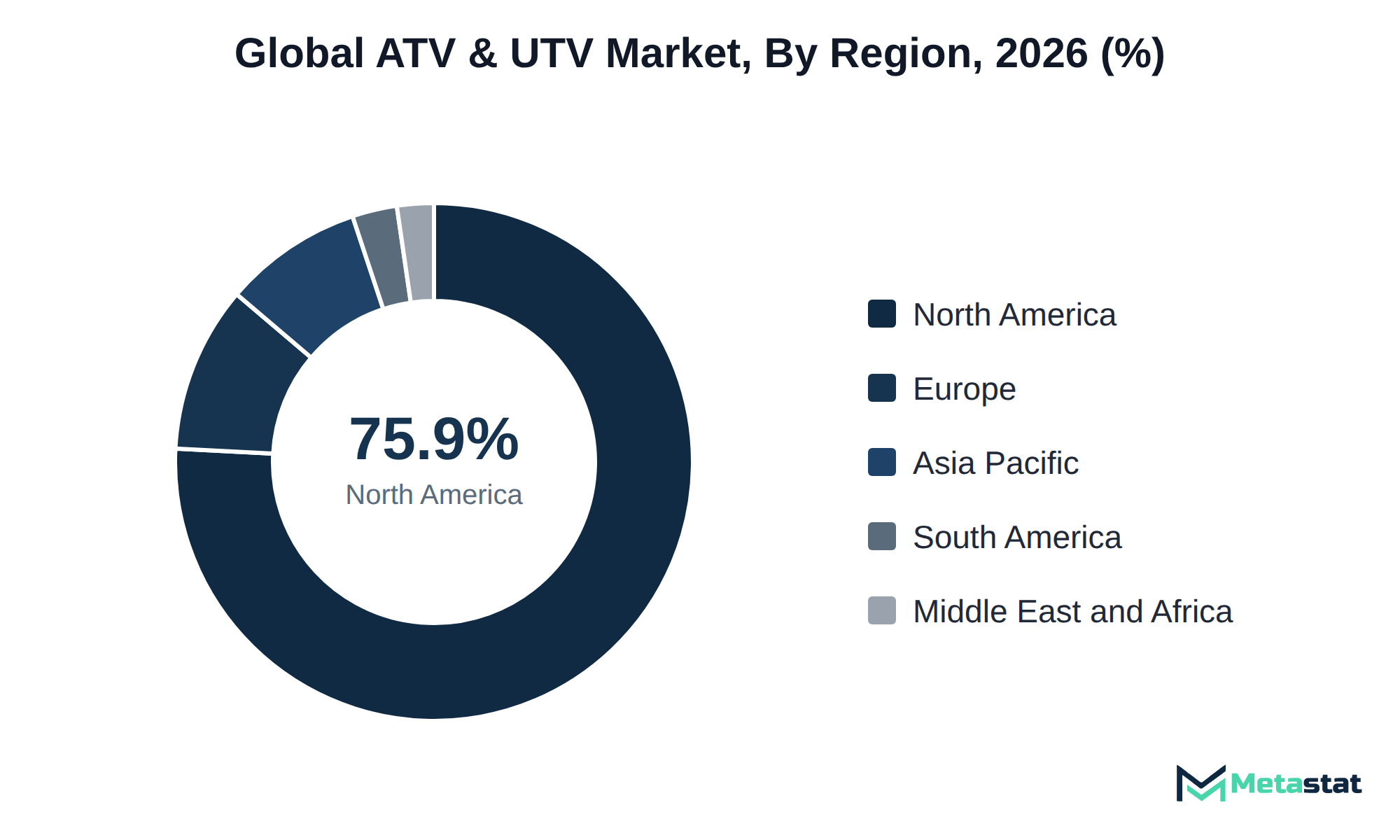
Geographic Lead: North America dominates the market, accounting for 75.9% in 2025, with the US projected to maintain its leadership due to a strong consumer base and established infrastructure.
What's Inside: The report includes comprehensive competitive coverage, detailed analyses of market dynamics, and forecasts extending to 2033, providing insights across various vehicle types and applications.
Technological Advancements: Innovations in propulsion and vehicle design enhance performance, attracting consumers focused on efficiency and reliability, thereby driving market penetration.
Price Sensitivity: Price sensitivity among consumers affects buying decisions, leading to a demand for competitive pricing and financing options, which can impact overall market profitability.
Choose Your License
Global ATV & UTV Market
The global ATV & UTV market was valued at USD 13.9 billion in 2025 and is projected to reach USD 24.6 billion by 2033, growing at a CAGR of 7.3% over the forecast period.
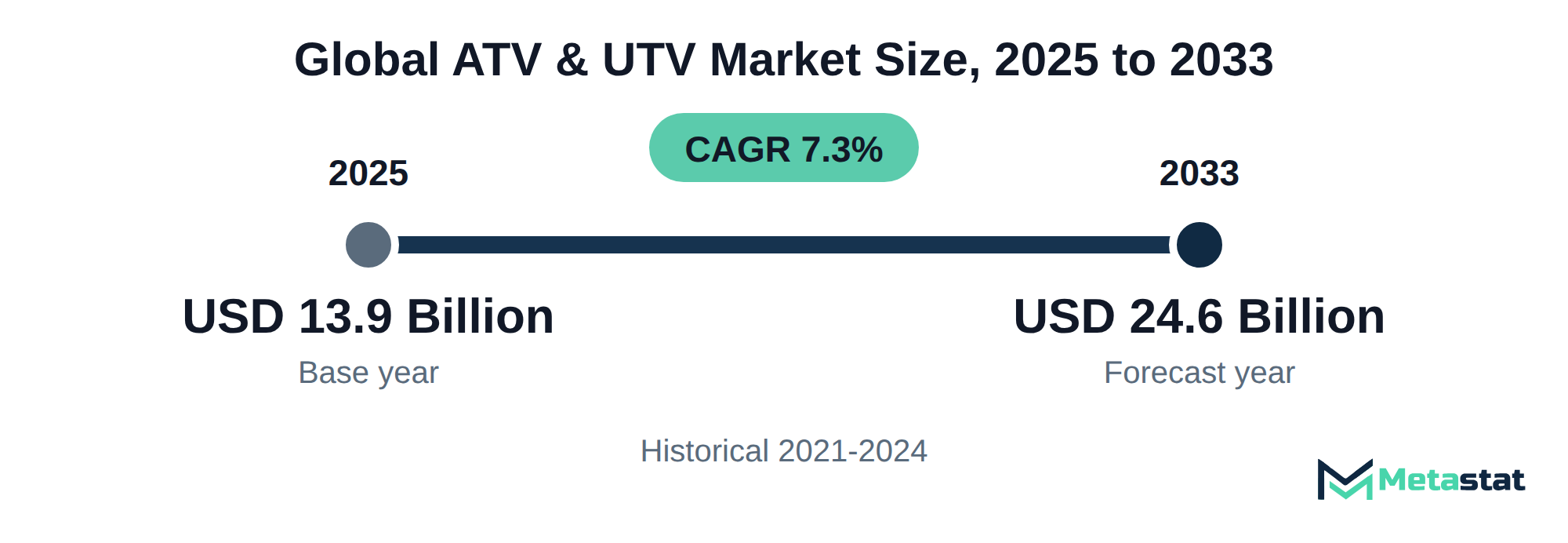
The ATV & UTV market encompasses a variety of vehicles designed for off-road use, including All-Terrain Vehicles (ATVs) and Utility Terrain Vehicles (UTVs). Buyers invest in these vehicles for recreational purposes, agricultural applications, and commercial operations. The versatility of ATVs and UTVs meets diverse consumer needs, driving spending across multiple sectors.
Growth in the market is propelled by increasing demand for utility vehicles in sectors including agriculture and forestry. Utility Terrain Vehicles (UTVs) represent the segment with the most value, highlighting their significance in industrial and recreational applications. North America holds 75.9% of the market in 2025, with the US leading in 2026. This regional dominance reflects the strong consumer base and established infrastructure supporting the use of ATVs and UTVs.
The ATV & UTV market is expanding, driven by advancements in propulsion technologies and growing interest in outdoor recreational activities. Consumers increasingly seek efficient and environmentally friendly options, contributing to a shift in preferences toward battery electric and hybrid electric models. This shift in demand presents opportunities for manufacturers to innovate and capture market share.
The ATV & UTV market features vehicles tailored for diverse applications, including recreational, agricultural, and industrial use. Buyers invest in these vehicles for their versatility, performance, and capability to navigate challenging terrains. The growing demand for outdoor activities and the increasing adoption of these vehicles in agricultural operations fuel spending, driving market expansion. The US is projected to lead the market in 2026, contributing significantly to the overall growth.
Growth in the ATV & UTV market is propelled by rising interest in outdoor recreational activities. The increasing popularity of off-road sports and recreational tourism enhances demand for All-Terrain Vehicles (ATVs) and Utility Terrain Vehicles (UTVs). Among the segments, Utility Terrain Vehicles (UTVs) exhibit the highest value, reflecting their utility in various applications, including industrial and commercial operations.
North America remains the largest regional market, significantly outpacing other regions. The preference for high-performance vehicles and well-developed infrastructure supports market growth in this region. The market is expected to continue expanding, driven by the increasing focus on outdoor recreation and the necessity for reliable vehicles across multiple sectors.
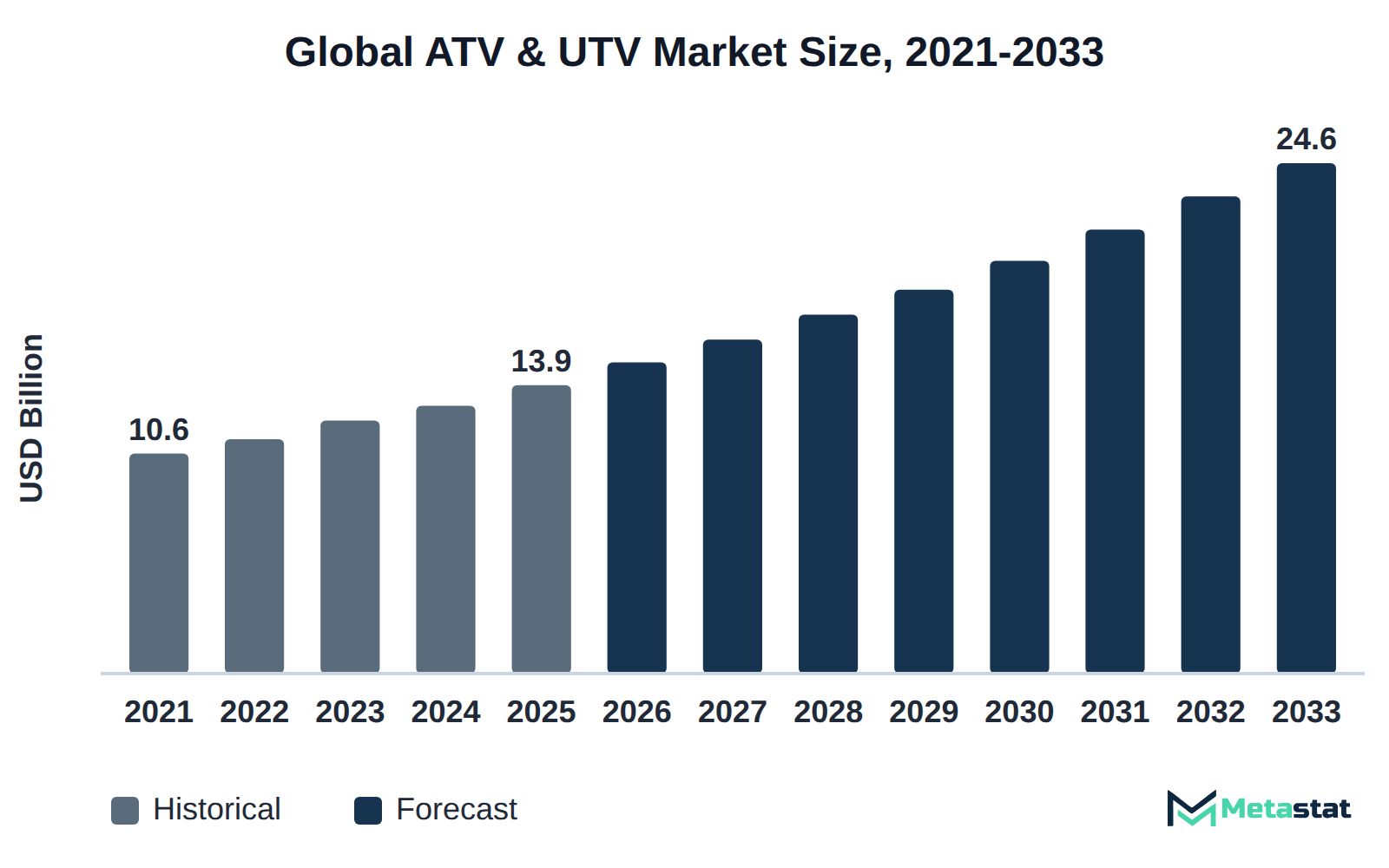
Electric Utility Terrain Vehicles (UTVs) offer significant advantages in operational costs, particularly through reduced fuel and maintenance expenses. The shift towards electric propulsion within the ATV & UTV market contributes to this trend, with the battery electric segment projected to reach USD 2.9 billion by 2033. This growth reflects an increasing preference among buyers for cleaner, more efficient alternatives to traditional gasoline models.
Charging infrastructure remains a critical consideration for fleet managers. Access to convenient charging stations directly influences the practicality of electric UTVs in various applications, including agriculture and industrial operations. Faster charging options, including DC fast charging, can reduce the time vehicles spend out of service. Companies that invest in establishing accessible charging networks enhance fleet utilization rates, leading to optimized duty cycles and ultimately lower lifetime costs.
The transition towards electric UTVs significantly impacts the cost equations for operators. While initial capital expenditure rises due to the premium associated with electric models, the long-term savings from reduced fuel consumption and maintenance demands increase the economic appeal. This strategic shift aligns with the overall trajectory of the ATV & UTV market, supporting the growing demand for sustainable vehicle options.
Dealer inventory levels and financing costs significantly influence pricing structures within the ATV & UTV market. Inventory levels have fluctuated, leading to variable pricing strategies among dealers. For instance, in 2026, the value of Utility Terrain Vehicles (UTVs) is projected to reach USD 19.2 billion by 2033, highlighting the importance of effective inventory management. Dealers face pressure to balance stock levels while maintaining competitive pricing, impacting overall profitability.
Financing options shape how consumers purchase these vehicles. Many buyers consider various financing models, including installment payments, buy now pay later plans, or leasing options, which allow for greater flexibility in acquiring vehicles. The presence of attractive financing solutions stimulates demand in the market, driving sales and enabling buyers to invest in higher-priced models without immediate financial strain. Evolving financing options encourage more consumers to enter the market, reflecting growing interest in off-road recreational activities and utility applications.
The combination of managing dealer inventory and offering diverse financing solutions results in a dynamic pricing environment. Dealers navigate these factors and adapt their strategies to optimize sales and maintain market share. These financial considerations shape the pricing models that influence purchasing decisions for consumers and dealers in the ATV & UTV market.
Localized manufacturing and effective homologation processes significantly impact the export competitiveness of the ATV & UTV market. Buyers seeking vehicles tailored to specific regional regulations and customer preferences benefit from manufacturers that establish local production facilities. This strategy not only aligns products with local standards but reduces finished vehicle logistics costs, leading to improved market pricing. In 2025, the market recorded a value of USD 13.9 billion, reflecting the importance of regional strategies in shaping overall performance.
Countries with strict homologation requirements often present challenges for foreign manufacturers. However, domestic production facilitates easier compliance with local regulations, enhancing brand trust among consumers. For instance, in North America, localized production supports a projected market value of USD 17.4 billion by 2033. Localized manufacturing strategies attract buyers by ensuring products meet specific safety and environmental standards, ultimately improving sales potential.
Farm and forestry operations prioritize specific features in ATV and UTV models to enhance productivity and operational efficiency. Key features include power, versatility, and payload capacity, which directly influence their utility in demanding agricultural tasks. Utility Terrain Vehicles (UTVs) within the ATV & UTV market are expected to reach a value of USD 19.2 billion by 2033, indicating strong adoption driven by their utility in these sectors.
Powerful engines enable these vehicles to operate effectively in rugged terrains, facilitating tasks including hauling equipment or transporting materials. Versatility is essential, with various attachments enhancing functionality, allowing one vehicle to perform multiple roles, including plowing, towing, or carrying loads. The payload capacity of these vehicles significantly impacts their performance in agricultural settings, where operational demands require reliable transport for heavy loads like harvested crops or forestry products.
The anticipated growth in the UTV segment of the market presents a significant commercial opportunity for manufacturers investing in vehicles tailored for farm and forestry applications. Focusing on these features will satisfy current market needs and drive future sales.
Shifts in consumer behavior drive increased spending on outdoor recreational activities, significantly boosting demand for All-Terrain Vehicles (ATVs) and Utility Terrain Vehicles (UTVs). This trend aligns with heightened interest in recreational exploration and experiential travel such as adventure tourism, particularly among younger demographics. In 2026, the market is projected to reach USD 15 billion, reflecting an increase from USD 13.9 billion in 2025. This growth is attributed to consumers prioritizing experiences over material goods, leading to increased volumes of ATV and UTV purchases. Buyers increasingly view these vehicles as essential for outdoor activities, resulting in a broader market appeal that encompasses various user groups, from recreational enthusiasts to families. The trend signifies a potential for sustained growth, with outdoor exploration contributing to revenue expansion in the market.
Growing demand for recreational and tourism applications supports investment in enhanced vehicle features, ensuring vehicles meet consumer expectations for performance and versatility. This focus on features aligns with the evolving needs of buyers, encouraging manufacturers to innovate and adapt to changing consumer preferences.
Technological innovations in propulsion systems and vehicle design significantly enhance the performance of All-Terrain Vehicles (ATVs) and Utility Terrain Vehicles (UTVs). Enhanced engine efficiency and improved drivetrain configurations contribute to higher power output and better fuel economy. Such advancements attract consumers focused on performance and operational cost efficiency, driving increased adoption across various applications, including recreational and industrial sectors.
The integration of smart technologies, including navigation systems and telematics, enriches user experience while providing real-time data for maintenance and performance tracking. GPS tracking devices typically supply the location data behind these telematics functions. These features appeal to buyers who prioritize convenience and reliability, driving greater market penetration. The ongoing development of battery electric and hybrid electric propulsion systems further aligns with environmental objectives, attracting eco-conscious consumers. These shifts in technology reinforce the competitive positioning of the market and stimulate sustained growth during the forecast period.
Price sensitivity poses a significant limitation within the ATV & UTV market, affecting consumer behavior, particularly among recreational buyers. The high initial costs associated with all-terrain vehicles and utility terrain vehicles frequently result in slower adoption rates within this segment. Buyers often evaluate alternatives, including lower-priced models or used vehicles, which further complicates purchase decisions. This heightened scrutiny on pricing leads to reduced order volumes and delayed replacement cycles, with consumers holding off on investments until favorable pricing conditions arise. The growing prevalence of budget-conscious consumers introduces competitive pressure on manufacturers, compelling them to offer incentives that could dilute overall market profitability. Brands therefore need to balance quality and affordability in a price-sensitive market.
Input costs pose a significant challenge for suppliers within the ATV & UTV market, impacting profitability and pricing strategies. Increasing material costs, particularly for components including metals and plastics, exert pressure on manufacturers. Suppliers respond by exploring alternative sourcing options and implementing cost-reduction strategies to maintain competitive pricing. Developing partnerships with local suppliers enhances cost efficiency while reducing lead times. Innovations in smart manufacturing processes, including automation and lean production techniques, contribute to mitigating rising expenses. These approaches allow suppliers to preserve margins while adapting to changing market dynamics. In addition, suppliers invest in research and development to improve product efficiency and reduce reliance on costly materials. These efforts reflect an industry-wide push to sustain growth amid fluctuating input costs, ultimately benefiting consumers with more competitive pricing and innovative offerings.
Utility Terrain Vehicles (UTVs) represent a significant growth segment within the market. With a projected value of USD 19.2 billion by 2033, this category experiences a compound annual growth rate (CAGR) of 7.4%. Factors driving this expansion include increased demand from various industries, including agriculture and industrial operations, where UTVs offer enhanced capabilities for cargo transport and task execution. The growing interest in utility applications has prompted manufacturers to innovate and offer vehicles that meet specific operational needs, ensuring competitive pricing and improved functionality. This segment's rise highlights the evolving preferences of consumers and businesses, eager to capitalize on the practical advantages UTVs provide. Investment in UTV development is expected to keep accelerating, shaping the future of off-road vehicles.
The Global ATV & UTV market is segmented based on Vehicle Type, Propulsion Type, Drive Type, and Application.
All-Terrain Vehicles (ATVs) segment is valued at USD 3.4 billion in 2026 and is projected to reach USD 5.3 billion by 2033, at a CAGR of 6.9% during the forecast period. ATVs serve primarily recreational purposes, with buyers including outdoor enthusiasts and those engaged in agricultural activities. Increasing interest in outdoor recreation drives demand, while technological advancements enhance performance and safety features. Compared to Utility Terrain Vehicles (UTVs), which experience a higher CAGR of 7.4%, ATVs represent a slower growth opportunity, but their established market presence provides stability. The pricing strategy for ATVs remains competitive, appealing to cost-conscious consumers seeking versatile vehicles that excel in varied terrains. This segment's ongoing evolution, driven by consumer preferences and product innovation, positions it for sustained relevance in the market.
Utility Terrain Vehicles (UTVs / Side-by-Sides) segment is estimated to reach USD 19.2 billion by 2033, at a CAGR of 7.4% during the forecast period. UTVs serve various applications, including recreational, agricultural, and industrial uses, appealing to buyers including outdoor enthusiasts, farmers, and commercial operators. The segment stands out with its emphasis on higher payload capacities and versatility, which differentiates it from All-Terrain Vehicles (ATVs) that prioritize speed and maneuverability. Demand for UTVs is driven by increased outdoor recreational activities and the need for efficient utility vehicles in agriculture and industry. Growth in this segment reflects the rising preference for vehicles that offer both work and leisure functions, indicating a shift toward multifunctional off-road vehicles. The market displays significant potential due to ongoing innovations in technology and design, enhancing performance and capabilities in UTV offerings.
The gasoline segment is valued at USD 12.6 billion in 2026 and is projected to reach USD 19.3 billion by 2033, at a CAGR of 6.2% during the forecast period. This segment serves various applications, primarily for recreation, tourism, and agriculture. Enthusiasts and professionals choose gasoline-powered vehicles for their reliability and performance during off-road adventures. Growing demand for recreational activities drives this segment, alongside increasing agricultural mechanization. Compared to other propulsion types, gasoline exhibits a relatively slower growth rate, influenced by rising interest in battery electric options. The gasoline segment's established technology and widespread availability continue to appeal to buyers seeking immediate access to off-road vehicles, ensuring its significant presence in the ATV & UTV market.
Diesel segment is estimated to reach USD 2.1 billion by 2033, at a CAGR of 6.6% during the forecast period. This segment primarily serves industrial and commercial operations, where vehicles require robust engines for heavy-duty tasks. Key drivers include increasing demand for efficient fuel use in commercial applications and stringent emissions regulations prompting a shift toward cleaner diesel technologies. Compared to other propulsion types, diesel vehicles typically offer lower operating costs over time, appealing particularly to agricultural and construction sectors that prioritize durability and long-range capabilities. The growth rate for diesel propulsion remains lower than that of hybrid electric vehicles, which is projected to have a CAGR of 17.2%, reflecting the increasing interest in alternative power sources. The market continues to evolve, with innovations aimed at enhancing fuel efficiency and reducing emissions, addressing both environmental concerns and operational demands.
This segment focuses on vehicles powered by electric batteries, catering mainly to environmentally conscious consumers and businesses seeking sustainable alternatives. The demand for battery electric vehicles has surged due to increasing regulatory pressures aimed at reducing emissions, alongside advancements in lithium-ion battery technology making electric models more viable. Recreational users and commercial operators, particularly in tourism and agriculture, show considerable interest in these vehicles due to lower operational costs. The growth rate of this segment, influenced by a CAGR of 17.2%, surpasses that of gasoline-powered vehicles, contributing to an evolving market. This shift toward electrification reflects a broader trend favoring sustainable options, along with changing consumer preferences and industry dynamics in the ATV & UTV market.
Hybrid Electric segment is projected to grow at a CAGR of 17.2% during the forecast period. This segment focuses on vehicles powered by a combination of traditional fuel and electric power, appealing to environmentally conscious consumers and those seeking improved fuel efficiency. Hybrid Electric vehicles find widespread usage in recreational activities and agricultural operations, providing versatility and reduced emissions compared to fully gasoline-powered models. Demand drivers include increasing regulations on emissions and a growing consumer preference for sustainable options. The Hybrid Electric segment differentiates itself from the Gasoline segment, which is projected to grow at a CAGR of 6.2%, indicating a faster growth trajectory. This shift towards hybrid technology reflects a broader trend of innovation in the ATV and UTV market, aligning with consumer interest in advanced propulsion systems and eco-friendly solutions.
The Two-Wheel Drive (2WD) segment is valued at USD 2.5 billion in 2026 and is projected to reach USD 3.6 billion by 2033, at a CAGR of 5.3% during the forecast period. This segment primarily serves recreational users seeking versatile vehicles for outdoor activities. Demand for 2WD units experiences growth driven by rising interest in recreational pursuits, allowing manufacturers to cater to a broader consumer base. Compared to other drive types, including Selectable Four-Wheel Drive (4WD), which has a CAGR of 6.9%, the growth rate for 2WD is slower. However, the cost advantage often associated with 2WD vehicles appeals to price-sensitive consumers, sustaining its presence in the market. Ongoing enhancements in vehicle design further enrich the user experience, allowing 2WD models to differentiate themselves from their counterparts.
Selectable Four-Wheel Drive (4WD) segment is estimated to reach USD 14.1 billion by 2033, at a CAGR of 6.9% during the forecast period. This drive type is widely adopted for its versatility, allowing vehicles to switch between two-wheel and four-wheel drive depending on terrain requirements. Outdoor enthusiasts and commercial operators employ 4WD vehicles for enhanced traction and stability in challenging conditions. Demand increases due to rising interest in recreational off-road activities, driving manufacturers to innovate and enhance performance features. Compared to other drive types, Selectable Four-Wheel Drive exhibits a favorable growth trajectory, driven by evolving consumer preferences and the pursuit of versatile applications. The segment's combination of price competitiveness and operational effectiveness positions it as an attractive option in the market. Advancements in vehicle technology continue to increase consumer interest, promoting further adoption across diverse applications.
On-Demand All-Wheel Drive (AWD) segment is expected to reach USD 6.8 billion by 2033. This drive type offers superior traction and control, appealing to users requiring reliable performance in various terrains. Operators in recreational settings and commercial applications, including agriculture and forestry, prioritize AWD for its ability to enhance vehicle stability and maneuverability under challenging conditions. The growing emphasis on safety and handling drives demand for this segment, positioning it favorably compared to others, including Two-Wheel Drive (2WD). The CAGR for On-Demand AWD is projected at a solid rate, reflecting its competitive advantages over traditional drive types. This growth trajectory highlights market dynamics driven by advancements in vehicle technology and shifting consumer preferences, reinforcing the importance of performance and reliability in the ATV & UTV market.
The Recreation & Tourism segment is valued at USD 5 billion in 2026 and is projected to reach USD 7.8 billion by 2033, at a CAGR of 6.7% during the forecast period. This segment caters to various buyers, including outdoor enthusiasts, travel agencies, and tourism operators, who use All-Terrain Vehicles (ATVs) and Utility Terrain Vehicles (UTVs) for recreational activities, adventure tourism, and guided tours. Increasing participation in outdoor activities and adventure tourism significantly boosts demand for recreational vehicles. Unlike other segments, this sector experiences consistent growth due to rising disposable incomes and changing consumer preferences for outdoor experiences. The Recreation & Tourism segment exhibits a slower growth rate compared to the Utility Terrain Vehicles (UTVs) segment, which is projected to grow at a CAGR of 7.4%. This growth dynamic highlights the unique positioning of the Recreation & Tourism segment within the broader ATV & UTV market.
Sports & Racing segment is estimated to reach USD 3.1 billion by 2033, at a CAGR of 6.5% during the forecast period. This segment primarily focuses on high-performance vehicles used for competitive sports and racing events, attracting enthusiasts and professional racers. The growing interest in motorsports directly influences demand, with racing organizations and recreational users driving growth through increased participation in events. Compared to other applications, the Sports & Racing segment experiences a higher growth rate due to its appeal among a dedicated consumer base willing to invest in advanced vehicles. The segment's emphasis on performance features, technology enhancements, and specialized builds differentiates it from other applications, including Agriculture & Forestry, which targets broader usability rather than performance. The market for these vehicles reflects the increasing prioritization of sport and competition in recreational activities.
Agriculture & Forestry segment is expected to reach USD 7.4 billion by 2033. This segment finds extensive application in farming operations, forestry management, and land conservation efforts. Farmers and forestry professionals use All-Terrain Vehicles (ATVs) and Utility Terrain Vehicles (UTVs) for tasks including transporting goods, navigating rough terrains, and enhancing operational efficiency. The demand for these vehicles is driven by increasing mechanization in agriculture, including wider adoption of agricultural machinery, allowing for improved productivity and cost savings. With a CAGR of 8% projected for this segment, it shows faster growth compared to others like Sports & Racing, which has a CAGR of 6.5%. This segment's distinct focus on utility and productivity differentiates it, appealing to a different buyer demographic concerned with operational effectiveness rather than recreational use. Sustained demand results from the agricultural sector's ongoing modernization efforts, shaping market dynamics effectively.
Industrial & Commercial Operations segment is projected to grow at a CAGR of 8% during the forecast period. This segment serves various industries including construction, mining, and logistics, where durable, reliable vehicles are essential for operational efficiency. Key drivers include increasing demand for efficient material handling and transportation solutions, which boosts adoption among businesses. On worksites, these vehicles often operate alongside construction equipment, moving crews and materials across uneven ground. Unlike the Recreation & Tourism segment, which focuses on leisure applications, this segment targets professional use, leading to a different buyer profile. The focus on productivity and heavy-duty capabilities often results in higher price points compared to recreational models, reflecting its utility in demanding environments. With the increasing emphasis on operational efficiency, investment in this segment is expected to enhance market dynamics significantly.
Military & Defense applications employ All-Terrain Vehicles (ATVs) and Utility Terrain Vehicles (UTVs) for operational effectiveness in various environments. Defense forces and military agencies rely on these vehicles for logistics, transportation, and reconnaissance missions. The segment experiences growth driven by increased defense budgets and rising demand for versatile, reliable vehicles capable of navigating challenging terrains. Unlike other segments, Military & Defense sees less focus on leisure or recreational use, resulting in distinct pricing dynamics and user specifications. The need for durable and specialized vehicles in this segment influences purchasing decisions, shaping market strategies. Innovations in technology and enhancements in vehicle capability further differentiate this segment from other applications within the market.
Public Safety & Emergency Response involves the use of all-terrain vehicles to support various safety operations, including search and rescue missions, firefighting, and law enforcement activities. Users within this segment include governmental agencies, fire departments, and emergency response teams that require vehicles capable of navigating rugged terrains. The demand for these vehicles increases due to heightened awareness of safety measures and the necessity for rapid response capabilities. This segment typically faces fewer price-sensitive buyers compared to the recreational segments, focusing on reliability and durability. The market distinguishes itself through specific design requirements that cater to emergency situations, emphasizing functionality over luxury, which influences purchasing decisions.
Others (Conservation, Scientific Fieldwork) focuses on specialized applications of utility vehicles for environmental preservation and research activities. Organizations involved in conservation efforts and scientific research access this segment to reach remote locations while conducting field studies. Growing environmental concerns drive demand for efficient vehicles that minimize ecosystem disruption. The segment differentiates itself from Recreation & Tourism in terms of market dynamics, with a potentially lower growth rate due to budget constraints in projects and specific regulatory hurdles governing environmental impact. Buyers prioritize functionality and durability over recreational features, impacting the segment's pricing strategy. Advancements in vehicle technology support the segment's evolution, enhancing operational capabilities while adhering to environmental standards.
Based on geography, the Global ATV & UTV market is divided into North America, Europe, Asia-Pacific, South America, Middle East, and Africa.
North America presents a significant opportunity within the ATV & UTV market, with the region projected to reach USD 17.4 billion by the end of 2033. Demand comes primarily from outdoor recreation, agriculture, and commercial sectors, with consumers in the United States, Canada, and Mexico driving growth. Infrastructure in North America, characterized by extensive off-road networks and recreational areas, supports the adoption of these vehicles. The market benefits from favorable regulations promoting recreational vehicle usage while addressing safety and environmental standards. Growing interest in electric models offers avenues for investment, contributing to a competitive landscape. Manufacturers enhance their offerings to meet consumer preferences in this evolving market.
Demand in the European ATV & UTV market is driven by a diverse range of applications, including recreation, tourism, and agricultural activities. The market benefits from substantial investments in infrastructure and recreational facilities across Germany, France, Italy, and Spain, enhancing access and promoting usage. Regulatory frameworks supporting environmentally friendly vehicle options influence purchasing decisions among consumers and businesses. Growing interest in recreational off-roading activities contributes to increased demand in the region. Europe holds a share of the global market, with its growth trajectory reflecting evolving consumer preferences and heightened focus on sustainability. The presence of established manufacturers in the region supports competition, driving innovation and offering consumers a wider array of vehicles to choose from.
Demand for the ATV & UTV market in the Asia-Pacific region is driven by recreational use, agriculture, and industrial applications. Countries including China and India exhibit significant growth potential due to their expanding agricultural sectors and increasing recreational activities. Infrastructure development in these nations supports the adoption of these vehicles, enhancing accessibility to rural and remote areas. The market share for this region stands at 8.7% in 2025, reflecting a growing interest in both gasoline and electric propulsion types. Initiatives promoting outdoor activities fuel demand for all-terrain vehicles, while urbanization in Southeast Asia drives interest in utility terrain vehicles. The expanding middle class in South Korea and Australia contributes to the demand for recreational vehicles, indicating a favorable outlook for the market in the region.
Brazil and Argentina represent key markets in the region, driven by rising interest in recreational activities and agricultural applications. The market benefits from growing demand for All-Terrain Vehicles (ATVs) and Utility Terrain Vehicles (UTVs), fueled by increasing investments in rural infrastructure and outdoor tourism initiatives. Local manufacturers and suppliers play a significant role, providing affordable options tailored to the preferences of regional buyers. The market in South America holds a share of 2.8% of the global total in 2025, highlighting the importance of this region in the overall context. Future growth in South America is expected to hinge on enhancing distribution networks and building customer awareness of the benefits associated with vehicle ownership.
In the Middle East and Africa, demand for the ATV & UTV market primarily originates from recreational activities and agricultural applications. Countries including Saudi Arabia and the UAE exhibit a growing interest in off-road vehicles for both leisure and utility purposes. South Africa stands out with its well-developed infrastructure and increasing participation in outdoor sports, driving the need for versatile terrain vehicles. The regional market benefits from rising disposable incomes and expanding tourism sectors, which encourage purchases for recreational use. The market is projected to hold a share of 2.3% globally in 2025, reflecting ongoing interest and investment opportunities within this region.
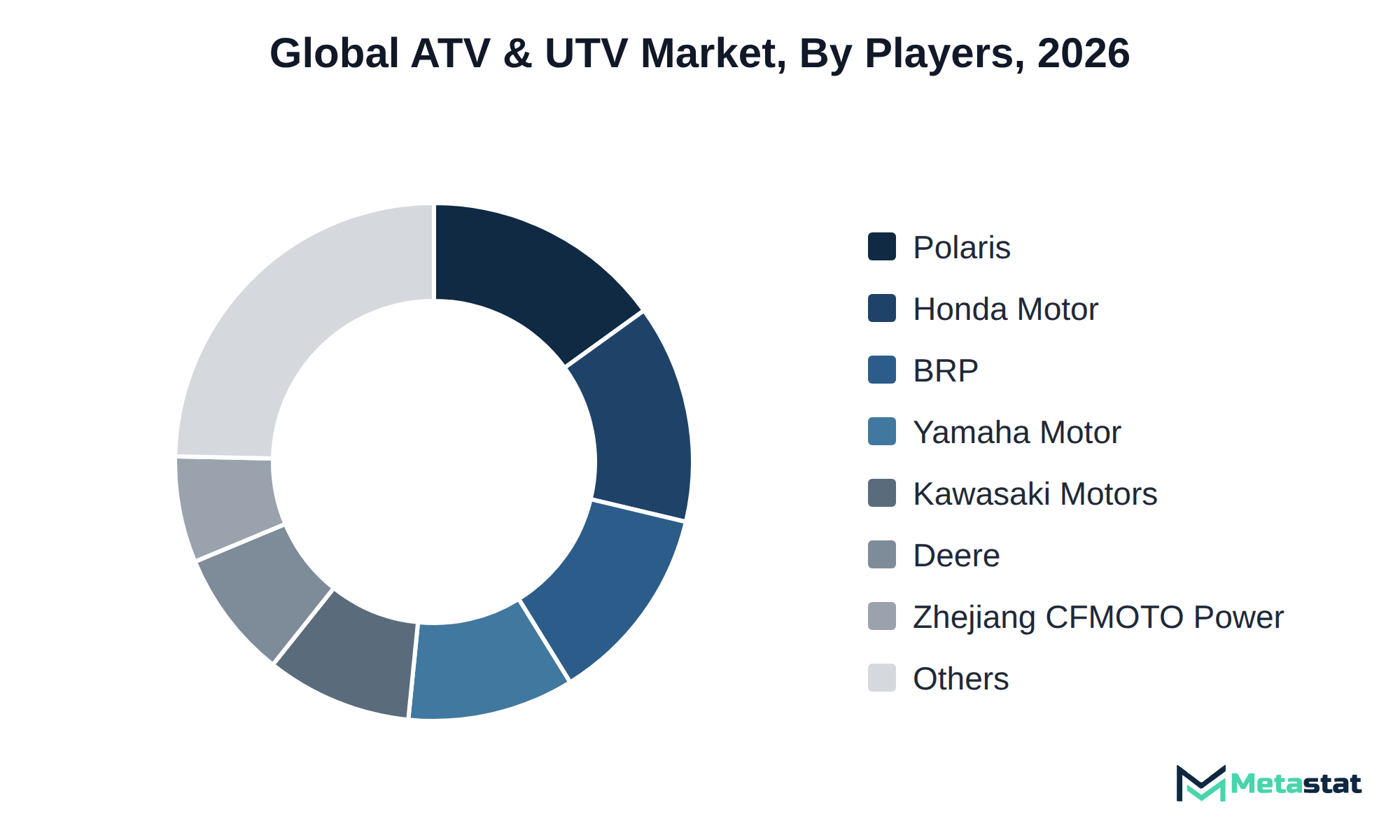
The ATV & UTV market features a diverse set of players competing on various fronts including pricing, product customization, and service offerings. Key buyers prioritize attributes including price, certification, and the overall ecosystem surrounding the vehicles. Companies differentiate themselves through the development of specialized product lines and enhanced service support.
Polaris Inc. focuses on its range of All-Terrain Vehicles (ATVs) and Utility Terrain Vehicles (UTVs), using brand reputation and extensive dealer networks to strengthen its market position. Honda Motor Co., Ltd. emphasizes reliability and innovation in propulsion technologies, particularly in gasoline and battery electric segments. Meanwhile, Kawasaki Motors, Ltd. targets enthusiasts with performance-oriented models, enhancing appeal through customization options in the ATV & UTV market.
Achieving this growth hinges on several key developments within the ATV & UTV market. Firstly, the increasing demand for Utility Terrain Vehicles (UTVs) is expected to drive significant revenue, transitioning from USD 19.2 billion by 2033, reflecting a strong consumer preference for versatile outdoor vehicles. Secondly, advancements in battery electric propulsion technology will enhance the market's appeal, especially in regions like North America, where environmental considerations influence buying decisions. The forecast period anticipates solid growth in the battery electric segment, contributing to overall market expansion. Conversely, challenges including fluctuating raw material costs present a notable risk, potentially constraining profitability, particularly for manufacturers heavily reliant on gasoline and diesel engines. This situation could impact the overall pricing strategy and consumer affordability. The combination of rising demand in key segments and the need for efficient production strategies will dictate the market's trajectory leading to 2033.
By Vehicle Type: All-Terrain Vehicles (ATVs), Utility Terrain Vehicles (UTVs / Side-by-Sides)
By Propulsion Type: Gasoline, Diesel, Battery Electric, Hybrid Electric
By Application: Recreation & Tourism, Sports & Racing, Agriculture & Forestry, Industrial & Commercial Operations, Military & Defense, Public Safety & Emergency Response, Others (Conservation, Scientific Fieldwork)
The report strategically identifies and profiles the key market players and analyses their core competencies in each sub-segment of the ATV & UTV market.
|
Report Attributes |
Details |
|
Study Period |
2021-2033 |
|
Base Year |
2025 |
|
Estimated Year |
2026 |
|
Forecast Period |
2026-2033 |
|
Historical Period |
2021-2025 |
|
Growth Rate |
CAGR 7.3% from 2026 to 2033 |
|
Revenue Unit |
USD billion |
|
Segmentation |
By Vehicle Type, Propulsion Type, Drive Type, Application, and Region |
|
By Region |
North America (By Vehicle Type, Propulsion Type, Drive Type, Application, and Country)
|
|
Europe (By Vehicle Type, Propulsion Type, Drive Type, Application, and Country)
|
|
|
Asia Pacific (By Vehicle Type, Propulsion Type, Drive Type, Application, and Country)
|
|
|
South America (By Vehicle Type, Propulsion Type, Drive Type, Application, and Country)
|
|
|
Middle East and Africa (By Vehicle Type, Propulsion Type, Drive Type, Application, and Country)
|
Find answers to common questions about this report
The ATV & UTV market size was valued at USD 13.9 billion in 2025.
The market is projected to grow at a CAGR of 7.3% during the forecast period from 2026 to 2033.
The North America ATV & UTV market size is estimated to reach USD 17.4 billion by 2033.
Utility Terrain Vehicles (UTVs) lead the ATV & UTV market with a projected value of USD 19.2 billion by 2033, surpassing All-Terrain Vehicles (ATVs), which are expected to reach USD 5.3 billion in the same year.
Shifts in consumer behavior drive increased spending on outdoor recreational activities, significantly boosting demand for ATVs and UTVs. Technological innovations in propulsion systems and vehicle design enhance performance and operational cost efficiency, attracting consumers focused on these advancements.
North America holds the dominant share of the ATV & UTV market, accounting for USD 17.4 billion in 2033, representing 75.9 percent of the total market.
Price sensitivity and rising input costs represent significant factors restraining growth in the ATV and UTV market. High initial costs affect consumer behavior, leading to slower adoption rates, while increasing material prices challenge suppliers and impact pricing strategies.
Technological innovations in propulsion systems and vehicle design significantly enhance the performance of All-Terrain Vehicles (ATVs) and Utility Terrain Vehicles (UTVs). The integration of smart technologies and the development of battery electric and hybrid electric systems align with consumer preferences for performance, convenience, and environmental sustainability, driving adoption across various applications.
The ATV & UTV market is estimated to reach a valuation of USD 24.6 billion by 2033.
Key players operating in the ATV & UTV market include Polaris Inc., BRP Inc., Honda Motor Co., Ltd., Yamaha Motor Co., Ltd., Kawasaki Motors, Ltd., and Deere & Company.
The analysts below cover Automotive and Transportation research at Metastat Insights.
LEAD ANALYST
Utkarsh Khirodkar is a Lead Market Research Analyst at MetaStat Insight, specializing in market intelligence, technology sector assessments, and competitive strategy.

ENERGY & INFRASTRUCTURE INDUSTRY CONSULTANT
Automotive and Transportation · Electronics and Semiconductor · Energy and Power · Machinery & Equipment
Saurabh Vasant Ganvir consults for Energy & Infrastructure Industry at MetaStat Insight, specializing in renewable energy, solar EPC, and electric vehicle (EV) infrastructure markets.
The technical breakdown of ISO 20022 migration readiness across correspondent banking corridors was remarkably thorough. Rather than treating cross-border corporate payments as a single block, the report drew a useful distinction between multilateral netting platforms and domestic instant payment rails across ASEAN economies. MetaStat Insight highlighted regulatory constraints on foreign exchange liquidity management that many publications gloss over. The research material offered practical clarity for our platform development roadmap.
Our group needed clearer visibility into out-of-autoclave processing timelines for high-temperature thermoplastic composites. MetaStat Insight delivered an objective assessment that contrasted automated fiber placement scrap rates with traditional thermoset prepreg layup cycles. The supplier landscape mapped out primary resin suppliers and tape slitting capacity across France, Germany, and Japan with solid technical accuracy. Their analyst handled our questions on precursor supply risks during an unscheduled inquiry call, providing clear, unembellished context.
Evaluating sensor fusion reliability across harsh operating environments can be tricky without field-validated data. The study on agricultural autonomous guidance systems clearly separated stereo vision setups from automotive-grade solid-state LiDAR. We appreciated the regional infrastructure analysis, specifically around RTK network density across North America and South America. During our follow-up consultation, the MetaStat Insight team walked through tier-two perception software partnerships, giving our engineering leads a practical basis for vendor shortlisting.
Explore related market intelligence reports worth reading alongside this one.