logo

Search

Oct 14, 2025

Heat Transfer Equipment Market To Reach $15.4 Billion by 2032

In the industrial era of today, effective heat transfer matters to industries of energy production, chemical processing, and heating, ventilation, and air conditioning. The Heat Transfer Equipment industry globally launched by Metastat Insight fits into this background as energy prices rise, regulations tighten, and efficiency from systems is more in demand. This isn't machinery this is about making cleaner, greener production possible for industries that touch people's daily lives. 

To examine the overall findings and certain insights, visit the entire studies record at: https://www.metastatinsight.com/report/heat-transfer-equipment-market

Limitations in traditional heat treatment systems like wastage of energy unnecessarily, maintenance loads, and poor scalability are driving demand for innovative equipment. Old exchangers are bottlenecks to performance in intense temperature processes or big chemical plants. In the meanwhile, growing regulatory pressure on emissions and energy wastage calls for a move. Solutions in sophisticated Heat Transfer Equipment therefore become drivers of operational excellence, reduced carbon footprints, and conformity with emerging environment regulations. 

High-temperature heat exchangers operate by exchanging thermal energy between fluid and fluid or between fluid and solid surface, typically on the principle of optimized surface shapes, advanced materials, or novel fluid concepts. Designs allow for increased heat flux, lowest pressure drop, and better temperature gradient management. Advantages include minimized energy consumption, optimized thermal management in small form factors, and intensified processes. Representative applications range across petrochemicals, power plants, refrigeration, electronics cooling, and industrial heaters. 

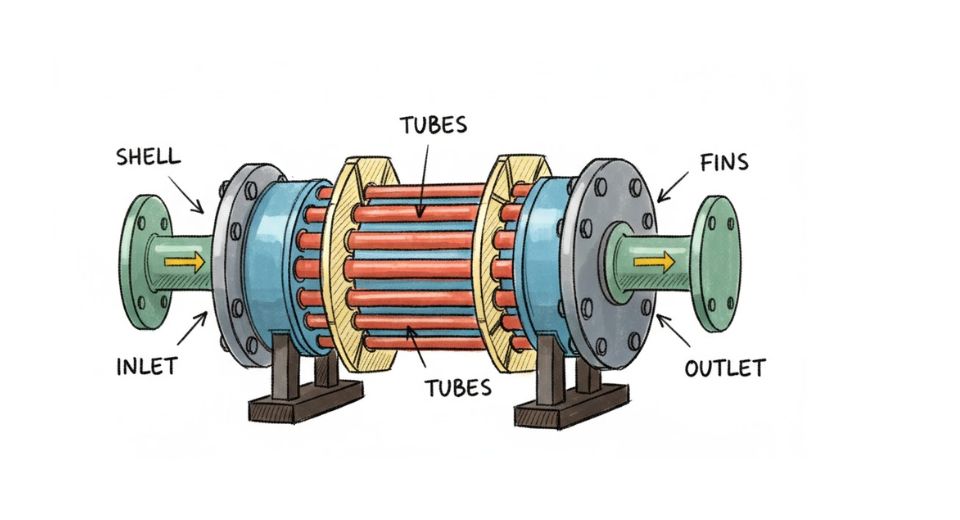
These have gained wider acceptance with the progression of time. At first, incremental technology improvements in shell-and-tube heat exchangers and plate heat exchangers prevailed. In recent times, developments like microchannel geometries, compact spiral exchangers, and plate-fin assemblies gained prominence. With industries' desire to reduce equipment footprints and move towards better performance, the transition to more advanced units was inevitable. Over the years, erstwhile niche models have graduated to being regular selections in mainstream engineering, and research in additive manufacturing and high-performance coatings keeps going the extra mile in optimizing longevity and thermal performance. In places around the globe, some are light years ahead of others. 

Industrialized economies of North America and Western Europe have the highest penetration, aided by robust regulatory systems, commitment to retrofitting the plant base, and incentives on energy efficiency. East Asia also has robust demand, driven by the high growth of industry, investment in semiconductor and chemical industries, and aggressive sustainability goals. At the same time, developing markets of Latin America, Southeast Asia, and parts of the Middle East are displaying rising growth opportunities. Geographies are at a crossroads industrial modernization and infrastructure growth present opportunities for equipment vendors and integrators. There are challenges, though. Initial capital expenditures on high-performance equipment discourage smaller operators. 

Installed base compatibility leads to integration complexity. Regulatory regime divergence across geography might make cross-border deployments challenging. Market fragmentation and alternative technologies (e.g., direct cooling technologies or alternate thermal management technologies) also hinder adoption. Opportunity exists, though. Advancements in additive manufacturing, smart sensors, and materials science can make it cheaper and offer greater performance. Cross-industry synergies i.e., the combination of heat exchangers with waste-heat recovery, carbon capture equipment, or process electrification increase applications.

Energy transition and decarbonization also provide opportunities for more thermal technologies. Momentum for sustainability also seems quite strong at present. As governments and companies drive the sustainability agenda, industries that previously used to consider thermal systems as back-of-house facilities are now appreciating their strategic significance. Metastat Insight's global Heat Transfer Equipment market report comes at a juncture when cleaner energy demand, electrification, and process robustness converge. Future wiser and more sustainable thermal platform investors will be designing not only individual plants but industrial transformation by continent in the years to come.

Drop us an email at:

inquiry@metastatinsight.com

Call us on:

+1 5186502376

+91 73850 57479