
Nov 10, 2025
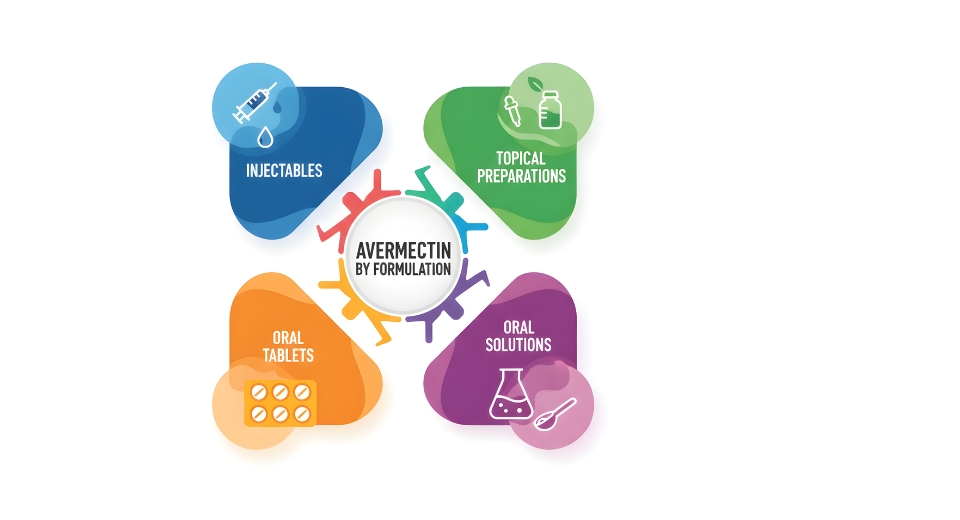
The global avermectin market, as per Metastat Insight's analysis, has been recognized as the way reliable solutions for agricultural productivity and parasite management are being searched for throughout the industries. The growth of interest in products from this family of compounds has come about due to the demand of farming operations, veterinary treatments, and even the related sectors. Avermectin-based solutions are now the regular practice of growers and animal health professionals who expect consistent results even in the most difficult biological conditions. The demand for safe conditions, lower losses, and higher output has put this market into the limelight, not the least because the already upscale consumer expectations for quality in sensitive supply chains keep on rising.
Market context
All agricultural and livestock activities around the globe are going through a tough time with the pressure mounting on them. Every day, food producers are troubled by pests, parasites, and resistance, which are the major concerns. Sustainable harvesting can only be granted through the use of compounds with reliable performance in the field. Avermectin-based products enter that area as a facilitator for protecting the crop and good animal-keeping practices. Commercial farmers want solutions that will enable them to have a grip on the situation without the need for constant reapplication or huge manpower. Veterinary practices are looking for reliable ways to prevent parasites from spreading in their animals thereby affecting productivity and the health of the entire herd. The end objective is the same in both the scenarios: to get rid of the biological threats without compromising on the environmental balance of the long run.
Beyond agriculture and animal care, supply chain managers and distributors seek predictability. Quality assurance teams need products with stability and measurable standards. Growing sophistication in global trade has encouraged the use of regulated, high-purity compounds. Avermectin products match those expectations by offering controlled performance in demanding conditions.
How it works / Why it’s valuable
The source of Avermectin is microorganisms in the soil, and then the compound is refined to get compounds that are suitable for the market. It is not directly affecting the target organisms, but rather the biological pathways that the organism uses to transmit the nerve signals, and thus, the parasites or pests are getting controlled. The main advantage of this intervention is that it can be done without chemical damage for the crops and livestock which ultimately leads to higher yield and better production environment.
The compound is a user-friendly product as its concentrated effectivity means that less amount is required for application as compared to the older chemical methods. When the quantity is reduced, it can also lead to lesser residues, greater compatibility with the environment, and more efficient use of the resources. Manufacturers create a wide range of formulations that can be administered through injectables for veterinary treatment or used in the form of sprays for protecting the crops, etc., which makes the compound suitable for varied operational requirements. The flexibility of the compound makes it easy to use in farms with different sizes and structures
Growth story / Technological evolution
Avermectin was initially a product of research based in microbiology. It has been a long journey from initial discoveries to today's formulations with the unit of constant refinement which has allowed the drug to have stronger performance and wider application. In the course of time, the improvements in the fermentation methods and purification processes have led to the consistency and quality being gamed. Agriculture slowly and steadily accepted the product as experts gradually became familiar with the benefits and the regulatory bodies simplified the usage frameworks.
Over time, more specific products were introduced aimed at certain pests or parasites. More Product lines were created, which allowed the easy application of insecticides to specific areas rather the whole area. The delivery systems had also been upgraded to slow-release formulations and better suspension technology, which increased the performance and use of the products. The manufacturers are still working with the old production technology because of its purity, stability, and low environmental impact.
Global or regional trend
Adoption has achieved the most rapid progress in areas of agricultural plantations with high commercial crop and livestock production capacity. Regions that cultivate large quantities of grains, fruits, and vegetables are eager to receive inputs for pest management that are less toxic and more refined. The farms in the livestock region that have high veterinary standards are using on a regular basis the treatments based on avermectin for their animals.
Nevertheless, not only rich countries but also the poor agricultural countries are starting to assemble their expansion phase. Modern crop protection systems' growing investment demand has sped up the demand for such products in the developing markets. Higher incomes and better export incentives push the producers to comply with the quality standards that are stricter, therefore making them more dependent on the certified input materials like avermectin. In these rapidly developing areas, improved supply chain access and gradual infrastructure development have made it possible to supply a wider range of products.
Challenges and opportunities
Cost of production is still a major problem, particularly in case of small farms that stretch their tight budgets. Safety validation and documentation requirements are among the major regulatory obstacles that can be faced in the early stages. Differentiation is made more difficult by the existence of other pest-control methods either biological or chemical putting pressure on every player to be unique. Some areas go for low-cost solutions with poor quality, thus the technologically advanced compounds are not yet widely used there.
Nevertheless, the challenges are there and yet opportunities keep on increasing. Scientists are working on the development of new formulations that have even longer-lasting effects or are less damaging to the environment. Digital farming-which is predicated on data mapping and remote sensing-may allow for the very accurate application of the products and thus, will result in reduced waste and improved results. Sustainable farming practices such as IPM, that are compatible with the new chemicals, create a bigger market for the groups that are able to provide them with the targeted action without killing the surrounding ecosystems. The markets that are increasingly focused on food safety and export compliance will continue to look for compounds that have good traceability and regulatory acceptance.
Why it matters now
Agriculture stands at a crossroads. Escalating demand for food, climate-related pressures, and persistent biological threats challenge traditional production methods. Avermectin solutions play a meaningful role by supporting healthier crops and livestock while reducing waste and loss. The compound aligns with growing global expectations for efficiency, sustainability, and responsible resource use.
A shift toward healthier production systems calls for products offering stability, targeted performance, and safe handling qualities. Producers and veterinary professionals search for solutions that support output and reduce operational risk. Within this shifting landscape, the global avermectin market, supported by Metastat Insight research, demonstrates how highly focused scientific development contributes to steady progress in modern agricultural practices.
Drop us an email at:
Call us on:
+1 214 613 5758
+91 73850 57479
 inquiry@metastatinsight.com
 US: +1 3023308252
UK: +44 2034116747APAC: +91 7385057479
US: +1 3023308252
UK: +44 2034116747APAC: +91 7385057479 Address





.png) Agriculture
Agriculture Aerospace and Defense
 Automotive and Transportation
 Banking & Finance
 Biotechnology
 Chemicals and Materials
 Consumer Goods
 Energy and Power
 Food and Beverages
 Healthcare IT
 Information & Technology
 Machinery & Equipment
 Packaging
 Healthcare
 Electronics and Semiconductor
 Medical Devices
