Global Thoracolumbar Posterior Fixation Systems Market Size, Share, By Product Type (Pedicle Screw Systems, Rod Systems, Interbody Fusion Devices, Hooks, Wires, and Others), By Material Type (Titanium, Titanium Alloys, Stainless Steel, and Cobalt-Chrome Alloys), By Application (Thoracic Spine Fixation, Lumbar Spine Fixation, and Combined Thoracolumbar Fixation) By End User (Hospitals, Ambulatory Surgery Centers, Specialty Clinics, Orthopedic Centers, and Neurosurgery Centers), Industry Analysis, Growth, Trends, and Forecast, 2026-2033
Report ID
MSI-4769
Published
May 26, 2026
Pages
314 Pages
Format
Report Details
Comprehensive Market Analysis And Insights
Market Overview
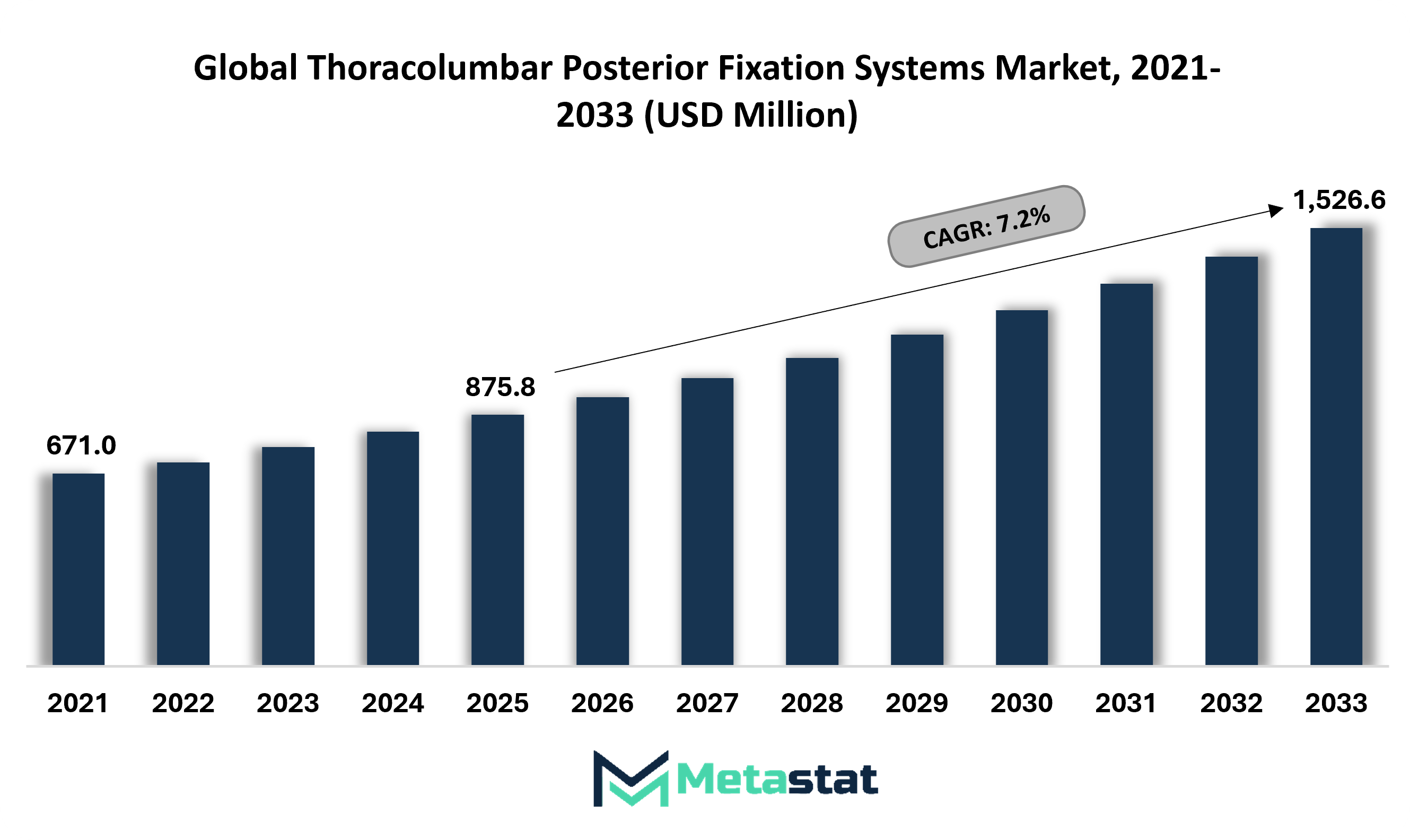
Global Thoracolumbar Posterior Fixation Systems market size is valued at USD 875.8 million in 2025 and projected to grow at a CAGR of 7.2% during the forecast period, reaching USD 1,526.6 million by 2033.
Global Thoracolumbar Posterior Fixation Systems Market: Comprehensive Data-Driven Market Analysis and Strategic Outlook
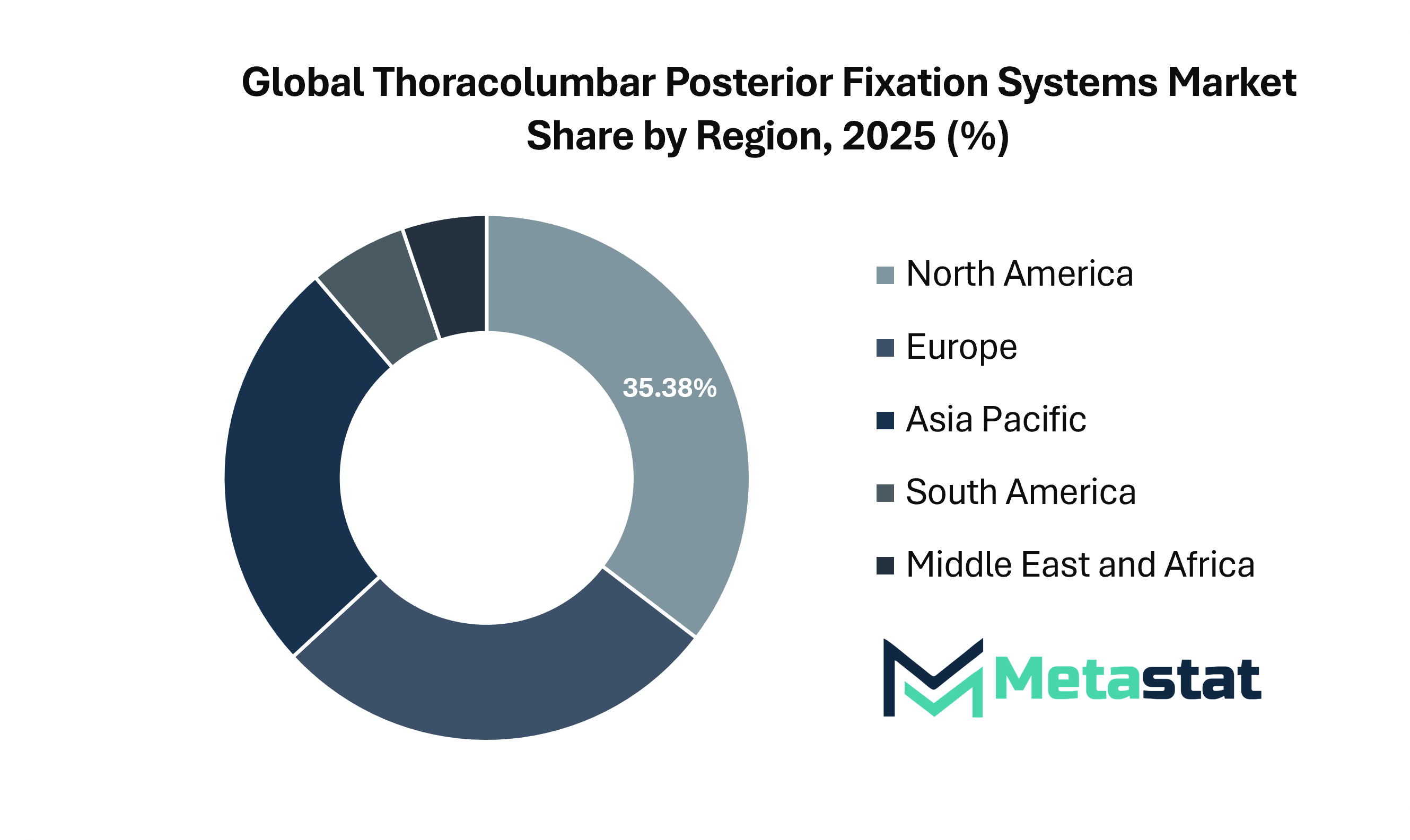
North America held 35.4% of the market share in 2025, with the U.S. leading the regional market.
The Pedicle Screw Systems segment accounted for 42.3% of the market share in 2025.
Key trends driving growth: Increasing prevalence of spinal disorders and trauma cases, along with advancements in implant materials and minimally invasive techniques.
Opportunities include growing adoption of minimally invasive spine surgery.
Key insight: The Global Thoracolumbar Posterior Fixation Systems Market is expanding steadily as aging populations and complex spinal disorders increase surgical intervention demand.
The Global Thoracolumbar Posterior Fixation Systems Market is a critical segment of spine care, focused on stabilizing the thoracic and lumbar spine after trauma, deformity, degeneration, or tumor-related damage. These systems help restore spinal alignment, support fusion, and reduce pain by securing affected vertebral levels through posterior surgical procedures.
Hospitals and spine centers are increasing the use of advanced implant systems designed for precise placement, reduced surgical time, and improved biomechanical stability. Ongoing advancements in biomaterials, modular implants, and image-guided surgery will support long-term growth in the Thoracolumbar Posterior Fixation Systems market.
Market Dynamics
Growth Drivers:
Increasing prevalence of spinal disorders and trauma cases.
Rising incidence of degenerative spinal conditions, road injuries, workplace accidents, sports trauma, and age-related vertebral damage is creating strong demand for thoracolumbar fixation systems. Hospitals are expanding spinal care capacity, while surgeons are increasingly recommending early stabilization procedures. Future healthcare planning indicates sustained procedural growth across urban and regional facilities.
Advancements in implant materials and minimally invasive techniques
Development of titanium alloys, biocompatible coatings, stronger rods, improved pedicle screws, navigation systems, and compact surgical instruments is enhancing treatment outcomes. Minimally invasive techniques support shorter hospital stays, reduced tissue damage, and faster recovery periods. Future product launches will deliver smarter implants with improved surgical precision.
Restraints and Challenges:
High cost of implants and surgical procedures
Premium implants, imaging guidance, operating room expenses, physician fees, rehabilitation costs, and follow-up care create financial pressure for patients and healthcare providers. Budget limitations in developing economies will slow procedure volumes. Future market expansion will depend on reimbursement reforms, localized manufacturing, and cost-efficient product portfolios.
Surgical complexity and risk of complications
Thoracolumbar fixation procedures require technical expertise, detailed imaging review, accurate screw placement, and careful postoperative monitoring. Risks include infection, nerve injury, implant loosening, adjacent segment stress, and the need for revision surgery. Future improvement will depend on robotics, surgeon training programs, and safer procedural workflows.
Opportunities:
Growing adoption of minimally invasive spine surgery
Preference for smaller incisions, reduced blood loss, shorter recovery timelines, and quicker return to daily activities is increasing acceptance of minimally invasive spine surgery. Private hospitals and specialty centers are investing in advanced systems. Future demand will rise with wider access to surgeon training and continued technology upgrades.
Market Segmentation Analysis
The Global Thoracolumbar Posterior Fixation Systems market is classified based on Product Type, Material Type, Application, and End User.
By Product Type, the market is further segmented into:
Pedicle Screw Systems
Pedicle Screw Systems segment is valued at USD 396.7 million in 2026 and is projected to reach USD 665.9 million by 2033, at a CAGR of 7.7% during the forecast period.
Demand for Pedicle Screw Systems will rise through improved spinal stability, faster surgical alignment, and better load distribution. Navigation-assisted placement, patient-matched sizing, and surface-treated implants will support surgeon preference. Expansion of trauma care and growth in degenerative spine procedures will sustain strong commercial momentum worldwide.
Rod Systems
Rod Systems segment is valued at USD 213.0 million in 2026 and is projected to reach USD 334.2 million by 2033, at a CAGR of 6.6% during the forecast period.
Growth of Rod Systems will benefit from stronger construct support during corrective surgery. Flexible contouring options, fatigue-resistant metals, and precision locking mechanisms will improve operating room efficiency. Rising scoliosis management and complex reconstruction cases will create long-lasting demand across healthcare networks.
Interbody Fusion Devices
Interbody Fusion Devices segment is valued at USD 173.5 million in 2026 and is projected to reach USD 307.0 million by 2033, at a CAGR of 8.5% during the forecast period.
Interest in Interbody Fusion Devices will expand with rising focus on disc height restoration and fusion support. Porous designs, imaging-compatible materials, and graft-friendly architecture will improve clinical acceptance. Aging populations and chronic spinal degeneration will increase procedure volumes in the coming years.
Hooks and Wires
Hooks and Wires segment is valued at USD 81.1 million in 2026 and is projected to reach USD 110.5 million by 2033, at a CAGR of 4.5% during the forecast period.
Hooks and Wires will continue to hold value in selective correction procedures and revision surgeries within the Thoracolumbar Posterior Fixation Systems market. Cost-effective positioning, supplemental fixation roles, and surgeon familiarity will sustain usage. Emerging hospitals seeking budget-conscious implant portfolios will maintain steady procurement activity over the forecast period.
Others
Others segment is valued at USD 73.7 million in 2026 and is projected to reach USD 109.0 million by 2033, at a CAGR of 5.8% during the forecast period.
The Others segment includes connectors, cross-links, caps, and supportive accessories. Product upgrades will target easier assembly, shorter operating time, and stronger construct integrity. Broad procedural customization needs will encourage steady innovation and recurring replacement demand across surgical centers.
By Material Type, the market is divided into:
Titanium and Titanium Alloys
Titanium and Titanium Alloys segment is projected to reach USD 1,115.6 million by 2033, at a CAGR of 7.7% during the forecast period.
Titanium and Titanium Alloys will maintain strong leadership in the Thoracolumbar Posterior Fixation Systems market owing to high strength, corrosion resistance, and imaging compatibility. Demand for lightweight implants, adoption of premium surgical systems, and long implant service life will support revenue growth. Advanced coatings will further improve fusion outcomes.
Stainless Steel
Stainless Steel segment is projected to reach USD 211.4 million by 2033, at a CAGR of 4.8% during the forecast period.
Stainless Steel will continue to remain relevant in price-sensitive regions and standard fixation procedures within the Thoracolumbar Posterior Fixation Systems market. Reliable mechanical strength, established supply chains, and lower manufacturing costs will support volume-based purchasing. Public hospitals and mid-tier centers will sustain sales momentum.
Cobalt-Chrome Alloys
Cobalt-Chrome Alloys segment is projected to reach USD 199.5 million by 2033, at a CAGR of 7.1% during the forecast period.
Cobalt-Chrome Alloys will gain adoption in high-load applications requiring greater strength within the Thoracolumbar Posterior Fixation Systems market. Wear resistance, durable performance, and correction support in complex deformity cases will increase adoption. Premium surgical applications and specialist facilities will drive niche expansion globally.
By Application, the market is further divided into:
Thoracic Spine Fixation
Thoracic Spine Fixation segment is projected to reach USD 333.4 million by 2033.
Demand for Thoracic Spine Fixation will rise with trauma management, deformity correction, and metastatic lesion stabilization. Better imaging guidance, safer instrumentation pathways, and refined implant geometry will enhance surgeon confidence. Tertiary care hospitals will remain key revenue contributors.
Lumbar Spine Fixation
Lumbar Spine Fixation segment is projected to reach USD 706.9 million by 2033.
Lumbar Spine Fixation will remain a high-demand application in the Thoracolumbar Posterior Fixation Systems market owing to the significant burden of lower back disorders. Growth in fusion procedures, minimally invasive access techniques, and faster recovery goals will increase implant usage. Sedentary lifestyles among working-age populations will support procedure demand.
Combined Thoracolumbar Fixation
Combined Thoracolumbar Fixation segment is projected to reach USD 486.2 million by 2033.
Combined Thoracolumbar Fixation will gain opportunities in the Thoracolumbar Posterior Fixation Systems market through multi-level instability and severe trauma care. Long-segment constructs, advanced planning software, and durable hardware systems will improve correction precision. Referral centers handling complex cases will generate premium revenue streams.
By End User, the Global Thoracolumbar Posterior Fixation Systems market is divided as:
Hospitals
Hospitals segment is projected to grow at a CAGR of 6.3% during the forecast period.
Hospital sales in the Thoracolumbar Posterior Fixation Systems market will dominate owing to surgical capacity, imaging resources, and access to intensive postoperative care. Large procurement contracts, multidisciplinary teams, and emergency trauma admissions will sustain purchasing volumes. Teaching institutions will accelerate adoption of advanced implant platforms.
Ambulatory Surgery Centers
Ambulatory Surgery Centers segment is projected to grow at a CAGR of 9.5% during the forecast period.
Adoption in Ambulatory Surgery Centers will increase with outpatient spine procedures and cost-efficient care models. Streamlined scheduling, shorter stays, and targeted surgical pathways will attract suitable patient groups. Compact instrumentation sets will support operational efficiency.
Specialty Clinics
Specialty Clinics segment is projected to grow at a CAGR of 8.4% during the forecast period.
Demand from Specialty Clinics in the Thoracolumbar Posterior Fixation Systems market will rise through focused spine consultation and elective intervention programs. Personalized treatment planning, follow-up continuity, and referral partnerships will improve case flow. Urban healthcare expansion will strengthen purchasing activity for modern fixation systems.
Orthopedic and Neurosurgery Centers segment is projected to grow at a CAGR of 7.3% during the forecast period.
Growth across Orthopedic and Neurosurgery Centers will benefit from specialist-led complex procedures. High case concentration, advanced diagnostics, and precision surgical teams will encourage premium implant selection. Research-driven treatment models will support early uptake of next-generation technologies.
By Region:
Based on geography, the Global Thoracolumbar Posterior Fixation Systems market is divided into North America, Europe, Asia-Pacific, South America, Middle East, and Africa.
North America benefits from strong reimbursement support, advanced surgical centers, and high adoption of spine navigation systems.
Presence of leading orthopedic device companies and skilled spine surgeons continues to support regional growth.
Europe represents a significant market for thoracolumbar posterior fixation systems, supported by advanced spine surgery infrastructure, high adoption of orthopedic implant technologies, and a growing elderly population with degenerative spinal conditions.
Asia Pacific presents strong opportunities through rising healthcare spending, growing trauma burden, and increasing access to advanced orthopedic surgery.
Government hospital upgrades and growth in medical tourism are improving market penetration across Asia Pacific.
Across the Middle East, Africa, and South America, demand is supported by improving surgical infrastructure, rising accident incidence, and expanding private specialty care networks.
Competitive Landscape and Strategic Insights
The Global Thoracolumbar Posterior Fixation Systems Market includes several established players that continue to shape demand across hospitals and specialty spine centers. Major companies include Medtronic plc, Stryker Corporation, Globus Medical, Inc., and DePuy Synthes. These companies offer broad product portfolios, continuous research support, and surgeon training programs. Their extensive reach enables customers to access implants, instruments, and after-sales service with minimal delay. Strong brand trust also plays a key role when hospitals evaluate suppliers. Leading companies therefore remain preferred choices across several regions and healthcare systems worldwide.
Mid-sized competitors continue to strengthen their market position by focusing on product design, faster response, and surgeon partnerships. Important names in this group include Orthofix Medical Inc., Highridge Medical, ATEC Spine, Inc., B. Braun Melsungen AG, Medacta International SA, and Life Spine, Inc. These companies regularly work closely with surgeons to improve implant handling, operating room efficiency, and patient outcomes. Many buyers value flexible service, direct communication, and focused support that will move faster than larger corporate structures. Such advantages help these companies secure consistent business over time.
Specialized manufacturers also add healthy competition by serving niche clinical needs and customized requirements. This group includes Precision Spine, Inc., Xtant Medical Holdings, Inc., Spineart SA, Spinal Elements, Inc., CTL Amedica, and GS Medical USA, Inc. Their growth often comes from advanced engineering, surgeon-specific systems, and strong distributor relationships. Many facilities prefer options that match specific case needs, budget limits, and operating preferences without compromising quality or reliability standards.
Newer and regional participants continue to expand the market by offering cost-effective alternatives and differentiated product concepts. These include Zavation Medical Products, LLC, Alphatec Holdings, Inc., Osseus Fusion Systems, Genesys Spine, Spine Wave, Inc., SIGNUS Medizintechnik GmbH, icotec ag, MiRus LLC, and Canwell Medical Co., Ltd. With improving healthcare access, these companies will continue to increase pressure on pricing, innovation, and service quality across the industry.
Forecast and Future Outlook
Market size is forecast to rise from USD 875.8 million in 2025 to over USD 1,526.6 million by 2033.
The Global Thoracolumbar Posterior Fixation Systems Market is expected to benefit from rising elderly populations, broader access to spine surgery, and the continued shift toward precision-guided minimally invasive procedures. Future demand is likely to favour lighter implants, personalized systems, and digitally integrated surgical platforms.
Thoracolumbar Posterior Fixation Systems Market Key Segments:
By Product Type:
Pedicle Screw Systems
Rod Systems
Interbody Fusion Devices
Hooks and Wires
Others
By Material Type:
Titanium and Titanium Alloys
Stainless Steel
Cobalt-Chrome Alloys
By Application:
Thoracic Spine Fixation
Lumbar Spine Fixation
Combined Thoracolumbar Fixation
By End User:
Hospitals
Ambulatory Surgery Centers
Specialty Clinics
Orthopedic and Neurosurgery Centers
Key Global Thoracolumbar Posterior Fixation Systems Industry Players
This research report categorizes the Thoracolumbar Posterior Fixation Systems market based on key segments and regions, forecasts revenue growth, and analyzes trends in each submarket. The report analyzes key growth drivers, opportunities, and challenges influencing the Thoracolumbar Posterior Fixation Systems market. Recent market developments and competitive strategies such as expansions, product launches, partnerships, mergers, and acquisitions have been included to define the competitive landscape of the market.
The report strategically identifies and profiles key market players and analyzes their core competencies across each sub-segment of the Thoracolumbar Posterior Fixation Systems market.
Report Attributes
Details
Study Period
2021-2033
Base Year
2025
Estimated Year
2026
Forecast Period
2026-2033
Historical Period
2021-2025
Growth Rate
CAGR 7.2% from 2026 to 2033
Revenue Unit
USD million
Segmentation
By Product Type, Material Type, Application, End User, and Region
By Region
North America (By Product Type, Material Type, Application, End User, and Country)
United States
Canada
Mexico
Europe (By Product Type, Material Type, Application, End User, and Country)
Germany
France
UK
Italy
Spain
Russia
Rest of Europe
Asia Pacific (By Product Type, Material Type, Application, End User, and Country)
China
Japan
India
South Korea
Australia
Southeast Asia
Rest of Asia Pacific
South America (By Product Type, Material Type, Application, End User, and Country)
Brazil
Argentina
Rest of South America
Middle East and Africa (By Product Type, Material Type, Application, End User, and Country)
Saudi Arabia
UAE
South Africa
Rest of Middle East and Africa
WHAT REPORT PROVIDES
Key Company Market Share, Revenue, and Position/Ranking
Key Market Leaders
Full In-Depth Analysis of the Parent Industry
Industry Statistics
Important Changes in Market and Its Dynamics
Segmentation Details of the Market
Historical, On-Going, and Projected Market Analysis
Assessment of Niche Industry Developments
Market Share Analysis
Key Strategies of Major Players
Company Profiles of Key Players
Unique Selling Propositions of Leading Market Players
India Maternal Health Monitoring Market Size, Share, Trends, 2033
India Maternal Health Monitoring market size is valued at USD 416.0 million in 2025 and is projected to reach USD 834.4 million in 2033, at a CAGR of 9.1% from 2026 to 2033
India Maternal Health Monitoring Market, India Maternal Health Monitoring Market Size, India Maternal Health Monitoring Market Share, India Maternal Health Monitoring Market Analysis, India Maternal Health Monitoring Market Growth, India Maternal Health Monitoring Market Trends, India Maternal Health Monitoring Market Research Report, India Maternal Health Monitoring Market Forecast, India Maternal Health Monitoring, India Maternal Health Monitoring Market Research, India Maternal Health Monitoring Industry, India Maternal Health Monitoring Industry Report, India Maternal Health Monitoring Market Data, India Maternal Health Monitoring Statistics, India Maternal Health Monitoring Market Statistics, India Maternal Health Monitoring Industry Trends, India Maternal Health Monitoring Market Report, India Maternal Health Monitoring Market Trends, India Maternal Health Monitoring Market News, India Maternal Health Monitoring Forecasts, India Maternal Health Monitoring Market Intelligence Report
Global Anaerobic Incubators market size is valued at USD 177.5 million in 2025 and is projected to reach USD 323.6 million in 2033, at a CAGR of 7.8% from 2026 to 2033
Global Radiochemical Synthesizers market size is valued at USD 450.5 million in 2025 and is projected to reach USD 746.6 million in 2033, at a CAGR of 6.7% from 2026 to 2033.
Global Radiochemical Synthesizers Market, Global Radiochemical Synthesizers Market Size, Global Radiochemical Synthesizers Market Share, Global Radiochemical Synthesizers Market Analysis, Global Radiochemical Synthesizers Market Growth, Global Radiochemical Synthesizers Market Trends, Global Radiochemical Synthesizers Market Research Report, Global Radiochemical Synthesizers Market Forecast, Global Radiochemical Synthesizers, Global Radiochemical Synthesizers Market Research, Global Radiochemical Synthesizers Industry, Global Radiochemical Synthesizers Industry Report, Global Radiochemical Synthesizers Market Data, Global Radiochemical Synthesizers Statistics, Global Radiochemical Synthesizers Market Statistics, Global Radiochemical Synthesizers Industry Trends, Global Radiochemical Synthesizers Market Report, Global Radiochemical Synthesizers Market Trends, Global Radiochemical Synthesizers Market News, Global Radiochemical Synthesizers Forecasts, Global Radiochemical Synthesizers Market Intelligence Report
Global Cranial Perforator market size is valued at USD 125.6 million in 2025 and is projected to reach USD 192.6 million in 2033, at a CAGR of 5.5% from 2026 to 2033