Global Skincare Ingredients Market Size, Share, By Ingredient Type (Emollients, Humectants, Surfactants, Preservatives, Antioxidants, UV Filters, and Others), By Source (Natural Ingredients, Organic Ingredients, Synthetic Ingredients, Upcycled Ingredients, Circular Ingredients, and Biotechnology-derived Ingredients), By Application (Cleansers, Creams, Face Wash, Peels, Scrubs, Toners, Lotions, and Others), By Distribution Channel (Direct Sales, Distributors, Wholesalers, and Online B2B Platforms ), Industry Analysis, Growth, Trends, and Forecast, 2026-2033
Report ID
MSI-4694
Published
April 30, 2026
Pages
314 Pages
Format
Report Details
Comprehensive Market Analysis And Insights
Market Overview
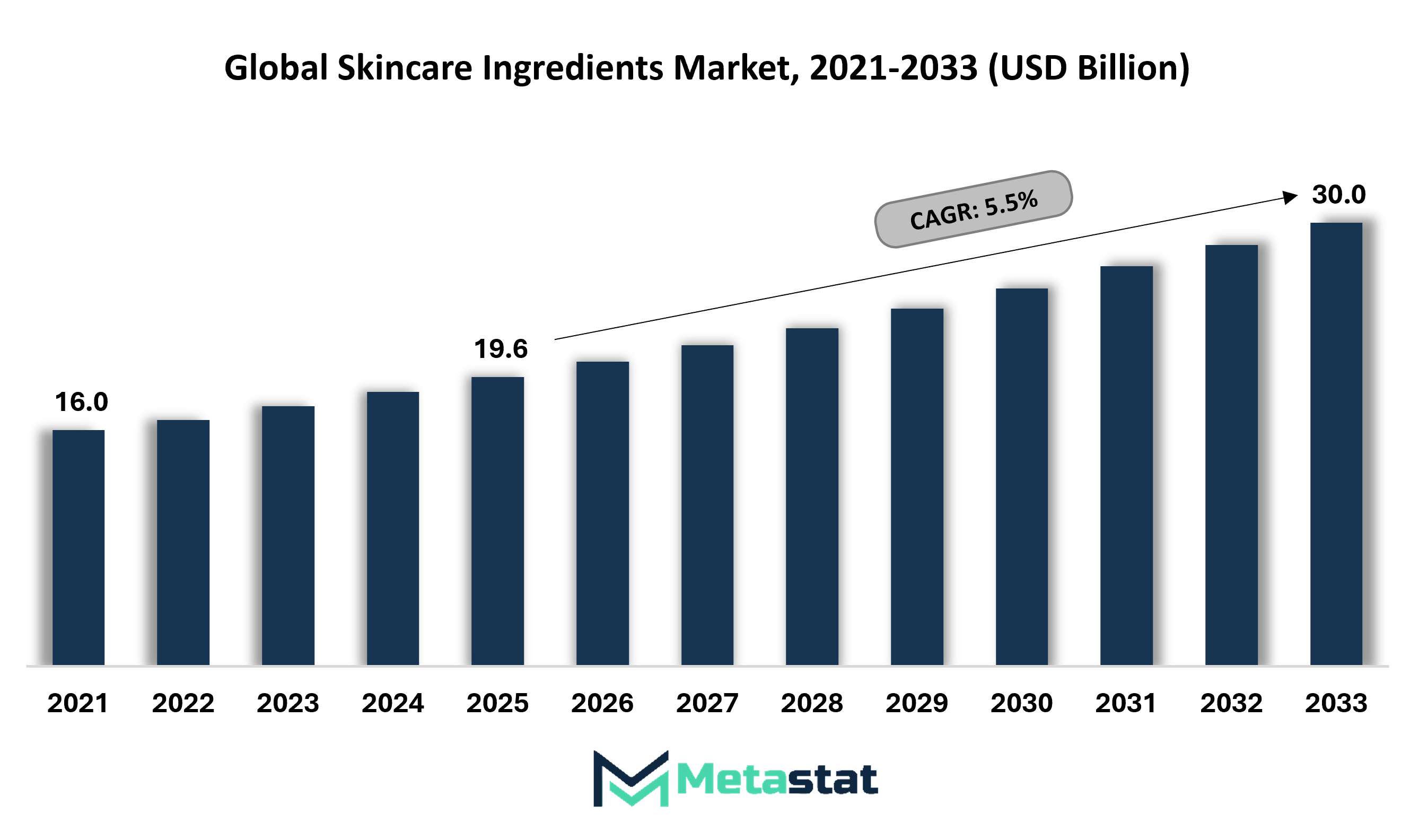
Global Skincare Ingredients market size is valued at USD 19.6 billion in 2025 and projected to grow at a CAGR of 5.5% during the forecast period, reaching USD 30.0 billion by 2033.
Global Skincare Ingredients Market: Comprehensive Data-Driven Market Analysis and Strategic Outlook
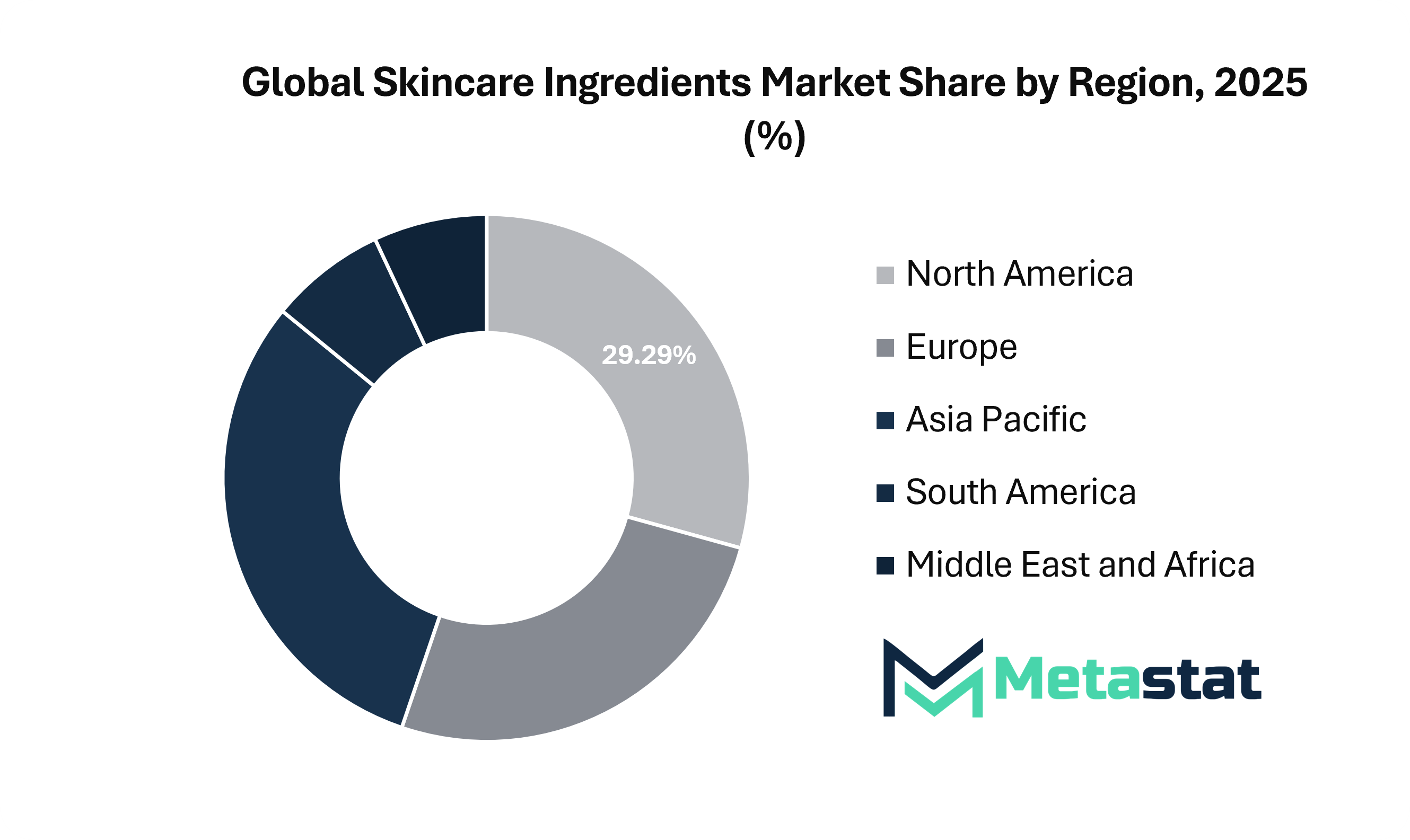
North America holds 29.3% in 2025 with US leading the market share in 2025.
Emollients segment account for a market share of 23.5% in 2025.
Key trends driving growth: Rising consumer awareness regarding skin health, ingredient transparency, and demand for natural or clinically proven formulations, along with technological advancements in biotechnology and formulation science enabling innovative, multifunctional ingredients.
Opportunities include growing demand for sustainable, microbiome-friendly, and bio-based skincare ingredients creating innovation avenues.
Key insight: Rising demand for clean-label, multifunctional, and scientifically backed skincare ingredients is accelerating global market expansion, driven by increasing skin health awareness and ingredient transparency trends.
The Global Skincare Ingredients market is expanding steadily, supported by rising consumer awareness regarding skin health, product transparency, and ingredient efficacy. Formulations offering targeted skincare benefits are gaining stronger traction, encouraging innovation across natural, bio-based, and scientifically advanced compounds. Ingredient-led purchasing behavior continues to strengthen, with product labels, safety claims, and active ingredient composition playing an important role in consumer buying decisions.
Natural and bio-based ingredients are gaining traction, supported by clean beauty trends and regulatory alignment across major regions. Synthetic ingredients continue to evolve with improved safety profiles and consistent performance, maintaining relevance in formulation science. The Global Skincare Ingredients market is also transforming through biotechnology integration, where lab-engineered compounds improve consistency, sustainability, and scalability. Ingredient manufacturers are focusing on multifunctional solutions that reduce formulation complexity while delivering measurable skincare benefits.
Market Dynamics
Growth Drivers:
Rising consumer awareness regarding skin health, ingredient transparency, and demand for natural or clinically proven formulations.
Growing focus on skin wellness is encouraging the adoption of safer and clearly labelled formulations across the Skincare Ingredients market. Consumers increasingly prefer plant-based extracts, dermatologically tested actives, and visible product efficacy. Clean-label positioning is gaining importance, while brands are responding with simplified ingredient lists and transparent sourcing information, supporting long-term market expansion.
Technological advancements in biotechnology and formulation science enabling innovative, multifunctional ingredients
Advancements in biotechnology are supporting the development of high-performance actives with improved stability and targeted benefits across the Skincare Ingredients market. Peptide engineering, fermentation technologies, and encapsulation systems enhance absorption and performance. Multifunctional ingredients reduce formulation complexity, support cost control, and create pathways for advanced skincare solutions across premium and mass-market segments.
Restraints and Challenges:
Stringent and varying regulatory frameworks increasing compliance costs and delaying product approvals
Regulatory differences across regions create operational complexity for manufacturers operating in the Skincare Ingredients market. Approval timelines lengthen owing to safety assessments, documentation requirements, and ingredient restrictions. Compliance costs increase, influencing pricing strategies and slowing innovation cycles, particularly for new entrants expanding across multiple international markets.
Volatility in raw material prices and stability challenges of natural ingredients impacting production and formulation
Fluctuations in the availability and pricing of botanical extracts and specialty chemicals create uncertainty across the Global Skincare Ingredients market. Natural ingredients often face shelf-life limitations and sensitivity to environmental conditions. Manufacturers are investing in stabilization technologies and alternative sourcing strategies, while cost pressures continue to influence production planning and profit margins.
Opportunities:
Growing demand for sustainable, microbiome-friendly, and bio-based skincare ingredients creating innovation avenues
Rising preference for eco-conscious and skin-compatible formulations is driving innovation across the Skincare Ingredients market. Bio-based actives, probiotic extracts, and biodegradable compounds are gaining traction among environmentally conscious consumers. Research efforts focused on microbiome balance and long-term skin health are enabling manufacturers to develop differentiated offerings aligned with sustainability goals and future regulatory expectations.
Market Segmentation Analysis
The Global Skincare Ingredients market is classified based on Ingredient Type, Source, Application, and Distribution Channel.
By Ingredient Type, the market is further segmented into:
Emollients:
Emollients segment is valued at USD 4.8 billion in 2026 and is projected to reach USD 6.8 billion by 2033, at a CAGR of 4.9% during the forecast period.
Emollients support skin barrier repair through lipid replenishment and texture enhancement. Segment expansion aligns with premium formulations targeting dryness, sensitivity, and long-lasting hydration. Future development indicates stronger adoption of plant-based oils and advanced esters, supported by consumer preference for smoother sensory profiles and improved skin comfort.
Humectants:
Humectants segment is valued at USD 3.7 billion in 2026 and is projected to reach USD 5.5 billion by 2033, at a CAGR of 5.9% during the forecast period.
Humectants support moisture retention through water-binding properties. Hydration-focused skincare routines across diverse climates are strengthening product adoption. Innovation trends highlight bio-based glycerin alternatives and fermentation-derived actives, offering improved moisture balance and compatibility with minimalist formulations focused on efficacy and skin health.
Surfactants:
Surfactants segment is valued at USD 3.4 billion in 2026 and is projected to reach USD 4.3 billion by 2033, at a CAGR of 3.4% during the forecast period.
Surfactants enable cleansing through the effective removal of impurities and excess oil. Mild formulations are gaining importance owing to rising awareness regarding skin sensitivity. Market outlook reflects a shift toward sulfate-free and amino acid-based surfactants, improving skin compatibility while maintaining cleansing efficiency in daily-use formulations.
Preservatives:
Preservatives segment is valued at USD 2.5 billion in 2026 and is projected to reach USD 3.3 billion by 2033, at a CAGR of 4.5% during the forecast period.
Preservatives ensure product stability and microbial safety across extended shelf life. Regulatory pressure is encouraging the development of safer and low-irritation preservation systems. Market direction indicates increased adoption of multifunctional ingredients and natural preservation blends supporting clean-label positioning without compromising safety standards.
Antioxidants:
Antioxidants segment is valued at USD 2.3 billion in 2026 and is projected to reach USD 3.9 billion by 2033, at a CAGR of 7.6% during the forecast period.
Antioxidants protect skin against environmental stress and oxidative damage. Rising pollution exposure is increasing the adoption of protective skincare solutions. Future advancements include plant-derived extracts and vitamin complexes delivering improved stability and targeted efficacy in anti-aging and skin repair formulations.
UV Filters:
UV Filters segment is valued at USD 2.1 billion in 2026 and is projected to reach USD 3.4 billion by 2033, at a CAGR of 6.8% during the forecast period.
UV filters provide protection against harmful radiation exposure. Segment expansion aligns with rising awareness regarding skin damage prevention. Innovation trends emphasize mineral-based filters and next-generation organic compounds delivering broad-spectrum protection with improved safety profiles and reduced environmental impact.
Others:
Others segment is valued at USD 1.9 billion in 2026 and is projected to reach USD 2.8 billion by 2033, at a CAGR of 5.6% during the forecast period.
Other ingredients include peptides, enzymes, and specialty actives designed for targeted skincare benefits. Market expansion reflects growing interest in multifunctional skincare addressing concerns such as pigmentation, aging, and uneven texture. Future development connects with personalized formulations and precision-based ingredient integration.
Natural and Organic Ingredients segment is projected to reach USD 10.5 billion by 2033, at a CAGR of 5.7% during the forecast period.
Natural and organic ingredients attract adoption through clean-label positioning and consumer trust. Segment expansion links with preference for plant-derived extracts, essential oils, and naturally sourced actives. Market outlook highlights sustainable sourcing practices and certification standards strengthening product credibility and long-term adoption.
Synthetic Ingredients:
Synthetic Ingredients segment is projected to reach USD 11.3 billion by 2033, at a CAGR of 3.2% during the forecast period.
Synthetic ingredients market support consistency, cost efficiency, and performance reliability. Adoption remains steady in mass-market formulations requiring stability and scalability. Future direction focuses on safer synthetic alternatives designed to meet regulatory standards while retaining efficacy across diverse skincare product categories.
Upcycled and Circular Ingredients:
Upcycled and Circular Ingredients segment is projected to reach USD 2.8 billion by 2033, at a CAGR of 10.8% during the forecast period.
Upcycled and circular ingredients use waste streams to create value-added skincare components. Sustainability goals are encouraging adoption among manufacturers seeking reduced environmental impact. Future expansion indicates increased investment in circular economy models and innovative extraction technologies improving ingredient quality.
Biotechnology-derived Ingredients:
Biotechnology-derived Ingredients segment is projected to reach USD 5.4 billion by 2033, at a CAGR of 8.4% during the forecast period.
Biotechnology-derived ingredients enable precision-based formulation through fermentation and cellular engineering. Adoption is rising with interest in high-performance and eco-conscious solutions. Future trends emphasize lab-grown actives delivering consistent quality, reduced resource dependency, and enhanced functionality in advanced skincare applications.
By Application, the market is further divided into:
Cleansers:
Cleansers segment is projected to reach USD 5.2 billion by 2033.
Cleansers rely on gentle yet effective ingredient systems for daily skin protection. Rising focus on hygiene and skincare routines is supporting broader use of cleansing formulations. Future trends indicate increased adoption of multifunctional cleansers integrating hydration and barrier protection within single formulations.
Creams:
Creams segment is projected to reach USD 8.7 billion by 2033.
Creams use rich ingredient blends supporting hydration, nourishment, and skin repair. Segment expansion aligns with anti-aging and moisturizing needs across demographics. Market outlook suggests growth in adaptive formulations responding to skin conditions and environmental changes through smart ingredient combinations.
Face Wash:
Face Wash segment is projected to reach USD 4.5 billion by 2033.
Face wash formulations emphasize mild surfactants and skin-friendly actives. Consumer preference leans toward sulfate-free and pH-balanced products. Future growth reflects innovation in gel-based and foam-based formats providing enhanced cleansing without disrupting natural skin balance.
Peels and Scrubs:
Peels and Scrubs segment is projected to reach USD 2.4 billion by 2033.
Peels and scrubs focus on exfoliation through chemical and physical agents. Rising interest in skin renewal treatments is strengthening adoption. Future trends highlight enzyme-based and micro-exfoliation technologies delivering effective results with minimal irritation.
Toners:
Toners segment is projected to reach USD 2.2 billion by 2033.
Toners offer hydration, pH balance, and preparation for further skincare steps. Consumer preference is shifting toward alcohol-free and soothing formulations. Future direction includes infusion of active ingredients delivering targeted benefits such as pore refinement, skin brightening, and barrier support.
Lotions:
Lotions segment is projected to reach USD 4.4 billion by 2033.
Lotions offer lightweight hydration suitable for daily application. Segment expansion aligns with preference for non-greasy textures across climates. Future innovation focuses on fast-absorbing formulations integrating protective and nourishing ingredients for long-lasting skin comfort.
Others:
Others segment is projected to reach USD 2.6 billion by 2033.
Other applications include serums, masks, and specialty treatments designed for targeted outcomes. Market expansion reflects growing consumer interest in personalized skincare. Outlook emphasizes advanced delivery systems improving ingredient penetration and overall formulation effectiveness.
By Distribution Channel, the Global Skincare Ingredients market is divided as:
Direct Sales:
Direct Sales segment is projected to grow at a CAGR of 4.1% during the forecast period.
Direct sales enable manufacturers to establish strong relationships with skincare brands. Segment growth connects with customized ingredient solutions, technical support services, and formulation advisory capabilities. Future direction highlights digital integration and direct engagement platforms improving efficiency and communication.
Distributors and Wholesalers:
Distributors and Wholesalers segment is projected to grow at a CAGR of 3.5% during the forecast period.
Distributors and wholesalers support broad product availability and supply chain stability. Adoption remains strong among small and mid-sized manufacturers requiring reliable ingredient access. Future expansion suggests improved logistics networks and inventory management systems enhancing distribution performance.
Online B2B Platforms:
Online B2B Platforms segment is projected to grow at a CAGR of 12.5% during the forecast period.
Online B2B platforms market offer streamlined procurement and global accessibility. Rapid digital adoption accelerates market reach and transparency. Future trends indicate integration of data-driven insights and automated sourcing tools enhancing decision-making and supplier connectivity.
By Region:
Based on geography, the Global Skincare Ingredients market is divided into North America, Europe, Asia-Pacific, South America, Middle East, and Africa.
North America drives growth in the Skincare Ingredients market through strong adoption of premium skincare products and high consumer awareness regarding ingredient safety and efficacy.
Europe holds a significant position in the Skincare Ingredients market, supported by strong demand for premium skincare, clean-label formulations, and science-backed cosmetic ingredients.
Asia-Pacific presents strong opportunities for the Skincare Ingredients market through an expanding middle-class population and increasing skincare adoption across emerging economies.
Across the Middle East, Africa, and South America, the Skincare Ingredients market is progressing through rising disposable income, increasing beauty awareness, and expanding retail distribution networks.
Competitive Landscape and Strategic Insights
The Global Skincare Ingredients market continues to expand as consumers pay closer attention to product quality, ingredient transparency, and formulation safety. Label reading has become a stronger purchase behavior, with consumers seeking safe, effective, and reliable ingredients in skincare routines. The shift is encouraging manufacturers to focus on research, testing, and improved sourcing of raw materials. Companies are also balancing performance with sustainability, which has become an important factor in purchasing decisions. Natural extracts, active compounds, and bio-based ingredients are gaining wider attention, while synthetic alternatives are being improved to meet safety standards and deliver consistent outcomes.
Key Global Skincare Ingredients industry players include BASF SE, Croda International Plc, dsm-firmenich AG, Evonik Industries AG, Ashland Inc., Clariant AG, Symrise AG, Givaudan SA, Lubrizol Corporation, Solvay SA, Dow Inc., Innospec Inc., SEPPIC S.A., International Flavors & Fragrances Inc., Arxada AG, Merck KGaA, Roquette Frères, Corbion N.V., Eastman Chemical Company, Shin-Etsu Chemical Co., Ltd., Kao Corporation, ADEKA Corporation, Sensient Cosmetic Technologies, Solabia Group, Mibelle Biochemistry, SILAB, CLR Chemisches Laboratorium Dr. Kurt Richter GmbH, RAHN AG, Vytrus Biotech S.A., Hallstar Beauty, and Grant Industries, Inc. These companies play a vital role in shaping product development by offering a wide range of ingredients that support hydration, anti-aging, skin repair, cleansing, preservation, and protection.
Innovation will remain a key factor driving competition among these players. Many companies are investing in biotechnology and green chemistry to create ingredients that are effective and environmentally responsible. Partnerships between ingredient suppliers and skincare manufacturers are also becoming common, supporting faster product launches. Regulatory guidelines will continue to influence company operations, encouraging strong safety and quality standards across different regions.
The market will also see changes in consumer preferences, with rising adoption of clean beauty and personalized skincare solutions. Digital platforms and social media will continue to shape buying behavior, making ingredient education and product comparison easier for consumers. In response, companies will focus on clear communication and transparent marketing to build trust. Overall, the Global Skincare Ingredients market shows strong potential, supported by innovation, changing consumer behavior, and ongoing efforts to improve product performance and safety.
Forecast and Future Outlook
Market size is forecast to rise from USD 19.6 billion in 2025 to over USD 30.0 billion by 2033.
The Global Skincare Ingredients market growth will be supported by innovation in active ingredients, rising demand for targeted skincare solutions, and stronger preference for transparent formulations. Advances in biotechnology, sustainable sourcing, and multifunctional ingredient development will continue to reshape product pipelines across premium, mass, and clinical skincare categories.
This research report categorizes the Skincare Ingredients market based on key segments and regions, forecasts revenue growth, and analyses trends in each submarket. The report analyses the key growth drivers, opportunities, and challenges influencing the Skincare Ingredients market. Recent market developments and competitive strategies such as expansion, product launch, partnership, merger, and acquisition have been included to draw the competitive landscape in the market.
The report strategically identifies and profiles the key market players and analyses their core competencies in each sub-segment of the Skincare Ingredients market.
Report Attributes
Details
Study Period
2021-2033
Base Year
2025
Estimated Year
2026
Forecast Period
2026-2033
Historical Period
2021-2025
Growth Rate
CAGR 5.5% from 2026 to 2033
Revenue Unit
USD billion
Sales Volume Unit
Kilotons
Segmentation
By Ingredient Type, Source, Application, Distribution Channel, and Region
By Region
North America (By Ingredient Type, Source, Application, Distribution Channel, and Country)
United States
Canada
Mexico
Europe (By Ingredient Type, Source, Application, Distribution Channel, and Country)
Germany
France
UK
Italy
Spain
Russia
Rest of Europe
Asia Pacific (By Ingredient Type, Source, Application, Distribution Channel, and Country)
China
Japan
India
South Korea
Australia
Southeast Asia
Rest of Asia Pacific
South America (By Ingredient Type, Source, Application, Distribution Channel, and Country)
Brazil
Argentina
Rest of South America
Middle East and Africa (By Ingredient Type, Source, Application, Distribution Channel, and Country)
Saudi Arabia
UAE
South Africa
Rest of Middle East and Africa
WHAT REPORT PROVIDES
Key Company Market Share, Revenue, and Position/Ranking
Key Market Leaders
Full In-Depth Analysis of the Parent Industry
Industry Statistics
Important Changes in Market and Its Dynamics
Segmentation Details of the Market
Historical, On-Going, and Projected Market Analysis
Assessment of Niche Industry Developments
Market Share Analysis
Key Strategies of Major Players
Company Profiles of Key Players
Unique Selling Propositions of Leading Market Players
Emerging Segments and Regional Growth Potential
Key Strategic Recommendations
Competitive Benchmarking
Import Export Trade Statistics
End of Report Overview
Frequently Asked Questions
Find answers to common questions about this report
Top players operating in the Skincare Ingredients industry include BASF SE, Croda International Plc, dsm-firmenich AG, Evonik Industries AG, Ashland Inc., and Clariant AG
North America region dominates the market.
The Emollients is the leading type segment in the Global market.
Global Skincare Ingredients market is estimated to reach USD 30.0 billion by 2033.
Stringent and varying regulatory frameworks increasing compliance costs and delaying product approvals will hamper the market growth within the forecast period.
The Metastat Insights analysis shows that the North America Skincare Ingredients market size is estimated to be USD 7.7 billion by 2033.
The Global Skincare Ingredients market is expected to grow at a CAGR of 5.5% over the forecast period (2026-2033).
The Metastat Insights study shows that the Global Skincare Ingredients market size was USD 19.6 billion in 2025.
Rising consumer awareness regarding skin health, ingredient transparency, and demand for natural or clinically proven formulations and Technological advancements in biotechnology and formulation science enabling innovative, multifunctional ingredients are key driving factors, boosting the market.
Lubricants Manufacturing market size is valued at USD 151.1 billion in 2025 and projected to reach USD 208.4 billion by 2033, growing at a CAGR of 4.1%.
Vapor Degreasing Solvent market size is valued at USD 1,004.1 million in 2025 and projected to reach USD 1,576.4 million by 2033, growing at a CAGR of 5.8%.
Bangladesh Flavours and Fragrances Market Size, Share, Trends, 2033
Bangladesh Flavours and Fragrances market size is valued at USD 793.9 million in 2025 and is projected to reach USD 1,447.9 million in 2033, at a CAGR of 7.8% from 2026 to 2033
Bangladesh Flavours and Fragrances Market, Bangladesh Flavours and Fragrances Market Size, Bangladesh Flavours and Fragrances Market Share, Bangladesh Flavours and Fragrances Market Analysis, Bangladesh Flavours and Fragrances Market Growth, Bangladesh Flavours and Fragrances Market Trends, Bangladesh Flavours and Fragrances Market Research Report, Bangladesh Flavours and Fragrances Market Forecast, Bangladesh Flavours and Fragrances, Bangladesh Flavours and Fragrances Market Research, Bangladesh Flavours and Fragrances Industry, Bangladesh Flavours and Fragrances Industry Report, Bangladesh Flavours and Fragrances Market Data, Bangladesh Flavours and Fragrances Statistics, Bangladesh Flavours and Fragrances Market Statistics, Bangladesh Flavours and Fragrances Industry Trends, Bangladesh Flavours and Fragrances Market Report, Bangladesh Flavours and Fragrances Market Trends, Bangladesh Flavours and Fragrances Market News, Bangladesh Flavours and Fragrances Forecasts, Bangladesh Flavours and Fragrances Market Intelligence Report
Biocatalysis and Enzyme Biocatalysts Market Size, Share, Trends, 2033
Biocatalysis and Enzyme Biocatalysts market size is valued at USD 737.8 million in 2025 and is projected to reach USD 1,221.0 million in 2033, at a CAGR of 6.5% from 2026 to 2033.
Biocatalysis and Enzyme Biocatalysts Market, Biocatalysis and Enzyme Biocatalysts Market Size, Biocatalysis and Enzyme Biocatalysts Market Share, Biocatalysis and Enzyme Biocatalysts Market Analysis, Biocatalysis and Enzyme Biocatalysts Market Growth, Biocatalysis and Enzyme Biocatalysts Market Trends, Biocatalysis and Enzyme Biocatalysts Market Research Report, Biocatalysis and Enzyme Biocatalysts Market Forecast, Biocatalysis and Enzyme Biocatalysts, Biocatalysis and Enzyme Biocatalysts Market Research, Biocatalysis and Enzyme Biocatalysts Industry, Biocatalysis and Enzyme Biocatalysts Industry Report, Biocatalysis and Enzyme Biocatalysts Market Data, Biocatalysis and Enzyme Biocatalysts Statistics, Biocatalysis and Enzyme Biocatalysts Market Statistics, Biocatalysis and Enzyme Biocatalysts Industry Trends, Biocatalysis and Enzyme Biocatalysts Market Report, Biocatalysis and Enzyme Biocatalysts Market Trends, Biocatalysis and Enzyme Biocatalysts Market News, Biocatalysis and Enzyme Biocatalysts Forecasts, Biocatalysis and Enzyme Biocatalysts Market Intelligence Report