Global Protein Wafer Bar Market Size, Share, By Product Type (Regular, Low-sugar, Sugar-free, High-protein, Keto-friendly, Vegan Gluten-free, and Others), By Packaging Type (Single Bar Packs, Multi-pack Boxes, Variety Packs, and Bulk Packs), By Flavor (Chocolate, Vanilla, Peanut Butter, Hazelnut, Caramel, Cookies, Cream, Fruit Flavors, and Other Flavors), By Distribution Channel (Supermarkets, Hypermarkets, Convenience Stores, Specialty Nutrition Stores, Pharmacies, Online Retail, Direct-to-consumer, Gyms, Fitness Centers, and Others), Industry Analysis, Growth, Trends, and Forecast, 2026-2033
Report ID
MSI-4690
Published
April 29, 2026
Pages
314 Pages
Format
Report Details
Comprehensive Market Analysis And Insights
Market Overview
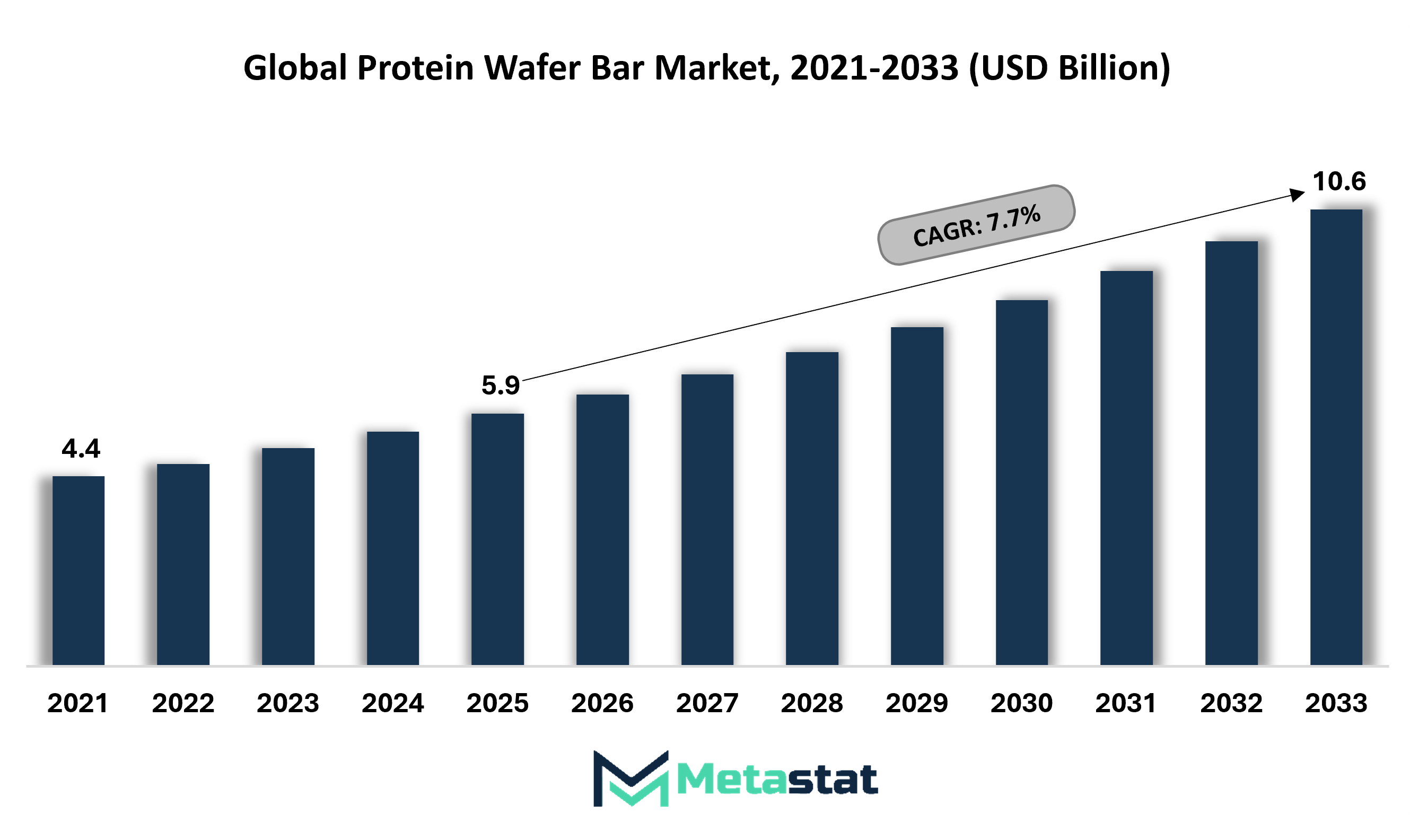
Global Protein Wafer Bar market size is valued at USD 5.9 billion in 2025 and projected to grow at a CAGR of 7.7% during the forecast period, reaching USD 10.6 billion by 2033.
Global Protein Wafer Bar Market: Comprehensive Data-Driven Market Analysis and Strategic Outlook
Global Protein Wafer Bar market valued at USD 5.9 billion in 2025, growing at a CAGR of 7.7% through 2033, with potential to exceed USD 10.6 billion.
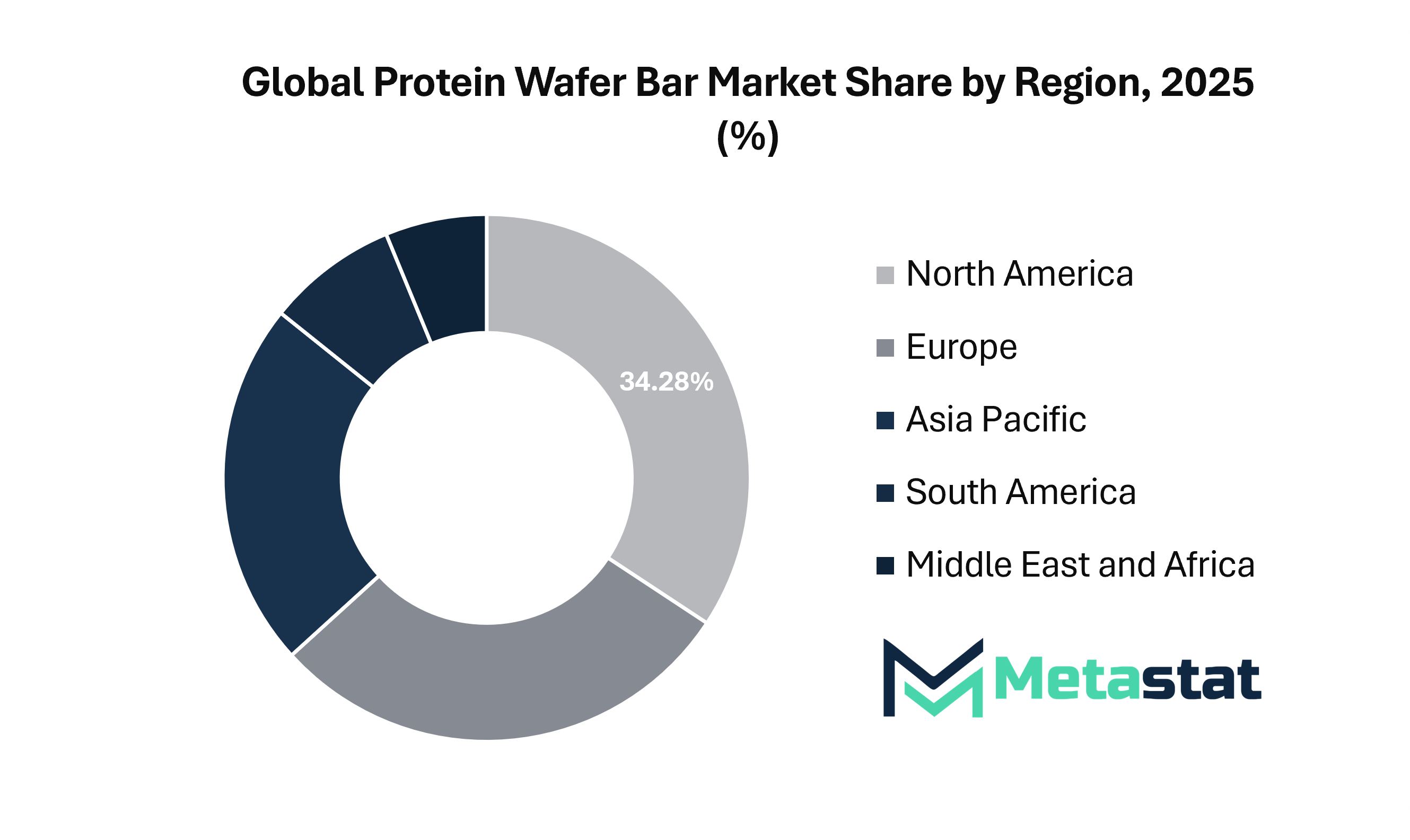
North America holds 34.3% in 2025 with US leading the market share in 2025.
Regular segment account for a market share of 21.0% in 2025.
Key trends driving growth: Rising health consciousness and increased demand for high-protein, on-the-go snack options, along with growth in fitness, sports nutrition, and weight management trends driving functional food adoption.
Opportunities include Innovation in flavors, clean-label ingredients, and plant-based protein variants expanding consumer base.
Key insight: The Global Protein Wafer Bar market is expanding rapidly owing to the convergence of indulgence and functional nutrition, supported by evolving consumer eating habits and product innovation.
The Global Protein Wafer Bar market is gaining strong traction as consumers increasingly seek convenient, high-protein snack options that align with active lifestyles and nutritional goals. The market is evolving through product innovation, clean-label formulations, and expanding retail accessibility across developed and emerging economies. Chocolate-based protein wafer bars account for a significant share of consumption owing to their balanced combination of taste appeal and functional nutrition.
The Global Protein Wafer Bar market is projected to expand beyond traditional sports nutrition boundaries and increasingly emerge as a hybrid category combining confectionery appeal with nutritional value. Consumer preference is shifting toward snacks that deliver both taste satisfaction and measurable health benefits, encouraging manufacturers to refine formulations and ingredient sourcing strategies. Over the forecast period, product development will focus on layered textures, reduced sugar content, and improved protein density without compromising flavor. The market will also witness packaging innovations that support portability, shelf appeal, and extended shelf life while maintaining product quality.
Market Dynamics
Growth Drivers:
Rising health consciousness and increased demand for high-protein, on-the-go snack options.
Rising awareness regarding balanced nutrition is shaping consumer preference toward convenient snack formats enriched with protein content. Busy urban lifestyles continue to support demand for portable meal and snack solutions. Product positioning around wellness benefits is strengthening adoption, while retail expansion across supermarkets and digital platforms is improving accessibility and visibility.
Growth in fitness, sports nutrition, and weight management trends driving functional food adoption
Growing participation in fitness activities and structured dietary routines is accelerating the consumption of functional snacks aligned with performance goals. Protein-focused products are gaining traction among gym users and health-conscious consumers. Integration of nutritional claims with targeted marketing strategies is further supporting demand across weight management and active lifestyle segments.
Restraints and Challenges:
High product cost compared to conventional snack bars limiting mass-market penetration
Premium pricing associated with protein-rich formulations limits affordability across price-sensitive consumer groups. Cost pressures linked to raw materials and specialized processing continue to influence final pricing structures. Limited penetration in rural and lower-income segments will persist, requiring strategic pricing adjustments and supply chain optimization to support broader market acceptance.
Taste and texture challenges affecting repeat consumer purchases
Product acceptance depends heavily on sensory experience, as dense texture and artificial aftertaste will reduce repeat purchases. Continuous formulation improvement remains essential to achieve a balance between nutritional value and palatability. Brands that prioritize consumer feedback and iterative product development will strengthen long-term retention rates.
Opportunities:
Innovation in flavors, clean-label ingredients, and plant-based protein variants expanding consumer base
Growing demand for transparency and natural ingredients is encouraging the development of clean-label offerings with minimal additives. The introduction of diverse flavors and plant-based protein sources is broadening appeal among vegan and lactose-intolerant consumers. Product diversification aligned with regional taste preferences will create new growth avenues in the Global Protein Wafer Bar market.
Market Segmentation Analysis
The Global Protein Wafer Bar market is classified based on Product Type, Packaging Type, Flavor, and Distribution Channel.
By Product Type, the market is further segmented into:
Regular
Regular segment is valued at USD 1.3 billion in 2026 and is projected to reach USD 1.9 billion by 2033, at a CAGR of 5.3% during the forecast period.
Regular protein wafer bars will maintain steady demand owing to their balanced taste profile and comparatively wider consumer appeal. Product innovation will focus on texture refinement, portion control, and ingredient quality to improve everyday snacking suitability. Expansion across emerging economies will support volume growth, while manufacturers continue to align offerings with evolving health and convenience preferences.
Low sugar
Low-sugar segment is valued at USD 1 billion in 2026 and is projected to reach USD 1.8 billion by 2033, at a CAGR of 8.3% during the forecast period.
Low-sugar protein wafer bars will gain traction with rising awareness regarding sugar reduction and metabolic wellness. Manufacturers will continue adopting alternative sweeteners and improved formulations to preserve taste appeal while reducing sugar content. Stronger preference for healthier indulgence will position this category as an important growth contributor in the Global Protein Wafer Bar market.
Sugar-free
Sugar-free segment is valued at USD 0.7 billion in 2026 and is projected to reach USD 1.3 billion by 2033, at a CAGR of 8.8% during the forecast period.
Sugar-free protein wafer bars will attract diabetic, calorie-conscious, and specialized diet consumers seeking stricter nutritional control. Product development will emphasize clean labeling, functional positioning, and better taste optimization to improve acceptance. Wider retail availability and enhanced formulation quality will strengthen the segment’s presence across premium health-focused snack categories.
High protein
High-protein segment is valued at USD 1.9 billion in 2026 and is projected to reach USD 3.5 billion by 2033, at a CAGR of 9.6% during the forecast period.
High-protein protein wafer bars will remain a leading category owing to rising fitness participation and stronger interest in muscle recovery and satiety-supporting snacks. Brands will enhance protein content through whey, plant-based, and blended protein sources to meet varied dietary needs. Continued formulation innovation will improve digestibility, texture, and flavor, reinforcing the segment’s market strength.
Keto-friendly
Keto-friendly segment is valued at USD 0.6 billion in 2026 and is projected to reach USD 1.1 billion by 2033, at a CAGR of 8.6% during the forecast period.
Keto-friendly protein wafer bars will expand with the increasing adoption of low-carbohydrate and ketogenic dietary patterns. Formulations will focus on lower net carbohydrate content, higher fat composition, and controlled sweetness while maintaining taste appeal. Premium positioning and targeted marketing toward niche diet consumers will continue to strengthen segment differentiation.
Others (Vegan, Gluten-unfastened)
Keto-friendly segment is valued at USD 0.6 billion in 2026 and is projected to reach USD 1.1 billion by 2033, at a CAGR of 8.6% during the forecast period.
Vegan and gluten-free protein wafer bars will witness notable demand driven by dietary preferences, ingredient sensitivity, and lifestyle-led food choices. Manufacturers will increasingly use plant-based proteins, allergen-free ingredients, and transparent labeling to appeal to a broader consumer base. Product diversification in this category will support inclusive growth and stronger brand differentiation in the Global Protein Wafer Bar market.
By Packaging Type, the market is divided into:
Single Bar Packs
Single Bar Packs segment is projected to reach USD 4.1 billion by 2033, at a CAGR of 7.3% during the forecast period.
Single bar packs will remain highly popular owing to convenience, portability, and suitability for impulse and on-the-go purchases. Urban consumers continue to favor compact snack formats that fit busy routines and active lifestyles. Brands will focus on attractive designs and improved packaging materials to strengthen shelf visibility and daily consumption appeal.
Multi-percent Boxes
Multi-pack Boxes segment is projected to reach USD 3.1 billion by 2033, at a CAGR of 7.9% during the forecast period.
Multi-pack boxes will appeal to households and repeat buyers seeking better value and convenient stock-up options. Rising preference for bulk purchasing in modern retail and online channels will support demand for these formats. Packaging efficiency, value-based pricing, and family-oriented consumption patterns will continue to support revenue contribution from this segment.
Variety Packs
Variety Packs segment is projected to reach USD 1.5 billion by 2033, at a CAGR of 9.1% during the forecast period.
Variety packs will attract consumers looking for flavor diversity, trial options, and greater purchase flexibility. Brands will use these formats to introduce new flavors, improve product discovery, and strengthen customer retention. Subscription-driven consumption and gifting-oriented purchases will also support demand for assortment-based packaging.
Bulk Packs
Bulk Packs segment is projected to reach USD 1.9 billion by 2033, at a CAGR of 7.2% during the forecast period.
Bulk packs will gain traction among fitness-focused consumers, gyms, and institutional buyers looking for cost-efficient purchasing options. Long-term consumption needs and higher usage frequency will support adoption across commercial and routine-use settings. Manufacturers will focus on durable packaging and shelf-life stability to strengthen appeal in high-volume channels.
Chocolate segment is projected to reach USD 2.5 billion by 2033.
Chocolate flavor will continue to dominate owing to strong consumer familiarity and its ability to combine indulgence with functional nutrition. Product innovation within dark chocolate, layered textures, and reduced-sugar variants will further strengthen category appeal. Broad demographic acceptance will continue to support leadership of this flavor in the Global Protein Wafer Bar market.
Vanilla
Vanilla segment is projected to reach USD 1.1 billion by 2033.
Vanilla flavor will maintain steady demand owing to its mild taste, versatility, and compatibility with various protein formulations. Manufacturers will refine natural flavor profiles and combine vanilla with complementary ingredients to widen appeal. Stable acceptance among consumers seeking subtle and balanced snack options will support continued relevance of this segment.
Peanut Butter
Peanut Butter segment is projected to reach USD 1.8 billion by 2033.
Peanut butter flavor will remain attractive to consumers seeking rich taste and stronger alignment with protein-focused snacking. Product development will focus on texture consistency, indulgent mouthfeel, and allergen transparency to strengthen category trust. Demand from fitness-oriented and regular snack consumers will continue to support segment expansion.
Hazelnut
Hazelnut segment is projected to reach USD 1.1 billion by 2033.
Hazelnut flavor will gain popularity through its premium positioning and indulgent taste profile within the functional snack space. Brands will increasingly pair hazelnut with chocolate and layered formulations to enhance flavor depth and product differentiation. Rising interest in indulgent yet health-oriented snacks will support sustained momentum for this segment.
Caramel
Caramel segment is projected to reach USD 1.2 billion by 2033.
Caramel flavor will attract a broad consumer base through its balance of sweetness, richness, and dessert-like appeal. Manufacturers will work on reduced-sugar and cleaner-label caramel variants to align with changing health preferences. Consistent demand for familiar indulgent flavors will support stable growth across this category.
Cookies & Cream
Cookies & Cream segment is projected to reach USD 1.1 billion by 2033.
Cookies & Cream flavor will appeal strongly to younger consumers and indulgence-driven buyers seeking a dessert-inspired snacking experience. Visual appeal, contrasting textures, and stronger novelty value will continue to support demand in this segment. Brands will use this flavor to attract mainstream snack consumers into the protein bar category.
Fruit Flavors segment is projected to reach USD 1.0 billion by 2033.
Fruit flavors will gain traction owing to their refreshing profile and stronger association with natural taste preferences. Manufacturers will increasingly use fruit-inspired formulations, natural flavor systems, and reduced artificial additives to improve health-oriented positioning. Demand among consumers seeking lighter and cleaner-tasting snack options will support segment expansion.
Other Flavors
Other Flavors segment is projected to reach USD 0.7 billion by 2033.
Other flavors will include seasonal, limited-edition, and experimental variants designed to address niche taste preferences and encourage consumer trial. Continuous flavor innovation will help brands maintain engagement and differentiate themselves in a competitive market. Expansion of unique flavor portfolios will strengthen premium positioning and repeat purchase potential.
By Distribution Channel, the Global Protein Wafer Bar market is divided as:
Supermarkets and Hypermarkets
Supermarkets and Hypermarkets segment is projected to grow at a CAGR of 6.8% during the forecast period.
Supermarkets and hypermarkets will remain dominant distribution channels owing to wide product availability, strong footfall, and organized shelf placement. Promotional activities, in-store visibility, and category expansion within modern retail will continue to support consumer awareness. Established retail networks will play a major role in maintaining steady market growth across core regions.
Convenience Stores
Convenience Stores segment is projected to grow at a CAGR of 4.5% during the forecast period.
Convenience stores will continue to support impulse buying and immediate consumption patterns, particularly among urban consumers. Strategic placement near billing counters and grab-and-go sections will strengthen product visibility and quick-purchase behavior. Accessibility and frequent foot traffic will help sustain the relevance of this channel in the Protein Wafer Bar market.
Specialty Nutrition Stores
Specialty Nutrition Stores segment is projected to grow at a CAGR of 7.8% during the forecast period.
Specialty nutrition stores will cater to health-focused consumers seeking targeted guidance, performance-led products, and premium nutrition offerings. Curated assortments and stronger trust in specialist retail environments will support product credibility and premium positioning. Rising health awareness and fitness participation will continue to drive demand through this channel.
Pharmacies
Pharmacies segment is projected to grow at a CAGR of 6.7% during the forecast period.
Pharmacies will strengthen their role in the distribution of protein wafer bars by offering a trusted retail setting associated with health and wellness products. Consumers often perceive products sold through pharmacies as more credible and nutritionally aligned. Expansion of wellness-focused retail sections will support visibility and category penetration within this channel.
Online Retail
Online Retail segment is projected to grow at a CAGR of 11.1% during the forecast period.
Online retail will witness strong expansion driven by convenience, broader assortment availability, and easy product comparison. Digital marketing, subscription models, and direct brand communication will improve customer engagement and repeat purchase behavior. E-commerce platforms will continue expanding category reach across both established and developing consumer markets.
Direct-to-consumer
Direct-to-consumer segment is projected to grow at a CAGR of 10.8% during the forecast period.
Direct-to-consumer channels will enable brands to build stronger customer relationships, capture consumer insights, and offer exclusive product launches. Personalized bundles, limited-edition variants, and stronger brand storytelling will improve loyalty and repeat purchasing. Greater control over pricing, communication, and customer experience will support continued channel growth.
Gyms / Fitness Centers
Gyms / Fitness Centers segment is projected to grow at a CAGR of 8% during the forecast period.
Gyms and fitness centers will remain important points of sale for protein wafer bars among active and performance-focused consumers. Immediate post-workout consumption and stronger relevance within fitness routines will support product uptake in this channel. Partnerships with fitness chains and sports nutrition outlets will further enhance category presence.
Others
Others segment is projected to grow at a CAGR of 2.5% during the forecast period.
Other distribution channels will include vending machines, institutional sales, and select non-traditional retail formats that improve category accessibility. Expansion into alternative purchase points will support convenience-led consumption and trial opportunities. Broader channel diversification will help brands strengthen market reach and long-term sales stability.
By Region:
Based on geography, the Global Protein Wafer Bar market is divided into North America, Europe, Asia-Pacific, South America, Middle East, and Africa.
North America is witnessing strong demand owing to high awareness of protein-rich diets, established fitness culture, and widespread acceptance of functional snack products.
Europe represents a significant market for Protein Wafer Bars, supported by strong consumer awareness regarding functional nutrition, balanced snacking, and protein-enriched food products.
Asia Pacific presents significant opportunities for the Protein Wafer Bar market owing to rising disposable incomes, expanding urban populations, and growing adoption of western snacking patterns.
Across the Middle East, Africa, and South America, the Protein Wafer Bar market is expanding steadily owing to improving retail infrastructure, rising health awareness, and increasing penetration of packaged food products.
Competitive Landscape and Strategic Insights
The Global Protein Wafer Bar market is witnessing steady growth driven by rising consumer interest in convenient and healthier snack options. Buyers are increasingly choosing products that deliver both taste and nutritional value, making protein wafer bars an appealing option for everyday snacking, fitness routines, and on-the-go consumption. The portability, convenience, and alignment with active lifestyles are supporting wider adoption across multiple consumer groups. Growing fitness awareness, changing food habits, and rising participation in gym and wellness activities are further strengthening market demand.
The market is also being shaped by continuous product innovation. Companies are introducing new flavors, improving textures, and refining ingredient profiles to appeal to a broader audience. Strong focus remains on reducing sugar content while maintaining indulgent taste and better mouthfeel. Plant-based protein variants are also gaining traction, particularly among consumers looking for dairy-free and lifestyle-oriented alternatives. Improvements in packaging design, shelf appeal, and convenience are helping brands strengthen visibility and stand out in an increasingly competitive market.
Competition in the Protein Wafer Bar market remains strong, with both established and emerging players competing through formulation innovation, premium positioning, and distribution expansion. Key companies include Parag Milk Foods Limited, Elite Mindset Private Limited (SuperYou), Kanari Nutrition Private Limited (Supply6), Avolt Nutrition, HSHS Nutraceuticals Limited (Divine Nutrition), Drips Foods Private Limited (Stroom), Zydus Wellness Products Ltd., Simpl Innovative Brands Private Limited (phab), Snactivate LLP, and Guardian Healthcare Services Private Limited. International brands such as Performix LLC, THG Nutrition Limited (Myprotein), Applied Nutrition plc, GymBeam s.r.o., Vitafy GmbH (Bodylab), Bio-Nutritional Research Group, Inc. (Power Crunch), Genius Gourmet Inc., Prozis.com, S.A., Vitaco Health Australia Pty Limited (Musashi), Nutramino, LUB Foods Europe AB (N!CK’S), Weider Global Nutrition, IronMaxx Nutrition GmbH & Co. KG, SFD Spółka Akcyjna (ALLNUTRITION), Harrison Sport Nutrition, S.L. (HSN), QNT SA/NV, Equilibra s.r.l., and XACT Nutrition also contribute notably to market competition.
Price sensitivity will restrict adoption across some consumer groups, particularly in developing markets where protein snacks are still viewed as premium products. Concerns related to artificial ingredients, taste consistency, and texture quality will also influence repeat purchases. In response, companies are improving transparency, strengthening clean-label positioning, and refining formulations to better match evolving consumer expectations. Continued innovation and wider accessibility will support the long-term expansion of the Global Protein Wafer Bar market.
Forecast and Future Outlook
Market size is forecast to rise from USD 5.9 billion in 2025 to over USD 10.6 billion by 2033.
The Global Protein Wafer Bar market is projected to witness sustained expansion driven by rising consumer preference for functional foods and convenient nutrition solutions. Product innovation, particularly across plant-based, low-sugar, and high-protein formulations, will remain critical in shaping future demand. Increasing alignment between indulgence, portability, and performance nutrition will continue to strengthen the long-term outlook of the market.
This research report categorizes the Protein Wafer Bar market based on key segments and regions, forecasts revenue growth, and analyses trends in each submarket. The report analyses the key growth drivers, opportunities, and challenges influencing the Protein Wafer Bar market. Recent market developments and competitive strategies such as expansion, product launch, partnership, merger, and acquisition have been included to draw the competitive landscape in the market.
The report strategically identifies and profiles the key market players and analyses their core competencies in each sub-segment of the Protein Wafer Bar market.
Report Attributes
Details
Study Period
2021-2033
Base Year
2025
Estimated Year
2026
Forecast Period
2026-2033
Historical Period
2021-2025
Growth Rate
CAGR 7.7% from 2026 to 2033
Revenue Unit
USD billion
Segmentation
By Product Type, Packaging Type, Flavor, Distribution Channel, and Region
By Region
North America (By Product Type, Packaging Type, Flavor, Distribution Channel, and Country)
United States
Canada
Mexico
Europe (By Product Type, Packaging Type, Flavor, Distribution Channel, and Country)
Germany
France
UK
Italy
Spain
Russia
Rest of Europe
Asia Pacific (By Product Type, Packaging Type, Flavor, Distribution Channel, and Country)
China
Japan
India
South Korea
Australia
Southeast Asia
Rest of Asia Pacific
South America (By Product Type, Packaging Type, Flavor, Distribution Channel, and Country)
Brazil
Argentina
Rest of South America
Middle East and Africa (By Product Type, Packaging Type, Flavor, Distribution Channel, and Country)
Saudi Arabia
UAE
South Africa
Rest of Middle East and Africa
WHAT REPORT PROVIDES
Key Company Market Share, Revenue, and Position/Ranking
Key Market Leaders
Full In-Depth Analysis of the Parent Industry
Industry Statistics
Important Changes in Market and Its Dynamics
Segmentation Details of the Market
Historical, On-Going, and Projected Market Analysis
Assessment of Niche Industry Developments
Market Share Analysis
Key Strategies of Major Players
Company Profiles of Key Players
Unique Selling Prepositions of Leading Market Players
Reduced Sugar Food & Beverages market size is valued at USD 793.9 billion in 2025 and projected to reach USD 1,447.9 billion by 2033, growing at a CAGR of 7.8%.
Kazakhstan Frozen Potato Products market size is valued at USD 26.4 million in 2025 and is projected to reach USD 53.0 million in 2033, at a CAGR of 9.0% from 2026 to 2033.
Switzerland Poke Food market size is valued at USD 29.2 million in 2025 and is projected to reach USD 44.5 million in 2033, at a CAGR of 5.5% from 2026 to 2033.
Netherlands Food and Beverages QA, QC, and Compliance Software Solutions Market Size, Share, Trends, 2033
Netherlands F&B QA, QC, and Compliance Software Solutions market size is valued at USD 272.5 million in 2025 and is projected to reach USD 421.3 million in 2033, at a CAGR of 5.6% from 2026 to 2033.
Netherlands F&B QA, QC, and Compliance Software Solutions Market, Netherlands F&B QA, QC, and Compliance Software Solutions Market Size, Netherlands F&B QA, QC, and Compliance Software Solutions Market Share, Netherlands F&B QA, QC, and Compliance Software Solutions Market Analysis, Netherlands F&B QA, QC, and Compliance Software Solutions Market Growth, Netherlands F&B QA, QC, and Compliance Software Solutions Market Trends, Netherlands F&B QA, QC, and Compliance Software Solutions Market Research Report, Netherlands F&B QA, QC, and Compliance Software Solutions Market Forecast, Netherlands F&B QA, QC, and Compliance Software Solutions, Netherlands F&B QA, QC, and Compliance Software Solutions Market Research, Netherlands F&B QA, QC, and Compliance Software Solutions Industry, Netherlands F&B QA, QC, and Compliance Software Solutions Industry Report, Netherlands F&B QA, QC, and Compliance Software Solutions Market Data, Netherlands F&B QA, QC, and Compliance Software Solutions Statistics, Netherlands F&B QA, QC, and Compliance Software Solutions Market Statistics, Netherlands F&B QA, QC, and Compliance Software Solutions Industry Trends, Netherlands F&B QA, QC, and Compliance Software Solutions Market Report, Netherlands F&B QA, QC, and Compliance Software Solutions Market Trends, Netherlands F&B QA, QC, and Compliance Software Solutions Market News, Netherlands F&B QA, QC, and Compliance Software Solutions Forecasts, Netherlands F&B QA, QC, and Compliance Software Solutions Market Intelligence Report