Global Pallets Market Size, Share, By Material Type (Wood, Plastic, Metal, Paper and Presswood, Others), By Design (Block Pallets and Stringer Pallets), By Service Model (Direct Purchase and Ownership, Rental and Pallet Pooling, Repair and Reconditioning, Recycling and Reverse Logistics), By End-Use Industry (Food and Beverages, Retail and E-Commerce, Automotive and Industrial Manufacturing, Pharmaceuticals and Chemicals), Industry Analysis, Growth, Trends, and Forecast, 2026-2033
Report ID
MSI-4816
Published
July 27, 2026
Pages
254 Pages
Format
Report Details
Comprehensive Market Analysis And Insights
Market Overview
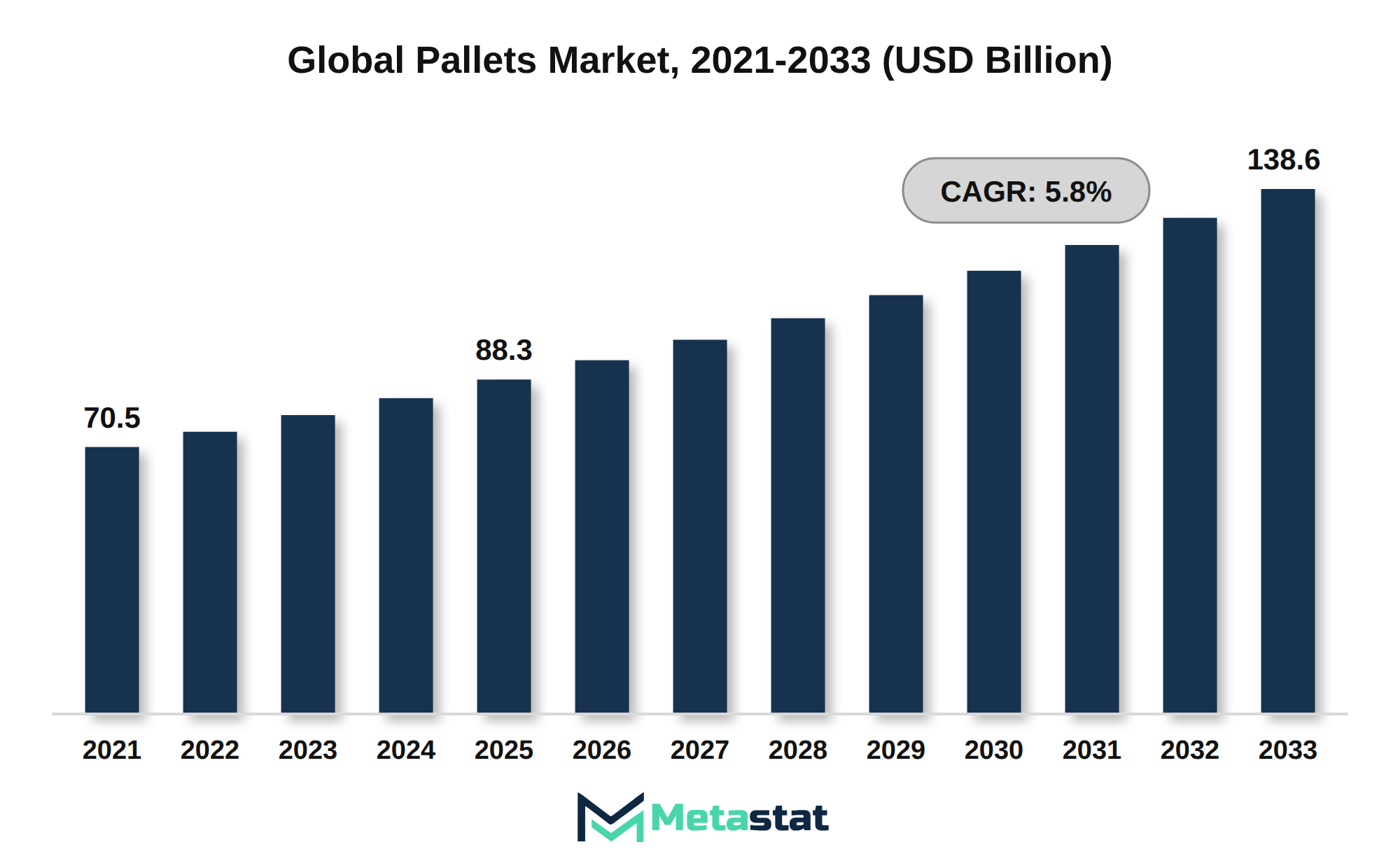
The global Pallets market was valued at USD 88.3 billion in 2025 and is projected to grow at a CAGR of 5.8% during the forecast period, reaching USD 138.6 billion by 2033.
Current trends and insights in the Pallets Market
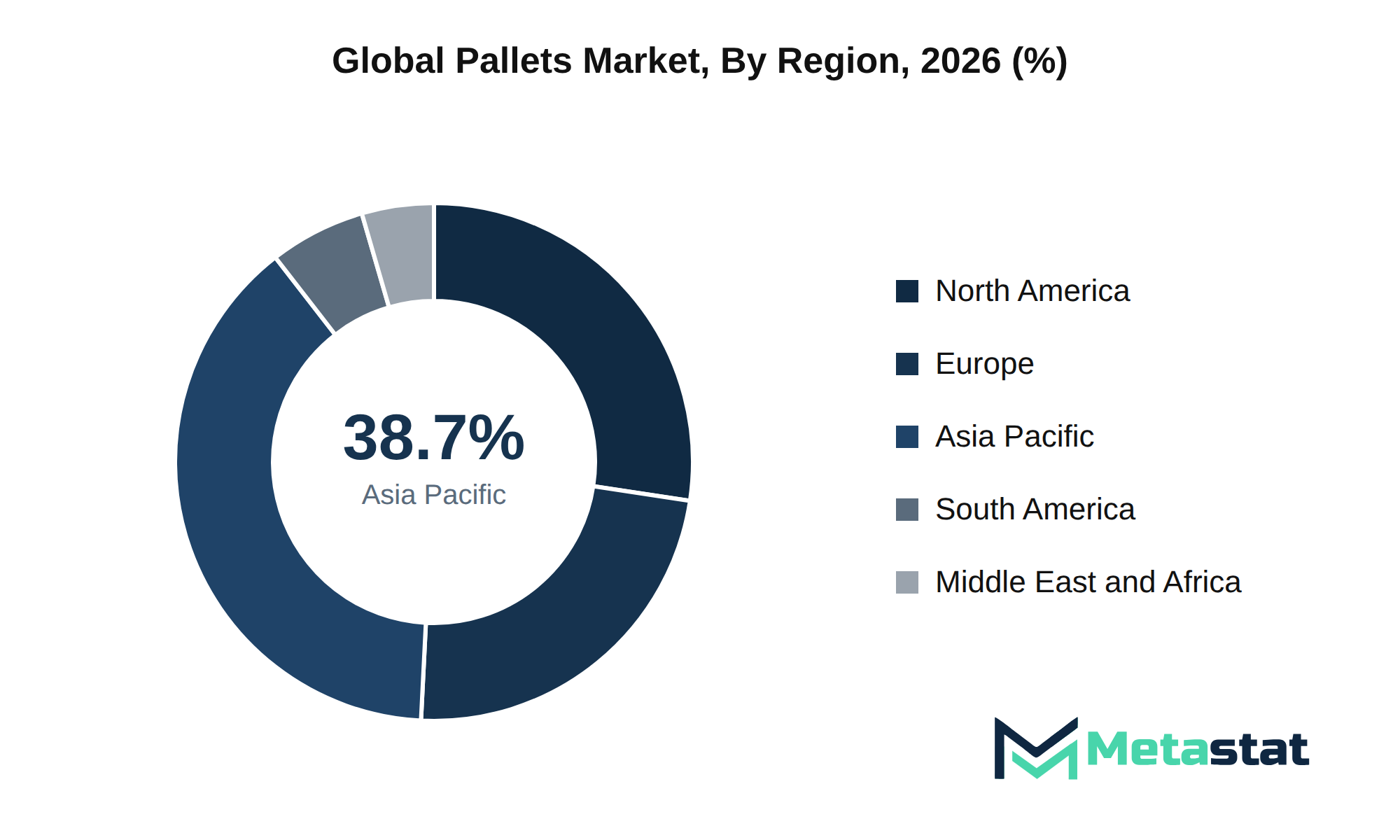
The Pallets market is positioned for significant growth, with a projected market value of USD 88.3 billion in 2025 and an estimated increase to USD 138.6 billion by 2033, representing a compound annual growth rate (CAGR) of 5.8%. This growth reflects a robust demand across various sectors, driven by the increasing reliance on pallets for efficient transportation and storage solutions. In terms of regional distribution, North America holds a substantial share of 27.4% in 2025, with the United States leading the market share in 2026. The market dynamics in North America are influenced by the region's high level of industrial activity and logistics operations.
Europe follows closely, contributing 23.4% to the market share, while the Asia Pacific region dominates with a significant 38.7% share. The diverse needs across these regions drive innovations in pallet design and materials, contributing to the overall expansion of the market. Asia Pacific's leadership is attributed to the rapid industrialization and growth of e-commerce in countries like China and India. The ongoing investments in logistics infrastructure further enhance the demand for pallets, facilitating smoother supply chain operations.
Regulatory compliance and standards
Regulatory compliance remains crucial in the Pallets market, as different regions impose varying standards that manufacturers must adhere to. In North America, for instance, compliance with safety and environmental regulations is essential for market players. Standards related to pallet durability, recyclability, and safety are enforced to ensure that products meet the required specifications. These regulations impact manufacturing processes and influence sourcing strategies and customer preferences. As sustainability becomes a priority, companies are increasingly focusing on eco-friendly materials and practices to comply with emerging regulations.
Geopolitical factors also play a role in shaping the market. Tariffs and trade policies can affect the cost and availability of pallet materials, necessitating that companies remain agile in their sourcing and production strategies. Such dynamics can create both challenges and opportunities for manufacturers and suppliers, affecting their ability to compete effectively in the global market.
Supply chain resilience and logistics architecture
Supply chain resilience is a critical factor in the Pallets market, influenced by global disruptions and changing consumer demands. The COVID-19 pandemic highlighted vulnerabilities in supply chains, prompting companies to rethink their logistics architecture. As a result, businesses are increasingly adopting strategies that prioritize flexibility and adaptability in their operations. The emphasis on efficient logistics has led to heightened demand for innovative pallet solutions that can withstand the pressures of fluctuating market conditions.
Advancements in technology are reshaping logistics operations. Digitalization and automation are being integrated into supply chain processes, enhancing tracking, inventory management, and operational efficiency. Companies are leveraging data analytics to optimize their pallet utilization and reduce waste. Such initiatives improve productivity and align with sustainability goals as businesses seek to minimize their environmental footprint.
The relationship between supply chain resilience and pallet design is crucial for meeting the demands of various end-use industries. For instance, the food and beverage sector requires pallets that meet stringent hygiene and safety standards, while the retail and e-commerce sectors prioritize lightweight and durable options. This diversity in requirements drives innovation in pallet design and material selection, ultimately driving growth in the market.
As the Pallets market continues to evolve, companies must remain vigilant in adapting to regulatory changes, market demands, and technological advancements. This proactive approach will be essential to maintaining competitiveness in a landscape that is increasingly influenced by sustainability, innovation, and supply chain dynamics.
Supply chain resilience and logistics architecture
Supply chain resilience is increasingly crucial in the Pallets market, especially in light of recent disruptions. Companies are reevaluating logistics architecture to enhance efficiency and reduce vulnerability. The growing trend towards just-in-time inventory is influencing pallet design and usage. As businesses shift to more resilient supply chains, the demand for versatile pallet types, such as stackable and nestable pallets, is expected to rise. This shift aims to minimize downtime and maximize operational continuity in the face of unexpected challenges.
Digital transformation and industry integration
Digitalization is reshaping the Pallets market, pushing companies to adopt smart operations. Integrating technologies such as IoT and advanced analytics enhances inventory management and tracking. Digital tools enable real-time visibility across the supply chain, optimizing pallet utilization and reducing waste. The industry is moving towards Industry 4.0 principles, where automation and connectivity are essential. As companies strive for operational excellence, the adoption of smart pallets equipped with sensors and tracking capabilities is likely to increase significantly.
Capital allocation and infrastructure investments
Capital allocation strategies are important for growth in the Pallets market. Businesses are directing investments towards infrastructure that supports sustainable practices and operational efficiency. This includes advancements in manufacturing technology and the development of eco-friendly pallet materials. Firms are also focusing on enhancing their distribution networks to facilitate rapid response to market demands. The trend towards increased capital expenditure reflects a commitment to long-term growth and sustainability within the sector.
Macroeconomic influences and inflationary pressures
The Pallets market is not immune to macroeconomic headwinds and inflationary pressures. Rising raw material costs and labor expenses are impacting profit margins across the industry. Companies must navigate these challenges while maintaining competitive pricing and service levels. Fluctuations in currency exchange rates further complicate the situation, particularly for manufacturers relying on international supply chains. As the market adapts, organizations are prioritizing cost management strategies to mitigate the effects of these economic factors.
Value chain dynamics and customer journey
Understanding the value chain is essential for stakeholders in the Pallets market. Each segment, from raw material sourcing to end-user delivery, is significant in overall market performance. Procurement strategies are evolving, with companies seeking to establish strong partnerships with suppliers to ensure quality and reliability. The customer journey is becoming increasingly data-driven, emphasizing the need for effective interactions and tailored solutions. Businesses that can align their value propositions with customer expectations are likely to achieve a competitive advantage.
Regulatory compliance and standards
Regulatory compliance is a critical aspect of the Pallets market, influencing production practices and material usage. Companies must adhere to safety standards and environmental regulations, which can vary by region. Compliance with these regulations not only avoids penalties but also enhances brand reputation among environmentally conscious consumers. As sustainability becomes a priority, adherence to evolving standards will be vital for long-term success in the market.
Market Dynamics
Economic growth and rising capital investment drive pallets demand
Economic growth and increased capital investment are significantly influencing the pallets market. As economies expand, businesses across various sectors enhance their operations, leading to heightened demand for logistics and transportation solutions. Capital investments in infrastructure and manufacturing create a ripple effect, necessitating the use of pallets for efficient storage and distribution. Companies are increasingly recognizing the importance of optimizing their supply chains, which includes upgrading their pallet systems to ensure smooth operations. This trend contributes to a projected market value increase from USD 88.3 billion in 2025 to USD 138.6 billion by 2033, with a compound annual growth rate (CAGR) of 5.8% during the forecast period.
The impact of this growth driver is most pronounced in regions experiencing robust economic activity. In North America, for instance, capital investments in logistics and manufacturing are driving demand, particularly in the food and beverages sector. This region is projected to account for 27.4% of the market share, with a forecasted value of USD 36.8 billion by 2033. The Asia Pacific region, which is expected to represent 38.7% of the market, is witnessing a surge in capital investments aimed at enhancing manufacturing capabilities and supply chain efficiencies. These dynamics create a fertile ground for growth in the pallets market as companies seek effective solutions to meet increasing inventory demands.
For suppliers, the current economic climate presents both challenges and opportunities. As demand for pallets escalates, suppliers need to innovate and adapt their offerings to meet the diverse needs of businesses. This includes developing more efficient pallet designs and service models, such as rental and pooling options, to cater to businesses looking for cost-effective solutions. Suppliers must focus on sustainability to align with evolving consumer expectations and regulatory requirements. By capitalizing on these trends and adapting to market demands, suppliers can position themselves effectively within the growing pallets market.
Digital transformation and technological integration drive pallet innovation
Advancements in digital transformation and technological integration are reshaping the pallets market, influencing how products are manufactured, tracked, and distributed. Increased automation, artificial intelligence (AI), and software adoption are central to this shift. Companies now employ technology to digitize legacy processes, enhancing operational efficiency and reducing costs. Automation minimizes manual labor, while AI optimizes supply chain management, leading to improved inventory control and logistics. This evolution results in heightened demand for innovative pallet solutions that align with modern operational needs.
The impact of this transformation is particularly pronounced in the Asia Pacific region, where rapid industrialization and urbanization drive the adoption of advanced technologies. As businesses in countries like China and India modernize their supply chains, they increasingly require sophisticated pallets that support automation and digital tracking systems. Concurrently, sectors such as retail and e-commerce, which are experiencing substantial growth, are pushing for more efficient logistics solutions, further propelling demand for modern pallet designs and materials.
For suppliers, the digital transformation signifies both challenges and opportunities. Companies must invest in research and development to innovate their pallet offerings, integrating technological features that enhance functionality. This may involve producing pallets equipped with IoT sensors for real-time monitoring or applying data analytics to optimize pallet utilization. As the market evolves, suppliers who adapt to these technological demands can gain a competitive edge, positioning themselves as leaders in the pallets market while meeting the needs of a more digitized and automated supply chain.
High capital investment requirements and escalating operating costs
The Pallets market faces significant constraints due to high capital investment requirements and escalating operating costs. These factors primarily arise from the need for advanced equipment, manufacturing capabilities, and compliance with various industry standards. As companies strive to enhance productivity and efficiency, they must invest in new technologies and machinery, leading to substantial upfront costs. The rising prices of raw materials, coupled with inflationary pressures, contribute to increasing operational expenses.
Segments such as automotive and industrial manufacturing, as well as food and beverages, bear the brunt of these financial pressures. For instance, the food and beverages sector is projected to grow from USD 28.3 billion in 2026 to USD 40.7 billion by 2033, reflecting a compound annual growth rate (CAGR) of 5.3%. However, the costs tied to maintaining and upgrading pallet systems can severely impact profit margins. Regions such as Asia Pacific, which accounts for 38.7% of the market share, may experience challenges in scaling operations due to local economic conditions and resource availability, further limiting growth potential.
To navigate these constraints, companies are exploring various strategies, including pallet pooling and rental services. While these approaches can reduce upfront capital expenditures, they do not fully mitigate the ongoing costs associated with maintenance, compliance, and supply chain logistics. Reliance on rental models may expose businesses to fluctuations in availability and pricing, which can disrupt operations. As a result, while temporary workarounds may alleviate some immediate financial pressures, they do not address the underlying issues of high investment requirements and rising operating costs in the market.
Supply chain instability is straining operational efficiency in the pallets market
Supply chain instability poses significant challenges for firms in the pallets market, stemming from a combination of logistical disruptions, geopolitical tensions, and fluctuating feedstock availability. As global supply chains become increasingly interconnected, any disruption, whether due to natural disasters, trade disputes, or political unrest, can result in delays and increased costs. This unpredictability forces companies to adopt contingency plans and invest in more robust supply chain management strategies, which can strain operational budgets and resources.
Regions with heightened geopolitical tensions experience the most difficulty in managing these challenges. For instance, companies operating in Europe and Asia Pacific are particularly vulnerable to supply chain disruptions caused by regional conflicts and trade barriers. The reliance on specific feedstock materials, such as wood and plastic, further exacerbates these challenges, as fluctuations in availability and pricing can occur suddenly. Firms in these regions often find themselves navigating complex supply chains with limited flexibility to adapt to sudden changes in the market.
In response to these challenges, firms are implementing various strategies to enhance supply chain resilience, often at significant costs. Many companies are investing in technology-driven solutions to improve visibility and inventory management, which can lead to increased operational expenses. Firms are diversifying their supplier base to mitigate risks associated with dependency on single sources. This diversification strategy, while effective, often results in higher procurement costs and longer lead times. As firms navigate these challenges, the overall cost structure within the pallets market continues to face upward pressure, impacting pricing and profit margins.
Sustainability imperatives are driving innovations in the pallets market
Growing environmental concerns and shifting consumer preferences are creating a significant opportunity in the pallets market. Companies are increasingly focusing on sustainable practices and materials to align with environmental, social, and governance (ESG) standards. This shift has prompted manufacturers to explore eco-friendly materials, such as recycled plastics and sustainably sourced wood, thereby enhancing their market offerings. As businesses aim to reduce their carbon footprints, the demand for sustainable pallets continues to rise.
Firms that prioritize sustainability and innovation are well-positioned to capitalize on this opportunity. Players in the market should develop capabilities in sourcing eco-friendly materials and adopting sustainable production processes. Integrating new technologies, such as tracking systems for lifecycle assessments, will help enhance transparency and accountability, which are critical for companies looking to meet the expectations of environmentally conscious consumers. The ability to offer a range of sustainable pallet options can differentiate companies in an increasingly competitive market.
The window for capturing this market opportunity is crucial as companies adapt to evolving regulations and consumer demands. With the global push for sustainability expected to intensify, businesses need to act swiftly to implement green practices and technologies. Delays in adopting sustainable approaches could result in losing out to competitors who are more agile and responsive to market trends. As the pallets market evolves, those that proactively embrace sustainability will likely gain a significant advantage.
Market Segmentation Analysis
The Global Pallets market is segmented based on Material Type, Design, Service Model, and End-Use Industry.
By Material Type, the market is further segmented into:
Wood
Plastic
Metal
Paper and Presswood
Others
Wood
In 2026, the wood segment is valued at USD 59.6 billion and is projected to grow to USD 84.8 billion by 2033, reflecting a compound annual growth rate (CAGR) of 5.2% during this period. This growth is driven by several factors, including the rising demand for sustainable and biodegradable materials in packaging solutions. Wood pallets, known for their recyclability and lower environmental impact, are increasingly favored by companies aiming to improve their sustainability profiles.
Technological maturation within the wood processing industry has led to enhanced durability and strength of wood pallets. Innovations in treatment and manufacturing processes reduce the risk of pest infestation and increase the lifespan of these pallets, making them more appealing to end-users. The market is also experiencing shifts due to increased consumption in the food and beverage sector, which heavily relies on wood pallets for transportation and storage.
On the regulatory front, compliance with environmental standards is becoming more stringent. Niche certifications related to sustainable forest practices further support market growth by ensuring that wood pallets meet high environmental criteria. Logistical vulnerabilities associated with raw material sourcing have prompted suppliers to optimize their supply chains, ensuring consistent availability and cost management.
The wood segment of the pallets market is well-positioned for expansion, driven by sustainability trends, technological advancements, and regulatory compliance. These factors collectively support a favorable outlook for wood pallets through 2033.
Plastic
By 2033, the plastic segment is projected to reach USD 35.3 billion, growing at a compound annual growth rate (CAGR) of 7.5% during the forecast period. This growth is driven by increasing demand for lightweight, durable pallets that enhance efficiency in logistics and storage operations. The transition towards sustainable practices is also influencing the market, as companies seek recyclable and reusable options that meet environmental guidelines.
Technological advancements in the production of plastic pallets are resulting in improved designs that cater to specific end-use applications. Innovations in materials, such as the development of biodegradable plastics, are likely to attract attention from industries looking to reduce their carbon footprints. As businesses integrate next-generation upgrades into their supply chains, the demand for these advanced plastic pallets is expected to rise significantly.
End-use dynamics indicate a strong preference for plastic pallets in industries like retail and e-commerce, where quick turnover and efficiency are critical. Changes in raw material prices can pose challenges to manufacturers, affecting cost structures and profit margins. However, strategic investments in production capabilities and supply chain resilience will likely position key players to leverage growth opportunities within the plastic segment of the pallets market.
Metal
By 2033, the metal segment of the pallets market is projected to reach USD 7.5 billion. This growth is largely driven by increasing demand for durable and reusable solutions in various industries, particularly in sectors where strength and longevity are critical, such as automotive and industrial manufacturing.
Technological advancements in manufacturing processes are enhancing the production of metal pallets. These advancements allow for next-generation designs that improve efficiency and reduce costs. Innovations include the use of lightweight alloys and high-strength materials, which contribute to better performance and adaptability in diverse applications.
Supply chain resilience is vital for maintaining competitive edge. This makes metal pallets an attractive option for businesses looking to optimize logistics. Their ability to withstand harsh conditions and support heavier loads aligns well with the evolving needs of end-users who prioritize reliability and safety.
However, the segment faces challenges related to cost structures and pricing volatility, particularly due to fluctuations in raw material prices. Manufacturers must navigate these pressures while ensuring that quality and compliance with regulatory standards are maintained. This can impact profit margins. Overall, the metal segment is set to play a significant role in the broader pallets market, driven by structural demand and ongoing innovations.
Paper and Presswood
Projected to grow at a CAGR of 6.5% during the forecast period, the Paper and Presswood segment demonstrates a solid trajectory within the pallets market. This growth is largely driven by increasing consumer preferences for sustainable and eco-friendly packaging options. As environmental concerns gain traction, the demand for materials that are recyclable and biodegradable is on the rise, positioning paper and presswood as a viable alternative to traditional materials.
Technological advancements are also shaping the evolution of this segment. Innovations in manufacturing processes enhance the durability and functionality of paper and presswood pallets, making them suitable for a broader range of applications. Developments in coatings and treatments can improve resistance to moisture and abrasion, further increasing their appeal in various industries.
Cost structures within the Paper and Presswood segment are significantly influenced by raw material sourcing and supply chain considerations. Fluctuations in the availability of paper and wood fibers can lead to pricing volatility. Regions with robust recycling systems can experience lower costs, enhancing competitiveness in the market.
In terms of end-use dynamics, sectors such as food and beverages and retail are increasingly adopting paper and presswood pallets. These industries prioritize lightweight, easy-to-handle solutions that maintain product integrity during transportation. As consumption patterns shift, the market's response will be vital to sustaining growth in this segment. This adoption is concentrated in high-precision manufacturing and logistics operations.
Others
This sub-segment comprises a variety of materials not explicitly categorized under wood, plastic, metal, or paper and presswood. It remains residual due to the lack of significant market share and distinctive characteristics that would promote it to a primary category. Factors influencing adoption in this segment include niche applications and specific end-use dynamics, which may not be widely recognized or standardized. The segment faces challenges due to pricing volatility and competition from established materials. Overall, the "Others" segment reflects the diverse yet fragmented nature of the pallets market, making it a smaller component that lacks significant growth drivers.
By Design, the market is further segmented into:
Block Pallets
Stringer Pallets
Nestable Pallets
Stackable Pallets
Others
Block Pallets
In 2026, the Block Pallets segment is valued at USD 39.4 billion and is projected to reach USD 59.3 billion by 2033, growing at a CAGR of 6% during the forecast period. This segment benefits from increasing demand in various end-use industries, particularly in food and beverages, which are anticipated to drive consumption due to the need for safe and efficient transportation.
Adoption rates for block pallets are being influenced by their structural advantages, such as higher load-bearing capabilities and improved stability compared to other pallet designs. Technological maturation in the production of these pallets enhances their durability and cost-effectiveness, making them a preferred choice among manufacturers and suppliers.
Regulatory compliance standards are also shaping the landscape, as businesses seek certifications that ensure sustainability and safety. These certifications are critical in industries like pharmaceuticals and food, where regulatory oversight is stringent.
Supply chain resilience remains a pressing concern, particularly in the face of disruptions caused by global events. The demand for block pallets can be attributed to their versatility and efficiency in various logistics scenarios, making them a strategic asset in many supply chains. As the market continues to evolve, the increasing focus on sustainable practices and environment-friendly materials will likely influence future development in the segment.
Stringer Pallets
The Stringer Pallets segment is projected to reach USD 45.7 billion by 2033, growing at a CAGR of 5.1% during the forecast period. This growth can be attributed to the rising demand for efficient logistics solutions across various industries, including food and beverages, retail, and automotive manufacturing. Stringer pallets offer structural integrity and ease of handling, making them a preferred choice for transporting goods.
Adoption rates are expected to increase due to technological maturation and next-gen upgrades that enhance durability and versatility. The introduction of lightweight materials and advanced manufacturing techniques contributes to product evolution, providing operational advantages in supply chain management. These advancements will likely stimulate demand for Stringer Pallets, particularly in markets that prioritize sustainability and cost-efficiency.
Cost structures and pricing volatility also play significant roles in this segment. As raw material costs fluctuate, manufacturers must adapt to maintain competitive pricing while ensuring quality. Supply chain resilience remains a vital consideration, with organizations seeking reliable sourcing and logistics solutions to mitigate risks associated with material shortages and transportation disruptions.
As the Pallets market evolves, Stringer Pallets are well-positioned to capture a larger share, driven by regulatory compliance standards and the growing emphasis on sustainable practices. These factors create strategic opportunity windows for manufacturers to innovate and expand their offerings, aligning with market demands for improved functionality and environmental responsibility.
Nestable Pallets
By 2033, the Nestable Pallets segment is expected to reach USD 14.1 billion. This growth is driven by various factors, including increasing demand for efficient storage solutions in logistics and supply chains. Nestable pallets offer significant advantages in terms of space-saving capabilities, as they can be stacked within one another when not in use, optimizing storage and transport efficiency.
Technological advancements are also playing a critical role in driving this segment's growth. Innovations in materials and designs are enhancing the durability and usability of nestable pallets, making them more appealing to end-users. These advancements ensure that the pallets meet the evolving requirements of various industries, especially in sectors such as retail and e-commerce, where rapid inventory turnover is essential.
Regulatory compliance standards related to environmental sustainability are influencing the adoption of nestable pallets. As companies seek to minimize their carbon footprints, the demand for eco-friendly materials and practices increases. This shift encourages manufacturers to produce nestable pallets that align with these sustainability goals.
The market dynamics are also shaped by cost structures and pricing volatility. With rising raw material costs, manufacturers must balance affordability with quality. Nestable pallets must be competitively priced to maintain market share while still delivering value to customers.
Stackable Pallets
Throughout the forecast period, the Stackable Pallets segment is projected to grow at a CAGR of 6.2%. This growth can be attributed to several factors, including the increasing demand for efficient space utilization in warehouses and distribution centers. Stackable pallets allow for higher density storage, which translates to reduced logistics costs and improved operational efficiency.
Technological advancements also play a crucial role in driving growth within this segment. Innovations in materials and design are leading to enhanced durability and load-bearing capabilities, which are appealing to industries that prioritize reliability in their supply chains. As manufacturers continue to evolve their product offerings, the adoption of stackable pallets is likely to increase across various applications.
The end-use dynamics indicate a significant shift towards e-commerce and retail sectors, where the need for efficient pallet systems is becoming critical. As companies aim to optimize their storage capabilities while ensuring easy access to goods, stackable pallets present a practical solution. This trend aligns with the overall movement in the pallets market toward more versatile and adaptable storage solutions.
The combination of space efficiency, technological advancements, and shifting end-use industry demands positions the stackable pallets segment for substantial growth in the coming years, reinforcing its importance in the broader pallets market.
Others
This residual category encompasses pallet designs that do not fit into the primary classifications of block, stringer, nestable, or stackable pallets. The diversity within this group results in its classification as "Others,” which reflects the limited volume and specific applications of these designs in the broader pallets market. Applications are often niche and driven by unique end-use requirements, which do not align with mainstream pallet structures. Consequently, this segment remains small, as many users prefer established designs that offer proven efficiency and compatibility across various industries. The market faces challenges from technological obsolescence as innovations favor more conventional designs.
By Service Model, the market is further segmented into:
Direct Purchase and Ownership
Rental and Pallet Pooling
Repair and Reconditioning
Recycling and Reverse Logistics
Others
Direct Purchase and Ownership
Valued at USD 48.7 billion in 2026, the Direct Purchase and Ownership segment is projected to increase to USD 67.9 billion by 2033, reflecting a compound annual growth rate (CAGR) of 4.9% during the forecast period. This growth is driven by a combination of factors, including rising demand for durable and reusable pallets, as well as the advantages of ownership versus rental options. Companies favor direct purchase models, especially in industries where consistency and reliability in packaging are crucial.
Technological maturation in pallet design and materials is enhancing the appeal of direct ownership. Innovations in manufacturing techniques and materials are leading to stronger, lighter, and more efficient pallets that meet industry standards. Next-gen upgrades, such as RFID tracking and enhanced durability features, are becoming standard in the market, further encouraging companies to invest in their own pallets.
Cost structures also play a vital role in this segment's dynamics. With ownership, firms can avoid ongoing rental fees and reduce long-term costs associated with pallet management. However, companies must navigate potential pricing volatility in raw materials, particularly as demand for sustainable options increases. Supply chain resilience remains a crucial factor, as organizations seek reliable sourcing of materials to maintain competitive pricing and quality.
Ultimately, the Direct Purchase and Ownership model stands out in the Pallets market as companies increasingly recognize the benefits of a tailored approach to their logistics needs. This segment is well-positioned for growth as businesses continue to prioritize efficiency and cost-effectiveness in their supply chain strategies.
Rental and Pallet Pooling
By 2033, the Rental and Pallet Pooling segment is estimated to reach USD 40.9 billion, growing at a CAGR of 7.8% during the forecast period. This segment benefits from increasing demand for cost-effective and flexible logistics solutions across various industries. The shift towards rental and pooling services helps companies mitigate capital expenses associated with purchasing pallets, allowing for greater financial agility.
Advancements in technology are driving the evolution of pallet pooling systems. Digital tracking and management tools enhance efficiency, enabling companies to optimize their supply chains and reduce waste. The growing emphasis on sustainability is also influencing adoption, as rental services generally have a lower environmental impact than traditional ownership models. Companies can effectively reduce their carbon footprint by sharing resources instead of maintaining large inventories of pallets.
In addition, regulatory compliance is shaping the operational frameworks within the market. Niche certifications for rental services are emerging, reflecting industry standards for safety and sustainability. This is crucial in industries like food and pharmaceuticals, where strict regulations govern material handling. As the market matures, these compliance measures will likely become essential criteria for service providers.
The market for rental and pallet pooling presents strategic opportunities for investment and growth. As businesses increasingly prioritize supply chain resilience and flexibility, the demand for these services is expected to continue its upward trajectory. Companies that can leverage innovative solutions and maintain compliance will be well-positioned to capture a significant share of the growing market.
Repair and Reconditioning
By 2033, the Repair and Reconditioning segment is expected to reach USD 13.9 billion. This growth aligns with increasing awareness around sustainability and cost-effectiveness in the pallets market. Organizations are increasingly opting for repair and reconditioning services to extend the lifecycle of pallets, reducing waste and saving costs associated with purchasing new pallets.
Technological advancements in repair techniques are also facilitating this shift. Innovations in materials and processes allow for more efficient and effective reconditioning practices, enhancing the reliability and performance of refurbished pallets. These next-gen upgrades are becoming essential as industries strive for optimized operational efficiency.
Regulatory compliance standards increasingly mandate responsible practices, including the use of repaired pallets. As consumers and businesses demand more sustainable practices, adherence to these standards becomes a catalyst for growth in the segment. Companies that invest in reconditioning capabilities can leverage this compliance to attract environmentally conscious clients.
The segment faces challenges related to supply chain resilience, particularly concerning raw material sourcing and logistics vulnerabilities. As the demand for repaired pallets grows, ensuring adequate supply chains for the necessary resources becomes crucial for maintaining service quality and meeting customer expectations in the market.
Recycling and Reverse Logistics
The Recycling and Reverse Logistics segment is projected to grow at a CAGR of 6.6% during the forecast period. This growth is primarily driven by increasing sustainability efforts across various industries, prompting companies to adopt more eco-friendly practices. Recycling and reverse logistics not only help in waste reduction but also optimize resource utilization, making them appealing to organizations aiming to enhance their operational efficiencies while adhering to environmental regulations.
Technological advancements play a crucial role in this segment’s expansion. Innovations in recycling technologies enable more efficient processing of used pallets, significantly enhancing recovery rates. Companies are increasingly investing in next-generation upgrades to their logistics capabilities, facilitating better tracking and management of returned pallets. This shift contributes to improving overall supply chain resilience, which is essential given the rising costs associated with raw materials and logistics vulnerabilities.
Regulatory compliance is another significant factor influencing the growth of this segment. As governments implement stricter waste management policies, businesses are compelled to adapt to these standards, which in turn increases the demand for recycling and reverse logistics services. In addition, the market is witnessing a notable increase in niche certifications that validate sustainable practices, further encouraging adoption.
Overall, the Recycling and Reverse Logistics segment is a key area within the pallets market, responding dynamically to both regulatory pressures and consumer demand for sustainable practices.
Others
This sub-segment aggregates various service models that do not distinctly fit into the primary categories of direct purchase, rental, repair, or recycling. It remains residual due to the diverse range of niche applications and unique service offerings that are less frequently used across the pallets market. Factors such as regulatory compliance standards and niche certifications play a role in shaping the demand dynamics within this category. Emerging technologies may prompt shifts that could influence the service model landscape, though currently, these models have not achieved significant traction. As a result, they represent a smaller share of the overall market, which complicates their quantification.
By End-Use Industry, the market is further segmented into:
Food and Beverages
Retail and E-Commerce
Automotive and Industrial Manufacturing
Pharmaceuticals and Chemicals
Others
Food and Beverages
Valued at USD 28.3 billion in 2026, the Food and Beverages segment is projected to reach USD 40.7 billion by 2033, growing at a CAGR of 5.3% during the forecast period. This growth is driven by increasing demand for packaged food and beverages, which necessitates efficient and durable transportation solutions. As consumer preferences shift towards sustainable and environmentally friendly packaging, pallet manufacturers are adapting by offering products that align with these trends.
Technological advancements play a significant role in this segment's evolution. Innovations in pallet design and materials, such as lightweight plastics and recyclable options, enhance operational efficiency and reduce costs. These improvements contribute to supply chain resilience, allowing businesses to meet fluctuating demands in the food and beverage industry effectively. The need for compliance with stringent regulatory standards regarding food safety and packaging further stimulates market growth.
Supply chain vulnerabilities can impact the availability of raw materials, influencing pricing volatility in the market. Pallet manufacturers must navigate these challenges while maintaining quality and sustainability. Despite potential disruptions, the segment's growth trajectory highlights its importance within the broader pallets market, emphasizing the critical role pallets play in ensuring effective logistics and distribution channels.
Retail and E-Commerce
By 2033, the Retail and E-Commerce segment is estimated to reach USD 36.7 billion, growing at a CAGR of 7% during the forecast period. This growth is driven by the increasing demand for efficient logistics and supply chain management in the retail sector, particularly as e-commerce continues to expand rapidly. Retailers are increasingly embracing advanced pallet solutions that facilitate the storage and transportation of goods. These solutions enhance operational efficiencies.
The market is experiencing a shift toward next-generation pallet designs that incorporate technological advancements, such as lightweight materials and enhanced durability. These innovations improve the handling of products and contribute to sustainability efforts by reducing waste and increasing recyclability. As e-commerce businesses seek to optimize their delivery processes, the need for versatile pallet solutions becomes more pronounced.
Cost structures in this segment are influenced by fluctuating material prices and rising logistic costs, which can affect profit margins. Retailers and e-commerce companies are exploring rental and pooling models to mitigate these challenges. By adopting these service models, businesses can improve their supply chain resilience while managing costs more effectively.
The evolving nature of e-commerce demands that companies remain agile, adapting their warehouse and logistics strategies. This adaptability is crucial for maintaining competitiveness in the market, where consumer expectations for rapid delivery continue to rise.
Automotive and Industrial Manufacturing
By 2033, the Automotive and Industrial Manufacturing segment is expected to reach USD 30.1 billion. This growth is driven by increasing demands for efficiency and operational flexibility within production environments. Manufacturers are adopting advanced pallet technologies to streamline their supply chains, enhancing logistical performance and reducing turnaround times.
Cost structures also play a significant role in this segment. Prices for pallet materials can fluctuate, impacting overall profitability. The market faces margin pressures as companies seek to balance quality with cost-effectiveness while also adhering to regulatory compliance standards. Compliance is crucial for maintaining operational licenses in various regions, particularly in safety-sensitive industries like automotive manufacturing.
Supply chain resilience is another critical factor influencing this segment. Raw material sourcing challenges and logistics vulnerabilities can disrupt operations, prompting manufacturers to seek alternative solutions, such as pallet pooling and rental services. These options can mitigate risks associated with supply shortages and transportation delays, enhancing operational stability.
In terms of competitive dynamics, the market for pallets is characterized by rapid product evolution. Innovations in material science and design are leading to the development of lighter and stronger pallets, further enhancing efficiency in automotive and industrial manufacturing applications. As these advancements continue, the pallets market is positioned for ongoing growth in alignment with the evolving needs of manufacturers.
Pharmaceuticals and Chemicals
Projected to grow at a CAGR of 6.4% during the forecast period, the Pharmaceuticals and Chemicals segment is experiencing significant expansion driven by stringent regulatory compliance standards. This sector demands pallets that meet high hygiene and safety requirements, leading to increased adoption of specialized pallet designs and materials.
The need for efficient supply chain resilience has prompted companies within this segment to invest in logistics capabilities. Reliable raw material sourcing is critical to ensure that pallets can withstand the unique handling and transportation requirements of pharmaceuticals and chemicals. This focus enhances the durability and performance of pallets, aligning with the industry's expectations.
Cost structures and pricing volatility also play a role in shaping purchasing decisions. Manufacturers must balance the costs associated with high-quality pallet materials against operational efficiency gains. As companies look to streamline their processes, the appeal of cost-effective and sustainable solutions becomes apparent.
As the market evolves, the introduction of next-generation upgrades, such as lightweight and reusable pallets, is expected to reshape operational dynamics significantly. By addressing both performance and compliance needs, the Pharmaceuticals and Chemicals sector remains a key contributor to the overall growth of the pallets market.
Others
This sub-segment consists of various applications that do not fit neatly into the primary categories of end-use industries. It includes niche industries and specialized sectors where pallets are used for specific purposes, yet these applications do not dominate the market. As a result, this category remains residual, aggregating limited activity compared to its more prominent counterparts. Factors such as technological maturation and regulatory compliance influence adoption in these areas, but the overall contribution to the pallets market remains marginal. Consequently, opportunities for growth may exist, albeit at a slower pace compared to larger segments.
By Region
Based on geography, the Global Pallets market is divided into North America, Europe, Asia-Pacific, South America, Middle East, and Africa.
North America
Projected to grow at a CAGR of 5.8%, the North America Pallets market is expected to reach a total addressable market size of USD 36.8 billion by the end of 2033. This region's share of the global market in 2025 stands at 27.4%, indicating its significant role in the overall dynamics of the pallets industry.
Infrastructure modernization is a key driver in North America, particularly as industries upgrade their logistics and supply chain capabilities. Enhanced efficiency in material handling processes has spurred demand for advanced pallet solutions, especially in sectors like food and beverages and retail and e-commerce. The latter is set to benefit from a growing emphasis on e-commerce logistics, which requires flexible and innovative pallet designs.
Adoption rates for various materials show a clear preference for wood, projected to grow from USD 59.6 billion in 2026 to USD 84.8 billion by 2033. This segment is complemented by the rise of plastic pallets, which are anticipated to achieve a market size of USD 35.3 billion in the same timeframe. The increasing focus on sustainability is also influencing this transition, as companies seek to reduce their environmental footprint.
Localized manufacturing densities play a significant role in shaping the market landscape. Nearshoring initiatives have encouraged the establishment of domestic production facilities, thereby enhancing regional supply chain resilience. This move not only mitigates disruption risks but also supports faster response times to market changes.
Domestic market leaders are consolidating their positions through strategic partnerships and acquisitions, reflecting a competitive landscape characterized by both innovation and collaboration. As the market evolves, players are focusing on value-added services, including rental and pallet pooling, which are projected to grow to USD 40.9 billion by 2033.
Europe
Europe represents a significant share of the global pallets market, accounting for 23.4% in 2025. Several factors contribute to this robust market presence, including mature market dynamics and high-value replacement cycles that fuel incremental growth opportunities across the region.
The demand for pallets is influenced by a variety of industries, with food and beverages, retail and e-commerce, and automotive and industrial manufacturing playing critical roles. The food and beverages segment is expected to grow from USD 28.3 billion in 2026 to USD 40.7 billion by 2033, reflecting a compound annual growth rate (CAGR) of 5.3%. Retail and e-commerce are also projected to expand, emphasizing the importance of efficient logistics and distribution in modern supply chains.
Germany, France, the UK, Italy, and Spain are leading markets within Europe, driven by their advanced infrastructure and significant industrial bases. These countries are investing in infrastructure modernization, enhancing local manufacturing densities and facilitating supply chain regionalization. This trend promotes localized procurement dynamics, allowing businesses to adapt to regional buying behaviors and preferences.
In addition, geopolitical fragmentation and cross-border trade corridors are shaping the competitive landscape. Manufacturers are increasingly focused on compliance with local regulations, which can affect operational costs and market entry strategies. As a result, domestic market leaders are consolidating their positions while emerging players seek strategic entry barriers to capture underpenetrated territories.
Overall, the upcoming years will see sustained growth in Europe’s pallets market, supported by a blend of established demand drivers and new opportunities for innovation and investment in manufacturing and supply chain solutions.
Asia-Pacific
Asia-Pacific holds a substantial share of the global pallets market, accounting for 38.7% in 2025. The region is characterized by a diverse range of demand drivers, including infrastructure modernization and emerging markets. Countries such as China, India, and Japan are leading this growth, driven by their expanding manufacturing sectors and increasing urbanization. In particular, China remains a front-runner, where the demand for pallets is rising significantly due to a robust logistics network and a fast-growing e-commerce sector.
High-value replacement cycles are common in mature markets like Japan and South Korea, where companies prioritize efficiency and sustainability in their operations. This focus has led to an increased adoption of innovative pallet designs and materials. The presence of established players in the region is facilitating incremental growth vectors, allowing for gradual market expansion through the introduction of advanced pallet solutions.
Supply chain regionalization and nearshoring initiatives are prominent trends in Asia-Pacific. Businesses are increasingly localizing their manufacturing and sourcing practices, which is expected to enhance the demand for pallets. Countries such as India and Southeast Asia are becoming attractive destinations for foreign direct investment, which will further strengthen localized manufacturing densities in the region.
Cross-border trade corridors are being developed to streamline logistics and distribution. This connectivity is crucial for facilitating trade between Asia-Pacific nations and enhancing the overall efficiency of supply chains. However, geopolitical fragmentation presents challenges that could impact trade agreements and tariff dynamics across the region.
In terms of localized procurement dynamics, cultural nuances play a significant role in B2B buying behaviors. Companies in the region are adapting their procurement strategies to align with local practices and preferences. This localized approach not only strengthens supplier relationships but also enhances competitiveness in the pallets market.
South America
South America accounts for 6.00% of the global pallets market in 2025. Brazil is the largest contributor, driven by its vast agricultural sector and substantial manufacturing base. Argentina follows, with demand influenced by both local production needs and export activities. The Rest of South America includes several emerging markets that are beginning to adopt pallet solutions, albeit at a slower pace compared to their larger counterparts.
Infrastructure modernization is important for enhancing pallet logistics across the region. Projects aimed at upgrading transportation networks facilitate smoother supply chain operations, allowing for more efficient pallet distribution. While Brazil and Argentina are making significant strides in this area, other nations in the region still have opportunities for growth through improved logistics frameworks and transportation access.
Localized procurement dynamics significantly impact the pallets market in South America. Cultural nuances in purchasing behaviors influence how businesses acquire pallets, with a preference often shown for local suppliers who can offer tailored services. This trend is particularly evident in sectors like food and beverages, where proximity to suppliers can enhance supply chain responsiveness.
Emerging market front-runners in South America benefit from increased foreign direct investment (FDI) flows, which are directed towards strengthening domestic manufacturing capabilities. This influx of investment creates a landscape where regional manufacturers can expand their production and service capabilities, thus improving the overall pallets market in the region.
As the demand for pallets continues to grow, incremental growth vectors such as the rise of e-commerce and retail sectors also influence the market. These sectors require efficient logistics and distribution systems, driving further interest in pallet solutions. The combination of these factors positions South America as a region with significant potential for future growth in the pallets market.
Middle East and Africa
The Middle East and Africa region is projected to hold a 4.5% share of the global pallets market by 2025. This market segment is characterized by emerging market front-runners like Saudi Arabia and the UAE, where infrastructure modernization initiatives are driving increased demand for pallets. The region is experiencing significant growth as companies seek to enhance supply chain efficiency and reduce dependency on traditional logistics practices.
In South Africa, the adoption of pallets is growing steadily, fueled by a shift towards sustainable packaging solutions and improved logistics frameworks. The demand for wooden pallets remains strong, driven by their cost-effectiveness and recyclability. The increasing awareness of environmental concerns is pushing local manufacturers to adopt more sustainable practices, thus positively impacting market dynamics.
Regional competitive landscapes are evolving as domestic market leaders strive for consolidation and improved service offerings. Key players are focusing on localized manufacturing densities to better serve their customers, which can provide a competitive edge in terms of logistics and supply chain efficiency. Foreign direct investment (FDI) flows support the growth potential of the market through the establishment of new facilities and partnerships.
Geopolitical fragmentation can influence cross-border trade corridors within the region, affecting supply chain operations. As companies navigate these complexities, strategic entry barriers may present opportunities for local vendors who understand the unique cultural nuances and procurement dynamics of their markets.
The region's infrastructure readiness varies, with a focus on developing energy grid resiliency and ensuring that local resources are available to support market growth. As the demand for pallets evolves, companies must adapt to these changing dynamics and capitalize on the incremental growth vectors emerging across the Middle East and Africa.
Competitive Landscape and Strategic Insights
Mergers, acquisitions (M&A), strategic consolidation, and industry restructuring
The pallets market exhibits a dynamic structure shaped by strategic consolidation and mergers among key players. Major companies such as CHEP and PECO Pallet, Inc. have established robust market positions through acquisitions, enhancing their service offerings and geographic reach. This trend indicates a movement towards fewer, larger entities dominating the market, which may lead to increased bargaining power over suppliers and customers alike. The ongoing consolidation is likely to create challenges for smaller firms, as they may struggle to compete against larger, more resource-rich competitors.
Go-to-market (GTM) strategies, commercial models, and pricing architectures
Companies in the pallets market are adopting diverse go-to-market strategies to cater to varying customer needs across regions. For instance, Tosca Services, LLC and iGPS Logistics LLC focus on rental and pallet pooling models, which align with the shifting preferences towards sustainability and cost-efficiency. Pricing strategies are influenced by material types and service models, with wood pallets being the most prevalent due to their favorable cost-performance ratio. Plastic pallets, however, are gaining ground due to their durability and hygiene advantages, reflecting a segmented pricing architecture that caters to distinct customer segments.
Product differentiation is important in the competitive strategies employed by leading firms. Manufacturers are investing in product innovation and technology, developing new pallet designs such as block and stringer pallets, each tailored for specific applications and user requirements. This focus on research and development encourages proprietary technology moats, allowing companies to maintain competitive advantages within the market.
Strategic alliances and partnerships are increasingly common as companies look to enhance their service offerings. For instance, collaborations between pallet manufacturers and logistics firms can streamline supply chain processes, providing end-users with integrated solutions. These partnerships can also extend to recycling and reverse logistics initiatives, where companies like Rehrig Pacific Company and Cabka Group GmbH explore new revenue streams through sustainable practices.
Barriers to entry in the pallets market vary across different segments. Established players benefit from strong brand equity, customer loyalty, and economies of scale, creating high switching costs for customers considering alternative suppliers. New entrants may find it challenging to penetrate this market without substantial investment in manufacturing capabilities and distribution networks. However, startups focusing on innovative material use or sustainable practices may disrupt traditional supply chains and introduce new value propositions, potentially reshaping competitive dynamics.
Vertical integration is another significant trend among key market players. Companies such as Kamps, Inc. and UFP Packaging, LLC are extending their value chains by incorporating manufacturing, distribution, and recycling processes. This integration improves operational efficiencies and enhances control over product quality and supply chain reliability, contributing to customer retention strategies.
Intellectual property (IP) positioning remains crucial, especially as technological advancements drive product innovation. Companies are investing in patent portfolios to protect their proprietary designs and manufacturing processes. This focus on IP safeguards competitive advantages and deters potential market entrants from replicating successful products.
The competitive outlook for the pallets market indicates a forward trajectory, with continued growth anticipated through 2033. The market is expected to expand from USD 88.3 billion in 2025 to USD 138.6 billion by 2033, reflecting a compound annual growth rate (CAGR) of 5.8%. This growth will be driven by increasing demand across various end-use industries, including food and beverages, retail and e-commerce, and pharmaceuticals. As companies adapt to evolving consumer preferences and sustainability trends, defensive imperatives will shape strategic growth vectors, positioning established players and newcomers to capitalize on emerging opportunities in the pallets market.
Forecast and Future Outlook
The Pallets market is expected to experience significant growth, with market size forecast to rise from USD 88.3 billion in 2025 to over USD 138.6 billion by 2033. This represents a compound annual growth rate (CAGR) of 5.8%. The growth trajectory is influenced by several factors, including downstream demand transformations, core industry maturation, and structural consumption shifts.
In the bull case scenario, the market could experience accelerated growth driven by increased investments in next-generation technologies and the rapid commercialization of research and development findings. Companies that prioritize technological integration may gain a competitive edge, positioning themselves to capture high-growth pockets within the market. The evolving regulatory landscape may favor businesses that adapt proactively, leading to greater operational efficiencies and enhanced compliance.
Conversely, in the bear case, the market may face challenges stemming from geopolitical realignments and disruptions in global supply chains. Fluctuations in trade corridors could negatively impact logistics strategies, leading to increased costs and operational complexities. Companies relying heavily on specific regions for supply or demand may need to reassess their strategies to mitigate risks associated with potential market volatility.
Strategic capital allocation will be crucial in navigating these scenarios. Organizations should commit to infrastructure investments that enhance their operational capabilities and enable responsiveness to changing market dynamics. This includes diversifying supplier networks to reduce reliance on single sources and qualifying more suppliers outside current concentration regions.
To capitalize on emerging white-space opportunities, businesses must identify unmet enterprise needs within the market. For instance, sectors such as retail and e-commerce are anticipated to drive increased demand for innovative pallet solutions, as these industries continue to expand. This growth presents an opportunity for companies that can tailor their offerings to meet the unique requirements of these sectors.
As the market matures, defensibility roadmaps will become increasingly important. Companies should focus on building robust relationships with key stakeholders while enhancing their value propositions. Engaging in collaborative initiatives and emphasizing sustainability in product offerings could build loyalty among customers and position businesses favorably in the competitive environment.
For the base case to hold, several factors must align. Economic stability is essential, as it will sustain consumer spending and drive demand across various sectors. Companies must effectively manage supply chain risks and remain adaptive to changes in regulatory frameworks and market conditions. An emphasis on technological adoption and innovation will also play a vital role in ensuring that organizations can meet the evolving needs of their customers while maintaining efficiency and sustainability in operations.
The report strategically identifies and profiles the key market players and analyses their core competencies in each sub-segment of the Pallets market.
Report Attributes
Details
Study Period
2021-2033
Base Year
2025
Estimated Year
2026
Forecast Period
2026-2033
Historical Period
2021-2025
Growth Rate
CAGR 5.8% from 2026 to 2033
Revenue Unit
USD billion
Sales Volume Unit
Thousand Units
Segmentation
By Material Type, Design, Service Model, End-Use Industry, and Region
By Region
North America (By Material Type, Design, Service Model, End-Use Industry, and Country)
United States
Canada
Mexico
Europe (By Material Type, Design, Service Model, End-Use Industry, and Country)
Germany
France
UK
Italy
Spain
Russia
Rest of the Europe
Asia Pacific (By Material Type, Design, Service Model, End-Use Industry, and Country)
China
Japan
India
South Korea
Australia
Southeast Asia
Rest of Asia Pacific
South America (By Material Type, Design, Service Model, End-Use Industry, and Country)
Brazil
Argentina
Rest of South America
Middle East and Africa (By Material Type, Design, Service Model, End-Use Industry, and Country)
Saudi Arabia
UAE
South Africa
Rest of Middle East and Africa
WHAT REPORT PROVIDES
Key Pallets market share, revenue, and position/ranking
Key Pallets market leaders
Full in-depth analysis of the Pallets market
Pallets market statistics
Important changes in the Pallets market and its dynamics
Segmentation details of the Pallets market
Historical, ongoing, and projected Pallets market analysis
Assessment of niche Pallets market developments
Pallets market share analysis
Key strategies of major Pallets market players
Company profiles of key Pallets market players
Unique selling propositions of leading Pallets market players
Emerging segments and regional growth potential in the Pallets market
Key strategic recommendations for the Pallets market
Competitive benchmarking in the Pallets market
Import-export trade statistics for the Pallets market
Europe Premium Molded Fiber Market Size, Share, Trends, 2033
Europe Premium Molded Fiber market size is valued at USD 448.0 million in 2025 and is projected to reach USD 901.0 million in 2033, at a CAGR of 9.2% from 2026 to 2033
Europe Premium Molded Fiber Market, Europe Premium Molded Fiber Market Size, Europe Premium Molded Fiber Market Share, Europe Premium Molded Fiber Market Analysis, Europe Premium Molded Fiber Market Growth, Europe Premium Molded Fiber Market Trends, Europe Premium Molded Fiber Market Research Report, Europe Premium Molded Fiber Market Forecast, Europe Premium Molded Fiber, Europe Premium Molded Fiber Market Research, Europe Premium Molded Fiber Industry, Europe Premium Molded Fiber Industry Report, Europe Premium Molded Fiber Market Data, Europe Premium Molded Fiber Statistics, Europe Premium Molded Fiber Market Statistics, Europe Premium Molded Fiber Industry Trends, Europe Premium Molded Fiber Market Report, Europe Premium Molded Fiber Market Trends, Europe Premium Molded Fiber Market News, Europe Premium Molded Fiber Forecasts, Europe Premium Molded Fiber Market Intelligence Report
North America Infant Formula Metal Packaging Market Size, Share, Trends, 2033
North America Infant Formula Metal Packaging market size is valued at USD 7,665.5 million in 2025 and is projected to reach USD 12,123.8 million in 2033, at a CAGR of 5.7% from 2026 to 2033
North America Infant Formula Metal Packaging Market, North America Infant Formula Metal Packaging Market Size, North America Infant Formula Metal Packaging Market Share, North America Infant Formula Metal Packaging Market Analysis, North America Infant Formula Metal Packaging Market Growth, North America Infant Formula Metal Packaging Market Trends, North America Infant Formula Metal Packaging Market Research Report, North America Infant Formula Metal Packaging Market Forecast, North America Infant Formula Metal Packaging, North America Infant Formula Metal Packaging Market Research, North America Infant Formula Metal Packaging Industry, North America Infant Formula Metal Packaging Industry Report, North America Infant Formula Metal Packaging Market Data, North America Infant Formula Metal Packaging Statistics, North America Infant Formula Metal Packaging Market Statistics, North America Infant Formula Metal Packaging Industry Trends, North America Infant Formula Metal Packaging Market Report, North America Infant Formula Metal Packaging Market Trends, North America Infant Formula Metal Packaging Market News, North America Infant Formula Metal Packaging Forecasts, North America Infant Formula Metal Packaging Market Intelligence Report
RTD Packaging Systems Market Size, Share, Trends, 2033
Global RTD Packaging Systems market size is valued at USD 134.3 billion in 2025 and is projected to reach USD 220.4 billion in 2033, at a CAGR of 6.4% from 2026 to 2033
RTD Packaging Systems Market, RTD Packaging Systems Market Size, RTD Packaging Systems Market Share, RTD Packaging Systems Market Analysis, RTD Packaging Systems Market Growth, RTD Packaging Systems Market Trends, RTD Packaging Systems Market Research Report, RTD Packaging Systems Market Forecast, RTD Packaging Systems, RTD Packaging Systems Market Research, RTD Packaging Systems Industry, RTD Packaging Systems Industry Report, RTD Packaging Systems Market Data, RTD Packaging Systems Statistics, RTD Packaging Systems Market Statistics, RTD Packaging Systems Industry Trends, RTD Packaging Systems Market Report, RTD Packaging Systems Market Trends, RTD Packaging Systems Market News, RTD Packaging Systems Forecasts, RTD Packaging Systems Market Intelligence Report
Global Tinplate market size is valued at USD 31.9 billion in 2025 and is projected to reach USD 41.4 billion in 2033, at a CAGR of 3.3% from 2026 to 2033