Global Hydrocarbon Market Size, Share, By Type (Aliphatic and Aromatic), By Application (Fuel and Combustion, Petrochemical and Chemical Feedstock, Lubricants and Functional Fluids, Solvents and Industrial Process Fluids, Asphalt and Bitumen Production, Others (Paraffin Waxes, Carbon Black, Refrigerants and Aerosol Propellants)), By End-Use Industry (Transportation and Mobility, Petrochemicals and Chemicals, Power Generation and Utilities, Industrial Manufacturing and Processing, Construction and Infrastructure, Mining, Others (Agriculture, Residential and Commercial Heating and Government and Defense)), Industry Analysis, Growth, Trends, and Forecast, 2026-2033
Report ID
MSI-4823
Published
July 28, 2026
Pages
257 Pages
Format
Report Details
Comprehensive Market Analysis And Insights
Market Overview
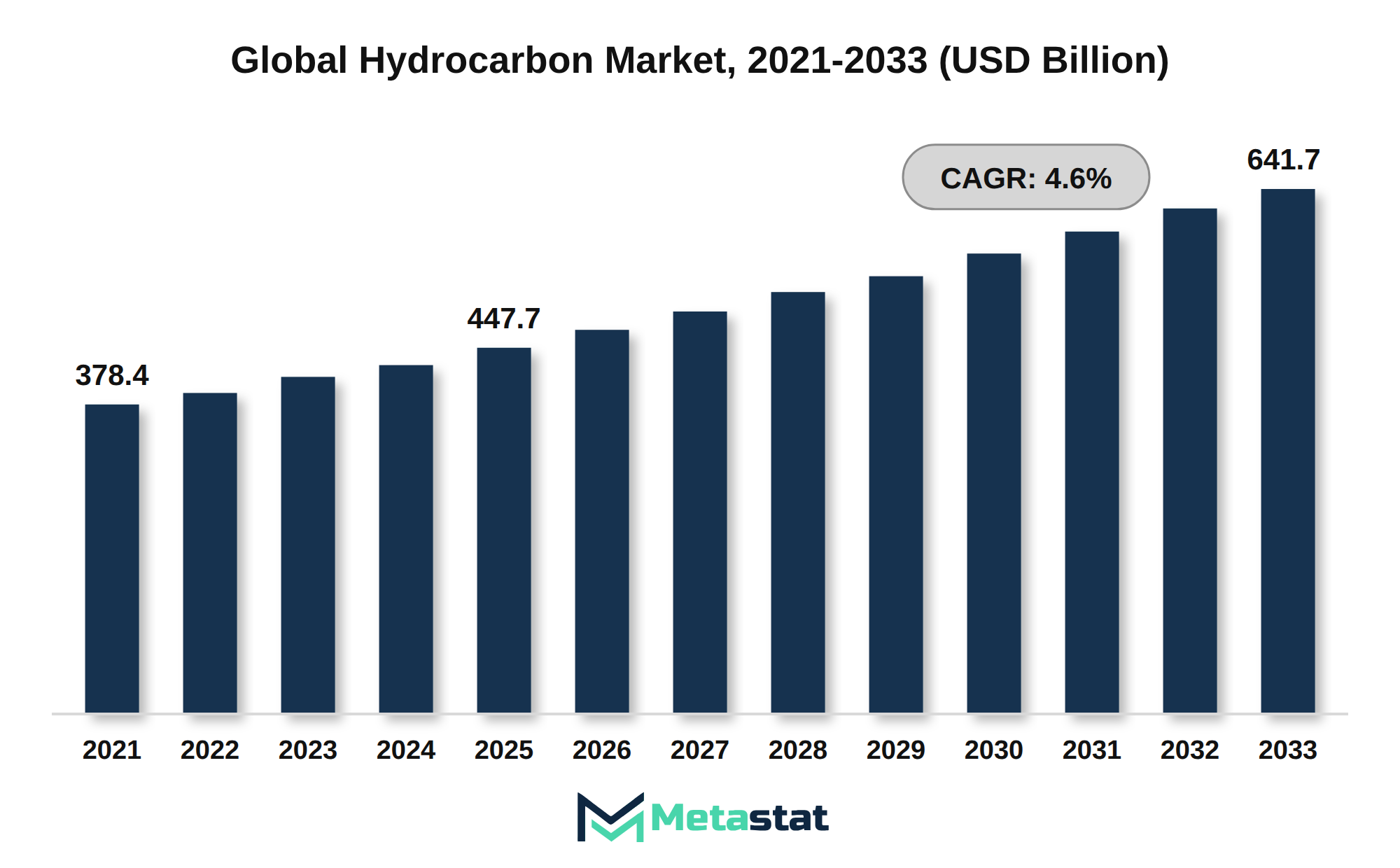
The global Hydrocarbon market was valued at USD 447.7 billion in 2025 and is projected to grow at a CAGR of 4.6% during the forecast period, reaching USD 641.7 billion by 2033.
Key Trends and Forecasts Landscape
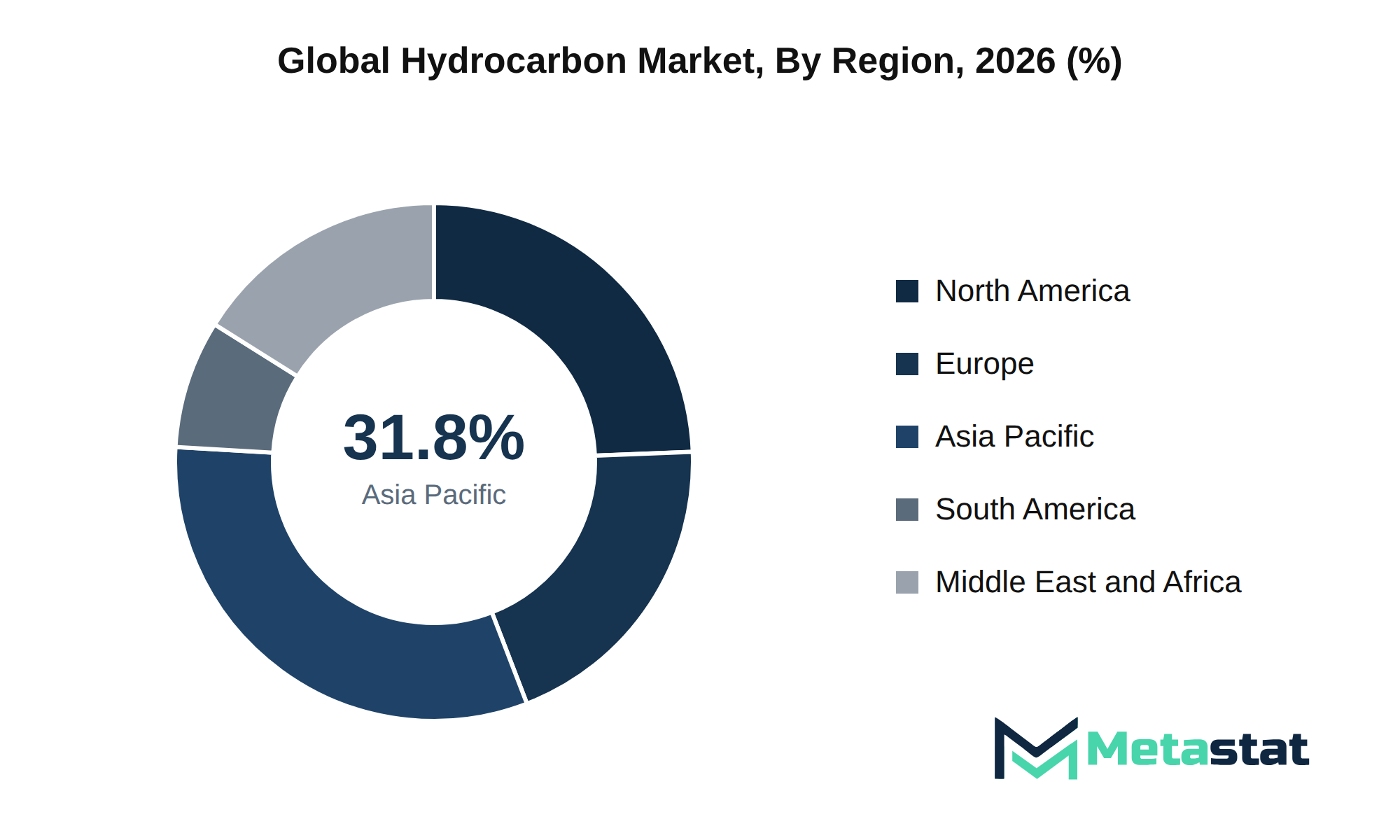
The Hydrocarbon market is projected to reach USD 641.7 billion by 2033, growing from USD 447.7 billion in 2025, representing a compound annual growth rate (CAGR) of 4.6%. This growth is driven by increasing demand across various sectors, including transportation and petrochemicals, along with innovations in extraction and processing technologies. The market's current regional distribution shows North America holding a significant share of 24.4% in 2025, with the United States leading the market share in 2026. The Asia Pacific region follows closely with a share of 31.8%, while Europe accounts for 19.8%. South America and the Middle East and Africa hold shares of 8% and 16.1%, respectively.
Hydrocarbon market regional dynamics
North America's market, valued at USD 148.6 billion by 2033, is expected to grow at a CAGR of 4.6%. The region benefits from established infrastructure, advanced technology, and a robust supply chain. The presence of major players such as Exxon Mobil Corporation and Chevron Corporation further strengthens its market position. Innovations in extraction technologies, including hydraulic fracturing and horizontal drilling, have significantly enhanced production capabilities in the region. These advancements contribute to the overall growth trajectory of the market and position North America as an important player in the global hydrocarbon sector.
In contrast, the Asia Pacific region's significant share of 31.8% indicates a robust demand for hydrocarbons, primarily driven by rapid industrialization and urbanization in countries like China and India. The region is expected to see substantial investments in refining and petrochemical capacities, catering to the growing consumer base. The transition towards cleaner energy sources is influencing market dynamics, as countries seek to balance economic growth with environmental considerations.
Competitive landscape and market fragmentation
The competitive landscape of the hydrocarbon market is characterized by a mix of well-established companies and emerging players. Major multinational corporations dominate the sector, with firms like BP p.l.c. and Royal Dutch Shell leading in market share. However, increasing competition from smaller, agile companies is driving innovation and efficiency. This fragmentation results in a diverse range of offerings, from traditional hydrocarbons to alternative fuels and chemicals.
As the market evolves, mergers and acquisitions are anticipated as companies seek to enhance their market presence and diversify their portfolios. The strategic alignment of resources will likely become critical, especially as firms aim to address regulatory pressures and sustainability challenges. Companies that can effectively navigate these complexities will be better positioned to capture market share and drive future growth.
Innovation within the sector is significant, with research and development trajectories focusing on next-generation technologies. Companies are investing in sustainable practices, aiming to reduce environmental impacts while maintaining production efficiency. This focus on innovation not only addresses regulatory compliance but also meets the growing demand for sustainable products, aligning with consumer preferences for environmentally friendly solutions.
Regulatory compliance and geopolitical risk frameworks
The Hydrocarbon market operates within a complex framework of regulations and geopolitical factors that significantly influence its dynamics. Regulatory compliance is critical, as companies must adhere to environmental standards, safety regulations, and trade policies that vary across regions. These regulations can impact operational costs and market entry strategies, necessitating a keen awareness of the legal landscape. Geopolitical risks, including political instability in key oil-producing regions, can disrupt supply chains and affect pricing. Companies must develop risk management strategies to mitigate the impact of uncertainties on their operations.
Capital allocation and infrastructure investments
Capital allocation in the Hydrocarbon sector is heavily influenced by the need for infrastructure investments. Companies focus on enhancing operational capabilities and expanding production capacities to meet growing demand. Significant capital expenditures are directed toward upgrading existing facilities and investing in new technologies. This investment is essential for maintaining competitive advantage and achieving long-term sustainability. As the market evolves, firms are expected to prioritize investments that enhance efficiency and reduce environmental impact, aligning with global sustainability goals.
Macroeconomic headwinds and currency volatility
Macroeconomic headwinds, including inflationary pressures and currency volatility, present challenges for the market. Fluctuating currency values can affect the profitability of companies engaged in international trade, while inflation can drive up operational costs. Economic instability in major markets can lead to decreased demand for hydrocarbons, influencing overall market performance. Companies in the Hydrocarbon sector must remain agile and adapt their strategies to navigate economic fluctuations effectively.
Supply chain resilience and sourcing strategies
Supply chain resilience is critical in the Hydrocarbon market, where disruptions can have far-reaching consequences. Companies must adopt robust sourcing strategies to ensure the availability of raw materials and manage risks associated with transportation and logistics. Diversifying supply sources and improving logistical networks can help mitigate risks and enhance operational continuity. Building resilient supply chains is increasingly important as companies seek to navigate uncertainties in the global market.
Next-gen innovation and digital transformation
Next-generation innovation is reshaping the Hydrocarbon market, with digital transformation playing a key role in enhancing operational efficiency. Companies increasingly leverage advanced technologies, including artificial intelligence and data analytics, to optimize production processes and improve decision-making. The integration of Industry 4.0 and 5.0 principles drives significant changes in how companies operate, enabling them to respond more effectively to market demands. Embracing digitalization is essential for maintaining competitiveness in an increasingly technology-driven environment.
Market Dynamics
Solvent emission limits are pulling buyers toward closed-loop systems
Recent developments in environmental regulations have heightened the pressure on industries to reduce solvent emissions. This shift arises from an increasing awareness of the detrimental effects of volatile organic compounds (VOCs) and the need for compliance with stringent emission standards. As businesses strive to meet these requirements, they are increasingly adopting closed-loop systems that minimize solvent loss, recycle materials, and enhance overall efficiency. This transition addresses regulatory mandates and appeals to environmentally conscious consumers, thereby driving demand in the Hydrocarbon market.
The impact of these changes is most pronounced in regions with stricter environmental policies, such as Europe and North America. In these areas, the hydrocarbon industry faces significant challenges as companies navigate complex regulations while striving to maintain profitability. The demand for closed-loop systems is particularly strong in sectors such as petrochemicals and chemicals, where solvent emissions are a primary concern. As organizations in these regions enhance their operational practices to comply with regulations, they inadvertently create a more substantial market for hydrocarbons that meet eco-friendly standards.
For suppliers, this trend represents an opportunity to innovate and offer products tailored to closed-loop systems. Companies that provide low-emission hydrocarbons or solutions designed for solvent recovery can position themselves advantageously in the market. As demand for compliance-driven solutions grows, suppliers must invest in research and development to create effective products that align with environmental standards. This proactive approach ensures market relevance and supports the broader movement toward sustainability in the Hydrocarbon market.
Digital transformation is enhancing operational efficiencies and market dynamics
Digital transformation is reshaping the Hydrocarbon market by integrating advanced technologies into various processes. Automation, artificial intelligence, and software adoption are optimizing operations, reducing costs, and improving decision-making. Companies are digitizing legacy systems, which allows for better data management and operational transparency. This shift not only enhances productivity but also creates opportunities for innovative solutions tailored to market demands. The emphasis on technological integration is raising expectations for efficiency and responsiveness, driving strong demand for hydrocarbons in applications ranging from fuel combustion to petrochemical production.
The impact of digital transformation is particularly pronounced in the Asia Pacific and North America regions. Asia Pacific, accounting for 31.8% of market share, is experiencing rapid industrialization and urbanization, driving the need for more efficient energy solutions. As countries in this region adopt automation and AI, the demand for hydrocarbons is likely to surge. North America, with a forecast value of USD 148.6 billion by 2033, is also investing heavily in digital technologies to enhance its oil and gas sector. Companies are prioritizing investments that leverage digital tools to streamline operations, thereby boosting demand for hydrocarbons.
For suppliers, digital transformation presents both challenges and opportunities. Companies must adapt to new technologies and consumer expectations, which can increase competition. However, those who successfully integrate digital solutions will likely find a competitive edge in the market. Suppliers can enhance their offerings by developing smart technologies that optimize hydrocarbon extraction and processing. As the market evolves, suppliers focusing on digital integration can position themselves favorably to meet the growing demand driven by this transformation.
High capital investment requirements are limiting market growth
The Hydrocarbon market faces significant constraints due to high capital investment requirements and escalating operating costs. These financial burdens originate from the need to maintain compliance with regulatory standards, invest in advanced technologies, and upgrade aging infrastructure. Companies striving for operational efficiency and sustainability encounter substantial upfront costs that can deter investment, particularly among smaller players in the industry.
Regions with the most pronounced impact include North America, Europe, and Asia Pacific, which collectively dominate market share. North America is projected to contribute USD 148.6 billion by 2033, reflecting a compound annual growth rate (CAGR) of 4.6%. However, the high initial costs associated with developing and maintaining hydrocarbon extraction and processing facilities can hinder growth, particularly for new market entrants. In Europe, regulatory compliance adds to the financial pressure, restricting further investment in emerging technologies that could enhance efficiency. Asia Pacific, despite its high market share, also struggles with rising operational costs and capital expenditures that escalate as companies seek to modernize their operations.
To navigate these challenges, industry players are exploring alternative financing options and partnerships to spread the financial burden. Some companies are leveraging public-private partnerships to access necessary funds, while others are investing in technology to improve operational efficiency over the long term. However, these workarounds do not fully alleviate the constraints posed by high capital requirements. Reliance on external funding can create vulnerabilities and limit operational flexibility, leaving many companies unable to respond swiftly to market changes or advancements in technology. Without addressing these fundamental financial constraints, the growth potential of the Hydrocarbon market remains significantly hampered.
Pricing compression is squeezing margins and increasing input costs
Firms in the Hydrocarbon market are grappling with significant pricing compression that adversely affects their profit margins. This challenge arises from fluctuating demand and increased competition, which has led to a downward pressure on prices. The rising costs of raw materials and operational expenditures further compound the issue, forcing firms to manage their pricing strategies carefully to maintain profitability.
Regions experiencing the most pronounced effects of pricing compression include Asia Pacific and Europe. In these markets, heightened competition and a saturated market have made it particularly difficult for firms to pass on increased costs to consumers. As a result, businesses must balance the need to remain competitive with the constraints imposed by escalating input costs. This balancing act is most pronounced in the petrochemical and chemical segments, where profit margins are inherently tight.
In response to these pressures, firms are seeking to enhance operational efficiencies and optimize their supply chains. Investments in technology and process improvements are becoming more common, although these initiatives often entail considerable upfront costs. Some companies are turning to automation and workforce retraining as strategies to maintain productivity while controlling expenses. Despite these efforts, the financial burden associated with these strategies can strain resources, highlighting the challenges firms face in navigating the current market environment effectively.
Emerging regional demands are driving infrastructure modernization
The Hydrocarbon market is experiencing a significant opportunity due to emerging regional demands and infrastructure modernization efforts. As global energy consumption rises, particularly in developing regions, the need for modernized infrastructure to support hydrocarbons has become increasingly apparent. New projects in Asia Pacific and Africa are aiming to enhance extraction and distribution capabilities. Existing infrastructure often requires upgrades to meet current safety and environmental standards, thus creating a gap that can be filled by companies prepared to invest in these enhancements.
Firms positioned to capitalize on this opportunity will require a combination of technical expertise, financial resources, and innovative solutions that address regional challenges. Companies that can offer integrated services, from extraction to refining and distribution, will find themselves at a competitive advantage. Partnerships with local governments and stakeholders can facilitate smoother project rollouts and enhance trust within communities. The ability to navigate regulatory landscapes and adapt to local market conditions will also be crucial for success in capturing this emerging demand.
The timing for entering this market opportunity is critical, as the window may not remain open for long. With the Hydrocarbon market projected to reach USD 641.7 billion by 2033, firms that delay action may miss out on substantial growth. Infrastructure projects often involve long lead times, so early engagement will prove advantageous. Economic fluctuations or shifts in regulatory policies could quickly alter the situation, making it essential for companies to act decisively and strategically to secure their positions in this evolving market.
Market Segmentation Analysis
The Global Hydrocarbon market is segmented based on Type, Application, End-Use Industry, and undefined.
By Type, the market is further segmented into:
Aliphatic
Aromatic
Aliphatic
Valued at USD 286 billion in 2026, the Aliphatic segment is projected to grow to USD 377.1 billion by 2033, representing a compound annual growth rate (CAGR) of 4% during the forecast period. This segment's growth is primarily driven by increasing demand in various downstream applications, especially within the transportation and petrochemical sectors. As these industries expand, they fuel a corresponding rise in the consumption of aliphatic hydrocarbons.
Technological maturation in production processes is enhancing the quality and efficiency of aliphatic compounds, leading to greater adoption across various applications. Next-generation upgrades and innovations in refining technologies further strengthen the segment's position within the Hydrocarbon market, aligning with the industry's need for high-purity chemical feedstock.
Regulatory compliance standards are also influencing market dynamics. Stricter environmental regulations encourage the shift towards cleaner production methods, increasing the demand for low-emission aliphatic products. Firms investing in sustainable practices are likely to benefit from evolving consumer preferences and regulatory landscapes.
However, cost structures present challenges. Pricing volatility in crude oil and raw materials is impacting margins and profitability for players in this segment. As companies face these pressures, effective supply chain resilience and raw material sourcing strategies will be critical to maintaining competitive advantage.
Aromatic
Aromatic hydrocarbons are projected to reach USD 264.6 billion by 2033, with a compound annual growth rate (CAGR) of 5.4% during the forecast period. This segment is driven by increasing demand in various applications, particularly in the petrochemical industry, where aromatic compounds serve as essential feedstocks. The consumption shift towards sustainable and efficient products is evident as industries seek to enhance their operational efficiencies and reduce environmental impacts.
Technological advancements play a vital role in the aromatic segment, as companies invest in next-generation upgrades to improve production processes. These advancements enhance the yield of aromatic compounds and contribute to better compliance with regulatory standards aimed at reducing emissions. The evolution of products within this segment is influenced by market demands for high-purity chemicals, which are critical in various end-use industries, including transportation and industrial manufacturing.
Despite the growth prospects, the segment faces cost structures and pricing volatility challenges, particularly in raw material sourcing. Fluctuations in crude oil prices can impact margins and profitability. Supply chain resilience is essential, as disruptions can affect availability and pricing in the market. As the market continues to adapt to these dynamics, strategic opportunity windows are emerging, particularly for companies that can navigate these complexities effectively.
By Application, the market is further segmented into:
Fuel and combustion applications are driven by an increasing global demand for energy, particularly in transportation and power generation. As economies grow and urbanization accelerates, the need for reliable fuel sources remains critical. This segment has seen substantial adoption due to its important role in powering vehicles and supporting industrial processes. Advancements in refining technologies and the development of cleaner-burning fuels are enhancing the efficiency and sustainability of combustion processes.
End-use dynamics within this segment show a marked shift towards cleaner and more efficient energy solutions. Regulatory compliance standards play a significant role in shaping fuel formulations, necessitating adherence to emissions regulations that vary by region. As governments impose stricter limits on pollution, the market is witnessing a gradual transition from traditional fuels to alternatives that offer lower emissions and improved performance. This evolution necessitates ongoing investment in research and development for next-generation fuel technologies.
Pricing volatility in the hydrocarbon market affects cost structures across the fuel and combustion segment. Fluctuations in crude oil prices can impact margins and result in varying cost pressures for companies in the market. Supply chain resilience is also critical, as disruptions in raw material sourcing can lead to significant operational challenges. Stakeholders must continuously assess their logistics and procurement strategies to mitigate risks associated with supply fluctuations and maintain operational continuity.
Petrochemical and Chemical Feedstock
Petrochemical and chemical feedstock applications play a significant role in driving the demand within the hydrocarbon market. These applications are primarily fueled by the rising demand for plastics, synthetic rubber, and various chemicals used across numerous industries. As end-use industries like automotive, packaging, and consumer goods expand, the need for diverse feedstock materials also increases, creating a favorable environment for growth.
Technological maturation influences this sub-segment through advancements in processing techniques and product development. Innovation in catalyst technologies and refining processes enhances the efficiency of producing petrochemical derivatives, thus improving yield and economic viability. Next-generation upgrades in facilities allow for more sustainable practices, aligning with global trends toward environmental responsibility.
Consumption shifts towards more sustainable products are evident, prompting manufacturers to adapt their offerings in response to regulatory pressures and consumer preferences. Compliance with environmental regulations becomes essential for companies operating in this space, inciting them to reconsider their sourcing and production methodologies. Supply chain resilience is critical as fluctuations in raw material availability can impact production timelines and costs.
Margin pressures due to pricing volatility in the raw material market further complicate operational strategies for companies within this sub-segment. Strategic opportunity windows arise as firms seek to optimize their supply chains and innovate their product lines. This ultimately enhances competitiveness in the hydrocarbon market.
Lubricants and Functional Fluids
Demand for lubricants and functional fluids is influenced by the diverse applications across various end-use industries. These fluids ensure optimal performance in machinery and equipment, reducing wear and tear while enhancing efficiency. The expansion of sectors such as transportation and industrial manufacturing drives the need for advanced lubricants, which are formulated to withstand extreme conditions and provide better protection.
Technological maturation is important as manufacturers invest in next-gen upgrades to improve product performance and sustainability. Enhanced formulations are being developed to meet the evolving requirements of modern engines and machinery, emphasizing energy efficiency and environmental compliance. As a result, the market is seeing increased adoption of synthetic lubricants, which offer superior characteristics compared to conventional options.
Regulatory compliance is increasingly stringent, pushing manufacturers to innovate and align with environmental standards. Niche certifications are becoming more prominent, influencing consumer preferences towards eco-friendly products. As these regulations tighten, companies must adapt their offerings to meet changing compliance requirements while maintaining competitive pricing under margin pressures.
Supply chain resilience remains crucial as raw material sourcing impacts production. Disruptive alternatives may emerge, necessitating a focus on sustainability and innovation to mitigate risks associated with supply chain vulnerabilities. Strategic opportunity windows are available for firms willing to invest in research and development, enabling them to capitalize on shifts in consumer demand and regulatory conditions within the hydrocarbon market.
Solvents and Industrial Process Fluids
Demand for solvents and industrial process fluids is primarily driven by the need for effective and efficient cleaning agents, as well as their role in various chemical processes. Industries such as petrochemicals, automotive, and manufacturing increasingly rely on these fluids for both production and maintenance operations. The hydrocarbon market is poised for further adoption of innovative formulations that enhance performance while addressing environmental concerns.
The ongoing evolution of product formulations is a critical vector for growth within this segment. Technological maturation has led to the development of next-generation solvents that offer improved efficacy and reduced environmental impact. There is a noticeable shift in consumer preferences toward sustainable alternatives, prompting manufacturers to invest in research and development for eco-friendly solutions.
Regulatory compliance remains a significant factor influencing the market. Stricter environmental regulations and safety guidelines compel companies to adapt their product offerings. Niche certifications further enhance marketability, ensuring that products meet both consumer and regulatory expectations. Such compliance efforts not only mitigate risks but also open new opportunities in various applications.
Supply chain resilience is crucial in this sector, especially concerning raw material sourcing. Fluctuations in crude oil prices can lead to pricing volatility, impacting margins. As a result, companies are increasingly focused on establishing robust supply chains to mitigate these vulnerabilities. Strategic opportunities are emerging in the market as firms navigate these dynamics and seek to capitalize on evolving consumer demands and regulatory landscapes.
Asphalt and Bitumen Production
Asphalt and bitumen production benefits from significant demand drivers linked to infrastructure development and maintenance. Growing investments in road construction, urbanization, and public works projects globally contribute to increased consumption in this sub-segment. The market has seen a shift towards high-performance asphalt solutions, which enhance road durability and reduce maintenance costs. This trend reflects a broader adoption of innovative materials in construction, influenced by advancements in product technology.
Technological maturation is important for enhancing production efficiency and product quality. Developments in refining processes, including the integration of recycled materials, have led to improved sustainability and reduced environmental impact. The push for compliance with stringent regulatory standards has encouraged manufacturers to adopt eco-friendly practices in asphalt production. These regulations are increasingly focusing on reducing carbon emissions and promoting the use of alternative materials.
Cost structures in asphalt and bitumen production are influenced by raw material availability and pricing volatility. Fluctuations in crude oil prices directly impact production costs, creating challenges for profitability. Logistics vulnerabilities in the supply chain can affect timely delivery and project timelines, highlighting the importance of strategic sourcing and efficient distribution networks in the market.
Overall, the asphalt and bitumen production sub-segment presents strategic opportunity windows for companies looking to capitalize on the growing demand for infrastructure development while navigating the complexities of regulatory compliance and market dynamics within the Hydrocarbon market.
Applications such as paraffin waxes, carbon black, refrigerants, and aerosol propellants are integral to various sectors, demonstrating diverse demand drivers. The hydrocarbon market benefits significantly from the consistent demand for these materials in industries like automotive, consumer goods, and construction. For instance, paraffin waxes are crucial in the manufacture of candles, cosmetics, and packaging materials, while carbon black is a reinforcing agent in tires and other rubber products.
Technological maturation is important in the evolution of this sub-segment. Innovations in production methods have enhanced the efficiency and quality of these products, leading to increased adoption rates across multiple end-use industries. Regulatory compliance standards shape market dynamics, particularly concerning environmental impact and product safety. This influences manufacturers to seek out sustainable practices and ingredients, driving further development within the segment.
Supply chain resilience is another critical factor, as logistical vulnerabilities can affect the availability and pricing of raw materials. Fluctuations in the cost structures of these products may create margin pressures for manufacturers, prompting them to explore alternative sourcing options. Such factors lead to shifts in consumption patterns, as industries adapt to meet evolving demands and regulatory requirements.
By End-Use Industry, the market is further segmented into:
Transportation and Mobility
Petrochemicals and Chemicals
Power Generation and Utilities
Industrial Manufacturing and Processing
Construction and Infrastructure
Mining
Others (Agriculture, Residential and Commercial Heating, Government and Defense)
Transportation and Mobility
Factors driving demand in the transportation and mobility sector are closely tied to the increasing global focus on sustainability and energy efficiency. As governments and organizations strive to reduce carbon emissions, an enhanced emphasis on cleaner fuel alternatives is evident. This shift encourages the adoption of fuel-efficient technologies and vehicles, influencing consumption patterns within the Hydrocarbon market. Innovations in electric vehicles and hybrid technologies are rapidly advancing, pushing traditional hydrocarbon applications to adapt to the evolving environment.
Significant challenges include regulatory compliance standards, which compel manufacturers to adhere to stricter emissions guidelines. This regulatory framework can impact production costs and ultimately lead to pricing volatility. Companies must navigate these compliance hurdles while maintaining competitiveness in the market. The supply chain faces vulnerabilities due to fluctuations in raw material sourcing and logistics constraints, which could disrupt consistent product availability and pricing stability.
The introduction of next-generation upgrades in transportation infrastructure plays a crucial role in shaping consumption shifts. As electric and alternative fuel vehicles gain market traction, traditional hydrocarbons may face substitution risks from disruptive alternatives. However, strategic opportunities arise as investments in infrastructure adapt to these changes, creating a pathway for both innovation and growth within the sector.
Petrochemicals and Chemicals
Growing demand for petrochemicals, coupled with advancements in technology, drives the evolution of the Petrochemicals and Chemicals sector within the hydrocarbon market. This segment is benefiting from significant upgrades and product innovations that improve efficiency and reduce environmental impact. As manufacturers adopt next-generation processes, the production capabilities expand, allowing for a broader range of chemical products to enter the market.
End-use dynamics indicate a shift in consumption patterns, with an increasing preference for sustainable and high-performance materials. Industries such as automotive, packaging, and electronics are increasingly using petrochemical products, reflecting the sector's integral role in modern manufacturing. Regulatory compliance standards are tightening, pushing companies to prioritize eco-friendly practices and meet niche certifications, which, in turn, can influence market entry strategies and operational costs.
Cost structures remain a concern, as pricing volatility of raw materials impacts profit margins. The sector must navigate these challenges while maintaining supply chain resilience. Sourcing reliable raw materials has become critical, given the vulnerabilities exposed by recent global disruptions. Strategic opportunities exist for businesses that can adapt to these changes and invest in technologies that mitigate risks associated with substitution and obsolescence.
Power Generation and Utilities
Growth in the Power Generation and Utilities sector is driven by increasing demand for reliable and efficient energy systems. This growth is influenced by government initiatives promoting cleaner energy sources and infrastructure upgrades. Adoption rates are expected to rise as utilities invest in advanced technologies that enhance operational efficiency and reduce emissions. The transition to renewable energy sources, such as wind and solar, is also creating new opportunities in hydrocarbon applications for backup power and hybrid systems.
Technological maturation plays a critical role in this segment, with next-generation upgrades focusing on automation and smart grid technologies. These improvements not only optimize power generation but also facilitate real-time monitoring and maintenance. As utilities shift towards more sustainable practices, product evolution vectors highlight the movement toward cleaner hydrocarbon alternatives and hybrid systems that combine traditional and renewable energy sources.
Regulatory compliance standards increasingly emphasize the need for reduced carbon emissions, pushing utilities to adopt more eco-friendly hydrocarbon solutions. This regulatory landscape creates a challenging environment for companies, necessitating investments in research and development to meet stringent compliance requirements.
Cost structures in this segment are affected by pricing volatility in raw materials and the need for continuous investment in innovation. As price fluctuations impact margins, utilities must carefully manage their supply chains to ensure resilience and efficiency, ultimately enhancing their service delivery in the competitive hydrocarbon market.
Industrial Manufacturing and Processing
Demand within the industrial manufacturing and processing sector is shaped by the need for efficient, reliable, and high-quality hydrocarbons. The sector is experiencing a shift toward more sustainable practices, driving the adoption of advanced technologies and next-generation upgrades. Manufacturers are increasingly seeking hydrocarbons that not only meet production needs but also align with environmental standards and regulations.
Regulatory compliance is important in shaping operational strategies, as firms prioritize adherence to environmental policies and certification requirements. These standards often influence the selection of materials and processes in manufacturing, impacting both cost structures and product development timelines. Companies must navigate these regulations carefully to avoid penalties and maintain market competitiveness.
Price volatility poses additional challenges for manufacturers. Fluctuations in hydrocarbon costs can affect overall production expenses and profit margins. Organizations face the need to implement robust supply chain strategies to manage raw material sourcing effectively, ensuring resilience against market disruptions. This includes diversifying suppliers and securing alternative sourcing options to mitigate risks associated with pricing and availability.
As companies explore strategic opportunity windows, investments in innovative technologies and processes are essential. A focus on research and development enhances product offerings and improves operational efficiencies. The integration of disruptive alternatives can lead to shifts in consumption, requiring firms to adapt swiftly to emerging trends within the hydrocarbon market.
Construction and Infrastructure
Investment in construction and infrastructure projects is a primary demand driver for the hydrocarbon market. This segment benefits from substantial government spending on urban development, transportation networks, and energy infrastructure. Adoption rates have been supported by the increasing need for sustainable and efficient building materials, which use hydrocarbons in their production. As cities expand and develop, the need for robust infrastructure to support growing populations becomes essential.
Technological maturation in materials and processes is critical for this segment. New advancements in hydrocarbon-based materials, such as asphalt modifications for enhanced durability, have transformed infrastructure projects. Next-generation upgrades in construction methodologies, including the integration of digital technologies and smart materials, are enhancing the efficiency and sustainability of construction processes.
Regulatory compliance standards also play a significant role in shaping the dynamics of this segment. Stricter environmental regulations are prompting construction companies to seek out hydrocarbons that meet these standards while maintaining performance. These regulations ensure that projects are not only efficient but also environmentally responsible.
Supply chain resilience is a growing concern amid global economic fluctuations. Companies are focusing on raw material sourcing and logistics vulnerabilities to mitigate risks. The ongoing challenges in the supply chain push firms to innovate and find alternatives, ensuring they can meet project demands without compromising on quality or timelines. This focus on resilience is essential for maintaining operational continuity in a fluctuating market.
Mining
Growth in the mining sector is influenced by various factors, including the increasing demand for energy resources and advancements in extraction technologies. Adoption rates of hydrocarbons in mining are driven by the need for efficient power sources and materials that enhance production capabilities. Environmental policies and regulatory compliance standards related to emissions are becoming critical, especially as mining operations face scrutiny regarding their environmental impact.
Technological maturation in extraction methods allows for next-gen upgrades in equipment, making it possible for mining operations to lower costs while increasing efficiency. Product evolution vectors emphasize the importance of integrating sustainable practices, which are becoming essential as companies look to meet global sustainability goals. As the market evolves, consumption shifts towards hydrocarbons that align with these emerging environmental standards.
Supply chain resilience is increasingly vital for mining companies, particularly in sourcing raw materials and managing logistics vulnerabilities. Disruptive alternatives, such as renewable energy sources, present substitution risks that the mining sector must navigate cautiously. Companies are compelled to assess their capital investment outlook, seeking strategic opportunity windows that align with industry trends.
The mining sector within the hydrocarbon market navigates a complex environment shaped by regulatory pressures, technological advancements, and evolving consumer preferences, all of which impact operational strategies and market dynamics.
Others (Agriculture, Residential and Commercial Heating, Government and Defense)
Demand drivers in agriculture, residential and commercial heating, and government and defense span a wide range of applications and technologies. Key sectors such as agriculture increasingly rely on hydrocarbons for fertilizers and heating solutions, ensuring crop viability and yield enhancement. In residential and commercial contexts, rising energy needs prompt a shift towards more efficient heating systems, while government and defense sectors depend on hydrocarbons for energy security and operational effectiveness.
Technological maturation has led to advancements in hydrocarbon applications across these end-use industries. Innovations in energy-efficient heating systems and the integration of smart technologies are transforming user experiences and consumption patterns. The market is witnessing a shift towards next-generation upgrades, which emphasize sustainability and reduced carbon footprints, especially in residential applications.
Compliance with regulatory standards is important in shaping the market dynamics. Governments are increasingly imposing stricter emissions regulations, prompting industries to adopt cleaner technologies and processes. Moreover, cost structures and price volatility can impact purchasing decisions, particularly in sectors like agriculture, where margins may be tighter.
As supply chain resilience becomes crucial, raw material sourcing and logistics vulnerabilities are under scrutiny. Disruptive alternatives pose substitution risks that could influence future hydrocarbon consumption patterns. Recognizing strategic opportunity windows allows stakeholders to capitalize on emerging trends, ensuring continued growth in the hydrocarbon market.
By Region
Based on geography, the Global Hydrocarbon market is divided into North America, Europe, Asia-Pacific, South America, Middle East, and Africa.
North America
North America is projected to achieve a market size of USD 148.6 billion by the end of 2033 in the hydrocarbon market, growing at a compound annual growth rate (CAGR) of 4.6% during the forecast period. The region accounted for 24.4% of the global market in 2025, indicating its significant share and influence in hydrocarbon production and consumption.
Mature market dynamics characterize North America's hydrocarbon sector, where established players dominate and high-value replacement cycles drive incremental growth. The United States, Canada, and Mexico have well-developed infrastructure that facilitates efficient supply chains and localized manufacturing. Investments in modernization efforts are ongoing, ensuring facilities can adapt to evolving market conditions and technological advancements.
Cross-border trade corridors enhance the region's economic integration, allowing for smoother transactions and exchanges of hydrocarbons. Geopolitical factors can affect trade flows, but the existing trade frameworks between these three countries remain robust. Local compliance mandates and geographic regulatory frameworks also shape operational practices, promoting a stable market environment.
Regional resource availability is essential in meeting domestic energy demands. North America benefits from significant reserves and diverse energy sources, contributing to energy grid resiliency. This resource abundance supports various sectors, including power generation, transportation, and industrial manufacturing, all of which rely heavily on hydrocarbons.
Strategic entry barriers exist for new entrants, primarily due to the established dominance of existing companies and the high capital investment required to develop infrastructure. However, foreign direct investment (FDI) flows into the region signal confidence and potential opportunities for growth in the hydrocarbon market. As North America continues to modernize its infrastructure and adapt to market demands, it remains a key player on the global stage.
Europe
Europe contributes significantly to the global Hydrocarbon market. Key countries such as Germany, France, the UK, Italy, and Spain, along with Russia and the Rest of Europe, play vital roles in this market.
Mature market dynamics are evident across the region, where high-value replacement cycles in existing infrastructure are crucial. This trend is particularly pronounced in countries with established industrial bases, where aging facilities require upgrades to meet modern standards. Incremental growth vectors are also emerging, with improvements in efficiency and sustainability becoming essential considerations for businesses operating in this sector.
Infrastructure modernization is a primary focus, as many European countries aim to enhance their energy grid resiliency. The integration of renewable energy sources necessitates an adaptable hydrocarbon supply chain. As this modernization progresses, regions with underpenetrated territories may experience increased demand for hydrocarbons, driven by new projects aimed at improving energy security and supply reliability.
Localized procurement dynamics are increasingly influential, with cultural nuances shaping purchasing behaviors in different countries. Domestic market leaders are adapting their strategies to align with regional preferences and regulatory requirements. This focus on localization encourages greater collaboration among suppliers and buyers, further strengthening the market's resilience.
Geopolitical factors also impact trade corridors within Europe. Cross-border trade relationships are evolving, influenced by regulatory frameworks and compliance mandates that vary from one country to another. Understanding these dynamics is essential for market players aiming to capitalize on opportunities in the hydrocarbon sector.
Asia-Pacific
Asia-Pacific represents a significant share of the global hydrocarbon market. The region's growth trajectory is driven by emerging market front-runners such as China, India, and Southeast Asia, which are expanding their energy needs to support rapid industrialization and urbanization. Infrastructure modernization plays an important role as countries invest heavily in refining capacities and distribution networks, enhancing their ability to meet increasing domestic demand.
In South Korea and Japan, mature market dynamics contribute to high-value replacement cycles, where existing infrastructure is upgraded to improve efficiency and reduce environmental impact. These nations maintain a strong focus on adopting cleaner technologies while balancing their energy strategies with traditional hydrocarbon sources. This dual approach supports incremental growth vectors that align with evolving regulatory frameworks and local compliance mandates.
Localized procurement dynamics further influence the market. Cultural nuances in B2B buying behaviors shape how companies in the region engage with suppliers and negotiate contracts, ensuring that local preferences are considered. This localized approach promotes vendor consolidation trends, making it easier for domestic players to compete with larger multinational corporations.
Geopolitical fragmentation significantly affects cross-border trade corridors, with regional tensions prompting countries to reassess their energy partnerships. As nations seek to fortify their energy security, they are increasingly focused on developing localized manufacturing densities, which can reduce dependency on imports and enhance supply chain resilience. Foreign direct investment flows into the region remain robust, driven by the promise of untapped energy resources and the push for geographic expansion windows.
Regional resource availability, particularly in countries like Australia and India, complements these efforts, as the region continues to explore various energy sources to meet future needs. Energy grid resiliency is also a priority, with investments in infrastructure aimed at ensuring reliable energy supply despite fluctuations in demand. Collectively, these factors position the Asia-Pacific region as a key player in the hydrocarbon market through 2033 and beyond.
South America
South America accounts for 8.00% of the global Hydrocarbon market in 2025. Brazil and Argentina lead the region, driven by their significant hydrocarbon reserves and ongoing investments in infrastructure modernization. The Rest of South America also contributes to the market, although at a lesser extent.
Infrastructure modernization remains a crucial factor in supporting market growth. Improved transport and distribution networks enhance the efficiency of hydrocarbon extraction and distribution, strengthening domestic consumption and export capabilities. Increased focus on developing energy grids supports regional resource availability and energy security.
Brazil's hydrocarbon sector is characterized by substantial offshore oil reserves. This unique geographic advantage enables the country to maintain a competitive edge, attracting foreign direct investment (FDI) flows. Argentina, with its vast shale resources, is working towards optimizing its extraction techniques, aiming to enhance productivity in the hydrocarbon market.
Localized procurement dynamics shape the B2B buying behaviors in both Brazil and Argentina. Cultural factors influence supplier relationships and purchasing decisions, leading to a distinct market environment. Companies operating in the region must adapt their strategies to accommodate these nuances and align with regional demand drivers.
Regional competitive landscapes are evolving as domestic market leaders consolidate their positions. This trend encourages collaboration among local players, which drives innovation and efficiency in operations. As a result, the hydrocarbon market in South America is poised for incremental growth in the coming years, supported by strong demand, evolving market dynamics, and strategic partnerships.
Middle East and Africa
The Middle East and Africa region is projected to hold a significant share of the global hydrocarbon market by 2025. This significant footprint is driven by a combination of infrastructure modernization and emerging market front-runners. Saudi Arabia and the UAE are key players, benefitting from vast hydrocarbon reserves and ongoing investments aimed at enhancing production capabilities. These countries are also focusing on technological advancements to improve efficiency and reduce environmental impact.
In South Africa, there is a growing focus on local compliance mandates and regulatory frameworks that guide the hydrocarbon sector. This environment creates a competitive landscape where domestic market leaders can thrive, supported by localized procurement dynamics and cultural nuances that shape B2B buying behavior. The combination of these factors contributes to a resilient market poised for incremental growth.
The region's supply chain is experiencing a trend towards regionalization, as companies seek to nearshore operations and establish localized manufacturing densities. This shift is driven by both economic pressures and the need for greater supply chain resilience. By investing in domestic capabilities, regional players can enhance their competitiveness in the hydrocarbon market.
Geopolitical fragmentation and cross-border trade corridors will influence market dynamics in the Middle East and Africa. The interaction of these factors may create both opportunities and challenges, impacting trade flows and investment strategies in the hydrocarbon sector.
Competitive Landscape and Strategic Insights
Mergers, acquisitions (M&A), strategic consolidation, and industry restructuring
The hydrocarbon market exhibits a complex competitive landscape marked by strategic consolidation and active mergers and acquisitions. Major players are increasingly pursuing vertical integration to enhance operational efficiencies and secure supply chains. This trend is evident among large corporations such as Saudi Arabian Oil Company (Saudi Aramco), BP p.l.c., and Chevron Corporation, which actively engage in acquiring smaller firms to expand their market presence and technological capabilities. These moves often lead to a more concentrated market structure, impacting pricing and competitive dynamics.
Companies are also focusing on collaborations to drive innovation and improve market reach. Strategic alliances and joint ventures are prevalent, as seen with firms like TotalEnergies SE and Reliance Industries Limited, which partner to leverage complementary strengths and access new market segments. Such partnerships enable firms to co-develop technologies and enhance product offerings, particularly in emerging sectors like renewable energy and cleaner hydrocarbon production.
Go-to-market (GTM) strategies, commercial models, and pricing architectures
In the hydrocarbon market, a variety of go-to-market strategies are employed to capture diverse consumer segments. Players often implement tiered pricing structures, allowing them to cater to different end-use industries such as transportation, power generation, and industrial manufacturing. This approach enables firms like China National Petroleum Corporation (CNPC) and PetroChina to maintain competitiveness across various regional markets, including North America and Asia Pacific.
Product differentiation is key in this industry, with companies investing significantly in research and development (R&D) to create proprietary technologies. For instance, firms like Dow and Eastman Chemical Company focus on developing specialized chemical formulations and advanced petrochemical processes to enhance the performance of their products. This R&D emphasis helps establish robust technology moats that protect market share against new entrants.
Barriers to entry in the hydrocarbon market remain high, primarily due to substantial capital requirements and regulatory compliance. The complex nature of extraction, refining, and distribution processes necessitates significant investment in technology and infrastructure. Established companies benefit from their extensive experience and established supply chains, making it difficult for new entrants to compete effectively.
Customer retention strategies play a crucial role in maintaining market share. Companies often implement loyalty programs and long-term contracts to minimize switching costs for customers. This strategy is particularly effective in sectors like petrochemical feedstock, where reliability and quality are essential. Brand equity dynamics also contribute, as established brands like Exxon Mobil Corporation and Royal Dutch Shell leverage their reputation to secure long-term partnerships.
Intellectual property (IP) positioning is another critical facet of competition in the hydrocarbon market. Major firms, including Eni S.p.A. and ConocoPhillips Company, have developed extensive patent portfolios that safeguard their innovations and provide a competitive edge. This emphasis on technological defensibility is vital, as it allows companies to maintain leadership in an industry that is constantly changing.
Looking ahead, the competitive outlook for the hydrocarbon market suggests ongoing pressure for companies to innovate and adapt. Defensive imperatives will drive strategic growth vectors, including sustainability initiatives and shifts towards cleaner production methods. As concerns regarding climate change intensify, companies will need to navigate these challenges while continuing to meet global energy demands.
Forecast and Future Outlook
The hydrocarbon market is projected to experience substantial growth over the forecast period. The market size is forecast to rise from USD 447.7 billion in 2025 to over USD 641.7 billion by 2033, representing a compound annual growth rate (CAGR) of 4.6%. This growth trajectory reflects increasing demand across various sectors, including transportation, petrochemicals, and industrial manufacturing.
In the base case scenario, steady economic recovery and geopolitical stability are anticipated to support market expansion. Increasing investments in infrastructure and technology integration across the hydrocarbon sector will enhance operational efficiency and product quality. Companies will likely focus on research and development, leading to innovations in production processes and product offerings, thus meeting evolving consumer demands.
Conversely, the bear case scenario suggests potential challenges that could hinder growth. Regulatory changes aimed at environmental protection may impose stricter compliance costs, affecting profit margins for operators. Heightened geopolitical tensions could disrupt supply chains and create volatility in crude oil prices, impacting downstream demand. Shifts toward renewable energy sources and changing consumer behavior may reduce dependency on hydrocarbons, leading to slower growth rates.
The bull case scenario presents an optimistic outlook, driven by accelerated technological advancements and expanded market applications. Increased demand for cleaner energy solutions may stimulate investments in cleaner hydrocarbon technologies, enhancing the appeal of hydrocarbons in a transitioning energy landscape. A focus on carbon capture and storage technologies may also create new opportunities for market participants, further propelling growth.
As the hydrocarbon market evolves, strategic capital allocation will be critical. Companies should prioritize investments in infrastructure that enhance supply chain resilience and streamline production processes. Qualifying a second supplier outside the current concentration region can mitigate risks associated with supply chain disruptions. Emphasizing partnerships with technology firms can also facilitate the integration of next-generation technologies, ensuring long-term competitiveness.
Identifying emerging white-space opportunities will be essential for maintaining growth. Companies should explore unmet enterprise needs in sectors such as transportation and construction, where demand for hydrocarbons as feedstock remains strong. By targeting high-growth pockets, operators can enhance their market positioning and drive revenue growth.
The future outlook for the hydrocarbon market hinges on several factors. The successful integration of technology, coupled with favorable regulatory frameworks, will be necessary for the base case to hold. Maintaining stable geopolitical relations and adapting to shifts in energy consumption patterns will be crucial for sustaining growth over the forecast period.
The report strategically identifies and profiles the key market players and analyses their core competencies in each sub-segment of the Hydrocarbon market.
Report Attributes
Details
Study Period
2021-2033
Base Year
2025
Estimated Year
2026
Forecast Period
2026-2033
Historical Period
2021-2025
Growth Rate
CAGR 4.6% from 2026 to 2033
Revenue Unit
USD billion
Sales Volume Unit
Kilotons
Segmentation
By Type, Application, End-Use Industry, and Region
By Region
North America (By Type, Application, End-Use Industry, and Country)
United States
Canada
Mexico
Europe (By Type, Application, End-Use Industry, and Country)
Germany
France
UK
Italy
Spain
Russia
Rest of the Europe
Asia Pacific (By Type, Application, End-Use Industry, and Country)
China
Japan
India
South Korea
Australia
Southeast Asia
Rest of Asia Pacific
South America (By Type, Application, End-Use Industry, and Country)
Brazil
Argentina
Rest of South America
Middle East and Africa (By Type, Application, End-Use Industry, and Country)
Saudi Arabia
UAE
South Africa
Rest of Middle East and Africa
WHAT REPORT PROVIDES
Key Hydrocarbon market share, revenue, and position/ranking
Key Hydrocarbon market leaders
Full in-depth analysis of the Hydrocarbon market
Hydrocarbon market statistics
Important changes in the Hydrocarbon market and its dynamics
Segmentation details of the Hydrocarbon market
Historical, ongoing, and projected Hydrocarbon market analysis
Assessment of niche Hydrocarbon market developments
Hydrocarbon market share analysis
Key strategies of major Hydrocarbon market players
Company profiles of key Hydrocarbon market players
Unique selling propositions of leading Hydrocarbon market players
Emerging segments and regional growth potential in the Hydrocarbon market
Key strategic recommendations for the Hydrocarbon market
Competitive benchmarking in the Hydrocarbon market
Asset Integrity Management market size is valued at USD 26.1 billion in 2025 and projected to reach USD 40.6 billion by 2033, growing at a CAGR of 5.7%.
Energy Harvesting Module Market Size, Share, Trends, 2033
Energy Harvesting Module market size is valued at USD 707.9 billion in 2025 and is projected to reach USD 1,727.8 billion by 2033, growing at a CAGR of 11.8%.
Energy Harvesting Module market, Energy Harvesting Module Market Size, Energy Harvesting Module Market Share, Energy Harvesting Module Market Analysis, Energy Harvesting Module Market Growth, Energy Harvesting Module Market Trends, Energy Harvesting Module Market Research Report, Energy Harvesting Module Market Forecast, Energy Harvesting Module, Energy Harvesting Module Market Research, Energy Harvesting Module Industry, Energy Harvesting Module Industry Report, Energy Harvesting Module Market Data, Energy Harvesting Module Statistics, Energy Harvesting Module Market Statistics, Energy Harvesting Module Industry Trends, Energy Harvesting Module Market Report, Energy Harvesting Module Market Trends, Energy Harvesting Module Market News, Energy Harvesting Module Forecasts, Energy Harvesting Module Market Intelligence Report, Energy Harvesting Module market 2033, Energy Harvesting Module market outlook, Energy Harvesting Module market segmentation, Energy Harvesting Module market drivers, Energy Harvesting Module market restraints, Energy Harvesting Module market opportunities, Energy Harvesting Module market CAGR, Energy Harvesting Module suppliers, Energy Harvesting Module manufacturers, Energy Harvesting Module market by region, North America Energy Harvesting Module market, Asia Pacific Energy Harvesting Module market, Europe Energy Harvesting Module market, Energy Harvesting Module market competitive landscape, Energy Harvesting Module market key players, Photovoltaic and Light Energy Harvesting market, Thermoelectric and Heat Energy Harvesting market, Piezoelectric and Vibration Energy Harvesting market, Industrial IoT and Condition Monitoring market, Smart Buildings and Home Automation market
Concentrated Solar Power Market Size, Share, Trends, 2033
Concentrated Solar Power market size is valued at USD 7.5 billion in 2025 and is projected to reach USD 17.3 billion in 2033, at a CAGR of 11.1% from 2026 to 2033.
Concentrated Solar Power Market, Concentrated Solar Power Market Size, Concentrated Solar Power Market Share, Concentrated Solar Power Market Analysis, Concentrated Solar Power Market Growth, Concentrated Solar Power Market Trends, Concentrated Solar Power Market Research Report, Concentrated Solar Power Market Forecast, Concentrated Solar Power, Concentrated Solar Power Market Research, Concentrated Solar Power Industry, Concentrated Solar Power Industry Report, Concentrated Solar Power Market Data, Concentrated Solar Power Statistics, Concentrated Solar Power Market Statistics, Concentrated Solar Power Industry Trends, Concentrated Solar Power Market Report, Concentrated Solar Power Market Trends, Concentrated Solar Power Market News, Concentrated Solar Power Forecasts, Concentrated Solar Power Market Intelligence Report
Global Leak Detection Software market size is valued at USD 985.8 million in 2025 and is projected to reach USD 1,713.0 million in 2033, at a CAGR of 7.1% from 2026 to 2033
Global Leak Detection Software Market, Global Leak Detection Software Market Size, Global Leak Detection Software Market Share, Global Leak Detection Software Market Analysis, Global Leak Detection Software Market Growth, Global Leak Detection Software Market Trends, Global Leak Detection Software Market Research Report, Global Leak Detection Software Market Forecast, Global Leak Detection Software, Global Leak Detection Software Market Research, Global Leak Detection Software Industry, Global Leak Detection Software Industry Report, Global Leak Detection Software Market Data, Global Leak Detection Software Statistics, Global Leak Detection Software Market Statistics, Global Leak Detection Software Industry Trends, Global Leak Detection Software Market Report, Global Leak Detection Software Market Trends, Global Leak Detection Software Market News, Global Leak Detection Software Forecasts, Global Leak Detection Software Market Intelligence Report