Dental RVG Sensor Market Size, Share, By Sensor Form Factor (Wired and Wireless), By Detector Technology (CMOS, CCD, APS CMOS, and Hybrid CMOS), By Application (Periapical Imaging, Bitewing Imaging, Endodontics, Implantology, Periodontics, and Others), By End User (Dental Clinics, Dental Hospitals, Dental Academic, and Research Institutes), Industry Analysis, Growth, Trends, and Forecast, 2026-2033
Report ID
MSI-4726
Published
May 11, 2026
Pages
317 Pages
Format
Report Details
Comprehensive Market Analysis And Insights
Market Overview
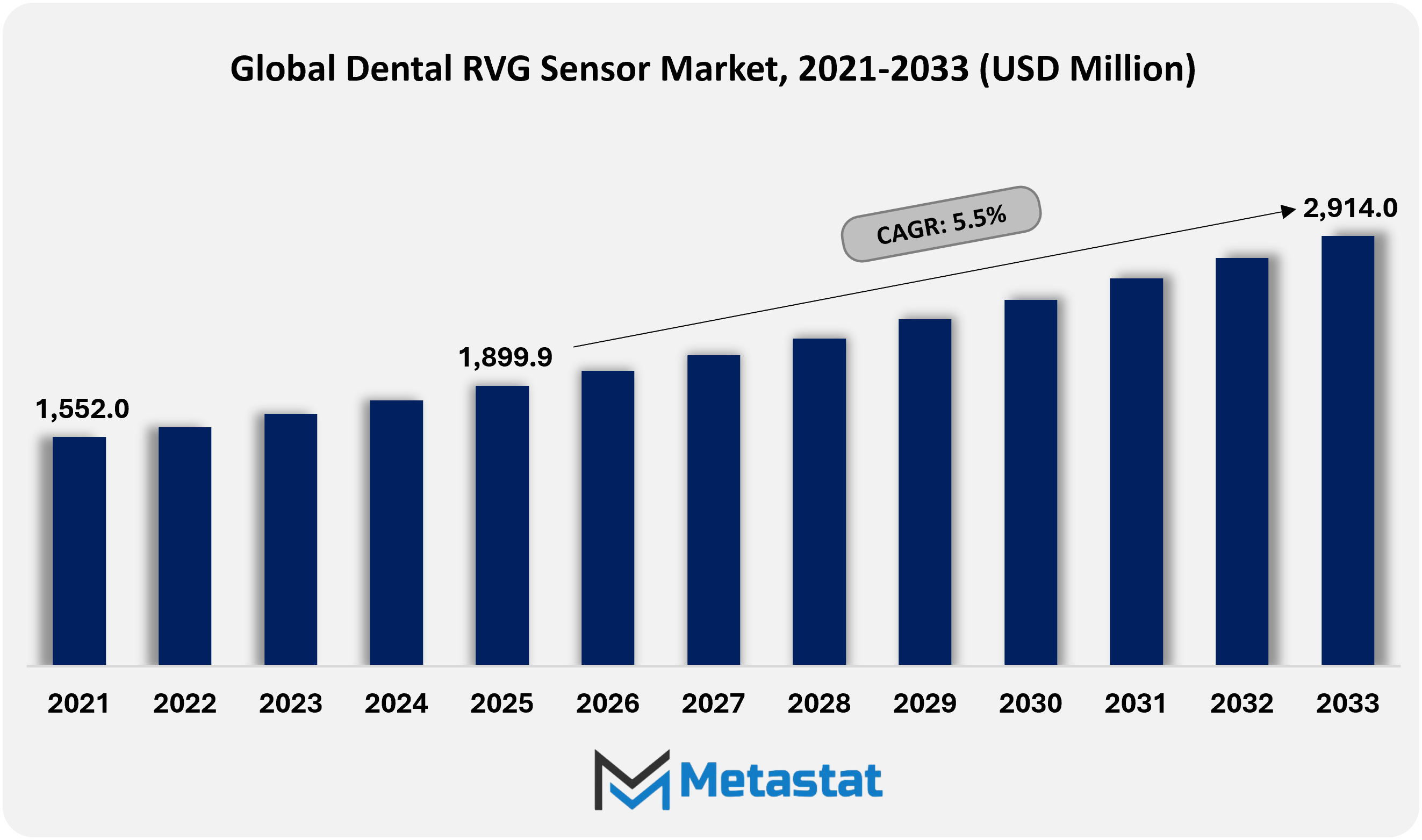
Global Dental RVG Sensor market size is valued at USD 1,899.9 million in 2025 and projected to grow at a CAGR of 5.5% during the forecast period, reaching USD 2,914.0 million by 2033.
Global Dental RVG Sensor Market: Comprehensive Data-Driven Market Analysis and Strategic Outlook
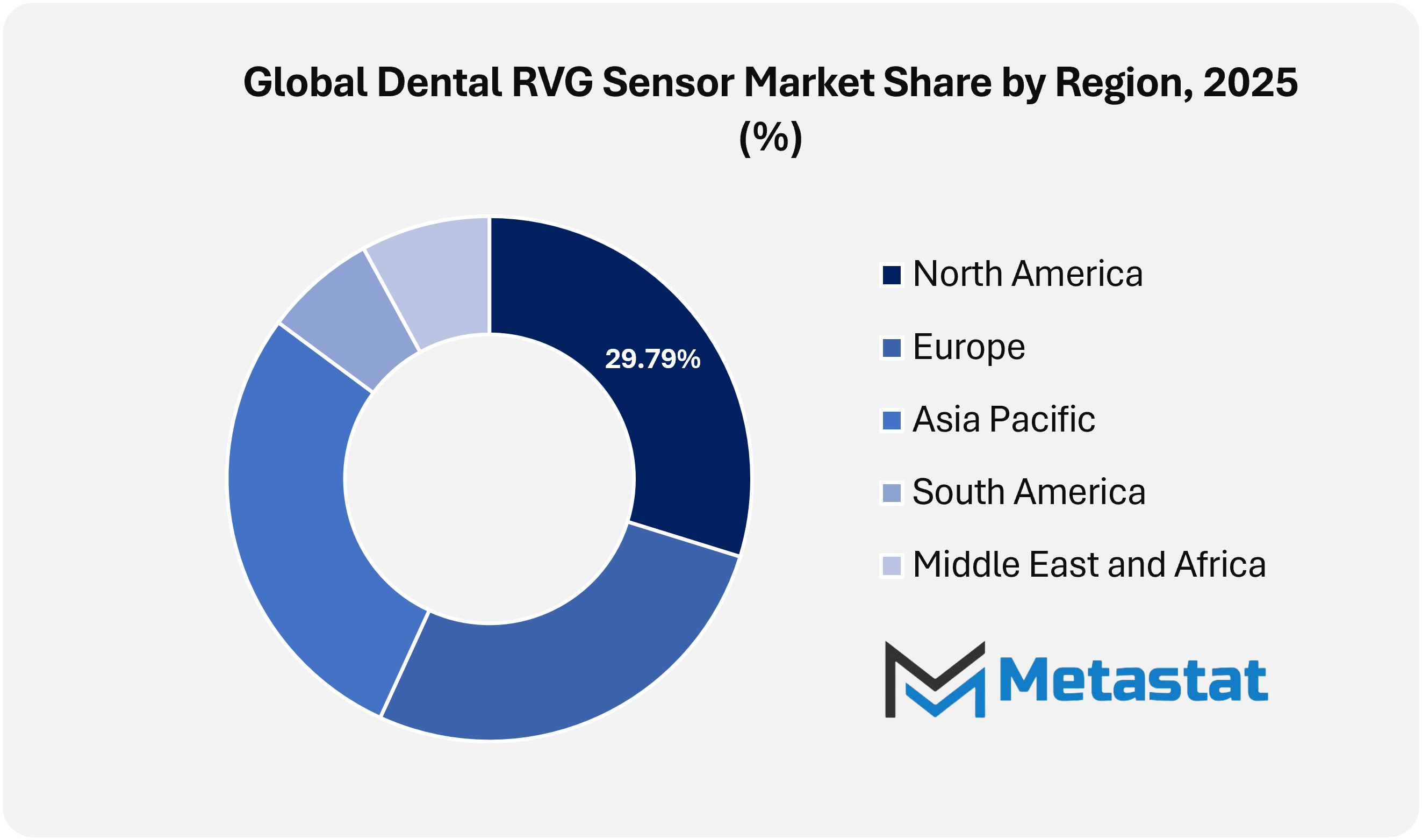
North America holds 29.8% of the global market in 2025, with the U.S. leading regional revenue generation.
Wired segment accounts for a market share of 68.8% in 2025.
Key trends driving growth: Digital transformation in dentistry with rising adoption of intraoral imaging systems enabling faster diagnosis and enhanced imaging precision along with growing demand for preventive and cosmetic dental procedures globally increasing need for high-end diagnostic tools.
Opportunities include Integration of AI, cloud-based storage, and advanced imaging analytics to enhance diagnostics, remote access, and workflow efficiency.
Key insight: Rising digital dentistry adoption and diagnostic precision demand accelerate growth trajectory of the Global Dental RVG Sensor Market.
The Global Dental RVG Sensor market is evolving beyond conventional chairside radiography and is becoming an integral part of the broader digital dental imaging ecosystem. What began as a replacement for film-based X-rays is now advancing into a tightly connected workflow in which RVG sensors integrate with imaging software, cloud-enabled practice management systems, AI-assisted diagnostic tools, and remote consultation platforms. Dental clinics are increasingly treating RVG systems not merely as imaging hardware, but as a critical data acquisition solution that strengthens clinical documentation, diagnostic accuracy, treatment planning, and patient communication.
Future market development will place stronger emphasis on software-driven intelligence and workflow optimization. RVG sensor systems are increasingly being paired with image enhancement algorithms capable of identifying early-stage caries, periapical abnormalities, and variations in bone structure with greater consistency. Such integration helps reduce interpretation variability and supports more standardized treatment planning across single-site clinics and multi-location dental networks. Manufacturers are also focusing on ergonomic improvements, thinner sensor profiles, and wireless connectivity features to improve patient comfort while maintaining high-resolution imaging performance.
Market Dynamics
Growth Drivers:
Digital transformation in dentistry with rising adoption of intraoral imaging systems enabling faster diagnosis and enhanced imaging precision.
Rapid modernization across dental clinics and hospitals is strengthening growth in the Global Dental RVG Sensor market. Increasing adoption of intraoral imaging systems is improving diagnostic speed, enhancing image clarity, and supporting more accurate treatment planning. Digital workflows also reduce manual errors, streamline chairside procedures, and improve patient communication, encouraging continued investment in advanced RVG sensor technologies.
Growing demand for preventive and cosmetic dental procedures globally increasing need for high‑end diagnostic tools.
Rising awareness of oral health maintenance and aesthetic dental correction is increasing procedural volumes across developed and emerging economies, strengthening the Global Dental RVG Sensor market. Preventive screening, orthodontic planning, implant procedures, and cosmetic treatments require precise digital imaging for effective clinical outcomes. This is increasing the need for dependable, high-resolution diagnostic tools and supporting sustained adoption of advanced RVG sensor systems.
Restraints and Challenges:
High initial cost and price sensitivity of advanced digital RVG sensors limiting uptake in smaller practices.
The high initial cost of advanced digital RVG systems remains a major barrier to adoption in the Global Dental RVG Sensor market. Independent clinics and smaller dental practices often face budget constraints, which can delay replacement of conventional imaging equipment and slow technology upgrades. Price sensitivity across cost-conscious markets also affects purchasing decisions and limits faster market penetration.
Strict and varying regulatory compliance requirements across regions slowing product approvals and market entry.
Complex and varied regulatory frameworks across countries continue to influence commercialization timelines in the Global Dental RVG Sensor market. Different certification standards, documentation requirements, and safety validations increase the administrative burden for manufacturers. Lengthy approval cycles can delay product launches, disrupt distribution strategies, and create uneven growth patterns across regional markets.
Opportunities:
Integration of AI, cloud‑based storage, and advanced imaging analytics to enhance diagnostics, remote access, and workflow efficiency.
Technological convergence will create strong growth opportunities in the Global Dental RVG Sensor market. Integration of artificial intelligence can support automated image interpretation and early pathology detection, while cloud-based storage solutions improve remote consultations and secure data management. Advanced imaging analytics will further optimize clinical workflows, strengthen diagnostic confidence, and expand long-term market potential.
Market Segmentation Analysis
The Global Dental RVG Sensor market is classified based on Sensor Form Factor, Detector Technology, Application, and End User.
By Sensor Form Factor, the market is further segmented into:
Wired
Wired segment is valued at USD 1,378.3 million in 2026 and is projected to reach USD 1,610.3 million by 2033, at a CAGR of 2.2% during the forecast period.
Wired configurations will continue to maintain preference in high-volume dental settings where uninterrupted data transmission and stable image output remain essential. Improvements in shielding, durability, and ergonomic cable design are supporting workflow efficiency while helping clinics maintain cost control for long-term clinical use.
Wireless
Wireless segment is valued at USD 624.1 million in 2026 and is projected to reach USD 1,303.7 million by 2033, at a CAGR of 11.1% during the forecast period.
Wireless formats will expand through improved battery performance, secure connectivity, and seamless integration with digital record systems. Mobility advantages support greater chairside flexibility, reduce operatory clutter, and encourage adoption across modern dental practices seeking streamlined diagnostic workflows and improved patient comfort.
By Detector Technology, the market is divided into:
CMOS
CMOS segment is projected to reach USD 1,509.7 million by 2033, at a CAGR of 4.5% during the forecast period.
CMOS detector technology will maintain strong momentum owing to faster image acquisition, lower power consumption, and improved image clarity. Continued refinement in pixel architecture and noise reduction is enhancing diagnostic performance while supporting affordability across a broad range of dental facilities.
CCD
CCD segment is projected to reach USD 242.4 million by 2033, at a CAGR of -4.4% during the forecast period.
CCD-based systems will continue to retain relevance in practices that prioritize stable image performance and established workflow compatibility. Although adoption is moderating, demand persists in institutions that value proven reliability and consistent signal output in routine diagnostic procedures.
APS CMOS
APS CMOS segment is projected to reach USD 721.5 million by 2033, at a CAGR of 11.5% during the forecast period.
APS CMOS technology will grow through integrated pixel-level amplification, which supports sharper visualization and improved low-dose imaging capability. Ongoing sensor miniaturization and software calibration are helping strengthen diagnostic confidence while aligning with radiation safety objectives.
Hybrid CMOS
Hybrid CMOS segment is projected to reach USD 440.3 million by 2033, at a CAGR of 10.2% during the forecast period.
Hybrid CMOS solutions will combine the advantages of established sensor architectures with advanced processing capabilities. Their balanced performance in speed, image clarity, and durability will attract technologically advanced dental facilities seeking higher diagnostic precision supported by intelligent imaging functions.
By Application, the market is further divided into:
Periapical Imaging
Periapical Imaging segment is projected to reach USD 731.1 million by 2033.
Periapical imaging is benefiting from growing need for accurate root structure assessment and early pathology detection. High-resolution sensors combined with real-time visualization software improve treatment planning accuracy and support more precise and minimally invasive dental interventions.
Bitewing Imaging
Bitewing Imaging segment is projected to reach USD 644.9 million by 2033.
Bitewing imaging applications are expanding through preventive dentistry initiatives and routine caries detection programs. Improved contrast sensitivity and optimized exposure control support accurate interproximal assessment while enhancing patient experience through faster imaging procedures.
Endodontics
Endodontics segment is projected to reach USD 440.6 million by 2033.
Endodontic procedures will depend heavily on precise imaging for canal assessment and treatment monitoring. Advancements in sensor clarity and depth differentiation are improving procedural accuracy, strengthening clinical outcomes, and reducing errors in complex restorative cases.
Implantology
Implantology segment is projected to reach USD 491. million by 2033.
Implantology applications are expanding with rising demand for digital planning and guided surgical procedures. High-definition imaging and compatibility with advanced treatment planning systems support accurate implant placement and long-term structural assessment.
Periodontics
Periodontics segment is projected to reach USD 322.6 million by 2033.
Periodontal diagnostics are gaining importance through improved visualization of bone density and attachment levels. Enhanced grayscale calibration and integration with diagnostic software support earlier intervention, better disease monitoring, and more structured treatment management.
Others
Periodontics segment is projected to reach USD 322.6 million by 2033.
Other applications include orthodontic assessment and oral pathology screening. Sensor versatility, combined with adaptive imaging protocols, is supporting broader procedural integration across multidisciplinary dental practices.
By End User, the Global Dental RVG Sensor market is divided as:
Dental Clinics
Dental Clinics segment is projected to grow at a CAGR of 4.9% during the forecast period.
Dental clinics will drive steady adoption as practices transition toward fully digital workflows. Compact sensor designs, cost-effective solutions, and simplified installation processes support operational efficiency and strengthen service competitiveness.
Dental Hospitals
Dental Hospitals segment is projected to grow at a CAGR of 7.6% during the forecast period.
Dental hospitals are prioritizing advanced sensor systems capable of handling high patient volumes and complex clinical cases. Integration with centralized data systems and multi-chair connectivity improves coordinated diagnostics and supports higher institutional performance standards.
Dental Academic & Research Institutes
Dental Academic & Research Institutes segment is projected to grow at a CAGR of 7.2% during the forecast period.
Dental academic and research institutes are generating demand for technologically advanced imaging equipment that supports clinical education and investigative research. Emphasis on innovation, precision measurement, and data analytics is shaping procurement strategies centered on future-ready solutions.
By Region:
Based on geography, the Global Dental RVG Sensor market is divided into North America, Europe, Asia-Pacific, South America, Middle East, and Africa.
North America Dental RVG Sensor Market is set to expand at a CAGR of 5.5% within the forecast period, reaching a market size (TAM) of USD 842.4 million by the end of 2033.
North America leads the Dental RVG Sensor market through strong adoption of digital dentistry across clinics, hospitals, and institutional practices.
Europe remains a significant market for Dental RVG Sensors, supported by mature dental care systems, broad adoption of digital diagnostic tools, and growing emphasis on workflow efficiency across dental practices.
Asia Pacific presents strong growth opportunities for the Dental RVG Sensor market, supported by expanding dental infrastructure across emerging economies.
South America and the Middle East & Africa are witnessing steady market progress, supported by improving access to dental care, gradual modernization of clinics, and rising awareness of early oral disease detection.
Competitive Landscape and Strategic Insights
The global Dental RVG Sensor market is expanding steadily as dental clinics shift from conventional film-based radiography to digital imaging systems. RVG sensors enable real-time intraoral image capture, supporting faster diagnosis, improved clinical communication, and greater workflow efficiency. Rising awareness of oral health and the growing volume of dental procedures worldwide continue to increase demand for advanced imaging equipment. Patients increasingly expect faster treatment and lower radiation exposure, while clinics are upgrading their systems to remain competitive and deliver modern technology-enabled dental care.
Technological advancement is playing a major role in shaping the market. Manufacturers are focusing on improving image quality, durability, software compatibility, and patient comfort through smaller and thinner sensor designs. Better integration with practice management systems and digital record platforms is helping dentists develop more accurate treatment plans and reduce repeat imaging. As affordability gradually improves, smaller clinics in developing markets will adopt RVG systems at a faster pace.
Competition in the Global Dental RVG Sensor market is shaped by the presence of established global brands and regional manufacturers competing on product reliability, imaging performance, after-sales support, and pricing. Key players operating in the market include Carestream Dental LLC, Advin Health Care, Owandy Radiology, Agkem Impex Pvt. Ltd., Jiangsu Dynamic Medical Technology Co., Ltd., Medtech Remedies Private Limited, Star Nuke Consulting Engineering Services Private Limited, Dentmark, AMT Medical, and Confident Dental Equipments Pvt. Ltd. These companies are strengthening their market position through product quality enhancement, broader distribution reach, and closer engagement with dental clinics and hospitals. Continuous product improvements and customer education initiatives are also helping companies build long-term relationships with practitioners and support repeat adoption across clinical settings.
Regional demand patterns continue to influence expansion of the Global Dental RVG Sensor market. North America and Europe will remain key markets, supported by advanced healthcare infrastructure, high digital adoption in dentistry, and strong investment in diagnostic technologies. Asia Pacific is projected to record strong growth, driven by expanding dental infrastructure, rising disposable income, and improving access to modern oral healthcare services. Government initiatives promoting digital healthcare adoption are further supporting market development across several countries. Over the forecast period, the Global Dental RVG Sensor market will benefit from ongoing technological advancement, rising patient awareness, and continued modernization of dental practices across both developed and emerging economies.
Forecast and Future Outlook
Market size is forecast to rise from USD 1,899.9 million in 2025 to over USD 2,914.0 million by 2033.
Regulatory compliance and cybersecurity will gain greater importance as imaging systems increasingly store, transfer, and integrate sensitive patient health information. Vendors will invest in encrypted data pathways, secure storage frameworks, and interoperable system architecture to align with regional health data standards. As a result, the Dental RVG Sensor market is shifting from standalone imaging equipment toward secure, intelligent, and interconnected diagnostic infrastructure that will redefine how dental professionals capture, interpret, and manage radiographic data globally.
This research report categorizes the Dental RVG Sensor market based on key segments and regions, forecasts revenue growth, and analyses trends in each submarket. The report analyses the key growth drivers, opportunities, and challenges influencing the Dental RVG Sensor market. Recent market developments and competitive strategies such as expansion, product launch, partnership, merger, and acquisition have been included to draw the competitive landscape in the market.
The report strategically identifies and profiles the key market players and analyses their core competencies in each sub-segment of the Dental RVG Sensor market.
Report Attributes
Details
Study Period
2021-2033
Base Year
2025
Estimated Year
2026
Forecast Period
2026-2033
Historical Period
2021-2025
Growth Rate
CAGR 5.5% from 2026 to 2033
Revenue Unit
USD million
Sales Volume Unit
Units
Segmentation
By Sensor Form Factor, Detector Technology, Application, End User, and Region
By Region
North America (By Sensor Form Factor, Detector Technology, Application, End User, and Country)
United States
Canada
Mexico
Europe (By Sensor Form Factor, Detector Technology, Application, End User, and Country)
Germany
France
UK
Italy
Spain
Russia
Rest of Europe
Asia Pacific (By Sensor Form Factor, Detector Technology, Application, End User, and Country)
China
Japan
India
South Korea
Australia
Southeast Asia
Rest of Asia Pacific
South America (By Sensor Form Factor, Detector Technology, Application, End User, and Country)
Brazil
Argentina
Rest of South America
Middle East and Africa (By Sensor Form Factor, Detector Technology, Application, End User, and Country)
Saudi Arabia
UAE
South Africa
Rest of Middle East and Africa
WHAT REPORT PROVIDES
Key Company Market Share, Revenue, and Position/Ranking
Key Market Leaders
Full In-Depth Analysis of the Parent Industry
Industry Statistics
Important Changes in Market and Its Dynamics
Segmentation Details of the Market
Historical, On-Going, and Projected Market Analysis
Assessment of Niche Industry Developments
Market Share Analysis
Key Strategies of Major Players
Company Profiles of Key Players
Unique Selling Propositions of Leading Market Players
Emerging Segments and Regional Growth Potential
Key Strategic Recommendations
Competitive Benchmarking
End of Report Overview
Frequently Asked Questions
Find answers to common questions about this report
Top players operating in the Dental RVG Sensor industry include Carestream Dental LLC, Advin Health Care, Owandy Radiology, Agkem Impex Pvt. Ltd., Jiangsu Dynamic Medical Technology Co., Ltd, Medtech Remedies Private Limited, Star Nuke Consulting Engineering Services Private Limited, Dentmark, AMT Medical, and Confident Dental Equipments Pvt. Ltd
High initial cost and price sensitivity of advanced digital RVG sensors limiting uptake in smaller practices. will hamper the market growth within the forecast period.
Global Dental RVG Sensor market is estimated to reach USD 2,914.0 million by 2033.
Nort America region dominates the market.
The Global Dental RVG Sensor market is expected to grow at a CAGR of 5.5% over the forecast period (2026-2033).
Digital transformation in dentistry with rising adoption of intraoral imaging systems enabling faster diagnosis and enhanced imaging precision and growing demand for preventive and cosmetic dental procedures globally increasing need for high‑end diagnostic tools. are key driving factors, boosting the market.
The Metastat Insights analysis shows that the North America Dental RVG Sensor market size is estimated to be USD 842.4 million by 2033.
The Metastat Insights study shows that the Global Dental RVG Sensor market size was USD 1,899.9 million in 2025.
Fluid Management Systems Market Size, Share, Trends, 2033
Fluid Management Systems market size is valued at USD 13.5 billion in 2025 and projected to reach USD 35.9 billion by 2033, growing at a CAGR of 13.0%.
Fluid Management Systems market, Fluid Management Systems Market Size, Fluid Management Systems Market Share, Fluid Management Systems Market Analysis, Fluid Management Systems Market Growth, Fluid Management Systems Market Trends, Fluid Management Systems Market Research Report, Fluid Management Systems Market Forecast, Fluid Management Systems, Fluid Management Systems Market Research, Fluid Management Systems Industry, Fluid Management Systems Industry Report, Fluid Management Systems Market Data, Fluid Management Systems Statistics, Fluid Management Systems Market Statistics, Fluid Management Systems Industry Trends, Fluid Management Systems Market Report, Fluid Management Systems Market Trends, Fluid Management Systems Market News, Fluid Management Systems Forecasts, Fluid Management Systems Market Intelligence Report, Fluid Management Systems market 2033, Fluid Management Systems market outlook, Fluid Management Systems market segmentation, Fluid Management Systems market drivers, Fluid Management Systems market restraints, Fluid Management Systems market opportunities, Fluid Management Systems market CAGR, Fluid Management Systems suppliers, Fluid Management Systems manufacturers, Fluid Management Systems market by region, North America Fluid Management Systems market, Asia Pacific Fluid Management Systems market, Europe Fluid Management Systems market, Fluid Management Systems market competitive landscape, Fluid Management Systems market key players, Fluid Management Systems Disposables and Consumables, Fluid Management Systems Arthroscopy market, Fluid Management Systems Urology and Nephrology market, Fluid Management Systems Hospitals market, Fluid Management Systems Dialysis Centers market.
Global Nanorobotics market size reached USD 8.3 billion in 2025 and is forecast to hit USD 15.5 billion by 2033 at a 8.2% CAGR. Segment and regional data.
Ga 68 DOTATOC market size is valued at USD 100.9 million in 2025 and projected to reach USD 235.9 million by 2033, growing at a CAGR of 11.2%.
Ga 68 DOTATOC market, Ga 68 DOTATOC Market Size, Ga 68 DOTATOC Market Share, Ga 68 DOTATOC Market Analysis, Ga 68 DOTATOC Market Growth, Ga 68 DOTATOC Market Trends, Ga 68 DOTATOC Market Research Report, Ga 68 DOTATOC Market Forecast, Ga 68 DOTATOC, Ga 68 DOTATOC Market Research, Ga 68 DOTATOC Industry, Ga 68 DOTATOC Industry Report, Ga 68 DOTATOC Market Data, Ga 68 DOTATOC Statistics, Ga 68 DOTATOC Market Statistics, Ga 68 DOTATOC Industry Trends, Ga 68 DOTATOC Market Report, Ga 68 DOTATOC Market Trends, Ga 68 DOTATOC Market News, Ga 68 DOTATOC Forecasts, Ga 68 DOTATOC Market Intelligence Report, Ga 68 DOTATOC Market Outlook, Ga 68 DOTATOC Market Segmentation, Ga 68 DOTATOC Market Drivers, Ga 68 DOTATOC Market Restraints, Ga 68 DOTATOC Market Opportunities, Ga 68 DOTATOC Market CAGR, Ga 68 DOTATOC Suppliers, Ga 68 DOTATOC Manufacturers, Ga 68 DOTATOC Market by Region, North America Ga 68 DOTATOC Market, Asia Pacific Ga 68 DOTATOC Market, Europe Ga 68 DOTATOC Market, Ga 68 DOTATOC Market Competitive Landscape, Ga 68 DOTATOC Market Key Players, Ga-68 DOTATOC Ready-to-Use Market, Ga-68 DOTATOC Radiolabeling Kits Market, Gastrointestinal Neuroendocrine Tumor Market, Pancreatic Neuroendocrine Tumor Market, Lung Neuroendocrine Tumor Market, Hospitals and Academic Medical Centers Market, Specialty Nuclear Medicine Centers Market, Diagnostic Imaging Centers Market, Radiopharmacies Market, Oncology Centers Market
Bone Graft Substitutes Market Size, Share, Trends, 2033
Bone Graft Substitutes market to hit $5,275.6M by 2033, growing from $1,004.1M in 2025 at a 6.0% CAGR. Explore top industry trends & insights.
Bone Graft Substitutes market, Bone Graft Substitutes Market Size, Bone Graft Substitutes Market Share, Bone Graft Substitutes Market Analysis, Bone Graft Substitutes Market Growth, Bone Graft Substitutes Market Trends, Bone Graft Substitutes Market Research Report, Bone Graft Substitutes Market Forecast, Bone Graft Substitutes, Bone Graft Substitutes Market Research, Bone Graft Substitutes Industry, Bone Graft Substitutes Industry Report, Bone Graft Substitutes Market Data, Bone Graft Substitutes Statistics, Bone Graft Substitutes Market Statistics, Bone Graft Substitutes Industry Trends, Bone Graft Substitutes Market Report, Bone Graft Substitutes Market Trends, Bone Graft Substitutes Market News, Bone Graft Substitutes Forecasts, Bone Graft Substitutes Market Intelligence Report, Bone Graft Substitutes Market 2033, Bone Graft Substitutes Market Outlook, Bone Graft Substitutes Market Segmentation, Bone Graft Substitutes Market Drivers, Bone Graft Substitutes Market Restraints, Bone Graft Substitutes Market Opportunities, Bone Graft Substitutes Market CAGR, Bone Graft Substitutes Suppliers, Bone Graft Substitutes Manufacturers, Bone Graft Substitutes Market by Region, North America Bone Graft Substitutes Market, Asia Pacific Bone Graft Substitutes Market, Europe Bone Graft Substitutes Market, Bone Graft Substitutes Market Competitive Landscape, Bone Graft Substitutes Market Key Players, Mineralized Bone Allografts Market, Demineralized Bone Matrix Market, Cellular Bone Matrices Market, Synthetic Bone Graft Substitutes Market, Bone Morphogenetic Protein-Based Grafts Market, Spinal Fusion Bone Graft Substitutes, Trauma and Long-Bone Repair Bone Graft Substitutes, Joint Reconstruction Bone Graft Substitutes, Dental Bone Grafting Market.