
Metastat Insight, a leading global market research firm, has released its latest comprehensive study on the Global Women's Formal Wear Market. The report reveals a significant valuation of USD 206.4 billion in 2025, with a projected compound annual growth rate (CAGR) of 4.9%, propelling the industry to an estimated USD 303.3 billion by 2033.
As the corporate landscape undergoes a transformative shift, the demand for structured dressing is being redefined. The research highlights that the return to hybrid office models and a surge in high-profile social calendars are the primary catalysts for this sustained growth.
Strategic Market Drivers and Evolution The transition toward "workplace formalization" is revitalizing the demand for blazers, tailored suits, and professional separates. However, the modern female professional is seeking more than just traditional aesthetics. The market is witnessing a pivot toward "desk-to-dinner" versatility, where wrinkle-resistant, stretchable, and easy-care fabrics offer the premiumization consumers now demand.
"The category is expanding beyond traditional office tailoring," states the Metastat Insight analysis. "As more women ascend to senior leadership roles, formal wear is evolving to balance authority and comfort. We are seeing a move toward specialized segments shaped by executive branding and public-facing professional use cases."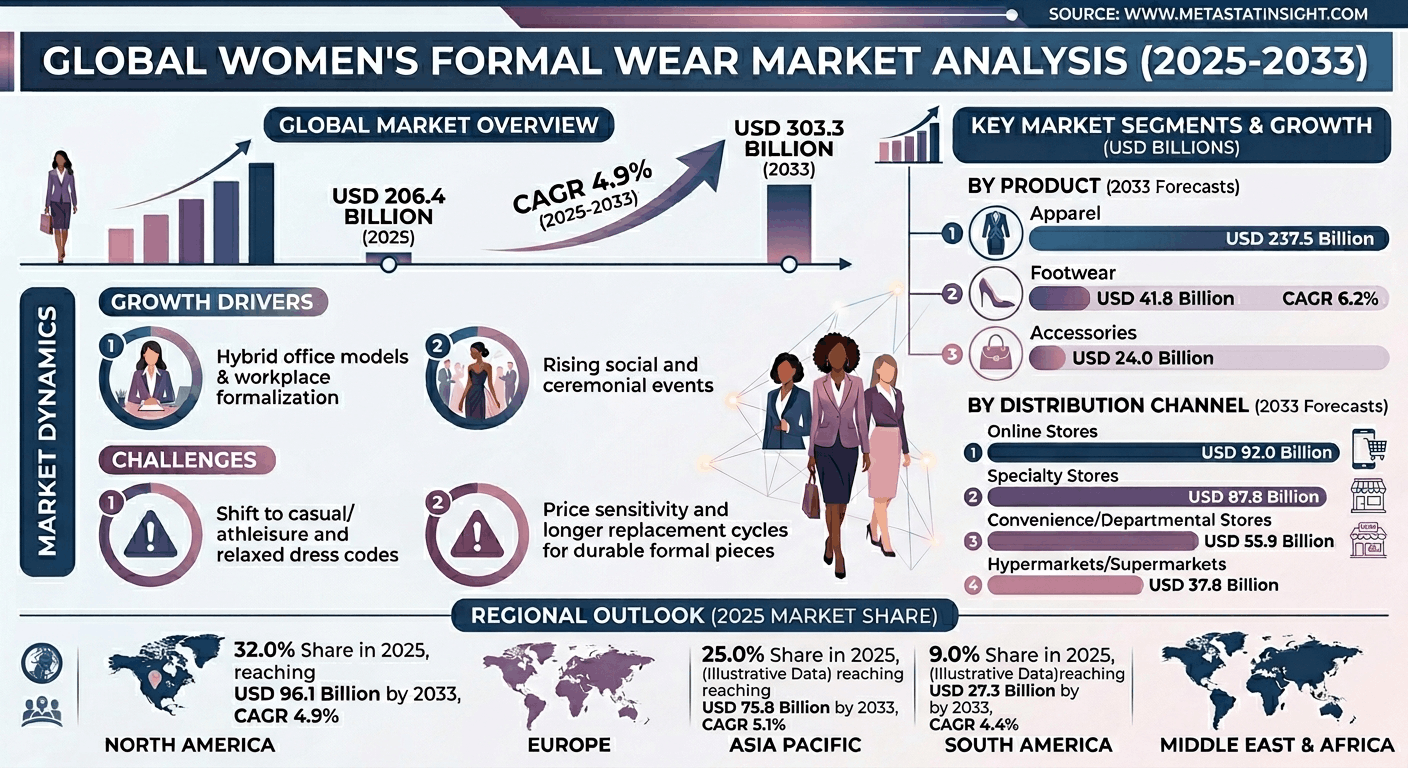
Key Insights from the Report:
-
Segment Dominance: The Apparel segment remains the powerhouse of the industry, accounting for 79.2% of the global market share in 2025.
-
Regional Leadership:North America spearheaded regional revenue generation in 2025, holding a 32.0% market share, led primarily by the United States.
-
Fastest Growing Categories: While apparel holds the largest share, the Footwear segment is projected to grow at the highest CAGR of 6.2%, driven by innovations in ergonomic design and sustainable materials.
-
Pricing Dynamics: The Premium segment is expected to reach USD 49.5 billion by 2033, reflecting a growing preference for exclusive tailoring and high-grade materials among executive-level consumers.
Digital Transformation and Sustainability The report identifies Online Stores as a critical growth engine, projected to reach USD 92.0 billion by 2033. Technological integrations, such as AI-assisted body scanning and virtual fitting tools, are reducing return rates and enhancing consumer confidence. Furthermore, a shift toward bio-based fibers and temperature-regulating linings reflects a broader industry commitment to innovation and wearability.
Challenges and Competitive Landscape Despite the optimistic outlook, the market faces hurdles such as high price sensitivity and the cultural shift toward athleisure. Because formal pieces typically have longer replacement cycles, brands are focusing on "mix-and-match" separates to increase basket size and encourage more frequent purchases.
The competitive landscape remains robust, featuring industry giants such as Gap Inc., Inditex (Zara), H&M Group, LVMH, Kering, and Hugo Boss AG. These players are increasingly differentiating themselves through inclusive sizing, transparent supply chains, and omnichannel retail excellence.
About Metastat Insight Metastat Insight is a premier market research provider, delivering data-driven insights and strategic outlooks across diverse global industries. Our reports are designed to empower businesses with the precision tailoring of information needed to navigate complex market dynamics.