
Oct 23, 2025
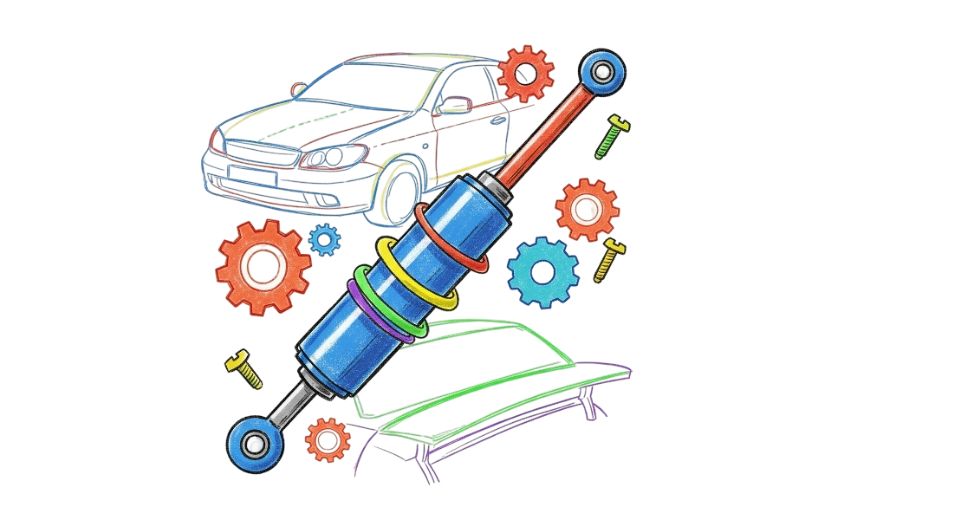
Today's manufacturing floors, assembly lines, and heavy machinery all rely on parts that provide smooth, accurate movement and controlled force. The global Industrial Gas Springs market, as presented by Metastat Insight, illustrates the way industries have increasingly turned to these small but potent devices. From car manufacturing to sophisticated automation systems, the need for friction-free mechanical motion has reshaped performance and reliability expectations. As technology in machinery continues to advance, the capacity to provide safe, ergonomic, and efficient performance has transitioned from nicety to requirement positioning this market as a vital source of industrial innovation across the globe.
Market Context
Today's production environments must balance speed, safety, and energy efficiency without losing precision. Mechanical springs traditionally have trouble standing up to repetitive stress or heavy loading, leading to imperfect motion and higher maintenance requirements. Industries looking for reliable motion control have discovered a better option in gas spring technology. The Industrial Gas Springs market meets these challenges with components that blend durability, controlled force, and flexibility. They exist as vital components in uses from adjustable machinery panels to intricate assembly equipment, all designed to result in smoother operations and enhanced user safety. In a time when operational uptime and ergonomic performance are paramount, gas springs have emerged as an ideal solution that benefits both automation as well as manual systems.
How It Works / Why It's Valuable
Essentially, a gas spring utilizes compressed gas in a sealed cylinder to apply controlled pressure to a piston. This type of design allows for uniform, damped movement in extension and compression, so machinery can open and close, lift or lower, or position with little physical effort.
In contrast to mechanical alternatives, gas springs provide uniform performance through long cycles, providing a quieter and smoother motion profile. In the market for Industrial Gas Springs, customization is a hallmark characteristic each product can be designed to provide targeted force ranges and travel distances appropriate to its use. Used in conveyor systems, industrial enclosures, or adjustable workstations, these units minimize strain, increase safety, and prolong the life of adjacent machinery. Their flexibility not only facilitates mechanical efficiency but also meets contemporary expectations of ergonomic design and operator comfort.
Growth Story / Technological Evolution
The evolution of the Industrial Gas Springs industry has tracked the general modernization of manufacturing. Originally viewed as ancillary technology for occasional use, gas springs modestly moved into mainstream industrial application as dependability and materials science improved.
Early models were replaced by stronger models that could tolerate harsh conditions and heavy cycling. The use of enhanced sealing materials and precision valves has reduced maintenance while ensuring consistency in performance. With time, industries realized the wider potential of these products not just as motion aids but as part of automated and safety-critical systems. The path of the market illustrates a gradual coming of age, through innovation in miniaturization, corrosion resistance, and adaptability. These advances have established gas springs as reliable components through industries ranging from heavy equipment to cleanroom manufacturing.
Regional and Global Trends
Patterns of adoption in the Industrial Gas Springs market indicate strong participation throughout advanced manufacturing economies, where intensity of automation and safety are high. Areas with developed manufacturing infrastructure have experienced consistent integration of gas springs into machinery design, assembly lines, and maintenance systems. Concurrently, developing industrial areas are picking up steam with the growth in local manufacturing capabilities and heightened awareness of ergonomic enhancement in manufacturing settings.
This wider global diffusion is not exclusive to heavy industry areas like logistics, renewable energy, and the production of special equipment have also adopted gas spring solutions. Regional variation in adoption demonstrates varying industrial priorities, but a common interest in enhanced motion control and operational reliability applies to worldwide demand.
Challenges and Opportunities
While increasing adoption, the Industrial Gas Springs market is challenged in its continued development by material costs, product standardization, and low-cost alternative competition continuing to challenge manufacturers' flexibility. Environmental law and sustainable development targets also necessitate continuing innovation in materials and recycling technology. But these same limitations also bring new possibilities. New surface treatments, tunable damping technologies, and hybrid gas-mechanical systems provide paths to differentiation and higher value.
The market also gains from greater integration with digital monitoring technologies, where sensors can monitor pressure and performance metrics for predictive maintenance. Working with automation and robotics industries further expands possible application fields, highlighting the way improvement and adaptation continue to mark its future course.
Why It Matters Now
The relevance of the Industrial Gas Springs market, as described by Metastat Insight, speaks deeply in the modern industrial context. Global manufacturing policy today focuses on sustainability, security, and energy efficiency, and gas spring systems reinforce each of these goals. Gas springs decrease mechanical friction, add precision, and help ensure working conditions that are ergonomic essential elements for responsible and effective production. As industries move toward more intelligent, more flexible systems, gas springs represent a mix of mechanical dependability and engineering elegance that harmonizes with contemporary design aesthetics.
Their continued relevance is in providing the capacity to facilitate smooth human-machine interaction and prolong the life of critical equipment. With precision and efficiency defining competitiveness in today's world, the role of the market only continues to grow, further entrenching its reach into manufacturing, automation, and beyond.
The international Industrial Gas Springs market, as introduced by Metastat Insight, is a demonstration of the power of subtle mechanical innovation to change the face of industrial functionality. Its development from a niche component to a central feature of contemporary machinery is a testament to technical advancement as well as pragmatic utility. As businesses strive for greater control, security, and environmental sustainability, gas springs become the focal point of making those things happen unobtrusively dictating the next chapter of industrial performance and design.
Drop us an email at:
Call us on:
+1 5186502376
+91 73850 57479
 inquiry@metastatinsight.com
 US: +1 3023308252
UK: +44 2034116747APAC: +91 7385057479
US: +1 3023308252
UK: +44 2034116747APAC: +91 7385057479 Address





.png) Agriculture
Agriculture Aerospace and Defense
 Automotive and Transportation
 Banking & Finance
 Biotechnology
 Chemicals and Materials
 Consumer Goods
 Energy and Power
 Food and Beverages
 Healthcare IT
 Information & Technology
 Machinery & Equipment
 Packaging
 Healthcare
 Electronics and Semiconductor
 Medical Devices
