Aluminium Billets Market To Reach $287.1 Billion by 2032
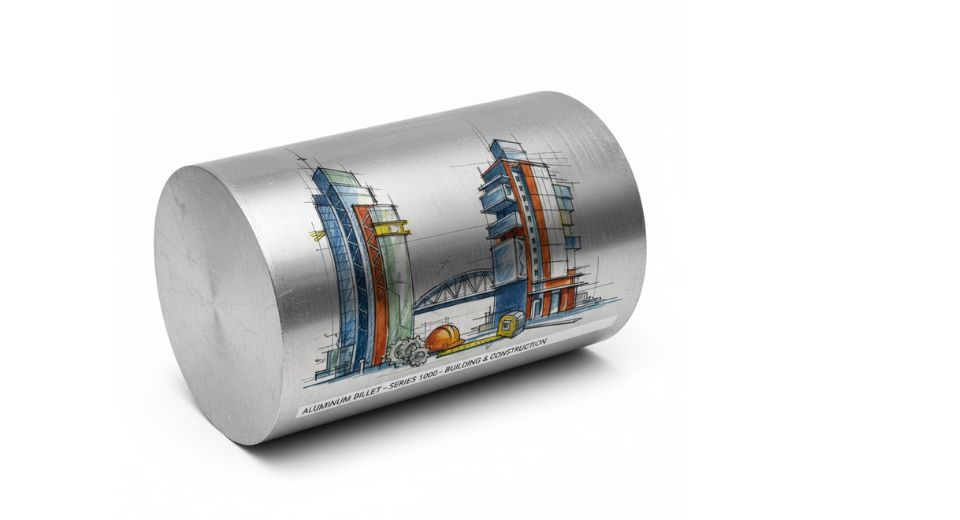
In a world where high-strength, low-weight materials are accelerating efficiency ranging from new-generation electric cars to high-performance aerospace parts the demand for high-quality feedstock has never been more urgent. The global Aluminium Billets market that Metastat Insight sets before us enters this light, presenting a pivotal connection between raw aluminium manufacture and downstream production. With industries spearheading lighter, greener solutions, supply of dependable billets is increasingly at the forefront of fulfilling demand and driving innovation.
Market Context
Pell-mell changes in manufacturing, material substitution, and pressures in the supply chain have left loopholes in conventional raw aluminium supply models. Producers are under growing pressure regarding consistency, lead time, and alloy performance. Constrained access to primary aluminium in some regions makes billet sourcing particularly worrisome. Such a challenge was compounded when tariffs, energy prices, and requirements for sustainability began to disrupt upstream flows. Against these forces, billets producers stepped up as more than just commodity providers they become strategic partners that provide material readiness, stability, and alloy traceability. The market's product line high-integrity Aluminium Billets is a buffer between primary smelters and fabricators. It helps to moderate supply fluctuations, widen alloy options, and facilitate just-in-time manufacturing. In most situations, access to a consistent billet supply minimizes downtime, enhances batch-to-batch consistency, and eliminates a bottleneck that previously hindered innovation in industries like automotive extrusion, structural framing, and renewable-energy tubing.
How It Works and Why It's Worth It
Production of aluminium billet starts with remelting, alloying, and casting aluminium ingots into pre-defined shapes suitable for downstream processing. The worth is in controlled composition, close dimensional tolerances, and internal metallurgical soundness. From the user's point of view, having a billet to the expected chemical, mechanical, and physical standards means extrusion lines operate more efficiently, yield rates are better, and downstream defect rates decrease. The main benefits are purity control, tailored alloying versatility, and supply-chain spanning.
End-users value that a billet supplier may adapt alloy grades to suit specialty applications such as high-strength automotive beams or corrosion-resistant infrastructure profiles. Since billets are made nearer finished shape, they minimize handling and lower waste due to secondary processing. In addition, billet production plants can have high-end quality control, for example, ultrasonic examination or tomography, to be able to find internal defects ahead of extrusion, thereby providing an assurance layer. In products like aerospace frames, electrical conductors, and structural systems, the stage of the billet controls the extent to which the end-product can function under stress, fatigue, or adverse environmental conditions. A billet that has uniform grain structure or few inclusions is now an enabler and not a constraint.
Evolution and Growth Journey
Initially, the aluminum industry viewed billets as a fairly straightforward intermediate, frequently casting them only when needed. In most markets, billets quietly became a logistics device staged around extrusion facilities or regional nodes to absorb timing lags in primary aluminum availability. As industries requested more alloy alternatives and consistent delivery over time, production of billets developed. Plants started making investments in precision-casting equipment, continuous-casting lines, and combined quality control tools.
Advances like directional solidification, semi-continuous casting, and advanced thermal control fortified the billet's attractiveness. Manufacturers improved their capacity to supply narrower tolerances, tighter purity, and on-the-fly alloy switching. Fabrication houses, therefore, had direct access to more uniform feedstock, minimizing reliance on remote smelters or special ingots.
Today, the market shows a consistent integration trend. Whereas earlier fabrication mills stored up ingots, increasingly, they collaborate with billet experts. The change indicates moving away from commoditized upstream supply towards responsive, specialized, and mixed-material logistics.
Regional and Global Trends
Adoption of billet-focussed strategies is most prevalent in geographies that boast mature downstream aluminium economies Western Europe, North America, Japan, and South Korea. Such places require highly specialized alloys, advanced quality control, and flexible supply chains. Producers that are close to dominant extrusion clusters in those regions enjoy advantages of proximity, lowering transportation time and expense.
In frontier markets like Southeast Asia, India, and Latin American countries, demand is growing exponentially. Urbanization, infrastructure development, and domestic manufacture drive demand for extruded aluminium products, leaving opportunities for billet suppliers to grow. Since primary smelting of aluminium can be limited or expensive in these markets, dependence upon processing locally sourced billet is a growth driver.
Middle Eastern and Gulf states with high levels of energy resources are investing in downstream value-add and billet rather than simple raw aluminium exports. And African markets, albeit in their infancy, have promise as industrialization gains traction and local fabrication capacity grows.
Challenges and Opportunities
One of the refractory hurdles is energy and capital intensity. Billet casting is power-intensive, requires exact thermal control, and daily maintenance. For new manufacturers, initial investment is high. Moreover, Alloy certification, assurance of quality, and compliance with progressively stricter environmental regulations complicate the process. Logistical issues such as heavy billet transportation and cross-border trade policies are still a hurdle in certain markets.
But opportunities are evident. Integration with renewable energy provides lower costs of operation and emissions. Collaboration with fabricators or co-located extrusion facilities enables synergies. Development of new alloys or hybrid materials opens up upscale applications. Sensor technology and digital monitoring of quality enhance confidence in billet integrity. And increasing demand for electric-vehicle lightweighting, green building, and advanced infrastructure heightens the requirement for reliable feeding of high-grade aluminium into fabrication streams. The second area for opportunity is in circular supply: recycling downgrades or scrap to billet feedstock, closing the loop in aluminium ecosystems and meeting sustainability criteria.
Why the Moment Is Now
The world Aluminium Billets market from Metastat Insight arrives at a point of convergence. Sectors driving sustainability, weight savings, and high performance all look towards aluminium as a key facilitator but quality feedstock is required to allow for effective use. With the global supply chains under pressure from geopolitical realignments, energy limitations, and climate agendas, having stable billet sources close to consumption points provides resiliency.
Mobility, building, energy, and transport circuits all depend on extruded aluminium components. Without robust supply of billets, innovation falters. The market for billets as a steadying, quality-assured link between raw aluminium and finished products has seldom seemed so indispensable. By facilitating lighter cars, efficient buildings, and higher technology products, Metastat Insight's global Aluminium Billets market is a corner stone in creating tomorrow's high-performance, sustainable industries.
Drop us an email at:
inquiry@metastatinsight.com
Call us on:
+1 5186502376
+91 73850 57479


 Agriculture
 Aerospace and Defense
 Automation & Process Control
 Automotive and Transportation
 Banking & Finance
 Biotechnology
1.png) Chemicals and Materials
Chemicals and Materials
 Consumer Goods
 Energy and Power
 Food and Beverages
 Healthcare IT
 Information & Communications
 Manufacturing and Construction
 Packaging
 Healthcare
 Electronics and Semiconductor
 Medical Devices


 US: +1 3023308252


