
Prepared Meals Market
Prepared Meals Market Size, Share, By Product (Frozen Meals, Chilled Meals, and Canned Meals), By Meal Type (Vegetarian and Non-Vegetarian), By Distribution Channel (Supermarkets & Hypermarkets, Convenience Stores, Online Retail, and Others (Wholesale, Specialist Retailers), Industry Analysis, Growth, Trends, and Forecasts, 2026-2033
MSI-4533
February 17, 2026
310 Pages
Report Details
Comprehensive Market Analysis And Insights
Market Overview
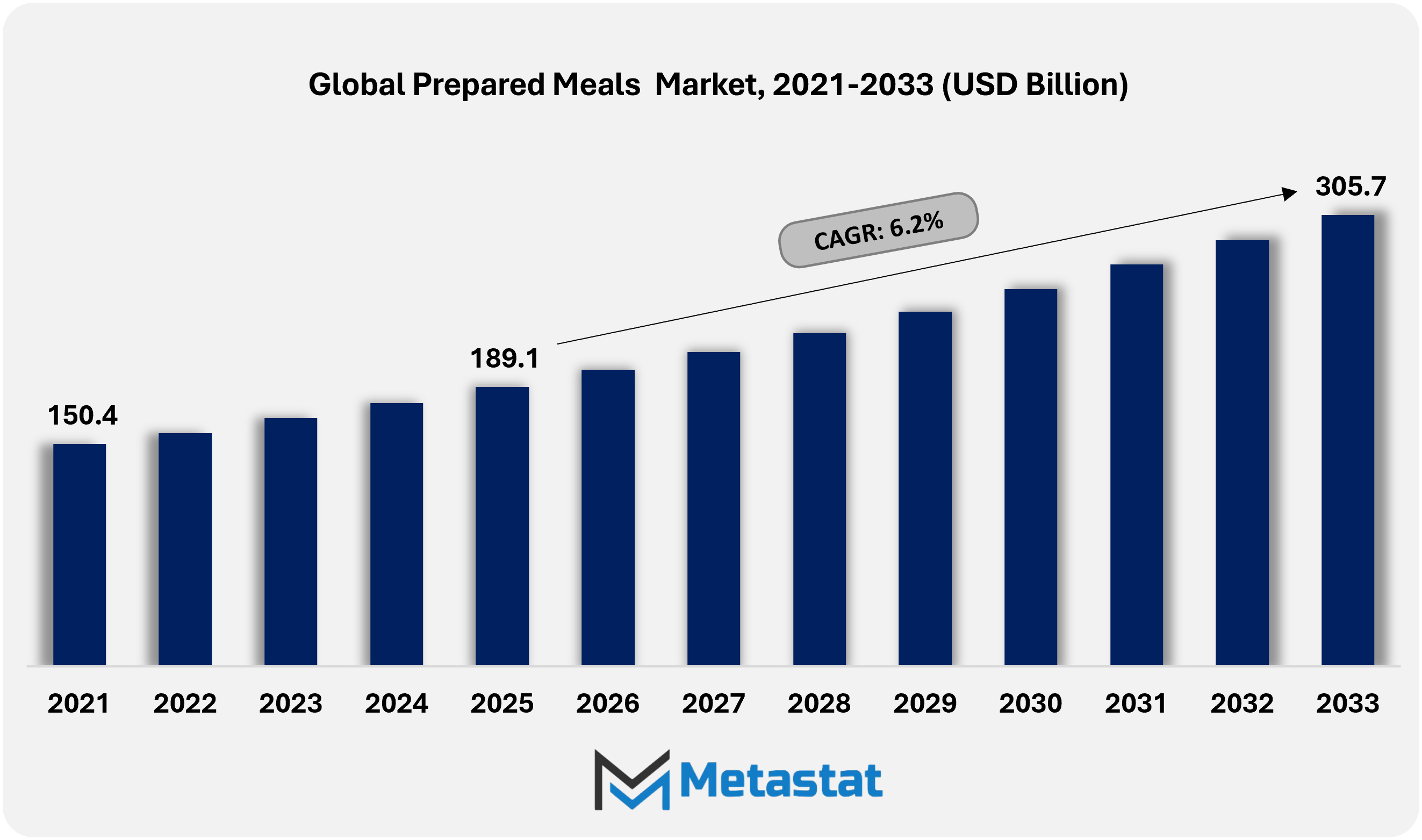
The global Prepared Meals market size was valued at USD 189.1 billion in 2025. The market is projected to grow from USD 200.6 billion in 2026 to USD 305.7 billion by 2033, exhibiting a CAGR of 6.2% during the forecast period.
Global Prepared Meals Market - Comprehensive Data-Driven Market Analysis & Strategic Outlook
- Global Prepared Meals market valued at USD 189.1 billion in 2025, growing at a CAGR of around 6.2% through 2033, with potential to exceed USD 305.7 billion.
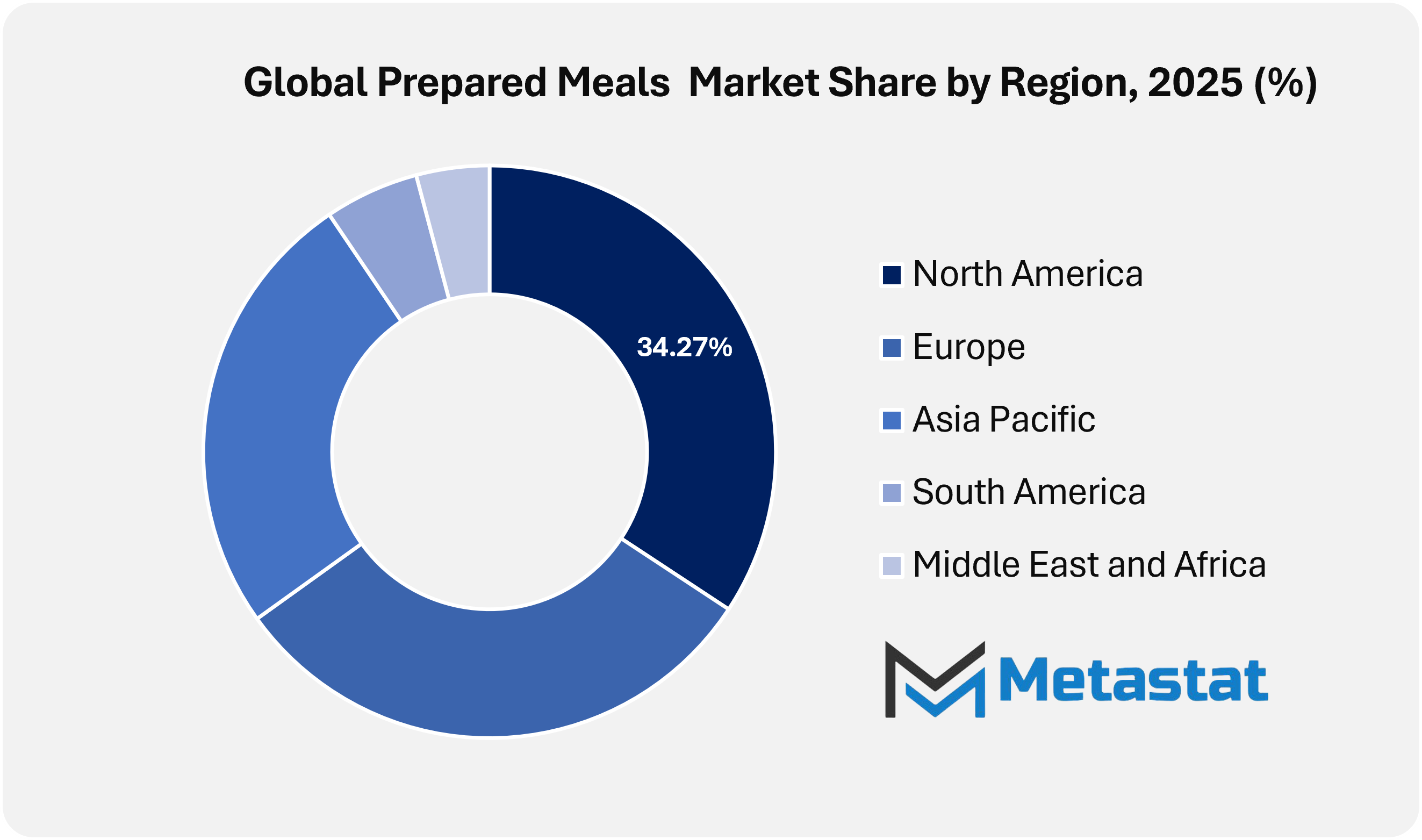
- North America holds 34.3% in 2025 with US leading the market share in 2026.
- Frozen Meals segment account for a market share of 52.0% in 2025.
- Key trends driving growth: Increasing demand for convenience foods, Busy lifestyles and hectic schedules leading to a rise in demand for ready-to-eat meals
- Expansion of premium and health-focused ready meals is a key opportunity with prepared meals market during forecast period.
- Key insight: Rising reliance on ultra‑processed foods, including ready and prepared meals, is a major driver of market growth.
The Prepared Meals market is a rapidly growing segment of the global packaged foods industry, driven by increasing consumer demand for convenience, time-saving, and ready-to-eat solutions. The category includes frozen, chilled, and shelf-stable meals available in both single-serve and family-size formats, catering to diverse consumption needs. Growing health awareness is influencing product development, with manufacturers increasingly emphasizing plant-based ingredients, cleaner labels, and improved nutritional profiles to align with evolving dietary expectations.
A key driving factor for the prepared meals market is the high consumption of ultra‑processed foods, as highlighted by U.S. federal data from the National Health and Nutrition Examination Survey (NHANES). The data shows that ultra‑processed foods accounted for approximately 55 % of total daily caloric intake for individuals aged 1 and older, with children and adolescents deriving nearly 62% of their calories from these sources, which include many ready and prepared meal products. Adults obtained about 53 % of their daily calories from ultra‑processed foods, indicating a broad reliance on convenience foods. The widespread consumption, coupled with lifestyle trends favouring quick, easy-to-prepare meals is fuelling the demand for prepared meals, positioning them as a staple in modern diets.
Consumption trends reflect deep penetration into daily diets. In urban areas, convenience foods, including prepared meals, constitute a significant share of packaged food consumption, with many households embracing on‑the‑go and single‑serve formats owing to time constraints and dual‑income work patterns, thus driving the growth of the prepared meals market.
Market Dynamics
Growth Drivers:
Increasing demand for convenience foods
Convenience meals are easy to store, ready to be heated, and are consistent in taste. It is well suited for people in economy and everyday commuting. The growth of modern retail and online grocery platforms further supports accessibility and repeat purchases.
Busy lifestyles and hectic schedules leading to a rise in demand for ready-to-eat meals
Long and busy working hours, especially for the urban population, is a huge factor resulting in a fast-paced economy. Prepared meal is a simple, fast, and effective solution for meals on weekdays. Meals to be used later during the day, or on the go are becoming more popular in urban areas. The lifestyle results in high demand for ready to eat food products like frozen, chilled prepped, and even shelf stable.
Restraints & Challenges:
Concerns regarding the healthiness and nutritional value of prepared meals
Prepared meals are often associated with high sodium, preservatives, and lower freshness compared to home-cooked food. Growing awareness of diet-related health issues makes consumers more cautious about frequent consumption. This perception will restrict demand or shift preferences toward healthier alternatives that affect the growth of the prepared meals market.
Environmental impact associated with packaging and transportation of prepared meals
Prepared meals rely heavily on single-use and temperature-controlled packaging for transportation. These factors increase waste generation and carbon emissions. Sustainability concerns may raise compliance costs and influence purchasing decisions. Such that environmental impact associated with packaging and transportation of prepared meals can restrain the growth of the market.
Opportunities:
Expansion of premium ready meals
Consumers are getting health conscious and increasingly spending more for better quality, taste, and ingredients. Premium prepared meals featuring gourmet recipes, organic inputs, or regional cuisines will attract higher-income and urban consumers. This factor will allow manufacturers to improve margins and brand positioning that helps to create opportunity for the prepared meal market.
Customization and personalization of prepared meals
Increasing consumer interest in personalized nutrition is creating opportunities for customizable prepared meals. Health-conscious and lifestyle-driven customers are drawn to options like portion control, dietary choices (vegetarian, vegan, gluten-free), and calorie-specific meals. Digital ordering platforms and subscription models further enable tailored meal solutions, strengthening customer loyalty and repeat consumption.
Market Segmentation Analysis
The global Prepared Meals market is classified based on Product, Meal Type, and Distribution Channel.
By Product the market is further segmented into:
- Frozen Meals
Frozen meals are extensively utilized owing to their long shelf life and convenience. The freezing process aids in maintaining flavor and nutritional integrity while facilitating bulk storage and straightforward distribution. These items are favored by working professionals and families in search of quick meal options.
- Chilled Meals
Chilled meals are marketed as fresher substitutes to frozen options, often regarded as superior in quality and flavor. They generally possess shorter shelf lives and necessitate refrigerated storage. The demand is fueled by consumers looking for ready meals that offer a more freshly prepared experience.
- Canned Meals
Canned meals provide long-term shelf stability and convenient storage without the need for refrigeration. They are frequently utilized for emergency food supplies, travel, and cost-effective consumption. Although they are often viewed as less fresh, their affordability and longevity maintain a consistent demand.
By Meal Type the market is divided into:
- Vegetarian
Vegetarian prepared meals are increasingly popular owing to heightened health consciousness and the rising adoption of plant-based diets. These meals attract vegetarians, flexitarians, and individuals seeking lighter or meat-free alternatives. Innovations in flavor and protein sources is expanding this market segment.
- Non-Vegetarian
Non-vegetarian meals continue to generate significant demand due to established dietary preferences and protein consumption patterns. Products featuring poultry, meat, and seafood are readily available in both frozen and chilled formats. This segment benefits from a variety of flavors and a sense of familiarity.
By Distribution Channel the market is further divided into:
- Supermarkets & Hypermarkets
Supermarkets & Hypermarkets channels are main distributor channel in prepared meal sales owing to their extensive product ranges and strong consumer confidence. In-store visibility and promotional efforts stimulate impulse buying. Supermarkets & Hypermarkets act as primary distribution hubs for both mass-market and premium meal options.
- Convenience Stores
Convenience stores address immediate consumption needs and cater to on-the-go customers. Their close proximity and extended hours make them suitable for single-serve and chilled ready meals. This channel benefits from urbanization and busy lifestyles
- Online Retail
Online retail is growing rapidly owing to home delivery, subscription models, and expanded product availability. Consumers benefit from easy ordering, customization options, and doorstep delivery. This channel gained significant momentum with digital adoption and changing shopping habits.
- Others (Wholesale, Specialist Retailers)
Othe segment includes bulk purchases and niche-focused outlets such as health food stores and gourmet retailers. Specialist retailers often cater to premium, organic, or diet-specific prepared meals. Wholesale distribution supports institutional buyers and foodservice operators.
By Region:
- Based on geography, the global Prepared Meals market is divided into North America, Europe, Asia-Pacific, South America, and the Middle East & Africa.
- North America Prepared Meals Market is set to expand at a CAGR of 6.2% within the forecast period, reaching a market size (TAM) of USD 104.3 billion by the end of 2033.
In North America the busy lifestyle, high working hours, and extended commuting times continue to fuel significant demand for prepared meals as everyday food options rather than just occasional alternatives. The well-established logistics for frozen and chilled foods, combined with the extensive presence of supermarkets, hypermarkets, and online grocery services, facilitate large-scale distribution and reliable availability of prepared meals drive growth of prepared meal market in North America region.
In Asia Pacific the swift pace of urbanization and increased exposure to Western-style diets are generating substantial opportunities for ready and prepared meals, particularly in major cities. Moreover, the rise in disposable incomes is propelling the demand for premium, healthier, and diverse prepared meals, including vegetarian, plant-based, and regionally inspired options.
In Europe, prepared meals are thoroughly integrated into everyday diets, bolstered by strong retail penetration and a demand for chilled and premium ready meals, especially those that highlight quality, sustainability, and clean labels. In the Middle East, demand is driven by a significant expatriate community, urban lifestyles, and the growth of modern retail formats, with an increasing interest in halal-certified prepared meals. Africa is still an emerging market, where growth is slow and primarily focused in urban areas, propelled by the expansion of retail infrastructure and a rising consumption of packaged foods, although affordability and cold-chain challenges remain critical issues in several countries.
Competitive Landscape & Strategic Insights
The competitive environment of the prepared meals sector is defined by a combination of global food multinationals, regional specialists, and direct-to-consumer entities vying for dominance in scale, convenience, health positioning, and innovation. Nestlé SA continues to be a leader in this category, with its prepared dishes and cooking solutions accounting for a substantial portion of its global sales, bolstered by ongoing reformulation and the expansion of its frozen and chilled meal offerings.
Conagra Brands, General Mills, Kraft Heinz, Campbell Soup Company, Hormel Foods, Tyson Foods, and Unilever capitalize on their strong brand equity and extensive retail presence in North America and Europe. Nomad Foods Limited, recognized as Europe’s largest branded frozen food company, along with Bakkavor Group and Greencore Group, which are significant suppliers of fresh prepared meals to major retailers, play essential roles in the private label and fresh food markets.
HelloFresh SE, which delivers millions of meals each year, and Blue Apron Holdings exemplify the rising impact of subscription and ready-to-heat meal services, frequently collaborating with logistics providers and sourcing partners to enhance last-mile delivery efficiency.
In Asia, Ajinomoto Co. and Tasty Bite are fortifying the market with robust ready-to-eat product lines and co-manufacturing alliances, while Indian companies like Shimla Hills Offerings, MZ Food Products, HayBite, and Indomeals concentrate on domestic cuisines and export-ready formats. Vivera, Amy’s Kitchen, Dr. Schär, and Kevin’s Natural Foods compete by offering plant-based, organic, and free-from products, aligning with the increasing health-conscious consumer demand.
Forecast & Future Outlook
Market size is forecast to rise from USD 189.1 billion in 2025 to over USD 305.7 billion by 2033.
The future outlook for the prepared meals market is supported by sustained demand for convenience-driven food solutions amid increasingly time-constrained lifestyles. Urbanization, rising workforce participation, and the growing preference for quick meal options will continue to underpin consumption across frozen, chilled, and ready-to-eat formats. Health and wellness trends are expected to shape product innovation, with stronger focus on clean labels, balanced nutrition, plant-based ingredients, and reduced preservatives. Advancements in packaging technology and cold-chain logistics will improve product quality and shelf life, while expansion of online retail and subscription models will enhance accessibility. Premiumization and regional flavor innovation are likely to further drive value growth.
Prepared Meals Market Key Segments:
By Product:
- Frozen Meals
- Chilled Meals
- Canned Meals
By Meal Type:
- Vegetarian
- Non-Vegetarian
By Distribution Channel:
- Supermarkets & Hypermarkets
- Convenience Stores
- Online Retail
- Others (Wholesale, Specialist Retailers)
Key Global Prepared Meals Industry Players
- Nestlé SA
- Conagra Brands, Inc.
- Dr Oetker
- General Mills, Inc.
- Tyson Foods, Inc.
- Green Mill Foods
- Bakkavor Group
- Nomad Foods Limited
- 2 Sisters Food Group
- HelloFresh SE
- Blue Apron Holdings, Inc.
- Fleury Michon
- Hormel Foods Corporation
- Greencore Group Plc
- The Kraft Heinz Company
- Unilever
- Campbell Soup Company
- Ajinomoto Co.
- Shimla Hills Offerings Pvt. Ltd.
- HayBite
- MZ Food Products Pvt. Ltd.
- Sigma Alimentos
- Regal Kitchen Foods
- Vivera
- Tasty Bite
- Amy’s Kitchen
- Kevin’s Natural Foods
- Schär
- COOK Kitchen
- Indomeals
Report Coverage
This research report categorizes the Prepared Meals market based on key segments and regions, forecasts revenue growth, and analyses trends in each submarket. The report analyses the key growth drivers, opportunities, and challenges influencing the Prepared Meals market. Recent market developments and competitive strategies such as expansion, type launch, development, partnership, merger, and acquisition have been included to draw the competitive landscape in the market.
The report strategically identifies and profiles the key market players and analyses their core competencies in each sub-segment of the Prepared Meals market.
|
Report Attributes |
Details |
|
Study Period |
2021-2033 |
|
Base Year |
2025 |
|
Estimated Year |
2026 |
|
Forecast Period |
2026-2033 |
|
Historical Period |
2021-2025 |
|
Growth Rate |
CAGR 6.2% from 2026 to 2033 |
|
Revenue Unit |
USD billion |
|
Sales Volume Unit |
Kilotons |
|
Segmentation |
By Product, Meal Type, Distribution Channel, and Region |
|
By Product |
|
|
By Meal Type |
|
|
By Distribution Channel |
|
|
By Region |
North America (By Product, Meal Type, Distribution Channel, and Country) |
|
|
|
|
|
Europe (By Product, Meal Type, Distribution Channel, and Country) |
|
|
|
|
|
Asia Pacific (By Product, Meal Type, Distribution Channel, and Country) |
|
|
|
|
|
South America (By Product, Meal Type, Distribution Channel, and Country) |
|
|
|
|
|
Middle East and Africa (By Product, Meal Type, Distribution Channel, and Country) |
|
|
|
WHAT REPORT PROVIDES
- Full in-depth analysis of the parent Industry
- Important changes in market and its dynamics
- Segmentation details of the market
- Former, on-going, and projected market analysis in terms of volume and value
- Assessment of niche industry developments
- Market share analysis
- Key strategies of major players
- Emerging segments and regional growth potential
RELATED REPORTS
- Canada Ready To Eat Meals Market
- Frozen Cooked Ready Meals Market
- North America and Europe Ready Meals Market
- North America Prepared Meals Market
- North America Ready To Eat Meals Market
- Prepared Meals Industry
- Prepared Meals Market
- Ready Meals Market
- Ready To Eat Meals Market
- US Prepared Meals Market Report
- US Ready Meals Market
Frequently Asked Questions
Find answers to common questions about this report
The Metastat Insights study shows that the global Prepared Meals market size was USD 189.1 billion in 2025.
The global Prepared Meals market is expected to grow at a CAGR of 6.2% over the forecast period (2026-2033).
The Metastat Insights analysis shows that the North America Prepared Meals market size is estimated to be USD 104.3 billion by 2033.
Frozen Meals is the leading type segment in the global market.
Increasing demand for convenience foods, Busy lifestyles, and hectic schedules are leading to a rise in demand for ready-to-eat meals.
North America region dominates the market.
Top players operating in the Prepared Meals industry includes Nestlé SA, Conagra Brands, Inc., Dr Oetker, General Mills, Inc., Tyson Foods, Inc., Green Mill Foods, Bakkavor Group, Nomad Foods Limited, 2 Sisters Food Group, HelloFresh SE, Blue Apron Holdings, Inc., Fleury Michon, Hormel Foods Corporation, Greencore Group Plc, The Kraft Heinz Company, Unilever, Campbell Soup Company, Ajinomoto Co., Shimla Hills Offerings Pvt. Ltd., HayBite, MZ Food Products Pvt. Ltd., Sigma Alimentos, Regal Kitchen Foods, Vivera, Tasty Bite, Amy’s Kitchen, Kevin’s Natural Foods, Dr. Schär, COOK Kitchen, and Indomeals
Choose Your License
Prepared Meals Market
Related Reports
Explore related market intelligence reports worth reading alongside this one.