
LEAD ANALYST
Utkarsh Khirodkar is a Lead Market Research Analyst at MetaStat Insight, specializing in market intelligence, technology sector assessments, and competitive strategy.

Global Playground Equipment Market Size, Share, By Product Type (Multi-activity Play Systems, Swings, Slides, Climbing Equipment, Spinners and Carousels, Seesaws and Spring Rockers, Balancing and Obstacle Equipment, Sensory and Musical Play Equipment, Playhouses and Role-play Equipment), By Primary Material (Metal, Wood, Plastic), By End Use (Public Parks and Recreation Grounds, Schools, Early Childhood Facilities, Residential Communities, Private Households, Commercial Leisure Venues), By Installation Type (Outdoor and Indoor), Industry Analysis, Growth, Trends, and Forecast, 2026-2033
Report ID
MSI-3133
Published
October, 2026
Pages
275 Pages
Format
Historical
Base year
Forecast
Forecast period
Report Details
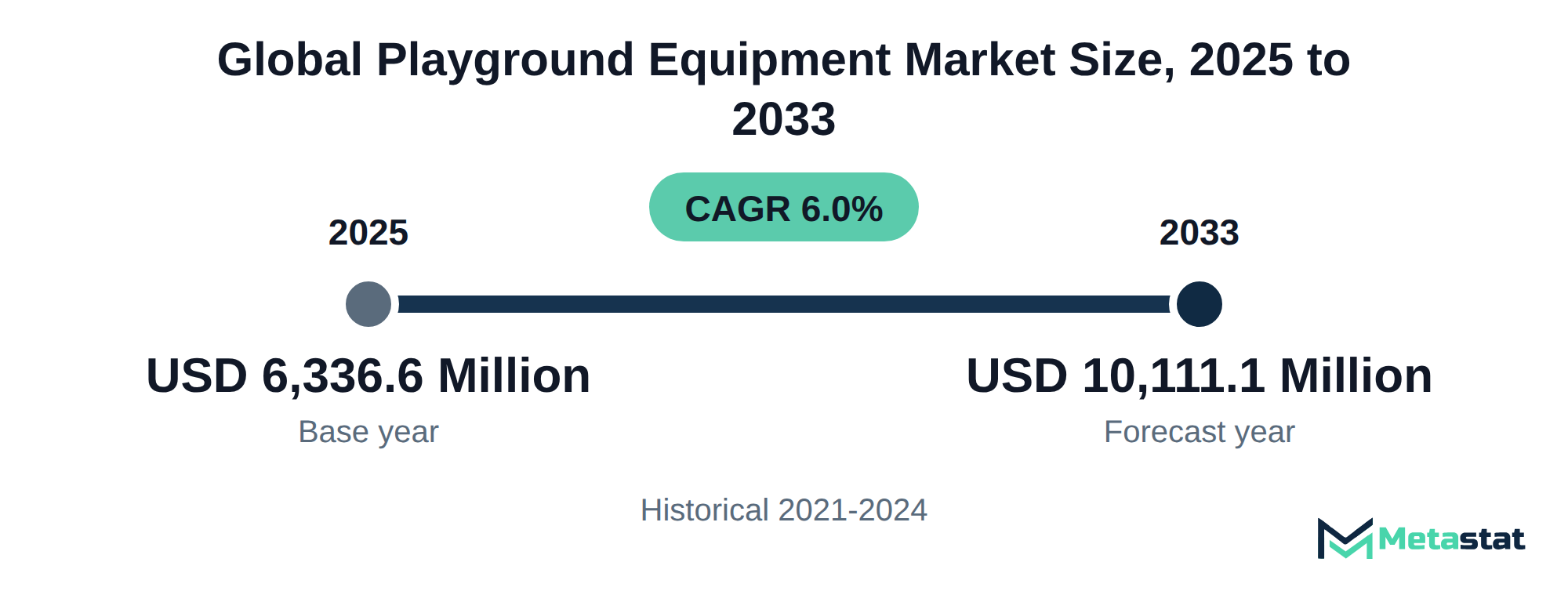
Market Valuation: Valued at $6,336.6 Million in 2025, projected to reach $10,111.1 Million by 2033 at a 6.0% CAGR.
Dominant Segment: The multi-activity play systems segment leads the market, driven by their appeal to diverse age groups and their ability to encourage interactive play.
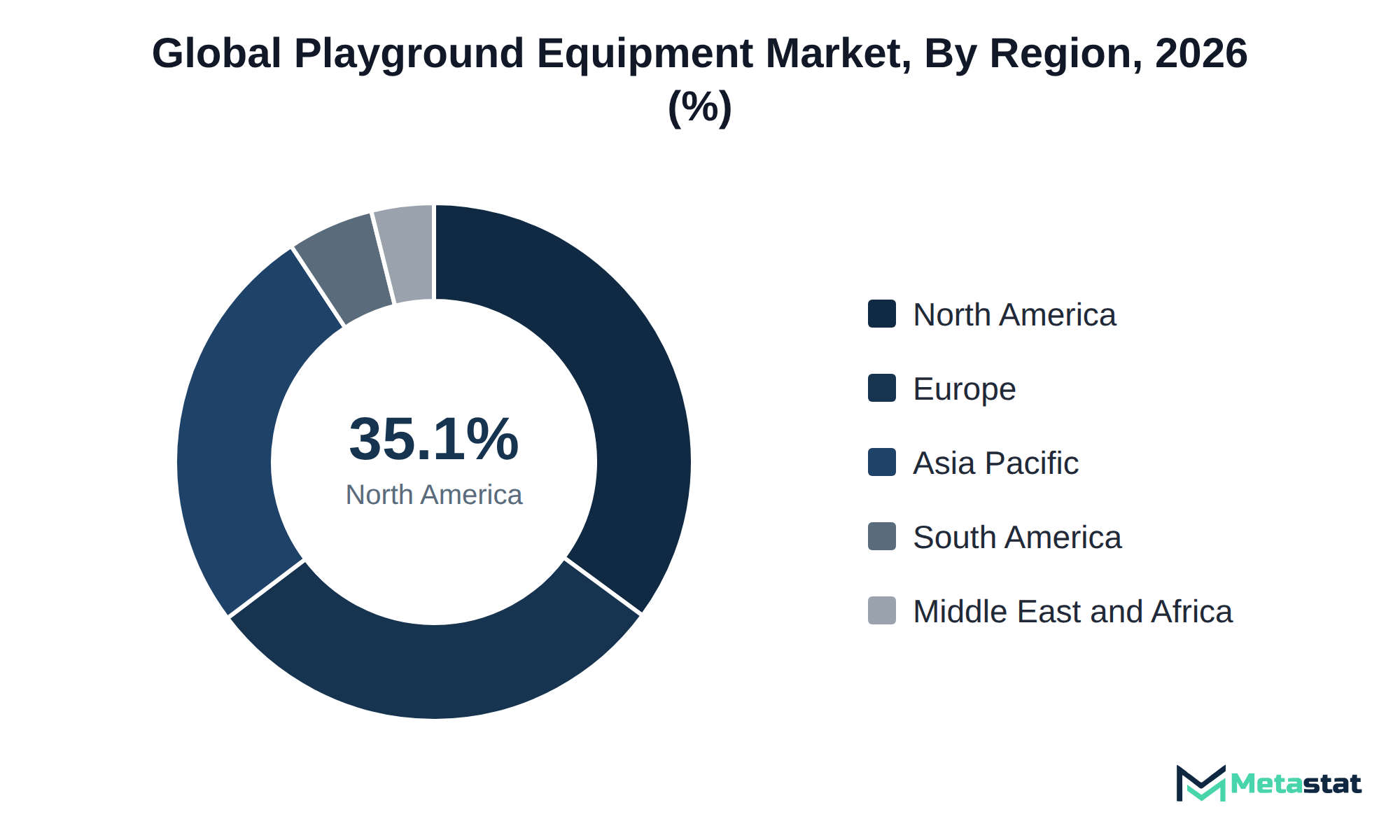
Geographic Lead: North America is the leading region, holding 35.1% of the market in 2025, with strong demand for innovative and inclusive playground solutions.
What's Inside: The report includes comprehensive competitive coverage, market analyses, and a detailed forecast window from 2026 to 2033, focusing on various product types and materials.
Emerging Trends: There is a growing emphasis on inclusive playground equipment, particularly for public parks and schools, reflecting a commitment to accessibility for children of all abilities.
Sustainability Focus: The market is increasingly shifting towards sustainably sourced materials, such as recycled plastic and timber, aligning with consumer preferences for eco-friendly options.
Choose Your License
Global Playground Equipment Market
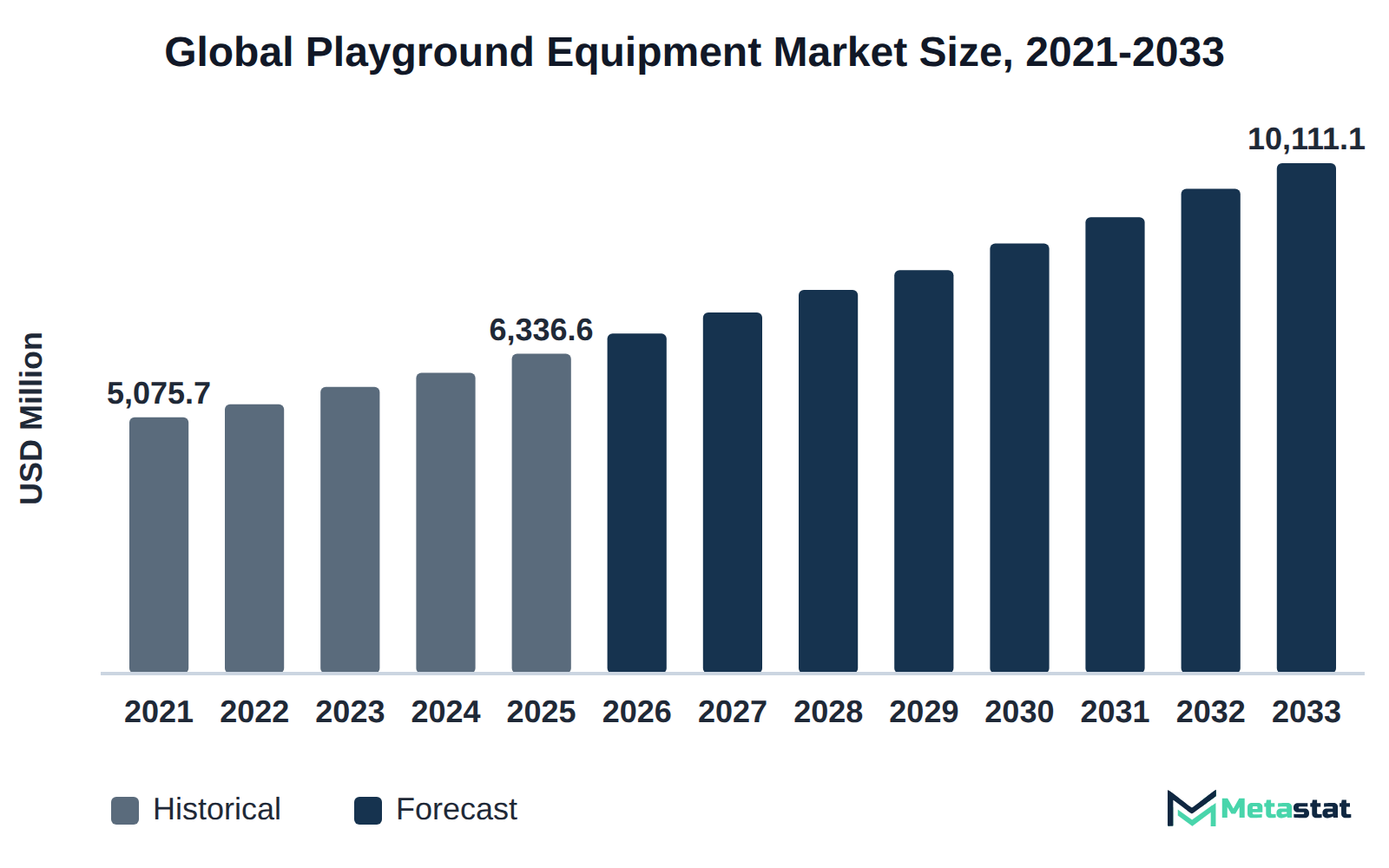
The global Playground Equipment market was valued at USD 6,336.6 million in 2025 and is projected to reach USD 10,111.1 million by 2033, growing at a CAGR of 6.0% over the forecast period.
The Playground Equipment market encompasses diverse products designed for recreational use, including swings, slides, and multi-activity play systems. Buyers invest in this market to enhance play experiences in public parks, schools, and residential communities, reflecting a growing recognition of the importance of outdoor play for children’s development. This investment contributes to community well-being and supports social interaction and physical activity among users.
Growth in the market is driven by increasing investments in public infrastructure and recreational facilities. The multi-activity play systems segment represents the highest value, catering to diverse age groups and encouraging interactive play. North America holds 35.1% of the market in 2025, with the US leading in 2026. Strong demand for innovative and inclusive playground solutions fuels competition among manufacturers, prompting them to expand their product offerings.
The market experiences expansion due to heightened awareness of child development and the need for safe, engaging play environments. North America leads in revenue generation, followed closely by Europe and Asia Pacific. The ongoing trend towards incorporating sustainable materials in playground designs supports growth, allowing manufacturers to meet evolving consumer preferences.
The Playground Equipment market comprises products for varied recreational needs, targeting children and communities that seek engaging outdoor experiences. Buyers invest in this market due to the increasing focus on child development, social interaction, and physical fitness. Enhanced awareness surrounding the significance of play in childhood development further drives purchases in public parks, schools, and residential areas, ensuring that children have access to safe and stimulating play environments.
Several factors drive growth in the market, led by the rising emphasis on outdoor activities. Multi-activity play systems represent the largest segment by value, reflecting their appeal to families and communities seeking versatile recreational options. This region benefits from significant investments in playground infrastructure and a strong preference for innovative play solutions, supporting the overall expansion of the sector.
Continued investment in playground modernization and safety standards serves to enhance the market's attractiveness. Public parks and recreation grounds emerge as key end-use sectors, reflecting a commitment to creating inclusive recreational spaces for diverse populations. Playground equipment now needs quality, engaging designs, in line with broader trends in community development and child engagement.
Inclusive playground equipment represents a significant shift in the design and functionality of outdoor play spaces, particularly for schools and public parks. This equipment ensures accessibility for children of all abilities, creating an inclusive environment. The growing emphasis on inclusivity drives the need for innovative designs that accommodate various physical and sensory needs. Public parks and recreation grounds are projected to grow from USD 2,449.9 million in 2026 to USD 3,622.8 million by 2033, highlighting the rising demand for inclusive solutions.
This trend is supported by advancements in materials and technologies, allowing for the creation of equipment that encourages social interaction among children. Multi-activity play systems that integrate sensory experiences promote engagement for all users, reinforcing the importance of play in childhood development. Such innovations enhance play experiences and align with educational policies that prioritize inclusivity in community spaces.
This shift has significant commercial consequences, as manufacturers and suppliers in the Playground Equipment market adapt their offerings to these needs. Increased investment in inclusive equipment reflects a commitment to creating accessible environments, which supports market growth and expands customer bases. Companies that focus on inclusive designs strengthen their competitive position and support long-term success in a growing segment of the market.
The procurement of playground equipment increasingly focuses on sustainably sourced materials, including recycled plastic and timber. The emphasis on eco-friendly options aligns with a growing trend where buyers prioritize environmental responsibility in their purchasing decisions. In the playground equipment market, recycled plastic and timber serve viable alternatives to traditional materials, enhancing sustainability while meeting safety standards. Recycled HDPE pellets offer one feedstock for plastic components made from recycled content.
For instance, in the segment of Primary Material, the value of playground equipment made from wood is projected to reach USD 2,732 million by 2033. Reclaimed lumber is one route for buyers who want sustainably sourced timber. This trend indicates that buyers are willing to invest in higher-cost materials that contribute to environmental sustainability while ensuring the longevity and safety of playground installations. The commitment to using recycled materials reflects a broader shift towards sustainable practices, influencing purchasing contracts and pricing models.
Buyers negotiate contracts that include stipulations for eco-friendly materials, affecting overall project costs. The integration of recycled materials leads to increased upfront procurement expenses. However, the long-term benefits, including lower maintenance costs and enhanced public perception, create strong reasons for investment. Overall, the choice of materials in the playground equipment market significantly influences procurement strategies and financial outcomes.
Indoor playground equipment in malls and family entertainment centres has gained significant traction due to the growing focus on creating engaging environments for children. These venues seek equipment that not only entertains but promotes physical activity, enhancing the overall family experience. By 2033, the market for indoor playground equipment is projected to reach USD 1,896.8 million, reflecting a compound annual growth rate (CAGR) of 7.6% for this installation type. This growth highlights increasing demand for innovative and safe play structures designed for indoor settings, catering specifically to the unique needs of these buyers. Related attractions include kiddie rides in European shopping malls, which target the same family audience.
Facilities prioritize features including safety, durability, and diverse play options to attract families. This focus on quality and variety drives manufacturers to develop playground equipment that meets stringent safety standards while offering interactive experiences. Rising competition among family entertainment centres encourages investment in high-quality installations, which supports the market. Businesses that invest in state-of-the-art indoor playgrounds improve their market position and appeal, which drives higher foot traffic.
Safety is a primary concern when selecting commercial playground equipment. The incorporation of safety features significantly influences the choice of equipment, ensuring a secure play environment for children. In the market, equipment designed specifically for public parks and recreation grounds, which includes various safety standards, generated USD 2,449.9 million in value in 2026, with an expected increase to USD 3,622.8 million by 2033. This growth demonstrates the emphasis placed on safety within the market. Buyers also plan for the surface beneath the equipment, and rubber flooring is a common choice for impact protection.
Durability constitutes another vital factor. Buyers frequently seek equipment that withstands different environmental conditions while remaining cost-effective over time. The focus on materials including metal, wood, and plastic indicates varying performance levels. For instance, metal equipment, with a projected market value increase from USD 2,940.7 million in 2026 to USD 4,338.7 million by 2033, illustrates its resilience and longevity, making it a favored choice for many buyers.
Lastly, equipment versatility is important in selection. Buyers increasingly prefer multi-activity play systems that offer diverse play opportunities, appealing to various age groups and enhancing user engagement. Multi-activity play systems are projected to grow from USD 2,500.3 million in 2026 to USD 3,860.4 million by 2033. This illustrates strong demand for versatile solutions in the Playground Equipment market and their value in meeting diverse community needs.
Investment in public infrastructure has surged, leading to heightened demand for playground equipment among municipalities and local governments. Enhanced focus on creating safe, engaging recreational spaces for children drives this shift. Public parks and recreation grounds, which account for a significant portion of equipment purchases, are increasingly prioritized due to their role in promoting community well-being. Park upgrades often add street furniture alongside play areas as part of the same public space project. This demand supports the overall expansion of the market for playground equipment, creating opportunities for suppliers to innovate and diversify their offerings.
Innovations in playground equipment design and manufacturing drive significant improvements in safety and user engagement. Enhanced materials and construction techniques contribute to durable and versatile products, capturing the attention of municipalities and educational institutions. These advancements include the integration of smart technology, which allows for interactive play experiences that promote physical activity and cognitive development among children. Improved safety standards resulting from technological advancements reduce liability concerns for buyers, reinforcing their investment decisions.
Developments in eco-friendly materials align with the growing demand for sustainable practices, attracting environmentally conscious customers. The Playground Equipment market sees increasing interest in products that incorporate recycled and responsibly sourced materials, appealing to buyers prioritizing sustainability. Technological advancements enhance play value while addressing environmental concerns, which supports growth and investment in the market.
High costs associated with playground equipment significantly limit adoption among municipalities and educational institutions. Many buyers, particularly local governments, face budget constraints that restrict the number of units purchased or lead to delayed replacements. This financial pressure results in smaller orders or a reluctance to invest in new installations, hindering overall market growth. The perceived value of innovative equipment often does not align with tight budgets, leading to increased scrutiny over funding allocations. Price sensitivity affects demand for high-quality, durable products that enhance user engagement and safety. The necessity for balance between cost and quality complicates procurement strategies, particularly in public spaces where safety and accessibility are critical. Investment decisions in the Playground Equipment market hinge on weighing long-term benefits against immediate costs.
Suppliers in the Playground Equipment market face significant challenges due to rising material costs, particularly for metals and plastics. The increasing demand for high-quality materials, driven by safety and durability requirements, results in higher procurement expenses. These costs impact profit margins for manufacturers and complicate pricing strategies, as they balance expenses with competitive pricing in a growing market.
In response to these challenges, many suppliers explore alternative materials and manufacturing methods to mitigate costs. Innovations in material sourcing, including a shift towards sustainable options like recycled plastics and wood, provide potential savings while meeting consumer preferences for eco-friendly solutions. Suppliers invest in technology to enhance production efficiency, aiming to streamline operations and reduce waste, which alleviates pressure from rising costs.
The rising preference for multi-activity play systems represents a significant opportunity within the Playground Equipment market. This segment shows a compound annual growth rate (CAGR) of 6.4% from 2026 to 2033, suggesting strong demand among consumers seeking versatile recreational options. Increasing awareness of the benefits of engaging children in diverse physical activities drives this trend. Municipalities, schools, and residential communities prioritize these systems for their capacity to accommodate various age groups and promote social interaction.
Investment in multi-activity play systems leads to enhanced user experiences, aligning with the growing emphasis on community wellness and active lifestyles. Suppliers focusing on innovative designs and safety features capture this demand, resulting in a favorable outlook for market growth within this area.
The Global Playground Equipment market is segmented based on Product Type, Primary Material, End Use, and Installation Type.
This category serves various recreational needs, catering primarily to public parks, schools, and early childhood facilities. The increasing focus on engaging and inclusive play environments drives demand, particularly among municipalities and educational institutions. Unlike other segments, this category demonstrates a stronger growth trajectory, with a CAGR of 6.4%, compared to swings at 5.2% and slides, which lack a specified CAGR. Adoption is influenced by heightened awareness of the developmental benefits of play, highlighting the importance of multi-activity structures in promoting social interaction and physical engagement among children. Increasing investment in public infrastructure further supports the expansion of this segment within the Playground Equipment market.
Swings segment is estimated to reach USD 1,660.2 million by 2033, at a CAGR of 5.2% during the forecast period. This equipment primarily serves children in playgrounds, parks, and recreational facilities, facilitating physical activity and social interaction. The demand for swings is driven by increasing investments in community infrastructure and recreational facilities aimed at enhancing children's play experiences. Compared to other segments like Multi-activity Play Systems, which exhibit a CAGR of 6.4%, swings experience steadier growth. This slower rate stems from established safety standards and user preferences that favor the traditional design and functionality of swings over more complex play systems. Communities prioritize safe and accessible play spaces, and swings continue to occupy a significant position in the overall market.
Slides segment is expected to reach USD 1,000 million by 2033. This segment primarily includes equipment designed for children's play areas, commonly found in public parks, schools, and residential areas. The demand for slides is driven by the increasing emphasis on outdoor play facilities that enhance children's physical activity and social interaction. Unlike multi-activity play systems that achieve a compound growth rate of 6.4%, the growth rate for slides stands at a more modest pace within the market. This slower growth reflects the segment's straightforward design and function compared to multifunctional equipment. Cost considerations for purchasing and maintaining slides influence adoption among buyers prioritizing budget constraints while investing in playground equipment.
Climbing Equipment segment is projected to grow at a CAGR of 6.6% during the forecast period. This equipment is essential in promoting physical activity and developing motor skills among children, used in various settings including public parks, schools, and residential communities. Heightened awareness of childhood obesity and the emphasis on active play drive demand for climbing structures that challenge children physically and mentally. Differentiating this segment from others, including swings and slides, is its focus on physical engagement and developmental benefits. The relatively higher price point of climbing equipment reflects its robust construction and safety features, appealing to buyers seeking longevity and safety in their investments. The market for climbing equipment continues to expand while municipalities and organizations prioritize engaging, physically challenging play areas for children.
Spinners and Carousels provide dynamic play experiences that engage children's imagination and physical abilities. These play structures are typically found in public parks, schools, and recreational facilities, where children of various age groups enjoy their rotating and spinning features, promoting social interaction and cooperative play. The growing focus on enhancing play experiences drives demand in this segment, differentiating it from other product types that focus primarily on static or linear play. Safety considerations and material choices critically influence the development of spinners and carousels, ensuring durability and user protection. These play structures continue to gain popularity, and the market is shifting toward innovative designs that prioritize safety and user engagement. This positions the segment as a valuable addition to the broader Playground Equipment market.
Seesaws and Spring Rockers provide interactive play experiences, appealing primarily to young children. These pieces of equipment enhance motor skills and social interaction among users, functioning well in various settings including public parks, schools, and residential communities. The segment benefits from the growing emphasis on early childhood development, where playful learning environments gain recognition. Demand for these products is driven by parents and educational institutions seeking engaging and safe play options for children. Compared to other segments including Multi-activity Play Systems, which experience faster growth, Seesaws and Spring Rockers occupy a niche with stable appeal, attracting a dedicated customer base focused on traditional play experiences. The market sees steady demand from buyers prioritizing value and safety, influencing purchasing decisions.
Balancing and Obstacle Equipment comprises apparatus designed to challenge physical coordination and stability. This equipment finds extensive usage in public parks, schools, and early childhood facilities, appealing to a broad spectrum of children. The growing emphasis on physical fitness and outdoor activities fuels demand for this segment, with educational institutions and local governments recognizing the importance of promoting active play. The same focus on coordination and active play also shapes interest in youth sports. Compared to other segments, this sub-segment exhibits unique characteristics, focusing on enhancing children's physical skills rather than just entertainment. While several segments experience steady growth, Balancing and Obstacle Equipment stands out due to its multi-faceted benefits, encouraging both fun and physical development. The Playground Equipment market continues to evolve, integrating innovative designs that enhance user engagement and safety, driving further investment in this specific area.
Sensory and Musical Play Equipment encompasses products designed to stimulate children's senses through auditory, tactile, and visual experiences. This segment finds application in various settings, including public parks, early childhood facilities, and residential communities, where engaging children in imaginative play is essential. The growing recognition of the importance of sensory play in child development drives demand for these products. Educational institutions and childcare centers increasingly incorporate sensory play equipment to enhance learning environments. In comparison to other segments, Sensory and Musical Play Equipment offers unique benefits that promote developmental and cognitive skills, distinguishing it from traditional playground structures. This segment aligns with trends emphasizing overall child development, contributing to its growing relevance in the market.
Playhouses and Role-play Equipment consists of structures designed to facilitate imaginative play for children. These elements serve essential components in various play environments, including public parks, schools, and residential communities, where they encourage social interaction and creative expression. Demand for these products arises from educational institutions and municipalities seeking to enhance children's play experiences. Growth in this segment is influenced by increasing awareness of the benefits of imaginative play, supporting cognitive and social development in early childhood. Compared to other product types, this segment attracts a specific buyer demographic that prioritizes educational value and engagement in play equipment. The market for playground equipment continues to expand, driven by the desire for environments that support children's imagination and development.
Others (Sand Tables, Water Tables, Aerial Runways) includes various interactive play products that offer unique sensory experiences for children. Commonly found in early childhood facilities, public parks, and residential communities, these items encourage imaginative play and social interaction among young users. Demand for such equipment rises due to increasing emphasis on creative outdoor play environments that promote physical and cognitive development. Unlike larger segments including Multi-activity Play Systems, this sub-segment experiences slower growth patterns, reflecting a more niche market appeal. Pricing strategies for these items tend to be lower than those for multi-activity systems, attracting budget-conscious buyers including local governments and schools aiming to enhance play areas without extensive investment. The Playground Equipment market continues to evolve, with emerging trends in the development of eco-friendly materials influencing the design and production of these unique play items.
This material is widely used in playground equipment, particularly in public parks, schools, and residential communities, due to its durability and resistance to wear and tear. Increased investment in outdoor recreational spaces drives demand for metal playground equipment, with municipalities and recreational facilities focusing on long-lasting solutions. Compared to wood and plastic, metal typically offers greater structural integrity, resulting in higher safety standards and lower maintenance costs. The anticipated growth in this segment reflects a broader trend toward enhancing playground experiences while ensuring user safety, positioning the metal segment as a critical component of the market.
Wood segment is estimated to reach USD 2,732 million by 2033, at a CAGR of 5.8% during the forecast period. This segment caters primarily to schools, public parks, and residential communities that seek durable and aesthetically pleasing playground equipment. The rising preference for eco-friendly materials fuels growth in this segment, attracting environmentally conscious buyers. Compared to other primary materials, wood provides a unique appeal due to its natural look and feel, enhancing the play environment for children. The segment stands out with its projected growth rate, aligning closely with broader trends in sustainability. Increased investment in public parks emphasizes the demand for wood-based structures, creating opportunities for suppliers and manufacturers focused on this material in the Playground Equipment market.
The plastic segment is expected to reach USD 2,596.5 million by 2033. This segment is used in various playground applications, particularly in outdoor settings, due to its durability and resistance to weather conditions. Key buyers include public parks, schools, and residential communities, all seeking safe and low-maintenance equipment for children's play. Demand is driven by the continuous shift towards materials that require less upkeep, which contributes to the appeal of plastic over traditional materials like wood and metal. Compared to the metal segment, which has a CAGR of 5.7%, the plastic segment's growth trajectory stands out, reflecting a unique market preference for lightweight and versatile solutions that accommodate a wide range of play equipment designs. With an anticipated increase in eco-friendly materials for playground equipment, the market for plastic products is expected to expand further, aligning with broader sustainability trends.
USD 2,596.5 million defines the Others (Rope, Composites) segment, projected to grow at a CAGR of 6.1% during the forecast period. This segment includes various products made from rope and composite materials, commonly used in playgrounds for creative and flexible play solutions. Educational institutions and public parks frequently select these materials due to their durability and safety features, driving demand. The increasing emphasis on innovative and sustainable materials influences this segment, distinguishing it from more traditional materials like metal and wood. While segments like Multi-activity Play Systems experience faster growth due to broader applications, the Others segment appeals to specific projects requiring unique designs and capabilities. This focus on adaptability and environmental considerations supports ongoing growth and a steady rise in market share.
This segment serves various communities, providing essential recreational spaces for families and children. Increasing investment in public infrastructure and urban development drives demand for playground equipment in parks. Unlike segments targeting schools or residential communities, this segment focuses on public amenities, ensuring broad accessibility. The rapid growth in urban areas necessitates more inclusive playgrounds, enhancing social interaction and physical activity among children. Demand from municipalities and government projects underpins this segment, distinguishing it from others with different target buyers. The projected growth rate for Public Parks and Recreation Grounds surpasses that of several other segments, reflecting heightened prioritization of community well-being.
USD 2,044.5 million defines the Schools segment, projected to grow at a CAGR of 5.9% during the forecast period. This segment primarily serves educational institutions that incorporate playground equipment to enhance physical activity and social interaction among students. The demand for high-quality, safe, and engaging playground equipment significantly influences growth, driven by an increasing emphasis on childhood development and outdoor play. Public Parks and Recreation Grounds cater to broader community needs and exhibit a CAGR of 5.7%. In contrast, the Schools segment focuses on a more specific buyer group and grows slightly slower than Multi-activity Play Systems, which show a higher CAGR of 6.4%. Investments in educational infrastructure are essential to meet evolving standards and promote inclusive play areas, contributing to the overall expansion of the market.
Early Childhood Facilities segment is expected to reach USD 1,333.6 million by 2033. This segment serves educational institutions catering to children in their formative years, focusing on creating safe and engaging environments for play and learning. Increasing awareness of the importance of early childhood education drives demand for specialized playground equipment tailored to this age group. With a forecasted CAGR of 5.9%, growth in this segment outpaces other categories like Public Parks and Recreation Grounds, primarily due to heightened investment in educational facilities. In comparison, equipment for Early Childhood Facilities typically features unique designs that facilitate developmental play, contrasting with general playground equipment aimed at broader age ranges. The market benefits from government initiatives promoting early childhood education, further supporting the growth and adoption of tailored playground solutions.
Residential Communities segment is projected to grow at a CAGR of 6.6% during the forecast period. This segment encompasses playground equipment designed specifically for residential areas, including private housing developments and community facilities. Builders and developers invest in these installations to enhance property value and attractiveness for potential buyers. A growing trend toward creating family-friendly environments increases demand for such equipment. Compared to other segments, this category experiences faster growth, driven by a focus on community engagement and outdoor family activities. The market reflects a shift in consumer preference toward environments that promote social interaction and physical play among children.
Private households represent a growing segment of the Playground Equipment market, encompassing equipment purchased for residential use, primarily aimed at providing recreational opportunities for children in home environments. Families seek durable and safe equipment that encourages physical activity and social interaction. Home play areas often develop alongside other outdoor living structures that families add to their yards. Key drivers of demand in this segment include increased disposable incomes and a rising focus on home-based recreational activities. In contrast to public and commercial spaces, private households prioritize affordability and ease of installation. This segment typically experiences slower growth compared to public parks and recreation grounds due to varying consumer spending patterns and preferences. Tailored offerings for this demographic enhance engagement and satisfaction, differentiating it from other purchasing groups within the market.
Commercial Leisure Venues includes a variety of playground equipment used in amusement parks, entertainment centers, and family entertainment venues. These locations prioritize engaging, durable, and safe equipment to attract visitors and enhance their experience. Demand for innovative and interactive play structures drives this segment, with operators seeking to differentiate their offerings and draw in families. Investment in unique attractions, including themed play areas, influences purchasing decisions significantly. Compared to other segments, this sub-segment experiences higher pricing due to the specialized nature of the equipment and customization options, catering to the diverse needs of various leisure venues. The Playground Equipment market reflects this trend, with suppliers focusing on creating multifunctional and visually appealing structures that enhance user experience. This focus on unique offerings strengthens competition among manufacturers, pushing advancements in design and technology within the segment.
Healthcare facilities and places of worship employ playground equipment to create engaging and safe environments for children. These locations aim to promote physical activity and social interaction among young visitors, often prioritizing inclusive designs that cater to diverse needs. The driving force behind this segment stems from a growing emphasis on child development and wellness in various community settings. Compared to other segments, this category experiences slower growth due to budget constraints and varying investment priorities in non-profit organizations. Unlike public parks or schools, which typically benefit from larger budgets and infrastructure support, these spaces face challenges in securing funding for playground installations. Nevertheless, increasing awareness of the importance of play in early childhood development encourages more facilities to incorporate suitable playground equipment.
The outdoor segment is valued at USD 5,601.7 million in 2026 and is projected to reach USD 8,214.2 million by 2033, at a CAGR of 5.6% during the forecast period. This segment primarily serves public parks, schools, and residential communities, providing essential recreational spaces for children. Increasing awareness of the importance of outdoor play for child development drives demand in this segment. The segment differentiates itself from indoor installations by catering to larger groups and offering a variety of equipment designed for outdoor environments, including multi-activity play systems and climbing equipment. The growth rate of outdoor installations aligns with the emphasis on creating safe and engaging play areas, contributing to the overall expansion of the market.
These products primarily serve educational institutions, recreational facilities, and residential communities looking to create engaging environments for children regardless of weather conditions. Rapid urbanization and increasing adoption of indoor play spaces result in heightened demand for this segment. Factors driving this growth include rising focus on child development and the need for safe play areas in schools and childcare facilities. Compared to outdoor equipment, the indoor segment experiences faster growth due to a growing preference for multifunctional and space-efficient designs. Consequently, this segment offers unique opportunities for innovation and customization, appealing to a broader range of buyers in the Playground Equipment market.
Based on geography, the Global Playground Equipment market is divided into North America, Europe, Asia-Pacific, South America, Middle East, and Africa.
Projected growth in North America highlights strong demand for playground equipment, which stems from increasing investments in public parks and recreational facilities. The focus on enhancing outdoor spaces for community engagement drives purchases from local governments and private developers. A notable trend includes the rising popularity of multi-activity play systems, catering to diverse age groups and encouraging active play. By 2033, North America is projected to reach USD 3,378.1 million. Park and recreation projects in the US form one part of overall US construction spending. The emphasis on safety standards and innovative designs influences buyer decisions, ensuring that equipment meets stringent requirements. This region's commitment to promoting healthy lifestyles for children contributes to a positive growth outlook in the playground equipment market.
Demand for playground equipment in Europe draws significant interest from public parks and educational institutions. Countries including Germany, France, and the UK prioritize initiatives aimed at enhancing outdoor recreational spaces, which supports the market's growth. Investment in infrastructure, particularly in urban areas, drives demand for multi-activity play systems and climbing equipment, driven by the promotion of active lifestyles. By 2025, Europe holds a 29.6% share of the global market, reflecting its commitment to providing safe and engaging environments for children. The market is projected to benefit from increased spending on community facilities and upgrades to existing playgrounds, aligning with public health goals and community engagement strategies.
In the Asia-Pacific region, demand for playground equipment is driven primarily by public parks, schools, and early childhood facilities. Notable investments in urban infrastructure across countries like China, India, and Australia support growth within the market. Emerging economies in Southeast Asia contribute significantly to demand due to increasing urbanization and a rising focus on child development. The region is projected to capture 26.00% of the global market share in 2025, reflecting strong investment in recreational facilities. The market benefits from government initiatives aimed at improving public spaces, creating a favorable environment for playground equipment adoption. Countries within the region prioritize safety standards and innovative designs to enhance user experience, further propelling market growth.
Brazil and Argentina represent key markets within South America for playground equipment. The projected market share for this region in 2025 stands at 5.4%. Demand for playground equipment arises from public parks and recreational facilities, reflecting growing urban development and investments in community infrastructure. Educational institutions further drive market expansion, with increasing emphasis on outdoor play and physical activity among children. Infrastructure improvements enhance accessibility to recreational spaces. The importance of safety regulations in playground design influences purchasing decisions, encouraging local manufacturers to innovate and meet these standards. Increased awareness of the benefits of outdoor play fuels demand within the playground equipment market.
In the Middle East and Africa, the Playground Equipment market experiences distinct dynamics. The demand primarily arises from public parks, schools, and residential communities, driven by increasing urbanization and investment in recreational infrastructure. Middle East residential construction projects create further sites for play facilities within new communities. A focus on enhancing children's play environments aligns with initiatives by various governments to promote healthy lifestyles and outdoor activities. The region reflects a modest but growing interest in playground solutions. Countries including Saudi Arabia and the UAE lead in investment toward modern play structures, while South Africa seeks to expand its offerings in public spaces. The market benefits from a blend of traditional materials and innovative designs, facilitating a diverse range of equipment tailored to local preferences.
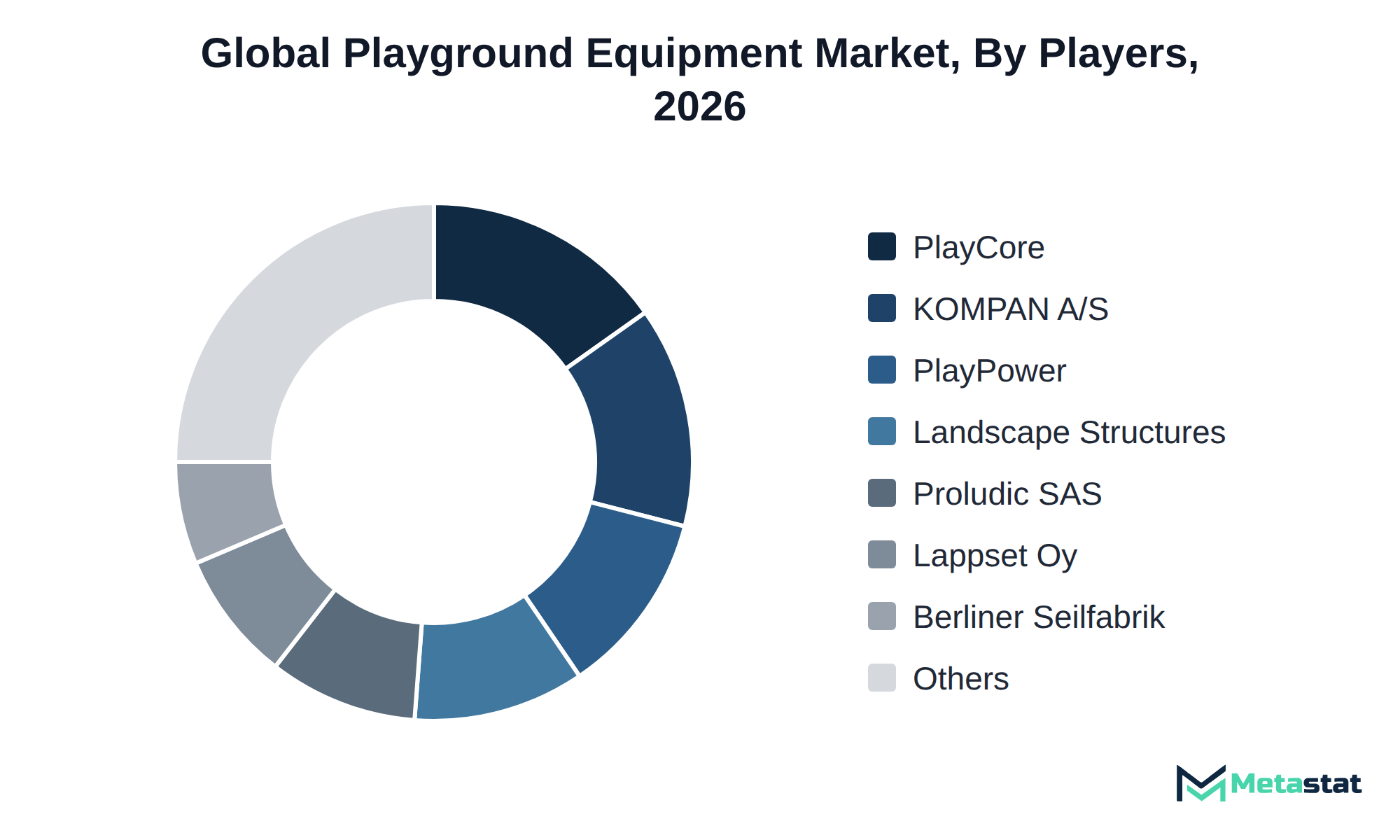
In the Playground Equipment market, companies compete primarily based on product innovation, customization, and pricing strategies. Buyers select products according to perceived value, which includes certification, service, and the overall ecosystem offered by suppliers.
KOMPAN A/S focuses on creating multi-activity play systems that enhance user experience through innovative designs. Landscape Structures Inc. emphasizes sustainability in its product offerings, targeting environmentally conscious buyers. PlayGlobal provides cost-effective solutions tailored to local market needs, appealing to budget-sensitive customers.
Growth in the Playground Equipment market hinges on several key developments. Firstly, the expansion of multi-activity play systems is critical, with an anticipated increase from USD 2,500.3 million in 2026 to USD 3,860.4 million by 2033, driven by rising consumer interest in diverse recreational options. Secondly, growth in outdoor installations is projected, moving from USD 5,601.7 million in 2026 to USD 8,214.2 million by 2033, reflecting a trend toward enhancing public parks and recreation grounds. Lastly, the increasing demand for metal-based equipment, with a growth from USD 2,940.7 million in 2026 to USD 4,338.7 million by 2033, supports market expansion due to durability and maintenance advantages. Potential risks that could impede this growth include economic downturns, which reduce public and private funding for playground infrastructure, particularly affecting the public parks segment. Without sufficient financial backing, the anticipated demand across various segments faces challenges, affecting overall market growth.
By Product Type: Multi-activity Play Systems, Swings, Slides, Climbing Equipment, Spinners and Carousels, Seesaws and Spring Rockers, Balancing and Obstacle Equipment, Sensory and Musical Play Equipment, Playhouses and Role-play Equipment, Others (Sand Tables, Water Tables, Aerial Runways)
By Primary Material: Metal, Wood, Plastic, Others (Rope, Composites)
By End Use: Public Parks and Recreation Grounds, Schools, Early Childhood Facilities, Residential Communities, Private Households, Commercial Leisure Venues, Others (Healthcare, Places of Worship)
By Installation Type: Outdoor, Indoor
The report strategically identifies and profiles the key market players and analyses their core competencies in each sub-segment of the Playground Equipment market.
|
Report Attributes |
Details |
|
Study Period |
2021-2033 |
|
Base Year |
2025 |
|
Estimated Year |
2026 |
|
Forecast Period |
2026-2033 |
|
Historical Period |
2021-2025 |
|
Growth Rate |
CAGR 6.0% from 2026 to 2033 |
|
Revenue Unit |
USD million |
|
Segmentation |
By Product Type, Primary Material, End Use, Installation Type, and Region |
|
By Region |
North America (By Product Type, Primary Material, End Use, Installation Type, and Country)
|
|
Europe (By Product Type, Primary Material, End Use, Installation Type, and Country)
|
|
|
Asia Pacific (By Product Type, Primary Material, End Use, Installation Type, and Country)
|
|
|
South America (By Product Type, Primary Material, End Use, Installation Type, and Country)
|
|
|
Middle East and Africa (By Product Type, Primary Material, End Use, Installation Type, and Country)
|
Find answers to common questions about this report
The Playground Equipment market size was valued at USD 6,336.6 million in 2025.
The market is projected to grow at a CAGR of 6.0% during the forecast period from 2026 to 2033.
The North America Playground Equipment market size is estimated to reach USD 3,378.1 million by 2033.
Multi-activity Play Systems lead the Playground Equipment market with a projected value of USD 3,860.4 million by 2033, representing the highest revenue among product types.
North America holds the dominant share of the Playground Equipment market, with a value of USD 3,378.1 million projected for 2033, representing 35.1 percent of the total market.
High costs associated with playground equipment significantly limit adoption among municipalities and educational institutions, as budget constraints restrict the number of units purchased. Rising material costs, particularly for metals and plastics, further complicate pricing strategies and impact profit margins for manufacturers.
Investment in multi-activity play systems drives adoption in the Playground Equipment market. This trend reflects consumer demand for versatile recreational options that promote diverse physical activities, aligning with the emphasis on community wellness and active lifestyles.
The Playground Equipment market is estimated to reach a valuation of USD 10,111.1 million by 2033.
Key players operating in the Playground Equipment market include KOMPAN A/S, PlayPower, Inc., PlayCore, Inc., Landscape Structures Inc., Lappset Group Oy, Proludic SAS, and Berliner Seilfabrik GmbH & Co.
The projected value of multi-activity play systems is expected to reach USD 3,860.4 million by 2033, reflecting a compound annual growth rate of 6.4% from 2026.
The analysts below cover Consumer Goods research at Metastat Insights.
LEAD ANALYST
Utkarsh Khirodkar is a Lead Market Research Analyst at MetaStat Insight, specializing in market intelligence, technology sector assessments, and competitive strategy.
In the biological seed treatment space, registration timelines vary drastically between the European Union, Brazil, and North America. The MetaStat Insight research handled these cross-border regulatory barriers with genuine nuance, mapping commercialization pathways alongside historical field adoption rates. The segmentation between microbial strains and biochemical active ingredients was particularly well structured.
Our team was tracking whether regional recycling infrastructure could realistically absorb the growing volume of lithium iron phosphate batteries over the next decade. The report did a solid job separating announced hydrometallurgical plant capacity from active, permitted operational throughput. That distinction made the feedstock availability projections and regional recovery rate models far more credible than standard commercial overviews.
Tracking capacity expansion in single-use bioprocessing requires dependable data on raw material availability and cleanroom-grade polymer supply chains. The competitive landscape chapter gave a grounded evaluation of secondary component suppliers across North America and Asia-Pacific rather than simply reprinting press releases. Having that level of supplier benchmarking helped clarify dual-sourcing considerations for our clinical pipeline planning.
Explore related market intelligence reports worth reading alongside this one.