
LEAD ANALYST
Utkarsh Khirodkar is a Lead Market Research Analyst at MetaStat Insight, specializing in market intelligence, technology sector assessments, and competitive strategy.

Optical Design Software Market By Deployment (Cloud-based and Offline), By Application (Illumination, Medical Instrumentation, Aerospace, Defense Systems, Telecommunications, Equipment, Experimental Study, and Others), Industry Analysis, Size, Share, Growth, Trends, and Forecast, 2023-2030
MSI-2504
February, 2026
256 Pages
Report Details
Comprehensive Market Analysis And Insights
The Global Optical Design Software market is estimated to reach $604.8 Million by 2030; growing at a CAGR of 10.1% from 2023 to 2030.
The Optical Design Software Market is instrumental in shaping the future of optical systems by providing advanced software solutions that play a crucial role in the design and optimization of optical components. As technology continues to advance, the significance of optical design software becomes increasingly pronounced, offering engineers and designers unprecedented capabilities to create sophisticated optical systems.
Optical design software serves as the digital toolkit for professionals in the field, empowering them to conceptualize, simulate, and refine optical designs with precision and efficiency. The importance of this software lies in its ability to streamline the design process, enabling faster iterations and reducing the time required to bring cutting-edge optical systems to market. In an era where innovation is paramount, the role of optical design software in expediting product development cannot be overstated.
One of the key features that distinguish optical design software is its capacity to simulate and analyze the behavior of light within complex optical systems. This capability allows engineers to optimize various parameters, such as lens shapes, materials, and coatings, leading to the creation of optical components with enhanced performance characteristics. Consequently, the market for optical design software becomes a catalyst for breakthroughs in industries where precision optics are integral, including healthcare, telecommunications, and manufacturing.
The software's significance extends beyond its technical capabilities; it serves as a facilitator of collaboration and knowledge sharing among professionals in the optical design community. As a result, it fosters a vibrant ecosystem where ideas are exchanged, and best practices are disseminated, contributing to the continuous improvement of optical systems.
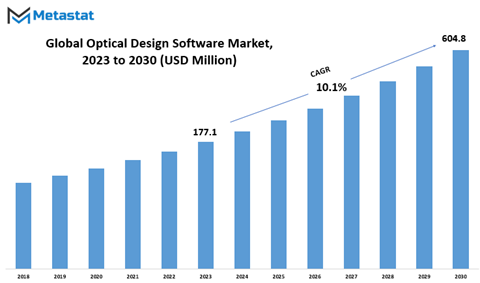
In the Optical Design Software Market, the primary drivers shaping its trajectory are innovation and technological advancements, propelling the industry forward. These factors catalyze the development of cutting-edge software solutions, enhancing the design capabilities and efficiency of optical systems. The market's growth is intrinsically linked to the dynamic landscape of technology, where continual progress fuels the demand for sophisticated optical design tools.
However, challenges loom on the horizon. The complexity of optical design processes and the potential constraints associated with integrating new software into existing workflows pose hurdles. These challenges can impede the seamless adoption of optical design software, affecting market growth.
Additionally, the need for skilled professionals proficient in leveraging advanced optical design software presents a potential bottleneck. The scarcity of expertise in this domain could hinder the optimal utilization of these tools, creating a gap between technological potential and practical implementation.
Yet, despite these challenges, the market remains resilient. The increasing demand for precision in optical systems, driven by applications in various industries like healthcare, telecommunications, and consumer electronics, promises sustained growth. As industries recognize the pivotal role of optical design software in achieving precision and efficiency, the market is poised to capitalize on these opportunities.
Looking ahead, the Optical Design Software Market is well-positioned to capitalize on emerging opportunities. The growing emphasis on research and development in fields like augmented reality, virtual reality, and autonomous vehicles opens new avenues for optical design software. These technologies, reliant on intricate optical systems, present fertile ground for the market to thrive.
The Optical Design Software Market, in its segmentation by deployment, unfolds into two distinct categories, each presenting a unique approach to meet user needs. The Cloud-based segment, valued at 42.3 USD Million in 2021, represents a modern and flexible deployment method. This approach leverages cloud infrastructure, allowing users to access the software remotely over the internet. It embodies convenience and scalability, catering to the contemporary demand for seamless and accessible solutions.
In contrast, the Offline segment, valued at 106.7 USD Million in the same period, adopts a more traditional deployment model. In this setup, the software is installed and operates directly on a user's local device, without the need for continuous internet connectivity. This approach appeals to users who prioritize autonomy and control over their software environment, appreciating a self-contained solution that doesn't rely on external servers.
The Cloud-based deployment option capitalizes on the ubiquitous connectivity of the internet, fostering collaboration and real-time updates. Its appeal lies in the ability to harness computing power from a centralized source, ensuring efficient processing and reduced dependence on individual device capabilities. This approach aligns with the contemporary trend of embracing cloud solutions for their adaptability and ease of integration.
On the other hand, the Offline deployment, while eschewing the reliance on external servers, underscores a preference for a more self-contained and private software experience. Users in environments with limited or no internet access might find this deployment option more suitable. Additionally, those who prioritize data security and prefer to operate software within their local infrastructure may opt for this traditional model.
The segmentation of the Optical Design Software Market by deployment into Cloud-based and Offline options encapsulates the dual nature of contemporary software preferences. The Cloud-based approach mirrors the demand for flexibility and collaboration, while the Offline model caters to those valuing autonomy and localized control. Both options contribute to the market's adaptability, ensuring that users can choose the deployment method that aligns with their specific needs and preferences.
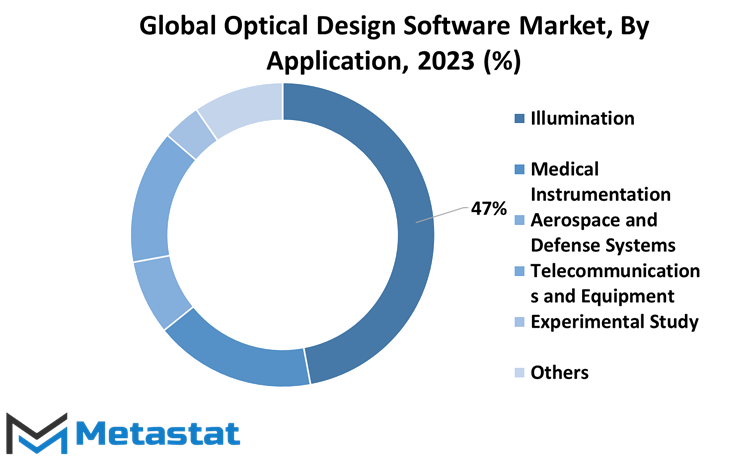
In the Optical Design Software Market, diverse applications delineate the versatile uses of this technology. The market is segmented into various applications, each serving distinct purposes. The Illumination segment, valued at 69.7 USD Million in 2021, showcases the significance of optical design in lighting systems, ensuring efficient and effective illumination in various settings.
Moving beyond lighting, the Medical Instrumentation segment, valued at 25.7 USD Million in the same period, underlines the crucial role of optical design in the development of advanced medical devices and instruments. It highlights how this technology contributes to the precision and functionality of medical equipment, ultimately benefiting healthcare practices.
The Aerospace and Defense Systems segment, valued at 11.9 USD Million in 2021, signifies the importance of optical design in enhancing the performance of aerospace and defense-related optical systems. This application showcases the role of optical design in ensuring accuracy and reliability in critical systems within these sectors.
Telecommunications and Equipment, valued at 21.1 USD Million in 2021, elucidate the role of optical design in the telecommunications industry. It emphasizes the importance of optical components and systems in ensuring the efficient transmission of data through fiber-optic networks, contributing to the seamless functioning of modern communication systems.
Beyond these prominent applications, the market also caters to Experimental Study and Other applications, showcasing the adaptability of optical design software across various research and industrial domains. This diversity in applications highlights the broad spectrum of industries benefiting from the capabilities of optical design software.
The Optical Design Software Market isn't confined to a singular application but extends its impact across a range of sectors. From providing precise illumination solutions to advancing medical instruments, enhancing aerospace and defense systems, optimizing telecommunications, and contributing to experimental studies, optical design software emerges as a versatile and indispensable technology with a wide array of applications in our modern technological landscape.
The Optical Design Software Market exhibits a global presence, with geographical divisions that shape its dynamics. Delving into these divisions, the market spans North America and Europe, highlighting the expansive reach and impact of optical design software solutions across these regions.
In North America, the market finds a robust foothold, driven by technological advancements and a high adoption rate of optical design software in various industries. The region's tech-savvy landscape, coupled with a strong emphasis on innovation, positions it as a significant player in the optical design software domain.
On the other side of the Atlantic, Europe mirrors this trend, contributing substantially to the global optical design software market. With a rich industrial landscape and a keen interest in cutting-edge technologies, European countries actively engage in the utilization of optical design software for diverse applications.
These geographic segments not only represent substantial market shares but also embody the diverse contexts in which optical design software is applied. From research and development initiatives to industrial applications, the global Optical Design Software Market seamlessly integrates into the operational fabric of North America and Europe, epitomizing the widespread influence of this technology on a global scale.
In the expansive landscape of the Optical Design Software Market, key players are instrumental in steering the industry's trajectory. Synopsys and Excelitas Technologies Corp stand as prominent entities within this realm. These companies, through their adept operations, contribute significantly to shaping the market dynamics.
Synopsys, a key player in the Optical Design Software industry, brings its expertise to the fore. Its role extends beyond mere participation; rather, it influences the market with its innovative solutions and technological prowess. The company's presence underscores the importance of cutting-edge optical design capabilities in a technologically advancing world.
Similarly, Excelitas Technologies Corp emerges as another noteworthy contributor. Its operations within the Optical Design Software Market reflect a commitment to advancing optical solutions. The company's role in the industry aligns with the growing demand for sophisticated optical design tools that cater to diverse applications.
These key players navigate the intricacies of the Optical Design Software Market, leveraging their technological acumen to meet the evolving needs of industries relying on optical systems. The impact of Synopsys and Excelitas Technologies Corp extends beyond their immediate operations; it permeates the broader market, influencing trends, innovations, and the overall trajectory of the Optical Design Software industry. As these companies continue to play a pivotal role, the industry is poised to witness further advancements in optical design solutions, ushering in a new era of possibilities and applications.
Emerging segments and regional growth potential
Find answers to common questions about this report
Global Optical Design Software market is valued at $177.1 million in 2023.
Global Optical Design Software market is estimated to grow with a CAGR of 10.1% from 2023 to 2030.
Global Optical Design Software market is estimated to reach $604.8 million by 2030.
Top players operating in the Optical Design Software industry includes Synopsys, Inc, Excelitas Technologies Corp., ZEMAX LLC., Lambda Research Corporation, and others.
Choose Your License
Optical Design Software Market
The analysts below cover Electronics and Semiconductor research at Metastat Insights.
LEAD ANALYST
Utkarsh Khirodkar is a Lead Market Research Analyst at MetaStat Insight, specializing in market intelligence, technology sector assessments, and competitive strategy.

PRINCIPAL CONSULTANT - ENTERPRISE AI & EMERGING TECHNOLOGIES
Banking & Finance · Electronics and Semiconductor · Energy and Power · Healthcare IT · Information & Technology · Professional Services
Vijay Gunti is a Principal Consultant at MetaStat Insight, bringing over two decades of experience across enterprise digital transformation, technology strategy, and intelligent systems.

PRINCIPAL CONSULTANT - QUALITY SYSTEMS & COMPLIANCE
Electronics and Semiconductor · Machinery & Equipment · Professional Services
Omkar Phadtare is an Industry Consultant at MetaStat Insight, specializing in quality systems, regulatory compliance, and standards benchmarking to drive data-driven market intelligence and strategic industry research.

ENERGY & INFRASTRUCTURE INDUSTRY CONSULTANT
Automotive and Transportation · Electronics and Semiconductor · Energy and Power · Machinery & Equipment
Saurabh Vasant Ganvir consults for Energy & Infrastructure Industry at MetaStat Insight, specializing in renewable energy, solar EPC, and electric vehicle (EV) infrastructure markets.

LEAD CONSULTANT - COMMUNICATION, TELECOM, AND IT
Electronics and Semiconductor · Information & Technology · Machinery & Equipment · Professional Services
Ravindra Sathe Consultants for Communication, Telecom, and IT at MetaStat Insight. He leads the firm's industry research initiatives across telecommunications infrastructure, digital connectivity, enterprise networking, and emerging information technology domains.
Replacing petrochemical surfactants with bio-based alternatives requires realistic timelines on industrial precision fermentation scaling. The market research broke down commercialization timelines, feedstock sugar price sensitivities, and regional cosmetic ingredient regulatory approvals in Europe and East Asia. That supplier readiness mapping gave our formulations team reliable context when comparing renewable chemical sourcing roadmaps.
Tracking ceramic matrix composite adoption in high-bypass aero engines requires strict attention to material qualification cycles and FAA airworthiness testing milestones. The MetaStat Insight team provided a detailed timeline of silicon carbide fiber manufacturing capacity and commercial foundry lead times. Having clear visibility into upstream thermal barrier coating supply helped us stress-test our long-term component procurement strategy.
Transitioning ultra-class mining haul trucks to alternative power requires concrete data on remote hydrogen refueling infrastructure economics. The report evaluated megawatt-scale electrolyzer installation expenses, onsite storage safety mandates, and heavy-duty fuel cell stack degradation under continuous duty cycles. That technical rigor helped our engineers benchmark realistic total operating cost horizons for off-highway fleet decarbonization.
Explore related market intelligence reports worth reading alongside this one.
Starting from
$2950
Starting from
$2950