
LEAD ANALYST
Utkarsh Khirodkar is a Lead Market Research Analyst at MetaStat Insight, specializing in market intelligence, technology sector assessments, and competitive strategy.

Nutricosmetics Market Size, Share, By Product Type (Skin Care, Hair Care, Nail Care, and Others), By Ingredient Type (Collagen and Peptides, Vitamins and Minerals, Omega-3 and EFAs, Probiotics and Postbiotics, Botanical Extracts, and Others), By Form (Tablets and Capsules, Powders and Liquids, Gummies and Soft-Chews, and Others), By Distribution Channel (Supermarkets & Hypermarkets, Health & Beauty Stores, Online Retail & D2C, and Others), Industry Analysis, Growth, Trends, and Forecasts, 2026-2033
MSI-4530
February, 2026
257 Pages
Report Details
Comprehensive Market Analysis And Insights
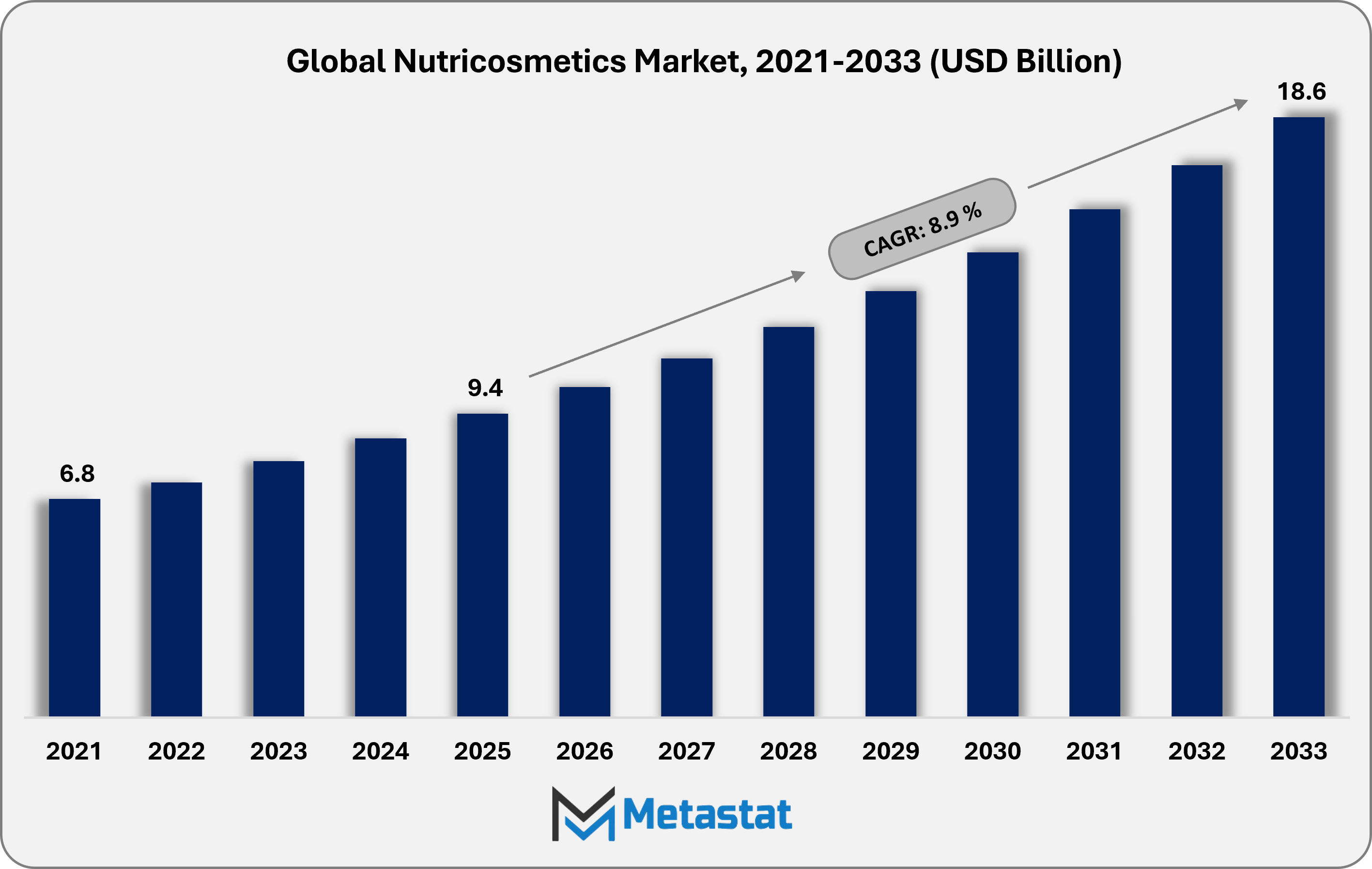
The global nutricosmetics market size was valued at USD 9.41 billion in 2025. The market is projected to grow from USD 10.2 billion in 2026 to USD 18.6 billion by 2033, exhibiting a CAGR of 8.9% during the forecast period.
The global nutricosmetics market was valued at USD 9.4 billion in 2025, growing at a CAGR of around 8.9% through 2033, with potential to exceed USD 18.6 billion.
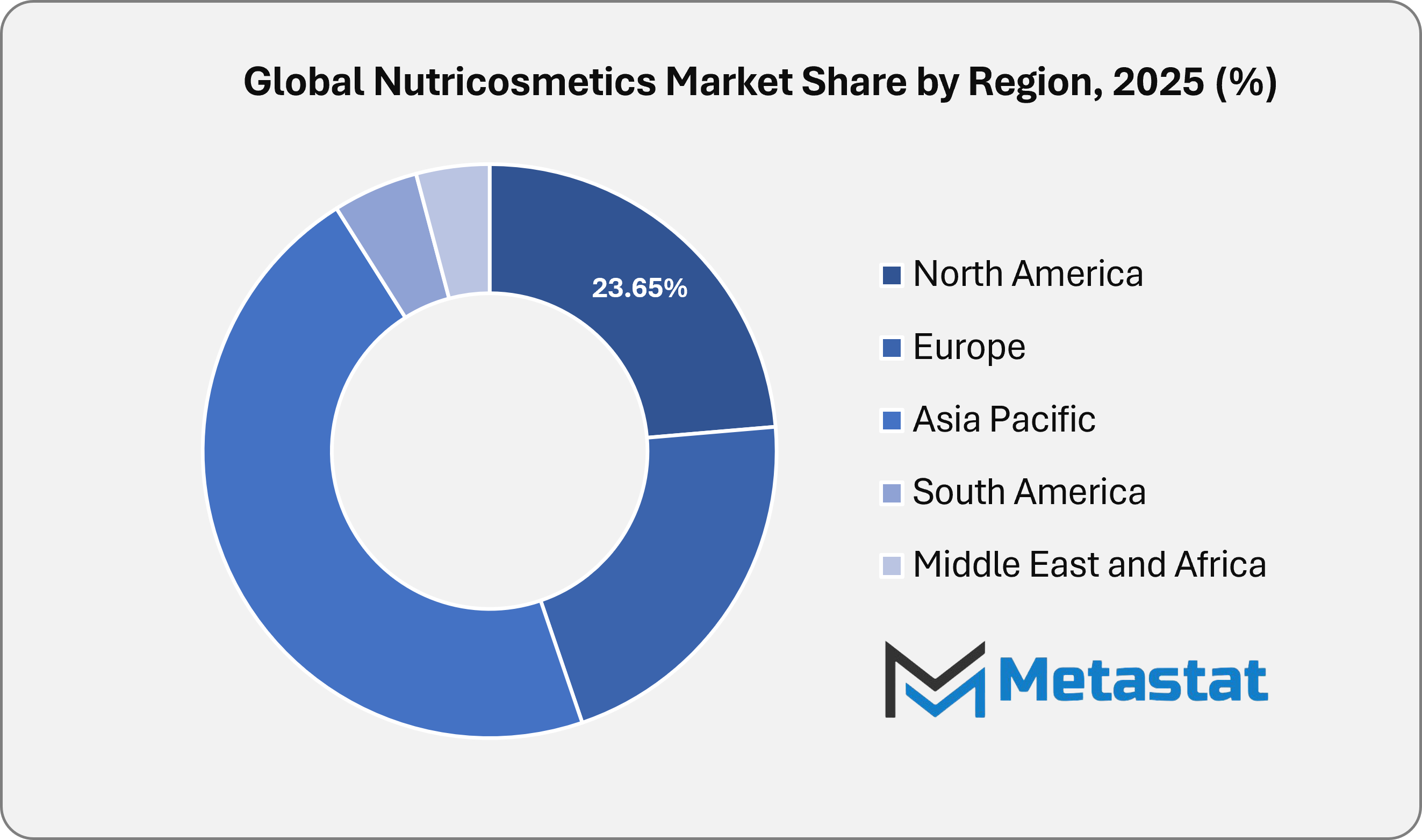
North America accounted for 23.7% of the nutricosmetics market in 2025, with the US leading the market share in 2026.
The Skin Care segment accounts for 57.6% of the nutricosmetics market share in 2025, driving innovation and expanding applications through clinically aligned multi-ingredient stacks combining collagen peptides, vitamin C, ceramides, hyaluronic acid, zinc, and antioxidant actives to support hydration, firmness, and barrier performance.
Rising consumer preference for beauty-from-within products supporting holistic wellness and growing awareness of anti-aging and skin rejuvenation benefits through nutritional supplements are key driving trends of nutricosmetics market.
Increasing innovation in personalized, plant-based, and collagen-enriched nutricosmetic formulations is an opportunity for the nutricosmetics market.
Key insight: Clinical-grade positioning and measurable beauty outcomes are expected to propel premiumization in nutricosmetics, with brands that pair evidence-backed actives, clean-label sourcing, and personalized formats likely to secure increased repeat purchases and stronger pricing power over the next decade.
The nutricosmetics market is shifting from occasional supplement consumption to integrated beauty routines, with consumers seeking outcomes for skin radiance, hydration, elasticity, hair density, and nail strength that fit preventive wellness priorities. The demand of nutricosmetics is being propelled by collagen peptides, hyaluronic acid, ceramides, biotin, carotenoids, and microbiome-oriented concepts delivered through gummies, powders, liquids, and functional beverages that emphasize taste, convenience, and measurable results. The direction is reinforced by the macro wellness backdrop, with the global wellness institute reporting that the wellness economy reached about USD 6,800 billion in 2024, growing by 7.9% from the previous year, highlighting the sustained consumer willingness to spend on integrated health and beauty routines.
The growth of the nutricosmetic market is expected to remain strong across the forecast period, with the brands set to increase clinical substantiation, strengthen third-party testing, and refine claim language around skin barrier support, anti-ageing, and hair-fall reduction. Subscription models and dermatologist-nutritionist collaborations are likely to increase repeat purchases, driven by rising preferences for personalized stacks and transparent ingredient sourcing. Large consumer goods players are validating the category's strategic relevance. For instance, Unilever's Beauty & Wellbeing business reported at Euro 13.2 billion in 2024 and delivering 6.5% underlying sales growth, supported by strong performance from its wellbeing brands, signalling increased competitive intensity and innovation pipelines in ingestible beauty.
Rising Consumer Preference for Beauty-from-within Products Supporting Holistic Wellness
Consumers are connecting skin, hair, and nailcare outcomes with nutrition, sleep, stress balance, and gut health. Daily ingestible routines are gaining traction alongside topical regimens in urban and fitness-led groups. Gummies, powders, and ready-to-mix formats are improving adherence and lifestyle fit. The change of daily routine is expected to propel a sustained demand for science-led, preventive nutricosmetics.
Growing Awareness of Anti-Aging and Skin Rejuvenation Benefits through Nutritional Supplements
Increased exposure to clinical content is strengthening trust in collagen, antioxidants, ceramides, and hydrating blends. Users are seeking gradual, visible improvements in elasticity, hydration, and tone with consistent intake. Brands are expanding evidence-backed claims and dosage transparency to support credibility. The dynamic is likely to propel premium offerings and increased purchases of nutricosmetic products across all the age groups.
High Product Cost and Limited Clinical Validation Affecting Consumer Trust
The premium pricing for collagen, ceramides, and specialty blends is narrowing nutricosmetics market adoption. The price-value audit is increasing in online channels where comparisons are immediate and frequent. Limited large-scale human trials in some claims are creating hesitation among new buyers. The combination is likely to slow brand switching and temper volume expansion in price-sensitive consumers.
Regulatory Inconsistencies across Regions Slowing Product Approvals
The legal health claims, ingredients and different labeling rules are complicating global launches in the nutricosmetics market. The major brands often need region-specific formulations and packaging, owing to an increase in deployment delays. Compliance costs are rising owing to increased inspection of efficacy and safety statements by authorities. The environment is expected to delay cross-border scale-up and constrain uniform portfolio strategies in the nutricosmetics market.
Increasing Innovation in Personalized, Plant-Based, and Collagen-Enriched Nutricosmetic Formulations
The personalized collection of nutricosmetics aligned to age, lifestyle, and skin concerns are improving efficacy and loyalty. Plant-based actives and clean-label positioning are attracting vegan and sustainability-focused buyers to the nutricosmetic market. Next-generation collagen formats and synergistic blends are supporting improved bioavailability narratives. These opportunities are expected to propel growth and increased brand differentiation, owing to stronger alignment with individualized beauty goals.
The global Nutricosmetics market is mainly classified based on Product Type, Ingredient Type, Form, and Distribution Channel.
Skin care remains the primary source within the nutricosmetics market. Collagen peptides, hyaluronic acid, ceramides, antioxidants, and probiotic-led blends are supporting demand for hydration, elasticity, and barrier reinforcement. Cross-category adoption from dermatology, wellness, and preventive health is increasing purchase frequency. The clinically framed claims and routine-friendly formats will propel the growth in the nutricosmetics market.
Hairfall control, density support, and scalp health are strengthening consumer pull across all genders. Biotin, zinc, amino acids, marine and plant proteins, and adaptogen-based formulas are getting attention in the nutricosmetics market. The influencer-led routines and digital education are increasing trial and adoption.
Nail strength, brittleness reduction, and faster growth benefits are shaping nail care into a focused, performance-led subcategory. Formulations featuring biotin, collagen, silica, and trace minerals are supporting demand for targeted, outcome-driven approaches. Bundled hair-skin-nail offerings are increasing visibility while strengthening value insight.
The others category includes emerging areas owing to oral beauty, body firming, pigmentation support, and microbiome-linked beauty concepts. Major brands are exploring botanicals, carotenoids, and functional beverage formats to widen consumer entry points. Innovation in clean-label, sugar-managed gummies and ready-to-drink options is increasing addressable demand in the nutricosmetics market. The others segment is expected to propel corner mainstream transitions, owing to accelerated product experimentation.
Collagen and peptides support consumable beauty positioning owing to skin firmness, elasticity, and hydration. Marine and bovine sources, along with targeted peptide blends, are increasingly combined with vitamin C and hyaluronic acid to boost bioavailability and efficacy narratives in the nutricosmetics market. Consumers are adopting powders, sticks, and gummies, propelled by premium branding and improved taste profiles.
Vitamins and minerals are expected to maintain broad demand across skin brightness, hair strength, and nail resilience propositions. Biotin, zinc, selenium, and vitamins A, C, D, and E dominate multi-benefit formulas in mainstream and premium ranges in the nutricosmetics market. Purchase frequency is increasing in daily wellness routines, owing to familiar ingredients and accessible pricing of nutricosmetic products.
Omega-3 and EFA offerings, which target skin barrier function, dryness management, and inflammation modulation, support the nutricosmetic market. Clean-label fish, algal, and plant-derived oils are strengthening trust among health-led consumers. Cross-category overlap with heart and cognitive wellness is expanding addressable demand and supporting increased repeat purchases in the nutricosmetic market.
Probiotics and postbiotics are shaping gut-skin axis positioning centered on acne support, sensitivity reduction, and overall clarity. Shelf-stable strains, synbiotic combinations, and multi-format delivery systems are making swiftly innovation in the nutricosmetic market. Consumer familiarity is rising rapidly, propelled by broader digestive health adoption and clearer clinical communication.
Botanical extracts diversify formulations across antioxidant protection, brightening, and stress-linked beauty claims. Astaxanthin, green tea, grape seed, turmeric, and adaptogens are gaining interest within clean-label portfolios. Demand for botanical extracts is increasing among younger groups, owing to plant-forward preferences and premium storytelling in the nutricosmetics market.
The others category includes ceramides, hyaluronic acid, coenzymes, and emerging bioactives that extend beyond standard skin-hair-nail stacks. Brands are building synergistic combinations to differentiate in crowded assortments and strengthen evidence-led claims. Functional beverages and advanced gummy systems are widening entry points and supporting increased trial in the nutricosmetics market.
Tablets and capsules remain a mature, trust-led format within nutricosmetics market, valued for dose precision and clean, clinical positioning. Brand portfolios continue to expand with multi-ingredient skin-hair-nail stacks that fit daily routines. The demand for tablets and capsules has led to the development of pharmacy-led credibility and cost-efficient pack sizes, which support consistent replenishment in the nutricosmetics market.
Powders and liquids are strengthening their role in a premium and performance-focused approach centered on collagen, peptides, and hydration blends. Fast-mix convenience and flavour-led innovation are supporting increased adherence in fitness-aligned consumers. Adoption of these powder and liquid products is rising in online and specialty channels, owing to stronger perceived potency and flexible dosage options.
Gummies and soft chews are driving accessibility with sensory appeal and simplified daily intake. This product format is particularly effective in first-time user conversion and younger demographics seeking enjoyable wellness habits. Brand innovation in low-sugar, clean-label, and functional combinations is helping propel repeat purchases and premium extensions.
The others segment includes emerging delivery formats such as functional shots, ready-to-drink beauty beverages, and dissolvable strips. These formats are gaining attention in convenience-led and on-the-go consumption occasions. The interest in nutricosmetics products is increasing with brand differentiation strategies and lifestyle positioning that reinforces beauty-from-within routines.
Supermarkets and hypermarkets provide high-visibility access for mass and mid-tier nutricosmetics, supporting impulse-led trial and bundled wellness purchases. Brand-led shelf education, sampling, and value packs are reinforcing routine adoption in mainstream consumer cohorts. Share stability is supported by price competitiveness and broad reach, owing to strong footfall and cross-category merchandising.
Health and beauty stores strengthen premium positioning through expert-assisted selling and curated consumable beauty assortments. Dermatology-aligned recommendations and category specialists improve consumer confidence in collagen, probiotic, and antioxidant-based procedures. Health and beauty stores are rising with targeted launches and exclusive SKUs that propel repeat purchases and brand loyalty.
Online retail and D2C channels are accelerating category expansion through education-led discovery, subscriptions, and personalized regimen builders in the nutricosmetics market. Influencer-driven content, reviews, and clinical storytelling are increasing conversion and reducing trial barriers. Data-led product optimization and faster innovation cycles reinforce momentum, owing to direct consumer feedback loops.
The others category includes pharmacies and specialty nutrition outlets, which support credibility-led purchases and targeted solutions aligned to specific beauty concerns. The contribution from other channels is strengthening owing to Omni channel strategies and premium sampling programs that enhance awareness and encourage routine adherence.
Based on geography, the global Nutricosmetics market is divided into North America, Europe, Asia-Pacific, South America, and the Middle East & Africa.
North America Nutricosmetics Market is set to expand at a CAGR of 8.9% within the forecast period, reaching a market size (TAM) of USD 4.4 billion by the end of 2033.
Holistic wellness culture and high supplement penetration are accelerating ingestible beauty adoption across North America. Consumers of nutricosmetic products link gut health, inflammation management, and healthy aging with visible skin and hair outcomes, supporting daily use of collagen, ceramides, and microbiome-oriented stacks.
Plant-forward actives, fermentation-led concepts, and functional beverage formats match everyday consumption habits and increase trial rates. Localized flavour profiles and culturally familiar botanicals support faster acceptance and premium storytelling, owing to their strong resonance with heritage wellness cues in the Asia-Pacific region.
Urban consumers in the Middle East, Africa, and leading Latin American economies are showing increased interest in preventive wellness routines that extend into ingestible beauty. Price sensitivity, import reliance, and cross-country regulatory variation elevate the importance of tiered portfolios, pharmacy-led credibility, and clear, locally compliant claims.
Competitive intensity in nutricosmetics reflects a mix of global nutrition leaders, beauty multinationals, and high-credibility wellness platforms shaping category standards and consumer expectations. Amway Corporation and Herbalife Nutrition Ltd continue to leverage relationship-led selling and regimen-based education, while Nestle Health Science and Unilever bring scale, clinical framing, and adjacent wellbeing portfolios that support cross-category penetration. Shiseido Company Ltd, Suntory Holdings Ltd, Kirin Cosmetics Co., Ltd., FANCL Corporation, DHC Corporation, Orihiro Co., Ltd., and LG Household & Health Care Co., Ltd. strengthen Asia-led innovation in beauty-from-within through strong alignment to functional formats and premium brand equity. GNC Holdings LLC and Vitabiotics Ltd add broad retail visibility and science-positioned portfolios that boost mainstream trust, alongside Viviscal Limited and BioCell Technology LLC that retain specialist credibility within hair health and collagen-centric propositions.
Ingredient provenance, format innovation, and clinical storytelling increasingly define strategic differentiation, elevating brand trust and supporting premium pricing. Australia-origin players such as Blackmores Ltd, Swisse Wellness Pty Ltd, The Beauty Chef Pty Ltd, Vida Glow, and Advanced Nutrition Programme are pushing premium collagen, gut-skin axis, and clean-label narratives, supported by strong export momentum and lifestyle-led brand building. US and global digital-native brands including HUM Nutrition Inc, Olly Public Benefit Corp, Moon Juice, The Nue Co., and LYMA Life are accelerating personalization, subscription models, and influencer-healthcare crossover education to increase repeat purchases. Kora Organics and Wow Skin Science reinforce clean beauty adjacency and India-led accessibility, while GELITA AG represents a critical upstream enabler of high-purity collagen and peptide innovation that helps brand partners improve efficacy claims and sensory performance. Portfolio strategy across these players is moving toward modular skin-hair-nail stacks and microbiome-aligned offerings, propelled by increased consumer focus on measurable outcomes and preventive beauty routines.
Market size is forecast to rise from USD 9.4 billion in 2025 to over USD 18.6 billion by 2033.
Nutricosmetics is likely to maintain strong momentum over the forecast period as beauty-from-within routines become a mainstream extension of daily wellness. Premiumization will rise as clinically validated collagen, ceramides, probiotics, and multi-active stacks gain larger market shares in the nutricosmetics sector. In both mature and emerging markets, personalization, subscriptions, and condition-specific procedures will propel retention and lifetime value. Innovation in plant-based actives, low-sugar gummies, functional beverages, and advanced delivery systems will reinforce trial and repeat purchases. Regulatory tightening around claims and quality standards led to elevate entry barriers while improving consumer confidence in validated brands. Competitive strategies will increasingly prioritize evidence, ingredient traceability, and omnichannel education, owing to rising expectations for measurable outcomes.
This research report categorizes the nutricosmetics market based on key segments and regions, forecasts revenue growth, and analyses trends in each submarket. The report analyses the key growth drivers, opportunities, and challenges influencing the nutricosmetics market. Recent market developments and competitive strategies such as expansion, type launch, development, partnership, merger, and acquisition have been included to draw the competitive landscape in the market.
The report strategically identifies and profiles the key market players and analyses their core competencies in each sub-segment of the nutricosmetics market.
|
Report Attributes |
Details |
|
Study Period |
2021-2033 |
|
Base Year |
2025 |
|
Estimated Year |
2026 |
|
Forecast Period |
2026-2033 |
|
Historical Period |
2021-2025 |
|
Growth Rate |
CAGR 8.9% from 2026 to 2033 |
|
Revenue Unit |
USD billion |
|
Sales Volume Unit |
Kilotons |
|
Segmentation |
By Product Type, Ingredient Type, Form, Distribution Channel, and Region |
|
By Product Type |
Skin Care |
|
Hair Care |
|
|
Nail Care |
|
|
Others |
|
|
By Ingredient Type |
Collagen and Peptides |
|
Vitamins and Minerals |
|
|
Omega-3 and EFAs |
|
|
Probiotics and Postbiotics |
|
|
Botanical Extracts |
|
|
Others |
|
|
By Form |
Tablets and Capsules |
|
Powders and Liquids |
|
|
Gummies and Soft-Chews |
|
|
Others |
|
|
By Distribution Channel |
Supermarkets & Hypermarkets |
|
Health & Beauty Stores |
|
|
Online Retail & D2C |
|
|
Others |
|
|
By Region |
North America (By Product Type, Ingredient Type, Form, Distribution Channel, and Country) |
|
|
|
|
|
|
|
Europe (By Product Type, Ingredient Type, Form, Distribution Channel, and Country) |
|
|
|
|
|
|
|
|
|
|
|
|
|
|
|
|
Asia Pacific (By Product Type, Ingredient Type, Form, Distribution Channel, and Country) |
|
|
|
|
|
|
|
|
|
|
|
|
|
|
|
|
South America (By Product Type, Ingredient Type, Form, Distribution Channel, and Country) |
|
|
|
|
|
|
|
|
Middle East and Africa (By Product Type, Ingredient Type, Form, Distribution Channel, and Country) |
|
|
|
|
|
|
|
|
Find answers to common questions about this report
The Metastats Insights study shows that the global nutricosmetics market size was USD 9.4 billion in 2025.
The global Nutricosmetics market is likely to grow at a CAGR of 8.9% over the forecast period (2026-2033).
Global Nutricosmetics market is estimated to reach USD 18.6 billion by 2033.
Top players operating in the Nutricosmetics industry are Amway Corporation, Herbalife Nutrition Ltd, Nestle Health Science, Shiseido Company Ltd, etc.
Nutricosmetics refer to ingestible beauty products formulated to enhance skin, hair, and nail health from within. Unlike traditional topical cosmetics that act on the surface, nutricosmetics work systemically by delivering bioactive ingredients through oral supplements such as capsules, tablets, powders, gummies, or functional beverages.
Choose Your License
Nutricosmetics Market
The analysts below cover Food and Beverages research at Metastat Insights.
LEAD ANALYST
Utkarsh Khirodkar is a Lead Market Research Analyst at MetaStat Insight, specializing in market intelligence, technology sector assessments, and competitive strategy.

LEAD PRINCIPAL ANALYST, PHARMA AND HEALTHCARE
Food and Beverages · Healthcare · Healthcare IT · Medical Devices
Ajay Devgire is the Lead Healthcare Analyst at MetaStat Insight, leading strategic research and market intelligence initiatives across the global healthcare domain.

SENIOR RESEARCH ANALYST
Biotechnology · Food and Beverages · Medical Devices · Packaging
Snehal Pasalkar is a Research Analyst at MetaStat Insight, operating at the intersection of life sciences research, competitive strategy, and market intelligence.
Transitioning ultra-class mining haul trucks to alternative power requires concrete data on remote hydrogen refueling infrastructure economics. The report evaluated megawatt-scale electrolyzer installation expenses, onsite storage safety mandates, and heavy-duty fuel cell stack degradation under continuous duty cycles. That technical rigor helped our engineers benchmark realistic total operating cost horizons for off-highway fleet decarbonization.
Enterprise zero-trust network rollouts are often slowed down by multi-cloud transit latency and proprietary hardware retirement schedules. This study provided realistic total cost of ownership models comparing cloud-delivered security edge solutions against traditional hardware refreshes. The analysis of contract renewal lengths and software maintenance fees gave us clear visibility into enterprise replacement cycles over the next three to five years.
Scaling antibody-drug conjugate manufacturing hinges on contract manufacturing availability for high-potency active ingredients. The MetaStat Insight analysis looked closely at global cleanroom slot constraints, bioconjugation batch failure rates, and supply chain redundancies between the US, Europe, and India. The supplier capability matrix proved genuinely useful for our team when mapping secondary source options across our clinical pipeline.
Explore related market intelligence reports worth reading alongside this one.