Global Smartphone Display Market Size, Share, By Display Technology (LTPO AMOLED, LTPS AMOLED, LTPS TFT-LCD, a-Si TFT-LCD, Others (MicroLED and Mini-LED-backlit LCD)), By Screen Size (Below 5.5 Inches, 5.5 - 6.0 Inches, 6.1 - 6.5 Inches, 6.6 - 7.0 Inches and Above 7.0 Inches), By Refresh Rate (Up to 60 Hz, 61 - 90 Hz, 91 - 120 Hz and Above 120 Hz), Industry Analysis, Growth, Trends, and Forecast, 2026-2033
Report ID
MSI-4824
Published
July 28, 2026
Pages
256 Pages
Format
Report Details
Comprehensive Market Analysis And Insights
Market Overview
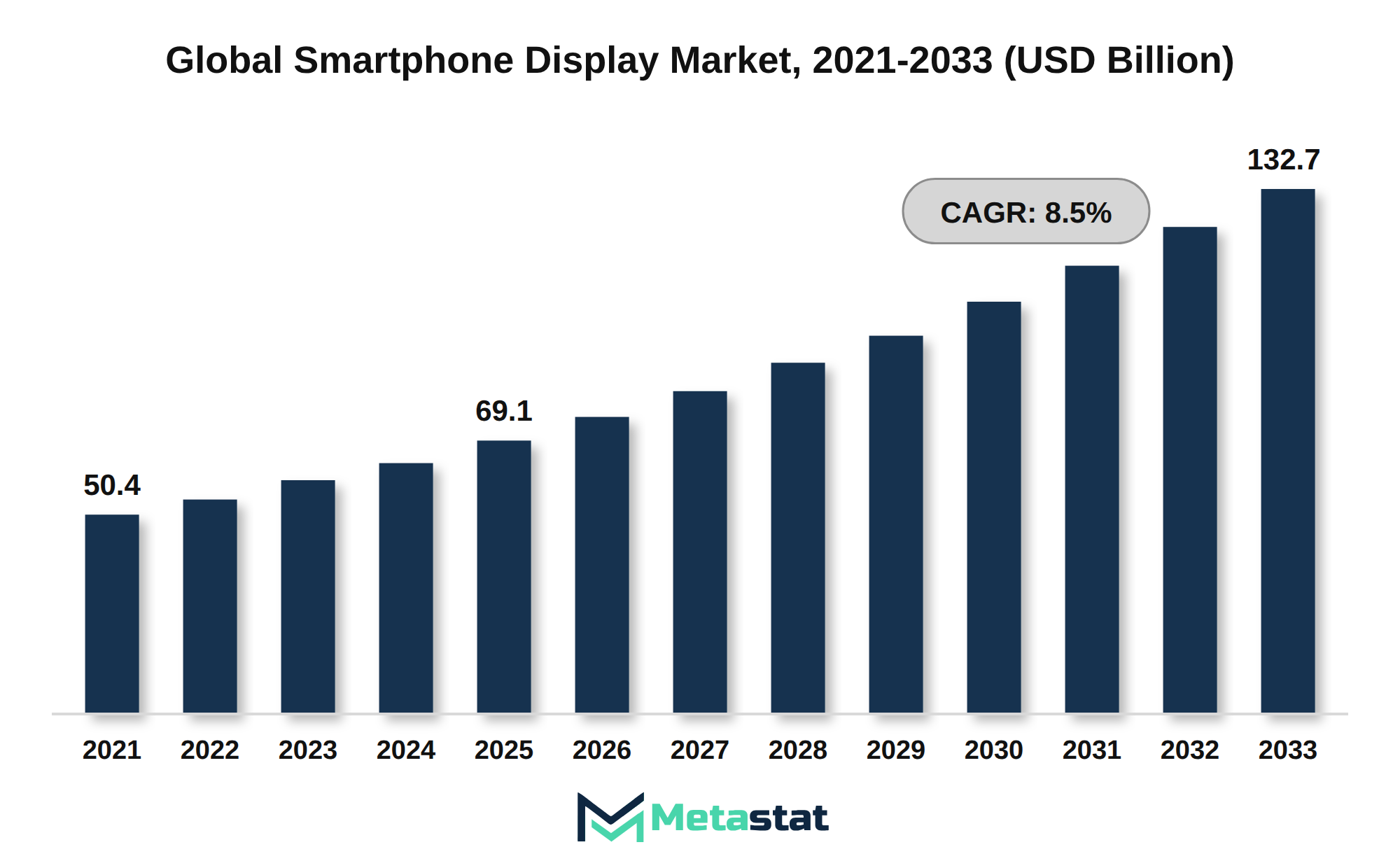
The global Smartphone Display market was valued at USD 69.1 billion in 2025 and is projected to grow at a CAGR of 8.5% during the forecast period, reaching USD 132.7 billion by 2033.
Current trends and future prospects in the Smartphone Display Market
The Smartphone Display market is projected to reach USD 132.7 billion by 2033, growing from a base value of USD 69.1 billion in 2025, which represents a compound annual growth rate (CAGR) of 8.5%. The market's growth trajectory is influenced by increasing demand for advanced display technologies and a rising consumer preference for larger screens with higher refresh rates.
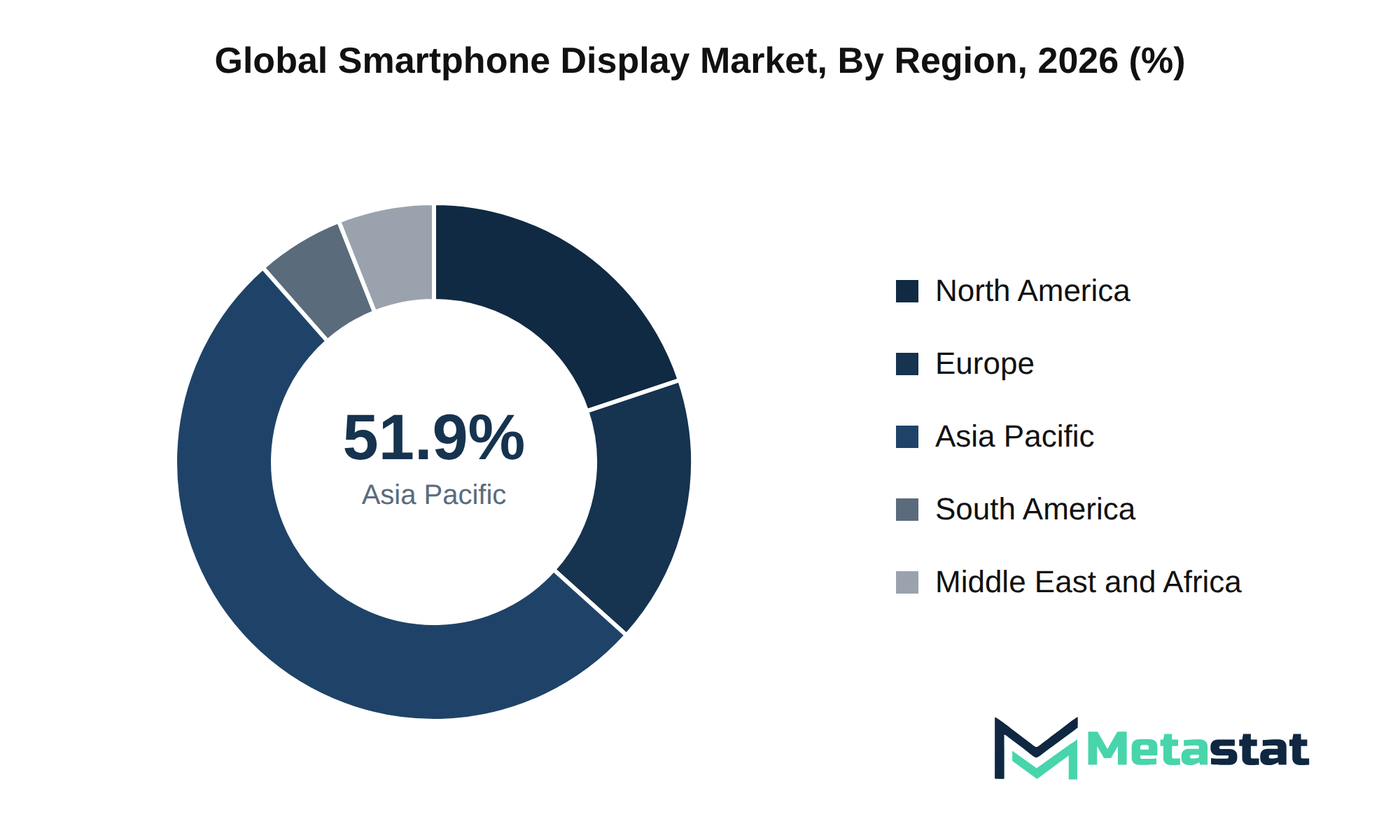
In 2025, North America is expected to hold a market share of 19.9%, with the United States leading in market share in 2026. This regional dominance reflects the significant presence of major players and technological advancements in display technologies. In comparison, Asia Pacific holds the largest share at 51.9%, driven by rapid smartphone adoption and manufacturing capabilities in countries such as China, Japan, and South Korea.
Market dynamics and technological advancements
The competitive environment in the Smartphone Display market is shaped by ongoing technological innovations and research and development efforts. Companies are investing in next-generation display technologies, such as LTPO AMOLED and LTPS AMOLED, which offer improved performance and energy efficiency. LTPO AMOLED is projected to grow from USD 16 billion in 2026 to USD 39.8 billion by 2033, showing a CAGR of 13.9%. LTPS AMOLED is also expected to experience significant growth, reaching USD 45.1 billion by 2033.
As manufacturers strive to meet evolving consumer expectations, they are focusing on enhancing display characteristics like refresh rates and screen sizes. Displays with refresh rates above 120 Hz are anticipated to gain traction, growing significantly. Larger screen sizes, particularly in the 6.1 to 6.5 inches category, are expected to dominate the market by 2033.
Supply chain resilience is critical for the market, as disruptions can impact production timelines and costs. Companies are adopting strategic sourcing strategies to secure components and materials essential for display production. This approach is vital in maintaining competitive pricing and ensuring product availability, especially in the face of geopolitical risks and fluctuating supply chain dynamics.
Manufacturers are increasingly prioritizing sustainable practices in their operations. The emphasis on decarbonization and circular economy principles is evident, as businesses seek to minimize their environmental footprint while meeting regulatory compliance. The integration of sustainable technologies not only satisfies consumer demand for eco-friendly products but also aligns with global initiatives aimed at reducing waste and promoting resource efficiency.
As the Smartphone Display market continues to evolve, players must navigate a complex environment characterized by rapid technological advancements and shifting consumer preferences. A proactive approach in adapting to these changes will be essential for companies aiming to maintain their market position and drive future growth.
Value chain analysis and customer dynamics
The Smartphone Display market operates within a complex value chain that involves multiple stages, including raw material sourcing, manufacturing, distribution, and retail. Key players in the market rely on efficient procurement strategies to ensure timely delivery of components, which is crucial for maintaining competitive pricing and product availability. The integration of advanced technologies and streamlined processes has improved operational efficiency across the value chain. These improvements enhance customer satisfaction and loyalty, as manufacturers can deliver products that meet consumer demand more effectively.
Digital transformation and operational efficiency
Digitalization is reshaping the operations within the Smartphone Display market. Companies are adopting smart operations to optimize production processes and improve product quality. The integration of Industry 4.0 principles, including automation and data analytics, allows manufacturers to respond rapidly to market changes. This shift not only increases production efficiency but also helps in managing supply chain disruptions. Enhanced visibility across the supply chain supports better decision-making, allowing businesses to adapt swiftly to consumer preferences and technological advancements.
Capital allocation and investment trends
Investment in infrastructure is critical for companies in the Smartphone Display market. Capital allocation focuses on upgrading manufacturing facilities and adopting advanced technologies to enhance production capabilities. These investments are essential to meet the growing demand for high-quality displays. Companies are increasingly prioritizing research and development (R&D) to encourage innovation. This commitment to R&D is essential for developing next-generation display technologies that can cater to evolving consumer needs, such as improved refresh rates and display sizes.
Macroeconomic factors affecting the market
The Smartphone Display market faces various macroeconomic challenges that can impact growth trajectories. Inflationary pressures can lead to increased costs for raw materials and labor, affecting overall profitability. Currency volatility also poses risks for companies that operate in multiple regions, as fluctuations can influence pricing strategies and profit margins. Companies must navigate these economic headwinds carefully to mitigate potential disruptions and maintain their competitive edge in the market.
Strategic considerations for market players
As the Smartphone Display market evolves, companies must adapt their strategies to remain relevant. A focus on sustainable practices is becoming increasingly important, as consumers prioritize eco-friendly products. This shift necessitates the adoption of circular economy principles, where companies are encouraged to minimize waste and enhance recyclability in their manufacturing processes. Firms that successfully implement these strategies may gain a significant advantage in attracting environmentally conscious consumers.
Ultimately, the market's future will depend on how well players can address these challenges while capitalizing on opportunities for growth and innovation. Strategic investments in technology, sustainability, and customer engagement will be crucial for success in this competitive environment.
Market Dynamics
Digital transformation drives demand for advanced display technologies
The ongoing digital transformation across various sectors significantly shapes the Smartphone Display market. As businesses increasingly adopt automation, artificial intelligence (AI), and modern software solutions, there is a heightened demand for smartphones equipped with advanced display technologies. This transformation is driven by the necessity for enhanced user experiences and interactions, compelling manufacturers to innovate and integrate superior display features, including higher refresh rates and improved color accuracy, into their devices. Consequently, consumers are more inclined to invest in smartphones that meet these evolving technological standards, boosting overall market growth.
Asia Pacific emerges as the most impacted region, accounting for 51.9% of the market share. In this region, the rapid pace of urbanization and technological advancement creates a strong appetite for smartphones with high-performance displays. Countries like China and India contribute significantly, as they are home to a large population of tech-savvy consumers who prioritize advanced features. The increasing disposable income allows a larger segment of the population to upgrade to premium devices with advanced display technologies, further fueling demand in the market.
Suppliers must adapt to these changing consumer expectations by prioritizing research and development efforts aimed at innovative display solutions. The need for higher-quality displays, such as LTPO AMOLED and LTPS AMOLED, presents opportunities for manufacturers to differentiate themselves through superior product offerings. As competition intensifies, suppliers that effectively innovate and streamline their production processes are well-positioned to capture a larger share of this expanding market. The emphasis on digital transformation will continue to drive investment in advanced display technologies, ultimately shaping the future of the Smartphone Display market.
Shifting demographic patterns drive demand for larger displays
As consumer behaviors evolve, shifting demographic patterns significantly influence the demand for larger smartphone displays. Increasing urbanization and lifestyle changes, particularly among younger populations, have prompted users to seek devices that support media consumption, gaming, and productivity tasks. Enhanced display sizes, paired with advanced technologies, create an attractive proposition for buyers who prioritize immersive experiences and ease of use. Consequently, the Smartphone Display market is poised for growth driven by the need for larger and more sophisticated screen technologies that accommodate these preferences.
Regions experiencing the most pronounced shifts are Asia Pacific and North America. In Asia Pacific, urban populations are rapidly increasing, leading to a greater demand for smartphones that feature larger displays. This demographic trend is reflected in the preference for devices that enhance social media engagement and gaming experiences, which necessitate larger screens. North America also exhibits growing consumer interest in larger displays, particularly among millennials and Generation Z, who prioritize functionality and multimedia capabilities. As these regions adapt to changing consumer expectations, manufacturers are likely to emphasize larger display offerings to capture market share.
For suppliers, this shift represents both an opportunity and a challenge. The demand for larger displays necessitates investment in new manufacturing processes and technologies, particularly in the production of high-resolution screens such as LTPO AMOLED and LTPS AMOLED. Suppliers must also focus on innovation to enhance performance while controlling costs in a competitive environment. This trend towards larger displays may drive collaboration among suppliers to streamline production and improve efficiency, ultimately benefiting the market as a whole through enhanced product offerings.
High capital investment requirements and escalating operating costs
The Smartphone Display market faces significant restraint from high capital investment requirements and escalating operating costs. Companies entering or expanding within this market must allocate substantial financial resources for research and development, production facilities, and advanced manufacturing technologies. This initial capital outlay can be a barrier, particularly for smaller firms and startups trying to compete with established players. Ongoing operational expenses, driven by raw material costs and workforce compensation, continue to rise, further straining profit margins.
Regions particularly affected by these constraints include Asia Pacific and North America, which together account for a substantial share of the market. In 2023, Asia Pacific held 51.9% of the market, with North America following at 19.9%. In these regions, the reliance on advanced display technologies such as LTPO AMOLED and LTPS AMOLED necessitates high upfront investments, which can deter new entrants. The volatility of material costs, particularly for components like glass and liquid crystal, can lead to unpredictable financial planning, further complicating market dynamics.
To address these challenges, companies in the Smartphone Display market are exploring various strategies, including partnerships and joint ventures to share costs, and adopting lean manufacturing practices to streamline operations. However, these workarounds are incomplete as they may not fully alleviate the financial burden associated with high infrastructure investments and ongoing costs. Without comprehensive solutions to mitigate these operational pressures, the market may experience slower growth and increased barriers to entry for emerging players.
Pricing pressures and rising input costs challenge profitability
Firms in the Smartphone Display market face significant challenges from pricing compression and rising input costs, which have intensified competition and reduced profit margins. The aggressive pricing strategies implemented by manufacturers seeking to capture market share have resulted in diminished revenues. The volatility in raw material prices, which includes essential components like glass and semiconductor materials, exacerbates the difficulty in maintaining stable pricing points. These factors create an operational challenge as companies must balance competitive pricing while managing costs effectively to sustain profitability.
The hardest areas to manage these challenges are primarily seen in the Asia Pacific region, where a majority of production occurs. Countries like China and South Korea dominate this market segment due to their established manufacturing capabilities. Firms operating in this region are particularly affected by fluctuating feedstock prices and increased labor costs, which strain their operational budgets. The prevalence of low-cost alternatives in emerging markets further intensifies the competitive landscape, making it difficult for established players to maintain their margins.
In response to these challenges, firms are adopting various strategies, including optimizing supply chain efficiencies and investing in automation to reduce reliance on human labor. These measures, while necessary, incur additional costs that can further strain financial performance. Companies are also exploring strategic partnerships to share resources and mitigate risks associated with price volatility. While these initiatives aim to improve operational resilience, they may lead to increased compliance overhead and investment in new technologies, placing further financial pressure on firms in the market.
Emerging regional demands drive growth in the smartphone display market
The growth in the Smartphone Display market is expected to benefit from emerging regional demands, particularly in the Asia Pacific region, which accounts for 51.9% of the market share. The increasing adoption of smartphones, propelled by enhanced digital connectivity and consumer preferences for larger, high-resolution displays, is creating substantial opportunities for manufacturers. The market's projected rise from USD 69.1 billion in 2025 to USD 132.7 billion by 2033, at a compound annual growth rate (CAGR) of 8.5%, highlights the significance of these regional trends. Infrastructure modernization combined with growing urbanization contributes to the increased demand for advanced display technologies in smartphones.
Key players in the market are well-positioned to capitalize on this opportunity by developing innovative display technologies such as LTPO AMOLED and LTPS AMOLED, which are expected to see CAGRs of 13.9% and 9.2%, respectively, by 2033. Companies must focus on enhancing their manufacturing capabilities and supply chain efficiencies to meet the rising consumer expectations for high-quality display experiences. Aligning with sustainability imperatives will be crucial, as environmentally conscious consumers increasingly prefer products that adhere to green standards. The integration of next-generation technologies and a responsive approach to market demands will enable firms to capture this growing segment effectively.
The window for capturing market share is influenced by the pace of technological advancements and shifts in consumer preferences. As the smartphone display market evolves, firms must remain agile to adapt to rapidly changing market conditions. Delays in adopting emerging technologies or failure to meet sustainability criteria could result in missed opportunities. Consequently, companies that prioritize innovation and sustainability will likely maintain their competitive edge in this dynamic market.
Market Segmentation Analysis
The Global Smartphone Display market is segmented based on Display Technology, Screen Size, Refresh Rate, and undefined.
By Display Technology, the market is further segmented into:
LTPO AMOLED
LTPS AMOLED
LTPS TFT-LCD
a-Si TFT-LCD
Others (MicroLED, Mini-LED-backlit LCD)
LTPO AMOLED
Valued at USD 16 billion in 2026, the LTPO AMOLED segment is expected to grow significantly, reaching USD 39.8 billion by 2033, with a compound annual growth rate (CAGR) of 13.9% during this forecast period. This rapid growth is driven by increasing demand for high-performance displays that offer enhanced visual experiences and energy efficiency. As smartphone manufacturers pursue technological advancements, the adoption of LTPO AMOLED technology is expected to rise, reflecting a shift towards next-generation upgrades and product evolution.
The market dynamics are also influenced by consumer preferences for displays with superior color accuracy and refresh rates. This trend is particularly evident in gaming and multimedia applications, where high-quality visuals are essential. The supply chain for LTPO AMOLED technology is becoming more resilient, with improved sourcing of raw materials and manufacturing processes, which further supports market expansion.
Regulatory compliance standards and niche certifications play a role in shaping market offerings, as manufacturers seek to meet both safety and performance requirements. As competitors strive to innovate, the risk of substitution from alternative display technologies, such as LTPS AMOLED and MicroLED, remains a consideration. Nevertheless, the strategic opportunity windows in the LTPO AMOLED segment indicate a strong outlook for capital investment and continued growth in the smartphone display market.
LTPS AMOLED
By 2033, the LTPS AMOLED segment is projected to reach USD 45.1 billion, growing at a CAGR of 9.2% during the forecast period. This growth is driven by advancements in display technology that enhance brightness, color accuracy, and efficiency, appealing especially to high-end smartphone manufacturers. As product evolution continues, manufacturers are increasingly integrating LTPS AMOLED technology into their devices to meet consumer demand for superior visual performance.
Adoption rates for LTPS AMOLED displays remain strong, particularly in regions with a high concentration of premium smartphone users such as Asia Pacific. The combination of technological maturation and next-gen upgrades plays a critical role in expanding the market. Innovations in manufacturing processes are making LTPS AMOLED displays more cost-effective, contributing to their wider acceptance.
Cost structures present unique challenges for the segment, as pricing volatility in raw materials can impact profit margins. Supply chain resilience is essential as manufacturers face pressures from sourcing high-quality materials. The situation is further complicated by potential substitution risks posed by emerging display technologies, which could influence long-term market dynamics.
Strategic opportunity windows are emerging as manufacturers seek to capitalize on the growing demand for LTPS AMOLED technology. Investment in research and development is expected to intensify, focusing on enhancing performance while reducing costs. This proactive approach will likely drive further adoption within the smartphone display market, ensuring LTPS AMOLED’s competitive position.
LTPS TFT-LCD
By 2033, the LTPS TFT-LCD segment is projected to achieve a value of USD 26.5 billion. This growth is primarily driven by the increasing demand for high-quality displays in smartphones, particularly as consumers seek improved visual experiences. Technological maturation within the segment has led to enhancements in display resolution and color accuracy, making LTPS TFT-LCDs a preferred choice for many manufacturers.
Adoption rates are rising as smartphone makers continue to prioritize display quality in their product offerings. The LTPS TFT-LCD technology is especially popular among mid-range devices, offering a balance between performance and cost. This trend aligns with the broader consumption shifts observed in the market, where consumers are willing to invest in devices that deliver superior display features.
However, the segment faces challenges related to cost structures, including pricing volatility and margin pressures. As raw material prices fluctuate, manufacturers must carefully manage production costs to maintain profitability. There are also substitution risks posed by emerging technologies such as OLED displays, which may offer better performance at competitive prices.
Strategic opportunity windows exist for companies invested in LTPS TFT-LCD technology, particularly in regions where smartphone penetration continues to rise. As the market evolves, capital investment in innovative display technologies will be crucial for staying competitive in the smartphone display market.
a-Si TFT-LCD
This segment is projected to grow at a CAGR of 2.6% during the forecast period. A-Si TFT-LCD technology continues to maintain a significant presence in the Smartphone Display market, primarily due to its cost-effectiveness and compatibility with various smartphone models. As manufacturers focus on delivering budget-friendly devices, the demand for a-Si TFT-LCD displays remains stable, catering to entry-level and mid-range smartphones.
Adoption rates are influenced by technological maturation. A-Si TFT-LCD displays have been a reliable choice for many years. While these displays may lack some advanced features found in newer technologies, they provide sufficient performance for average consumers. The ongoing evolution of smartphone design emphasizes lightweight materials and battery efficiency, which a-Si TFT-LCD can accommodate while maintaining acceptable display quality.
Cost structures in this segment face pressure from rising raw material prices and competition with emerging display technologies. However, the established manufacturing processes for a-Si TFT-LCD panels allow for relatively stable pricing, which can offset some volatility in the market. Consequently, manufacturers can continue to offer these displays without significant cost increases, further supporting their use in budget-conscious devices.
Lastly, substitution risks from newer display technologies like AMOLED may challenge the a-Si TFT-LCD segment. Consumers increasingly prefer devices with enhanced visual experiences. Despite this, the a-Si TFT-LCD segment's resilience is evident as it adapts to market demands and remains a key player in the Smartphone Display ecosystem.
Others (MicroLED, Mini-LED-backlit LCD)
Emerging technologies such as MicroLED and Mini-LED-backlit LCD are generating interest among manufacturers for their potential advantages in the Smartphone Display market. MicroLED technology is gaining traction due to its exceptional brightness, energy efficiency, and ability to deliver high contrast ratios. Mini-LED-backlit LCD displays offer enhanced color accuracy and finer control of local dimming, significantly improving image quality over traditional backlighting methods.
Adoption rates for these technologies remain relatively low but are expected to rise as production processes mature. Manufacturers are investing in R&D to address challenges related to cost and scalability, which are critical for widespread adoption. Ongoing advancements in manufacturing techniques and materials sourcing are essential for reducing the overall production costs associated with these high-end display technologies.
Competition from alternative technologies, such as OLED displays, poses a risk to the uptake of MicroLED and Mini-LED solutions. As OLED technology continues to evolve, it remains a strong player, particularly in premium smartphone segments. The unique benefits of MicroLED and Mini-LED technologies provide a strategic opportunity window for manufacturers looking to differentiate their products in a crowded market.
As consumer demand shifts towards devices with superior display capabilities, the Smartphone Display market could experience growth in these segments, driven by an increasing focus on enhanced visual experiences. Continuous innovation and strategic partnerships within the supply chain will be essential for these technologies to gain a foothold in the competitive environment.
By Screen Size, the market is further segmented into:
Below 5.5 Inches
5.5 - 6.0 Inches
6.1 - 6.5 Inches
6.6 - 7.0 Inches
Above 7.0 Inches
Below 5.5 Inches
In 2026, the market for smartphone displays in the Below 5.5 Inches segment is valued at USD 6.1 billion. By 2033, this segment is projected to decline slightly to USD 6 billion, reflecting a compound annual growth rate (CAGR) of -0.4% during the forecast period.
The decline in this segment can be attributed to evolving consumer preferences favoring larger screens, which provide enhanced viewing experiences for multimedia content. As smartphone manufacturers focus on larger models, the demand for devices with displays below 5.5 inches is diminishing. Many consumers prioritize features such as screen size and resolution, which larger displays better accommodate.
In addition to changing consumer preferences, the technological maturation of display technologies influences the market dynamics. Manufacturers are investing in next-generation display technologies, which may include features not typically integrated into smaller devices. The push for innovative enhancements like higher refresh rates and improved energy efficiency is more prominent in larger devices, contributing to the decline in adoption for smaller screens.
Lastly, the market faces challenges related to cost structures and pricing pressures. Smaller displays often do not command the same premium pricing as larger models, impacting profitability for manufacturers. Consequently, firms may prioritize the production of larger displays to maximize profit margins, leading to reduced offerings in the Below 5.5 Inches segment within the overall smartphone display market.
5.5 - 6.0 Inches
By 2033, the 5.5 - 6.0 Inches segment is estimated to reach USD 14.6 billion, growing at a CAGR of 2.1% during the forecast period. This segment continues to attract attention from consumers seeking a balance between portability and usability, which influences its steady demand. The increasing preference for smartphones with larger screens that can still fit comfortably in a user's hand drives adoption in this sub-segment.
Technological maturation is important in shaping this segment. As manufacturers enhance display technologies, users benefit from improved visual quality and energy efficiency. Next-generation upgrades are essential, with brands consistently innovating to meet consumer expectations for better performance and features in this size category. Advances in OLED technology are particularly notable, providing clear color reproduction and deeper blacks, which appeal to visual content consumers.
Cost structures and pricing volatility present challenges specific to this sub-segment. As raw material costs fluctuate, manufacturers face pressure on margins. This can affect pricing strategies, potentially leading to competitive disadvantages if not managed effectively. The supply chain resilience in sourcing materials is crucial to ensure uninterrupted production, given the global market dynamics.
Overall, the 5.5 - 6.0 Inches segment in the Smartphone Display market shows potential for growth, driven by evolving consumer preferences and ongoing technological advancements.
6.1 - 6.5 Inches
By 2033, the 6.1 - 6.5 Inches segment is expected to reach USD 45.1 billion. The growth in this segment can be attributed to the increasing consumer preference for devices that offer a balance between usability and portability. As smartphone manufacturers focus on providing larger screen real estate without compromising on device size, this sub-segment is poised for expansion.
Technological maturation is important in driving adoption rates within this segment. Innovations in display technologies, such as LTPS AMOLED, contribute to improved visual experiences and energy efficiency. The push for next-generation upgrades ensures that consumers are continually drawn to the latest offerings, further supporting segment growth.
End-use dynamics indicate a shift in consumer consumption patterns, with buyers increasingly favoring devices that support enhanced media consumption and gaming experiences. This trend emphasizes the need for high-quality displays, which are crucial for satisfying user expectations in various applications.
Cost structures and pricing volatility also impact the segment. As competition intensifies, manufacturers may face margin pressures. They must optimize their supply chain resilience to maintain profitability while meeting the rising demand for advanced smartphone displays. This focus on efficiency is essential.
6.6 - 7.0 Inches
This segment is projected to grow at a CAGR of 12.5% during the forecast period. The increasing preference for larger displays among consumers drives demand in this category, as users seek enhanced viewing experiences for gaming, video streaming, and multitasking. Evolving smartphone designs often favor larger screen sizes, further contributing to the segment's growth.
Technological advancements play a significant role in this segment's expansion. Next-generation display technologies, such as LTPO AMOLED, offer improved energy efficiency and visual quality, attracting both manufacturers and consumers. As these technologies become more widely adopted, the 6.6 - 7.0 Inches segment is likely to benefit from heightened consumer interest, which will support its growth trajectory.
Supply chain resilience is also crucial for this segment. Manufacturers must ensure a steady supply of materials, particularly as competition intensifies. Any disruptions in raw material sourcing or logistics can impact production timelines and costs, potentially affecting pricing strategies within the market. This interconnectedness highlights the importance of robust supply chain management.
Cost structures and pricing volatility present ongoing challenges. As manufacturers invest in advanced display technologies, the cost of production may fluctuate, influencing retail prices. The segment's ability to maintain competitive pricing while ensuring high-quality displays will be a critical factor in its sustained growth in the Smartphone Display market. Effective cost management strategies will be essential to navigate these challenges.
Above 7.0 Inches
Growing consumer preferences for larger displays drive the Above 7.0 Inches segment in the Smartphone Display market. Increasing demand for immersive media experiences, gaming, and multi-tasking capabilities fuels this trend. Larger screens provide enhanced viewing experiences, making them appealing to users who prioritize functionality and entertainment on their devices. As manufacturers respond to this demand, technological maturation plays a critical role in producing advanced display technologies that cater to larger screen sizes.
Next-gen upgrades and product evolution vectors contribute to the expansion of this segment. Innovations in materials and display technologies, such as LTPO AMOLED and LTPS AMOLED, allow for thinner, lighter screens without compromising performance or durability. These advancements enhance visual quality and improve energy efficiency, further attracting consumers to larger devices.
Shifts in end-use dynamics also impact the larger screen size segment. As mobile device usage continues to evolve, consumers increasingly rely on smartphones for activities traditionally performed on larger devices, such as tablets and laptops. This consumption shift encourages manufacturers to evolve their offerings, focusing on larger screens to meet emerging consumer demands. The demand for larger displays continues to grow as users seek functionality and versatility in their devices.
Strategic opportunity windows arise as brands seek to capitalize on the growth of the Above 7.0 Inches segment. Investment in research and development of innovative technologies tailored for this market can lead to competitive advantages. Companies aiming to capture this segment must prioritize innovation while addressing potential challenges, such as cost structures and supply chain resilience, to maximize their market position.
By Refresh Rate, the market is further segmented into:
Up to 60 Hz
61 - 90 Hz
91 - 120 Hz
Above 120 Hz
Up to 60 Hz
Valued at USD 22.2 billion in 2026, the Up to 60 Hz segment is projected to reach USD 23.9 billion by 2033, with a CAGR of 1% during this period. This segment continues to play a significant role in the Smartphone Display market, particularly among budget and mid-range smartphones where cost considerations remain critical. Many manufacturers apply displays with a refresh rate of up to 60 Hz to balance performance and affordability, catering to a large consumer base that prioritizes essential features over high-end specifications.
Technological maturation in display technology has also influenced the adoption of this segment. As smartphone manufacturers focus on enhancing battery life and overall device efficiency, the demand for displays with a refresh rate of up to 60 Hz aligns with these goals. This is particularly relevant in markets where energy efficiency is crucial, such as in regions with limited access to charging infrastructure.
In terms of downstream applications, devices equipped with displays in this category are often used for everyday tasks such as browsing, social media, and video playback. This reflects a consumer trend toward practicality in device usage, which supports steady demand. While there are rising alternatives with higher refresh rates, these displays continue to effectively meet the needs of their target audience without significant price escalation. Their established presence in the market ensures they remain a viable option for consumers.
Supply chain resilience is also noteworthy in this segment. The sourcing of materials for display technology is critical, especially as manufacturers seek to manage costs and maintain competitive pricing. Disruptive alternatives pose a lesser risk here, as the display technology for up to 60 Hz remains well-established and integrated into various devices, ensuring a stable market presence.
61 - 90 Hz
This segment is estimated to reach USD 21.2 billion by 2033, growing at a CAGR of 3.2% during the forecast period. Demand for displays with a refresh rate of 61 - 90 Hz is driven by consumer preferences for smoother visuals, particularly in gaming and multimedia applications. As smartphone usage for gaming increases, so does the necessity for displays that offer enhanced refresh rates. These features contribute to an overall better user experience. Technological maturation is significant in this segment, as manufacturers continue to innovate and improve display technologies, leading to better performance and energy efficiency. Next-generation upgrades, such as the integration of improved materials and manufacturing processes, further promote the adoption of this refresh rate category. End-use dynamics indicate a shift toward higher refresh rates across various smartphone models, with manufacturers aiming to enhance device appeal in a competitive market. This segment's growth is also influenced by the need for regulatory compliance with standards that enhance display performance while ensuring safety and quality. Cost structures within the market exhibit pricing volatility, which can impact margins for producers focused on this segment. Supply chain resilience remains crucial as manufacturers navigate raw material sourcing and logistics challenges to meet growing demand. The 61 - 90 Hz segment represents a crucial component of the overall Smartphone Display market, aligning with broader trends in consumer technology and product evolution.
91 - 120 Hz
By 2033, the 91 - 120 Hz segment is expected to reach USD 55.7 billion. This growth is driven by increasing consumer expectations for smoother and more responsive display experiences, particularly in gaming and high-definition video content. As smartphone manufacturers focus on enhancing user interface interactions, the demand for higher refresh rates is becoming a primary adoption driver within the market.
Technological maturation is crucial to the expansion of the 91 - 120 Hz segment. Manufacturers are investing in research and development to refine display technologies that support these higher refresh rates, leading to improved performance and efficiency. The evolution of OLED and LCD technologies facilitates next-generation upgrades that meet the demands of modern users.
Shifts in downstream applications further influence adoption rates. As more consumers prioritize visual performance for gaming and multimedia consumption, the market sees a notable increase in the integration of higher refresh rates into flagship devices. This trend aligns with the growing popularity of mobile gaming, where refresh rates significantly impact user experience.
The competitive environment within the smartphone display market drives innovation. As brands seek to differentiate themselves, offering displays with higher refresh rates becomes a strategic opportunity, allowing them to capture a larger share of the market. Companies are positioned to capitalize on this trend by delivering devices equipped with advanced display features that cater to consumer preferences.
Above 120 Hz
This segment is projected to grow at a CAGR of 19.5% during the forecast period. The growing demand for high-performance displays in gaming and multimedia applications drives the adoption of displays with refresh rates exceeding 120 Hz. These displays deliver smoother visuals, enhancing user experience significantly, and are increasingly favored by consumers seeking advanced features in their devices.
Technological maturation in display technologies, including the shift to LTPO AMOLED and other advanced materials, facilitates the production of high-refresh-rate screens. Manufacturers are investing in next-generation upgrades, allowing for improved performance and integration of these displays into a wider range of smartphones. As the market evolves, product evolution vectors play a crucial role in attracting consumers who prioritize faster refresh rates, particularly in competitive gaming and high-definition video playback scenarios.
Moreover, the downstream application matrix indicates that end-use dynamics are shifting, with more users embracing mobile gaming and streaming services. This shift directly influences consumption patterns, pushing manufacturers to prioritize higher refresh rates in new smartphone models. Regulatory compliance standards related to display quality may also impact market dynamics, encouraging manufacturers to adopt higher specifications.
In terms of cost structures, pricing volatility could present challenges, particularly as the demand for high-refresh-rate displays increases. Manufacturers will need to navigate potential margin pressures while meeting consumer expectations for performance and display quality in the Smartphone Display market.
By Region
Based on geography, the Global Smartphone Display market is divided into North America, Europe, Asia-Pacific, South America, Middle East, and Africa.
North America
The North America Smartphone Display market is projected to exhibit a compound annual growth rate (CAGR) of 8.5% during the forecast period, ultimately achieving a total addressable market (TAM) of USD 24.5 billion by the end of 2033. This growth is driven by a combination of high-value replacement cycles and the increasing demand for advanced display technologies among consumers.
The region accounted for 19.9% of the global market share in 2025. This significant share reflects the mature market dynamics present in North America, characterized by a preference for high-end devices with superior display features. The United States, Canada, and Mexico are the primary markets in this region, each presenting varied consumer preferences in smartphone display types.
Emerging trends such as infrastructure modernization and localized manufacturing densities are reshaping the competitive environment. Companies are increasingly focusing on nearshoring initiatives to enhance supply chain efficiencies. This shift allows manufacturers to respond quickly to market demands while minimizing transportation costs, thus supporting market growth.
The continued evolution of display technology, particularly LTPO AMOLED and LTPS AMOLED, fuels segment expansion. These advanced technologies cater to consumer desires for larger screens and higher refresh rates. As the market matures, leading players will likely concentrate on developing innovative products to retain their competitive edge.
In addition, local compliance mandates and regulatory frameworks influence market dynamics. Adhering to these regulations is crucial for companies operating in North America, affecting everything from manufacturing processes to marketing strategies. As compliance becomes increasingly complex, firms must navigate these challenges carefully to maintain their market position.
Europe
Europe is a significant player in the global Smartphone Display market, accounting for 16.8% of the market share in 2025. Key countries in this region include Germany, France, the UK, Italy, Spain, and Russia, each contributing to the market's dynamics. The demand for high-quality displays continues to rise, driven by consumer preferences for enhanced visual experiences and the proliferation of premium smartphones.
Mature market dynamics are evident in Europe, characterized by high-value replacement cycles. Consumers are increasingly inclined to upgrade their devices, leading to a steady demand for advanced display technologies such as LTPS AMOLED and LTPO AMOLED. Incremental growth vectors are supported by the consistent deployment of new smartphone models that incorporate innovative display technologies.
Supply chain regionalization is important in the market, with nearshoring initiatives and localized manufacturing densities becoming more prevalent. This shift helps alleviate some supply chain challenges and enhances the responsiveness of vendors to local market demands. Enhanced logistics and manufacturing efficiency contribute positively to market stability.
Geopolitical fragmentation has also influenced market conditions in Europe. Trade corridors have been affected by various factors, prompting manufacturers to adapt their strategies to remain competitive. The evolving regulatory landscape encourages compliance with local mandates, which further shapes market dynamics.
Localized procurement dynamics reflect the cultural nuances of each country. Regional B2B buying behaviors are gradually changing, as companies seek to align their purchasing strategies with local consumer preferences and trends. Understanding these behaviors is essential for vendors aiming to strengthen their market presence in Europe. The complexity of regional differences requires a tailored approach to effectively engage with diverse consumer bases.
Asia-Pacific
The Asia-Pacific region commands a substantial share of the global Smartphone Display market. This dominance can be attributed to several factors, including the rapid growth of smartphone adoption in emerging markets such as India and Southeast Asia. The increasing demand for larger, high-resolution displays is driving significant advancements in display technology, particularly within countries like China and South Korea.
Infrastructure modernization across these nations is facilitating improved manufacturing capabilities and enhanced supply chains. Localized manufacturing densities are becoming prominent, with companies investing in production facilities to reduce reliance on imports and manage costs effectively. This trend is evident as manufacturers in China and South Korea expand their operations to meet the growing demand for advanced display solutions.
In mature markets such as Japan and Australia, high-value replacement cycles contribute to the market's incremental growth. Consumers in these regions are increasingly upgrading to smartphones featuring the latest display technologies, such as LTPO AMOLED, which is projected to experience significant growth. Strong domestic market leaders leverage their established presence to capture market share effectively.
The regional dynamics are also influenced by localized procurement behaviors, where cultural nuances shape consumer preferences and buying patterns. Increased foreign direct investment (FDI) flows into countries like India and Vietnam indicate a growing interest in tapping into underpenetrated territories, further enhancing the market's expansion potential.
Overall, the Asia-Pacific region's Smartphone Display market is positioned for significant growth, driven by advancements in technology, evolving consumer expectations, and strategic investments within the supply chain.
South America
In South America, the Smartphone Display market is expected to represent 5.5% of the global market share in 2025. Brazil and Argentina are the primary drivers of growth in this region, characterized by rising smartphone adoption rates and increasing consumer demand for advanced display technologies. The penetration of smartphones remains relatively low compared to more developed markets, suggesting significant growth potential as more consumers transition to smartphones with enhanced display features.
Infrastructure modernization initiatives in Brazil and Argentina are playing a critical role in supporting the market. Improving telecommunications infrastructure and broader access to high-speed internet are key factors enabling consumers to leverage the capabilities of modern smartphones. This infrastructure development creates an environment conducive to the expansion of the Smartphone Display market, particularly as consumers seek devices that can accommodate streaming, gaming, and other multimedia applications.
Localized manufacturing is becoming more prominent in South America as companies respond to regional demand. Supply chain regionalization and nearshoring initiatives are leading to the establishment of production facilities closer to key markets, enhancing availability and reducing costs. This shift not only supports the growth of domestic manufacturers but also attracts foreign investment, facilitating market expansion.
Cultural nuances and regional buying behaviors influence procurement dynamics in South America. Consumers in these countries often prioritize value for money, prompting manufacturers to adapt their offerings to meet these expectations while maintaining competitive pricing. This approach is vital as brands strive to capture the attention of a cost-conscious market.
As competition intensifies, regional vendors focus on consolidating their positions through increased innovation and strategic partnerships. The presence of several domestic market leaders contributes to a competitive environment where differentiation is crucial. With the current trends and market dynamics, South America is poised for incremental growth in the Smartphone Display market through a combination of local demand and strategic adaptations from manufacturers. This growth is expected to unfold gradually as the market continues to evolve.
Middle East and Africa
The Middle East and Africa region is expected to account for a 6.00% share of the global Smartphone Display market by 2025. This region is characterized by emerging market front-runners, particularly in countries like Saudi Arabia and the UAE, where rapid adoption of advanced smartphone technologies is observed. Infrastructure modernization is a crucial driver, as investments in telecommunications and digital services enhance market potential. In South Africa, demand for high-quality displays is increasing, aided by a growing middle class and rising smartphone penetration.
High-value replacement cycles are evident as consumers increasingly seek upgraded devices with superior display capabilities. This trend supports incremental growth vectors in the market. Localized manufacturing densities in the UAE and Saudi Arabia contribute to more efficient supply chains and reduced import dependencies, further boosting market growth. Adoption of new display technologies such as LTPO AMOLED is gaining traction, indicating a shift towards premium offerings.
Regional competitive dynamics show a mix of domestic and international players vying for market share. Local compliance mandates and trade policy shifts influence the dynamics, as companies must navigate various regulations to sustain operations. Cultural nuances and regional B2B buying behaviors also shape the market, with preferences varying significantly between countries. The ongoing development of cross-border trade corridors enhances connectivity and supports the overall growth of the market.
Overall, the Middle East and Africa region presents unique opportunities and challenges, driven by a blend of economic growth, technological adoption, and evolving consumer preferences in the Smartphone Display market.
Competitive Landscape and Strategic Insights
Mergers, acquisitions (M&A) and strategic consolidation
The competitive dynamics in the Smartphone Display market reflect a trend towards consolidation, with larger players seeking to expand their technological capabilities and market reach through mergers and acquisitions. Companies such as Samsung Display Co., Ltd. and LG Display Co., Ltd. continue to strengthen their positions by enhancing their product portfolios and optimizing supply chains. Smaller entities like Visionox Technology Inc. and Tianma Microelectronics Co., Ltd. also play significant roles, often focusing on niche segments to differentiate their offerings.
Go-to-market strategies and product differentiation
Go-to-market strategies in the industry vary widely, with key players emphasizing product differentiation through advanced technologies and unique features. For example, Samsung Display Co., Ltd. and BOE Technology Group Co., Ltd. invest heavily in R&D to develop high-performance display technologies like LTPO AMOLED, which is projected to grow from USD 16.0 billion in 2026 to USD 39.8 billion by 2033, at a CAGR of 13.9%. Furthermore, pricing architectures are influenced by technological advancements and competition, with notable efforts to offer value through enhanced display quality and energy efficiency.
Strategic alliances and partnerships, both within and across industries, have become vital for market players looking to innovate and expand. Companies such as Corning Incorporated and Universal Display Corporation collaborate with various manufacturers to develop innovative materials and display technologies. These partnerships facilitate access to new markets and technological advancements, allowing firms to respond to evolving consumer preferences effectively.
Barriers to entry in the Smartphone Display market are significant, primarily due to the high capital requirements for advanced manufacturing technologies and the need for substantial R&D investment. New entrants face challenges in establishing brand equity and securing distribution channels, which are dominated by established players like LG Display Co., Ltd. and Samsung Display Co., Ltd.
Vertical integration strategies are increasingly common, as firms seek to control more of the value chain. This trend enhances procurement leverage and reduces dependency on third-party suppliers. Companies like AUO Corporation and Innolux Corporation maintain extensive manufacturing capabilities to ensure quality and supply continuity for their customers.
Customer retention strategies are essential in a competitive environment where switching costs can be high. Leading firms often invest in brand loyalty initiatives, offering warranties and superior customer service to maintain their market share. The significance of brand equity is highlighted by the prominence of established manufacturers who can leverage their reputations to attract and retain customers.
Intellectual property (IP) positioning is critical to maintaining competitive advantages in the market. Companies actively pursue patent portfolios that protect their proprietary technologies and innovations. This defensive strategy allows them to secure their market positions against potential disruptions from new entrants or emerging technologies.
The future competitive outlook for the Smartphone Display market appears robust, with significant growth anticipated through 2033. The overall market is expected to expand from USD 69.1 billion in 2025 to USD 132.7 billion by 2033, reflecting a CAGR of 8.5%. Companies will need to focus on innovative product development, strategic partnerships, and effective market positioning to capitalize on emerging trends and changing consumer demands.
Forecast and Future Outlook
The market size is forecast to rise from USD 69.1 billion in 2025 to over USD 132.7 billion by 2033, reflecting a compound annual growth rate (CAGR) of 8.5%. This growth is driven by several factors, including downstream demand transformations and the maturation of core industry technologies. The increasing integration of next-generation display technologies plays a central role in shaping consumer expectations and driving purchasing decisions, which in turn fuels market expansion.
In a bull case scenario, the rapid advancement in display technologies, such as LTPO AMOLED and higher refresh rates, could result in even stronger demand. This scenario may be supported by a surge in consumer electronics penetration, driven by new product innovations and improved performance specifications. Also, favorable regulatory environments and strategic capital allocation could enhance production capabilities, thereby meeting the growing market needs and potentially exceeding the current forecasts.
Conversely, the bear case indicates potential challenges that could hinder market growth. Economic downturns, supply chain disruptions, or geopolitical tensions may negatively impact production and distribution channels. In addition, shifts in consumer preferences toward alternative technologies could divert attention away from traditional smartphone displays, slowing growth rates. The market's reliance on specific regions for manufacturing could increase these risks if geopolitical realignments occur.
Strategic capital allocation will be essential for players in the smartphone display market to leverage emerging white-space opportunities. Companies should focus on investing in R&D to commercialize next-generation technologies and expand their product life cycles. Qualifying a second supplier outside the current concentration region can mitigate risks associated with supply chain disruptions and ensure continuity in production.
Companies should prioritize compliance with evolving regulatory standards, which could be important in facilitating smoother market entry for new technologies. Understanding imminent compliance milestones will help organizations align their strategies with market demands and navigate regulatory requirements effectively.
Identifying high-growth pockets within the market, such as segments driven by larger screen sizes and higher refresh rates, will be crucial. Companies should consider tailoring their product portfolios to address these unmet enterprise needs, positioning themselves to capture a larger share of the expanding market.
For the base case forecast to hold, consistent demand growth driven by technological advancements and sustained consumer interest in smartphones is essential. Stable economic conditions and effective supply chain management must be maintained to support production capacities while meeting the evolving needs of the market.
Smartphone Display Market Key Segments
By Display Technology:
LTPO AMOLED
LTPS AMOLED
LTPS TFT-LCD
a-Si TFT-LCD
Others (MicroLED, Mini-LED-backlit LCD)
By Screen Size:
Below 5.5 Inches
5.5 - 6.0 Inches
6.1 - 6.5 Inches
6.6 - 7.0 Inches
Above 7.0 Inches
By Refresh Rate:
Up to 60 Hz
61 - 90 Hz
91 - 120 Hz
Above 120 Hz
By Region:
North America
Europe
Asia-Pacific
South America
Middle East and Africa
Key Global Smartphone Display Industry Players
Samsung Display Co., Ltd.
BOE Technology Group Co., Ltd.
LG Display Co., Ltd.
Tianma Microelectronics Co., Ltd.
Visionox Technology Inc.
TCL China Star Optoelectronics Technology Co., Ltd.
The report strategically identifies and profiles the key market players and analyses their core competencies in each sub-segment of the Smartphone Display market.
Report Attributes
Details
Study Period
2021-2033
Base Year
2025
Estimated Year
2026
Forecast Period
2026-2033
Historical Period
2021-2025
Growth Rate
CAGR 8.5% from 2026 to 2033
Revenue Unit
USD billion
Sales Volume Unit
Thousand Units
Segmentation
By Display Technology, Screen Size, Refresh Rate, and Region
By Region
North America (By Display Technology, Screen Size, Refresh Rate, and Country)
United States
Canada
Mexico
Europe (By Display Technology, Screen Size, Refresh Rate, and Country)
Germany
France
UK
Italy
Spain
Russia
Rest of the Europe
Asia Pacific (By Display Technology, Screen Size, Refresh Rate, and Country)
China
Japan
India
South Korea
Australia
Southeast Asia
Rest of Asia Pacific
South America (By Display Technology, Screen Size, Refresh Rate, and Country)
Brazil
Argentina
Rest of South America
Middle East and Africa (By Display Technology, Screen Size, Refresh Rate, and Country)
Saudi Arabia
UAE
South Africa
Rest of Middle East and Africa
WHAT REPORT PROVIDES
Key Company Market Share, Revenue, and Position/Ranking
Key Market Leaders
Full In-Depth Analysis of the Parent Industry
Industry Statistics
Important Changes in Market and Its Dynamics
Segmentation Details of the Market
Historical, On-Going, and Projected Market Analysis
Assessment of Niche Industry Developments
Market Share Analysis
Key Strategies of Major Players
Company Profiles of Key Players
Unique Selling Prepositions of Leading Market Players
Semiconductor Gas Delivery Cabinet Market Size, Share, Trends, 2033
Semiconductor Gas Delivery Cabinet market size is valued at USD 1,308.2 million in 2025 and is projected to reach USD 2,446.2 million in 2033, at a CAGR of 8.1% from 2026 to 2033.
Semiconductor Gas Delivery Cabinet Market, Semiconductor Gas Delivery Cabinet Market Size, Semiconductor Gas Delivery Cabinet Market Share, Semiconductor Gas Delivery Cabinet Market Analysis, Semiconductor Gas Delivery Cabinet Market Growth, Semiconductor Gas Delivery Cabinet Market Trends, Semiconductor Gas Delivery Cabinet Market Research Report, Semiconductor Gas Delivery Cabinet Market Forecast, Semiconductor Gas Delivery Cabinet, Semiconductor Gas Delivery Cabinet Market Research, Semiconductor Gas Delivery Cabinet Industry, Semiconductor Gas Delivery Cabinet Industry Report, Semiconductor Gas Delivery Cabinet Market Data, Semiconductor Gas Delivery Cabinet Statistics, Semiconductor Gas Delivery Cabinet Market Statistics, Semiconductor Gas Delivery Cabinet Industry Trends, Semiconductor Gas Delivery Cabinet Market Report, Semiconductor Gas Delivery Cabinet Market Trends, Semiconductor Gas Delivery Cabinet Market News, Semiconductor Gas Delivery Cabinet Forecasts, Semiconductor Gas Delivery Cabinet Market Intelligence Report
Global Manual Electronic DIP Switches market size is valued at USD 1,662.9 million in 2025 and is projected to reach USD 2,363.3 million in 2033, at a CAGR of 4.5% from 2026 to 2033
Global Industrial Electronics Repair & Refurbishment Services market size is valued at USD 31.0 billion in 2025 and is projected to reach USD 59.8 billion in 2033, at a CAGR of 7.7% from 2026 to 2033
Hard Chemical-Mechanical Polishing (CMP) Pad Market Size, Share, Trends, 2033
Global Hard Chemical-Mechanical Polishing (CMP) Pad market size is valued at USD 1,227.2 million in 2025 and is projected to reach USD 2,479.9 million in 2033, at a CAGR of 9.2% from 2026 to 2033
Hard Chemical-Mechanical Polishing (CMP) Pad Market, Hard Chemical-Mechanical Polishing (CMP) Pad Market Size, Hard Chemical-Mechanical Polishing (CMP) Pad Market Share, Hard Chemical-Mechanical Polishing (CMP) Pad Market Analysis, Hard Chemical-Mechanical Polishing (CMP) Pad Market Growth, Hard Chemical-Mechanical Polishing (CMP) Pad Market Trends, Hard Chemical-Mechanical Polishing (CMP) Pad Market Research Report, Hard Chemical-Mechanical Polishing (CMP) Pad Market Forecast, Hard Chemical-Mechanical Polishing (CMP) Pad, Hard Chemical-Mechanical Polishing (CMP) Pad Market Research, Hard Chemical-Mechanical Polishing (CMP) Pad Industry, Hard Chemical-Mechanical Polishing (CMP) Pad Industry Report, Hard Chemical-Mechanical Polishing (CMP) Pad Market Data, Hard Chemical-Mechanical Polishing (CMP) Pad Statistics, Hard Chemical-Mechanical Polishing (CMP) Pad Market Statistics, Hard Chemical-Mechanical Polishing (CMP) Pad Industry Trends, Hard Chemical-Mechanical Polishing (CMP) Pad Market Report, Hard Chemical-Mechanical Polishing (CMP) Pad Market Trends, Hard Chemical-Mechanical Polishing (CMP) Pad Market News, Hard Chemical-Mechanical Polishing (CMP) Pad Forecasts, Hard Chemical-Mechanical Polishing (CMP) Pad Market Intelligence Report