Global Portable Monitor Market Size, Share, By Form Factor (Standalone Single-Screen Portable Monitors, Laptop-Attachable Screen Extenders, Foldable Dual-Screen Portable Monitors, Triple- and Multi-Screen Extenders and Others), By Panel Technology (IPS LCD, OLED, Mini-LED LCD and Others), By Screen Size (Below 14 Inches, 14-15.6 Inches, 15.7-17.3 Inches and Above 17.3 Inches), By Application (Business, Remote Work and Productivity, Gaming and Console Entertainment, Content Creation and Professional Design, Education and Personal Use), Industry Analysis, Growth, Trends, and Forecast, 2026-2033
Report ID
MSI-4837
Published
August 2, 2026
Pages
257 Pages
Format
Market Size 2021
USD 587.9 Million
Historical
Market Size 2025
USD 1,336.6 Million
Base year
Market Size 2033
USD 7,049.9 Million
Forecast
CAGR 2025-2033
23.1%
Forecast period
Report Details
Comprehensive Market Analysis And Insights
Market Overview
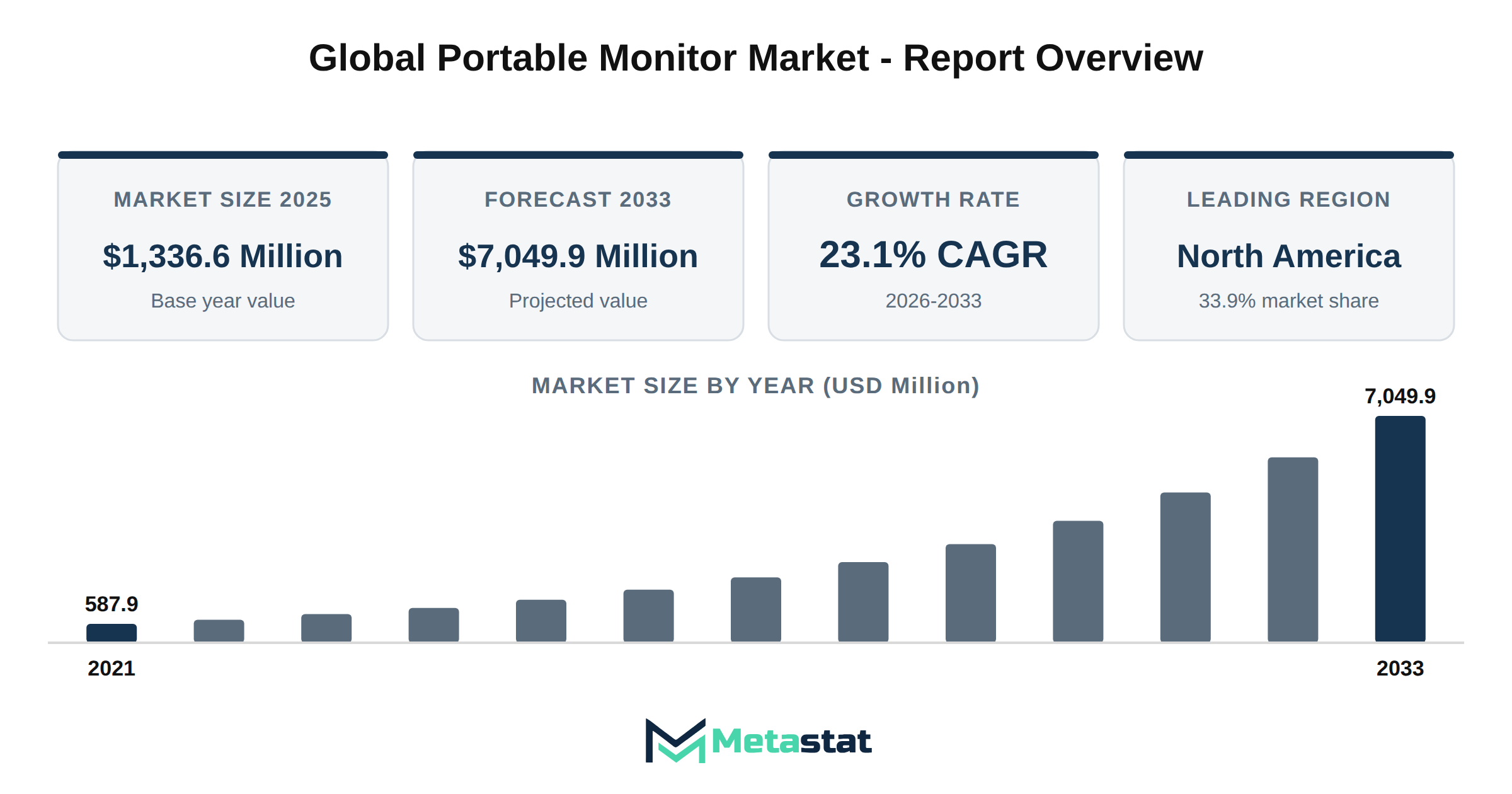
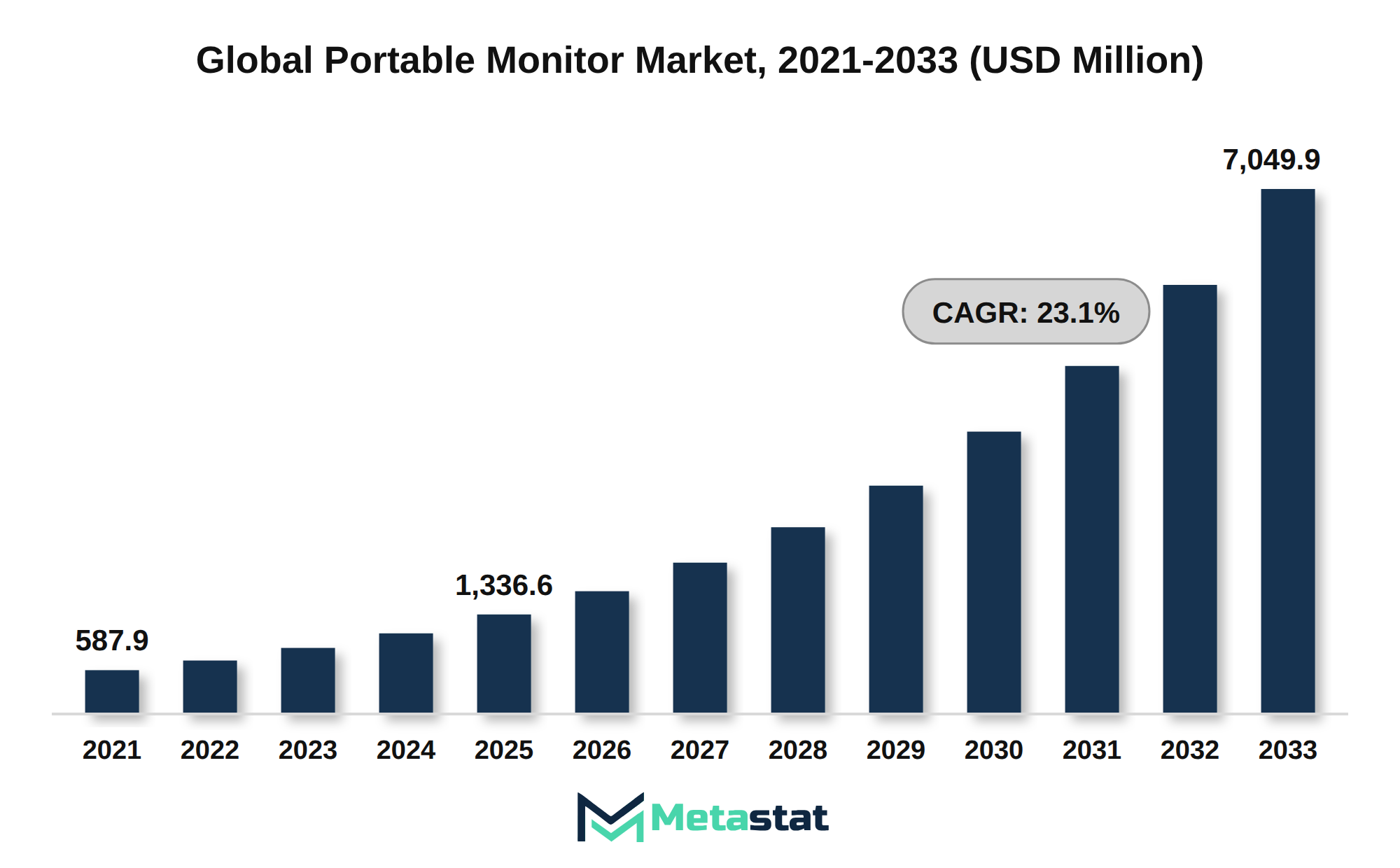
The global Portable Monitor market was valued at USD 1,336.6 million in 2025 and is projected to reach USD 7,049.9 million by 2033, growing at a CAGR of 23.1% over the forecast period.
Market Dynamics Overview
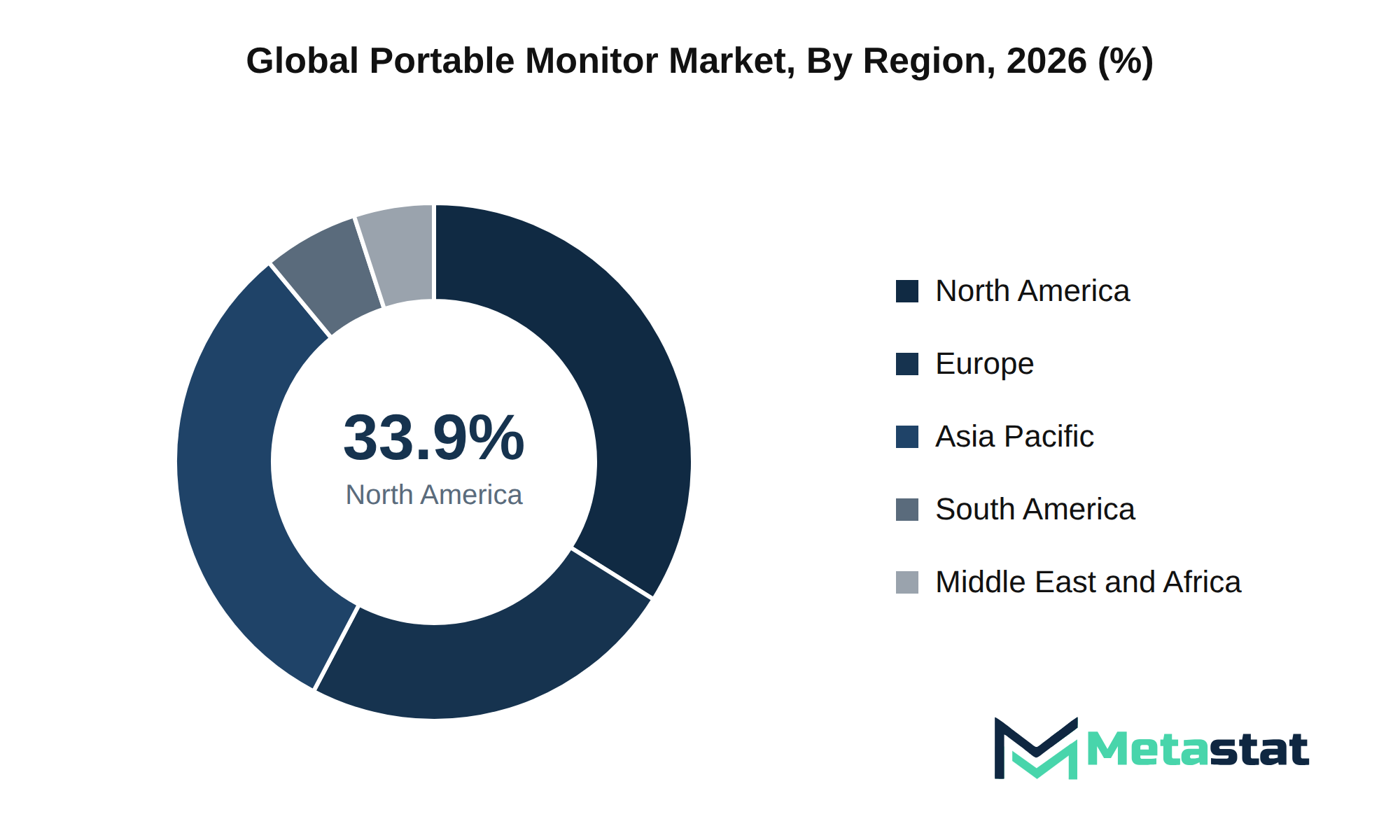
The Portable Monitor market demonstrates noteworthy growth driven by technological advancements and increasing demand for flexible display solutions. North America holds 33.9% in 2025, with the United States leading market share in 2026. This region benefits from a strong consumer electronics sector and a growing trend of remote work, which enhances the adoption of portable monitors for business and productivity applications.
Technological innovations, including improvements in panel technologies including IPS LCD and OLED, contribute significantly to market expansion. These advancements provide users with enhanced visual quality and energy efficiency, attracting consumers in various sectors including gaming, content creation, and professional design. The market’s projected compound annual growth rate (CAGR) of 23.1% from 2026 to 2033 reflects the increasing integration of portable monitors into daily workflows and leisure activities.
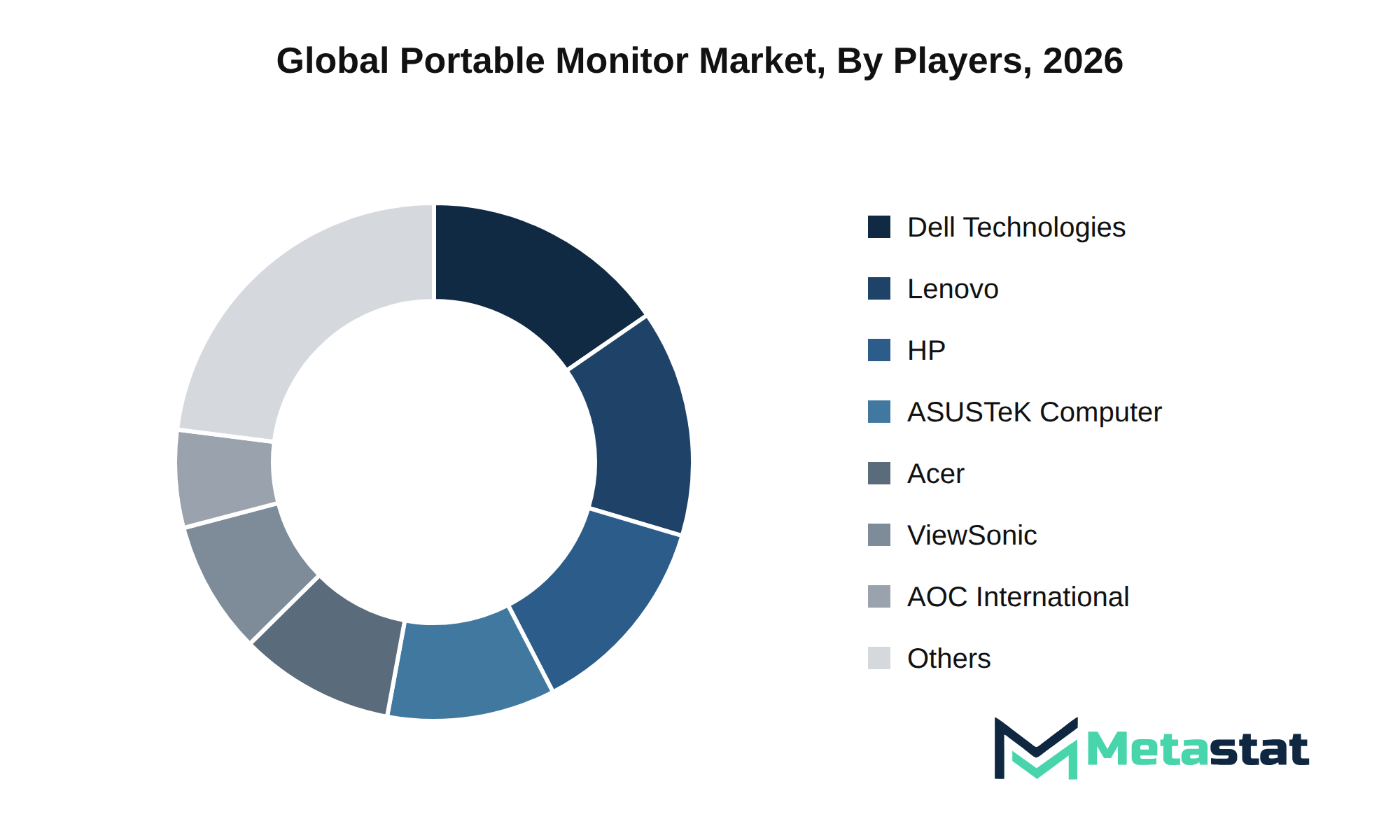
Geopolitical factors and supply chain dynamics influence the market landscape, with manufacturers focusing on optimizing logistics and production processes. The competitive environment features key players including ASUSTeK Computer Inc., Lenovo Group Limited, and Dell Technologies Inc., which strive to innovate and expand their product offerings. This environment creates opportunities for strategic partnerships and collaborations aimed at enhancing product accessibility and performance.
While consumer preferences evolve, the market experiences a shift toward portable monitors that accommodate various applications, including remote work, gaming, and personal use. This shift necessitates ongoing research and development to address specific needs, including screen size variations and form factors. The diversification of product offerings enhances market attractiveness and encourages investment in next-generation innovations.
Market Trends and Innovations in Portable Monitor Market
The Portable Monitor market experiences significant advancements driven by technological innovation and evolving consumer preferences. Manufacturers focus on enhancing portability, display quality, and connectivity options, leading to the development of ultra-slim and lightweight designs. This evolution meets the diverse requirements of professionals, gamers, and content creators, resulting in increased adoption across multiple sectors.
R&D trajectories emphasize the integration of next-generation technologies including OLED and Mini-LED display panels. These advancements facilitate superior color accuracy, contrast ratios, and energy efficiency, appealing to high-end users and professionals in graphic design and gaming. The transition to these advanced panel technologies is expected to significantly influence market growth, with OLED displays projected to reach USD 1,128 million by 2033, demonstrating a CAGR of 28.3%.
Sustainability initiatives gain momentum within the market, with companies prioritizing eco-friendly manufacturing processes and the adoption of recycled materials. This shift aligns with the growing consumer demand for environmentally responsible products, positioning brands strategically within the competitive landscape. The emphasis on sustainable transformation contributes to enhanced brand loyalty and market differentiation.
The competitive landscape remains fragmented, with numerous players vying for market share. Key participants including ASUSTeK Computer Inc., Lenovo Group Limited, and Dell Technologies Inc. actively expand their product offerings and enhance distribution channels. Strategic partnerships and collaborations become increasingly common due to companies seeking to leverage complementary strengths and optimize supply chain efficiencies.
Macroeconomic headwinds, including inflationary pressures and currency volatility, influence pricing strategies and consumer purchasing behavior. Companies navigate these challenges while maintaining product quality and affordability. The market is projected to grow from USD 1,336.6 million in 2025 to USD 7,049.9 million by 2033, reflecting a robust CAGR of 23.1% over the forecast period.
Market Dynamics
Increasing consumer reliance on remote work drives portable monitor market growth
Growing consumer reliance on remote work generates substantial demand for portable monitors. The shift toward flexible work arrangements results in a rising need for additional screen space, enhancing productivity during remote operations. Many professionals require high-resolution displays that facilitate multitasking, particularly in business, remote work, and productivity applications, which contribute significantly to market growth.
Technological advancements in display technologies, including IPS LCD and OLED, enhance visual quality and performance, attracting consumers seeking improved user experiences. Innovations in form factors, including laptop-attachable screen extenders and foldable dual-screen monitors, expand options for users, further stimulating demand. The combination of these elements supports a projected annual growth rate of 23.1% from 2026 to 2033, propelling the overall portable monitor market from USD 1,336.6 million in 2025 to USD 7,049.9 million by 2033.
Increased consumer engagement with digital content creation and entertainment drives demand for portable monitors. Gamers and content creators seek portable solutions that enhance their workflows and experiences, prompting manufacturers to innovate and diversify product offerings. The alignment of product development with evolving consumer behavior positions the market for continued expansion during the forecast period.
Digital transformation accelerates portable monitor market growth
The increasing emphasis on digital transformation drives significant interest in the Portable Monitor market. Organizations across various industries prioritize adopting innovative technologies to enhance productivity and improve operational efficiency. This shift reflects a broader trend toward automating processes and digitizing legacy systems, fueling demand for portable monitors that facilitate flexible and mobile work environments.
Technological integration stemming from digital transformation significantly impacts consumer behaviors and preferences. Businesses and individual users seek devices that complement their increasingly mobile lifestyles and remote work arrangements. The growing reliance on cloud-based applications and virtual collaboration tools enhances the appeal of portable monitors, enabling users to extend their screen real estate and improve multitasking capabilities. Consequently, this trend contributes to a growing market size projected to reach USD 7,049.9 million by 2033.
The market's expansion aligns with rising investments in infrastructure development and asset modernization across sectors. Companies invest in upgrading their digital and physical capabilities to adapt to evolving consumer demands. This strategic focus enhances the accessibility of portable monitors while driving the development of advanced features and functionalities, including improved connectivity options and enhanced display technologies. The combination of these factors positions the Portable Monitor market for significant growth.
Companies that proactively integrate innovative solutions and respond to shifting consumer behaviors are likely to capture a larger share of this expanding market, with an expected compound annual growth rate of 23.1% from 2026 to 2033.
Regulatory challenges and macroeconomic pressures
SECTION: Market restraint
Regulatory tightening and compliance hurdles present significant obstacles for the Portable Monitor market. Stricter regulations related to electronic waste and energy efficiency compel manufacturers to invest in costly compliance measures. This dynamic affects suppliers and increases the overall cost structure, limiting the ability to offer competitive pricing in the market.
Macroeconomic headwinds, including inflationary pressures and capital stagnation, further constrain market growth. Rising costs for raw materials and labor result in increased operating expenses for manufacturers, ultimately impacting their margins. Consequently, diminishing profitability affects investment in innovation and capacity expansion, which are critical for maintaining market share.
Geopolitical instability adds another layer of complexity to the Portable Monitor market. Supply chain disruptions caused by international conflicts or trade tensions hinder product availability, leading to delays and increased costs. Manufacturers face challenges in sourcing components, negatively impacting production flexibility and responsiveness to market demand.
Resource scarcity, particularly for specialized electronic components, poses a serious threat. Limited availability of key materials results in higher procurement costs and potential project delays. This situation hinders the development of new technologies and product offerings, ultimately restricting market growth opportunities.
Technological obsolescence represents a persistent concern, especially in a changing landscape where newer technologies emerge frequently. Companies grapple with staying relevant while managing the financial implications of outdated inventory. The presence of substitute products and alternative offerings further dilutes demand for portable monitors, necessitating ongoing innovation and adaptation within the market.
Infrastructure gaps and connectivity deficits hinder the deployment of portable monitors in certain regions. Insufficient technological infrastructure, particularly in emerging markets, limits the accessibility and usability of portable monitors. This situation slows down adoption rates and stifles potential revenue growth within those areas.
Talent gaps and skilled labor deficiencies impact the operational efficiency of manufacturers. Difficulty in attracting and retaining skilled workers limits production capabilities and leads to increased labor costs. Rising workforce overhead further compounds the challenge, affecting overall profitability.
Data security vulnerabilities and privacy concerns create apprehension among consumers and businesses regarding the adoption of new technologies. Incidents of IP theft and market fragmentation hinder trust in the market and discourage potential buyers. Addressing these concerns will be vital for building confidence and driving growth in the Portable Monitor market.
Geopolitical tensions and supply chain disruptions
Geopolitical fragmentation significantly impacts the Portable Monitor market, leading to trade deficits and tariff friction. Such conditions complicate international trade, raising costs for manufacturers and consumers alike. Disruptions in global logistics channels further exacerbate these challenges, resulting in delays and increased expenses that place pressure on profit margins.
Technological disruptions, including the rapid evolution of monitoring technologies, create interoperability friction among devices. Manufacturers face challenges integrating diverse technologies, which hinder product development cycles and increase research and development costs. These factors strain resources, affecting overall market competitiveness and innovation.
Volatility in feedstock and component availability presents another hurdle for the market. Fluctuating prices for essential materials, driven by global supply constraints, lead to unpredictability in production costs. This variability prompts manufacturers to reassess their procurement strategies, impacting pricing structures and limiting consumer access to portable monitors.
Market players encounter tightening global regulatory standards, which introduce compliance overheads that stall product launches. Adapting to evolving legal liabilities requires substantial investment in compliance measures, diverting resources from innovation and market expansion efforts. This situation constrains operational flexibility and increases the risk of market saturation.
Workforce skill gaps present a significant challenge, particularly in sectors requiring advanced technical knowledge for product development. Talent retention pressures compound these issues, making it difficult for companies to maintain a competitive edge. The need for skilled professionals becomes critical in navigating the complexities of modern manufacturing and design processes.
Environmental lifecycle footprints and sustainability demands drive the market toward adopting greener practices. Manufacturers face increasing pressure to reduce their environmental impact, leading to higher operational costs associated with retrofitting and implementing sustainable practices. The resulting cost structures limit market growth opportunities.
Emerging regional demands create opportunities in portable monitors
The Portable Monitor market experiences significant opportunities stemming from emerging regional demands, particularly in North America, Europe, and Asia Pacific. Each region displays unique characteristics that drive consumer preferences and purchasing patterns. For instance, the North American market, projected to reach USD 2,292.6 million by 2033, benefits from a strong emphasis on remote work and digital collaboration, prompting increased investments in portable display solutions. In Europe, the shift towards sustainable technologies and eco-friendly products increases demand for innovative, energy-efficient portable monitors.
Infrastructure modernization across various regions contributes to the market's expansion. Investments in advanced technological frameworks and digital procurement shifts enable businesses to adopt portable monitors because essential tools for enhancing productivity. Strategic consolidation among manufacturers further enhances innovation, leading to the development of next-generation products that cater to diverse consumer needs.
The ongoing digital transformation encourages businesses to embrace portable monitors for improved operational efficiency and flexibility. Companies strategically integrate these solutions into their workflows, reflecting a broader trend of asset life-cycle extensions and maintenance upgrades. This integration supports continuous demand for portable monitors across industries, including business, gaming, education, and content creation.
Cross-industry mergers and acquisitions play a crucial role in shaping market dynamics, allowing suppliers to diversify their offerings and target niche applications. By aligning their products with evolving buying behaviors and commercial model transitions, manufacturers position themselves favorably in the competitive landscape. The anticipated growth in the Portable Monitor market, with a compound annual growth rate of 23.1%, highlights the importance of these strategic initiatives.
Ultimately, the convergence of technological disruptions, sustainability imperatives, and consumer preferences creates fertile ground for market growth. The Portable Monitor market not only reflects current trends but adapts to future demands, ensuring robust opportunities for continued innovation and market expansion.
Market Segmentation Analysis
The Global Portable Monitor market is segmented based on Form Factor, Panel Technology, Screen Size, and Application.
By Form Factor, the market is further segmented into:
Standalone Single-Screen Portable Monitors
Laptop-Attachable Screen Extenders
Foldable Dual-Screen Portable Monitors
Triple- and Multi-Screen Extenders
Others
Standalone Single-Screen Portable Monitors
Standalone Single-Screen Portable Monitors segment is valued at USD 907.8 million in 2026 and is projected to reach USD 3,320.5 million by 2033, at a CAGR of 20.4% during the forecast period. Increasing consumer demands for portable and flexible work solutions drive significant growth in this segment. The rise in remote work and digital nomadism contributes to heightened adoption rates, driven by professionals seeking efficient ways to enhance their productivity on-the-go.
Technological advancements in display quality, connectivity options, and battery life enhance the appeal of standalone monitors. Consumers actively pursue products that seamlessly integrate with laptops and other devices, allowing for a more versatile workspace. The introduction of lightweight and slim models broadens the market's reach, attracting both business users and casual consumers.
Emerging applications across various sectors, including education and content creation, further support the segment's expansion. Students and professionals in creative industries increasingly rely on portable monitors to improve their workflows. Such trends drive demand, influencing both innovation and investment in this product category.
Cost structures continue to evolve, with manufacturers focusing on optimizing production processes to mitigate pricing volatility. Strategic partnerships between suppliers and device manufacturers strengthen resilience in the supply chain, ensuring a steady flow of raw materials and components. This stability enhances profitability and encourages continued investment in product development.
Overall, the standalone single-screen portable monitors segment represents a dynamic and rapidly growing area within the portable monitor market, characterized by evolving consumer preferences, technological advancements, and strategic market opportunities.
Laptop-Attachable Screen Extenders
Laptop-Attachable Screen Extenders represent a growing segment within the Portable Monitor market, driven by the increasing demand for enhanced productivity and multi-tasking capabilities among remote workers and professionals. The rise in remote work culture necessitates solutions that optimize workspace efficiency, generating significant interest in portable monitors that extend the display of laptops. This trend influences various industries, particularly in business and education, where effective multitasking and enhanced visual space are essential for performance.
Technological advancements in display technology contribute to rapid segment expansion. Continuous innovation, including improved resolution and the introduction of lightweight, compact designs, enhances user experience, attracting more consumers. The segment is projected to reach USD 1,621.5 million by 2033, at a CAGR of 25% during the forecast period. This growth reflects the increasing adoption of laptop-attachable screen extenders, essential tools for professionals seeking to improve their workflows and productivity.
Cost structure remains a critical factor influencing purchasing decisions. Competitive pricing strategies among manufacturers allow consumers to access advanced technology without significant financial burden. The ongoing evolution of product features and functionalities increases demand. While consumers prioritize mobility and versatility, the segment's appeal continues to grow.
Market players are actively exploring strategic opportunities to capture a larger share of the growing demand. Investment in marketing initiatives and enhancing distribution channels will improve market presence. While the technology matures and customer awareness increases, the segment is expected to attract further capital investment, reinforcing its position within the broader Portable Monitor market.
Foldable Dual-Screen Portable Monitors
Demand for Foldable Dual-Screen Portable Monitors experiences significant growth, driven by increasing consumer preferences for enhanced multi-tasking capabilities and connectivity options. The trend towards remote work and digital nomad lifestyles influences the adoption of these innovative devices, allowing users to expand their screen real estate without sacrificing portability. Industries including gaming, content creation, and professional design recognize the advantages of dual-screen setups, enhancing productivity and improving user experience.
Technological advancements play a significant role in the market expansion of foldable dual-screen monitors. Manufacturers incorporate advanced display technologies that enhance visual quality and reduce power consumption, appealing to environmentally conscious consumers. The evolution of flexible display technologies further supports product innovation, allowing for lighter and thinner designs that cater to consumer demands for portability and convenience.
Foldable dual-screen portable monitors are expected to gain traction in various downstream applications, including education and personal use. The ability to offer interactive learning experiences and facilitate multitasking in educational environments positions these monitors because valuable tools for students and educators alike. This trend signals a shift in consumption patterns, with users increasingly prioritizing flexibility and functionality in their device choices.
Cost structures within the segment reflect the high value of advanced features and the materials required for production. Pricing volatility results from fluctuating raw material costs and supply chain challenges that affect production timelines. Manufacturers face margin pressures stemming from the competitive nature of the market, necessitating strategies that balance innovation with cost efficiency.
The Foldable Dual-Screen Portable Monitors segment is expected to reach USD 951.7 million by 2033, highlighting its potential for substantial growth. This projection emphasizes the strategic opportunity windows for brands willing to invest in research and development, positioning them favorably within the portable monitor market.
Triple- and Multi-Screen Extenders
Significant demand for Triple- and Multi-Screen Extenders stems from the increasing need for enhanced productivity among remote workers and professionals. Businesses increasingly adopt these solutions to improve multitasking and enhance workflow during daily operations. The rising trend of hybrid work environments emphasizes the necessity for flexible and efficient setups, driving demand for multi-screen configurations. This segment is projected to grow at a CAGR of 28.7% during the forecast period, reflecting a strong upward trajectory within the Portable Monitor market.
Technological advancements contribute to segment growth by enabling integration of multiple screens with various devices. Improved compatibility with laptops, tablets, and smartphones enhances user experience and encourages adoption across diverse sectors. The increasing availability of high-resolution displays further attracts consumers looking for superior visual quality in their workspaces. Consequently, businesses prioritizing advanced technology for their employees experience operational efficiencies, resulting in increased market demand.
Awareness of ergonomic benefits associated with multi-screen setups influences consumer preferences. Enhanced screen real estate allows users to manage multiple applications simultaneously, reducing fatigue and increasing comfort during extended working hours. This aspect appeals particularly well in creative industries, where professionals rely on visual accuracy and detail. Ultimately, the shift toward multi-screen usage aligns with evolving work habits, supporting market growth opportunities.
Price competition among manufacturers drives innovation in product offerings. With multiple players targeting this segment, consumers benefit from a wider array of choices at varying price points. Competitive pricing strategies effectively attract budget-conscious buyers while encouraging premium options for high-end users. The combination of affordability and technological advancements enhances the appeal of Triple- and Multi-Screen Extenders in the Portable Monitor market.
Growth within the Triple- and Multi-Screen Extenders segment reflects broader trends in workplace efficiency and technological integration. Rising demand, driven by the necessity for enhanced productivity, coupled with competitive pricing and innovative solutions, positions this segment for significant expansion in the coming years.
By Panel Technology, the market is further segmented into:
IPS LCD
OLED
Mini-LED LCD
Others
IPS LCD
Valued at USD 1,232.5 million in 2026, the IPS LCD segment is projected to reach USD 4,864.4 million by 2033, exhibiting a compound annual growth rate (CAGR) of 21.7% during the forecast period. This growth stems from increasing consumer preferences for high-quality displays, particularly in portable monitors used for business, gaming, and content creation applications. The segment's enhancement in color accuracy and viewing angles positions it favorably among users who prioritize visual performance.
The accelerating adoption of portable monitors in various industries drives segment expansion. Businesses increasingly adopt multiple screens to improve productivity during remote work, while the gaming community values the rich colors and responsiveness offered by IPS LCD technology. Advancements in manufacturing processes and decreasing costs of display components contribute to a broader acceptance of IPS LCD monitors across different price segments.
Technological maturation plays a critical role in the segment's evolution. Continuous improvements in energy efficiency, screen resolution, and response times position IPS LCD displays because viable options for next-generation portable monitors. Regulatory compliance in terms of energy consumption and environmental impact encourages manufacturers to innovate sustainably, enhancing the market’s appeal among eco-conscious consumers.
The market demonstrates resilience against potential disruptions. Supply chain dynamics, including raw material sourcing and logistics, have become more robust due to strategic partnerships and diversified sourcing strategies. However, manufacturers remain vigilant regarding substitution risks from emerging display technologies like OLED and Mini-LED, which continue to gain traction among consumers seeking premium features.
Strategic opportunity windows arise because market participants respond to evolving consumer trends. The growing inclination towards hybrid work models emphasizes the demand for portable monitors, thus creating a fertile ground for investment and innovation within the IPS LCD segment. With its anticipated growth trajectory, the IPS LCD segment is well-positioned to capitalize on these shifts, reinforcing its role in the expansive Portable Monitor market.
OLED
Rapid adoption of OLED technology in the Portable Monitor market stems from its superior display quality, characterized by rich colors, high contrast ratios, and deeper blacks. This technology aligns with consumer preferences for enhanced visual experiences, driving significant demand from sectors including gaming, content creation, and professional design. Manufacturers recognize the advantages offered by OLED displays, including thinner profiles and improved energy efficiency, contributing to their growing integration into portable monitor designs.
Technological maturation plays a critical role in segment expansion, fueling investments in OLED panel manufacturing. Ongoing advancements in production processes reduce costs and enhance yield rates, enabling more manufacturers to enter the market. Intensifying competition benefits consumers through a wider array of options and more competitive pricing.
Primary demand drivers for OLED portable monitors include the increasing prevalence of remote work and the need for high-quality displays in professional settings. These monitors facilitate multitasking and enhance productivity, encouraging adoption across various industries. The trend toward compact, lightweight devices aligns with consumer preferences for portability and convenience.
Projected growth for the OLED segment shows an estimated value of USD 1,128 million by 2033, at a CAGR of 28.3% during the forecast period. This trajectory reflects the segment's robust expansion potential within the Portable Monitor market, supported by continuous innovations and increasing consumer demand for high-performance displays.
Mini-LED LCD
Growing adoption of Mini-LED LCD technology across various applications drives significant growth within the Portable Monitor market. Enhanced color accuracy, improved brightness, and higher contrast ratios attract consumers seeking superior visual experiences. Demand for high-quality displays in remote work and gaming applications fuels market expansion, driven by users prioritizing performance and image quality in portable devices.
Technological advancements contribute to the maturation of Mini-LED LCD, presenting strategic opportunities for manufacturers. Upgrades in production techniques and the integration of advanced features enhance product offerings, enabling companies to differentiate themselves in a competitive environment. The focus on next-gen upgrades aligns with consumer trends toward high-definition and immersive viewing experiences.
Pricing dynamics in the Mini-LED LCD segment reflect shifts in consumer expectations and market competition. Cost structures exhibit volatility influenced by raw material sourcing and manufacturing processes, impacting profit margins. Strategic investment in supply chain resilience and sustainable practices supports long-term growth, resulting from companies seeking to optimize costs while delivering quality products.
Market estimates indicate the Mini-LED LCD segment is expected to reach USD 564 million by 2033. This projection highlights the growing relevance of the technology in portable monitors, driven by evolving consumer preferences and technological advancements. Competitive pressures will continue to shape product development, ensuring ongoing innovation in this dynamic market segment.
By Screen Size, the market is further segmented into:
Below 14 Inches
14-15.6 Inches
15.7-17.3 Inches
Above 17.3 Inches
Below 14 Inches
Valued at USD 292.5 million in 2026, the Below 14 Inches segment is projected to reach USD 1,128 million by 2033, with a compound annual growth rate (CAGR) of 21.3% during the forecast period. Rapid growth in this segment results from increasing consumer demand for compact and lightweight monitors, particularly among remote workers and travelers. Technological advancements drive the development of high-resolution displays in smaller units, enhancing the overall user experience and functionality.
Continuous demand from various sectors, including education and personal use, fuels the adoption of portable monitors under 14 inches. The rise of hybrid work environments influences the need for versatile solutions that offer mobility without compromising performance. Price competitiveness in this segment encourages consumer interest, enabling users to access quality displays at affordable rates.
Investment in next-generation upgrades, including improved connectivity options and enhanced battery life, supports segment expansion and innovation. Strategic partnerships among manufacturers and suppliers strengthen supply chain resilience, ensuring timely delivery and availability of components necessary for production. Overall, the Below 14 Inches segment exemplifies potential within the Portable Monitor market, driven by evolving consumer preferences and continuous technological evolution.
14-15.6 Inches
Significant growth in the 14-15.6 Inches segment of the Portable Monitor market reflects rising demand for versatile display solutions in both professional and personal settings. This segment, valued at USD 3,454.5 million by 2033, experiences a compound annual growth rate (CAGR) of 21.7% during the forecast period. Factors contributing to this expansion include an increase in remote work and the need for dual-screen setups that enhance productivity and user experience.
Growing interest in gaming and content creation drives substantial adoption of portable monitors within this screen size category. Gamers and content creators seek high-quality displays that improve visual performance and provide flexibility. Technological advancements, particularly in panel technology, enhance the viewing experience and broaden the appeal of these devices. This trend aligns with the broader evolution of the market toward more sophisticated, high-definition screens that cater to diverse user needs.
End-use dynamics illustrate a shift in consumer preferences toward portable monitors that facilitate multitasking and improve efficiency. Business professionals increasingly rely on these devices for presentations and collaborative work, highlighting the importance of screen size in the functionality of portable monitors. This shift represents a significant opportunity for manufacturers to innovate and tailor products to meet the evolving demands of users in various sectors.
Investment in research and development continues to play a crucial role in the segment's growth. Companies in the Portable Monitor market prioritize next-generation upgrades and product evolution to remain competitive. By focusing on features including enhanced portability, connectivity options, and display quality, manufacturers position themselves to capture a share of the growing consumer base seeking advanced portable monitor solutions.
15.7-17.3 Inches
Demand for the 15.7-17.3 Inches segment of the Portable Monitor market experiences consistent growth, driven primarily by increasing requirements for larger displays in remote work and gaming applications. Businesses focus on enhancing productivity and multitasking capabilities, leading to heightened adoption of monitors within this size range. The segment supports a variety of downstream applications, catering to professionals in graphic design, gaming, and business sectors where larger screen real estate significantly improves user experience.
Technological maturation in display technologies, particularly advancements in IPS LCD and OLED panels, enhances the visual quality and performance of portable monitors. Next-gen upgrades, including higher refresh rates and improved color accuracy, further attract consumers seeking advanced solutions. The evolution of product designs that prioritize portability without compromising screen size aligns with current consumer preferences, thus supporting segment expansion.
Valued at USD 1,903.5 million by 2033, this segment reflects a strong capital investment outlook, with manufacturers investing in innovative features that address user needs. Strategic opportunity windows emerge owing to companies seeking to penetrate various market segments, including education and content creation, where larger displays provide significant advantages. The market expands through robust demand across diverse end-use applications, ensuring sustained growth and competitive positioning.
Above 17.3 Inches
Demand for portable monitors exceeding 17.3 inches in screen size drives notable market expansion, fueled by increasing consumer preference for larger displays that enhance productivity and entertainment experiences. This segment is projected to grow at a CAGR of 27.1% during the forecast period. The rise of remote work and gaming has further accelerated interest, driven by users seeking advanced visual capabilities for multitasking and immersive experiences. Technological advancements in display quality and portability improve user satisfaction, promoting wider adoption across various applications including business, gaming, and content creation. Investment in this segment reflects a strategic opportunity for manufacturers aiming to capture evolving consumer needs within the portable monitor market.
By Application, the market is further segmented into:
Business, Remote Work and Productivity
Gaming and Console Entertainment
Content Creation and Professional Design
Education and Personal Use
Others
Business, Remote Work and Productivity
Rapid growth in the Business, Remote Work and Productivity segment reflects changing workplace dynamics and the increasing integration of technology in daily tasks. Valued at USD 716.4 million in 2026, this segment is projected to reach USD 2,897.5 million by 2033, achieving a CAGR of 22.1% during the forecast period. This growth is driven by the rising need for flexible work solutions and enhanced productivity tools, which align closely with the demands of remote and hybrid work environments.
Adoption of portable monitors in business settings is influenced by several factors, including the need for improved multitasking capabilities and increased screen real estate. Professionals in various industries leverage portable monitors to enhance collaboration during meetings and improve efficiency in data analysis and presentations. The rise of remote work has made portable monitors essential tools for many employees, facilitating smooth workflow transitions between home and office setups.
Technological advancements in display quality and connectivity options further support segment expansion. Next-generation upgrades, including higher resolution displays and USB-C connectivity, enhance user experience and compatibility with modern devices. This technological maturation positions the market favorably, reflecting consumers' desire for products that integrate well with existing technology ecosystems.
Investment in portable monitors aligns with evolving consumption trends, where users prioritize flexibility and adaptability in their work arrangements. With increasing emphasis on work-life balance and productivity, the demand for portable monitors is expected to remain robust, influencing purchasing decisions across various sectors. Companies within the Portable Monitor market focus on delivering innovative solutions that address these evolving user needs and capitalize on strategic opportunity windows.
Gaming and Console Entertainment
Gaming and console entertainment applications significantly impact the portable monitor market. A growing number of gamers seek enhanced visuals and larger displays, driving demand for high-quality portable monitors. Increased participation in eSports and streaming platforms necessitates flexible and high-performance display solutions, enhancing the gaming experience. Technological advancements in refresh rates, response times, and display resolutions attract consumers aiming for immersive gaming experiences. The shift toward remote gaming and console connectivity further fuels adoption, driven by players prioritizing mobility without compromising on screen size and quality.
Investment in next-generation upgrades, including OLED and Mini-LED technologies, emphasizes the importance of display quality in this segment. The Gaming and Console Entertainment segment is estimated to reach USD 1,903.5 million by 2033, at a CAGR of 24.7% during the forecast period. Enhanced gaming consoles and portable devices create vast opportunities for manufacturers, leading to innovations in form factors and usability.
Competitive pressures among leading players drive strategic investments in marketing, distribution, and product differentiation. The presence of established brands including ASUSTeK Computer Inc., Lenovo Group Limited, Dell Technologies Inc., and HP Inc. intensifies competition while promoting innovation in product features. While consumer preferences evolve, manufacturers adapt their offerings to align with trends in gaming and console entertainment, positioning themselves for growth within the portable monitor market.
Content Creation and Professional Design
Increasing demand for high-resolution displays significantly impacts the Content Creation and Professional Design segment. Factors driving this demand include the rise of remote work environments and the growing emphasis on visual content across various industries, including advertising, film, and graphic design. Professionals in these sectors require portable monitors that provide accurate color representation and high pixel density to ensure quality output. Adoption of advanced panel technologies, particularly OLED and IPS LCD, enhances viewing experiences and drives user preference.
The evolution of portable monitors reflects technological maturation, with significant enhancements in display quality and form factor. The transition towards thinner and lighter designs aligns with the need for mobility in creative professions. This segment is projected to reach USD 1,057.5 million by 2033, indicating strong growth prospects driven by evolving user needs and preferences. Competitive pressures stimulate innovation, encouraging manufacturers to offer integrated solutions that cater specifically to content creators and designers.
Investment in research and development supports the introduction of next-generation features within portable monitors, including touch capabilities and improved connectivity options. These advancements facilitate interactions and enhance productivity for professionals engaged in design and content creation. While the market continues to expand, collaboration between hardware suppliers and software developers will influence future product offerings.
Education and Personal Use
Growing interest in portable monitors for educational purposes and personal use drives market expansion. Increased adoption of remote learning tools contributes to the rising demand for portable monitors, which enhance the learning environment by providing additional screen space for students and educators. This segment is projected to grow at a CAGR of 21% during the forecast period. The trend towards mobile learning and flexible study setups prompts educational institutions and individuals to seek versatile display solutions that facilitate multitasking and improve productivity.
Technological advancements in display technology enhance the appeal of portable monitors in education and personal use. Features including lightweight designs, high-resolution displays, and connectivity options attract users seeking improved functionality. While educational content evolves with an emphasis on interactive learning, portable monitors serve because effective tools for presentations and collaborative work among students. The increasing integration of portable monitors into personal digital setups reinforces their role in enhancing user experiences across various applications.
Demand for affordable yet high-quality portable monitors supports market growth, with manufacturers focusing on competitive pricing strategies and value-added features. While the education sector emphasizes digital resources and technology-enhanced learning, investments in portable monitor capabilities are likely to increase. The shift towards hybrid learning models presents strategic opportunity windows for industry players to innovate and capture market share within this expanding segment of the Portable Monitor market.
By Region
Based on geography, the Global Portable Monitor market is divided into North America, Europe, Asia-Pacific, South America, Middle East, and Africa.
North America
North America holds a prominent position in the Portable Monitor market, contributing 33.9% to the global market in 2025. The market is set to expand at a CAGR of 23.1% within the forecast period, reaching a market size (TAM) of USD 2,292.6 million by the end of 2033. This growth reflects the increasing demand for portable monitors across various sectors, including business, gaming, and education.
Factors driving this expansion include advancements in technology and a rising prevalence of remote work, which necessitates flexible display solutions. The United States, Canada, and Mexico represent key markets with robust infrastructure and a strong consumer base. The adoption of high-quality display technologies, including IPS LCD and OLED, enhances user experience and drives further demand within the market.
Investment in localized manufacturing and supply chain regionalization strengthens market dynamics in North America. Companies like ASUSTeK Computer Inc., Lenovo Group Limited, and Dell Technologies Inc. operate in the market, leveraging their resources to capitalize on emerging trends. These dynamics create a competitive environment, positioning the region for sustained growth in the Portable Monitor market.
Europe
The Portable Monitor market in Europe is characterized by a growing share in the global landscape at 2025. Countries including Germany, France, the UK, Italy, Spain, and Russia lead in demand owing to robust infrastructure and advanced technological adoption. The market experiences substantial growth driven by the rise in remote work and demand for portable solutions across professional settings.
Enhanced productivity requirements in business sectors encourage the integration of portable monitors into daily operations. In particular, the Business, Remote Work and Productivity segment is projected to expand significantly, with businesses investing in high-quality displays for improved workflow. While companies continue to embrace hybrid working models, the market for portable monitors is expected to flourish.
Technological advancements, including the introduction of OLED and IPS LCD technologies, contribute to the increasing appeal of portable monitors. Users prioritize high-resolution displays for activities ranging from content creation to gaming, driving demand in these segments. The emphasis on screen size options, including monitors exceeding 17.3 inches, caters to diverse consumer preferences within the market.
Localized manufacturing and procurement dynamics in Europe influence the competitive landscape. Domestic market participants, including ASUSTeK Computer Inc., Lenovo Group Limited, and HP Inc., adapt to regional demands and invest in R&D to maintain a competitive edge. This strategy enhances product availability and diversity, crucial for meeting evolving consumer expectations.
Factors including cross-border trade corridors and geopolitical considerations impact the market's trajectory. Regional compliance mandates create challenges for manufacturers, yet they simultaneously create opportunities for localized production and supply chain efficiency. While businesses seek cost-effective solutions, the emphasis on nearshoring initiatives further alters the operational landscape within the Portable Monitor market.
Asia-Pacific
Asia-Pacific represents a growing share of the Portable Monitor market. The region’s growth stems from robust demand across key markets, including China, Japan, India, South Korea, Australia, and Southeast Asia. Increased adoption of portable monitors in business, remote work, and productivity applications drives revenue, highlighting a strategic shift towards flexible work environments and enhanced productivity tools.
Emerging markets within the region reflect high-value opportunities, particularly in India and Southeast Asia, where modernization initiatives create a favorable landscape for new technology adoption. Infrastructure enhancements across these territories support the proliferation of portable monitors, resulting in increased accessibility and market penetration. Cultural nuances in regional B2B buying behaviors influence procurement patterns, favoring vendors that align with local needs and preferences.
Localized manufacturing densities and nearshoring initiatives contribute to a more resilient supply chain, enabling faster delivery and reduced costs. Strategic entry barriers for international players include compliance with local regulations and adapting to unique market dynamics, which affect competitive positioning. Domestic market participants in the region, including ASUSTeK Computer Inc., Lenovo Group Limited, and Dell Technologies Inc., have established strong footholds through tailored product offerings and responsive distribution networks.
Projected growth in the Portable Monitor market within Asia-Pacific reflects a compound annual growth rate (CAGR) of 23.1% from 2026 to 2033. This growth trajectory hinges on increased foreign direct investment (FDI) flows and geographic expansion windows, enabling companies to capitalize on emerging demand. The region's diverse market characteristics and evolving consumer behaviors outline significant opportunities for growth in the Portable Monitor market.
South America
South America is projected to capture a share of 6.00% in the global Portable Monitor market by 2025. The market experiences steady growth driven by increasing demand for portable displays across various applications. Brazil and Argentina represent the largest markets, both exhibiting rising adoption rates for portable monitors, particularly among business and educational users.
Infrastructure modernization is essential for enabling market expansion in the region. Investments in local manufacturing and supply chain regionalization contribute to enhanced availability of portable monitors. Localized procurement dynamics and cultural nuances influence buying behaviors, creating opportunities for market participants to tailor their offerings effectively.
Emerging market front-runners in South America face competition from established global players. Companies including ASUSTeK, Lenovo, and Dell operate in the regional market, adapting strategies to address local preferences and compliance mandates. The Portable Monitor market in South America is projected to benefit from incremental growth vectors and high-value replacement cycles, further strengthening its position in the global market.
Middle East and Africa
In the Middle East and Africa, the Portable Monitor market demonstrates considerable potential, with a projected market share of 5.00% of the global market by 2025. Growth in this region stems from increasing adoption of portable monitors across various sectors, including business, education, and entertainment.
Saudi Arabia and the UAE emerge because significant players in driving market demand, supported by economic diversification efforts and rising disposable incomes. South Africa contributes to market expansion by embracing technology-driven solutions, particularly in educational institutions and remote work settings.
Infrastructure modernization enhances local capabilities, allowing for improved distribution channels and greater accessibility to portable monitors. Emerging market front-runners engage in localized manufacturing initiatives and supply chain regionalization, strengthening the market's competitive landscape.
Cultural nuances and regional B2B buying behaviors shape procurement dynamics. Local compliance mandates ensure that products meet specific standards, promoting quality and safety across the market. Investment in energy grid resiliency and local infrastructure readiness supports a stable environment for market growth.
Overall, the Portable Monitor market in the Middle East and Africa is poised for growth, driven by high-value replacement cycles and evolving consumer preferences, indicating a favorable outlook for stakeholders in the region.
Competitive Landscape and Strategic Insights
The Portable Monitor market features a diverse range of players that employ various strategic behaviors to capture market share. Major companies including ASUSTeK Computer Inc., Lenovo Group Limited, and Dell Technologies Inc. focus on product differentiation through advanced technology and innovative designs. Investment in research and development (R&D) pipelines strengthens their competitive position, enabling the launch of monitors that cater to specific applications including business productivity and gaming.
Strategic alliances and partnerships shape the competitive dynamics in this market. Collaborations between firms including HP Inc. and LG Electronics Inc. enhance capabilities, allowing for the integration of proprietary technologies and expansion into new segments. The presence of smaller players, including Arzopa and GeChic Corporation, highlights the threat of new entrants disrupting established market positions, creating a competitive environment that drives innovation.
Pricing architectures vary across the market, with premium products positioned for high-end consumers while more affordable options target budget-conscious buyers. This pricing strategy impacts customer retention and brand equity, driven by firms striving to balance quality with cost. The continuous evolution of consumer preferences requires companies to remain agile in their approach to market strategies, ensuring adaptability in a rapidly changing environment.
Intellectual property (IP) portfolios play a crucial role in maintaining technological defensibility. Companies leverage patents to secure market advantages, creating barriers for new entrants. The competitive outlook remains positive, with significant growth projected in the coming years, driven by increasing demand for portable monitors in various applications.
Forecast and Future Outlook
Market size is forecast to rise from USD 1,336.6 million in 2025 to over USD 7,049.9 million by 2033, reflecting a compound annual growth rate (CAGR) of 23.1%. This upward trajectory derives from multiple factors, including the increasing integration of advanced technologies within portable monitors, heightened demand from professionals for enhanced productivity tools, and the continuous expansion of remote work culture.
In the bull case scenario, rapid advancements in next-generation technology and R&D commercialization timelines are expected to accelerate adoption rates, leading to an even more substantial market presence. Conversely, in the bear case scenario, potential geopolitical tensions and evolving trade corridors could disrupt supply chains, impacting the overall growth of the Portable Monitor market.
Adoption trends indicate a shift towards innovative form factors, including laptop-attachable screen extenders and foldable dual-screen portable monitors. This transition aligns with consumer preferences for versatile and efficient display solutions, driving demand across various applications, including business productivity and gaming. Continued investment in infrastructure and strategic capital allocation will support the market's growth and responsiveness to evolving consumer needs.
The report strategically identifies and profiles the key market players and analyses their core competencies in each sub-segment of the Portable Monitor market.
Report Attributes
Details
Study Period
2021-2033
Base Year
2025
Estimated Year
2026
Forecast Period
2026-2033
Historical Period
2021-2025
Growth Rate
CAGR 23.1% from 2026 to 2033
Revenue Unit
USD million
Segmentation
By Form Factor, Panel Technology, Screen Size, Application, and Region
By Region
North America (By Form Factor, Panel Technology, Screen Size, Application, and Country)
United States
Canada
Mexico
Europe (By Form Factor, Panel Technology, Screen Size, Application, and Country)
Germany
France
UK
Italy
Spain
Russia
Rest of the Europe
Asia Pacific (By Form Factor, Panel Technology, Screen Size, Application, and Country)
China
Japan
India
South Korea
Australia
Southeast Asia
Rest of Asia Pacific
South America (By Form Factor, Panel Technology, Screen Size, Application, and Country)
Brazil
Argentina
Rest of South America
Middle East and Africa (By Form Factor, Panel Technology, Screen Size, Application, and Country)
Saudi Arabia
UAE
South Africa
Rest of Middle East and Africa
WHAT REPORT PROVIDES
Company Market Share, Revenue and Ranking for the Portable Monitor Market
Key Market Leaders in the Portable Monitor Industry
Full In-Depth Analysis of the Portable Monitor Market
Industry Statistics and Important Changes in Market Dynamics
Segmentation Details of the Portable Monitor Market
Historical, Ongoing, and Projected Market Analysis
Find answers to common questions about this report
The Portable Monitor market size was valued at USD 1,336.6 million in 2025, according to the Metastat Insights study.
The Portable Monitor market is projected to grow at a CAGR of 23.1% during the forecast period from 2026 to 2033.
The North America Portable Monitor market size is estimated to reach USD 2,292.6 million by 2033.
Standalone Single-Screen Portable Monitors lead the Portable Monitor market, with a projected value of USD 3,320.5 million by 2033. This segment's growth reflects a compound annual growth rate (CAGR) of 20.4% from 2026 to 2033.
Growing consumer reliance on remote work drives substantial demand for portable monitors, because professionals seek additional screen space to enhance productivity. Technological advancements in display technologies and innovations in form factors further stimulate market growth, supporting an expected annual growth rate of 23.1% from 2026 to 2033.
North America holds the dominant share of the Portable Monitor market, accounting for 33.9% of the total market in 2025. This region is projected to generate USD 2,292.6 million by 2033.
Regulatory tightening and compliance hurdles significantly restrain Portable Monitor market growth. Stricter regulations regarding electronic waste and energy efficiency increase costs for manufacturers, limiting competitive pricing. macroeconomic headwinds, including inflation and labor costs, further constrain profitability and investment in innovation.
Growing consumer reliance on remote work and the need for additional screen space drives demand for portable monitors. Technological advancements in display quality and innovative form factors enhance user experiences, further supporting adoption in business and productivity applications. This trend aligns with increased engagement in digital content creation, fueling market growth.
The Portable Monitor market is estimated to reach a valuation of USD 7,049.9 million by 2033.
Key players in the Portable Monitor market include ASUSTeK Computer Inc., Lenovo Group Limited, Dell Technologies Inc., HP Inc., Acer Inc., and ViewSonic Corporation.
Global Smartphone Display market size: USD 69.1 billion in 2025, forecast USD 132.7 billion by 2033 at a 8.5% CAGR, with segment and regional analysis.
Semiconductor Gas Delivery Cabinet Market Size, Share, Trends, 2033
Semiconductor Gas Delivery Cabinet market size is valued at USD 1,308.2 million in 2025 and is projected to reach USD 2,446.2 million in 2033, at a CAGR of 8.1% from 2026 to 2033.
Semiconductor Gas Delivery Cabinet Market, Semiconductor Gas Delivery Cabinet Market Size, Semiconductor Gas Delivery Cabinet Market Share, Semiconductor Gas Delivery Cabinet Market Analysis, Semiconductor Gas Delivery Cabinet Market Growth, Semiconductor Gas Delivery Cabinet Market Trends, Semiconductor Gas Delivery Cabinet Market Research Report, Semiconductor Gas Delivery Cabinet Market Forecast, Semiconductor Gas Delivery Cabinet, Semiconductor Gas Delivery Cabinet Market Research, Semiconductor Gas Delivery Cabinet Industry, Semiconductor Gas Delivery Cabinet Industry Report, Semiconductor Gas Delivery Cabinet Market Data, Semiconductor Gas Delivery Cabinet Statistics, Semiconductor Gas Delivery Cabinet Market Statistics, Semiconductor Gas Delivery Cabinet Industry Trends, Semiconductor Gas Delivery Cabinet Market Report, Semiconductor Gas Delivery Cabinet Market Trends, Semiconductor Gas Delivery Cabinet Market News, Semiconductor Gas Delivery Cabinet Forecasts, Semiconductor Gas Delivery Cabinet Market Intelligence Report
Global Manual Electronic DIP Switches market size is valued at USD 1,662.9 million in 2025 and is projected to reach USD 2,363.3 million in 2033, at a CAGR of 4.5% from 2026 to 2033
Global Industrial Electronics Repair & Refurbishment Services market size is valued at USD 31.0 billion in 2025 and is projected to reach USD 59.8 billion in 2033, at a CAGR of 7.7% from 2026 to 2033