Global Offshore Support Vessel Market Size, Share, By Vessel Type (Anchor Handling Tug Supply Vessels (AHTS), Platform Supply Vessels (PSV), Multi-Purpose Support Vessels (MPSV), Standby & Rescue Vessels, Crew Vessels, Seismic Vessels and Chase Vessels), By Water Depth (Shallow Water and Deepwater), By Fuel Type (Marine Diesel Oil, Heavy Fuel Oil and LNG), By Application (Offshore Oil and Gas, Offshore Wind and Offshore Decommissioning), Industry Analysis, Growth, Trends, and Forecast, 2026-2033
Report ID
MSI-4822
Published
July 28, 2026
Pages
253 Pages
Format
Report Details
Comprehensive Market Analysis And Insights
Market Overview
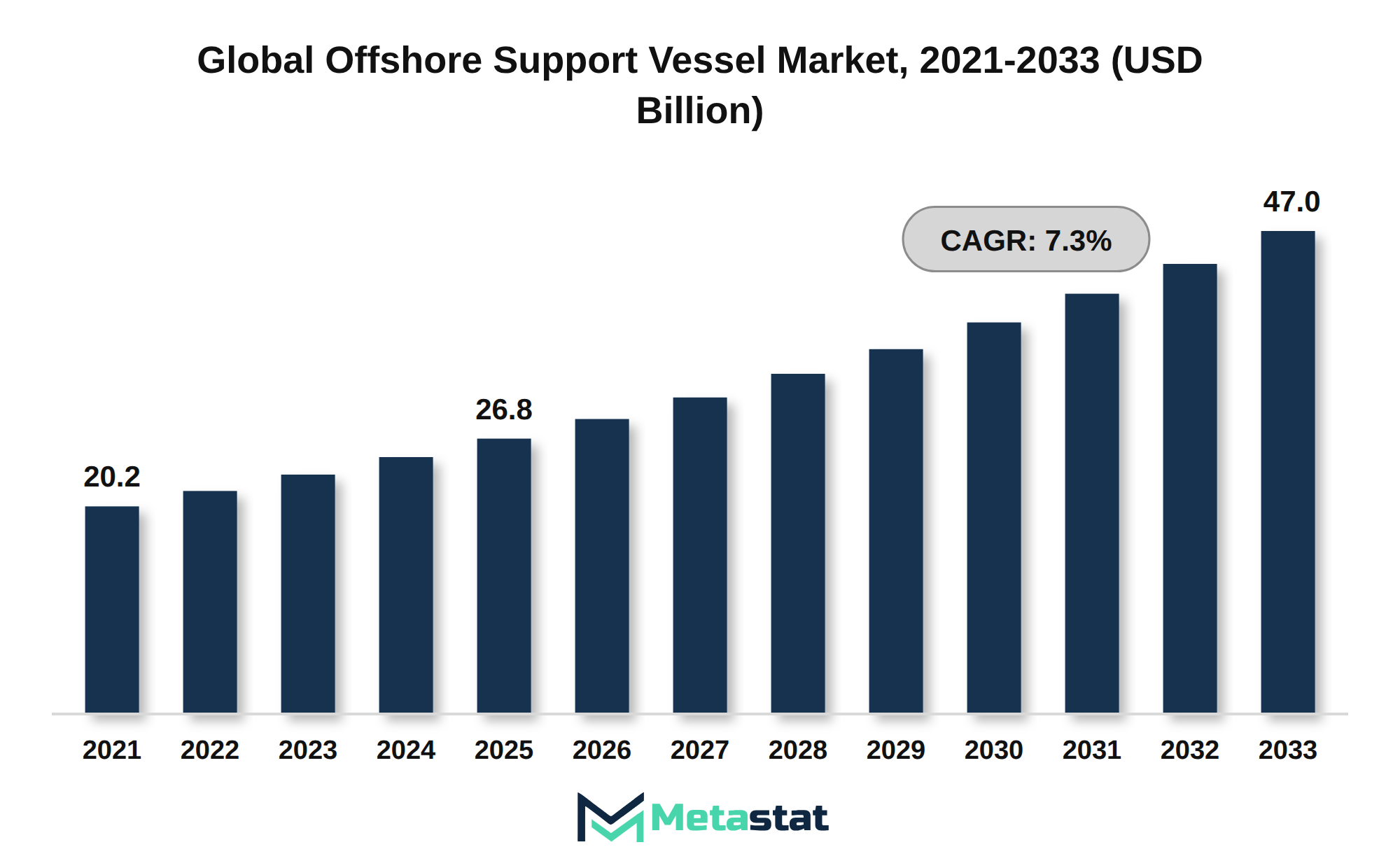
The global Offshore Support Vessel market was valued at USD 26.8 billion in 2025 and is projected to grow at a CAGR of 7.3% during the forecast period, reaching USD 47 billion by 2033.
Current trends and key factors shaping the Offshore Support Vessel Market
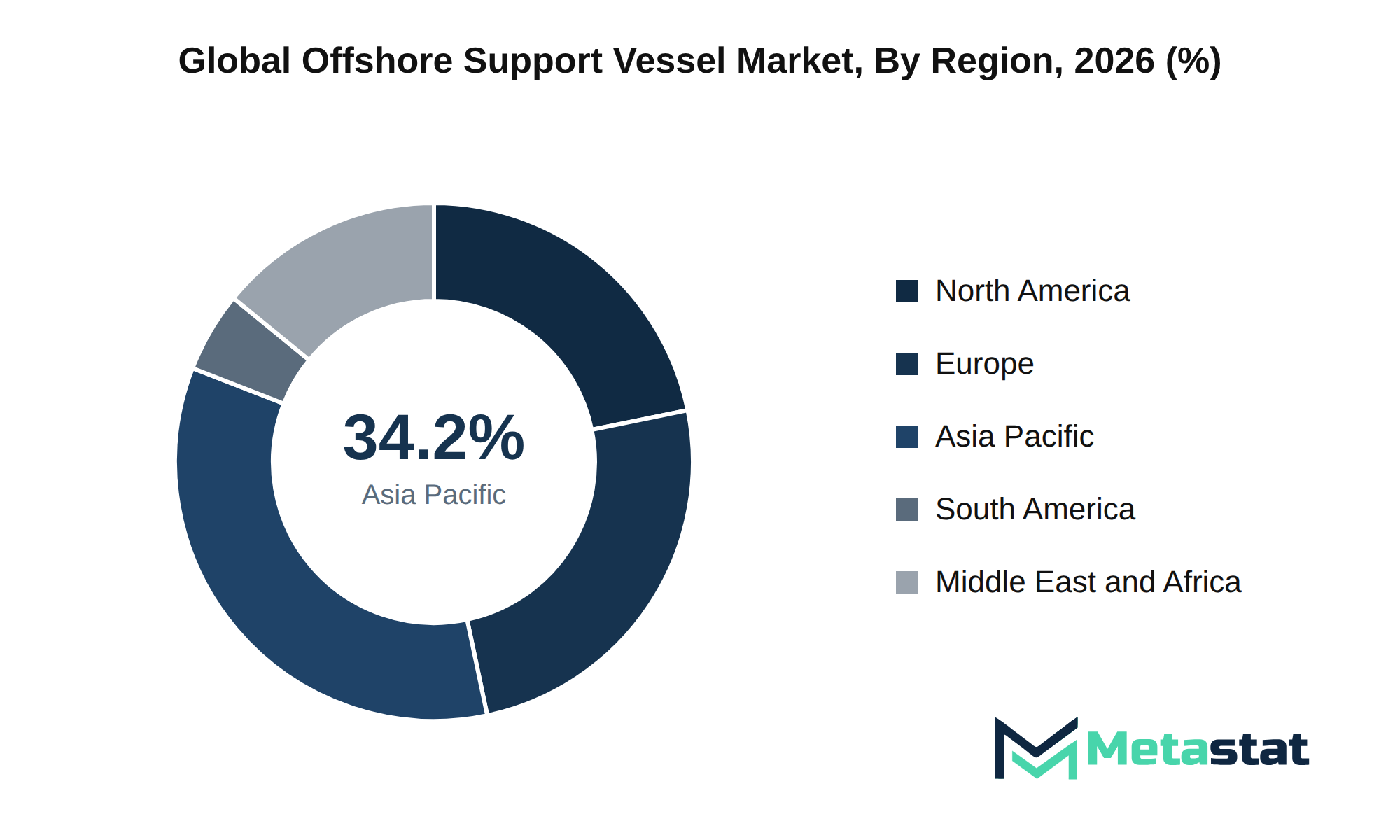
The Offshore Support Vessel market is poised for substantial growth, with a base value of USD 26.8 billion in 2025 projected to reach USD 47 billion by 2033, reflecting a compound annual growth rate (CAGR) of 7.3%. The market's regional distribution highlights significant shares, with North America holding 21.8% in 2025 and the United States leading in market share by 2026. Europe follows closely with 24.9%, while the Asia Pacific region commands the largest share at 34.2%. South America and the Middle East and Africa contribute 5% and 14.1%, respectively, illustrating a varied market dynamic across different regions.
Regulatory frameworks and compliance in offshore support
The Offshore Support Vessel market operates within a complex regulatory environment that demands strict compliance with both international and regional maritime regulations. These regulations often focus on safety standards, environmental protection, and operational efficiency. Compliance with these standards is crucial, as non-compliance can lead to significant financial penalties and operational shutdowns. Companies engaged in offshore support services must stay updated on evolving regulations to mitigate risks and ensure uninterrupted operations.
Geopolitical factors also play a critical role in shaping the operational landscape of the market. Tensions in regions rich in oil and gas resources can impact supply chains and logistics. Understanding the geopolitical landscape is essential for stakeholders in the Offshore Support Vessel market, as it influences operational strategies and investment decisions.
Technological advancements and innovation trajectories
Innovation within the Offshore Support Vessel market is driven by the need for enhanced operational efficiency and sustainability. Emerging technologies are expected to play a vital role in the transformation of vessel design and functionality. Research and development are focused on creating next-generation vessels that incorporate advanced materials, automation, and smart operations. These innovations aim to reduce operational costs and improve safety standards, aligning with the industry's push towards digitalization and Industry 4.0 integration.
The integration of digital technologies is reshaping operational practices. Smart operations, powered by data analytics and the Internet of Things (IoT), offer opportunities for real-time monitoring and predictive maintenance. This shift towards digitalization not only enhances operational efficiency but also contributes to better decision-making processes.
Sustainability and decarbonization efforts
As global attention shifts towards sustainability, the Offshore Support Vessel market faces increasing pressure to adopt environmentally friendly practices. Decarbonization initiatives are becoming a priority, driven by regulatory mandates and stakeholder expectations. Companies are investing in new vessel designs that use alternative fuels such as liquefied natural gas (LNG) and biofuels, aiming to reduce carbon emissions. This transition is crucial for ensuring long-term viability in an industry that is under scrutiny for its environmental impact.
The circular economy also influences market dynamics, prompting companies to explore sustainable sourcing and waste management strategies. By adopting circular practices, stakeholders can minimize waste and enhance resource efficiency, aligning business operations with broader sustainability goals.
Value chain analysis and procurement strategies
Understanding the value chain in the Offshore Support Vessel market is essential for stakeholders aiming to enhance operational efficiency and reduce costs. The market comprises various players, including shipbuilders, operators, and service providers, each contributing to the overall supply chain. Key procurement vectors involve the acquisition of vessels, equipment, and technology, which are critical for maintaining competitiveness. Operators typically seek vessels that meet specific operational requirements, often leading to investments in custom-built solutions. As the market evolves, the customer journey increasingly emphasizes sustainability and efficiency, prompting operators to adopt innovative procurement strategies that align with these goals.
Digitalization and smart operations
Digitalization is transforming operations within the Offshore Support Vessel market. The integration of smart technologies helps improve vessel performance and operational safety. For instance, advanced data analytics and real-time monitoring systems enable operators to enhance decision-making processes and optimize resource allocation. Industry 4.0 and 5.0 concepts are gaining traction, with a focus on automation and connectivity among vessels and shore-based facilities. This trend improves operational capabilities and addresses the growing demands for efficiency and environmental responsibility within the sector.
Capital allocation and investment realities
Capital allocation remains a crucial consideration for businesses in the Offshore Support Vessel market. Companies must navigate the complexities of operating expenses (OpEx) and capital expenditures (CapEx) while ensuring they remain competitive. Investments in modernizing fleets and adopting new technologies can lead to significant long-term benefits. However, the need for immediate returns can constrain decision-making, especially in an environment characterized by fluctuating oil prices and global economic uncertainties. Companies must balance short-term financial pressures with long-term strategic goals to maintain growth in the market.
Macroeconomic pressures and currency volatility
Macroeconomic headwinds impact the Offshore Support Vessel market significantly. Factors such as inflationary pressures and currency volatility can affect operating costs and overall profitability. Operators face challenges in managing expenses, particularly when currency fluctuations impact vessel procurement and maintenance costs. Global economic conditions can also influence demand for offshore services, with economic downturns leading to reduced investments in exploration and production activities. Companies need to be agile in their financial strategies to mitigate risks associated with these macroeconomic factors.
Strategic considerations and market dynamics
Strategic outlooks for the Offshore Support Vessel market are shaped by various imperatives, including the need for innovation and sustainability. Companies are increasingly focusing on developing strategies that address the shifting dynamics of the market, particularly in response to emerging trends such as environmental regulations and technological advancements. High-value recommendations for stakeholders include investing in research and development to enhance vessel capabilities and adopting sustainable practices to meet regulatory requirements. These strategies will be essential as the market evolves and faces new challenges and opportunities.
Market Dynamics
Increased investment in offshore oil and gas exploration drives demand
Investment in the offshore oil and gas sector has seen a notable increase, driven by rising energy prices and the need to secure long-term supply sources. This shift boosts the Offshore Support Vessel market as companies seek to enhance their exploration and production capabilities. With an anticipated compound annual growth rate (CAGR) of 7.3%, the market is projected to grow from USD 26.8 billion in 2025 to USD 47 billion by 2033. As operators in this sector ramp up their activities, the need for various types of support vessels becomes more pronounced, ranging from platform supply vessels to anchor handling tug supply vessels.
Regions such as Asia Pacific and North America are experiencing the strongest impacts from this investment surge. Asia Pacific, in particular, is set to account for 34.2% of the market share by 2033, reflecting its significant offshore resources and growing investments in exploration. North America, with 21.8% of the market share, is also witnessing a revitalization of offshore projects, supported by technological advancements and policy incentives that favor exploration and production activities. In these regions, the competition for new contracts is expected to intensify, propelling the growth of the market further.
For suppliers in the Offshore Support Vessel market, this growing investment presents opportunities for both established players and new entrants. Companies that can provide innovative and efficient vessel solutions may secure advantageous contracts as operators seek to optimize their operations. As regulatory frameworks evolve to support sustainable practices, suppliers are encouraged to innovate in their offerings, incorporating environmentally friendly technologies and solutions to meet market demand. This focus on sustainability, combined with increased capital investment, positions the market for steady growth in the upcoming years.
Increased venture funding fuels expansion in offshore support vessel capabilities
Venture funding has significantly transformed the Offshore Support Vessel market, driving innovation and enhancing operational capabilities. Increased capital inflows allow companies to upgrade their fleets, invest in advanced technologies, and improve vessel efficiency. Enhanced automation and software adoption streamline operations, making support vessels more competitive in a dynamic industry. These advancements meet the growing expectations of clients for higher performance and reliability, which in turn drives demand across various offshore applications.
The influence of venture funding is particularly pronounced in the Asia Pacific region, which holds a substantial share of 34.2% in the market. Countries like China and India are seeing a surge in investments targeting offshore oil and gas exploration and renewable energy projects, reflecting a broader trend towards modernization and efficiency improvements. As these nations continue to ramp up their offshore activities, the demand for innovative vessel solutions is expected to grow, further propelling the market forward.
For suppliers, the influx of venture capital signals a shift towards more strategic partnerships and collaborative initiatives within the industry. Companies will need to adapt by developing advanced technologies and improving service delivery to meet the evolving needs of their clients. This competitive environment encourages suppliers to differentiate themselves through innovation and enhanced service offerings, ensuring they remain relevant in the growing Offshore Support Vessel market.
High capital investment requirements and escalating operating costs
High capital investment requirements and escalating operating costs represent significant constraints on the Offshore Support Vessel market. The complex nature of offshore operations necessitates substantial financial outlay for vessel acquisition, maintenance, and compliance with safety and environmental regulations. This high capital intensity can deter new entrants and limit the expansion plans of existing players.
Regions with a high concentration of offshore activity, such as Asia Pacific, which holds a 34.2% share of the market, are particularly affected. The need for advanced vessels in deepwater and ultra-deepwater operations, where costs are inherently higher, exacerbates these financial challenges. As the market transitions to newer, more efficient technologies, existing operators face pressure to upgrade fleets, leading to increased financial strain. For instance, by 2033, investments in multi-purpose support vessels are projected to reach USD 7.1 billion, emphasizing the growing financial burden on operators.
To mitigate these challenges, companies are exploring various strategies, such as leasing vessels instead of purchasing them outright. This approach can alleviate upfront costs and provide greater flexibility in fleet management. Some operators are investing in retrofitting existing vessels to enhance efficiency and extend their operational lifespan. Despite these efforts, the workaround is incomplete, as many companies still struggle with high operating costs, driven by rising fuel prices and maintenance expenses. Consequently, while these strategies can provide temporary relief, the underlying financial barriers remain a significant constraint to overall market growth.
Pricing pressures are impacting operational margins in the offshore support vessel market
Firms in the offshore support vessel market are currently grappling with challenging pricing pressures that directly affect their operational margins. The fluctuating demand for various vessel types, alongside the rising input costs, creates a complex environment for firms to maintain competitive rates while ensuring profitability. This situation is exacerbated by a combination of factors, including increased competition and the necessity for firms to invest in advanced technologies and compliance with stringent regulations.
Managing these pricing pressures is particularly challenging in specific segments, such as Platform Supply Vessels (PSV) and Anchor Handling Tug Supply Vessels (AHTS). These vessel types are crucial for offshore oil and gas operations, and they face substantial competition from both established players and new entrants in key regions like North America and Europe. As firms strive to secure contracts, they may find themselves in a race to the bottom on pricing, which further squeezes their margins.
To address these challenges, firms are adopting various strategies that come with increased costs. Investments in technology upgrades, such as automation and data analytics, aim to enhance operational efficiency and reduce reliance on human labor. Firms are enhancing their training programs to bridge workforce skill gaps. While these initiatives are essential for long-term sustainability, they require significant capital outlay and can lead to short-term financial strain as firms work to balance their budgets. Overall, the combined effect of pricing compression and rising operational costs presents a considerable challenge for the market as firms seek to navigate this demanding environment.
Emerging regional demands and infrastructure modernization fuel opportunities
Growing regional demands and ongoing infrastructure modernization create significant opportunities within the Offshore Support Vessel market. As countries worldwide invest in offshore oil and gas exploration, particularly in the Asia Pacific region, the need for high-quality support vessels becomes critical. The market is expected to expand from a base value of USD 26.8 billion in 2025 to an estimated USD 47 billion by 2033, reflecting a compound annual growth rate (CAGR) of 7.3% during the forecast period.
Companies that can capture this opportunity will need strong operational capabilities and strategic positioning. Key players must develop advanced vessel technologies and innovative operational models to meet evolving market demands. The market's growth will be driven by demand for various support vessel types, including Platform Supply Vessels (PSV) and Anchor Handling Tug Supply Vessels (AHTS), which are essential for efficient operations in both shallow and deepwater settings. Firms with the ability to integrate digital transformation initiatives and sustainable practices into their operations will have a competitive edge.
The timing of this opportunity is crucial. As the market progresses toward its 2033 target, firms must act swiftly to establish their foothold. A failure to adapt to changing regulations and sustainability imperatives may close this window of opportunity for market participants. As the demand for offshore support vessels increases, firms that can efficiently manage supply chains and optimize operational processes will be better positioned to both capture and sustain market share in this competitive landscape.
Market Segmentation Analysis
The Global Offshore Support Vessel market is segmented based on Vessel Type, Water Depth, Fuel Type, and Application.
By Vessel Type, the market is further segmented into:
Anchor Handling Tug Supply Vessels (AHTS)
Platform Supply Vessels (PSV)
Multi-Purpose Support Vessels (MPSV)
Standby & Rescue Vessels
Crew Vessels
Seismic Vessels
Chase Vessels
Others
Anchor Handling Tug Supply Vessels (AHTS)
The Anchor Handling Tug Supply Vessels (AHTS) segment is valued at USD 7.6 billion in 2026 and is projected to reach USD 11.8 billion by 2033, at a CAGR of 6.4% during the forecast period. This growth is driven by increasing demand for AHTS vessels in offshore oil and gas operations, as companies require reliable support for towing and positioning rigs and platforms. The surge in exploration and production activities, particularly in deepwater regions, further increases the need for specialized vessels capable of handling heavy anchors and mooring systems.
Technological advancements play a crucial role in the evolution of AHTS vessels. The industry is witnessing the integration of next-generation systems that enhance operational efficiency and safety. Innovations such as dynamic positioning systems and automated anchor handling technology are becoming standard in new builds, allowing operators to maximize the capabilities of their fleets. The ongoing focus on reducing environmental impact has led to the adoption of eco-friendly fuel alternatives, including LNG.
Market dynamics indicate a shift towards regulatory compliance, as stricter international standards for emissions and safety protocols reshape the operational frameworks for AHTS vessels. Companies must navigate these regulations while managing cost structures and pricing volatility in a competitive market. Supply chain resilience also emerges as a key concern, with disruptions in raw material sourcing impacting vessel construction and maintenance schedules.
As the Offshore Support Vessel market continues to evolve, strategic opportunities will arise for operators willing to invest in technological upgrades and innovative service offerings. The growing emphasis on sustainable practices and compliance will also guide investment decisions, shaping the future of AHTS and overall market growth.
Platform Supply Vessels (PSV)
By 2033, the Platform Supply Vessels (PSV) segment is estimated to reach USD 12 billion, growing at a compound annual growth rate (CAGR) of 7.5% during the forecast period. This growth can be attributed to several factors driving demand in the offshore support vessel market.
As offshore oil and gas exploration expands, the need for efficient logistical support increases. Platform Supply Vessels play a critical role in transporting supplies and equipment to offshore installations, which is essential for maintaining operational efficiency. The ongoing shift towards renewable energy sources, including offshore wind farms, is also contributing to demand for PSVs, as these vessels are needed to support the construction and maintenance of such facilities.
Technological advancements in vessel design and propulsion are enhancing the capabilities of PSVs, allowing them to operate in more challenging environments and reducing fuel consumption. These innovations are significant as companies aim to lower operational costs while adhering to regulatory compliance standards and environmental sustainability goals.
Cost structures within the segment remain a concern, as fluctuating fuel prices and maintenance costs impact profit margins. However, the market is expected to adapt through improved operational practices and strategic investments in next-generation vessels. This focus on modernization will likely attract capital investment, further establishing the PSV segment as a vital component of the offshore support vessel market.
Multi-Purpose Support Vessels (MPSV)
The Multi-Purpose Support Vessels (MPSV) segment is expected to reach USD 7.1 billion by 2033. This growth is driven by increasing demand for versatile vessels capable of supporting various offshore activities, including oil and gas exploration, wind farm installation, and subsea maintenance. As operators seek to optimize operational efficiency, the adaptability of MPSVs becomes essential.
Technological maturation plays a critical role in the MPSV segment. Advances in vessel design and propulsion systems enhance performance and reduce environmental impact. The integration of next-generation technologies, such as automation and digital monitoring systems, enables operators to streamline operations, increasing the appeal of MPSVs in the Offshore Support Vessel market.
Regulatory compliance is another significant factor influencing the MPSV segment. Stricter environmental and safety regulations necessitate that vessels meet specific certifications, often leading to increased operational costs. Compliance can also drive innovation, pushing manufacturers to develop more efficient and environmentally friendly vessels.
Cost structures and pricing volatility remain key challenges for MPSV operators. Fluctuations in fuel prices and maintenance costs directly impact profit margins. As operators seek to cope with these pressures, investment in fuel-efficient technologies can offer long-term savings despite high upfront costs. Additionally, the need for cost management strategies is crucial in navigating these challenges.
Standby & Rescue Vessels
The Standby & Rescue Vessels segment is projected to grow at a CAGR of 6.2% during the forecast period. This growth is driven primarily by increasing demand in offshore operations, where safety and emergency response capabilities are critical. As offshore oil and gas activities expand, the need for effective standby and rescue vessels becomes more pronounced, ensuring compliance with safety regulations.
Technological advancements play a significant role in the evolution of standby and rescue vessels. Innovations in design and equipment are resulting in vessels that are more efficient and capable of meeting the stringent safety standards required in offshore environments. This trend reflects a broader movement in the Offshore Support Vessel market towards enhancing operational capabilities and reliability.
Another critical factor influencing the segment is the regulatory compliance landscape. As governments and industry bodies tighten safety regulations, operators are increasingly compelled to invest in standby and rescue vessels that not only meet but exceed these standards. This regulatory pressure is likely to spur investments and upgrades within the segment, driving the need for compliance.
Cost structures and pricing volatility also impact the Standby & Rescue Vessels segment. Fluctuations in fuel prices and operational costs are significant considerations for companies in this space. As a result, firms are exploring strategic partnerships and supply chain optimizations to mitigate these pressures, ensuring sustained investment in fleet capabilities that align with operational demands.
Crew Vessels
Demand for crew vessels is driven primarily by the need for personnel transportation and support in offshore operations, particularly in oil and gas exploration and production. The growing focus on offshore wind projects has also increased the demand for crew vessels, as these vessels are essential for moving workers to and from offshore sites. As the Offshore Support Vessel market expands, adoption rates for crew vessels are expected to rise, reflecting the industry's shift toward more sustainable energy sources.
Technological maturation plays a critical role in the evolution of crew vessels. The introduction of next-generation upgrades, such as advanced navigation systems and eco-friendly propulsion, has enhanced vessel performance and operational efficiency. These innovations facilitate compliance with increasingly stringent regulatory standards and contribute to lower operational costs. As operators seek to modernize their fleets, crew vessels are becoming more technologically advanced, aligning with industry trends toward sustainability and safety.
Regulatory compliance is another significant factor influencing the crew vessel segment. Operators must navigate a complex landscape of safety and environmental regulations. Niche certifications specific to crew vessels are becoming essential for ensuring compliance and maintaining operational legitimacy. The pressure to meet heightened environmental standards has led to investment in cleaner technologies and practices within this sub-segment.
The supply chain for crew vessels is also experiencing pressures related to raw material sourcing and logistics vulnerabilities. Challenges in obtaining high-quality materials due to global supply chain disruptions can impact the production timelines and costs of crew vessels. As operators seek resilience in their supply chains, they will increasingly prioritize strategic partnerships and alternative sourcing strategies to mitigate risks. This focus on supply chain stability is critical for the ongoing success of the crew vessel segment.
Seismic Vessels
Demand for seismic vessels is driven primarily by exploration activities in the offshore oil and gas sector. These vessels play an important role in geological surveying, enabling companies to assess subsea resources effectively. As exploration intensifies, adoption rates of seismic vessels are expected to rise, reflecting the industry's need for precise data acquisition and analysis.
Technological advancements have significantly influenced the evolution of seismic vessels. Next-generation upgrades, including enhanced imaging technologies and automated data processing systems, improve operational efficiency and data quality. This technological maturation boosts the capabilities of existing vessels and prompts the development of new designs tailored for specific exploration requirements.
Regulatory compliance remains a key factor for seismic vessels, with stringent standards governing emissions and operational safety. As governments implement more rigorous environmental policies, adherence to these regulations becomes essential for market participants. Companies that invest in niche certifications may gain a competitive edge, aligning their operations with regulatory trends.
Supply chain resilience is critical for seismic vessel operations, especially given the reliance on specialized equipment and materials. Logistics vulnerabilities can affect the timely delivery of services. Effective supply chain management is a priority for operators in the market. Addressing these challenges will be vital for ensuring consistent service delivery in an increasingly competitive environment.
Chase Vessels
Chase vessels play a crucial role in offshore operations, particularly in supporting larger vessels during complex maritime tasks. Their primary demand drivers include the increasing need for enhanced safety and operational efficiency in offshore oil and gas activities. Adoption rates are expected to rise as companies seek specialized vessels capable of executing various support roles, thus expanding this segment within the broader Offshore Support Vessel market.
Technological maturation is influencing chase vessel design and functionality, with next-gen upgrades focusing on automation and enhanced navigational systems. Such advancements aim to improve operational capabilities, making these vessels more attractive to potential users. The ongoing evolution of chase vessels will likely align with industry trends towards sustainability and eco-friendly practices, prompting further innovation.
End-use dynamics reflect a shift towards more integrated operations, where chase vessels are used not only for their traditional roles but also for newer applications in offshore wind and decommissioning projects. This versatility highlights their importance as market demands and consumption patterns change.
Regulatory compliance standards are becoming increasingly stringent, which could impact operational costs and procurement strategies for chase vessels. As companies navigate these challenges, the emphasis on niche certifications and adherence to policy frameworks will shape investment decisions in the market.
Others
This sub-segment encompasses various Offshore Support Vessels that do not fall into the more defined categories such as AHTS, PSV, MPSV, or Standby & Rescue Vessels. It remains residual due to the diversity of vessel types and their applications, which may cater to specialized, niche markets or unique operational requirements. The lack of standardization among these vessels often leads to varying demand drivers, thereby complicating their classification. In terms of technological maturation and compliance, vessels in this category may not align with mainstream advancements, causing them to experience different growth trajectories compared to more established vessel types in the Offshore Support Vessel market.
By Water Depth, the market is further segmented into:
Shallow Water
Deepwater
Ultra-Deepwater
Shallow Water
Valued at USD 13.5 billion in 2026, the Shallow Water segment is projected to reach USD 20.2 billion by 2033, growing at a CAGR of 6% during the forecast period. This growth is significantly influenced by increasing demand from offshore oil and gas projects, particularly in regions with vast shallow water expanses, such as the Gulf of Mexico and parts of Southeast Asia.
Technological maturation is a crucial factor in this segment, as advancements in vessel design and capabilities enhance efficiency and operational performance. Next-generation upgrades, including enhanced navigation systems and environmentally friendly fuel options, are becoming standard, driving adoption rates higher. The demand for specialized vessels catering to offshore wind projects is expanding, further boosting the segment's growth.
Regulatory compliance standards are also shaping the dynamics within the market. As environmental regulations become more stringent, operators are compelled to invest in vessels that meet or exceed these requirements. This regulatory environment drives innovation and creates opportunities for companies to differentiate themselves through compliance and sustainability initiatives.
Cost structures are another key consideration. Fluctuations in fuel prices impact operational expenses, leading operators to seek solutions that optimize fuel efficiency and reduce overall costs. These factors, combined with the growing emphasis on supply chain resilience, will continue to influence the Shallow Water segment's trajectory in the Offshore Support Vessel market.
Deepwater
By 2033, the Deepwater segment is estimated to reach USD 16.9 billion, with a compound annual growth rate (CAGR) of 8% during the forecast period. This growth is primarily driven by increasing exploration and production activities in offshore oil and gas, particularly in deeper waters where resources are becoming increasingly difficult to access. As operators seek to maximize output from existing fields and explore new opportunities, the demand for specialized offshore support vessels tailored for deepwater operations will continue to rise.
Technological maturation is important in supporting this segment's growth. Advances in vessel design and capabilities enhance operational efficiency and safety in challenging environments. The continued development of next-generation vessels equipped with advanced technology will likely attract investment and drive market expansion. Compliance with evolving regulatory standards ensures that vessels operate within safety and environmental guidelines, which is vital for maintaining sustainability in offshore operations.
Cost structures in deepwater operations are subject to significant pressures due to fluctuating oil prices and the high capital expenditure required for specialized vessels. These factors can impact profit margins and influence decisions regarding fleet composition and utilization. As the market evolves, operators must strategically navigate these challenges while capitalizing on emerging opportunities, particularly in the context of increasing demand for offshore wind energy and decommissioning services.
Ultra-Deepwater
By 2033, the Ultra-Deepwater segment is expected to reach USD 9.9 billion. This growth is primarily driven by increasing investments in deepwater exploration and production activities, necessitating advanced offshore support vessels capable of operating in extreme conditions. The market is experiencing a surge in demand for technological maturation and next-generation upgrades, as operators seek to enhance operational efficiency and reduce costs.
Cost structures associated with ultra-deepwater operations can be volatile, influenced by fluctuating oil prices and the high capital required for vessel construction and maintenance. Companies are focusing on optimizing their pricing strategies to maintain margins while simultaneously investing in research and development to address these pressures. The market will require a resilient supply chain, as sourcing raw materials and managing logistics can be challenging in this sub-segment.
Regulatory compliance standards are evolving, creating both challenges and opportunities for players in the market. Niche certifications will become increasingly important as companies aim to differentiate their offerings in a competitive environment. As the offshore support vessel market continues to expand, strategic opportunity windows will arise, particularly in emerging regions where deepwater activities are increasing.
By Fuel Type, the market is further segmented into:
Marine Diesel Oil
Heavy Fuel Oil
LNG
Biofuel
Marine Diesel Oil
Demand for Marine Diesel Oil in the Offshore Support Vessel market is influenced by several factors, including regulatory compliance and operational efficiency. As environmental regulations tighten, many operators are transitioning to compliant fuels, which drives the demand for Marine Diesel Oil. Its compatibility with existing engines simplifies the upgrade process, encouraging adoption across various vessel types.
Technological advancements also play a critical role in this sub-segment. The maturation of cleaner-burning engines and fuel management systems enhances the effectiveness of Marine Diesel Oil, enabling operators to achieve better fuel efficiency and lower emissions. The shift towards next-generation upgrades supports increased usage within the market.
Pricing dynamics present another layer of complexity for operators. Fluctuations in crude oil prices can affect the overall cost structure of Marine Diesel Oil, creating margin pressures for providers. Strategic sourcing and effective logistics management are essential for maintaining supply chain resilience during these pricing volatilities.
As alternative fuels emerge, potential substitution risks loom over the Marine Diesel Oil segment. Its established presence and operational familiarity within the industry continue to provide a competitive edge. The sub-segment is positioned to adapt and evolve alongside the shifting conditions of the Offshore Support Vessel market.
Heavy Fuel Oil
Heavy Fuel Oil (HFO) remains a significant fuel choice for the Offshore Support Vessel market due to its cost-effectiveness and availability. Primary demand drivers include the operational efficiency it offers for various offshore applications, particularly in the oil and gas sector. As industries continue to seek ways to reduce operational costs, HFO provides a viable option, enhancing adoption rates across numerous vessel types.
Technological maturation is influencing the segment. Advancements in engine technologies enable vessels to operate more efficiently on HFO. This includes next-generation upgrades aimed at optimizing fuel consumption while minimizing emissions. As regulatory compliance standards tighten, there is a push for more environmentally friendly alternatives, challenging HFO's dominance in the market.
Cost structures for HFO are subject to volatility, influenced by fluctuating crude oil prices and geopolitical factors. This pricing uncertainty can lead to margin pressures for operators. Consequently, operators may explore disruptive alternatives such as LNG and biofuels. HFO's widespread use in existing fleets offers a degree of resilience, as many vessels are specifically designed for its use.
Strategically, opportunities exist for operators willing to invest in retrofitting vessels to accommodate cleaner fuels. This investment may mitigate regulatory pressures. The ongoing evolution in fuel technologies highlights the importance of adapting to market demands while balancing operational costs, ensuring that HFO remains a key player in the Offshore Support Vessel market.
LNG
Demand for LNG as a fuel type in the Offshore Support Vessel market is largely driven by the global push for cleaner energy sources and the reduction of greenhouse gas emissions. As operators seek to meet increasingly stringent environmental regulations, LNG has gained traction due to its lower carbon footprint compared to traditional fuels. Adoption rates of LNG-powered vessels are also rising, with many companies investing in new builds that reflect a shift towards more sustainable practices in maritime operations.
Technological maturation in LNG propulsion systems has contributed to this trend, with advancements enhancing efficiency and performance. These next-generation upgrades allow vessels to operate more reliably and economically. The evolution of LNG infrastructure, such as bunkering facilities, is critical in supporting the growing number of LNG-fueled vessels, enabling integration into existing logistics networks.
End-use dynamics are shifting as sectors such as offshore oil and gas, and offshore wind increasingly prefer LNG-powered vessels for their operations. This trend is supported by favorable regulatory compliance standards that encourage the adoption of cleaner fuels in maritime activities. Market players must navigate challenges related to cost structures and pricing volatility associated with LNG, which can impact operational margins.
The strategic opportunity windows for LNG in the Offshore Support Vessel market are expanding. As investments in LNG technology and infrastructure increase, companies stand to benefit from enhanced competitiveness and compliance with global environmental standards.
Biofuel
Growing emphasis on sustainability in the Offshore Support Vessel market has led to increased interest in biofuels as a viable energy source. This segment is driven by the need to comply with stringent environmental regulations and a desire to reduce greenhouse gas emissions. Adoption rates are influenced by the escalating demand for cleaner fuel alternatives, as operators seek to align with global decarbonization goals. However, the transition to biofuels faces challenges, including the need for compatible vessel modifications and fuel supply chain adjustments.
Technological maturation in biofuel production is leading to advancements that could enhance its viability in marine applications. Research into next-generation biofuels aims to improve efficiency and reduce costs, further encouraging adoption in the sector. These efforts align with broader trends towards renewable energy sources within offshore operations. The end-use dynamics of biofuels are shifting as offshore operators increasingly recognize the importance of sustainable practices in maintaining their competitive edge.
Regulatory compliance standards are shaping biofuel adoption, with various certifications emerging to ensure quality and sustainability. As policies evolve, operators are navigating a complex environment of certifications which may either facilitate or hinder the market's growth. The cost structures associated with biofuels can present challenges, particularly in pricing volatility and margin pressures that affect profitability. Developing resilient supply chains and securing reliable raw material sourcing are critical for mitigating these risks and realizing the potential of biofuels in the Offshore Support Vessel market.
By Application, the market is further segmented into:
Offshore Oil and Gas
Offshore Wind
Offshore Decommissioning
Others
Offshore Oil and Gas
Operators in the offshore oil and gas sector face several primary demand drivers, including the need for enhanced exploration and production efficiency. As global energy demands rise, the industry continues to seek innovative solutions to optimize its operations, which significantly influences the Offshore Support Vessel market. Adoption rates for advanced vessel technologies are increasing as operators aim to improve operational efficiency and reduce environmental impacts.
Technological maturation is a critical factor in this sub-segment. Modern offshore support vessels are evolving through next-generation upgrades that enhance their capabilities and efficiency. Improved vessel designs, coupled with advanced automation and monitoring systems, are critical for meeting the evolving requirements of offshore operations. These upgrades not only facilitate better performance but also align with industry efforts to comply with stringent regulatory compliance standards.
Cost structures in the offshore oil and gas segment are also under scrutiny. Pricing volatility of raw materials essential for vessel operations puts pressure on margins, compelling operators to streamline their procurement and logistics processes. The need for supply chain resilience has become increasingly apparent as disruptions can significantly impact operational capabilities.
Technological obsolescence poses a risk, as older vessels may not meet new operational standards or efficiency benchmarks. This drives investment in newer, more capable vessels that can adapt to changing market conditions. Collectively, these dynamics shape operational strategies and investment within the offshore oil and gas sub-segment of the market.
Offshore Wind
Interest in offshore wind energy is increasing, driven by the global shift toward sustainable energy solutions. This growth is prompting investment in offshore support vessels tailored for wind farm installation and maintenance. The market must adapt to the evolving technological landscape, where innovations in vessel design and capabilities are crucial for operational efficiency. As vessels become more advanced, they must also meet rising regulatory compliance standards that emphasize safety and environmental responsibility.
Cost structures within the offshore wind segment present unique challenges. Vessel operators face margin pressures stemming from fluctuating fuel prices and the need for specialized equipment to service offshore wind farms effectively. As the demand for offshore wind energy expands, companies must ensure resilience in their supply chains. This is particularly important for raw material sourcing and logistics, which are essential for maintaining the operational readiness of support vessels.
Despite the challenges, opportunities abound in this sector. Strategic investment in next-generation vessel technology will likely yield competitive advantages in the market. The push for clean energy sources offers a significant avenue for growth, allowing operators to position themselves as leaders in the offshore wind domain. Analyzing these trends is vital for stakeholders looking to capitalize on the expanding offshore support vessel market.
Offshore Decommissioning
Decommissioning activities are key to maintaining environmental compliance and ensuring the safe removal of obsolete offshore structures. As regulatory frameworks tighten globally, adherence to these standards is becoming increasingly critical. The Offshore Support Vessel market is experiencing heightened demand for vessels that can support complex decommissioning operations, which require specialized capabilities and equipment designed for dismantling and removing offshore infrastructure.
Technological advancements are significantly influencing the decommissioning process. The maturation of next-generation vessels equipped with advanced technology enhances operational efficiency and safety. These innovations allow for more precise execution of decommissioning tasks, reducing environmental impact and operational costs. As the market evolves, investments in next-gen upgrades continue to shape the future of offshore decommissioning.
Cost structures and pricing volatility represent significant challenges for companies involved in offshore decommissioning. Fluctuations in material and operational costs can create margin pressures, necessitating effective cost management strategies. Companies must navigate these economic challenges while ensuring compliance with regulatory standards, which adds another layer of complexity to their operational frameworks. This situation emphasizes the need for strategic planning and adaptability.
Supply chain resilience is vital in this sub-segment, especially regarding raw material sourcing and logistics vulnerabilities. Disruptions in the supply chain can impact project timelines and overall costs. Companies must establish robust supply chains to mitigate risks associated with sourcing materials and ensuring timely delivery of equipment necessary for decommissioning operations. A focus on strengthening these supply chains will be essential for maintaining operational continuity.
Others
This sub-segment aggregates various niche applications within the Offshore Support Vessel market that do not fall under traditional categories such as offshore oil and gas or wind. It includes specialized tasks and unique operational needs that often demand tailored vessel capabilities. Due to the diversity and smaller scale of these operations, this bucket remains residual, lacking the volume of demand seen in more established segments. These applications are typically characterized by sporadic and project-specific requirements, resulting in limited visibility and predictability in market trends.
By Region
Based on geography, the Global Offshore Support Vessel market is divided into North America, Europe, Asia-Pacific, South America, Middle East, and Africa.
North America
North America is poised for significant growth in the Offshore Support Vessel market, expanding at a CAGR of 7.3% during the forecast period. The market is expected to reach a size of USD 9.5 billion by the end of 2033. Key demand drivers include ongoing infrastructure modernization and the need for high-value replacement cycles across various segments.
The United States, Canada, and Mexico are crucial players, with the U.S. being the largest contributor to the market. North America is expected to hold a substantial share of the global market in 2025. This dominance is supported by strategic initiatives in localized manufacturing and supply chain regionalization, which enhance operational efficiency and responsiveness to market demands.
Regional resource availability also influences market dynamics. The increasing focus on energy grid resiliency and local infrastructure readiness positions North America as a favorable environment for offshore operations. The ongoing shifts in geopolitical relations create opportunities for cross-border trade corridors that facilitate the movement of offshore support vessels.
Despite being a mature market, there exists potential for incremental growth vectors through new project developments and technological advancements. Companies are investing in advanced vessel types, such as Multi-Purpose Support Vessels (MPSV) and Platform Supply Vessels (PSV), to meet evolving customer needs. This focus on innovation ensures that North America remains competitive in the offshore support sector.
Overall, the North America Offshore Support Vessel market is characterized by a blend of robust infrastructure and strategic investments. These factors collectively support the region’s expansion and strengthen its role in the global offshore support vessel ecosystem.
Europe
The Offshore Support Vessel market in Europe represents a significant portion of the global market. This region exhibits a range of demand drivers, including a strong emphasis on infrastructure modernization and the ongoing development of offshore wind projects, particularly in the UK and Germany. These initiatives create substantial opportunities for the market and increase the importance of domestic production capabilities.
Mature market dynamics characterize the European sector, where high-value replacement cycles are increasingly prevalent. As older vessels are retired, there is growing demand for modern, efficient offshore support vessels that meet contemporary operational standards. This trend is particularly evident in countries such as France and Italy, where companies are investing in upgrades to enhance operational efficiency.
Localized procurement dynamics also play a critical role in shaping market behavior. Cultural nuances influence purchasing decisions, leading to varied buyer behaviors across countries like Spain and Russia. Vendors must adapt their strategies to cater to these diverse preferences, ensuring compliance with local regulations while meeting the specific needs of clients.
In addition, the European market benefits from a robust infrastructure that supports the offshore energy sector. Regional resource availability, particularly in Russia and the North Sea, adds to the market's attractiveness. Energy grid resiliency is another key factor ensuring that infrastructure can support ongoing and future offshore operations.
Overall, the Offshore Support Vessel market in Europe is poised for growth, backed by strategic entry barriers that encourage foreign direct investment. The combination of modernization efforts, localized manufacturing, and compliance with geographic regulatory frameworks creates a conducive environment for expansion in the coming years.
Asia-Pacific
Asia-Pacific represents a significant portion of the global Offshore Support Vessel market. The region is undergoing substantial infrastructure modernization, driven by the rising demand for energy and the expansion of offshore oil and gas exploration. Countries such as China, Japan, India, and South Korea are emerging as front-runners, capitalizing on their vast coastal lines and advancing technologies.
As local markets evolve, high-value replacement cycles for aging vessels are becoming prominent, particularly in mature markets like Australia and Japan. These countries are focusing on upgrading their fleets with more efficient and sustainable vessels, which is expected to stimulate incremental growth within the market. In addition, Southeast Asia and the Rest of Asia Pacific are identified as underpenetrated territories, presenting unique opportunities for vendors aiming to expand their presence.
The dynamics of the supply chain in this region are shifting, with localized manufacturing densities increasing in response to nearshoring initiatives. This trend allows for greater operational efficiency and reduced lead times, which are critical as the market grows. Moreover, regional resource availability plays a role in shaping the dynamics, with countries like Australia possessing robust energy grids and infrastructural readiness to support offshore operations.
Geopolitical factors and compliance mandates are also influencing the Offshore Support Vessel market. Various nations are implementing local regulations that affect procurement and operational practices. Understanding these geographic regulatory frameworks is essential for foreign direct investment flows and successful market entry strategies. These factors present both challenges and opportunities for growth in the Asia-Pacific region.
South America
Brazil stands out as a key player in the Offshore Support Vessel market within South America, driving significant demand through its extensive offshore oil and gas activities. The country is experiencing an upswing in infrastructure modernization, enhancing its capabilities in offshore operations. Argentina, while not as dominant as Brazil, contributes to regional dynamics with its own offshore initiatives, particularly in resource exploration. The rest of South America remains underpenetrated, presenting opportunities for growth as the market expands.
The market's growth is supported by high-value replacement cycles in aging vessel fleets, particularly in Brazil. Operators are increasingly focused on upgrading to more advanced and efficient vessels, which enhances operational capabilities while addressing environmental concerns. This pattern of incremental growth is anticipated to continue as companies adapt to evolving regulations and market demands.
Localized procurement dynamics also play a crucial role in shaping the market in this region. Companies are increasingly favoring domestic suppliers to meet compliance mandates and reduce logistics costs. Such trends are evident in Brazil, where regional vendors are becoming more competitive by offering tailored solutions that align with local operational needs.
Strategic entry barriers continue to influence the Offshore Support Vessel market. Foreign Direct Investment (FDI) flows into Brazil and Argentina have been relatively robust, as international players seek to capitalize on the opportunities present in these emerging markets. However, geopolitical factors and local regulations create complexities for foreign firms aiming to establish a foothold in the region.
Overall, South America holds a 5.00% share of the global Offshore Support Vessel market in 2025, indicating both potential and challenges. As regional players adapt to market conditions and expand their capabilities, the segment is poised for development in the coming years.
Middle East and Africa
In the Middle East and Africa, the Offshore Support Vessel market is poised for notable expansion, driven by significant regional developments in oil and gas exploration, particularly in Saudi Arabia and the UAE. These countries exhibit strong demand for advanced vessel types, including Anchor Handling Tug Supply Vessels (AHTS) and Platform Supply Vessels (PSV). Infrastructure modernization initiatives further enhance the operational capabilities required to support offshore activities, positioning these nations as front-runners in the emerging market.
South Africa also plays a critical role in the regional dynamics, benefiting from increased investments in offshore oil and gas projects. The nation’s focus on high-value replacement cycles for aging maritime assets will contribute to incremental growth in the market. The emphasis on localized manufacturing densities can streamline supply chains and reduce lead times, allowing for more responsive service delivery in offshore operations. This focus on modernization supports the overall growth trajectory.
The diverse geographical characteristics across the Rest of the Middle East and Africa present both opportunities and challenges. With varying degrees of market maturity, some areas remain underpenetrated, opening avenues for increased investment and foreign direct investment (FDI) flows. Strategic entry barriers, such as regulatory frameworks and compliance mandates, will shape the competitive environment in these regions. These factors will influence market participation and development.
Regional procurement dynamics reflect cultural nuances and distinct B2B buying behaviors, influencing how companies engage with suppliers. Understanding these localized dynamics is crucial for vendors seeking to establish a foothold in the market. Overall, as the demand for offshore support services continues to grow, the Middle East and Africa will represent 14.1% of the global market by 2025, indicating significant potential for stakeholders in this sector.
Competitive Landscape and Strategic Insights
Mergers, acquisitions, and strategic consolidation
The Offshore Support Vessel market is currently experiencing a phase of strategic consolidation, marked by mergers and acquisitions that aim to enhance operational efficiencies and expand geographic reach. Key players are increasingly pursuing partnerships to gain competitive advantages, which streamlines their service offerings and strengthens their market position. This trend is reflective of a broader industry restructuring as companies seek to adapt to changing market dynamics and customer demands.
Go-to-market strategies and product differentiation
In terms of go-to-market strategies, companies in the Offshore Support Vessel sector are focusing on tailored commercial models that align with specific customer needs across various segments. Pricing architectures vary, with many players offering competitive rates to attract clients in regions like North America and Europe, where demand is significant. Product differentiation is evident in the types of vessels offered, including Anchor Handling Tug Supply Vessels (AHTS) and Platform Supply Vessels (PSV), each designed for specific operational requirements in offshore oil and gas and wind sectors. R&D investments are directed towards improving vessel performance and sustainability, which further establishes proprietary technology moats around these offerings.
Strategic alliances and joint ventures are becoming more prevalent, facilitating cross-industry partnership ecosystems that leverage complementary strengths. This collaborative approach not only enhances service delivery but also mitigates risks associated with market fluctuations, particularly in regions with volatile demand patterns such as South America and the Middle East.
Barriers to entry in this market remain significant, primarily due to the high capital investment required for fleet acquisition and maintenance, as well as regulatory compliance challenges. Threats from new entrants are mitigated by established companies that hold substantial market share, making it difficult for startups to gain traction. The investment in brand equity is crucial, as customer retention strategies hinge on established reputations and the reliability of service delivery.
Vertical integration is being pursued by some players, allowing them to control more of the supply chain and enhance procurement leverage. This strategy can lead to reduced operational costs and improved margins. Companies like A.P. Moller-Maersk and Tidewater Inc. illustrate this trend, drawing on their extensive networks to manage both vessel operations and logistics effectively.
Intellectual property (IP) portfolios are crucial for maintaining competitive advantages within the Offshore Support Vessel market. Companies that invest in innovative designs and technologies can create defensible positions that discourage competitors from replicating their offerings. As the market progresses, the focus on technological advancements will likely intensify, further shaping the competitive dynamics.
Looking ahead, the future competitive outlook suggests that companies will have to navigate increasing pressures to adapt to environmental regulations and sustainability initiatives. Defensive imperatives will emerge as firms seek to protect their market share while exploring strategic growth vectors in renewable energy sectors, particularly offshore wind. The forecasted market growth from USD 26.8 billion in 2025 to USD 47 billion by 2033, with a CAGR of 7.3%, highlights the potential for expansion, but also emphasizes the need for strategic positioning to capitalize on emerging opportunities.
Forecast and Future Outlook
The Offshore Support Vessel market is expected to grow significantly, with the market size forecasted to rise from USD 26.8 billion in 2025 to over USD 47 billion by 2033, reflecting a compound annual growth rate (CAGR) of 7.3%. This growth trajectory indicates a strong recovery and expansion phase for the industry, spurred by various macroeconomic factors and demand transformations.
In a bull case scenario, enhanced global demand for offshore energy resources, particularly in oil and gas exploration, could drive the market even higher. Rising investments in renewable energy, specifically offshore wind farms, may result in increased requirements for diverse vessel types, including multi-purpose support vessels and platform supply vessels. This scenario would likely prompt stakeholders to accelerate technology integration and modernization of existing fleets, which could further improve market dynamics.
Conversely, the bear case presents challenges that could hinder growth. Economic downturns or geopolitical tensions may lead to reduced exploration and production activities, impacting vessel utilization rates. Compliance with stricter environmental regulations could also impose additional costs on operators, which may slow investment in new vessels or upgrades. In addition, any disruptions in global supply chains could delay project timelines and affect the overall demand for offshore support vessels.
Successful navigation of these market conditions will require strategic capital allocation and a focus on R&D commercialization. Companies should explore partnerships to enhance their operational capabilities, particularly in technology integration, to stay competitive. Investing in training and upskilling personnel to manage next-generation vessels equipped with advanced technology will also be vital. This investment will help ensure that teams are prepared for the evolving demands of the market.
Operators should prioritize identifying and qualifying secondary suppliers outside existing concentration regions to mitigate supply chain risks. Securing diverse supply options can enhance resiliency and ensure operational continuity in uncertain times. Focusing on emerging white-space opportunities, such as the increasing demand for eco-friendly vessel options using LNG and biofuels, may provide a competitive edge.
As the market matures, organizations should regularly assess core industry trends and structural consumption shifts. This evaluation will help prioritize investments in high-growth pockets, aligning offerings with evolving customer needs. Companies must develop defensibility roadmaps to address market volatility, ensuring that long-term strategies remain relevant during changing conditions.
For the base case to hold, it is essential that global economic stability is maintained, allowing for continuous investment in offshore energy projects. Regulatory environments should support growth, with timely compliance milestones that do not impose excessive burdens on operators. Collaboration across the offshore support vessel ecosystem will be crucial to address emerging challenges and opportunities.
Offshore Support Vessel Market Key Segments
By Vessel Type:
Anchor Handling Tug Supply Vessels (AHTS)
Platform Supply Vessels (PSV)
Multi-Purpose Support Vessels (MPSV)
Standby & Rescue Vessels
Crew Vessels
Seismic Vessels
Chase Vessels
Others
By Water Depth:
Shallow Water
Deepwater
Ultra-Deepwater
By Fuel Type:
Marine Diesel Oil
Heavy Fuel Oil
LNG
Biofuel
By Application:
Offshore Oil and Gas
Offshore Wind
Offshore Decommissioning
Others
By Region:
North America
Europe
Asia-Pacific
South America
Middle East and Africa
Key Global Offshore Support Vessel Industry Players
The report strategically identifies and profiles the key market players and analyses their core competencies in each sub-segment of the Offshore Support Vessel market.
Report Attributes
Details
Study Period
2021-2033
Base Year
2025
Estimated Year
2026
Forecast Period
2026-2033
Historical Period
2021-2025
Growth Rate
CAGR 7.3% from 2026 to 2033
Revenue Unit
USD billion
Sales Volume Unit
Thousand Units
Segmentation
By Vessel Type, Water Depth, Fuel Type, Application, and Region
By Region
North America (By Vessel Type, Water Depth, Fuel Type, Application, and Country)
United States
Canada
Mexico
Europe (By Vessel Type, Water Depth, Fuel Type, Application, and Country)
Germany
France
UK
Italy
Spain
Russia
Rest of the Europe
Asia Pacific (By Vessel Type, Water Depth, Fuel Type, Application, and Country)
China
Japan
India
South Korea
Australia
Southeast Asia
Rest of Asia Pacific
South America (By Vessel Type, Water Depth, Fuel Type, Application, and Country)
Brazil
Argentina
Rest of South America
Middle East and Africa (By Vessel Type, Water Depth, Fuel Type, Application, and Country)
Saudi Arabia
UAE
South Africa
Rest of Middle East and Africa
WHAT REPORT PROVIDES
Key Offshore Support Vessel market share, revenue, and position/ranking
Key Offshore Support Vessel market leaders
Full in-depth analysis of the Offshore Support Vessel market
Offshore Support Vessel industry statistics
Important changes in the Offshore Support Vessel market and its dynamics
Segmentation details of the Offshore Support Vessel market
Historical, ongoing, and projected Offshore Support Vessel market analysis
Assessment of niche Offshore Support Vessel industry developments
Offshore Support Vessel market share analysis
Key strategies of major Offshore Support Vessel players
Company profiles of key Offshore Support Vessel players
Unique selling propositions of leading Offshore Support Vessel players
Emerging segments and regional growth potential in the Offshore Support Vessel market
Key strategic recommendations for the Offshore Support Vessel market
Competitive benchmarking of the Offshore Support Vessel market
Import-export trade statistics for the Offshore Support Vessel market
Personal Watercraft Market Size, Share, Trends, 2033
Personal Watercraft market size is valued at USD 1,253.7 million in 2025 and projected to reach USD 2,407.9 million by 2033, growing at a CAGR of 8.5%.
Personal Watercraft market, Personal Watercraft Market Size, Personal Watercraft Market Share, Personal Watercraft Market Analysis, Personal Watercraft Market Growth, Personal Watercraft Market Trends, Personal Watercraft Market Research Report, Personal Watercraft Market Forecast, Personal Watercraft, Personal Watercraft Market Research, Personal Watercraft Industry, Personal Watercraft Industry Report, Personal Watercraft Market Data, Personal Watercraft Statistics, Personal Watercraft Market Statistics, Personal Watercraft Industry Trends, Personal Watercraft Market Report, Personal Watercraft Market Trends, Personal Watercraft Market News, Personal Watercraft Forecasts, Personal Watercraft Market Intelligence Report, Personal Watercraft market outlook, Personal Watercraft market segmentation, Personal Watercraft market drivers, Personal Watercraft market restraints, Personal Watercraft market opportunities, Personal Watercraft market CAGR, Personal Watercraft suppliers, Personal Watercraft manufacturers, Personal Watercraft market by region, North America Personal Watercraft market, Asia Pacific Personal Watercraft market, Europe Personal Watercraft market, Personal Watercraft market competitive landscape, Personal Watercraft market key players, Stand-up Personal Watercraft market, Rec-Lite Personal Watercraft market, Luxury Personal Watercraft market, Electric Personal Watercraft market, Personal Watercraft for Sports & Racing, Personal Watercraft for Military & Defense.
UK Bus & Coach Fleet Leasing, Rental and Finance Market Size, Share, Trends, 2033
UK Bus & Coach Fleet Leasing, Rental and Finance market size is valued at USD 886.4 million in 2025 and is projected to reach USD 1,442.8 million in 2033, at a CAGR of 6.3% from 2026 to 2033
UK Bus & Coach Fleet Leasing, Rental and Finance Market, UK Bus & Coach Fleet Leasing, Rental and Finance Market Size, UK Bus & Coach Fleet Leasing, Rental and Finance Market Share, UK Bus & Coach Fleet Leasing, Rental and Finance Market Analysis, UK Bus & Coach Fleet Leasing, Rental and Finance Market Growth, UK Bus & Coach Fleet Leasing, Rental and Finance Market Trends, UK Bus & Coach Fleet Leasing, Rental and Finance Market Research Report, UK Bus & Coach Fleet Leasing, Rental and Finance Market Forecast, UK Bus & Coach Fleet Leasing, Rental and Finance, UK Bus & Coach Fleet Leasing, Rental and Finance Market Research, UK Bus & Coach Fleet Leasing, Rental and Finance Industry, UK Bus & Coach Fleet Leasing, Rental and Finance Industry Report, UK Bus & Coach Fleet Leasing, Rental and Finance Market Data, UK Bus & Coach Fleet Leasing, Rental and Finance Statistics, UK Bus & Coach Fleet Leasing, Rental and Finance Market Statistics, UK Bus & Coach Fleet Leasing, Rental and Finance Industry Trends, UK Bus & Coach Fleet Leasing, Rental and Finance Market Report, UK Bus & Coach Fleet Leasing, Rental and Finance Market Trends, UK Bus & Coach Fleet Leasing, Rental and Finance Market News, UK Bus & Coach Fleet Leasing, Rental and Finance Forecasts, UK Bus & Coach Fleet Leasing, Rental and Finance Market Intelligence Report
Inductive Loop Vehicle Detector market size is valued at USD 93.1 million in 2025 and is projected to reach USD 205.5 million in 2033, at a CAGR of 10.4% from 2026 to 2033.
USA EVSE Procurement Market Size, Share, Trends, 2033
USA EVSE Procurement market size is valued at USD 6.6 billion in 2025 and is projected to reach USD 52.1 billion in 2033, at a CAGR of 29.5% from 2026 to 2033.
USA EVSE Procurement Market, USA EVSE Procurement Market Size, USA EVSE Procurement Market Share, USA EVSE Procurement Market Analysis, USA EVSE Procurement Market Growth, USA EVSE Procurement Market Trends, USA EVSE Procurement Market Research Report, USA EVSE Procurement Market Forecast, USA EVSE Procurement, USA EVSE Procurement Market Research, USA EVSE Procurement Industry, USA EVSE Procurement Industry Report, USA EVSE Procurement Market Data, USA EVSE Procurement Statistics, USA EVSE Procurement Market Statistics, USA EVSE Procurement Industry Trends, USA EVSE Procurement Market Report, USA EVSE Procurement Market Trends, USA EVSE Procurement Market News, USA EVSE Procurement Forecasts, USA EVSE Procurement Market Intelligence Report