Global Gluten-Free Food Market Size, Share, By Product Type (Bakery & Confectionery, Snacks & RTE Products, Dairy Products, Sauces & Dressings, Meat & Meat Substitutes and Others), By Consumer Type (Consumers with Diagnosed Celiac Disease, Consumers with Non-Celiac Gluten Sensitivity or Intolerance and Consumers Following Gluten-Free Diets for Lifestyle or Health Preferences), By Distribution Channel (Supermarkets and Hypermarkets, Convenience and Grocery Stores, Specialty and Health-Food Stores, Online Retail and E-Commerce and Foodservice and Institutional Channels), Industry Analysis, Growth, Trends, and Forecast, 2026-2033
Report ID
MSI-4886
Published
August 10, 2026
Pages
309 Pages
Format
Market Size 2021
USD 5.7 Billion
Historical
Market Size 2025
USD 7.9 Billion
Base year
Market Size 2033
USD 15.4 Billion
Forecast
CAGR 2025-2033
8.7%
Forecast period
Report Details
Comprehensive Market Analysis And Insights
Market Overview
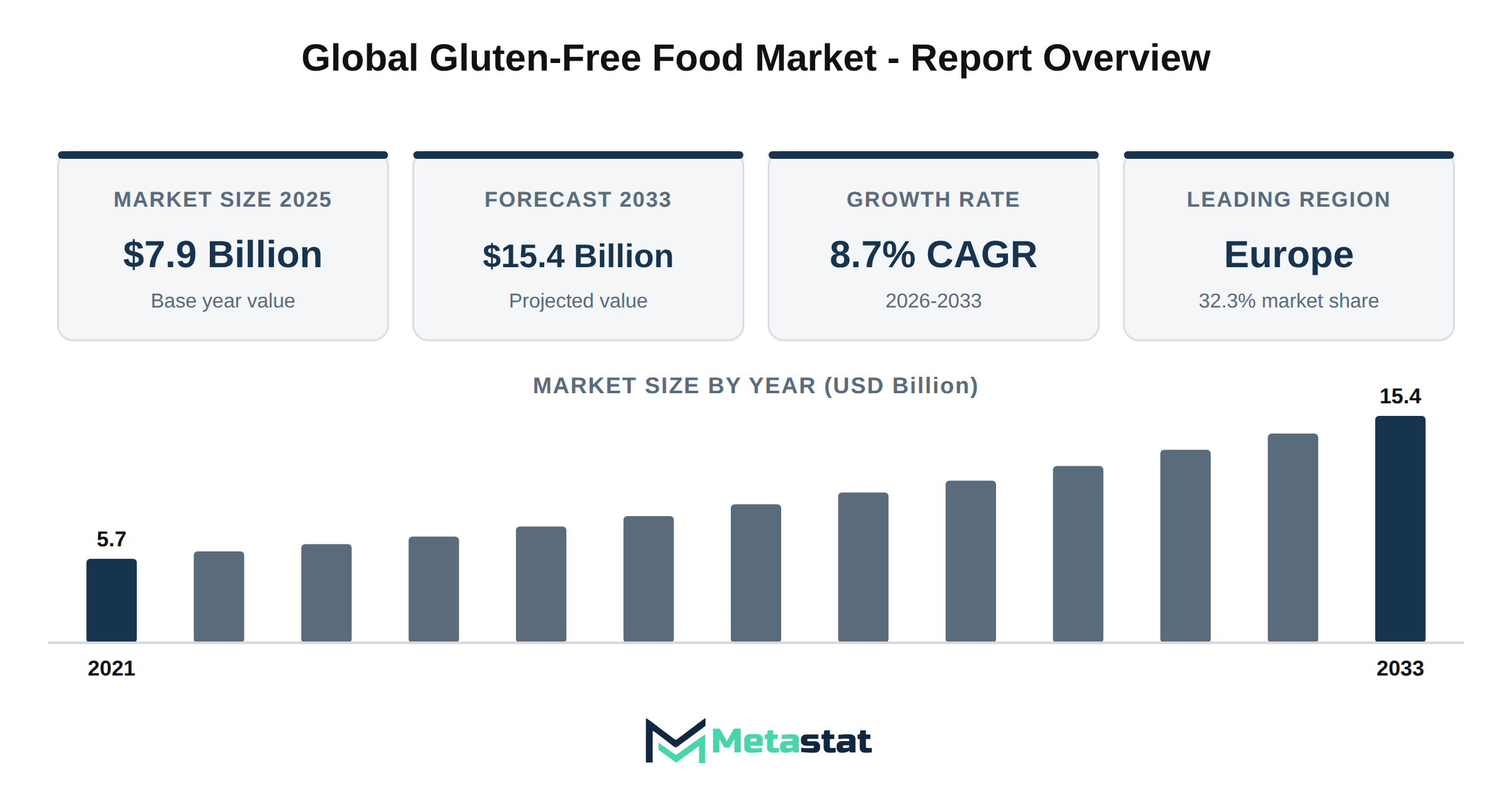
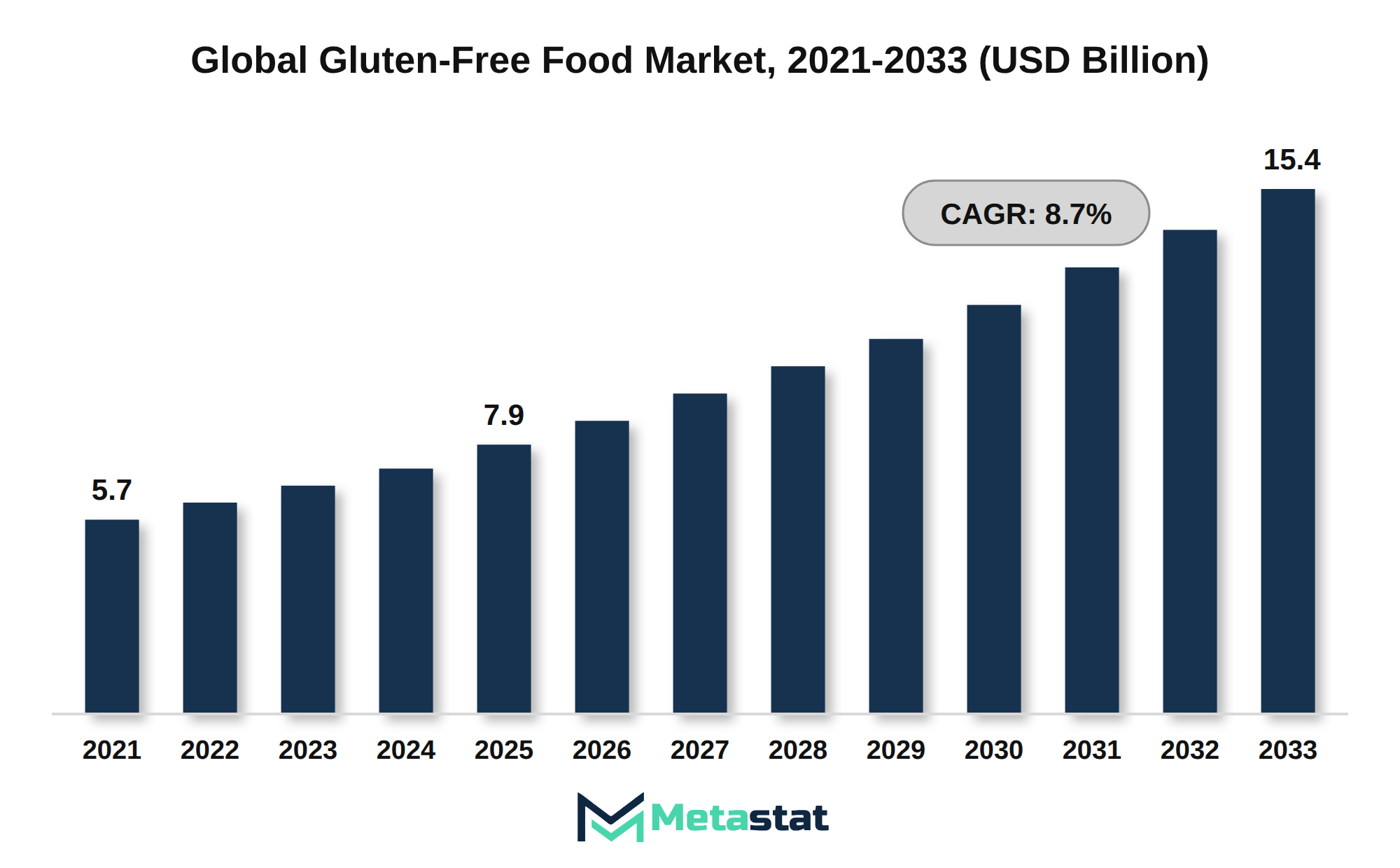
The global Gluten-Free Food market was valued at USD 7.9 billion in 2025 and is projected to reach USD 15.4 billion by 2033, growing at a CAGR of 8.7% over the forecast period.
The global Gluten-Free Food market, valued at USD 7.9 billion in 2025, shows significant growth potential, projected to reach USD 15.4 billion by 2033, with a compound annual growth rate (CAGR) of 8.7%. Historical data indicates a steady increase in value, starting from USD 5.7 billion in 2021 and rising to USD 7.2 billion in 2024. The market's expansion reflects changing consumer preferences towards gluten-free options, driven by increasing awareness of health and dietary needs.
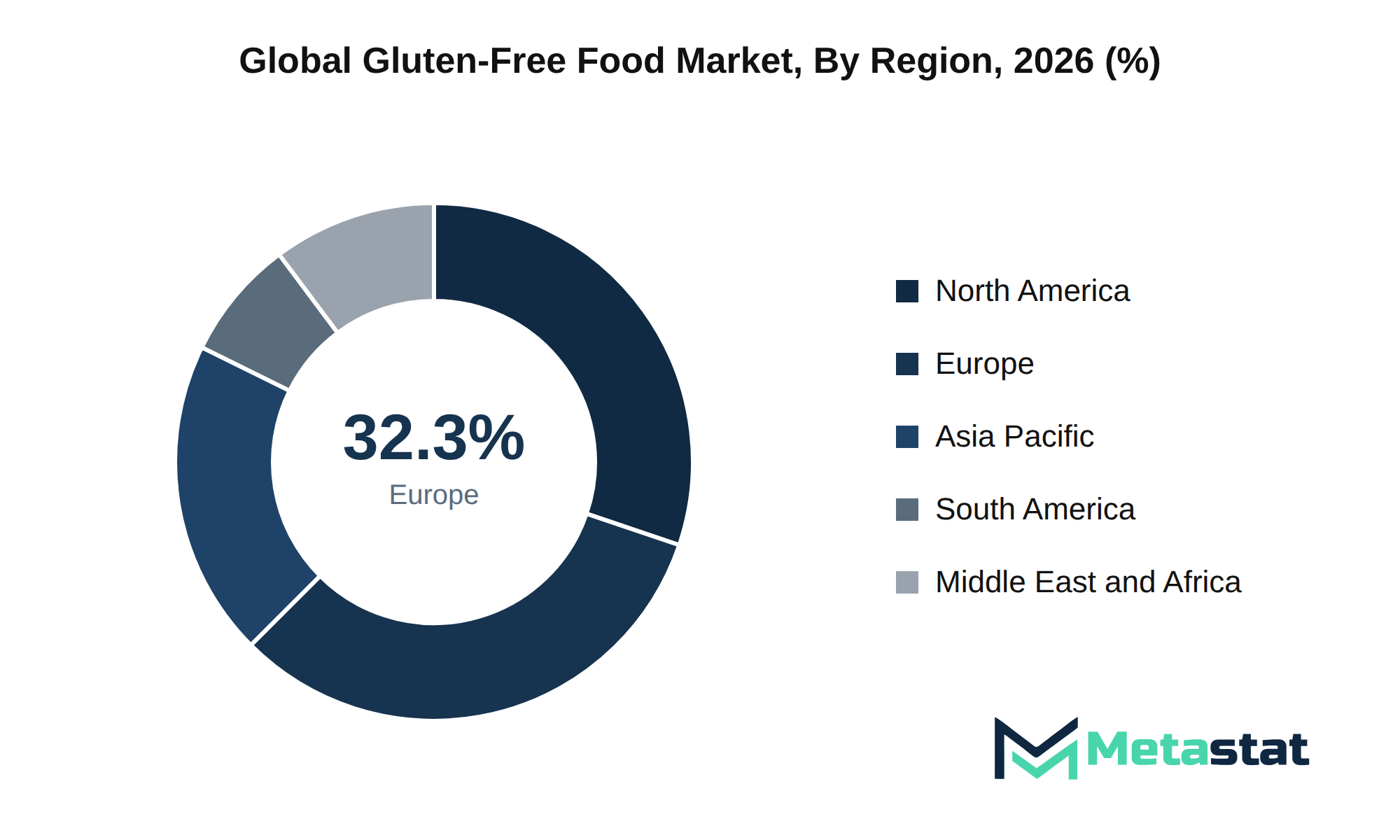
Regional analysis indicates that Europe holds the largest share of the market at 32.3%, closely followed by North America at 30.2%. The Asia Pacific region contributes 19.8%, while South America and the Middle East and Africa account for 7.5% and 10.2%, respectively. This geographical distribution highlights varying levels of acceptance and demand for gluten-free products across different regions.
Product innovation is essential in driving market growth. Bakery and confectionery products lead in sales, with a projected increase from USD 2.7 billion in 2026 to USD 4.8 billion in 2033, reflecting a CAGR of 8.3%. The snacks and ready-to-eat products segment shows even higher growth potential, with a forecasted value of USD 3.8 billion by 2033, supported by rising consumer demand for convenient gluten-free options.
Consumer segments reveal diverse motivations for purchasing gluten-free products. Consumers with diagnosed celiac disease represent a significant portion, with an anticipated increase from USD 3 billion in 2026 to USD 4.9 billion in 2033, reflecting a CAGR of 7.5%. In contrast, consumers following gluten-free diets for lifestyle or health reasons are expected to reach USD 5.9 billion by 2033, demonstrating the broader appeal of gluten-free living.
Consumer preferences continue to drive the gluten-free food market, with an increasing number of individuals opting for gluten-free products owing to health concerns and dietary choices. The rise in diagnoses for celiac disease and gluten sensitivity contributes significantly to this trend. Consumers pursuing gluten-free diets for lifestyle or health preferences further expands market demand. Product innovation is essential, with manufacturers introducing a diverse range of gluten-free offerings, including bakery and confectionery items, snacks, dairy products, and sauces. This innovation enhances the appeal of gluten-free foods, attracting a broader audience.
The retail and e-commerce landscape for the gluten-free food market evolves rapidly, with a notable shift toward online purchasing. Consumers increasingly prefer the convenience of shopping online for specialty gluten-free products. This trend influences distribution strategies, prompting retailers to enhance their e-commerce capabilities. Regulatory compliance and standards for gluten-free labeling remain essential, ensuring consumer trust and safety. While regulations tighten, companies within the market strengthen their quality assurance processes, enhancing product credibility.
Geopolitical risk frameworks and macroeconomic headwinds, including inflationary pressures and currency volatility, influence the market. Companies navigate these challenges by diversifying their supply chains and sourcing strategies, ensuring resilience. Future strategic outlooks indicate a focus on sustainable transformation, with companies prioritizing decarbonization and circular economy dynamics. Investment in research and development trajectories supports next-gen innovation, enabling the development of healthier and more sustainable gluten-free products. This focus on sustainability aligns with evolving consumer preferences and regulatory requirements.
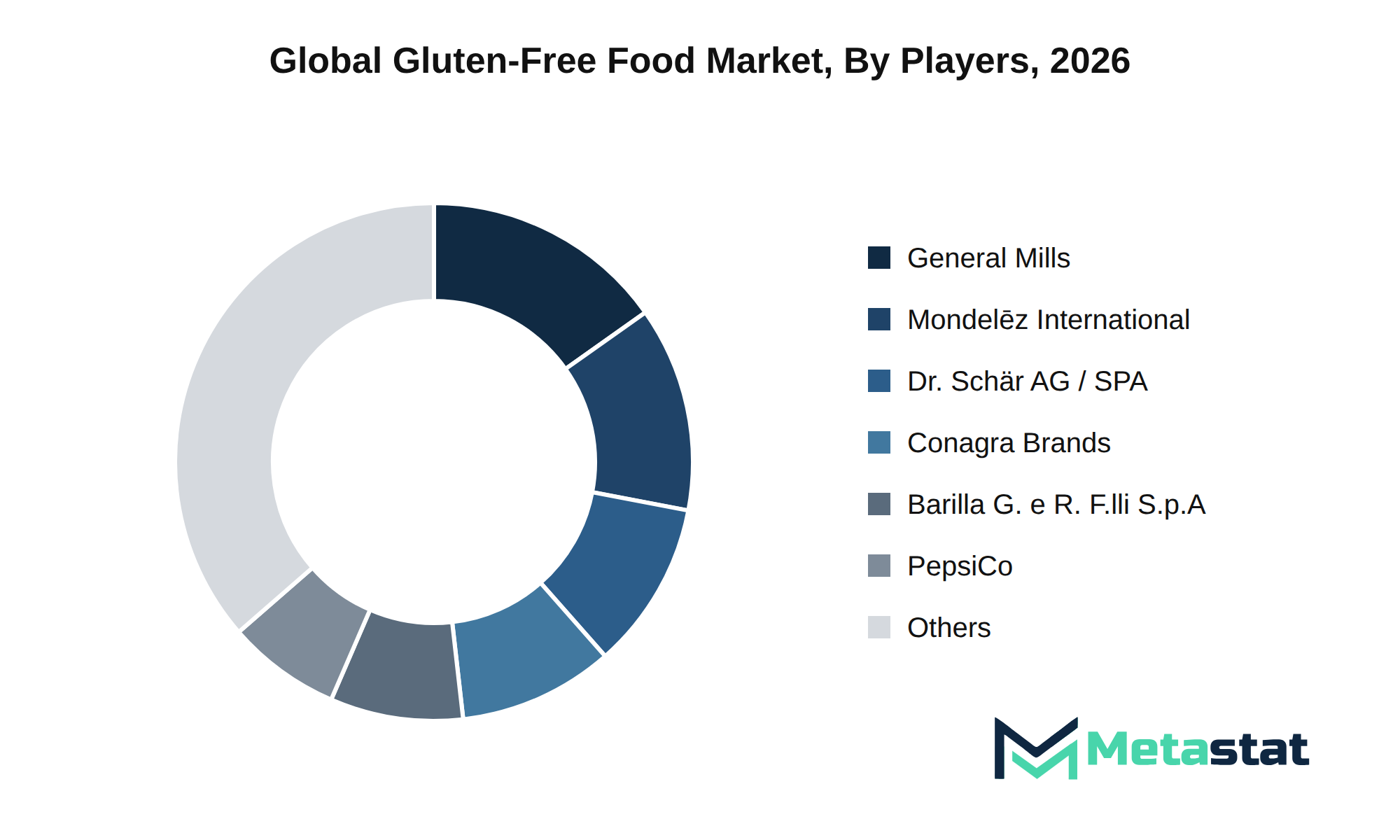
The market experiences fragmentation, with numerous players vying for market share. M&A dynamics reflect this competitive environment, driven by companies seeking strategic partnerships and acquisitions to enhance their portfolios. Key players in the gluten-free food market, including Dr. Schär AG / SPA, General Mills, and Conagra Brands, Inc., continuously adapt to evolving consumer demands and market conditions. Capital allocation decisions emphasize infrastructure investments, with companies expanding production capabilities to meet growing demand. This competitive landscape fosters innovation and drives market growth.
Increased health consciousness among consumers significantly influences the Gluten-Free Food market. An expanding awareness of gluten-related health issues, including celiac disease and gluten sensitivity, drives demand for gluten-free alternatives. This awareness is supported by rising lifestyle choices prioritizing healthier eating habits, further promoting the consumption of gluten-free products.
The growing aging population, combined with urbanization trends, contributes to a shift in dietary preferences. Aging individuals often seek gluten-free options to enhance their wellness. Urban consumers frequently opt for convenient, ready-to-eat gluten-free products. Both demographics actively participate in the market, pushing sales volumes higher.
The market is projected to grow from USD 7.9 billion in 2025 to USD 15.4 billion by 2033, representing a compound annual growth rate of 8.7 percent. This growth reflects the increasing adoption of gluten-free diets across various consumer segments, including those with diagnosed celiac disease and consumers following gluten-free lifestyles for health reasons.
Manufacturers continuously innovate to meet evolving consumer needs, integrating new flavors and product types into gluten-free offerings. The introduction of gluten-free snacks, bakery products, and dairy alternatives demonstrates the market's response to diverse consumer preferences, ensuring sustained expansion during the forecast period.
Consumer behavior shifts drive market growth
Increasing health awareness among consumers influences the Gluten-Free Food market significantly. Individuals adopt gluten-free diets owing to perceived health benefits, which include improved digestion and enhanced overall wellness. The aging population, particularly sensitive to dietary restrictions, shows heightened awareness of gluten's effects, creating a consistent demand for gluten-free products. Lifestyle changes stemming from urbanization and busy schedules further drive this shift, prompting consumers to seek convenient, health-oriented food options.
The rise of digital platforms and e-commerce facilitates access to gluten-free food products. Consumers increasingly prefer online shopping for convenience and a broader selection of gluten-free options. This trend boosts market visibility and provides manufacturers with opportunities to expand their reach. The market's growth reflects evolving consumer preferences, driven by companies innovating diverse gluten-free offerings to meet changing demands.
These dynamics lead to sustained investment in product development and marketing strategies focused on gluten-free foods. Companies targeting the Gluten-Free Food market strive to enhance product availability and visibility, aligning with consumer trends for health and convenience. The anticipated growth in this market, projected at a compound annual growth rate of 8.7%, highlights the importance of adapting to consumer behaviors and preferences.
Regulatory compliance challenges hinder growth
Regulatory compliance presents significant hurdles in the Gluten-Free Food market. Strict safety and labeling requirements impose considerable costs on manufacturers, affecting pricing strategies and profitability. Smaller companies experience heightened pressure due to limited resources for compliance compared to larger corporations. This situation creates an uneven playing field, deterring new entrants from accessing the market.
Macroeconomic headwinds, including inflationary pressures, complicate market dynamics. Rising costs of ingredients and transportation impact production expenses, forcing suppliers to absorb costs or pass them onto consumers. Increasing prices lead to reduced consumer spending, dampening demand for gluten-free products and affecting overall market performance.
Supply chain disruptions have introduced unpredictability in sourcing raw materials. Instabilities caused by geopolitical issues or natural disasters lead to scarcity of essential gluten-free ingredients, creating challenges in product availability. Such disruptions result in potential revenue losses for manufacturers, especially those reliant on consistent supply for their offerings.
Infrastructure gaps and connectivity deficits hinder efficient distribution and access to gluten-free foods in certain regions. Poor logistics result in delayed product deliveries and increased operational costs. These challenges impact market growth, particularly in underserved areas where access to gluten-free options remains limited.
The risk of technological obsolescence looms over the industry. Advancements in food processing and packaging continuously reshape consumer expectations. Companies that fail to innovate risk losing market share to competitors that embrace new technologies. Staying ahead in this environment requires substantial investment in research and development.
Market fragmentation complicates efforts to establish a cohesive brand presence. Diverse consumer preferences and cultural barriers result in a multitude of product offerings, making it difficult for companies to differentiate themselves. This fragmentation dilutes brand loyalty, forcing companies to invest heavily in marketing to capture attention in an overcrowded marketplace.
Geopolitical fragmentation poses significant challenges in the Gluten-Free Food market, complicating trade dynamics and creating uncertainty in supply chains. Increased tariffs and trade deficits impact sourcing strategies, forcing companies to adapt to fluctuating costs and shifting availability of raw materials. Nations impose restrictions that disrupt the flow of ingredients critical to gluten-free products, affecting both manufacturers and consumers. These factors contribute to rising costs and hinder operational efficiency in the market.
Technological disruptions further compound these challenges by necessitating complex research and development integrations. Companies in the market face pressures to innovate while managing the high costs associated with developing new gluten-free formulations. This pressure limits investment in other areas including marketing and distribution, ultimately impacting growth potential. The need for interoperability among new technologies and existing systems adds layers of complexity that companies navigate to maintain competitiveness.
Supply chain instability exacerbates these issues, with logistics disruptions leading to delays in product delivery. Fluctuations in feedstock prices contribute to unpredictable margins, forcing companies to adjust pricing strategies frequently. This pricing compression impacts profitability, creating an environment where businesses struggle to balance cost containment with quality assurance. The interrelated nature of geopolitical tensions, technological advancements, and supply chain challenges creates a multifaceted environment that companies in the Gluten-Free Food market expertly navigate to sustain growth and meet consumer demands.
Emerging regional demands drive market growth
The gluten-free food market experiences substantial opportunities driven by emerging regional demands. Increased awareness regarding health and wellness in various regions increases the requirement for gluten-free products. This trend is particularly evident in North America and Europe, where consumer preferences evolve towards healthier food options, pushing manufacturers to innovate and diversify product offerings.
Technological disruptions facilitate the introduction of next-generation innovations, enhancing product quality and flavor profiles in the gluten-free segment. Advances in food processing technology improve production efficiency, streamline operations, and reduce costs associated with gluten-free food manufacturing. Enhanced product integration within supply chains promotes quicker response times to changing consumer tastes, supporting market growth.
Sustainability imperatives influence purchasing decisions, aligning with environmentally conscious consumers. Brands embracing eco-friendly practices, including sustainable sourcing and packaging, gain competitive advantages. This focus on sustainability strongly connects with consumers, driving demand and shaping brand loyalty within the gluten-free food market.
The diversification of downstream markets creates additional avenues for revenue generation. Expanding into niche applications, including gluten-free snacks and beverages, allows firms to meet specific consumer needs, tapping into previously underserved segments. Strategic consolidation and cross-industry mergers enhance resource sharing and encourage innovation, further strengthening market positions and creating new growth opportunities.
Shifts in buying behaviors, particularly the rise of digital procurement channels, transform traditional distribution models. Online retail and e-commerce channels grow significantly, providing brands with access to a broader audience while enhancing consumer convenience. Market players that effectively adapt to these changes benefit from increased sales and market penetration.
Overall, the gluten-free food market continues to evolve, driven by emerging regional demands, technological advancements, and changing consumer preferences. These factors collectively create a robust environment for growth, allowing businesses to expand their reach and capitalize on evolving market dynamics.
Market Segmentation Analysis
The Global Gluten-Free Food market is segmented based on Product Type, Consumer Type, and Distribution Channel.
By Product Type, the market is further segmented into:
Bakery & Confectionery
Snacks & RTE Products
Dairy Products
Sauces & Dressings
Meat & Meat Substitutes
Others (Gluten-Free Beverages, Processed Meat and Other Niche Packaged Foods)
Bakery & Confectionery
Valued at USD 2.7 billion in 2026, the Bakery & Confectionery segment is projected to reach USD 4.8 billion by 2033, achieving a CAGR of 8.3% during the forecast period. Growing consumer trends towards gluten-free options drive demand within this segment, particularly among individuals with dietary restrictions and health-conscious consumers seeking alternatives. Increasing awareness of celiac disease and gluten sensitivity contributes to heightened adoption rates, with an emphasis on product quality and taste influencing purchase decisions.
Innovation in product development significantly expands offerings within the Bakery & Confectionery segment. Brands prioritize developing gluten-free versions of traditional baked goods, aligning with consumer preferences for familiar tastes and textures. This evolution creates a competitive landscape where companies strive to achieve a balance between health benefits and product enjoyment, enabling them to capture a larger market share.
Regulatory compliance surrounding gluten-free labeling further impacts market dynamics. Strict guidelines ensure transparency and safety for consumers, which helps build brand trust. Compliance requires manufacturers to invest in rigorous testing and quality control, influencing overall cost structures but enhancing product credibility in the market. This focus on regulation enables brands to cater to discerning customers, ultimately supporting market growth.
The demand for gluten-free Bakery & Confectionery products is expected to rise in various distribution channels, including supermarkets, specialty stores, and online platforms. This diversification of retail options enhances accessibility for consumers, thereby driving sales. The market's strong performance reflects a fundamental shift in eating habits, driven by gluten-free food products becoming integrated into mainstream diets, indicating a promising trajectory for future growth in the gluten-free food market.
Snacks & RTE Products
Growth in the Snacks & RTE Products segment reflects shifting consumer preferences towards convenient and health-conscious food options. Increasing awareness of gluten-related disorders and dietary choices drives demand for gluten-free snacks. The segment experiences significant expansion, with an estimated value of USD 3.8 billion by 2033, at a CAGR of 9.1% during the forecast period. Innovations in product offerings and improved taste profiles enhance market penetration, attracting a broader consumer base.
Technological advancements enable manufacturers to create diverse gluten-free snack options, ranging from chips to protein bars. Enhanced labeling and certification processes boost consumer confidence, resulting in greater adoption rates among individuals with gluten sensitivities. The emphasis on clean label products contributes to market growth, driven by consumers increasingly seeking transparency in ingredient sourcing.
Shifts in consumption patterns, alongside rising demand for ready-to-eat products, reinforce the segment's expansion trajectory within the Gluten-Free Food market. Companies that focus on strategic partnerships and capitalize on consumer trends gain competitive advantages in this evolving landscape. Enhancing supply chain resilience and optimizing raw material sourcing will further support the growth of gluten-free snacks and RTE products.
Dairy Products
Growth in the Dairy Products segment aligns with increasing consumer awareness regarding gluten intolerance and the desire for gluten-free options. This shift results from a combination of dietary health trends and the rising prevalence of celiac disease among consumers. With an expanding array of gluten-free dairy products available, including yogurt, cheese, and milk alternatives, this segment addresses growing consumer demand for safe and healthy food choices. Innovations in product formulations and better taste profiles enhance the appeal of dairy products in the gluten-free market.
Regulatory compliance influences the Dairy Products segment, driving manufacturers to ensure their offerings meet gluten-free standards. Certifications from recognized bodies enhance consumer confidence in gluten-free dairy products, facilitating wider adoption. This segment is projected to reach USD 2.3 billion by 2033, highlighting its important contribution to the overall growth of the Gluten-Free Food market.
Supply chain resilience remains critical for maintaining availability and cost-effectiveness in dairy product offerings. Sourcing high-quality raw materials at competitive prices influences production costs and pricing strategies. Companies in the segment continually explore strategic opportunity windows to optimize their operations and enhance competitive positioning. The future of the Dairy Products segment centers on meeting evolving consumer needs while navigating regulatory landscapes and market dynamics.
Sauces & Dressings
Growth within the sauces and dressings sub-segment of the gluten-free food market aligns with rising consumer demand for gluten-free alternatives. Increased health awareness among consumers drives the shift towards gluten-free diets, particularly among individuals with specific dietary restrictions. The segment is projected to grow at a CAGR of 8% during the forecast period, reflecting the ongoing expansion of gluten-free offerings in the market.
Innovation in product formulations enhances the appeal of gluten-free sauces and dressings. Manufacturers focus on developing diverse flavors and textures, catering to a broader audience that includes consumers without gluten sensitivities. These advancements contribute to increased consumption, allowing brands to penetrate new market segments effectively.
Distribution channels play a vital role in the accessibility of gluten-free sauces and dressings. Retailers increasingly allocate shelf space to gluten-free products, responding to consumer trends and preferences. Online platforms further enhance market reach, enabling brands to engage with consumers directly while providing convenience and variety.
Regulatory compliance and certifications become essential for brands seeking to build trust among health-conscious consumers. Adherence to gluten-free standards reduces the risk of cross-contamination, ensuring product safety. This compliance enhances brand reputation, attracting consumers who prioritize health and dietary requirements.
The competitive landscape features several key players committed to expanding their gluten-free product lines. Companies including Dr. Schär AG / SPA, General Mills, and Conagra Brands, Inc. operate in the market, leveraging their established presence to innovate and introduce new gluten-free sauces and dressings. Strategic partnerships and acquisitions further strengthen their market position, enabling them to adapt to consumer preferences and trends effectively.
Meat & Meat Substitutes
Interest in plant-based diets significantly influences the Meat & Meat Substitutes segment within the Gluten-Free Food market. Consumers seek healthier, protein-rich alternatives that align with their dietary preferences. This shift results from heightened awareness of the health benefits associated with reducing meat consumption, including lower cholesterol levels and improved heart health.
Innovations in food technology contribute to the expansion of this segment. Manufacturers develop gluten-free meat substitutes that replicate the texture and flavor of traditional meat products. These advancements cater to a growing demographic of consumers who prefer plant-based proteins without sacrificing taste or culinary experience.
Regulatory compliance and certifications surrounding gluten-free products shape consumer trust and purchasing decisions. Brands that achieve recognized certifications enhance their credibility in the market, attracting health-conscious consumers and increasing sales potential. The demand for transparency in ingredient sourcing encourages companies to adopt higher standards, ensuring that meat substitutes meet consumer expectations for quality and health benefits.
Strategic opportunities arise from shifts in consumption patterns, with younger consumers driving demand for innovative and convenient options. This generation prioritizes sustainability, health, and ethical considerations in their food choices, creating fertile ground for growth in the Meat & Meat Substitutes segment. Companies that adapt to these evolving preferences through targeted marketing and product development position themselves favorably within the market.
Others (Gluten-Free Beverages, Processed Meat and Other Niche Packaged Foods)
Continuous interest in gluten-free beverages, processed meats, and other niche packaged foods reflects growing consumer awareness regarding health and dietary preferences. A shift in consumption patterns occurs owing to individuals increasingly seeking alternatives to traditional food products. Rising incidences of gluten intolerance and celiac disease drive demand within this segment.
Developments in technological maturation enable the introduction of innovative formulations and enhanced flavors in gluten-free beverages and processed meats. These advancements create strategic opportunity windows for brands aiming to capture health-conscious consumers. Evolving production techniques allow for better preservation of taste and texture, contributing to product evolution across the market.
Regulatory compliance standards play a significant role in establishing consumer trust. Certifications related to gluten-free claims enhance product credibility, influencing purchasing decisions. This aspect particularly impacts manufacturers focused on ensuring their offerings meet stringent guidelines and quality benchmarks.
Pricing volatility remains a concern, with fluctuations in raw material costs affecting overall profitability. Producers face margin pressures, necessitating strategic adjustments to pricing models. Efficient raw material sourcing and supply chain resilience are crucial for maintaining competitive pricing while ensuring product availability.
Overall, the segment of gluten-free beverages, processed meat, and other niche packaged foods demonstrates strong growth potential within the broader gluten-free food market. Companies that capitalize on these trends position themselves advantageously, contributing to an evolving market driven by consumer demands and industry innovations.
By Consumer Type, the market is further segmented into:
Consumers with Diagnosed Celiac Disease
Consumers with Non-Celiac Gluten Sensitivity or Intolerance
Consumers Following Gluten-Free Diets for Lifestyle or Health Preferences
Consumers with Diagnosed Celiac Disease
Valued at USD 3 billion in 2026, the Consumers with Diagnosed Celiac Disease segment is projected to reach USD 4.9 billion by 2033, with a CAGR of 7.5% during the forecast period. Increasing awareness of celiac disease drives demand for gluten-free products among diagnosed consumers, leading to greater market penetration. Enhanced product offerings tailored to this specific consumer group contribute to segment expansion, driven by manufacturers developing innovative gluten-free solutions that meet dietary restrictions. Regulatory compliance remains a crucial factor, with stringent food labeling laws ensuring that consumers receive safe and accurate information about gluten content. The market for gluten-free food continues to evolve, reflecting the growing needs of individuals with celiac disease, who prioritize health and safety in their dietary choices.
Consumers with Non-Celiac Gluten Sensitivity or Intolerance
Growing awareness of gluten sensitivity drives demand within the gluten-free food market, particularly among consumers experiencing non-celiac gluten sensitivity or intolerance. This segment is estimated to reach USD 4.6 billion by 2033, at a CAGR of 8.5% during the forecast period. Increased diagnosis and improved understanding of gluten-related disorders contribute to this growth. Consumers increasingly seek gluten-free options to alleviate discomfort associated with gluten consumption, creating a robust preference for gluten-free products.
Product evolution attracts consumers with non-celiac gluten sensitivity. Innovations in gluten-free alternatives, including enhancements in taste and texture, have improved product acceptance. This segment benefits from the introduction of various product types including snacks and ready-to-eat offerings, which align with shifting consumer preferences for convenience and health-focused diets. Consequently, brands investing in developing high-quality gluten-free options gain a competitive edge in the market.
The gluten-free food market experiences consumption shifts, with more individuals adopting gluten-free diets for health and lifestyle reasons. This trend sparks increased demand for gluten-free items in mainstream and specialty retail channels, enabling wider access to products for consumers with non-celiac gluten sensitivity. Regulatory compliance regarding labeling and ingredient transparency influences consumer trust and loyalty toward gluten-free brands.
Overall, the combination of heightened awareness, product innovation, and regulatory support creates a favorable environment for growth within the consumers with non-celiac gluten sensitivity or intolerance segment, propelling the gluten-free food market toward expansion.
Consumers Following Gluten-Free Diets for Lifestyle or Health Preferences
Growing awareness regarding health and lifestyle choices significantly influences the Gluten-Free Food market. Consumers increasingly adopt gluten-free diets for various reasons, including perceived health benefits and lifestyle preferences. This segment is expected to reach USD 5.9 billion by 2033, reflecting a strong expansion trend driven by evolving consumer demands.
Health-conscious consumers often seek gluten-free options to improve overall wellness and manage specific dietary restrictions. The rise in dietary trends including clean eating, veganism, and organic sourcing enhances demand for gluten-free products. The market benefits from increased food labeling transparency, enabling consumers to make informed choices.
Product evolution plays a critical role in catering to this segment. Manufacturers introduce innovative gluten-free alternatives across various categories, including snacks, dairy products, and bakery items. Enhanced product formulations and the incorporation of diverse ingredients attract a broader consumer base, supporting segment growth.
Regulatory compliance and certifications related to gluten-free claims increase consumer confidence, driving further adoption. Increased availability of gluten-free options in supermarkets, health food stores, and online platforms ensures easy access for consumers. These factors collectively influence the segment's trajectory within the Gluten-Free Food market.
By Distribution Channel, the market is further segmented into:
Supermarkets and Hypermarkets
Convenience and Grocery Stores
Specialty and Health-Food Stores
Online Retail and E-Commerce
Foodservice and Institutional Channels
Supermarkets and Hypermarkets
Distribution through supermarkets and hypermarkets significantly influences the growth of the Gluten-Free Food market. These retail environments provide consumers with convenient access to a wide range of gluten-free products, enhancing visibility and availability. The increasing prevalence of gluten sensitivity and celiac disease drives demand within this channel, leading to an expanded product assortment tailored to meet consumer preferences.
Innovations in packaging and labeling have improved clarity regarding gluten-free credentials, influencing purchasing decisions. Consumers increasingly seek transparency in food sourcing and processing, prompting retailers to prioritize certified gluten-free options. This trend aligns with the growing health consciousness among shoppers, where gluten-free offerings present an appealing alternative for those with dietary restrictions or lifestyle choices.
Retailers are enhancing in-store promotions and gluten-free sections to attract health-conscious shoppers. Collaboration between manufacturers and retailers enables the introduction of new products while ensuring competitive pricing strategies. These initiatives contribute to market expansion and strengthen consumer loyalty.
Supply chain resilience is critical within this sub-segment, driven by sourcing gluten-free raw materials that pose challenges. Retailers engage in strategic partnerships with suppliers to ensure a steady flow of ingredients while managing costs effectively. This collaboration emphasizes the importance of maintaining quality standards that meet regulatory compliance, thus reinforcing consumer trust in gluten-free brands.
Supermarkets and hypermarkets significantly shape distribution dynamics within the Gluten-Free Food market by adapting to evolving consumer preferences, ensuring product variety, and strengthening supplier relationships that enhance market resilience.
Convenience and Grocery Stores
Growth in convenience and grocery stores significantly contributes to the Gluten-Free Food market. The increasing focus on health and wellness among consumers drives demand for gluten-free products in these retail channels. Rising awareness of gluten sensitivity and celiac disease leads to a growing number of consumers seeking gluten-free options, making convenience and grocery stores essential for product accessibility.
Changing lifestyles, characterized by busier schedules, push consumers towards seeking quick and accessible food solutions. Convenience stores, often located in high-traffic areas, attract consumers looking for readily available gluten-free products. This trend supports the expansion of gluten-free product ranges in grocery outlets, driven by retailers striving to meet consumer preferences.
Technological advancements in food production and packaging increase the availability of gluten-free products. Innovative product development and marketing strategies enable grocery stores to keep up with evolving consumer tastes and preferences. Enhanced supply chain resilience improves the distribution of gluten-free items, ensuring consistent availability for consumers.
Cost structures and pricing volatility impact the profitability of gluten-free products within convenience and grocery stores. Competitive pricing strategies are crucial for attracting price-sensitive consumers while maintaining product quality. Ongoing fluctuations in raw material costs challenge price stability, requiring retailers to adapt their pricing models accordingly.
Increasing competition among brands within the market drives product evolution, encouraging retailers to explore new gluten-free offerings. Strategic partnerships between manufacturers and grocery stores support the introduction of innovative products, enhancing consumer choice.
Regulatory compliance and certification standards shape the landscape for gluten-free products. Adherence to these standards enhances consumer trust and drives sales within convenience and grocery sectors. The emphasis on transparency in ingredient sourcing and labeling builds consumer confidence, further stimulating market growth.
Specialty and Health-Food Stores
Consumer preferences increasingly shift toward specialty and health-food stores for gluten-free products. This trend arises from a growing awareness of health benefits associated with gluten-free diets, coupled with a desire for organic and natural products. Specialty stores provide a wider variety of gluten-free options compared to traditional grocery outlets, attracting health-conscious consumers. This distribution channel supports brand differentiation and encourages consumer loyalty through product specialization.
Regulatory compliance standards influence product offerings within specialty and health-food stores. Retailers navigate specific certifications and labeling requirements for gluten-free products, ensuring consumers receive accurate and reliable options. Adherence to these regulations enhances consumer trust and encourages repeat purchases within this segment of the gluten-free food market.
Pricing volatility represents a challenge for specialty and health-food stores. Fluctuations in raw material costs affect the final retail price of gluten-free products, impacting consumer purchasing decisions. Retailers strategically manage margins to maintain profitability while remaining competitive in the market.
Innovation in gluten-free product development drives growth within specialty and health-food stores. Increased investment in research and development leads to the introduction of new, appealing products that cater to diverse consumer tastes and dietary needs. Retailers benefit from offering these innovative products, enhancing customer satisfaction and expanding market share.
Supply chain resilience becomes critical for specialty and health-food stores amid evolving consumer demands. Retailers increasingly seek reliable suppliers to ensure consistent availability of gluten-free products. Building strong relationships with manufacturers enhances supply chain stability and supports the growth of the gluten-free food market.
Strategic opportunity windows arise for specialty and health-food stores that effectively leverage social media and online marketing. Engaging with consumers through digital platforms increases brand awareness and facilitates targeted promotions. This approach enhances foot traffic and online sales, contributing to overall market growth.
Online Retail and E-Commerce
Rapid growth within the online retail and e-commerce channel reflects significant shifts in consumer purchasing behavior, driven by the convenience and accessibility of online platforms. Increased internet penetration and the proliferation of smartphones enhance the ability of consumers to access gluten-free products easily. The growing preference for online shopping aligns with the rising number of consumers adopting gluten-free diets, further increasing demand for gluten-free offerings in the market.
Technological advancements in e-commerce platforms allow for personalized shopping experiences, improving customer engagement and satisfaction. Enhanced product visibility through targeted marketing and social media campaigns attracts a broader audience, including those following gluten-free diets for health or lifestyle reasons. These factors contribute to an expanding customer base, driving revenue growth for brands operating in the gluten-free food market.
Consumer preferences for convenience and home delivery options elevate the role of online retail in the market. Many brands invest in user-friendly websites and mobile applications to streamline the purchasing process, catering to the growing expectations of consumers for efficient online experiences. These strategic initiatives position companies favorably to capture a larger share of the gluten-free food market.
Supply chain resilience has become critical, particularly because online purchasing increases. Companies focus on fortifying logistics and distribution networks to ensure product availability and timely deliveries. Collaboration with reliable suppliers and the adoption of advanced inventory management systems enhance operational efficiency, allowing brands to respond promptly to fluctuating consumer demand.
Pricing strategies within the online retail channel require careful consideration to maintain competitiveness. Companies navigate potential pricing volatility stemming from raw material sourcing and market dynamics. Understanding consumer price sensitivity is vital for successfully positioning products in the online marketplace, ensuring accessibility while maximizing profit margins.
Regulatory compliance and certifications play a significant role in online retail. Consumers increasingly seek assurance regarding the safety and quality of gluten-free products, making transparency crucial for brands. Compliance with labeling standards and certifications enhances brand reputation, influencing purchasing decisions and reinforcing customer loyalty within the gluten-free food market.
Foodservice and Institutional Channels
Increasing demand for gluten-free food within foodservice and institutional channels reflects a broader shift in consumer preferences for healthier dining options. Restaurants, cafeterias, and catering services increasingly adopt gluten-free offerings to accommodate customers with dietary restrictions, particularly those with diagnosed celiac disease or gluten sensitivity. This adaptation drives growth in the gluten-free food market, providing new revenue opportunities for suppliers and producers.
Technological maturation in food processing techniques enhances the ability to create gluten-free products that meet taste and texture expectations, improving consumer acceptance. Next-gen upgrades in production facilities facilitate the development of innovative products that align with changing consumer tastes and dietary needs, resulting in a diverse range of gluten-free food options available in foodservice settings.
End-use dynamics indicate that institutional buyers prioritize gluten-free items to cater to diverse consumer needs, which affects procurement strategies and supplier selection processes. Institutions focusing on health-conscious menus gain a competitive advantage through the inclusion of gluten-free options, appealing to a wider customer base and enhancing customer satisfaction. This competitive edge is essential for attracting and retaining customers.
Regulatory compliance standards and certifications surrounding gluten-free labeling further influence the market landscape. Strict adherence to these guidelines is essential for manufacturers and distributors, ensuring products meet safety requirements and consumer expectations. This compliance creates opportunities for businesses that invest in certification processes and quality assurance, enhancing their market position.
Pricing volatility and margin pressures specific to foodservice channels require careful management. Suppliers face challenges related to sourcing raw materials and maintaining stable supply chains. Adapting to fluctuations in ingredient costs while ensuring competitive pricing remains critical for sustaining profitability.
Strategic opportunity windows arise from growing consumer awareness of gluten-free diets in various culinary applications. Capital investment into product development and marketing campaigns targeting foodservice establishments positions businesses favorably within the competitive landscape, allowing them to capitalize on the expanding demand for gluten-free food. This investment is projected to drive growth in the coming years.
By Region
Based on geography, the Global Gluten-Free Food market is divided into North America, Europe, Asia-Pacific, South America, Middle East, and Africa.
North America
North America represents a significant portion of the global Gluten-Free Food market. This region includes the United States, Canada, and Mexico, where demand for gluten-free products is expected to grow steadily owing to increasing awareness of gluten sensitivities and the rising popularity of health-conscious diets. The market is projected to expand at a CAGR of 8.7% within the forecast period, reaching a market size (TAM) of USD 4.3 billion by the end of 2033.
Key drivers of growth in North America include the rising prevalence of celiac disease and non-celiac gluten sensitivity, prompting consumers to seek gluten-free options. The diverse product offerings in the market, including bakery items, snacks, and dairy products, further fuel consumer interest. Retail distribution through a variety of channels including supermarkets, specialty stores, and e-commerce platforms enhances accessibility, allowing consumers to find gluten-free options more easily.
Market participants in North America, including Dr. Schär AG / SPA, General Mills, and Conagra Brands, Inc., actively innovate to meet evolving consumer preferences. This competitive environment encourages collaboration and investment in product development, ensuring the availability of high-quality gluten-free products. With infrastructure modernization and localized manufacturing initiatives, the region strengthens its supply chain, enhancing the overall market dynamics.
Europe
Europe demonstrates significant potential within the Gluten-Free Food market, contributing 32.3% of the global market share in 2025. Rising consumer awareness regarding gluten sensitivity and health-conscious eating habits is driving demand for gluten-free products across the region. Countries including Germany, France, the UK, and Italy exhibit strong purchasing power and a growing preference for gluten-free food options, leading to increased market penetration.
The market in Europe reflects a mix of emerging market front-runners and established players. Germany leads in market size, while France and the UK show strong growth rates, supported by increasing investments in local production and supply chain regionalization. Spain and Italy are witnessing rising demand, particularly in the bakery and snacks categories, which align with evolving consumer tastes.
Regional infrastructure modernization enables improved distribution channels for gluten-free products, particularly through supermarkets, specialty stores, and online platforms. Enhanced logistics capabilities, along with localized manufacturing, strengthen the competitive position of regional brands while supporting cross-border trade corridors. The market benefits from foreign direct investment flows aimed at expanding production capabilities and increasing product availability.
Cultural nuances significantly influence consumer preferences across Europe, driving diverse buying behaviors. Regional compliance with health and safety regulations, along with local procurement dynamics, creates an environment conducive to the growth of the gluten-free food sector. The competitive landscape features prominent players including Dr. Schär AG / SPA, General Mills, and Mondelēz International, which focus on innovation and expansion to cater to the evolving demands of European consumers.
Asia-Pacific
The Asia-Pacific region accounts for USD 1,004.1 million of the global Gluten-Free Food market. This region experiences growing acceptance of gluten-free products, driven by rising health awareness and increased diagnosed cases of celiac disease. Countries including China, Japan, India, South Korea, and Australia have expanding consumer bases that actively seek gluten-free options for health and lifestyle preferences.
Infrastructure modernization within Asia-Pacific supports the distribution of gluten-free foods. Enhanced logistics and retail networks facilitate better access for consumers, particularly in urban areas. The proliferation of online retail and e-commerce platforms further accelerates market penetration by providing convenience and a wider selection of gluten-free products.
Emerging market front-runners like India and Southeast Asia exhibit high growth potential due to underpenetrated territories. Increased disposable income among consumers in these regions drives demand for specialty foods, including gluten-free options. Local compliance mandates and regulatory frameworks surrounding food safety and labeling standards contribute to the growth of the market by ensuring product quality and consumer trust.
Regional competitive landscapes include a mix of domestic market participants and multinational corporations, each vying for market share. Companies like General Mills, PepsiCo Inc., and Dr. Schär AG / SPA engage in strategic collaborations, enhancing their foothold in the region. This competitive dynamic encourages innovation and product diversification, positioning the gluten-free market for sustained growth through 2033.
South America
The Gluten-Free Food market in South America, accounting for a share of 7.5% of the global market in 2025, exhibits notable growth potential driven by increasing consumer awareness regarding health and dietary preferences. Brazil and Argentina serve because the primary markets, reflecting rising demand for gluten-free products among consumers with diagnosed celiac disease, non-celiac gluten sensitivity, and those following gluten-free diets for lifestyle choices.
Infrastructure modernization is essential for expanding distribution channels, especially through supermarkets, convenience stores, and online retail platforms. Local compliance mandates and cultural nuances influence buyer behavior, driving the adoption of gluten-free products. Domestic market participants focus on product innovation and localization strategies to capture growing demand, while cross-border trade corridors enhance market accessibility.
Investment in localized manufacturing capacities supports the market's expansion, ensuring products meet regional preferences and dietary standards. The market is characterized by competitive dynamics among major players, including General Mills, Mondelēz International, and PepsiCo Inc., who continually adapt their product offerings to maintain market relevance. Overall, the South American market for gluten-free food is expected to demonstrate significant growth through 2033.
Middle East and Africa
The gluten-free food market in the Middle East and Africa anticipates substantial growth, driven by increasing health awareness and dietary changes among consumers. Countries including Saudi Arabia, the UAE, and South Africa contribute to this market expansion. The rising prevalence of celiac disease and gluten sensitivities influences buying behavior, resulting in an uptick in demand for gluten-free products.
Emerging market front-runners benefit from local compliance mandates that support gluten-free product offerings. Investments in infrastructure modernization enhance distribution channels, enabling smoother access to gluten-free food products across various consumer segments. The presence of established brands, including Dr. Schär AG / SPA and General Mills, strengthens market competition, driving innovation and catering to diverse consumer needs.
Localized procurement dynamics play a significant role in shaping supply chains, with producers emphasizing regional sourcing to meet consumer demand more efficiently. Cultural nuances regarding dietary preferences affect gluten-free product acceptance, leading companies to tailor their offerings to suit local tastes. Ongoing investment in the gluten-free food market is expected to support continued growth in the coming years.
Competitive Landscape and Strategic Insights
The competitive environment within the Gluten-Free Food market features diverse strategies among key players. Companies including General Mills, Mondelēz International, and PepsiCo Inc. focus on innovation and product differentiation to appeal to health-conscious consumers. These firms invest in R&D pipelines to develop new gluten-free offerings, allowing them to capture a larger share of the growing market.
Strategic alliances and partnerships further enhance competitive positioning. Collaborations between companies, including Kellanova and Doves Farm Foods, facilitate access to broader distribution channels and customer bases. This tactic enables firms to leverage procurement advantages and strengthen their supply chain dominance.
Barriers to entry remain significant for new entrants, primarily due to established brand equity held by companies like Dr. Schär AG / SPA and The Campbell's Company. The existing landscape requires substantial investment in marketing and product development to gain market traction, posing challenges for startups attempting to disrupt the sector.
Future competitive dynamics will hinge on the ability of companies to adapt to evolving consumer preferences. The market anticipates heightened focus on sustainability and health benefits, compelling organizations to refine their commercial models and pricing architectures. Companies that navigate these trends successfully are projected for growth. The market expands from USD 7.9 billion in 2025 to USD 15.4 billion by 2033.
Forecast and Future Outlook
The market size is forecast to rise from USD 7.9 billion in 2025 to over USD 15.4 billion by 2033, reflecting a compound annual growth rate (CAGR) of 8.7%. The primary factors driving this growth include increasing consumer awareness about gluten-related disorders and a growing inclination towards gluten-free diets for health and lifestyle reasons. Demand for gluten-free options spans various consumer segments, including individuals with diagnosed celiac disease, those with non-celiac gluten sensitivity, and consumers selecting gluten-free products for general health benefits.
In the bullish scenario, heightened investments in innovation and product development could lead to an even faster market expansion. Companies focusing on next-generation technologies and R&D capture emerging demand, thereby enhancing their market positions. In a bearish scenario, potential economic downturns or regulatory changes could constrain consumer spending on premium gluten-free products, impacting overall market growth.
Strategic capital allocation towards infrastructure improvement and supply chain optimization remains essential for players in the gluten-free food market. Companies are likely to focus on enhancing their distribution channels, particularly online and through specialty stores, to better cater to evolving consumer preferences. This focus on distribution is expected to enhance convenience and accessibility for consumers, further driving market demand.
The gluten-free food market is in a phase of significant growth, supported by shifts in consumer behavior and strategic industry developments. Companies that effectively address the changing landscape by aligning their product offerings with consumer needs are well positioned to thrive in this evolving market.
Gluten-Free Food Market Key Segments
By Product Type:
Bakery & Confectionery
Snacks & RTE Products
Dairy Products
Sauces & Dressings
Meat & Meat Substitutes
Others (Gluten-Free Beverages, Processed Meat and Other Niche Packaged Foods)
By Consumer Type:
Consumers with Diagnosed Celiac Disease
Consumers with Non-Celiac Gluten Sensitivity or Intolerance
Consumers Following Gluten-Free Diets for Lifestyle or Health Preferences
The report strategically identifies and profiles the key market players and analyses their core competencies in each sub-segment of the Gluten-Free Food market.
Report Attributes
Details
Study Period
2021-2033
Base Year
2025
Estimated Year
2026
Forecast Period
2026-2033
Historical Period
2021-2025
Growth Rate
CAGR 8.7% from 2026 to 2033
Revenue Unit
USD billion
Segmentation
By Product Type, Consumer Type, Distribution Channel, and Region
By Region
North America (By Product Type, Consumer Type, Distribution Channel, and Country)
United States
Canada
Mexico
Europe (By Product Type, Consumer Type, Distribution Channel, and Country)
Germany
France
UK
Italy
Spain
Russia
Rest of the Europe
Asia Pacific (By Product Type, Consumer Type, Distribution Channel, and Country)
China
Japan
India
South Korea
Australia
Southeast Asia
Rest of Asia Pacific
South America (By Product Type, Consumer Type, Distribution Channel, and Country)
Brazil
Argentina
Rest of South America
Middle East and Africa (By Product Type, Consumer Type, Distribution Channel, and Country)
Saudi Arabia
UAE
South Africa
Rest of Middle East and Africa
WHAT REPORT PROVIDES
Key Company Market Share, Revenue and Ranking for the Gluten-Free Food Market
Key Market Leaders in the Gluten-Free Food Industry
Full In-Depth Analysis of the Gluten-Free Food Market
Industry Statistics for Gluten-Free Food Products
Important Changes in Gluten-Free Food Market Dynamics
Segmentation Details of the Gluten-Free Food Market
Historical, Ongoing, and Projected Market Analysis
Key Strategies of Major Players in the Gluten-Free Food Market
Find answers to common questions about this report
The Gluten-Free Food market size was valued at USD 7.9 billion in 2025.
The Gluten-Free Food market is projected to grow at a CAGR of 8.7% during the forecast period from 2026 to 2033.
The North America Gluten-Free Food market size is estimated to reach USD 4.3 billion by 2033.
The Snacks & RTE Products segment leads the Gluten-Free Food market, with a projected value of USD 3.8 billion by 2033. This segment's growth reflects a strong consumer preference for convenient gluten-free options.
Increased health consciousness among consumers drives the Gluten-Free Food market, with a growing awareness of gluten-related health issues and a shift toward healthier eating habits. The aging population and urbanization trends further contribute to demand, because individuals seek convenient gluten-free options for improved wellness.
Europe holds the dominant share of the Gluten-Free Food market, accounting for 32.3 percent. This figure reflects the regional distribution of market share among various areas.
Regulatory compliance presents significant challenges, imposing high costs on manufacturers and affecting pricing strategies. Smaller companies face additional pressure due to limited resources, deterring new entrants. Macroeconomic headwinds, including inflation and supply chain disruptions, further complicate market dynamics, leading to reduced consumer spending and impacting overall demand for gluten-free products.
Increased health consciousness among consumers drives gluten-free product adoption. Awareness of gluten-related health issues, along with a growing aging population and urbanization trends, leads to a demand for convenient, health-oriented options. Manufacturers respond by innovating diverse gluten-free offerings, enhancing product availability and visibility in the market.
The Gluten-Free Food market is estimated to reach a valuation of USD 15.4 billion by 2033.
Key players in the Gluten-Free Food market include Dr. Schär AG / SPA, General Mills, Conagra Brands, Inc., Barilla G. e R. F.lli S.p.A., Mondelēz International, PepsiCo Inc., Bob's Red Mill Natural Foods, and Amy's Kitchen, Inc.
Bulk Milk Coolers (BMC) market size is valued at USD 1,355.7 million in 2025 and projected to reach USD 2,194.3 million by 2033, growing at a CAGR of 6.2%.
Energy Drinks market to hit $159.9B by 2033, growing from $85.7B in 2025 at an 8.1% CAGR. Explore key energy drinks industry trends & insights.
Energy Drinks market, Energy Drinks Market Size, Energy Drinks Market Share, Energy Drinks Market Analysis, Energy Drinks Market Growth, Energy Drinks Market Trends, Energy Drinks Market Research Report, Energy Drinks Market Forecast, Energy Drinks, Energy Drinks Market Research, Energy Drinks Industry, Energy Drinks Industry Report, Energy Drinks Market Data, Energy Drinks Statistics, Energy Drinks Market Statistics, Energy Drinks Industry Trends, Energy Drinks Market Report, Energy Drinks Market Trends, Energy Drinks Market News, Energy Drinks Forecasts, Energy Drinks Market Intelligence Report, Energy Drinks market 2033, Energy Drinks market outlook, Energy Drinks market segmentation, Energy Drinks market drivers, Energy Drinks market restraints, Energy Drinks market opportunities, Energy Drinks market CAGR, Energy Drinks suppliers, Energy Drinks manufacturers, Energy Drinks market by region, North America Energy Drinks market, Asia Pacific Energy Drinks market, Europe Energy Drinks market, Energy Drinks market competitive landscape, Energy Drinks market key players, Standard-Serve Carbonated Ready-to-Drink Energy Drinks market, Low-Sugar Energy Drinks market, E-commerce Energy Drinks market, Powdered Energy Drink Mixes market.