Global Facilities Management Market Size, Share, By Vertical (Banking, Financial Services, and Insurance (BFSI), Construction (Real Estate), Education, Government, Healthcare and Life Sciences, Hospitality, IT and ITeS, Manufacturing, Military and Defense, Others), By Service Type (Hard Services and Soft Services), By Model (Outsourcing Facilities Management and In-House Facilities Management), By Outsourcing Type (Single Services and Bundled Services), Industry Analysis, Growth, Trends, and Forecast, 2026-2033
Report ID
MSI-4817
Published
July 28, 2026
Pages
259 Pages
Format
Report Details
Comprehensive Market Analysis And Insights
Market Overview
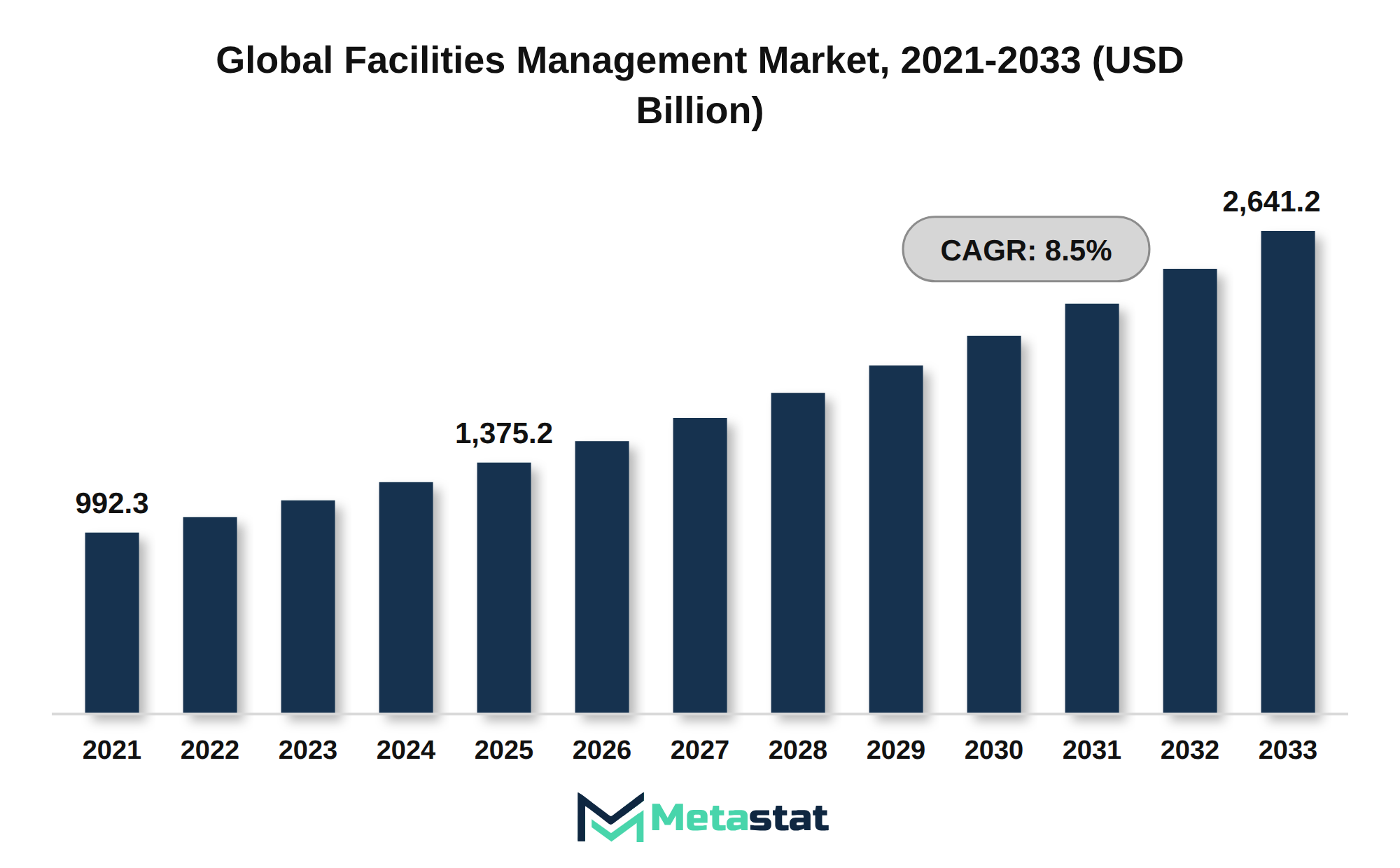
The global Facilities Management market was valued at USD 1,375.2 billion in 2025 and is projected to reach USD 2,641.2 billion by 2033, growing at a CAGR of 8.5% during the forecast period.
Facilities Management Market Growth Landscape
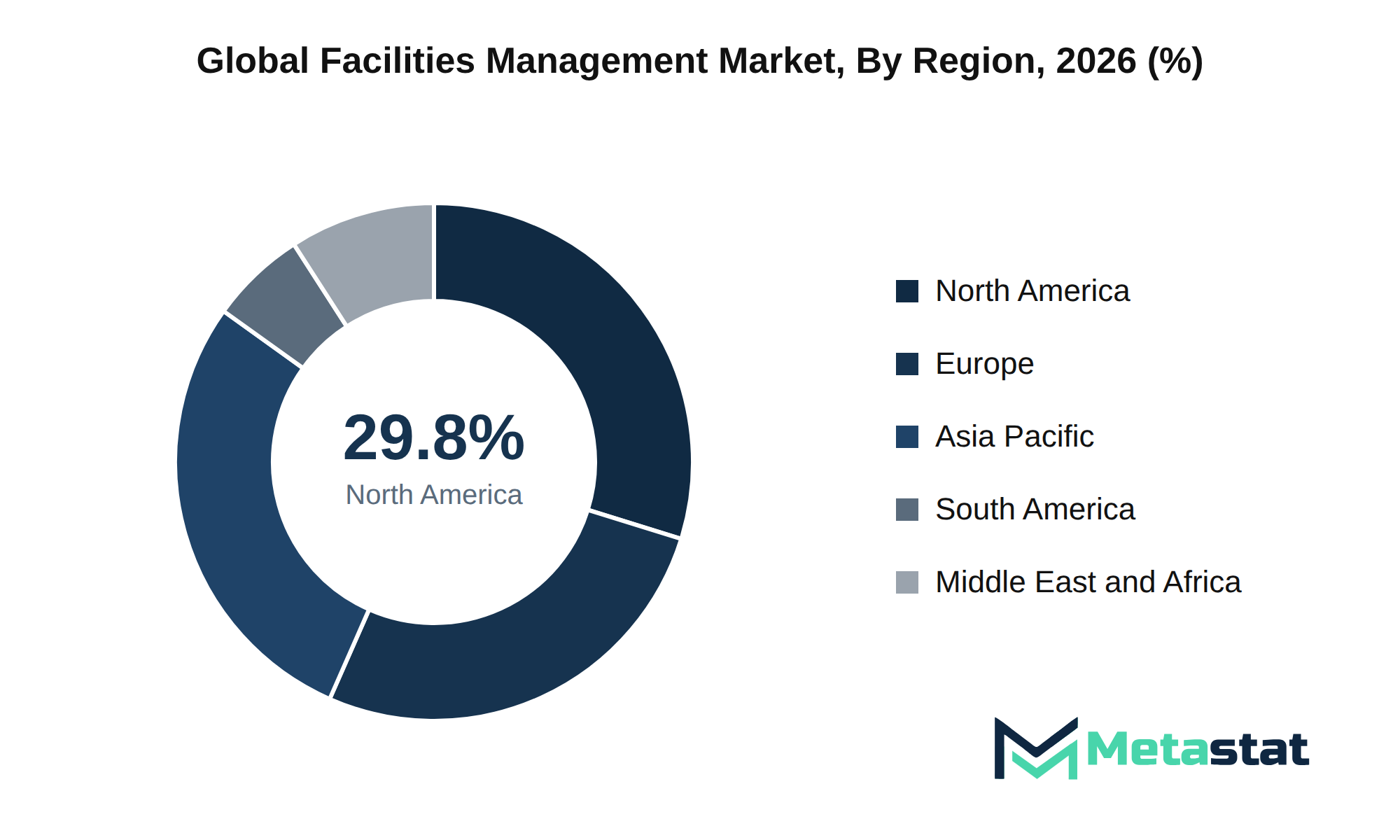
The Facilities Management market reached USD 1,375.2 billion in 2025, reflecting a significant position within the global economy. This market is poised for substantial growth, with a projected value of USD 2,641.2 billion by 2033, reflecting a compound annual growth rate (CAGR) of 8.5%. The regional distribution indicates North America holds a prominent share of 29.8% in 2025, with the United States leading the market share in 2026. Europe accounts for 26.8%, while the Asia Pacific region holds a share of 28.3%. The remaining market distribution includes South America at 6% and the Middle East and Africa at 9.1%. This regional split highlights the diverse opportunities that exist across various geographic areas.
Market dynamics and growth factors
The growth of the Facilities Management market is driven by several factors, including increased urbanization, the need for efficient building operations, and advancements in technology. As urban centers expand, the demand for effective facilities management becomes crucial to ensure that buildings operate smoothly and sustainably. The rise in remote working and flexible office spaces has prompted organizations to rethink their facilities strategies. This shift has led to a greater reliance on outsourced services.
Technological advancements play a significant role in shaping the future of facilities management. The integration of smart technologies into building operations has led to improved efficiencies and reduced operational costs. Companies are increasingly adopting digital solutions for maintenance management, energy monitoring, and space utilization tracking. These innovations enhance operational efficiency and contribute to sustainability efforts by optimizing resource use and minimizing waste.
In the context of regulatory compliance and standards, facilities management is influenced by various local and international regulations. Organizations must navigate these frameworks to ensure compliance with safety, environmental, and operational standards. This adherence mitigates risks and positions companies favorably within the market by demonstrating their commitment to responsible operations. The regulatory landscape is evolving, necessitating continuous adaptation and investment in compliance measures.
Sustainability is becoming a key focus of facilities management strategies. Companies are increasingly prioritizing sustainable practices and decarbonization efforts to align with global environmental goals. The focus on the circular economy is prompting facilities managers to implement strategies that reduce waste and promote recycling, thereby enhancing their sustainability profiles. This shift is beneficial for the environment and helps organizations improve their brand image while meeting the expectations of environmentally conscious consumers.
Supply chain resilience has emerged as a critical factor in facilities management, particularly in light of recent global disruptions. Organizations are reevaluating their logistics architecture and sourcing strategies to enhance their ability to respond to unforeseen challenges. By diversifying suppliers and integrating more robust logistics solutions, companies can better manage risks associated with supply chain disruptions. This proactive approach contributes to maintaining operational continuity and supports long-term growth in the market.
The competitive landscape of the Facilities Management market is characterized by a mix of established players and emerging firms. The market fragmentation allows for various service offerings, from hard services, such as maintenance and repairs, to soft services, including cleaning and catering. As companies strive to differentiate themselves, mergers and acquisitions are occurring as firms seek to expand their service portfolios and geographic reach. This dynamic environment creates opportunities for innovation and collaboration, driving the market forward.
Digital transformation and smart operations
The integration of digital technologies into the Facilities Management market is reshaping operational efficiencies and service delivery. Companies are increasingly adopting smart operations to streamline processes and enhance service quality. This includes deploying Internet of Things (IoT) devices, artificial intelligence, and data analytics to monitor facility conditions in real time. Such advancements enable proactive maintenance, reducing downtime and operational costs. The emphasis on digitalization is not only about improving efficiency but also about creating more responsive and adaptable environments that can cater to the evolving needs of occupants.
As organizations seek to optimize performance, the Facilities Management market is experiencing a shift towards Industry 4.0 and 5.0 principles. This transition involves leveraging advanced technologies to encourage greater collaboration and integration across the value chain. The move towards automation in facilities management is expected to increase productivity and enhance the overall user experience within managed spaces.
Capital allocation and infrastructure investments
Capital allocation is essential in the Facilities Management market, influencing how resources are distributed across various service types and operational needs. As the market continues to expand, investments in infrastructure are critical. This includes funding for modernizing existing facilities and constructing new buildings that meet contemporary standards and sustainability goals. Companies are focusing on both CapEx and OpEx to achieve long-term operational efficiency and flexibility.
Organizations are prioritizing investments that align with their strategic objectives, ensuring that capital is directed towards initiatives that yield the highest returns. This approach involves assessing the lifecycle costs of assets and making informed decisions about maintenance and upgrades. The effective allocation of capital is essential for maintaining competitive advantage in a market characterized by rapid change and increased customer expectations.
Macroeconomic influences and volatility
The Facilities Management market is not insulated from macroeconomic headwinds, which can significantly impact its trajectory. Inflationary pressures have been a persistent challenge, affecting operational costs and pricing strategies. Companies must navigate rising costs while maintaining service quality and profitability. Currency volatility also poses risks, particularly for firms operating across international markets. Fluctuations in exchange rates can affect profit margins and complicate pricing structures for outsourced services.
These economic factors necessitate a careful approach to financial planning and risk management. Organizations need to develop strategies that mitigate the impact of external economic conditions on their operations. This may involve diversifying service offerings or adjusting pricing models to remain competitive while facing changing economic dynamics.
Dependence on regulatory frameworks
Compliance with regulatory standards is a critical aspect of the Facilities Management market. Companies must adhere to various local, national, and international regulations that govern building safety, environmental impact, and labor practices. Non-compliance can result in significant financial penalties and damage to reputation. Therefore, organizations must invest in compliance frameworks and training to ensure that all operational practices meet regulatory requirements.
The evolving regulatory landscape adds complexity to the market, as firms must stay informed about changes that may affect their operations. This dependence on regulatory compliance can influence strategic decisions, particularly in areas such as sustainability initiatives and technology adoption. Organizations that proactively address regulatory challenges position themselves favorably in an increasingly competitive environment.
Market Dynamics
Digital transformation drives demand for advanced facilities management solutions
Organizations across various sectors increasingly rely on digital transformation to enhance operational efficiency and responsiveness. This shift is characterized by the adoption of automation, artificial intelligence (AI), and advanced software solutions aimed at digitizing traditional processes. In the Facilities Management market, this transformation leads to the implementation of smart technologies that optimize resource usage, reduce costs, and improve service delivery. As facilities seek to streamline operations and use data analytics, the demand for integrated management systems and innovative service models rises significantly.
The impact of digital transformation is particularly pronounced in regions with robust technological infrastructure, such as North America and Europe. In these areas, businesses are rapidly integrating IoT devices and AI-powered platforms into their facilities management strategies. Sectors like Banking, Financial Services, and Insurance (BFSI) and Construction (Real Estate) are leading, with growth rates projected at 8.7% and 8.9%, respectively, through 2033. The comparative adoption of these technologies in Asia Pacific also reflects a rising trend as industries in emerging economies begin to embrace automated solutions, creating further market opportunities.
Suppliers within the Facilities Management market must adapt to this evolving situation by offering advanced technological solutions and services that align with digital transformation trends. Companies that invest in R&D to develop proprietary technologies and integrated platforms will likely gain a competitive edge. The increasing expectation for real-time data analysis and reporting highlights the need for suppliers to enhance their software capabilities, ensuring they meet the demands of modern clients effectively. The connection between digital transformation and facilities management not only drives growth but also encourages innovation across the supply chain.
Increased focus on operational productivity and cost-efficiency initiatives
Recent economic pressures have compelled organizations to prioritize operational productivity and cost-efficiency initiatives within the Facilities Management market. Companies are increasingly seeking ways to optimize labor, streamline processes, and reduce overhead costs to enhance profitability. This shift arises from a pressing need to remain competitive while managing resource constraints, particularly in light of fluctuating economic conditions and rising costs of goods and services. By adopting improved management strategies and integrating advanced technologies, businesses can effectively enhance their operational performance, leading to increased demand for facilities management services.
The impact of these initiatives is most pronounced in sectors such as Banking, Financial Services, and Insurance (BFSI), where operational efficiency is critical for maintaining customer satisfaction and compliance standards. In this sector, the demand for facilities management solutions is projected to grow from USD 172.5 billion in 2026 to USD 308.5 billion by 2033, reflecting a compound annual growth rate (CAGR) of 8.7%. Similarly, the Construction (Real Estate) segment is also experiencing growth, with expectations to reach USD 356 billion by 2033 at a CAGR of 8.9%. As companies across these industries implement more rigorous cost-control measures, facilities management services will play a key role in supporting their operational goals.
This evolving focus on productivity and efficiency creates substantial opportunities for suppliers in the market. Providers that offer innovative solutions, including automation and integrated service delivery models, stand to gain a competitive advantage. Suppliers will need to position their offerings to demonstrate their ability to drive down costs while maximizing service quality. As organizations aim to optimize their operational frameworks, collaboration with facilities management providers that understand these dynamics will be crucial in meeting the evolving needs of clients across various sectors.
High capital investment requirements and escalating operating costs
The Facilities Management market faces significant constraints due to high capital investment requirements and escalating operating costs. These financial burdens stem from the increasing need for advanced technologies and infrastructure upgrades, which are essential for maintaining competitiveness and operational efficiency. As organizations strive to enhance their facilities, the initial investment for modernizing systems or implementing new solutions can be substantial, deterring many potential entrants and constraining growth for existing players.
North America and Europe are particularly affected by these financial pressures, which absorb the most damage. In these regions, businesses must allocate resources to meet compliance regulations and implement safety measures, further increasing operational costs. The escalating costs of labor and materials also contribute to the strain. For example, the North American segment alone is projected to reach USD 746.7 billion by 2033, reflecting a compound annual growth rate (CAGR) of 8.5%. This growth is tempered by the financial limitations imposed on companies, especially small to midsize enterprises that struggle to keep pace with larger competitors.
To navigate these challenges, industry players are currently exploring alternative financing options and optimizing resource allocation. Companies often seek partnerships or outsourcing arrangements to manage costs and share financial burdens. While these workarounds provide limited relief, they do not fully address the underlying issues. The reliance on external resources can lead to inconsistencies in service quality, and the capital-intensive nature of the market remains a significant hurdle. The incomplete nature of these strategies means that the industry continues to grapple with the dual pressures of high upfront investments and persistent operational costs.
Rising input costs challenge operational efficiency and profitability
Firms operating within the Facilities Management market face significant challenges related to rising input costs, which stem from various sources including increased labor expenses, material price fluctuations, and external economic pressures. These rising costs complicate budgeting and financial forecasting, making it difficult for firms to maintain operational efficiency while ensuring competitive service pricing. Moreover, firms contend with the complexity of balancing quality service delivery against the backdrop of escalating expenses, which can lead to reduced margins and profitability.
Particularly acute challenges arise in the construction and real estate segments, where the need for skilled labor and quality materials is critical. In regions such as North America and Europe, where labor shortages are exacerbated by demographic shifts and economic conditions, firms struggle to recruit and retain talent while managing the rising costs associated with workforce skill gaps. In Asia Pacific, the rapid urbanization and growth spurts in various sectors further strain supply chains, leading to increased competition for resources and higher input costs.
In response to these challenges, firms are adopting various strategies to mitigate rising input costs. Many companies enhance their operational efficiencies through technology and automation, aiming to streamline processes and reduce dependency on labor. However, the implementation of such technologies often involves substantial upfront investments, which can strain budgets further. Firms are also exploring alternative sourcing strategies to diversify their supplier base and reduce exposure to price volatility, though this approach may introduce its own complexities. As a result, while firms in the Facilities Management market seek to address these rising input costs, they must balance the investments required for adaptation against maintaining service quality and financial viability.
Emerging regional demands foster growth in facilities management
The Facilities Management market is experiencing significant opportunities driven by emerging regional demands and infrastructure modernization. As global economies continue to recover, there is a heightened focus on upgrading aging infrastructure and expanding facilities across various sectors. This drive is particularly evident in regions such as North America and Asia Pacific, where urbanization and economic growth are spurring investments in infrastructure development. The anticipated growth in the market from USD 1,375.2 billion in 2025 to USD 2,641.2 billion by 2033 highlights the potential for stakeholders to capitalize on these evolving demands.
Companies positioned to seize this opportunity will need to demonstrate a strong capability in project management, technological integration, and sustainable practices. Firms that can effectively leverage digital tools and strategies to enhance operational efficiency will likely gain a competitive edge. Those with expertise in developing customized solutions for diverse sectors, including banking, healthcare, and education, will be well-placed to capture market share. The expected compound annual growth rate of 8.5% during the forecast period reflects the increasing relevance of facilities management in meeting modern organizational needs.
Timing will be crucial for entities looking to enter or expand within the market. The window of opportunity may narrow as competition intensifies and established players strengthen their offerings. Organizations must act swiftly to adapt to shifting buyer behaviors and regulatory changes that emphasize sustainability and operational efficiency. If they delay in responding to these trends, they risk losing out to more agile competitors who can better meet the evolving expectations of clients and stakeholders in the Facilities Management market.
Market Segmentation Analysis
The Global Facilities Management market is segmented based on Vertical, Service Type, Model, and Outsourcing Type.
By Vertical, the market is further segmented into:
Banking, Financial Services, & Insurance (BFSI)
Construction (Real Estate)
Education
Government
Healthcare & Life Sciences
Hospitality
IT & ITeS
Manufacturing
Military & Defense
Others
Banking, Financial Services, & Insurance (BFSI)
Valued at USD 172.5 billion in 2026, the Banking, Financial Services, & Insurance (BFSI) segment is projected to reach USD 308.5 billion by 2033, reflecting a compound annual growth rate (CAGR) of 8.7% during the forecast period. This growth is driven by the increasing complexity of financial operations and the demand for enhanced service delivery in a highly competitive environment. The need for compliance with regulatory standards in the BFSI sector also contributes significantly to the growing adoption of facilities management services.
As technological maturation progresses, banks and financial institutions are increasingly investing in next-generation upgrades to improve operational efficiency. This modernization facilitates better risk management and enhances the customer experience, positioning FM providers as critical partners in this evolution. The focus on cost structures and pricing volatility remains significant, with organizations striving to optimize their facilities management budgets while maintaining service quality.
Supply chain resilience is another critical consideration within the BFSI segment. Financial institutions face unique vulnerabilities due to the complex logistics involved in facility operations. Addressing these vulnerabilities is essential for ensuring business continuity. Strategic opportunity windows are emerging, driven by the need for innovation and modernization in the facilities management market. As firms continue to seek ways to streamline operations and reduce costs, the BFSI segment is a key area of growth for facilities management.
Construction (Real Estate)
By 2033, the Construction (Real Estate) segment is projected to achieve a value of USD 356 billion, growing at a compound annual growth rate (CAGR) of 8.9% during the forecast period. This segment is experiencing a surge in demand driven by increased investments in infrastructure and urban development. The rising need for sustainable construction practices and energy-efficient buildings is reshaping project management and operational strategies within the segment.
Technological advancements are also influencing the market, particularly through the adoption of Building Information Modeling (BIM) and smart building technologies. These innovations enhance the efficiency and effectiveness of facilities management, offering greater control over construction processes and lifecycle management. The integration of next-generation upgrades in construction tools and techniques is expected to streamline operations and improve project outcomes.
Regulatory compliance is another critical factor, as stricter building codes and environmental regulations push firms to adapt their practices. Meeting these standards not only ensures legal compliance but also enhances market competitiveness. Changes in raw material costs and supply chain vulnerabilities are essential considerations, as they can impact overall project budgets and timelines.
Overall, the Construction (Real Estate) segment within the Facilities Management market is marked by a dynamic combination of technological evolution, regulatory challenges, and economic factors, positioning it for substantial growth in the coming years.
Education
By 2033, the education segment is projected to reach USD 185.1 billion. This growth reflects increasing investments in educational infrastructure and a heightened focus on improving learning environments through effective facilities management. Schools and universities are prioritizing maintenance and operational efficiency to enhance student experiences and ensure compliance with safety regulations.
Demand drivers include the need for advanced technological solutions that support next-generation learning spaces. Educational institutions are adopting smart technologies to streamline operations, reduce costs, and improve energy efficiency. The evolution of educational delivery models, particularly with the rise of hybrid learning, has necessitated a reevaluation of facility capabilities and management strategies.
Regulatory compliance standards play a significant role in shaping facilities management practices within the sector. Institutions must adhere to various safety and health regulations, which can impact operational procedures and contribute to rising costs. As schools face budget constraints, effective cost management becomes critical. This compels them to seek value-driven facilities management solutions.
Strategic opportunity windows exist for providers that can offer specialized services tailored to the education sector. As competition intensifies, leveraging technology and maintaining supply chain resilience will be essential for stakeholders aiming to capitalize on growth in the facilities management market within education.
Government
Government expenditures on facilities management are predicted to increase with a compound annual growth rate (CAGR) of 7.9% during the forecast period. This growth is primarily driven by a focus on enhancing operational efficiency within government institutions, which are increasingly adopting advanced facilities management solutions to streamline their processes.
Regulatory compliance is a significant factor influencing this segment. Governments are under pressure to meet various regulatory standards and environmental guidelines, necessitating the adoption of efficient facilities management practices. This includes the implementation of technology-driven solutions that assist in maintaining compliance while optimizing resource use.
Cost structures within the government segment are also evolving. Budget constraints have led to a critical assessment of operational expenditures, prompting agencies to seek innovative facilities management solutions that can deliver cost savings. As governments look to maximize value from their investments, the integration of next-generation upgrades and technologies becomes essential for achieving operational goals.
Supply chain resilience is another critical aspect influencing this segment. Government entities are focusing on building robust supply chains for facilities management services, ensuring that they remain operational during disruptions. This emphasis on logistical resilience will likely lead to increased investments in technology and partnerships with reliable service providers to enhance overall efficiency.
Overall, the dynamics within the government sub-segment of the facilities management market present a range of opportunities for service providers, especially those equipped to navigate regulatory challenges and offer comprehensive solutions tailored to government needs. These opportunities are amplified by the ongoing demand for improved operational effectiveness and compliance adherence.
Healthcare & Life Sciences
Increasing demands for healthcare services and advancements in medical technology are driving substantial growth in the Healthcare & Life Sciences sector within the Facilities Management market. Adoption rates are significantly influenced by the need for compliance with stringent regulatory standards, which mandate the maintenance of high operational and safety protocols in healthcare facilities. Facilities management is essential in ensuring that these standards are met, thereby enhancing the overall patient experience and operational efficiency.
Additionally, the integration of next-generation upgrades and technological maturation are transforming how healthcare facilities operate. These advancements facilitate streamlined processes, improve asset management, and optimize energy use, all of which are critical in a sector where cost structures and pricing volatility can significantly impact margins. The market is responding to these pressures by increasingly investing in innovative solutions that not only meet compliance requirements but also enhance service delivery.
As healthcare providers seek improved operational resilience, the focus is also shifting towards supply chain resilience and logistics efficiency. The need for reliable raw material sourcing and effective logistics management is crucial, particularly in responding to disruptions that can affect healthcare delivery. Strategic opportunity windows are emerging as organizations explore white-space analysis to identify gaps in service provision, allowing them to better align with evolving consumer demands.
Hospitality
In the Hospitality sector, demand for facilities management is primarily driven by the need for enhanced guest experiences and operational efficiency. As hotels and resorts increasingly focus on personalized services, facilities management is essential for ensuring smooth operations and maintaining high standards. Technological advancements in this sector have led to the adoption of smart building systems, allowing for better energy management and streamlined processes. As a result, operators are able to reduce costs while improving service delivery.
Adoption rates of next-generation technologies, such as Internet of Things (IoT) solutions, are rising within hospitality management. These tools enable data-driven decision-making, which enhances the overall guest experience. This segment benefits from evolving consumer preferences, with guests now expecting modern amenities and responsive services. Consequently, facilities management solutions are adapting to meet these changing demands.
Compliance with regulatory standards is essential in the hospitality space, as it directly impacts guest safety and satisfaction. Facilities must adhere to health and safety regulations, which can require significant investment in maintenance and upgrades. The sector faces cost pressures, particularly in relation to labor and materials, which can affect profit margins.
Strategic opportunities in the hospitality sector include expanding service offerings to encompass sustainability and wellness, areas that are increasingly prioritized by consumers. By capitalizing on these trends, facilities management can contribute to driving competitive advantage within the market.
IT & ITeS
Demand within the IT & ITeS sub-segment is driven by increasing reliance on digital solutions across industries. Organizations are seeking efficient management of their IT assets, which necessitates effective facilities management. The adoption of next-gen technologies, including cloud computing and artificial intelligence, enhances operational efficiency and increases the complexity of IT environments. Companies are motivated to upgrade their infrastructure to support these advancements, leading to a need for specialized facilities management services.
As firms transition to more integrated systems, the dynamics of end-use applications evolve. Facilities management is increasingly focused on optimizing the IT workspace, ensuring that environments cater to the needs of modern technology deployments. Emerging trends include a shift towards more sustainable practices, emphasizing energy efficiency and resource conservation, which align with the overall objectives of IT & ITeS companies.
Regulatory compliance and certifications play a critical role in this sub-segment. Companies must adhere to various standards related to data protection, environmental impact, and occupational health and safety. This creates opportunities for facilities management providers to offer services that ensure compliance and enhance operational resilience. The landscape is marked by pressures related to cost structures and pricing volatility, which influence how organizations allocate their budgets towards facilities management solutions.
Strategic opportunity windows are opening as businesses recognize the importance of aligning their facilities management strategies with broader organizational goals. The market presents significant potential for service providers who can adapt to the rapid technological changes and offer tailored solutions that meet the evolving needs of the IT & ITeS sector.
Manufacturing
Manufacturers are increasingly adopting advanced facilities management practices to enhance operational efficiencies and reduce costs. Key demand drivers include the need for improved productivity and streamlined operations. Adoption rates are rising, particularly as organizations seek to integrate innovative technologies and methodologies that align with evolving industry standards. This shift towards modernization is evident in the ongoing investments in next-gen upgrades and product evolution, which aim to optimize manufacturing processes.
Environmental compliance and regulatory standards play a vital role in shaping practices within the manufacturing sector. Companies must navigate various policies and niche certifications, which impact operational strategies and cost structures. Compliance with these regulations often leads to enhanced sustainability initiatives that can ultimately reduce long-term operational costs.
Supply chain resilience remains a significant focus for manufacturers, especially in light of recent disruptions. Effective raw material sourcing and logistics management are critical to maintaining competitiveness. Organizations are increasingly evaluating their supply chains to identify vulnerabilities and implement strategies that strengthen resilience.
As manufacturers explore strategic opportunity windows, they are also mindful of substitution risks and disruptive alternatives that could impact their market position. This proactive approach to facilities management not only safeguards against potential downsides but also positions companies to capitalize on emerging trends within the Facilities Management market.
Military & Defense
Advancements in technology and modernization of military facilities are key factors driving demand within the Military & Defense segment of the Facilities Management market. The necessity for efficient operations and maintenance of infrastructure has led to increased adoption of advanced management systems that enhance operational capabilities while ensuring compliance with stringent regulatory standards. Adoption rates are expected to rise as governmental and defense agencies emphasize modernization efforts and seek to improve the lifecycle management of military assets.
Technological maturation is important in segment expansion. Next-generation upgrades and the integration of smart technologies facilitate efficient resource allocation and cost reductions. The shift towards predictive maintenance and data analytics enables military organizations to optimize their facility operations and extend asset lifespans. In addition, evolving end-use dynamics in defense operations drive a reevaluation of consumption patterns, aligning facility management strategies with broader defense objectives.
Regulatory compliance is critical in the military sector, with niche certifications and standards influencing operational protocols. Agencies are increasingly required to adhere to rigorous guidelines, necessitating specialized facility management services that meet these criteria. Additionally, supply chain resilience remains a critical consideration, as logistics vulnerabilities can impact operational readiness. Overall, the Military & Defense segment is poised for growth, driven by the interconnection of technological advancements and regulatory imperatives.
By Service Type, the market is further segmented into:
Hard Services
Soft Services
Hard Services
Valued at USD 827.6 billion in 2026, the Hard Services segment is projected to reach USD 1,414.4 billion by 2033, growing at a CAGR of 8% during the forecast period. This growth is driven by increasing demand for reliable and efficient services in sectors such as manufacturing, healthcare, and governmental infrastructure. The integration of advanced technologies in hard services, including automation and IoT, enhances operational efficiency, thereby attracting investments in this segment.
As the market matures, there is a noticeable shift toward next-generation upgrades. These upgrades are largely influenced by the need for sustainability and reduced operational costs. Organizations are increasingly focusing on optimizing their facilities to comply with stringent regulatory standards. Compliance not only ensures safety and operational integrity but also enhances the reputation of organizations in a competitive market. The growing emphasis on regulatory compliance standards presents both a challenge and an opportunity for players within the market.
Cost structures in the Hard Services segment are also evolving. Fluctuations in raw material prices and the pressures associated with maintaining service quality can affect profit margins. Companies are adopting innovative procurement strategies to mitigate these risks. The segment's reliance on raw materials highlights vulnerabilities in the supply chain, necessitating a robust approach to sourcing and logistics.
The Hard Services segment of the Facilities Management market is positioned for significant growth, driven by technological advancements, regulatory compliance, and evolving cost structures. As organizations adapt, opportunities for strategic investments and partnerships will continue to emerge.
Soft Services
By 2033, the Soft Services segment is estimated to reach USD 1,226.8 billion, growing at a CAGR of 9.2% during the forecast period. This segment encompasses various services that enhance the operational efficiency and environment of facilities, including cleaning, catering, security, and landscaping services.
Primary demand drivers for this segment stem from evolving consumer expectations and a greater emphasis on workplace well-being. Organizations increasingly recognize that a clean and well-managed environment positively impacts employee productivity and satisfaction. The growing trend of outsourcing these services allows companies to focus on their core operations while relying on specialized providers for facility upkeep.
Technological maturation is significant in shaping the Soft Services market. Innovations in cleaning technologies and automation are driving operational efficiencies and reducing labor costs, thus appealing to a broader clientele. The integration of smart technologies in service delivery enables real-time monitoring and management, enhancing service quality.
Regulatory compliance and niche certifications also influence this segment. Companies must adhere to health and safety standards, thereby increasing demand for certified service providers. This compliance ensures that organizations maintain a safe and healthy environment, further emphasizing the importance of professional soft services.
Overall, the Soft Services segment is positioned for strong growth within the Facilities Management market, supported by various economic factors and advancements in technology and service delivery methodologies.
By Model, the market is further segmented into:
Outsourcing Facilities Management
In-House Facilities Management
Outsourcing Facilities Management
Outsourcing Facilities Management is essential for driving operational efficiency across various sectors. Increased demand for cost-cutting strategies and focus on core competencies are primary demand drivers in this segment. Companies are increasingly recognizing the benefits of outsourcing facilities management services to improve service quality while reducing operational costs. This trend is notable in industries that require specialized skills and knowledge, such as healthcare and education.
Technological maturation is facilitating the adoption of advanced facilities management solutions. Integration of next-generation technologies, such as IoT and AI, enhances service efficiency and enables real-time monitoring of facilities. As these technologies evolve, the potential for service optimization increases, pushing companies to seek outsourcing options that can provide these advanced capabilities without the need for extensive in-house investments.
Regulatory compliance is another significant factor influencing outsourcing decisions. Organizations face evolving standards that require adherence to safety and environmental regulations, prompting them to engage specialized firms with the requisite expertise. The market offers a variety of niche certifications that enhance the credibility of outsourcing providers, making them more appealing to businesses aiming for compliance.
Cost structures in this sub-segment are influenced by pricing volatility and margin pressures. Outsourcing can help businesses stabilize costs by locking in agreements with service providers, thus shielding them from fluctuations in labor and material costs. Companies can better manage their budgets while benefiting from the specialized knowledge of outsourcing firms. This contributes to a more resilient approach in facilities management.
In-House Facilities Management
In-house facilities management is increasingly becoming a strategic focus for organizations aiming to enhance operational efficiency and maintain control over essential services. Primary demand drivers for this model include the need for cost control, improved service quality, and better alignment with corporate culture. Companies often find that having dedicated in-house teams allows them to respond swiftly to internal needs and changes in the operational environment.
Technological maturation is important in the evolution of in-house facilities management. Organizations are leveraging advanced management software and IoT technologies to optimize resource allocation, streamline processes, and improve service delivery. This shift towards digitalization leads to enhanced productivity and better service outcomes, making in-house management more appealing.
Regulatory compliance is another critical concern for companies managing facilities internally. Adherence to industry standards and government regulations requires robust protocols and regular training, which can often strain resources. However, companies that successfully navigate these challenges benefit from reduced risk and enhanced reputation.
Cost structures within in-house facilities management can be complex, influenced by factors such as staffing requirements, technology investments, and maintenance expenditures. Organizations actively seek effective strategies to manage these costs while ensuring high-quality service delivery. As the facilities management market continues to grow, organizations must balance their in-house capabilities with the evolving demands of the industry, which can create both opportunities and challenges.
By Outsourcing Type, the market is further segmented into:
Single Services
Bundled Services
Single Services
Cost structures significantly impact the Single Services segment, driving pricing volatility and influencing margin pressures. Enterprises often face the challenge of balancing service quality with cost efficiency, particularly as they navigate fluctuating raw material prices and labor costs. This dynamic environment necessitates continuous evaluation of operational strategies to maintain profitability while delivering effective services.
Regulatory compliance standards are increasingly shaping the operational framework within this segment. Organizations must adhere to various local and international regulations, which can impose additional costs and complicate service delivery. Compliance with these standards not only mitigates legal risks but also enhances the overall reputation of service providers in the Facilities Management market.
As technological maturation progresses, single service offerings are evolving to incorporate next-gen upgrades. Companies are integrating advanced technologies, such as IoT and AI, to enhance efficiency and reduce operational costs. This evolution supports service providers in meeting the growing demand for innovative solutions that improve service delivery and customer satisfaction.
Supply chain resilience is essential for the performance of the Single Services segment. Disruptions in the supply chain can lead to delays and increased costs, emphasizing the need for strategic sourcing and logistics management. By ensuring robust supply chain mechanisms, organizations can enhance their service reliability. This ultimately benefits customers in the Facilities Management market.
Bundled Services
Adoption of bundled services in the Facilities Management market reflects a growing preference for integrated solutions that encompass multiple service offerings. This approach allows organizations to streamline operations and reduce complexity by consolidating their service needs with a single provider. Clients increasingly favor this model as it enhances efficiency and can lead to cost savings through economies of scale.
Technological maturation is significant in the development of bundled services, with advancements allowing for better interoperability between different service types. Next-generation upgrades are also contributing, as facilities management providers leverage innovative technologies to enhance service delivery. Increased reliance on building management systems, IoT devices, and data analytics enables more effective monitoring and maintenance of facilities.
Cost structures within bundled services present unique challenges and opportunities. Margin pressures can arise from the need to offer competitive pricing while maintaining quality across a range of services. Shifts in consumption patterns are evident as businesses seek flexible contracts that can adapt to changing operational needs. As companies navigate these dynamics, strategic opportunity windows emerge for suppliers who can effectively manage service integration and deliver value.
Regulatory compliance and niche certifications are factors influencing the uptake of bundled services. Many organizations are drawn to providers that can demonstrate adherence to industry standards, ensuring that compliance requirements are met consistently across various service domains. This focus on regulatory compliance further emphasizes the importance of selecting capable partners in the Facilities Management market.
By Region
Based on geography, the Global Facilities Management market is divided into North America, Europe, Asia-Pacific, South America, Middle East, and Africa.
North America
North America is a key player in the Facilities Management market, expected to grow at a CAGR of 8.5% during the forecast period, culminating in a market size of USD 746.7 billion by the end of 2033. The region accounted for a significant portion of the global market share in 2025, demonstrating its strong presence in the sector.
The growth in North America is supported by various factors, including infrastructure modernization efforts. Investments in upgrading existing facilities and implementing smart building technologies enhance operational efficiency and reduce costs. As businesses increasingly recognize the value of these upgrades, more facilities management services are being adopted.
Emerging market front-runners, particularly in the United States and Canada, are driving demand for comprehensive facilities management solutions. High-value replacement cycles contribute to incremental growth, as organizations replace outdated systems and services with more efficient and technologically advanced options.
Localized procurement dynamics also play a significant role in the region. Organizations are adapting their purchasing strategies to align with cultural nuances and regional business practices, which influences the types of services they seek. The focus on localized sourcing is complemented by the rise of nearshoring initiatives that aim to enhance supply chain efficiencies.
Finally, North America's regulatory frameworks and local compliance mandates require organizations to adhere to strict guidelines. This necessity creates a robust demand for facilities management services that can ensure compliance while optimizing operations. The combination of these factors establishes a strong foundation for growth in the Facilities Management market across North America.
Europe
Market dynamics in Europe are shaped by the region's significant share of the global Facilities Management market. Countries like Germany, France, the UK, Italy, and Spain lead the demand, driven by a blend of infrastructural modernization and high-value replacement cycles. The increasing adoption of advanced technologies improves service efficiency, catering to diverse sectors including government, healthcare, and education.
Germany stands out as a mature market, demonstrating a positive growth trajectory. The emphasis on high-quality facilities management services aligns with the country's commitment to sustainability and innovation. Similarly, the UK has displayed a marked preference for outsourcing facilities management, reflecting evolving B2B buying behaviors that favor specialized service providers.
In Italy and Spain, the expansion of facilities management services is propelled by ongoing infrastructure projects and investments. These countries are focusing on enhancing local compliance with regulatory frameworks, which in turn supports growth in the market. Russia's market is characterized by a mix of potential and challenges, with opportunities arising from a need for modernization amid geopolitical complexities.
Localized procurement dynamics are crucial in shaping facilities management strategies across Europe. Cultural nuances influence how businesses approach service contracts, often favoring long-term partnerships with established vendors. As companies seek to streamline operations, the trend toward localized manufacturing densities becomes more pronounced, which supports the supply chain's regionalization.
As the market matures, competition intensifies, with domestic market leaders consolidating their positions. This consolidation trend may lead to a more streamlined service offering, enhancing value for clients while ensuring compliance with diverse local regulations. The outlook for Europe’s facilities management sector remains optimistic, driven by incremental growth vectors and evolving consumer demands.
Asia-Pacific
In 2025, the Asia-Pacific region is expected to account for 28.3% of the global Facilities Management market. This market share reflects the diverse and rapidly growing economies of the region, including China, Japan, India, South Korea, and Australia, alongside dynamic developments in Southeast Asia and the Rest of Asia Pacific.
China and India are emerging as front-runners in the adoption of facilities management services. The drive for infrastructure modernization and urbanization has led to significant investments in commercial and residential developments, creating a growing demand for effective facilities management solutions. Japan and South Korea exhibit mature market dynamics, characterized by high-value replacement cycles as existing facilities upgrade their management practices to maintain competitiveness.
Localized procurement dynamics play a crucial role in the region, as cultural nuances influence B2B buying behaviors, impacting how facilities management services are sourced and implemented. Domestic market leaders, such as CBRE Group, Inc. and ISS Facility Services AG, are adapting their offerings to cater to these unique regional demands, ensuring compliance with local regulations while enhancing service delivery.
The region benefits from increased foreign direct investment (FDI) flows, further driving market growth. The emphasis on supply chain regionalization and nearshoring initiatives has led to a rise in localized manufacturing densities, resulting in more tailored facilities management services. This trend is particularly evident in sectors such as manufacturing and IT & ITeS, where operational efficiencies are closely tied to effective facilities management.
The Asia-Pacific market is also navigating complexities such as geopolitical fragmentation and trade policy shifts, which influence cross-border trade corridors. As these factors evolve, they create both challenges and opportunities for facilities management providers, prompting strategic adjustments to meet regional demands. Overall, the prospects for the Facilities Management market in Asia-Pacific are promising, driven by a combination of emerging market front-runners, incremental growth vectors, and localized considerations.
South America
Brazil and Argentina are the primary drivers of the Facilities Management market in South America. The market's share of the global landscape is projected to be 6.00% in 2025. Both nations are experiencing significant infrastructure modernization, which acts as a catalyst for growth in facilities management services. This modernization includes upgrades to various sectors, with investments aimed at enhancing operational efficiency.
Emerging market front-runners like Brazil are experiencing increased demand for both hard and soft services. The country is focusing on high-value replacement cycles within its aging infrastructure, prompting businesses to seek more efficient facilities management solutions. Argentina, while facing economic challenges, has opportunities for growth driven by localized procurement dynamics and cultural nuances in B2B buying behaviors.
The rest of South America is also showing potential for growth, with several underpenetrated territories ready for market entry. These regions' varying regulatory frameworks and local compliance mandates create unique challenges but also opportunities for tailored facilities management services. Companies that can address these complexities may find success in establishing a foothold in these markets.
Strategic entry barriers, especially for foreign direct investment (FDI), can significantly influence the market. Localization efforts and nearshoring initiatives are crucial for companies looking to optimize their supply chains while adapting to regional needs. As the market evolves, firms that prioritize understanding local dynamics will have a competitive edge.
Overall, the Facilities Management market in South America is positioned for incremental growth, driven by modernization efforts, strategic investments, and an increasing focus on localized service offerings. As both Brazil and Argentina lead the charge, the rest of the region is expected to follow, creating opportunities for future developments in facilities management services.
Middle East and Africa
The Facilities Management market in the Middle East and Africa is expected to account for a significant portion of the global market share in 2025. Countries such as Saudi Arabia, UAE, and South Africa are important in shaping market dynamics in this region. The demand for facilities management services is significantly driven by infrastructure modernization and urban development projects, particularly in rapidly growing urban centers.
Emerging market front-runners like Saudi Arabia and the UAE have prioritized infrastructure investments, which act as catalysts for the growth of the market. The focus on smart cities and sustainable development further highlights the need for effective facilities management solutions. In South Africa, a combination of high-value replacement cycles and the need for maintenance of aging infrastructure supports the continued expansion of facilities management services.
Localized procurement dynamics in this region reflect cultural nuances and specific regional requirements. Buyers often seek tailored solutions that align with local practices and compliance mandates. Consequently, market players must adapt their offerings to meet these unique demands effectively.
In addition, supply chain regionalization and nearshoring initiatives are becoming increasingly important, as companies aim to enhance operational efficiencies and reduce costs. This trend contributes to the market's growth by creating a more responsive and localized supply chain. Foreign direct investment (FDI) flows are anticipated to play a crucial role in the geographic expansion of facilities management services across the region.
As the Middle East and Africa continue to develop, the Facilities Management market is likely to experience ongoing growth. The combination of strategic entry barriers and regional resource availability, including energy grid resiliency, will shape the future of facilities management in these countries. A focus on compliance with local regulations and effective response to regional challenges will remain essential for businesses operating in the market.
Competitive Landscape and Strategic Insights
Mergers, acquisitions (M&A), strategic consolidation, and industry restructuring
The Facilities Management market has seen significant activity characterized by mergers and acquisitions as companies seek to consolidate their positions and leverage economies of scale. This trend is particularly prominent among larger firms, which are actively pursuing strategic consolidation to enhance their service offerings and expand their geographic footprints. The competitive dynamics reflect a clear intent to create comprehensive service portfolios, allowing for a more streamlined approach to client needs.
As market players look to position themselves competitively, strategic alliances and joint ventures have emerged as vital strategies. Such partnerships enable firms to combine resources, share technological advancements, and enhance their service capabilities. Companies exemplifying this trend focus on developing integrated facilities management solutions through collaboration.
Go-to-market (GTM) strategies, commercial models, and pricing architectures
Pricing strategies in the market have become increasingly sophisticated as firms differentiate their service offerings. Companies often adopt a mix of hard and soft services to meet diverse client needs, driving the need for tailored pricing structures. The integration of advanced technology, including smart building solutions, has allowed some players to command premium pricing based on enhanced value propositions.
Barriers to entry in the Facilities Management market remain high, influenced by established players with significant brand equity. New entrants face challenges related to capital investment, technological innovation, and market knowledge, which are critical for success. Firms maintain robust customer retention strategies that capitalize on their established reputations, making it difficult for newcomers to gain a foothold.
The forward outlook for the market indicates continued growth, reflecting a compound annual growth rate (CAGR) of 8.5%. This growth will likely prompt further consolidation as key players strive to strengthen their market positions and adapt to evolving customer demands.
Forecast and Future Outlook
The Facilities Management market is forecast to rise from USD 1,375.2 billion in 2025 to over USD 2,641.2 billion by 2033, reflecting a compound annual growth rate (CAGR) of 8.5%. This growth trajectory is driven by various factors, including the increasing demand for efficient facility operations and the integration of advanced technologies. The evolving market necessitates that companies adapt their strategies to take advantage of these opportunities effectively.
In a bull case scenario, accelerated adoption of next-generation technologies, such as artificial intelligence and automated systems, could significantly enhance operational efficiencies. Companies that proactively invest in technology integration and process modernization may outpace competitors, capturing greater market share. Moreover, favorable regulatory environments and increased capital allocation toward infrastructure projects could support growth prospects, especially in emerging markets.
Conversely, a bear case scenario could stem from economic downturns or geopolitical tensions that disrupt global supply chains. If companies face constraints in capital expenditure or stringent regulatory challenges, growth in the Facilities Management market could be adversely impacted. The failure to adapt to rapid technological advancements may also hinder competitive positioning, leading to reduced market share for those lagging behind.
Examining downstream demand transformations reveals a shift in client expectations. Organizations increasingly prioritize sustainability and cost-effectiveness, prompting a reevaluation of service delivery models. Companies are advised to develop flexible strategies that align with these changing demands to enhance customer satisfaction and loyalty.
Additionally, emerging white-space opportunities exist in sectors like healthcare and education, where customized facility solutions can drive significant value. Market participants should consider establishing partnerships with organizations that lack in-house capabilities or those seeking to optimize operations through outsourcing. This alignment can create new revenue streams and strengthen competitive defenses.
As infrastructure commitments ramp up globally, strategic capital allocation becomes critical. Organizations should prioritize investments in sectors poised for growth while maintaining agility to respond to shifting market dynamics. For instance, focusing on high-growth pockets within the Asia Pacific region could yield substantial returns, given its expanding economic footprint.
Regulatory evolution also shapes the Facilities Management market. Companies must remain vigilant regarding compliance milestones and policy enforcement horizons, particularly concerning environmental regulations. Adopting proactive stances on compliance can enhance reputational standing and mitigate potential penalties.
To capitalize on these insights, firms are encouraged to undertake comprehensive market assessments and adjust their operational strategies. This includes conducting detailed evaluations of service delivery models, exploring outsourcing options, and investing in R&D for innovative solutions. Qualifying alternative suppliers can reduce dependency on concentrated regions, thereby enhancing supply chain resilience.
For the base case growth scenario to hold, several conditions must be met. Continued economic stability, supportive regulatory frameworks, and sustained investment in technological advancements are essential. The ability of organizations to adapt swiftly to market trends and customer expectations will be crucial in maintaining momentum within the Facilities Management market.
The report strategically identifies and profiles the key market players and analyses their core competencies in each sub-segment of the Facilities Management market.
Report Attributes
Details
Study Period
2021-2033
Base Year
2025
Estimated Year
2026
Forecast Period
2026-2033
Historical Period
2021-2025
Growth Rate
CAGR 8.5% from 2026 to 2033
Revenue Unit
USD billion
Segmentation
By Vertical, Service Type, Model, Outsourcing Type, and Region
By Region
North America (By Vertical, Service Type, Model, Outsourcing Type, and Country)
United States
Canada
Mexico
Europe (By Vertical, Service Type, Model, Outsourcing Type, and Country)
Germany
France
UK
Italy
Spain
Russia
Rest of the Europe
Asia Pacific (By Vertical, Service Type, Model, Outsourcing Type, and Country)
China
Japan
India
South Korea
Australia
Southeast Asia
Rest of Asia Pacific
South America (By Vertical, Service Type, Model, Outsourcing Type, and Country)
Brazil
Argentina
Rest of South America
Middle East and Africa (By Vertical, Service Type, Model, Outsourcing Type, and Country)
Saudi Arabia
UAE
South Africa
Rest of Middle East and Africa
WHAT REPORT PROVIDES
Key Facilities Management market share, revenue, and position/ranking
Key Facilities Management market leaders
Full in-depth analysis of the Facilities Management market
Facilities Management industry statistics
Important changes in the Facilities Management market and its dynamics
Segmentation details of the Facilities Management market
Historical, ongoing, and projected Facilities Management market analysis
Assessment of niche Facilities Management developments
Facilities Management market share analysis
Key strategies of major Facilities Management players
Company profiles of key Facilities Management players
Unique selling propositions of leading Facilities Management players
Emerging segments and regional growth potential in Facilities Management
Key strategic recommendations for the Facilities Management market
Competitive benchmarking in the Facilities Management market
UAE Pet Boarding Services Market Size, Share, Trends, 2033
UAE Pet Boarding Services market size is valued at USD 32.3 million in 2025 and is projected to reach USD 66.6 million in 2033, at a CAGR of 9.3% from 2026 to 2033.
UAE Pet Boarding Services Market, UAE Pet Boarding Services Market Size, UAE Pet Boarding Services Market Share, UAE Pet Boarding Services Market Analysis, UAE Pet Boarding Services Market Growth, UAE Pet Boarding Services Market Trends, UAE Pet Boarding Services Market Research Report, UAE Pet Boarding Services Market Forecast, UAE Pet Boarding Services, UAE Pet Boarding Services Market Research, UAE Pet Boarding Services Industry, UAE Pet Boarding Services Industry Report, UAE Pet Boarding Services Market Data, UAE Pet Boarding Services Statistics, UAE Pet Boarding Services Market Statistics, UAE Pet Boarding Services Industry Trends, UAE Pet Boarding Services Market Report, UAE Pet Boarding Services Market Trends, UAE Pet Boarding Services Market News, UAE Pet Boarding Services Forecasts, UAE Pet Boarding Services Market Intelligence Report
Global Marketing Services market size is valued at USD 444.9 billion in 2025 and is projected to reach USD 661.9 billion in 2033, at a CAGR of 5.1% from 2026 to 2033
Global STEM Summer Programs market size is valued at USD 2,656.3 million in 2025 and is projected to reach USD 5,819.3 million in 2033, at a CAGR of 10.3% from 2026 to 2033
Sustainability Services and Strategies Market Size, Share, Trends, 2033
Global Sustainability Services and Strategies market size is valued at USD 22.8 billion in 2025 and is projected to reach USD 47.4 billion in 2033, at a CAGR of 9.6% from 2026 to 2033
Sustainability Services and Strategies Market, Sustainability Services and Strategies Market Size, Sustainability Services and Strategies Market Share, Sustainability Services and Strategies Market Analysis, Sustainability Services and Strategies Market Growth, Sustainability Services and Strategies Market Trends, Sustainability Services and Strategies Market Research Report, Sustainability Services and Strategies Market Forecast, Sustainability Services and Strategies, Sustainability Services and Strategies Market Research, Sustainability Services and Strategies Industry, Sustainability Services and Strategies Market Data, Sustainability Services and Strategies Statistics, Sustainability Services and Strategies Market Statistics, Sustainability Services and Strategies Industry Trends