Global Asset Integrity Management Market Size, Share, By Service Type (Non-Destructive Testing (NDT), Risk-Based Inspection (RBI), Pipeline Integrity Management, Hazard Identification (HAZID) Study, Structural Integrity Management, Fitness-for-Service Assessment, Corrosion and Pipeline Integrity Management, Asset Integrity Engineering and Lifecycle Management), By Technology (Conventional and Advanced Non-Destructive Testing, 3D Laser Scanning and Dimensional Control, UAV, Robotic and Remote Inspection, Digital Twins, AI and Integrity Management Software), By Asset Type (Pipelines and Distribution Networks, Pressure Vessels, Storage Tanks and Process Piping, Offshore, Marine and Subsea Assets, Industrial Plants, Structures and Utility Infrastructure), By End-Use Industry (Oil and Gas, Power Generation and Utilities, Chemicals, Petrochemicals and Refining, Marine and Offshore, Aerospace), Industry Analysis, Growth, Trends, and Forecast, 2026-2033
Report ID
MSI-4820
Published
July 28, 2026
Pages
252 Pages
Format
Report Details
Comprehensive Market Analysis And Insights
Market Overview
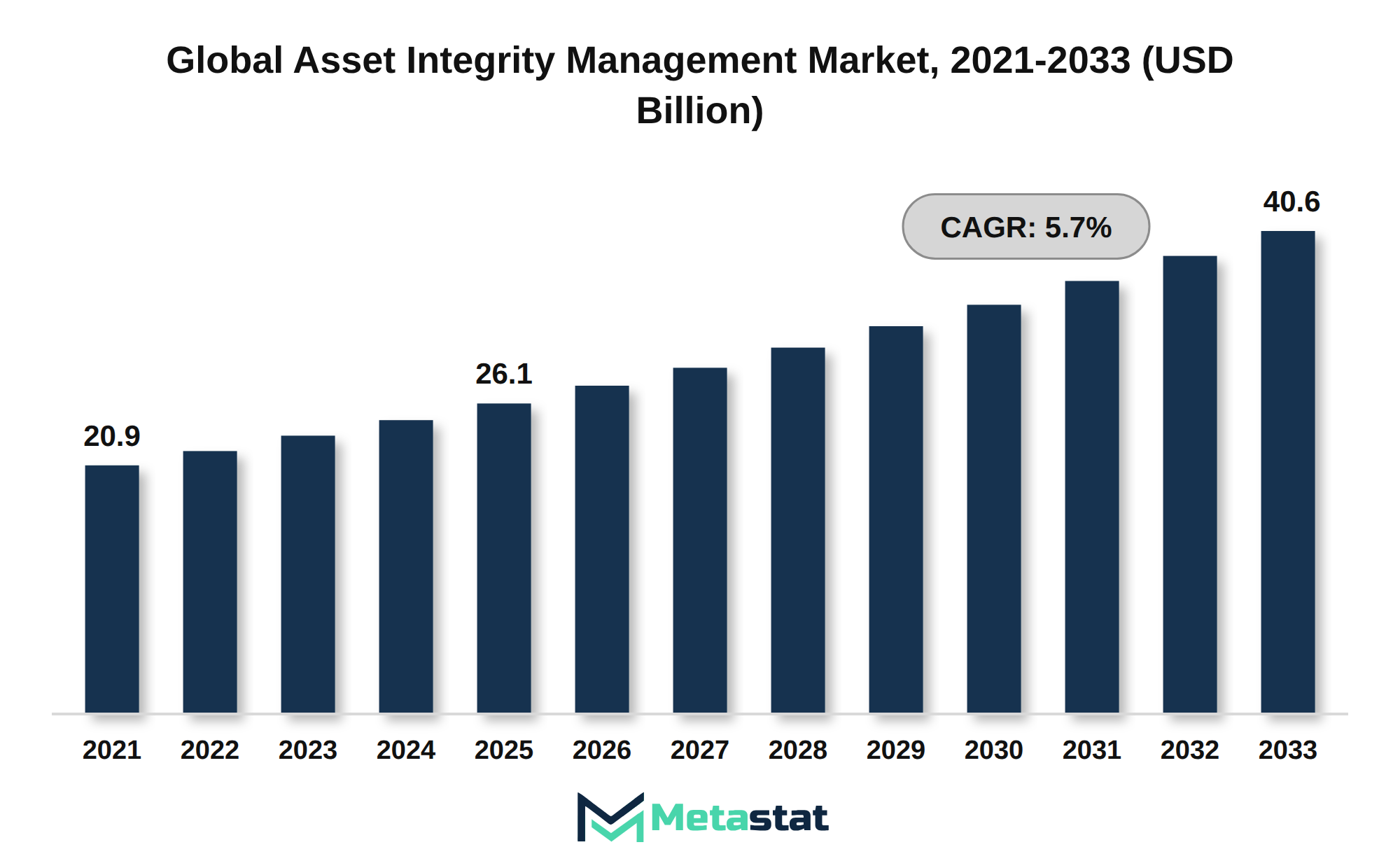
The global Asset Integrity Management market was valued at USD 26.1 billion in 2025 and is projected to grow at a CAGR of 5.7% during the forecast period, reaching USD 40.6 billion by 2033.
Current trends and future prospects in the Asset Integrity Management Market
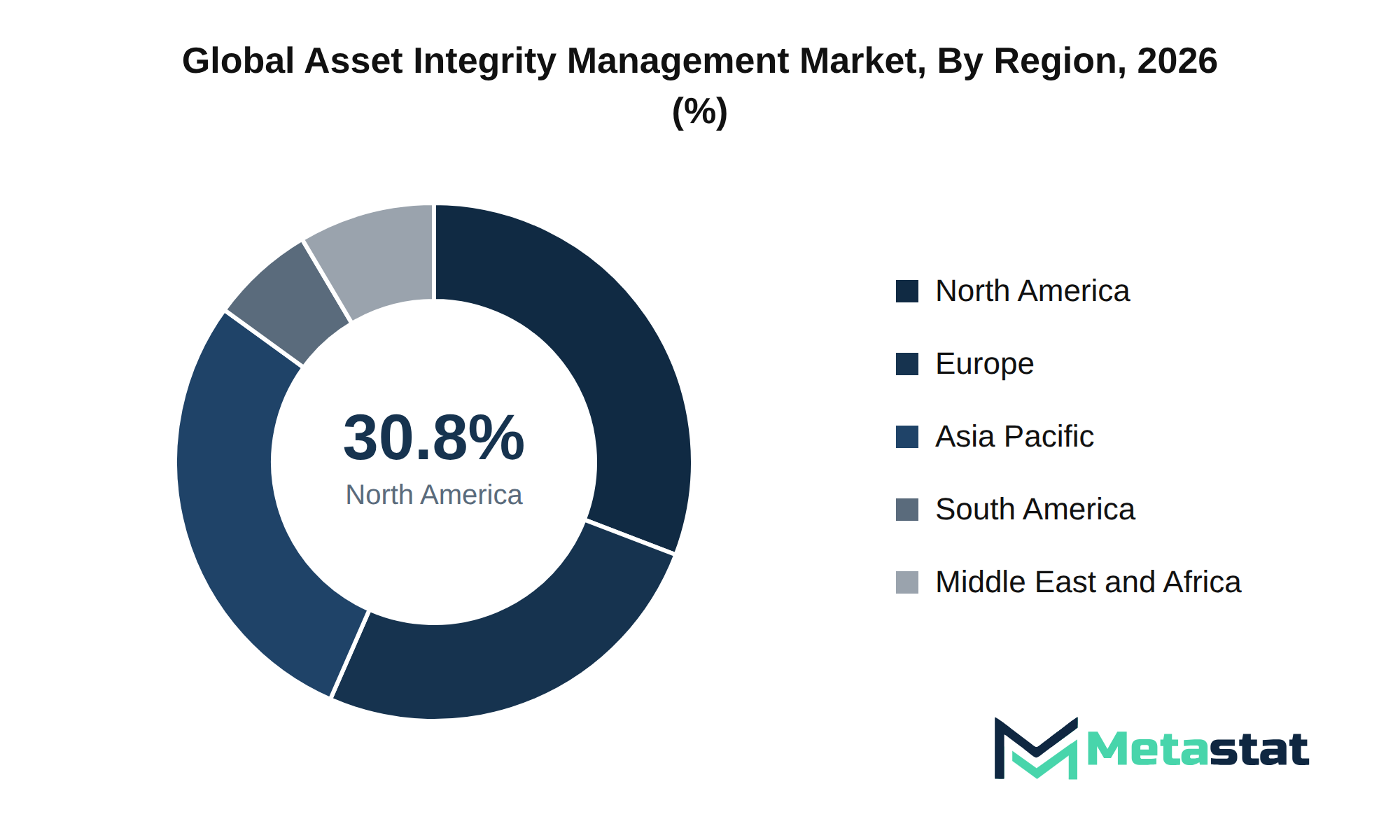
The Asset Integrity Management market is projected to grow from USD 26.1 billion in 2025 to USD 40.6 billion by 2033, reflecting a compound annual growth rate (CAGR) of 5.7%. In 2025, North America holds a significant market share of 30.8%, with the United States expected to lead this segment in 2026. Europe follows closely with a 25.7% share, while the Asia Pacific region accounts for 28.4%. South America and the Middle East and Africa hold smaller shares of 6.5% and 8.5%, respectively.
Regulatory compliance and standards
Regulatory compliance is a critical factor influencing the Asset Integrity Management market. Companies must adhere to various national and international standards designed to ensure safety, reliability, and efficiency in operations. These regulations often focus on minimizing risks associated with asset failures, particularly in industries such as oil and gas, where the consequences of non-compliance can be severe. As organizations strive to meet these requirements, they increasingly invest in advanced integrity management systems that facilitate compliance monitoring and reporting.
Standards such as ISO 55000, which outlines best practices for asset management, play a vital role in shaping the strategies of companies in the market. By implementing these standards, organizations can enhance their operational efficiency and reduce the likelihood of costly asset failures. This adherence to regulations and standards mitigates risks and builds trust among stakeholders, thereby strengthening the overall market position of companies within the Asset Integrity Management sector.
Supply chain resilience and logistics
Supply chain resilience has gained prominence in the Asset Integrity Management market, particularly in the face of recent global disruptions. Organizations are re-evaluating their logistics architecture and sourcing strategies to enhance their ability to withstand unforeseen challenges. Ensuring a reliable supply chain is essential for maintaining the integrity of assets, as delays or shortages can lead to increased risks and operational downtime.
Companies are increasingly focusing on diversifying their supplier base and investing in technology to improve visibility and responsiveness throughout their supply chains. By adopting advanced forecasting and inventory management solutions, organizations can better anticipate demand fluctuations and minimize potential disruptions. This proactive approach strengthens supply chain resilience and enhances overall operational efficiency in the Asset Integrity Management market.
Digitalization and smart operations
Digital transformation is reshaping the Asset Integrity Management market, with organizations increasingly adopting smart operations to enhance efficiency and reduce costs. The integration of technologies such as digital twins, artificial intelligence (AI), and advanced analytics allows companies to monitor asset performance in real-time, identify potential issues before they escalate, and optimize maintenance schedules.
As companies embrace Industry 4.0 principles, the focus on digitalization becomes crucial. The adoption of automated inspection techniques, such as UAVs and robotic systems, enables organizations to conduct thorough assessments of their assets without compromising safety or efficiency. This shift towards smart operations improves the reliability of assets and contributes to cost savings and improved compliance with regulatory requirements.
The increasing reliance on digital solutions is expected to drive growth in the Asset Integrity Management market, as organizations seek to leverage technology to enhance their operational capabilities and maintain a competitive edge. As the market evolves, the continued integration of digital tools and processes will play a significant role in shaping the future of asset integrity management.
Digitalization and Industry Integration
The integration of digital technologies is reshaping the Asset Integrity Management market. Companies are increasingly adopting advanced technologies such as Digital Twins, artificial intelligence, and integrity management software to enhance operational efficiency and reduce costs. The market for Digital Twins and AI within Asset Integrity Management is projected to grow at a compound annual growth rate (CAGR) of 7.6%. This growth reflects the industry's shift towards smart operations and automation, which are critical in maintaining asset integrity across various sectors.
In addition, the application of UAVs, robotics, and remote inspection technologies is gaining traction, with a projected value of USD 6.7 billion by 2033. These innovations facilitate real-time monitoring and inspection, significantly improving asset management and safety protocols. The convergence of Industry 4.0 and 5.0 principles is also driving digital transformation, enabling companies to leverage data analytics and predictive maintenance strategies to optimize their operations.
Capital allocation and investment trends
In the context of capital allocation, significant investments are directed towards enhancing infrastructure and technology in the Asset Integrity Management market. As companies strive to meet regulatory compliance and operational efficiency, the allocation of capital towards innovative technologies is becoming a priority. This investment trend contributes to the steady growth of the market, with a forecasted value of USD 40.6 billion by 2033.
Organizations are increasingly evaluating their capital expenditures (CapEx) and operational expenditures (OpEx) to ensure sustainable growth. The focus on strategic infrastructure investments is expected to influence procurement decisions and overall market dynamics. This balancing act between CapEx and OpEx remains crucial as companies navigate the complexities of maintaining asset integrity while addressing evolving regulatory landscapes and technological advancements.
Macroeconomic factors and market pressures
Various macroeconomic headwinds are impacting the Asset Integrity Management market. Inflationary pressures and currency volatility are significant concerns for companies operating in this space. Fluctuating material costs and labor expenses can strain budgets and affect investment strategies, potentially hindering growth. These economic factors necessitate a careful approach to financial planning and resource allocation to maintain competitive advantage.
As companies adapt to these challenges, they must also consider the implications of global geopolitical risks. Geopolitical tensions can disrupt supply chains and impact market stability, making it essential for organizations to develop resilient strategies. This includes diversifying sourcing strategies and enhancing supply chain resilience to mitigate potential disruptions.
Understanding the competitive landscape
The competitive landscape of the Asset Integrity Management market is characterized by fragmentation. A multitude of players, including ABS Group of Companies, Acuren Corporation, and Baker Hughes Company, are vying for market share. This competitive environment prompts organizations to continuously innovate and differentiate their offerings.
Market fragmentation also presents opportunities for mergers and acquisitions (M&A) as companies seek to expand their capabilities and enhance service offerings. The drive for innovation and efficiency is leading organizations to explore collaborative approaches that leverage complementary strengths. This dynamic interaction among market players will shape the future of the Asset Integrity Management market.
As the market continues to evolve, companies must remain vigilant in understanding the shifting dynamics and emerging trends. This awareness will inform strategic planning and operational decisions, ensuring that organizations can effectively navigate the challenges and opportunities present in this complex environment.
Market Dynamics
Macro-economic trends are driving demand for asset integrity management
The Asset Integrity Management market experiences significant demand stemming from macro-economic shifts, including fluctuations in interest rates, GDP growth, and changes in public-private spending power. These factors contribute to increased capital investments across various industries. Economic growth leads to higher investment in infrastructure and maintenance, prompting companies to prioritize asset integrity management. Low-interest rates enable organizations to allocate more resources toward enhancing operational efficiency and ensuring compliance with safety standards. This emphasis on maintaining asset integrity is crucial for minimizing downtime and extending the lifecycle of assets.
Regions most affected by these trends include North America and Asia Pacific, where economic activities are particularly robust. North America, accounting for 30.8% of the market share, is expected to see a compounded annual growth rate (CAGR) of 5.7% from 2025 to 2033. In Asia Pacific, representing 28.4% of the market, rapid industrialization and urbanization further increase the need for effective asset management practices. The heightened focus on infrastructure development and modernization in these regions enhances the urgency for asset integrity solutions, leading to increased investments in inspection technologies and compliance services.
For suppliers in the asset integrity management space, adapting to these macro-economic conditions presents both challenges and opportunities. Suppliers must align their offerings with the growing demand for innovative solutions that enhance asset reliability and safety. This may involve investing in advanced technologies such as automation, AI, and data analytics to streamline processes and provide clients with useful insights. As the market expands, suppliers who can demonstrate a clear value proposition and effectively address the evolving needs of their clients will position themselves favorably within the competitive environment.
Digital transformation is reshaping asset integrity management
Digital transformation is significantly influencing the Asset Integrity Management market by driving the adoption of advanced technologies such as automation, artificial intelligence, and integrity management software. Organizations are increasingly digitizing their legacy processes to enhance efficiency and reduce operational risks. This shift enables real-time monitoring of assets, predictive maintenance capabilities, and improved decision-making processes. As companies recognize the need for enhanced reliability and safety in their operations, investments in digital tools to manage asset integrity become imperative, thus propelling market growth.
Regions most affected by this transformation include North America and Europe, where industries are prioritizing technological integration to maintain competitive advantages. In North America, the market is projected to reach USD 11.9 billion by 2033, with a compound annual growth rate (CAGR) of 5.7%. European markets are similarly investing in digital solutions to improve asset management practices amid stringent safety regulations. The push for digitization is also gaining traction in the Asia Pacific, where growing industrialization and modernization efforts are prompting organizations to adopt innovative technologies, further driving market demand.
For suppliers, this digital shift presents both challenges and opportunities. Companies that offer advanced technologies, such as digital twins and AI-driven software solutions, are positioned to benefit from increasing demand. Suppliers need to focus on developing scalable and adaptable solutions that meet the evolving needs of their clients. By emphasizing integration capabilities and data analytics, they can enhance their value proposition and strengthen their competitive position in the market. As digitalization continues to gain momentum, suppliers that align their offerings with technological advancements will likely see substantial growth.
High capital investment requirements and escalating operating costs
The Asset Integrity Management market is significantly restrained by high capital investment requirements and escalating operating costs associated with maintaining asset integrity. Companies must allocate substantial budgets for the implementation of advanced integrity management systems, which often include non-destructive testing, risk-based inspections, and advanced technologies. This financial burden can deter new entrants and limit investments from existing players, stalling growth in the market.
Particularly affected segments include oil and gas, which is projected to grow from USD 9.3 billion in 2026 to USD 13.3 billion by 2033, yet faces increasing pressure to manage costs effectively. Industries like power generation and utilities also feel the strain, with a forecasted market value of USD 7.4 billion in 2033. Regions such as North America, which holds a 30.8% share of the market, must contend with these financial constraints that can impede the adoption of necessary infrastructure improvements and new technologies.
In response, companies are seeking efficiencies through technology adoption and process optimization. Strategies include leveraging digital twins and AI to streamline operations and reduce downtime, making the capital expenditures more manageable over time. These workarounds do not fully address the immediate impact of high upfront costs and ongoing operational expenditures. The reliance on older, less efficient technologies remains prevalent, hindering the transition to more modern asset integrity management solutions. The market continues to grapple with the dual challenge of maintaining financial viability while upgrading asset integrity protocols.
Tightening global regulatory standards and compliance overhead
Firms face the operational challenge of managing increasingly stringent global regulatory standards, which add complexity to compliance processes. Companies are compelled to navigate a landscape of evolving legal liabilities that require them to implement rigorous asset integrity management practices. Failure to comply can result in substantial penalties, operational disruptions, and reputational damage, all of which create significant friction in daily operations.
The challenge of compliance is particularly pronounced in regions with the highest regulatory scrutiny, such as North America and Europe. In these markets, companies encounter extensive regulations regarding environmental protection, safety, and operational transparency. The oil and gas sector, which is heavily regulated due to its environmental impact, finds it especially difficult to meet these requirements, often leading to increased costs associated with compliance management. Meanwhile, the Asia Pacific region, while experiencing rapid growth, also faces emerging regulatory frameworks that demand attention and adaptation, adding to the complexity.
To address these challenges, firms are investing in advanced compliance management systems and enhanced training for their workforce. These proactive measures can be costly, as companies must allocate significant resources toward compliance audits, employee training programs, and the integration of new technologies to streamline compliance processes. Such investments are essential to mitigate risks associated with non-compliance, yet they can impact profit margins. As a result, firms operating in the Asset Integrity Management market must balance compliance costs with ongoing operational efficiency to maintain competitiveness in a tightening regulatory environment.
Geographical expansion is driving asset integrity management growth
As the demand for efficient asset management intensifies, the Asset Integrity Management market is experiencing a significant shift driven by geographical expansion. This expansion is largely fueled by rising infrastructure modernization efforts across various regions, especially in Asia Pacific and North America. The need to maintain aging assets and optimize operational efficiency is prompting industries to invest in comprehensive asset integrity solutions. Consequently, the market is projected to grow from USD 26.1 billion in 2025 to USD 40.6 billion by 2033, at a CAGR of 5.7%.
Companies positioned to capitalize on this opportunity include those specializing in advanced non-destructive testing, risk-based inspection, and asset lifecycle management. Expertise in adopting innovative technologies such as digital twins and AI-driven integrity management software will be crucial. Firms that can deliver enhanced service offerings, integrated solutions, and localized support will find themselves in a favorable position to meet the evolving needs of customers across diverse sectors, including oil and gas, power generation, and chemicals.
As the market matures, timing will be essential for capturing growth opportunities. The urgency to upgrade aging infrastructure and implement robust asset management practices may create a narrow window for entry. Companies must act swiftly to develop and refine their service offerings. Failure to adapt to these changing market demands could result in missed opportunities as competitors strengthen their positions. Engaging with clients to anticipate regulatory compliance shifts and sustainability imperatives will further define the asset integrity management market.
Market Segmentation Analysis
The Global Asset Integrity Management market is segmented based on Service Type, Technology, Asset Type, and End-Use Industry.
By Service Type, the market is further segmented into:
Non-Destructive Testing (NDT)
Risk-Based Inspection (RBI)
Pipeline Integrity Management
Hazard Identification (HAZID) Study
Structural Integrity Management
Fitness-for-Service Assessment
Corrosion and Pipeline Integrity Management
Asset Integrity Engineering and Lifecycle Management
Others
Non-Destructive Testing (NDT)
In 2026, the Non-Destructive Testing (NDT) segment is valued at USD 6.5 billion and is projected to reach USD 9.2 billion by 2033, at a CAGR of 5% during the forecast period. This segment plays an essential role in ensuring the integrity of assets across various industries, particularly in oil and gas, power generation, and manufacturing. As demand increases for reliable asset management, NDT techniques are gaining traction due to their ability to detect flaws without causing damage to the materials being inspected.
Technological maturation is a significant driver for this segment. Advanced methods such as ultrasonic testing, radiographic testing, and magnetic particle testing are evolving, leading to enhanced accuracy and efficiency in identifying potential issues. These advancements facilitate timely interventions, reducing downtime and maintenance costs for operators. The integration of automation and robotics in NDT processes is streamlining operations, boosting overall productivity within the market.
Regulatory compliance also influences the adoption of NDT services. Stricter safety and quality standards across industries mandate regular inspections, pushing companies to invest in robust asset integrity management practices. As a result, NDT plays a critical role in helping organizations meet these regulatory requirements while ensuring operational safety.
Finally, as industries become more interconnected, the need for supply chain resilience becomes crucial. NDT contributes to this resilience by ensuring the reliability of infrastructure and assets, thus safeguarding against potential disruptions. This strategic importance strengthens NDT's position within the broader Asset Integrity Management market.
Risk-Based Inspection (RBI)
By 2033, the Risk-Based Inspection (RBI) segment is estimated to reach USD 5.5 billion, growing at a compound annual growth rate (CAGR) of 6.2% during the forecast period. This growth is driven by increasing demand for asset reliability and safety in various industries, particularly oil and gas. As businesses aim to optimize asset performance while minimizing risks, the adoption of RBI methodologies has become more prevalent.
Technological maturation is important in this segment's expansion, with advancements in data analytics and predictive maintenance enhancing the effectiveness of RBI practices. The integration of next-generation technologies, such as digital twins and AI, is improving risk assessment capabilities and supporting more informed decision-making processes. These developments streamline inspection processes and reduce operational costs, which is critical in a competitive market.
Regulatory compliance standards further increase the need for RBI as industries face stringent regulations regarding asset safety and performance. Companies must invest in robust inspection frameworks to meet these requirements, thus driving the market's growth. Shifts in end-use dynamics, especially in high-risk sectors, contribute to a steady consumption increase in asset integrity services.
As the market evolves, organizations must remain vigilant about potential substitution risks and disruptive alternatives that may emerge. Strategic opportunity windows are likely to arise from ongoing innovation in asset integrity management, encouraging firms to capitalize on advancements and enhance their RBI capabilities.
Pipeline Integrity Management
By 2033, the Pipeline Integrity Management segment is anticipated to achieve a market value of USD 6.3 billion. This growth is primarily driven by increasing demand for safer and more efficient pipeline systems. Regulatory compliance remains a critical aspect, pushing firms to adopt advanced integrity management strategies to meet stringent safety and environmental standards.
As technological maturation occurs, next-generation upgrades become essential. The adoption of digital tools and real-time monitoring technologies enhances predictive maintenance capabilities, reducing the risk of failures. This shift is vital in a landscape where proactive risk management is increasingly prioritized.
Cost structures also play a significant role in shaping the segment. Fluctuations in material costs and pricing volatility impact profit margins. Firms are pressured to optimize operational efficiency while managing these financial constraints. In this context, investment in innovative technologies can provide strategic advantages, allowing companies to maintain competitiveness in the market.
Supply chain resilience is another factor influencing this segment. As global supply chains face disruptions, companies must ensure robust sourcing strategies for critical materials. This necessity is heightened as organizations seek to mitigate risks associated with potential shortages and delays.
Overall, the Pipeline Integrity Management segment is poised for considerable growth as organizations navigate the challenges and opportunities presented by evolving market dynamics and regulatory frameworks within the Asset Integrity Management market.
Hazard Identification (HAZID) Study
The Hazard Identification (HAZID) Study segment is projected to grow at a CAGR of 5.1% during the forecast period. This steady growth reflects the increasing focus on safety and risk management across various industries. As organizations seek to minimize operational risks and enhance safety protocols, the demand for comprehensive HAZID studies is expected to rise. Key drivers include regulatory compliance requirements, which are becoming more stringent globally, pushing companies to invest in thorough hazard identification processes to avoid fines and ensure safe operations.
Technological advancements also play a significant role in the HAZID segment's expansion. Innovations in data analytics and risk assessment tools are improving the effectiveness of hazard identification, enabling organizations to better predict potential risks. This evolution in technology not only enhances the efficiency of HAZID studies but also allows for more accurate analysis of potential hazards, thereby increasing their importance in the Asset Integrity Management market.
The downstream application matrix indicates that industries such as oil and gas, power generation, and chemicals are increasingly adopting HAZID studies to comply with safety regulations and improve operational reliability. The alignment of these studies with broader asset integrity management strategies confirms their critical role in ensuring organizational resilience against potential hazards.
Structural Integrity Management
Maintaining structural integrity is critical for industries reliant on large-scale infrastructure. This segment emphasizes the necessity for ongoing assessments and maintenance strategies to ensure assets withstand operational stresses and environmental factors. Adoption rates for structural integrity management services have increased as organizations prioritize safety and compliance with regulatory standards.
Technological maturation has led to advancements in methodologies used for structural integrity assessments. Innovations such as digital twins, AI-driven analytics, and advanced non-destructive testing techniques facilitate more accurate evaluations of asset health and performance. These technologies enhance predictive maintenance strategies, enabling operators to address potential failures proactively.
Regulatory compliance remains a significant driver within the market. Organizations must adhere to stringent safety regulations to mitigate risks associated with asset failures. Consequently, compliance pressures encourage investments in structural integrity management services, reinforcing the segment's importance in various end-use industries, including energy and transportation.
Supply chain resilience is another factor influencing the structural integrity management sector, particularly concerning raw material sourcing and logistics. As industries face fluctuating costs and potential disruptions, maintaining a robust supply chain for maintenance materials and services becomes essential. This focus on resilience contributes to the overall stability and reliability of structural integrity management solutions.
Fitness-for-Service Assessment
Fitness-for-Service Assessment is essential in ensuring the operational reliability of assets across various industries within the Asset Integrity Management market. This service type focuses on evaluating the integrity and functionality of equipment, especially in high-stakes environments such as oil and gas, refining, and power generation. The demand for these assessments stems from the need to comply with stringent regulatory standards that govern safety and operational efficiency.
Technological maturation has driven significant advancements in Fitness-for-Service methodologies, enhancing accuracy and reducing assessment time. Next-generation upgrades, including digital tools and data analytics, support more comprehensive evaluations, enabling organizations to make informed decisions regarding asset management. With the increasing complexity of industrial assets, the ability to conduct thorough assessments becomes critical.
Regulatory compliance standards are becoming increasingly stringent, which emphasizes the importance of Fitness-for-Service Assessment in maintaining operational licenses and adhering to safety protocols. Firms must navigate these policies to avoid penalties and ensure the longevity of their assets.
While the segment faces challenges, including pricing volatility and margin pressures, opportunities for growth remain strong. As industries continue to prioritize safety and reliability, the demand for Fitness-for-Service Assessment will likely expand, contributing positively to the overall trajectory of the market.
Corrosion and Pipeline Integrity Management
Corrosion and Pipeline Integrity Management services are crucial for maintaining the safety and reliability of infrastructure in various industries. The primary demand drivers include the increasing age of existing pipelines and the rising need for regulatory compliance. Companies must adopt advanced management practices to mitigate risks associated with corrosion. These risks can significantly impact operational efficiency and safety.
Technological maturation influences this segment, as companies invest in next-generation upgrades. Innovations such as remote inspection technologies and predictive maintenance tools enhance the effectiveness of corrosion management strategies. These advancements facilitate real-time monitoring and allow for timely interventions. This reduces the overall costs associated with pipeline failures.
Regulatory compliance standards are becoming more stringent, necessitating the implementation of robust corrosion management practices. Companies face pressures from regulatory bodies and industry standards to ensure their assets are maintained in accordance with best practices. Compliance is essential for avoiding costly penalties and potential shutdowns.
Cost structures within this sub-segment reflect ongoing challenges related to pricing volatility of raw materials and the need for skilled labor. As companies strive to maintain profitability, effective cost management is vital to offset these pressures. This ensures high-quality service delivery in the Asset Integrity Management market.
Asset Integrity Engineering and Lifecycle Management
Demand for Asset Integrity Engineering and Lifecycle Management services is driven by the need for enhanced operational efficiency and regulatory compliance across various industries. Companies are increasingly adopting these services to improve safety and reliability while minimizing potential risks associated with asset failures. As businesses strive to maintain competitive advantages, leveraging advanced technologies and methodologies is essential for optimizing asset performance throughout their lifecycle.
Technological maturation is central to the evolution of this segment. Next-generation upgrades, such as digital twins and AI-driven integrity management software, are becoming integral to lifecycle management processes. These innovations enhance data accuracy and enable proactive decision-making, allowing organizations to anticipate maintenance needs before failures occur.
Regulatory compliance standards significantly influence service adoption. Companies are under pressure to adhere to stringent regulations, which necessitates comprehensive asset integrity strategies. Implementing robust lifecycle management practices helps organizations navigate these regulations effectively, minimizing the risk of non-compliance and associated penalties.
As industries face ongoing cost structures and margin pressures, investing in Asset Integrity Engineering and Lifecycle Management becomes crucial. Organizations find ways to streamline operations, reduce downtime, and optimize resource allocation. This ultimately leads to improved profitability. The market is poised for continued growth as these factors align with the evolving demands of asset management.
Others
This sub-segment aggregates various asset integrity management services that do not fit into the primary categories, including niche offerings and emerging technologies. It remains residual due to its diverse nature and the relatively lower adoption rates compared to established services. As industries evolve, the demand for specialized services may experience growth, but current market dynamics indicate limited mainstream integration. Regulatory compliance and cost structures associated with unique certifications may also hinder broader adoption. The Asset Integrity Management market will continue to reflect the complexities and specific needs of different sectors, influencing investment in these lesser-known service types.
By Technology, the market is further segmented into:
Conventional and Advanced Non-Destructive Testing
3D Laser Scanning and Dimensional Control
UAV, Robotic and Remote Inspection
Digital Twins, AI and Integrity Management Software
Others
Conventional and Advanced Non-Destructive Testing
In 2026, the Conventional and Advanced Non-Destructive Testing segment is valued at USD 13 billion and is projected to reach USD 17.7 billion by 2033, reflecting a CAGR of 4.5% during the forecast period. The growth in this segment is driven by the increasing demand for safety and compliance across various industries. Enhanced regulations, particularly in sectors such as oil and gas, power generation, and chemical processing, are compelling organizations to invest in advanced non-destructive testing (NDT) methods to ensure asset integrity and operational efficiency.
Technological maturation is important in the expansion of this segment. Innovations in NDT techniques, including ultrasonic testing, radiography, and eddy current testing, are enabling more accurate assessments of asset conditions. These next-gen upgrades are not only improving reliability but also reducing inspection times and costs. As organizations seek to optimize their asset management strategies, the transition to advanced NDT technologies is becoming essential.
Regulatory compliance standards are another significant factor influencing the market. As industries face stricter safety mandates, the need for reliable testing methodologies increases. Companies that comply with these standards can mitigate risks and avoid costly fines associated with non-compliance. The competitive landscape is shaped by firms that are investing in niche certifications, positioning themselves to meet specific sectoral needs.
Overall, the Conventional and Advanced Non-Destructive Testing segment is poised for substantial growth in the Asset Integrity Management market, driven by safety regulations, technological advancements, and a commitment to operational excellence.
3D Laser Scanning and Dimensional Control
By 2033, the 3D Laser Scanning and Dimensional Control segment is estimated to reach USD 5.4 billion, growing at a CAGR of 6.1% during the forecast period. This segment plays an important role in enhancing precision and efficiency within the Asset Integrity Management market. One primary demand driver is the increasing need for accurate data capture in various industries, particularly in construction, manufacturing, and infrastructure management. As organizations seek to improve their operational effectiveness, the adoption of advanced scanning technologies becomes essential.
Technological maturation significantly contributes to the market's growth, with next-generation upgrades enhancing the capabilities of 3D laser scanning tools. These advancements allow for more detailed and quicker assessments, facilitating faster decision-making processes. End-use dynamics indicate a strong shift towards the utilization of these technologies across sectors such as oil and gas, where precise measurements are critical for safety and compliance.
Regulatory compliance standards also act as a catalyst for segment expansion. As industries face stricter regulations regarding asset integrity, the demand for reliable measurement tools to support compliance efforts increases. Additionally, supply chain resilience remains a focus, emphasizing the importance of sourcing high-quality materials and components necessary for the effective deployment of 3D laser scanning technologies.
UAV, Robotic and Remote Inspection
By 2033, the UAV, Robotic and Remote Inspection segment is expected to reach USD 6.7 billion. This growth can be attributed to several key factors, including technological maturation and the increasing adoption of next-generation inspection solutions. The segment benefits from advancements in automation and robotics, allowing for more efficient and accurate data collection in challenging environments.
In addition, the demand for UAV and robotic inspection technologies is gaining traction across various end-use industries, particularly in oil and gas, power generation, and infrastructure management. These industries increasingly rely on remote inspection methods to enhance operational efficiency and ensure compliance with stringent regulatory standards.
Cost structures also play a crucial role in the segment's expansion. As technology evolves, the pricing of UAV and robotic solutions is becoming more competitive, which lowers barriers to entry for smaller operators while enabling large companies to scale their operations efficiently. However, companies must remain vigilant regarding margin pressures arising from fluctuating costs of raw materials and logistics challenges.
Overall, the UAV, Robotic and Remote Inspection segment is poised for sustained growth within the Asset Integrity Management market, driven by innovation, demand shifts, and a focus on regulatory compliance.
Digital Twins, AI and Integrity Management Software
The Digital Twins, AI and Integrity Management Software segment is projected to grow at a CAGR of 7.6% during the forecast period. This growth can be attributed to the increasing adoption of advanced digital technologies aimed at enhancing asset performance and reducing operational risks. Organizations are recognizing the value of digital twins in creating virtual models of physical assets, which facilitate real-time monitoring and predictive maintenance. As these technologies mature, their integration into existing systems becomes more streamlined, promoting wider acceptance within various industries.
Key demand drivers include the need for improved efficiency and compliance with stringent regulatory standards. Companies are under constant pressure to maintain asset integrity while minimizing downtime, which digital solutions help achieve. The rising complexity of operational environments necessitates sophisticated tools capable of comprehensive data analysis, which aligns with the capabilities of digital twins and AI-driven software.
Cost structures within this sub-segment are also evolving, as businesses weigh the long-term benefits of investing in digital solutions against initial implementation costs. Enhanced supply chain resilience and sourcing strategies are crucial, particularly given today's volatile market conditions. The ability to leverage software solutions for integrity management significantly reduces risks associated with asset failure, further driving market demand. Overall, the Asset Integrity Management market will likely see continued investment in digital technologies as organizations strive to enhance operational excellence.
By Asset Type, the market is further segmented into:
Pipelines and Distribution Networks
Pressure Vessels, Storage Tanks and Process Piping
Offshore, Marine and Subsea Assets
Industrial Plants, Structures and Utility Infrastructure
Others
Pipelines and Distribution Networks
Valued at USD 7.8 billion in 2026, the Pipelines and Distribution Networks segment is projected to grow to USD 11.7 billion by 2033, achieving a compound annual growth rate (CAGR) of 6% during the forecast period. This growth is driven by increasing demand for efficient and reliable pipeline infrastructure, essential for the transportation of various resources, including oil, gas, and water.
Technological maturation and next-generation upgrades are critical in this segment, as companies integrate advanced monitoring and inspection technologies to enhance asset integrity management. Innovations such as digital twins and AI-driven solutions facilitate real-time monitoring, ensuring compliance with safety and regulatory standards. Adoption rates are influenced by the need for enhanced operational efficiencies and reduced downtime.
Regulatory compliance remains a significant factor affecting the Pipelines and Distribution Networks segment. Stricter regulations mandate regular inspections and maintenance practices to mitigate risks associated with pipeline failures, emphasizing the importance of ongoing investment in asset integrity management solutions. The cost structures and pricing volatility in the market compel companies to seek reliable, cost-effective solutions to maintain their pipeline networks.
As industry players navigate these dynamics, strategic opportunity windows emerge. Companies that can effectively leverage technological advancements while adhering to compliance standards are well-positioned to capture market share in the evolving Asset Integrity Management market.
Pressure Vessels, Storage Tanks and Process Piping
By 2033, the Pressure Vessels, Storage Tanks and Process Piping segment is estimated to reach USD 9.5 billion, growing at a CAGR of 5.4% during the forecast period. This segment is driven by the need for higher safety standards and regulatory compliance, which necessitates continuous monitoring and maintenance of equipment. Industries such as oil and gas, chemicals, and power generation are significant end-users, emphasizing the importance of asset integrity management in ensuring operational efficiency and reducing risks associated with equipment failure.
Technological maturation plays a significant role in enhancing asset integrity management practices. The adoption of advanced inspection technologies, such as digital twins and AI-driven software, facilitates predictive maintenance strategies that can significantly reduce operational downtime. Next-generation upgrades are increasingly preferred, as they provide enhanced data analytics capabilities, allowing for more accurate assessments of asset health.
Cost structures in this segment are influenced by raw material sourcing and the complexities involved in inspections. Pricing volatility can impact financial planning for companies, making it essential to develop robust cost management strategies. Supply chain resilience is critical, as disruptions can lead to increased operational costs and project delays.
As regulatory compliance standards evolve, companies must stay ahead of niche certifications and policy advancements to mitigate risks associated with non-compliance. Strategic opportunity windows are emerging in this sector, presenting avenues for investment and growth in asset integrity solutions. By aligning with these trends, stakeholders can capitalize on the expanding market for asset integrity management.
Offshore, Marine and Subsea Assets
The Offshore, Marine and Subsea Assets segment is projected to achieve a market value of USD 7.8 billion by 2033. This growth is driven by increasing demand for advanced asset integrity management solutions that ensure safety and reliability in challenging marine environments. The complexity of offshore and subsea operations necessitates rigorous integrity assessments and monitoring, especially as industries are focused on reducing operational risks and maintaining compliance with strict regulatory standards.
Technological maturation is important in this segment, with innovations in remote inspection and monitoring technologies enhancing the safety and efficiency of operations. The use of UAVs, robotics, and advanced non-destructive testing techniques is on the rise, enabling real-time assessment of asset conditions and facilitating timely interventions. These next-gen upgrades not only improve safety outcomes but also optimize maintenance schedules, leading to cost savings and improved operational performance.
Regulatory compliance has become a critical concern for companies operating in offshore environments. Adherence to international safety standards and the adoption of niche certifications are essential for minimizing legal liabilities and ensuring operational continuity. The potential for supply chain vulnerabilities, particularly in sourcing specialized materials and equipment, necessitates strategic planning and risk management to maintain operational integrity.
As the market for Asset Integrity Management evolves, organizations must remain agile in adapting to changing compliance landscapes and technological advancements to leverage growth opportunities while ensuring the reliability of their offshore, marine, and subsea assets.
Industrial Plants, Structures and Utility Infrastructure
This segment is projected to grow at a CAGR of 5.4% during the forecast period. Industrial plants and utility infrastructure are critical components in ensuring operational efficiency and safety across various industries. The demand for asset integrity management in these areas is driven by the need for compliance with evolving regulatory standards, which require regular inspections and assessments to mitigate risks associated with aging infrastructure.
Technological advancements, particularly in non-destructive testing and inspection methodologies, are reshaping the asset integrity management field. Next-gen upgrades, such as the integration of digital twins and AI-driven analytics, enhance monitoring capabilities. This allows for predictive maintenance and reduces downtime. This evolution is crucial for maintaining the integrity of industrial structures, which face increasing operational pressures.
Pricing volatility and margin pressures pose challenges specific to this sub-segment. Fluctuations in raw material costs can impact the overall cost structures, affecting the pricing strategies of service providers. Supply chain resilience is becoming increasingly important as logistics vulnerabilities can disrupt service delivery, highlighting the need for effective risk management strategies.
As the market evolves, strategic opportunity windows are emerging, particularly for companies that can innovate and adapt to changing demands. An enhanced focus on sustainability and efficiency will likely shape investment decisions, driving growth within the asset integrity management market.
Others
This residual bucket aggregates diverse asset types that do not fall into defined categories within the Asset Integrity Management market. The lack of significant recognition for these asset types typically stems from their limited market presence or specialized applications, which may not warrant detailed analysis or standalone reporting. As a result, they remain a catch-all for various other assets that still require integrity management but do not fit the standard definitions. Factors contributing to their residual nature include varying demand drivers and adoption rates, as well as their unique end-use dynamics that differ significantly from more established asset types.
By End-Use Industry, the market is further segmented into:
Oil and Gas
Power Generation and Utilities
Chemicals, Petrochemicals and Refining
Marine and Offshore
Aerospace
Others
Oil and Gas
Valued at USD 9.3 billion in 2026, the Oil and Gas segment is projected to reach USD 13.3 billion by 2033, registering a compound annual growth rate (CAGR) of 5.2% during the forecast period. The demand for asset integrity management solutions in this sector is driven by the critical need to ensure safety and compliance with stringent regulatory standards. Companies are increasingly prioritizing risk-based inspection and maintenance strategies to prolong asset life and minimize operational disruptions.
Technological maturation also influences this segment. The adoption of advanced non-destructive testing methods and digital technologies, such as AI and digital twins, enhances the efficiency and accuracy of asset integrity assessments. These innovations support operators in identifying potential failures before they escalate, thereby reinforcing safety and reducing costs associated with unscheduled downtime.
Cost structures and pricing volatility, especially in oil and gas markets, further influence the segment's dynamics. As companies seek to optimize their expenditures, they are investing in asset integrity management solutions that provide long-term value while addressing margin pressures. This approach enables a proactive stance in managing the integrity of critical assets, which is essential for maintaining operational excellence.
Supply chain resilience is another factor shaping the Oil and Gas segment. Challenges in raw material sourcing and logistics can impact the timely implementation of asset integrity programs, thus requiring companies to develop robust strategies that mitigate these vulnerabilities. Overall, the oil and gas sector remains a vital component of the asset integrity management market, continually adapting to evolving demands and technological advancements.
Power Generation and Utilities
By 2033, the Power Generation and Utilities segment is estimated to reach USD 7.4 billion, growing at a CAGR of 5.9% during the forecast period. This growth is driven by increasing demands for efficient energy production and regulatory compliance aimed at ensuring operational safety and environmental protection. As utilities face aging infrastructure, there is a critical need for enhanced asset integrity management practices to mitigate risks associated with equipment failure and downtime.
Technological maturation is important in shaping the market within this segment. Advances in non-destructive testing (NDT) and risk-based inspection (RBI) methodologies are enabling more accurate assessments of asset conditions. These technologies not only improve safety and reliability but also optimize maintenance schedules, leading to cost savings for operators.
Regulatory compliance remains a key factor influencing the adoption of asset integrity management solutions. Stricter regulations surrounding environmental standards and operational safety are compelling utilities to invest in asset integrity programs. This trend highlights the importance of compliance in maintaining operational licenses and avoiding costly penalties.
Ultimately, the Power Generation and Utilities segment is expected to experience strong growth within the overall asset integrity management market. As utilities continue to modernize their infrastructure and ensure compliance, the demand for comprehensive asset integrity solutions is expected to rise significantly.
Chemicals, Petrochemicals and Refining
By 2033, the Chemicals, Petrochemicals and Refining segment is expected to reach USD 6.9 billion. This growth reflects the increasing complexity of asset integrity management in industries where operational efficiency and safety are critical. The market within this segment is driven by the need for stringent regulatory compliance and the rising costs associated with equipment failure and downtime.
Technological maturation is important in shaping asset integrity management strategies. Adoption of advanced non-destructive testing techniques and risk-based inspection methods enhances the ability to maintain asset safety and efficiency. These next-generation technologies allow companies to better assess the integrity of their assets. This assessment is crucial in the highly regulated chemicals and petrochemicals sectors.
Cost structures and pricing volatility are critical factors impacting this segment. Fluctuations in raw material prices can create significant margin pressures, driving firms to seek innovative solutions that enhance operational resilience. Strategic investments in integrity management technologies can help mitigate some of these challenges, allowing companies to optimize their operations while maintaining compliance with evolving regulatory standards.
Overall, the demand for robust asset integrity management in the chemicals, petrochemicals, and refining sectors highlights the importance of maintaining operational excellence. As the market evolves, companies will continue to invest in technologies and practices that enhance safety, reliability, and compliance within their operations.
Marine and Offshore
Projected to expand at a CAGR of 6.3% during the forecast period, the Marine and Offshore segment reflects a growing recognition of the essential role asset integrity management plays in these industries. This growth is driven by technological maturation and the increasing adoption of next-generation upgrades, which enhance safety and operational efficiency. Companies are increasingly investing in advanced monitoring and inspection technologies to comply with stringent regulatory standards, ensuring that they meet both national and international safety requirements.
As offshore operations become more complex, the demand for rigorous risk-based inspection strategies is rising. This trend highlights the importance of effective asset lifecycle management in mitigating risks associated with marine and offshore assets, particularly in harsh environmental conditions. Organizations are prioritizing the implementation of integrated integrity management systems to optimize performance while addressing the challenges posed by aging infrastructure and environmental regulations.
Supply chain resilience is another critical factor influencing the segment's growth. Companies are focusing on strategic sourcing and robust logistics to ensure timely access to necessary materials and technologies. The market is witnessing increased capital investment as firms aim to enhance their operational capabilities and maintain a competitive edge. The Marine and Offshore segment of the Asset Integrity Management market is set to experience significant advancements driven by technology, compliance, and strategic investments.
Aerospace
Aerospace applications demand strict adherence to safety and performance standards, driving the need for effective asset integrity management. Advanced technologies, including digital twins and AI, enhance predictive maintenance and operational efficiency within this sector. As aircraft and aerospace systems grow in complexity, the integration of next-generation upgrades becomes crucial for sustaining reliability and regulatory compliance. Companies are increasingly adopting risk-based inspection approaches to mitigate potential failures and extend asset lifespan.
Regulatory compliance in the aerospace industry involves stringent certifications and standards, influencing the market dynamics significantly. These regulations necessitate the implementation of comprehensive asset integrity programs to ensure safety and operational continuity. The aerospace sector faces cost pressures associated with maintaining compliance and enhancing operational capabilities, compelling organizations to establish effective cost management strategies.
Supply chain resilience is vital, particularly as aerospace manufacturers increasingly rely on global sourcing for critical components. Disruptions in logistics or raw material availability can substantially impact production schedules and overall project timelines. Many businesses are assessing their supply chain vulnerabilities and exploring local sourcing options to strengthen operations. The asset integrity management market supports these efforts by providing solutions that facilitate efficient asset tracking and maintenance scheduling.
By Region
Based on geography, the Global Asset Integrity Management market is divided into North America, Europe, Asia-Pacific, South America, Middle East, and Africa.
North America
North America is poised for significant growth in the Asset Integrity Management market, with a projected market size of USD 11.9 billion by the end of 2033. The market is set to expand at a compound annual growth rate (CAGR) of 5.7% during the forecast period. The region is expected to account for 30.8% of the global market share in 2025, indicating a strong foothold in asset management initiatives.
Infrastructure modernization is a critical demand driver for the market in North America. Industries are increasingly focusing on enhancing the lifespan and safety of their assets through advanced integrity management practices. The Oil and Gas sector continues to be a prominent end user, with expectations of substantial investments in maintaining and upgrading existing facilities. This focus on high-value replacement cycles further stimulates market growth.
Emerging technologies play a vital role in the region’s asset integrity strategies. The adoption of Non-Destructive Testing (NDT) and Risk-Based Inspection (RBI) methods is expected to grow as companies seek to reduce operational risks and maximize asset reliability. Advancements in UAV, robotic, and remote inspection technology are enhancing operational efficiency and safety across various sectors.
Localized procurement dynamics are also influencing the market. Companies are increasingly turning to domestic suppliers and partners, driven by a desire for enhanced quality control and reduced lead times. This trend is supported by the regionalization of supply chains and nearshoring initiatives, which seek to mitigate risks associated with global sourcing.
The competitive landscape in North America is characterized by the presence of established domestic market leaders. Vendors are consolidating their positions through strategic partnerships and mergers, which contribute to the market's overall growth. This consolidation enhances service offerings and provides clients with comprehensive asset integrity management solutions, addressing their unique needs and compliance mandates.
Europe
Europe is set to maintain a significant presence in the Asset Integrity Management market, contributing 25.7% to the global market share in 2025. The region's robust industrial base, especially in countries like Germany, France, and the UK, drives demand for advanced asset integrity solutions. These nations are experiencing infrastructure modernization initiatives, which are critical for enhancing operational efficiencies and safety standards.
Mature market dynamics in Europe facilitate high-value replacement cycles. Industries are increasingly focused on replacing outdated systems with integrated asset integrity management solutions. This shift is evident in sectors such as oil and gas, where companies are investing in new technologies to enhance their asset management capabilities. The expected growth in this area reflects a compound annual growth rate (CAGR) of 5.2% for the oil and gas sector, underlining the focus on maintaining safety and compliance.
Localized procurement dynamics also play a vital role in the market's evolution. Each country within Europe exhibits unique cultural nuances that influence B2B buying behaviors. As companies aim to align their operations with regional compliance mandates and local regulations, tailored asset integrity solutions are increasingly in demand. This trend is particularly noticeable in Spain and Italy, where local firms prioritize partnerships with regional providers to meet specific operational requirements.
Geopolitical factors and regional supply chain regionalization are reshaping the competitive environment in Europe. The impact of cross-border trade corridors and localized manufacturing densities has led to increased collaboration among domestic market leaders. Ongoing nearshoring initiatives support the development of localized supply chains, which enhance resilience and reduce dependency on external markets.
As the Asset Integrity Management market evolves, the combination of emerging technologies, such as digital twins and advanced non-destructive testing methods, will further drive growth in the region. With a focus on strategic entry barriers and foreign direct investment flows, European countries are well-positioned to capitalize on the increasing demand for asset integrity solutions in the coming years.
Asia-Pacific
The Asia-Pacific region is expected to capture a significant share of the global Asset Integrity Management market by 2025. This significant share reflects the region's ongoing commitment to infrastructure modernization and the need for enhanced asset management strategies across various sectors, including oil and gas, power generation, and manufacturing.
China, Japan, and India stand out as emerging market front-runners due to their rapid industrialization and increasing investments in infrastructure projects. South Korea and Australia also contribute to the momentum, driven by strict compliance with safety and performance standards in their industrial practices. In addition, Southeast Asia is experiencing growth as companies seek to enhance operational efficiencies and extend asset lifecycles.
Localized procurement dynamics and cultural nuances shape the purchasing behavior in this region. Companies are increasingly prioritizing domestic suppliers and solutions that cater to specific regional needs, which influences the overall adoption rates of asset integrity management solutions. The market is experiencing incremental growth due to high-value replacement cycles, with many companies upgrading their systems to comply with evolving regulatory frameworks.
Cross-border trade corridors and geopolitical considerations are influencing sector dynamics, prompting organizations to reassess supply chain strategies. Nearshoring initiatives have gained traction, leading firms to consider localized manufacturing densities as a way to mitigate risks associated with global supply chains.
Regional resource availability and energy grid resiliency are crucial factors driving the expansion of the market in Asia-Pacific. With increasing energy demands, countries are investing in maintaining the integrity of critical infrastructure, ensuring that assets are reliable and efficient. As a result, the Asset Integrity Management market is expected to thrive in the coming years, fueled by these diverse and interconnected factors.
South America
Brazil is a primary driver for the Asset Integrity Management market in South America, benefiting from its extensive oil and gas reserves. The country's focus on enhancing production efficiency and safety standards in its energy sector contributes to robust demand for asset integrity solutions. Argentina also plays a role, particularly in the oil and gas sector, where increasing investments in infrastructure modernization present opportunities for growth.
South America accounts for 6.5% of the global market share in 2025. This relatively small share is attributed to the region's underpenetrated territories, where asset integrity management solutions are still being adopted. The market's growth is expected to be supported by infrastructure upgrades and the modernization of aging assets across various industries.
The increasing emphasis on compliance with local regulations is shaping the market dynamics. Geographic regulatory frameworks and local compliance mandates are crucial factors for businesses operating in Brazil and Argentina. Companies are prioritizing investments in asset integrity management to meet these requirements while also improving operational efficiency.
Supply chain regionalization and nearshoring initiatives are evident as firms seek to reduce logistical challenges and enhance service delivery. This trend is leading to localized manufacturing densities, facilitating the availability of asset integrity solutions tailored for the unique needs of South American industries.
Foreign direct investment (FDI) flows into the region are gradually increasing, driven by the potential for growth in sectors such as oil and gas, power generation, and utilities. As investment continues, the Asset Integrity Management market is expected to expand, promoting vendor consolidation trends and the entry of domestic market leaders seeking to capture a larger share of the regional market.
Middle East and Africa
Saudi Arabia and the UAE are leading nations in the Asset Integrity Management market within the Middle East and Africa. These countries are investing heavily in infrastructure modernization, reflecting a broader trend of enhancing asset integrity across various sectors. South Africa also contributes to market growth, driven by its developing industries and rising demand for asset management solutions.
Infrastructure modernization is a critical demand driver in the region. Countries are prioritizing upgrades to existing facilities to meet contemporary operational standards. This trend is especially pronounced in sectors such as oil and gas, where asset integrity has significant implications for both safety and profitability. The adoption of advanced technologies, including Non-Destructive Testing (NDT) and Risk-Based Inspection (RBI), supports these efforts, ensuring that aging assets are continuously monitored and maintained.
Emerging market dynamics in the Middle East and Africa highlight underpenetrated territories that offer significant growth potential for the market. As local compliance mandates evolve, companies increasingly focus on ensuring that their operations align with regional regulations. This creates opportunities for vendors to provide tailored solutions that cater specifically to local requirements.
Supply chain regionalization also plays a role in shaping market dynamics. As businesses seek to localize manufacturing and procurement processes, they improve resilience against global disruptions. This strategy enhances collaboration among regional players and promotes the development of localized asset integrity solutions that address specific market needs. Localized solutions are becoming essential as companies adapt to changing conditions.
By 2025, the Middle East and Africa is projected to account for 8.5% of the global Asset Integrity Management market. As the region continues to invest in technological advancements and regulatory compliance, it is positioned for sustained growth through 2033. The strategic focus on enhancing asset integrity will drive significant opportunities for both new entrants and established players in the field.
Competitive Landscape and Strategic Insights
Mergers, acquisitions (M&A), strategic consolidation, and industry restructuring
In the Asset Integrity Management market, strategic consolidation has been notable, with established players seeking to enhance their service offerings through mergers and acquisitions. Companies like Aker Solutions ASA and Baker Hughes Company are focused on expanding their capabilities in response to growing demand for integrated asset integrity services. The trend towards consolidation may continue as larger entities look to capture a more significant market share and reduce operational redundancies.
Additionally, partnerships between firms such as DNV GL AS and Applus Services, S.A. aim to combine each other's strengths, combining technical expertise and geographical reach to offer comprehensive solutions. These strategic alliances are essential for enhancing service capabilities and entering new markets.
Go-to-market (GTM) strategies, commercial models, and pricing architectures
Market players are employing diverse go-to-market strategies to cater to various sectors such as oil and gas, power generation, and chemicals. Companies like Bureau Veritas S.A. and Intertek Group plc use a combination of direct sales and strategic partnerships, ensuring a robust commercial model that meets the industry's changing needs. Pricing architectures are increasingly focused on value-based pricing, offering tailored solutions that emphasize quality and reliability.
As the market evolves, players are expected to adapt their pricing models to reflect the growing emphasis on sustainability and technological innovation. This approach allows firms to differentiate themselves and maintain competitive pricing while addressing customer concerns about asset integrity and compliance.
Product differentiation remains critical in the market, with companies investing in research and development to innovate their service offerings. The deployment of advanced technologies, such as digital twins and AI-driven integrity management software, is reshaping the competitive dynamics. Organizations like TechnipFMC plc and MISTRAS Group, Inc. are leading these advancements, developing proprietary technologies that enhance operational efficiency and reduce risk.
This emphasis on technology creates a barrier to entry for new entrants, as established players possess significant intellectual property portfolios that enhance their competitive positioning. The advanced capabilities offered by major firms can deter potential disruptors and strengthen brand loyalty among existing customers.
Understanding customer retention strategies is essential for sustaining market share. Companies such as EnerMech Limited and Worley Limited focus on building long-term relationships with clients through high-quality service and robust support systems. Switching costs in the market can be considerable, as clients often require specialized knowledge and experience to manage their assets effectively. Therefore, maintaining brand equity is vital for established firms competing against emerging players.
The future competitive outlook for the Asset Integrity Management market indicates a continued focus on technological advancements and strategic partnerships. As the market is projected to grow from USD 26.1 billion in 2025 to USD 40.6 billion by 2033, companies will need to navigate the challenges of evolving regulatory requirements and increasing client expectations. Defensive imperatives such as investing in innovative technologies and forging strategic alliances will be crucial for sustaining growth and maintaining a competitive edge.
Forecast and Future Outlook
The Asset Integrity Management market is projected to experience significant growth, with market size forecast to rise from USD 26.1 billion in 2025 to over USD 40.6 billion by 2033, reflecting a compound annual growth rate (CAGR) of 5.7%. This growth trajectory is influenced by various factors, including downstream demand transformations, next-generation technology integration, and evolving regulatory landscapes.
In the bull case scenario, robust investments in infrastructure and increased compliance standards could accelerate market growth beyond current projections. Industries such as oil and gas, power generation, and chemicals are likely to adopt advanced asset integrity solutions to enhance operational efficiency and compliance. This environment might favor increased spending on technologies such as digital twins, AI-driven integrity management software, and enhanced non-destructive testing (NDT) methods. As industries mature, the demand for risk-based inspection (RBI) methodologies is expected to increase, contributing to the overall market expansion.
Conversely, a bear case scenario could arise from potential economic downturns, volatile commodity prices, or stringent regulatory changes that may lead to reduced investments in asset integrity solutions. Companies may delay or scale back investments in new technologies, impacting growth. Geopolitical tensions and evolving trade corridors could disrupt supply chains, adversely affecting the market. If companies fail to adapt to these changes, they may find themselves at a competitive disadvantage, significantly hindering growth prospects.
Strategic capital allocation will be critical for stakeholders in the Asset Integrity Management market. Companies should prioritize investments in emerging technologies that enhance operational capabilities and compliance. This includes qualifying alternative suppliers, particularly those outside concentrated regions, to mitigate risks associated with supply chain disruptions. Establishing partnerships with technology innovators can facilitate timely access to next-generation solutions, ensuring a competitive edge in asset integrity practices.
As regulatory compliance becomes increasingly stringent, organizations must stay ahead of imminent compliance milestones. This requires a proactive approach to integrating asset integrity processes into daily operations. Companies should also invest in employee training programs to ensure staff are equipped to implement and manage new technologies effectively. By aligning with regulatory evolution timelines, companies can avoid potential penalties and enhance their operational resilience.
Emerging white-space opportunities present avenues for growth in the market. Identifying unmet enterprise needs, particularly in industrial plants and offshore assets, can lead to high-growth pockets. Companies should conduct market research to uncover specific needs and tailor solutions accordingly. This customer-centric approach can result in improved satisfaction and loyalty, ultimately driving revenue growth.
To ensure the base case holds, economic stability and supportive regulatory frameworks must persist throughout the forecast period. A commitment to technological advancement and infrastructure investment will be essential. Companies should regularly assess market trends and adapt strategies in response to evolving conditions. Continuous innovation and a focus on operational excellence will be key to success in the competitive environment of the Asset Integrity Management market.
Asset Integrity Management Market Key Segments
By Service Type:
Non-Destructive Testing (NDT)
Risk-Based Inspection (RBI)
Pipeline Integrity Management
Hazard Identification (HAZID) Study
Structural Integrity Management
Fitness-for-Service Assessment
Corrosion and Pipeline Integrity Management
Asset Integrity Engineering and Lifecycle Management
Others
By Technology:
Conventional and Advanced Non-Destructive Testing
3D Laser Scanning and Dimensional Control
UAV, Robotic and Remote Inspection
Digital Twins, AI and Integrity Management Software
Others
By Asset Type:
Pipelines and Distribution Networks
Pressure Vessels, Storage Tanks and Process Piping
Offshore, Marine and Subsea Assets
Industrial Plants, Structures and Utility Infrastructure
Others
By End-Use Industry:
Oil and Gas
Power Generation and Utilities
Chemicals, Petrochemicals and Refining
Marine and Offshore
Aerospace
Others
By Region:
North America
Europe
Asia-Pacific
South America
Middle East and Africa
Key Global Asset Integrity Management Industry Players
The report strategically identifies and profiles the key market players and analyses their core competencies in each sub-segment of the Asset Integrity Management market.
Report Attributes
Details
Study Period
2021-2033
Base Year
2025
Estimated Year
2026
Forecast Period
2026-2033
Historical Period
2021-2025
Growth Rate
CAGR 5.7% from 2026 to 2033
Revenue Unit
USD billion
Segmentation
By Service Type, Technology, Asset Type, End-Use Industry, and Region
By Region
North America (By Service Type, Technology, Asset Type, End-Use Industry, and Country)
United States
Canada
Mexico
Europe (By Service Type, Technology, Asset Type, End-Use Industry, and Country)
Germany
France
UK
Italy
Spain
Russia
Rest of the Europe
Asia Pacific (By Service Type, Technology, Asset Type, End-Use Industry, and Country)
China
Japan
India
South Korea
Australia
Southeast Asia
Rest of Asia Pacific
South America (By Service Type, Technology, Asset Type, End-Use Industry, and Country)
Brazil
Argentina
Rest of South America
Middle East and Africa (By Service Type, Technology, Asset Type, End-Use Industry, and Country)
Saudi Arabia
UAE
South Africa
Rest of Middle East and Africa
WHAT REPORT PROVIDES
Key Company Asset Integrity Management Market Share, Revenue, and Position/Ranking
Key Asset Integrity Management Market Leaders
Full In-Depth Analysis of the Asset Integrity Management Market
Asset Integrity Management Industry Statistics
Important Changes in Asset Integrity Management Market and Its Dynamics
Segmentation Details of the Asset Integrity Management Market
Historical, On-Going, and Projected Asset Integrity Management Market Analysis
Assessment of Niche Asset Integrity Management Developments
Asset Integrity Management Market Share Analysis
Key Strategies of Major Asset Integrity Management Players
Company Profiles of Key Asset Integrity Management Players
Unique Selling Propositions of Leading Asset Integrity Management Players
Emerging Segments and Regional Growth Potential in Asset Integrity Management
Key Strategic Recommendations for Asset Integrity Management
Competitive Benchmarking in the Asset Integrity Management Market
Energy Harvesting Module Market Size, Share, Trends, 2033
Energy Harvesting Module market size is valued at USD 707.9 billion in 2025 and is projected to reach USD 1,727.8 billion by 2033, growing at a CAGR of 11.8%.
Energy Harvesting Module market, Energy Harvesting Module Market Size, Energy Harvesting Module Market Share, Energy Harvesting Module Market Analysis, Energy Harvesting Module Market Growth, Energy Harvesting Module Market Trends, Energy Harvesting Module Market Research Report, Energy Harvesting Module Market Forecast, Energy Harvesting Module, Energy Harvesting Module Market Research, Energy Harvesting Module Industry, Energy Harvesting Module Industry Report, Energy Harvesting Module Market Data, Energy Harvesting Module Statistics, Energy Harvesting Module Market Statistics, Energy Harvesting Module Industry Trends, Energy Harvesting Module Market Report, Energy Harvesting Module Market Trends, Energy Harvesting Module Market News, Energy Harvesting Module Forecasts, Energy Harvesting Module Market Intelligence Report, Energy Harvesting Module market 2033, Energy Harvesting Module market outlook, Energy Harvesting Module market segmentation, Energy Harvesting Module market drivers, Energy Harvesting Module market restraints, Energy Harvesting Module market opportunities, Energy Harvesting Module market CAGR, Energy Harvesting Module suppliers, Energy Harvesting Module manufacturers, Energy Harvesting Module market by region, North America Energy Harvesting Module market, Asia Pacific Energy Harvesting Module market, Europe Energy Harvesting Module market, Energy Harvesting Module market competitive landscape, Energy Harvesting Module market key players, Photovoltaic and Light Energy Harvesting market, Thermoelectric and Heat Energy Harvesting market, Piezoelectric and Vibration Energy Harvesting market, Industrial IoT and Condition Monitoring market, Smart Buildings and Home Automation market
Concentrated Solar Power Market Size, Share, Trends, 2033
Concentrated Solar Power market size is valued at USD 7.5 billion in 2025 and is projected to reach USD 17.3 billion in 2033, at a CAGR of 11.1% from 2026 to 2033.
Concentrated Solar Power Market, Concentrated Solar Power Market Size, Concentrated Solar Power Market Share, Concentrated Solar Power Market Analysis, Concentrated Solar Power Market Growth, Concentrated Solar Power Market Trends, Concentrated Solar Power Market Research Report, Concentrated Solar Power Market Forecast, Concentrated Solar Power, Concentrated Solar Power Market Research, Concentrated Solar Power Industry, Concentrated Solar Power Industry Report, Concentrated Solar Power Market Data, Concentrated Solar Power Statistics, Concentrated Solar Power Market Statistics, Concentrated Solar Power Industry Trends, Concentrated Solar Power Market Report, Concentrated Solar Power Market Trends, Concentrated Solar Power Market News, Concentrated Solar Power Forecasts, Concentrated Solar Power Market Intelligence Report
Global Leak Detection Software market size is valued at USD 985.8 million in 2025 and is projected to reach USD 1,713.0 million in 2033, at a CAGR of 7.1% from 2026 to 2033
Global Leak Detection Software Market, Global Leak Detection Software Market Size, Global Leak Detection Software Market Share, Global Leak Detection Software Market Analysis, Global Leak Detection Software Market Growth, Global Leak Detection Software Market Trends, Global Leak Detection Software Market Research Report, Global Leak Detection Software Market Forecast, Global Leak Detection Software, Global Leak Detection Software Market Research, Global Leak Detection Software Industry, Global Leak Detection Software Industry Report, Global Leak Detection Software Market Data, Global Leak Detection Software Statistics, Global Leak Detection Software Market Statistics, Global Leak Detection Software Industry Trends, Global Leak Detection Software Market Report, Global Leak Detection Software Market Trends, Global Leak Detection Software Market News, Global Leak Detection Software Forecasts, Global Leak Detection Software Market Intelligence Report
Renewable Energy market size is valued at USD 1,738.8 billion in 2025 and is projected to reach USD 5,698.6 billion in 2033, at a CAGR of 15.8% from 2026 to 2033.
Renewable Energy Market, Renewable Energy Market Size, Renewable Energy Market Share, Renewable Energy Market Analysis, Renewable Energy Market Growth, Renewable Energy Market Trends, Renewable Energy Market Research Report, Renewable Energy Market Forecast, Renewable Energy, Renewable Energy Market Research, Renewable Energy Industry, Renewable Energy Industry Report, Renewable Energy Market Data, Renewable Energy Statistics, Renewable Energy Market Statistics, Renewable Energy Industry Trends, Renewable Energy Market Report, Renewable Energy Market Trends, Renewable Energy Market News, Renewable Energy Forecasts, Renewable Energy Market Intelligence Report