
LEAD ANALYST
Utkarsh Khirodkar is a Lead Market Research Analyst at MetaStat Insight, specializing in market intelligence, technology sector assessments, and competitive strategy.

Global Electromechanical Switch Market Size, Share, By Product Type (Pushbutton and Tactile Switches, Rocker and Toggle Switches, Rotary and Selector Switches, Snap-Action and Limit Switches, DIP Switches, Slide Switches), By Mounting Type (PCB-Mount, Panel-Mount, Chassis-Mount), By Switching Function (Momentary, Maintained, Combination of Momentary and Maintained), By End-Use Industry (Automotive, Industrial Automation and Machinery, Consumer Electronics and Appliances, Telecommunications and Networking, Medical Devices, Aerospace and Defense), Industry Analysis, Growth, Trends, and Forecast, 2026-2033
Report ID
MSI-2428
Published
November, 2026
Pages
263 Pages
Format
Historical
Base year
Forecast
Forecast period
Report Details
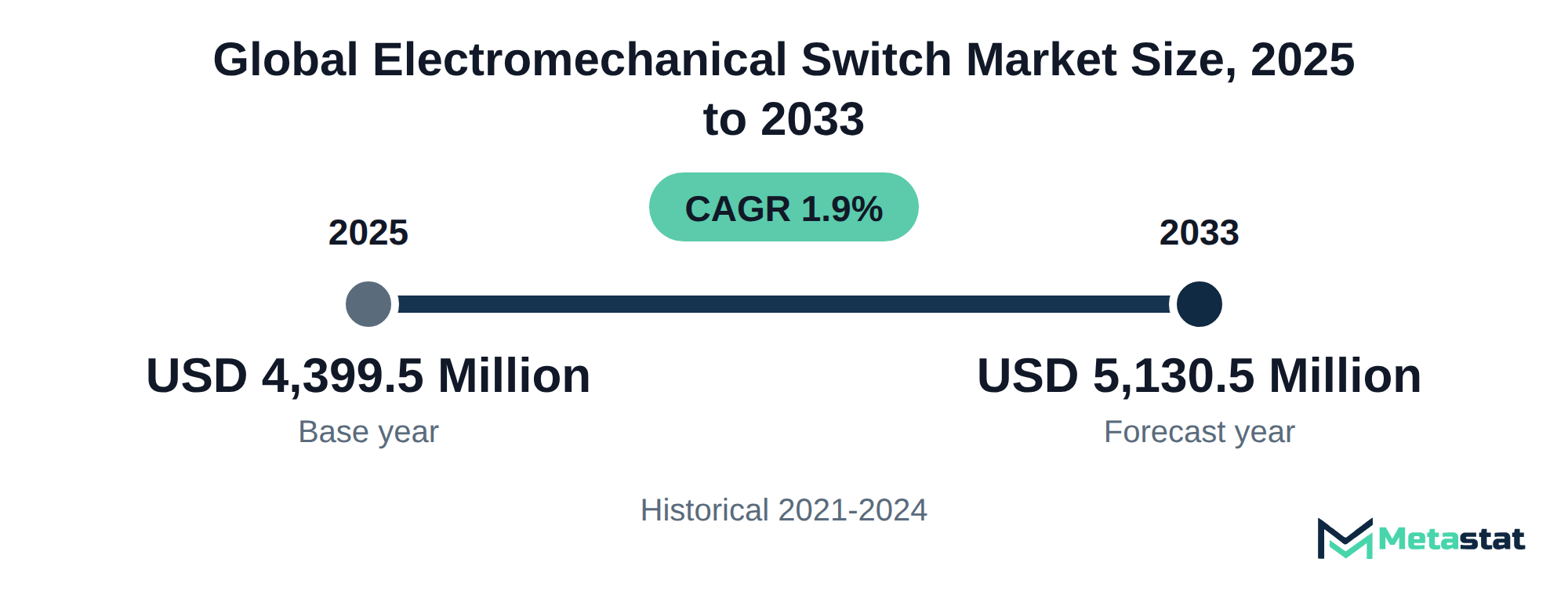
Market Valuation: Valued at $4,399.5 Million in 2025, projected to reach $5,130.5 Million by 2033 at a 1.9% CAGR.
Dominant Segment: Pushbutton and Tactile Switches lead the market, driven by their extensive application in consumer electronics and industrial automation, where user-friendly interfaces are increasingly in demand.
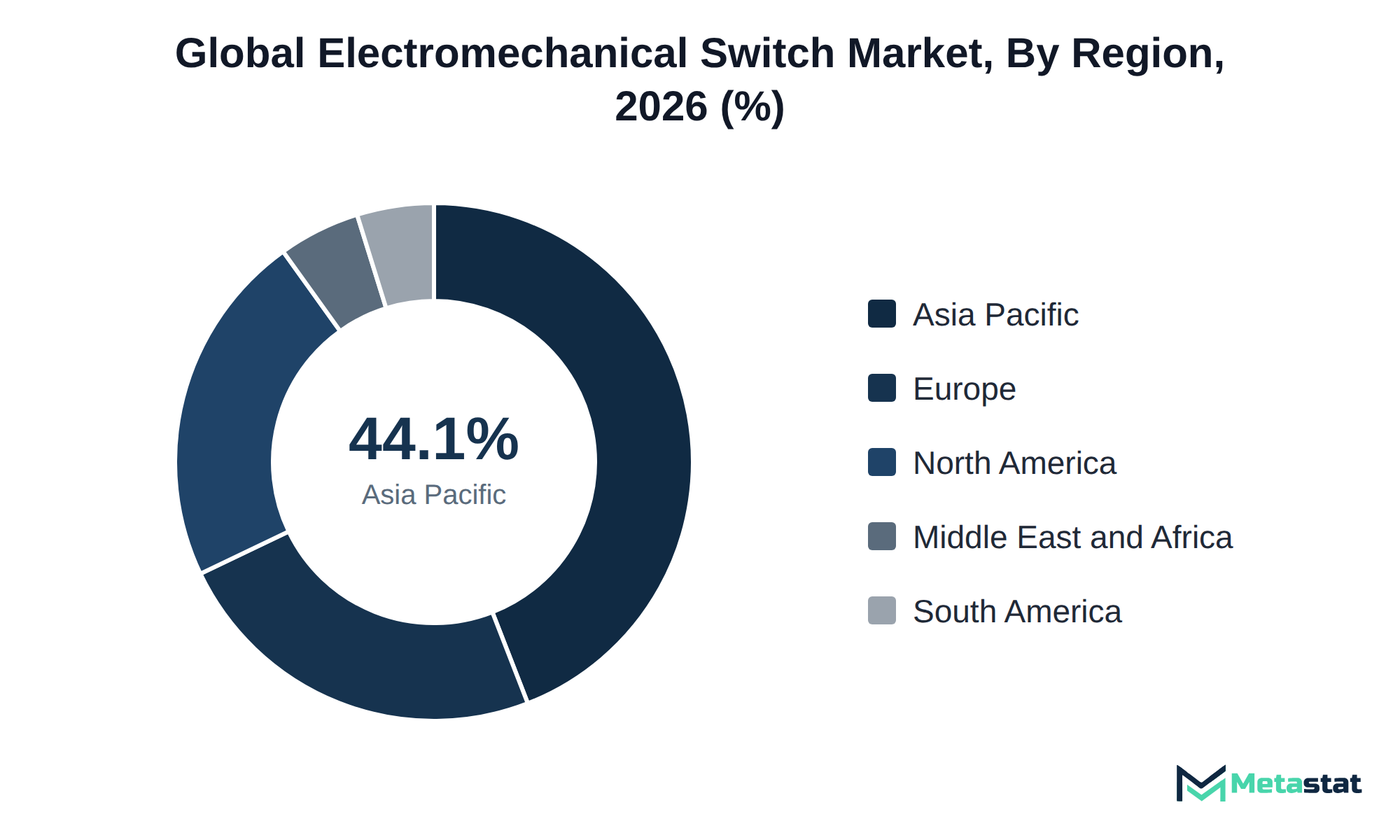
Geographic Lead: Asia Pacific holds the largest market share at 44.1%, fueled by robust manufacturing capabilities and a growing consumer market, particularly in the automotive sector.
What's Inside: The report provides comprehensive competitive coverage, detailed analyses of market dynamics, and forecasts spanning from 2026 to 2033, ensuring insights into emerging trends and opportunities.
Growth Drivers: The market is propelled by rising automation across industries and advancements in technology, particularly in the automotive sector, which is transitioning towards electric vehicles and smart technologies.
Price Sensitivity: Price sensitivity significantly affects buyer adoption, particularly in budget-conscious sectors like consumer electronics, leading to cautious procurement strategies and slower uptake of new technologies.
Choose Your License
Global Electromechanical Switch Market
The global Electromechanical Switch market was valued at USD 4,399.5 million in 2025 and is projected to reach USD 5,130.5 million by 2033, growing at a CAGR of 1.9% over the forecast period.
The Electromechanical Switch market encompasses a variety of switch types, including pushbutton, rocker, toggle, rotary, and limit switches. Buyers in sectors including automotive, industrial automation, and consumer electronics invest in these switches due to their critical role in enabling control and functionality in various applications. The demand for reliable and efficient switching solutions drives spending, particularly in industries where performance and safety are essential.
Technological advances and rising automation across multiple sectors drive growth in the electromechanical switch market. The automotive segment stands out with significant value, reflecting the industry's ongoing transition toward electric vehicles and smart technologies. Asia Pacific leads with a market share of 44.1%, outperforming North America, which holds 22.2% of the market in 2025, with the US leading in 2026. This regional dominance stems from high manufacturing capacity and expanding consumer markets.
Key drivers of growth include rising demand for automation, enhancing operational efficiency and productivity. This trend is particularly evident in industrial applications, where automated systems rely heavily on electromechanical switches for efficient operation. The market is projected to continue evolving, adapting to technological advancements and increasing consumer expectations across various sectors.
The electromechanical switch market spans many switch types and industries, driven by the need for reliable, efficient operation in electronic devices. Businesses invest in these switches primarily for their durability and functionality, which enhance product performance and user experience. The increasing integration of automation in sectors including automotive and industrial applications creates a strong demand for these components, leading to significant expenditures on high-quality electromechanical switches.
Rising demand for automation in manufacturing processes and advances in technology drive market growth. Among the product types, pushbutton and tactile switches represent the largest segment, reflecting their widespread use in consumer electronics and industrial automation. Asia Pacific holds the largest market share at 44.1%, benefiting from robust manufacturing capabilities and high adoption rates of electronic devices.
The ongoing shift toward smart technologies and IoT across various sectors necessitates the deployment of reliable electromechanical switches. Connected control products such as in-wall smart switches follow the same smart technology trend. This shift enhances the functionality of devices, promoting increased investment in the technology. As the market is projected to expand steadily, manufacturers and suppliers are focusing on innovative designs and improved performance to meet customer demands.
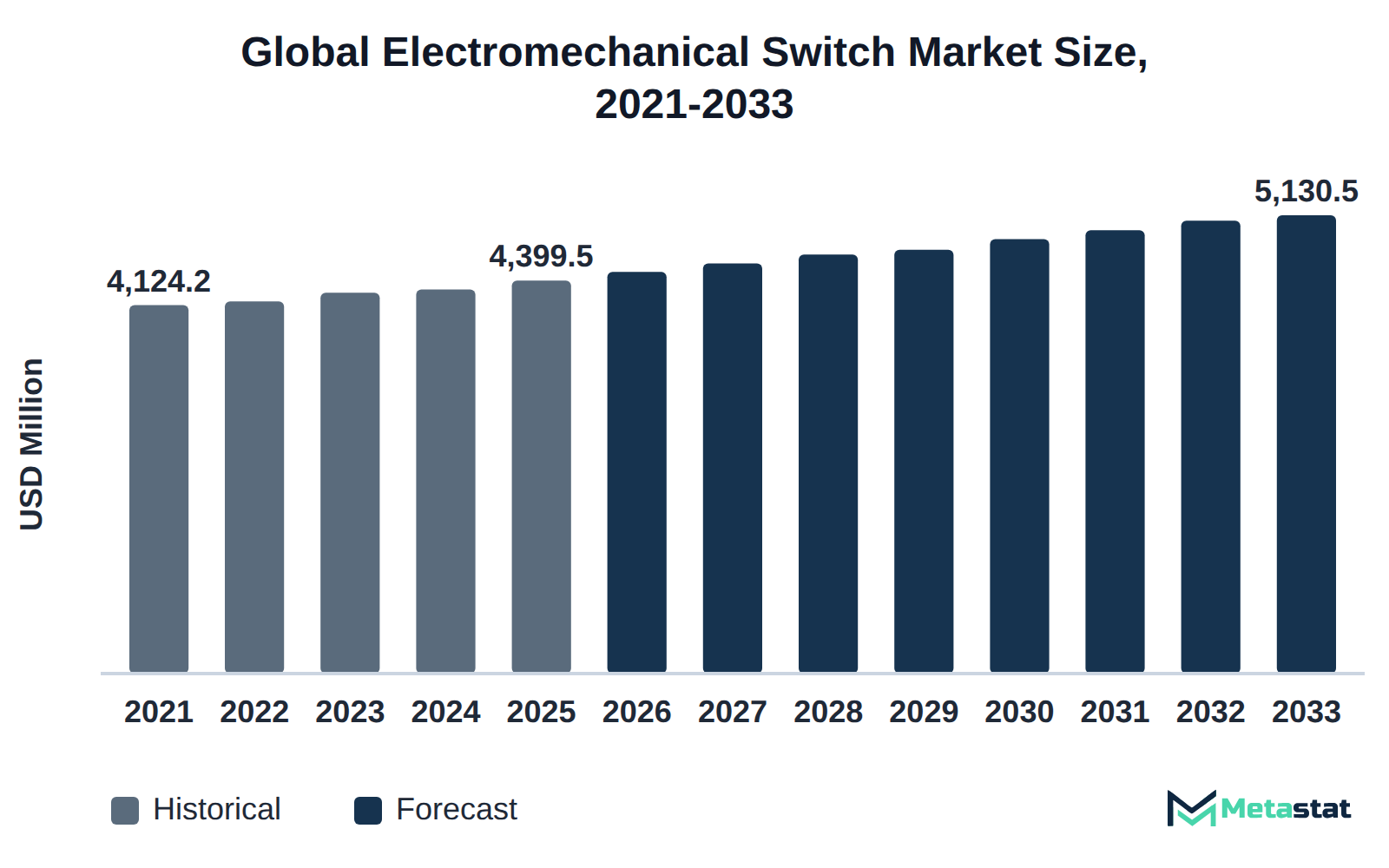
Sealed electromechanical switches have emerged as essential components for vehicle controls, driven by increasing demand for reliability and durability in automotive applications. The transition toward electric vehicles and enhanced automation requires durable switch solutions that withstand harsh environments, including exposure to moisture, dust, and vibrations. In this context, the market for sealed electromechanical switches is projected to grow significantly, with the automotive sector alone expected to reach USD 1,560.2 million by 2033.
These switches are designed to provide high performance in critical applications, where failure leads to safety issues or system malfunctions. For instance, in electric vehicles, sealed switches ensure consistent operation of control systems, including lighting, power distribution, and in-vehicle infotainment functions. The growing implementation of advanced driver-assistance systems (ADAS) further increases reliance on these components. Manufacturers focus on developing switches that meet stringent automotive standards while delivering enhanced functionality.
This emphasis on reliability and performance translates into a competitive advantage for companies that invest in sealed electromechanical switch technology. Suppliers that offer durable, efficient solutions are better placed to capture a larger share of the growing automotive segment.
Purchasing miniature electromechanical switches for printed circuit board (PCB) assembly involves specific pricing models that influence procurement strategies. The market exhibits a base value of USD 4,399.5 million in 2025, reflecting substantial interest from buyers in sectors requiring compact and reliable switching solutions. Buyers typically engage in volume purchasing agreements with suppliers, negotiating discounts based on order size or long-term contracts. This approach supports cost efficiency while ensuring a steady supply of components.
Competitive pricing is crucial given the projected growth in demand for PCB-mounted switches. That demand is expected to expand from USD 2,331.7 million in 2026 to USD 2,626.3 million by 2033, a compound annual growth rate of 1.7%. Suppliers implement tiered pricing strategies, enabling buyers to benefit from lower rates with larger bulk orders. Such pricing structures drive competitive advantage, allowing manufacturers to maintain profitability while catering to the diverse needs of the market. The strategic alignment of pricing with buyer expectations creates growth opportunities for suppliers in the electromechanical switch market.
Snap-action electromechanical switches serve diverse applications that demand precise control and reliable performance in industrial automation. Industries heavily invested in automation, including manufacturing and process control, require these switches to enhance operational efficiency and ensure safety. The market forecasts a compound annual growth rate of 2.6% for snap-action and limit switches, highlighting increasing adoption.
Due to their design, snap-action switches provide quick and reliable actuation, which is essential for applications including machinery control, safety switch interlocks, and emergency stop systems. These features contribute to improved reliability in automated processes, reducing downtime and maintenance costs. The automotive sector anticipates significant growth, with snap-action switches expected to drive demand for enhanced safety and automation features in vehicles. The overall market for electromechanical switches in industrial automation benefits from this trend, reflecting a move toward more sophisticated and integrated systems. In this context, suppliers of snap-action switches position themselves strategically to meet the growing demand for automation solutions across various industries.
Buyers prioritize durability and reliability when selecting electromechanical switches for harsh environments. Factors including temperature extremes, moisture, and vibration levels significantly influence the selection process. For instance, switches designed for the automotive industry, projected to grow from USD 1,355 million in 2026 to USD 1,560.2 million by 2033, demonstrate the critical nature of performance in challenging conditions. These switches withstand demanding operational environments, ensuring uninterrupted functionality.
Material choice affects how well electromechanical switches perform under harsh conditions. Buyers often seek components with robust enclosures and sealing features that prevent ingress of dust and water. Such specifications align with the operational requirements of the industrial automation and machinery sector, anticipated to reach USD 1,330.3 million by 2033. Meeting these criteria enhances reliability, minimizes downtime, and drives long-term operational efficiency.
Growing automotive production significantly influences demand for electromechanical switches. Manufacturers increasingly recognize the importance of reliable switching components in vehicles, leading to increased investments in production capabilities. This trend results in higher consumption of switches employed in various automotive applications, including user interfaces and safety systems. The automotive sector alone is expected to contribute USD 1,560.2 million to the market by 2033, reflecting a compound annual growth rate of 2%. Increased production volume directly impacts pricing dynamics, highlighting the critical role of electromechanical switches in meeting industry demands. The growing focus on functionality and safety features strengthens the position of these components within the automotive sector and supports market expansion.
Rapid advancements in digital technology significantly influence the market for electromechanical switches. The integration of smart systems in various sectors, including automotive and consumer electronics, drives the need for reliable and efficient switching solutions. Manufacturers increasingly focus on developing switches that support enhanced connectivity features and improved performance, reflecting the demand for automation and smart functionalities in devices. This trend highlights the importance of integrating electromechanical switches within IoT ecosystems, where the operational efficiency of connected devices relies on high-quality switching components.
The shift toward smart appliances and devices shapes electromechanical switch demand. Buyers prioritize innovative switching technologies that offer enhanced functionality while maintaining cost-effectiveness. Consequently, the market experiences increased competition among suppliers striving to deliver advanced products that meet evolving consumer expectations. Investment in R&D to create advanced solutions enhances growth prospects for the electromechanical switch market, promoting broader adoption across various industries.
Price sensitivity has a significant impact on the adoption of electromechanical switches among various industries. High production costs and fluctuating component prices lead to increased operational expenses for buyers, particularly in budget-conscious sectors like consumer electronics and automobile manufacturing. These industries experience slower uptake of newer switch technologies, resulting in smaller orders and delayed replacement cycles for existing products. The price factor restricts buyers from experimenting with advanced models, constraining innovation and efficiency improvements. Buyers remain cautious in selecting options that exceed their financial thresholds, limiting the overall growth potential of the market. Addressing price concerns through competitive pricing strategies and cost-effective solutions enhances market penetration across key industries. Actively engaging with buyers to illustrate the long-term value of investing in higher-quality switches could stimulate demand and facilitate stronger market growth.
Increasing costs for raw materials create challenges for suppliers in the electromechanical switch market. Fluctuations in prices for metals and plastics lead to rising production expenses, affecting profit margins. Suppliers respond with strategies focused on optimizing manufacturing processes and seeking alternative materials to mitigate these cost pressures. Innovations in materials science offer potential solutions, enabling the development of more cost-effective components without compromising quality. Collaboration with suppliers to secure favorable pricing agreements has become a common approach. These strategies aim to ensure financial sustainability while maintaining competitive pricing for buyers across various industries. Suppliers must adapt to these challenges to strengthen their market position and support long-term growth.
Snap-action electromechanical switches represent a significant opportunity within the Electromechanical Switch market, driven by their application across diverse sectors. This segment is projected to experience a compound annual growth rate (CAGR) of 2.6% during the forecast period, highlighting its potential for expansion. Increasing demand for precise control in industrial automation and machinery has led to greater adoption of these switches, which provide reliable performance in various operating conditions. The automotive and consumer electronics sectors contribute to this demand, with manufacturers seeking efficient solutions to enhance functionality. Addressing the needs of these industries by developing snap-action switches tailored for specific applications yields substantial revenue growth. The anticipated growth in this segment aligns with the overall upward trend of the market, which is expected to reach USD 5,130.5 million by 2033.
The Global Electromechanical Switch market is segmented based on Product Type, Mounting Type, Switching Function, and End-Use Industry.
Pushbutton and Tactile Switches segment is valued at USD 1,537.4 million in 2026 and is projected to reach USD 1,779.2 million by 2033, at a CAGR of 2.1% during the forecast period. This segment finds extensive application in consumer electronics, industrial machinery, and automotive controls, serving crucial functions in user interface design and equipment operation. Increasing demand for user-friendly interfaces and enhanced functionality drives growth in this segment. Unlike Rocker and Toggle Switches, which grow at a slower rate of 1.3%, Pushbutton and Tactile Switches benefit from their versatility and adaptability in various high-tech applications. Their competitive pricing, compared to advanced electronic alternatives, further enhances their appeal among manufacturers. The focus on innovation in tactile feedback and ergonomic design strengthens the segment's position within the market.
Rocker and Toggle Switches segment is estimated to reach USD 899.4 million by 2033, at a CAGR of 1.3% during the forecast period. These switches serve critical functions in various applications, including consumer electronics, automotive controls, and industrial machinery. The demand for rocker and toggle switches is influenced by the growing need for user-friendly interfaces that enhance the operation of electronic devices. Compared to other segments, including Pushbutton and Tactile Switches, which are projected to expand at a CAGR of 2.1%, Rocker and Toggle Switches exhibit slower growth. This difference reflects a shift in consumer preferences toward more versatile switch types that deliver enhanced functionality and durability, aligning with increasing demands in technology-driven sectors. Buyers in automotive and industrial segments prioritize reliability and ease of use, driving adoption in specific markets.
Rotary and Selector Switches segment is expected to reach USD 713.6 million by 2033. These switches serve critical functions in various electronic devices, allowing users to select different operational modes or settings. Key users include manufacturers in the automotive, industrial automation, and consumer electronics sectors. Demand for rotary and selector switches is driven by increasing automation and the need for precise functionality in electronic applications. Compared to other product types, this segment exhibits moderate growth, with a CAGR of 1.9% anticipated through 2033. The competitive landscape highlights a focus on innovation and performance, placing pressure on manufacturers to deliver high-quality products at competitive prices. The market's emphasis on reliability further distinguishes this segment, attracting buyers seeking durable solutions for demanding environments.
Snap-Action and Limit Switches segment is projected to grow at a CAGR of 2.6% during the forecast period. These switches serve critical functions in various devices, providing reliable performance in applications ranging from industrial machinery to consumer electronics. Demand for this segment is driven by the increasing need for precision and reliability, especially in sectors including industrial automation and automotive. Unlike other types of switches, snap-action and limit switches offer faster response times and higher actuation reliability, appealing to manufacturers focused on quality and efficiency. Growth in the automotive sector contributes to the rising adoption of these switches, with projections indicating a strong market presence. The combination of increased automation and the demand for durable components positions this segment uniquely compared to others in the market.
DIP switches serve essential components in various electronic devices, providing a reliable means of user input and configuration. Industries including telecommunications, consumer electronics, and industrial automation employ these switches for their compact size and ability to control multiple functions in a single package. Strong demand for greater customization in electronic devices drives the adoption of DIP switches, distinguishing them from other switch types. The pricing dynamics surrounding DIP switches tend to be competitive, with manufacturers focusing on maintaining affordability while ensuring quality. Compared to other segments, including pushbutton and tactile switches, DIP switches experience slower growth due to their specific application scope and niche market appeal. The Electromechanical Switch market benefits from the versatility of DIP switches, ensuring their continued relevance in various applications.
Slide switches are applied across various electronic applications, providing manual control for circuit operation. Commonly found in consumer electronics, home appliances, and automotive control systems, these switches help users toggle functions with ease. Demand for slide switches is driven by the increasing preference for compact designs in electronic devices, which aligns with consumer trends toward minimalism and functionality. Compared to other product types, slide switches typically exhibit slower growth, with alternative switch types including pushbutton and tactile switches showing more rapid expansion. This slower growth is attributed to specific application niches that slide switches serve, where alternative options demonstrate higher performance or enhanced features. The focus on ergonomic design and versatility continues to shape the competitive landscape.
Others (Keylock, Detector) include specialized switches in security systems and automation applications, providing enhanced functionality and control. Keylock switches are commonly employed in access control systems, enabling secure operations, whereas detectors serve in various sensing applications for automation. Demand for these switches is supported by the increasing emphasis on security and automation across industries. The segment attracts specific buyers seeking reliable and durable solutions. Compared to other segments, growth remains steady but does not match the pace of more mainstream products like pushbutton switches. This contributes to a unique positioning in the market, catering to niche applications and distinct customer requirements, setting it apart from broader categories including Pushbutton and Tactile Switches.
This segment finds extensive application in various electronic devices, with primary users including manufacturers of consumer electronics, industrial machinery, and telecommunications equipment. The growing demand for compact and efficient electronic designs drives this segment, with PCB-mounted switches providing space-saving solutions without compromising functionality. Compared to other mounting types, PCB-Mount segments often offer lower production costs, enhancing their attractiveness for budget-conscious buyers. In contrast, Panel-Mount segments cater to applications requiring larger switches, often at higher price points. The distinct growth trajectory of the PCB-Mount segment contributes significantly to the overall dynamics of the electromechanical switch market.
Panel-Mount segment is estimated to reach USD 1,860.3 million by 2033, at a CAGR of 2.4% during the forecast period. This segment finds application in various industries, including consumer electronics and automotive, where installation accessibility and ease of use play critical roles. Demand stems from increasing requirements for user-friendly interfaces and reliable operation in harsh environments. Compared to other mounting types, the Panel-Mount segment offers a distinct advantage in ease of installation, attracting buyers seeking efficient solutions. The market for this segment experiences steady growth due to rising investments in consumer electronics and automation, further enhancing its position in the electromechanical switch market. In contrast to PCB-Mount, which focuses on compact spaces, Panel-Mount caters to larger devices, supporting a broader range of applications and functionalities.
The Chassis-Mount segment is expected to reach USD 643.9 million by 2033. This segment finds application in various industrial and commercial equipment, where durability and mechanical reliability are crucial. Manufacturers involved in heavy machinery, automotive components, and industrial automation systems primarily apply chassis-mount switches. Growth in this segment is driven by increasing demand for robust solutions that withstand harsh environments. Compared to other mounting types, chassis-mount switches typically offer enhanced stability and ease of integration into complex machinery, though they often see slower growth with a CAGR of 1.7%. Unique demand dynamics stem from buyers seeking long-lasting components that support high performance in rigorous applications, setting them apart from alternatives like PCB-Mount switches, which experience a different growth trajectory.
Momentary segment is valued at USD 2,595.7 million in 2026 and is projected to reach USD 3,010 million by 2033, at a CAGR of 2.1% during the forecast period. These switches find extensive application in various devices, including consumer electronics and industrial machinery, where temporary connections are essential for functionality. Key drivers for this segment include increasing demand for automation in manufacturing and the growing trend of smart devices, which require precise control systems. Compared to other segments, momentary switches exhibit a higher growth rate, attributed to their versatility and adaptability across diverse applications. Pricing dynamics for this sub-segment reflect competitive strategies aimed at achieving cost efficiency while maintaining quality, setting it apart from other switch types that do not experience similar demand pressures.
Maintained segment is estimated to reach USD 1,884.9 million by 2033, at a CAGR of 1.4% during the forecast period. This type of switching function serves critical roles in various applications, particularly in industrial automation and consumer electronics. Demand for maintained switches arises primarily from increased automation across sectors, where consistent performance and reliability are essential. Unlike other segments, maintained switches provide a constant state until manually reset, differentiating their application from momentary switches. The growth of industries that rely on automation technologies significantly supports this segment, reflecting a steady demand trajectory compared to faster-growing categories. Ongoing advancements in control systems and user interfaces are expected to further enhance the relevance and adoption of maintained switches.
Combination of Momentary and Maintained segment is expected to reach USD 235.5 million by 2033. This segment finds applications in various electronic devices, providing flexibility by allowing both momentary and continuous functions. Industries including automotive and consumer electronics rely on these switches due to their versatility. The segment benefits from technological advancements, driving innovation and enhancing product capabilities. Growth in demand for smart devices and automation solutions supports this segment, differentiating it through a higher projected CAGR of 1.4% compared to the Maintained segment. The unique functionality and adaptability of this switch type create a distinct market position, appealing to manufacturers seeking efficient solutions. In contrast to other segments, this one offers a blend of momentary and maintained operations, aligning with changing user requirements across diverse applications.
This segment serves critical functions in vehicles, including powering various electronic systems and providing user interfaces for controls. Growth for this segment is driven by the increasing adoption of advanced vehicle technologies, including electric and hybrid vehicles. The shift toward automation in automotive systems further enhances demand for electromechanical switches, differentiating it from other segments in the market that experience slower growth. In comparison, industrial automation and machinery, while significant, shows a CAGR of 2.5%, indicating a slightly more rapid expansion of that segment. The automotive sector's focus on innovation and safety features sustains investment in electromechanical switches.
Industrial Automation and Machinery segment is estimated to reach USD 1,330.3 million by 2033, at a CAGR of 2.5% during the forecast period. This segment serves critical functions in manufacturing and production processes, primarily through applications in automated machinery and robotics for industrial automation. Demand for electromechanical switches in this field stems from ongoing industrial automation trends, where companies seek to enhance operational efficiency and reduce labor costs. The segment stands out from others due to its specific focus on high-reliability components that withstand rigorous operational environments, leading to potentially higher pricing compared to consumer electronics applications. The growth trajectory for this segment reflects a steady rise, driven by increased investments in automation technologies across various industries, supporting overall expansion of the electromechanical switch market.
The Consumer Electronics and Appliances segment is expected to reach USD 1,291.3 million by 2033. This segment serves various household and personal electronic devices, including televisions, computers, and kitchen appliances, which require reliable switching mechanisms. Increasing demand for smart devices and home automation contributes significantly to growth in this segment. A projected CAGR of 1.1% reflects a slower growth rate compared to other segments, including Industrial Automation and Machinery, which shows a CAGR of 2.5%. Consumer preferences for energy-efficient and user-friendly electronic devices drive innovation and competition among manufacturers. This segment differs from others in the group due to its focus on consumer-oriented applications, leading to distinct pricing strategies that cater to the retail market. Trends in consumer electronics continue to shape the electromechanical switch market.
Telecommunications and Networking segment is projected to grow at a CAGR of 1.1% during the forecast period. This segment serves critical functions in the communication infrastructure, enabling connectivity and data transmission for both consumers and businesses. The demand for advanced telecommunication solutions drives growth, particularly with industries increasingly adopting modern communication technologies. Unlike the Automotive segment, which shows a higher growth rate, Telecommunications and Networking relies on steady demand for reliable networking solutions. The competitive landscape in this segment is influenced by continuous advancements in technology, requiring players to innovate regularly to meet evolving customer needs.
Medical devices encompass a range of products in healthcare settings, including diagnostic equipment, therapeutic devices, and patient monitoring systems. These devices require precise control mechanisms, where electromechanical switches play a crucial role in ensuring operational reliability and user interactions. Demand for medical devices drives the need for high-quality switches that withstand rigorous use and meet regulatory standards. Evolving healthcare technology prompts manufacturers to seek innovations offering enhanced functionality and safety, influencing the adoption of advanced electromechanical switches. Within this context, the segment stands out due to its focus on quality and compliance, resulting in a higher price point compared to other segments, reflecting the specialized nature of medical applications. The Electromechanical Switch market responds to these dynamics, supported by ongoing investments in healthcare infrastructure and technology.
Aerospace and Defense involves critical components used in various military and aviation applications, ensuring functionality and reliability in complex systems. This segment primarily serves defense contractors, aircraft manufacturers, and governmental agencies requiring strict compliance with quality standards. Demand increases due to ongoing advancements in aviation technology and defense initiatives, driving the need for more sophisticated electromechanical switches. The segment differs from others in the market, characterized by a focus on high-reliability requirements and rigorous testing protocols, resulting in higher pricing than typical consumer electronics applications. Regulatory standards drive the adoption of advanced technologies in this segment, further influencing its development and commercial dynamics.
Test and Measurement, Building Controls encompass specialized applications that require precise control and monitoring capabilities. Industries engaging with this segment include automation, building management systems, and instrumentation sectors, focusing on enhancing operational efficiency. One driving factor for this segment involves the increasing emphasis on energy efficiency and sustainability, leading to heightened demand for sophisticated control systems in buildings. Advancements in sensor technology improve the capabilities of electromechanical switches used in these applications, enabling more responsive and reliable operations. Compared to other segments, this sub-segment experiences a slower growth trajectory, primarily due to higher price points associated with advanced technologies. However, the focus on more efficient systems remains an important force influencing demand in the Electromechanical Switch market.
Based on geography, the Global Electromechanical Switch market is divided into North America, Europe, Asia-Pacific, South America, Middle East, and Africa.
North America remains a significant player in the Electromechanical Switch market, with a projected value of USD 1,153.8 million by the end of 2033. The automotive and industrial automation sectors drive demand, reflecting a growing need for reliable control mechanisms in vehicles and machinery. The presence of advanced manufacturing facilities in the United States, Canada, and Mexico supports this demand by facilitating the integration of electromechanical switches in various applications. The market benefits from a well-established supply chain and robust infrastructure, enhancing the ability of manufacturers to deliver innovative solutions. Regulatory considerations continue to shape market dynamics, ensuring compliance with safety and performance standards in electronic systems. The region holds 22.2% of the global market share in 2025, reflecting strong ongoing investment and interest in electromechanical switch technologies.
Distinct buyer groups in Europe significantly influence the Electromechanical Switch market, particularly in automotive and industrial automation sectors. Innovation in these industries drives demand for improved switch functionalities and reliability. Countries including Germany and France prioritize advanced manufacturing processes, focusing on quality and efficiency. Regulatory standards throughout Europe enforce stringent safety and environmental compliance, compelling manufacturers to adapt their products accordingly. The market in this region reflects a strong presence among key players. Investments in infrastructure upgrades further support growth, particularly in telecommunications and consumer electronics. The focus on sustainability within manufacturing processes contributes to evolving market demands, ensuring competitiveness in an increasingly globalized environment.
Asia Pacific represents a significant portion of the Electromechanical Switch market, holding a share of 44.1% in 2025. Key industries driving demand in this region include automotive, consumer electronics, and industrial automation. The rapid expansion of the automotive sector in countries including China and India creates a robust requirement for various switch types, particularly for advanced vehicle functionalities. The increasing focus on industrial automation enhances demand for reliable switching solutions, reflecting a growing trend in manufacturing processes. Infrastructure developments across Southeast Asia and Australia further support market growth, with investments in smart technologies and automation systems. The presence of prominent manufacturers in the region contributes to a competitive landscape, facilitating innovation and efficiency within the market.
In South America, the Electromechanical Switch market reaches a share of 4.8% in 2025. Brazil and Argentina represent significant demand, driven primarily by the automotive and industrial automation sectors. The growing automotive industry in these countries highlights the increasing adoption of advanced electronic components, including electromechanical switches. Infrastructure investments focused on enhancing industrial capabilities further support market growth. Local manufacturers face challenges related to import costs and competition from international players. The market is projected to evolve, influenced by regional economic conditions and technological advancements within the automotive and automation sectors.
The Electromechanical Switch market in the Middle East and Africa presents unique characteristics shaped by local industries and infrastructure. Demand drivers include the automotive and industrial sectors, where advancements in technology and automation create a steady need for reliable switching solutions. Countries including Saudi Arabia and the UAE invest significantly in infrastructure development, enhancing operational efficiency in key industries. The region's share of the global market is projected at 5.1% in 2025. South Africa's growing electronics sector further contributes to market expansion, focusing on innovative consumer electronics. This regional focus encourages competitive dynamics, prompting suppliers to enhance product offerings tailored to local demands.
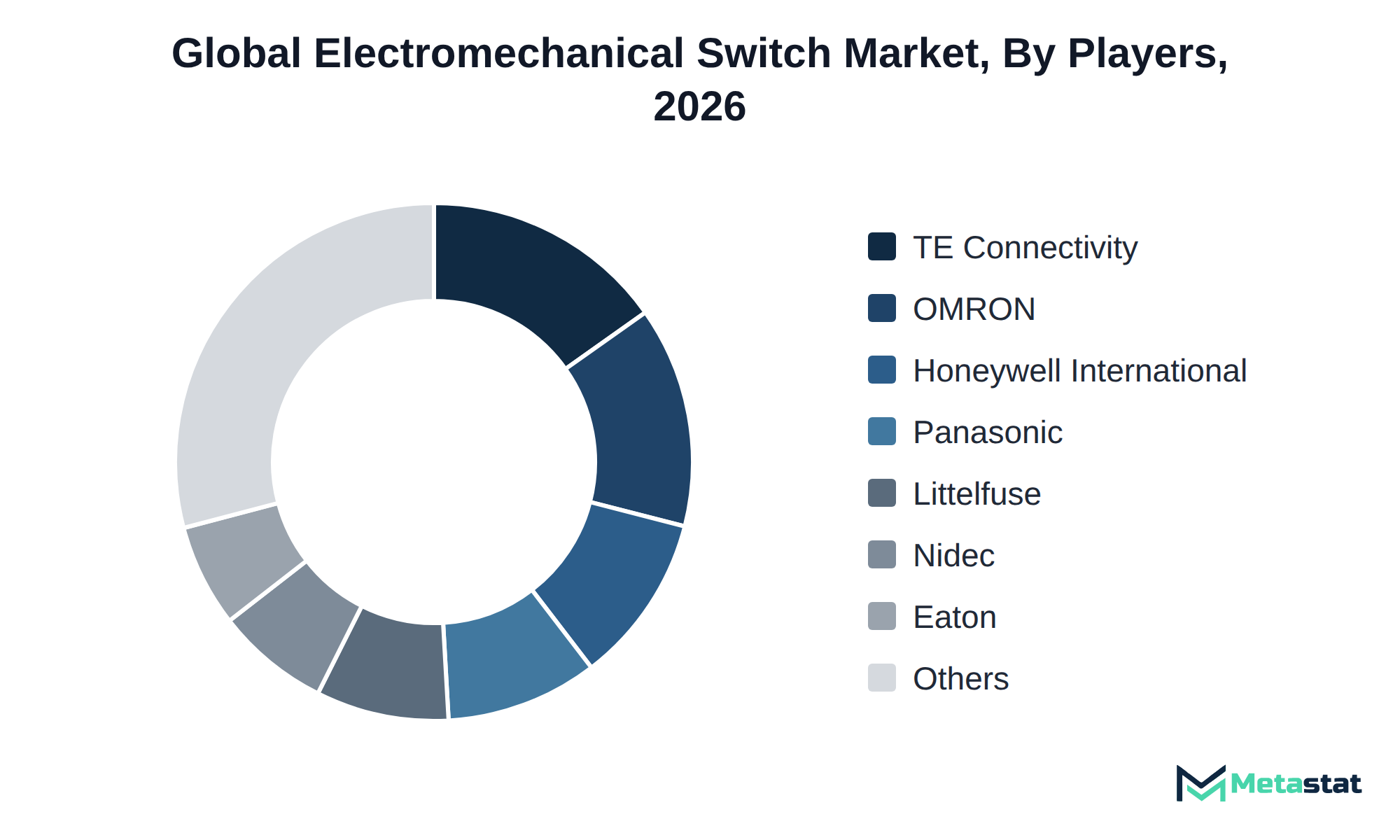
Companies in the Electromechanical Switch market employ various strategies to compete effectively. The market divides along several lines, including product type, mounting type, and switching function. Buyers prioritize factors including price, certification, customization, and service when selecting suppliers. Companies with broader product and service portfolios tend to stand out in competitive evaluations.
TE Connectivity plc focuses on delivering a range of pushbutton and tactile switches, emphasizing innovation and performance. OMRON Corporation prioritizes quality and reliability in its product offerings, particularly in the industrial automation sector. Littelfuse, Inc. aims to enhance product functionality with advanced engineering solutions, catering to diverse applications within the market.
The growth relies on several key developments, particularly in the automotive and industrial automation sectors. For instance, demand for Pushbutton and Tactile Switches is expected to increase, driven by advancements in vehicle technology and automation processes.
North America and Asia Pacific stand out as crucial regions for growth. In North America, a focus on innovative automotive solutions supports the adoption of advanced electromechanical switches. The Asia Pacific region sees expansion due to rising consumer electronics demand. However, potential risks including supply chain disruptions and fluctuations in raw material costs could impede market progress, affecting price stability and availability.
The Electromechanical Switch market is poised for continued growth, driven by strong demand from key industries and effective management of potential risks.
By Product Type: Pushbutton and Tactile Switches, Rocker and Toggle Switches, Rotary and Selector Switches, Snap-Action and Limit Switches, DIP Switches, Slide Switches, Others (Keylock, Detector)
By Mounting Type: PCB-Mount, Panel-Mount, Chassis-Mount
By Switching Function: Momentary, Maintained, Combination of Momentary and Maintained
By End-Use Industry: Automotive, Industrial Automation and Machinery, Consumer Electronics and Appliances, Telecommunications and Networking, Medical Devices, Aerospace and Defense, Others (Test and Measurement, Building Controls)
The report strategically identifies and profiles the key market players and analyses their core competencies in each sub-segment of the Electromechanical Switch market.
|
Report Attributes |
Details |
|
Study Period |
2021-2033 |
|
Base Year |
2025 |
|
Estimated Year |
2026 |
|
Forecast Period |
2026-2033 |
|
Historical Period |
2021-2025 |
|
Growth Rate |
CAGR 1.9% from 2026 to 2033 |
|
Revenue Unit |
USD million |
|
Segmentation |
By Product Type, Mounting Type, Switching Function, End-Use Industry, and Region |
|
By Region |
North America (By Product Type, Mounting Type, Switching Function, End-Use Industry, and Country)
|
|
Europe (By Product Type, Mounting Type, Switching Function, End-Use Industry, and Country)
|
|
|
Asia Pacific (By Product Type, Mounting Type, Switching Function, End-Use Industry, and Country)
|
|
|
South America (By Product Type, Mounting Type, Switching Function, End-Use Industry, and Country)
|
|
|
Middle East and Africa (By Product Type, Mounting Type, Switching Function, End-Use Industry, and Country)
|
Find answers to common questions about this report
The Electromechanical Switch market size was valued at USD 4,399.5 million in 2025.
The market is projected to grow at a CAGR of 1.9% during the forecast period from 2026 to 2033.
The North America Electromechanical Switch market size is estimated to reach USD 1,153.8 million by 2033.
Pushbutton and Tactile Switches lead the Electromechanical Switch market with a projected value of USD 1,779.2 million by 2033, based on the highest growth rate among the product types.
Growing automotive production significantly influences demand, driven by the recognition of reliable switching components in vehicles. Rapid advancements in digital technology lead to increased integration of smart systems across various sectors, enhancing the need for efficient switching solutions.
High production costs and fluctuating component prices restrain growth in the electromechanical switch market. These factors lead to increased operational expenses for buyers in budget-conscious sectors like consumer electronics and automobile manufacturing, affecting overall market adoption. Rising costs for raw materials create challenges for suppliers, impacting profit margins and prompting them to optimize manufacturing processes.
The growing demand for snap-action electromechanical switches, particularly in industrial automation and machinery, supports adoption across various sectors. Manufacturers prioritize efficient solutions that enhance functionality, leading to substantial revenue growth in this segment.
The Electromechanical Switch market is estimated to reach a valuation of USD 5,130.5 million by 2033.
Key players operating in the Electromechanical Switch market include TE Connectivity plc, Littelfuse, Inc., Alps Alpine Co., Ltd., OMRON Corporation, Panasonic Holdings Corporation, Honeywell International Inc., and Siemens AG.
The automotive segment is expected to reach USD 1,560.2 million by 2033, reflecting a compound annual growth rate of 2 percent.
The analysts below cover Electronics and Semiconductor research at Metastat Insights.
LEAD ANALYST
Utkarsh Khirodkar is a Lead Market Research Analyst at MetaStat Insight, specializing in market intelligence, technology sector assessments, and competitive strategy.

PRINCIPAL CONSULTANT - ENTERPRISE AI & EMERGING TECHNOLOGIES
Banking & Finance · Electronics and Semiconductor · Energy and Power · Healthcare IT · Information & Technology · Professional Services
Vijay Gunti is a Principal Consultant at MetaStat Insight, bringing over two decades of experience across enterprise digital transformation, technology strategy, and intelligent systems.

PRINCIPAL CONSULTANT - QUALITY SYSTEMS & COMPLIANCE
Electronics and Semiconductor · Machinery & Equipment · Professional Services
Omkar Phadtare is an Industry Consultant at MetaStat Insight, specializing in quality systems, regulatory compliance, and standards benchmarking to drive data-driven market intelligence and strategic industry research.

ENERGY & INFRASTRUCTURE INDUSTRY CONSULTANT
Automotive and Transportation · Electronics and Semiconductor · Energy and Power · Machinery & Equipment
Saurabh Vasant Ganvir consults for Energy & Infrastructure Industry at MetaStat Insight, specializing in renewable energy, solar EPC, and electric vehicle (EV) infrastructure markets.

LEAD CONSULTANT - COMMUNICATION, TELECOM, AND IT
Electronics and Semiconductor · Information & Technology · Machinery & Equipment · Professional Services
Ravindra Sathe Consultants for Communication, Telecom, and IT at MetaStat Insight. He leads the firm's industry research initiatives across telecommunications infrastructure, digital connectivity, enterprise networking, and emerging information technology domains.
Standard industry briefs frequently blur the operational distinctions between isobaric pressure exchangers and centrifugal turbines. In this study, MetaStat Insight categorized mega-scale desalination tenders across the GCC and Mediterranean basins by membrane replacement frequencies and salinity tolerances. Their primary research helped us evaluate local content requirements in Saudi Arabia and the UAE without relying on marketing literature. We found the segment-level equipment replacement estimates grounded and well-reasoned throughout.
The technical breakdown of ISO 20022 migration readiness across correspondent banking corridors was remarkably thorough. Rather than treating cross-border corporate payments as a single block, the report drew a useful distinction between multilateral netting platforms and domestic instant payment rails across ASEAN economies. MetaStat Insight highlighted regulatory constraints on foreign exchange liquidity management that many publications gloss over. The research material offered practical clarity for our platform development roadmap.
Our group needed clearer visibility into out-of-autoclave processing timelines for high-temperature thermoplastic composites. MetaStat Insight delivered an objective assessment that contrasted automated fiber placement scrap rates with traditional thermoset prepreg layup cycles. The supplier landscape mapped out primary resin suppliers and tape slitting capacity across France, Germany, and Japan with solid technical accuracy. Their analyst handled our questions on precursor supply risks during an unscheduled inquiry call, providing clear, unembellished context.
Explore related market intelligence reports worth reading alongside this one.
Starting from
$2950