
LEAD ANALYST
Utkarsh Khirodkar is a Lead Market Research Analyst at MetaStat Insight, specializing in market intelligence, technology sector assessments, and competitive strategy.

Bubble Tea Market Size, Share, By Type (Black Tea, Green Tea, Oolong Tea, White Tea, and Others), By Flavor (Fruit, Original, Chocolate, Coffee, and Others), By Distribution Channel (B2B Sales and B2C Sales), Industry Analysis, Growth, Trends, and Forecasts, 2026-2033
MSI-4524
January 19, 2026
Updated
259 Pages
Report Details
Comprehensive Market Analysis And Insights
The global Bubble Tea market size was valued at USD 3,191.6 million in 2025. The market is projected to grow from USD 3,434 million in 2026 to USD 5,774 million by 2033, exhibiting a CAGR of 7.7% during the forecast period.
The bubble tea market has rapidly evolved from a niche Asian beverage market into a global, highly branded category characterised by dense franchise networks, high-frequency consumption, and accelerating product innovation. Platform data cited by Grab show consumers drink an average of four cups of bubble tea per person per month Southeast Asia, with Thailand reaching about six cups and the Philippines five cups, underlining the drink's role as an everyday refreshment rather than an occasional treat. Chatime corporate briefing noted that regional demand in Southeast Asia was surged by about 3,000% in 2018, highlighting how quickly new formats, toppings, and digital ordering can scale once the category gains social media traction. On the supply side, leading specialist chains are building global footprints. For instance, Gong Cha reported record system sales of around USD 600 million in 2024 and closed the year with 2,162 outlets across 28 markets, with plans to expand further in Europe and target 10,000 stores globally by 2032.
Chatime's network similarly spans more than 30 countries across four continents, illustrating how Taiwanese-born brands now anchor a globalised "boba" ecosystem. At the same time, China's low-cost chains are reshaping competitive dynamics. For instance, Mixue Group has grown to over 45,000 outlets worldwide, around 40,000 in China, making it the world's largest food-and-beverage chain by store count and intensifying price competition in emerging markets such as Indonesia and Vietnam. Beyond dedicated teahouses, large beverage multinationals are using bubble tea to refresh their portfolios and target younger consumers. This ecosystem is increasingly diversified by format such as speciality cafés, kiosks, QSR tie-ups, convenience stores, RTD bottled or canned boba drinks. Moreover, the product extensions such as bubble-tea-flavoured bakery items and desserts reflecting the drink's migration from trend to lifestyle and reinforcing its position as one of the most dynamic segments in the contemporary non-alcoholic beverages industry.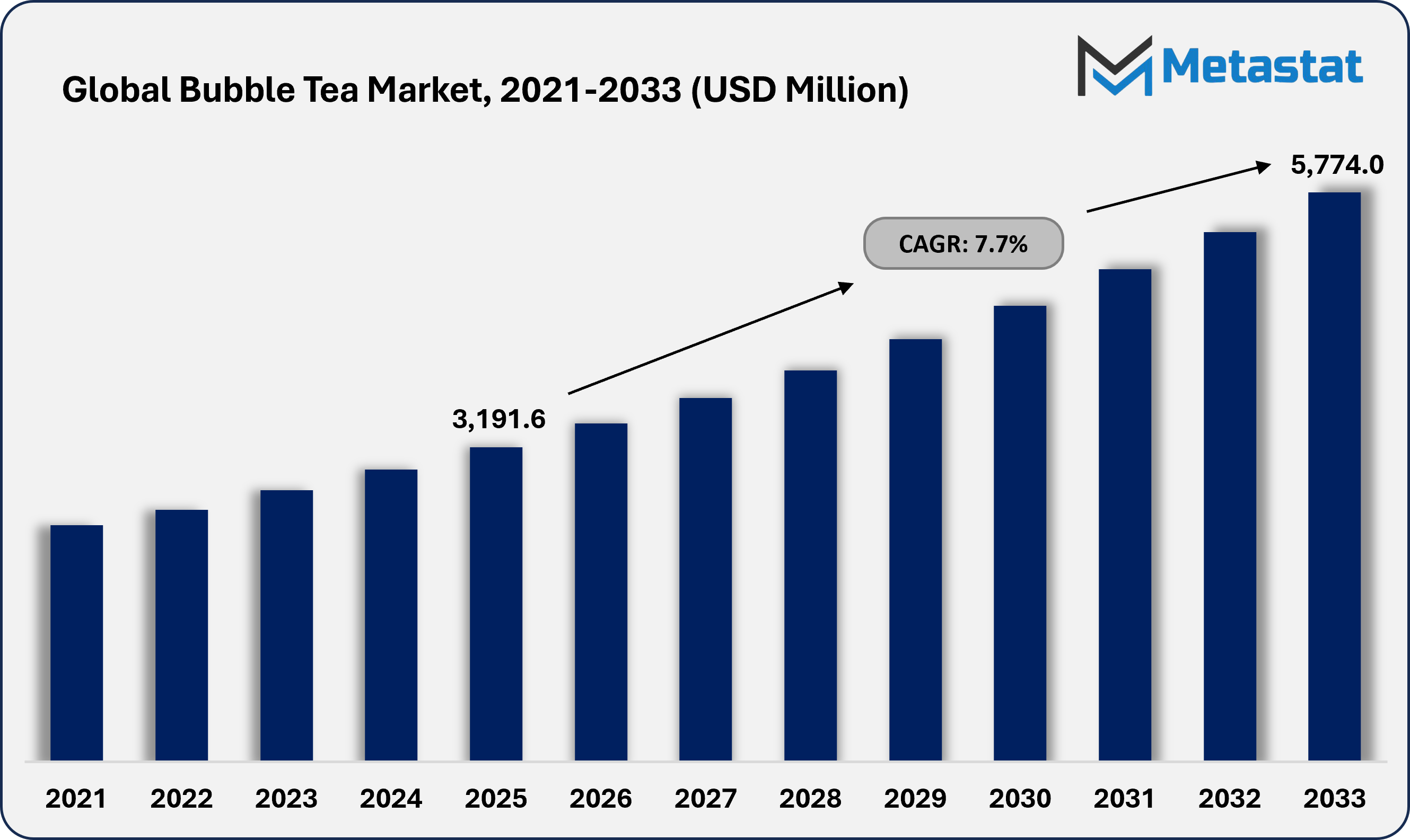
Global Bubble Tea Market - Comprehensive Data-Driven Market Analysis & Strategic Outlook
Global popularity of Asian cuisine and experiential beverage trends.
The growing popularity of Asian cuisine culture is a vital factor in bubble tea's growth outside of Asia. Bubble tea has gone from being a niche ethnic drink to a popular drink choice globally.
Social media appeal driving younger consumer adoption.
Social media is a key aspect in getting new customers, especially for Gen Z and Millennials. Viral visual trends and user-generated content on platforms is al lending factor for product trial, brand discovery, and long-term consumer engagement.
High sugar content leading to health-conscious consumer backlash.
Sugar concentration and health effects are a major obstacle and problem in adoption of bubble tea. As more people become aware of the health risks of sugar and the government looks more closely at how much sugar people eat, traditional recipes may become less popular with health-conscious clients. This could lead to stricter labeling, higher taxes, and market limitation for bubble tea market.
Market saturation and intense competition among brands.
Intense competition is a key factor for restricted market growth in bubble tea industry. The low entry barrier, growing independent stores & chains, pricing competition is hindering the market growth and potential.
Innovation in healthier ingredients, functional add-ins, and premiumization.
Healthy innovations and premiumization is a critical opportunity encashed by market leaders. Reformulating products with low-sugar recipes, natural sweeteners, and functional add-ins such as protein or adaptogens is directly addresses the main health restraint and opens new premium market segments. Whereas, moving beyond basic drinks through high-quality ingredients, artisanal preparations, and limited-edition collaborations allows brands to differentiate in a saturated market and command higher price points.
The global Bubble Tea market is mainly classified based on Type, Flavor, and Distribution Channel.
Black Tea is the leading market segment and cash cow in bubble tea market. With the biggest share of the market owing to its strong flavor that goes well with milk and sweets, making it the classic profile buddle tea category.
Green tea is an important growth segment owing to global health and wellness trends. Its purported antioxidant benefits and lighter taste appeal to health-conscious customers, allows for premium positioning. The premium market position will help the segment to contribute a major CAGR for buddle tea market.
Oolong Tea is a premium and unique niche market that appeals to connoisseurs and older people owing to its complex, subtle flavor profile. It supports higher price points and is commonly utilized in artisanal or luxury product lines.
White Tea is a new and high-end niche market that is used for its delicate flavor and strong antioxidant content. It is usually available in small amounts to appeal to the most health-conscious customers and with a high price point.
Others such as fruit teas, coffee, and non-tea bases, are the most important area for new ideas and growth. They are important for getting new customers to try tea, meeting dietary needs, and reaching a wider range of drinkers than just tea lovers.
Fruit flavors are the key area of development and innovation, with new seasonal and exotic types coming out all the time. This segment appeals to a wide range of customers looking for refreshing, colorful, and frequently lower-calorie options. Moreover, the increasing social media posting within this category will also push the market further.
Original flavors, like classic milk tea and taro, are the basic and most important part of the menu for most firms. This category generates consumer loyalty through familiar taste and are essential for building brand identification and operational consistency.
Chocolate tastes are a popular treat and crossover category owing to mass sweet desire and blur the distinctions between dessert drinks. This segment also helps to generate new customers during the colder months.
Coffee flavors are a strategic competitive segment that directly targets customers from the premium coffee shop occasion. This category utilizes the current coffee culture to entice people to try them and come back more often by delivering a familiar caffeine base with fun bubble tea textures.
The Others segment covers flowery, nutty, and hybrid flavors which are part of the experimental and premiumization group. Brands employ them to make trademark products, create buzz in the media with limited editions, and appeal to adventurous customers who want to try new flavors.
B2B sales are the most important part of the upstream supply and franchising market. The segment includes all wholesale transactions in which firms sell to other businesses. This category involves providing store owners with raw materials such as tea, tapioca, and syrups, equipment, and the rights to use franchising models. This segment is one of key driving factor of the bubble tea market.
B2C sales category is expected to push the market into growth phase in the forecast period. The segment includes all direct sales to the end customer. This channel is made up of physical stores for the experiential core, online food delivery services for growth driven by convenience, retail supermarkets for ready-to-drink product expansion, and other direct channels. Together, these channels increase brand awareness, market penetration, and contribute a major share of the industry's total revenue.
Based on geography, the global bubble tea market is divided into North America, Europe, Asia-Pacific, South America, and the Middle East & Africa.
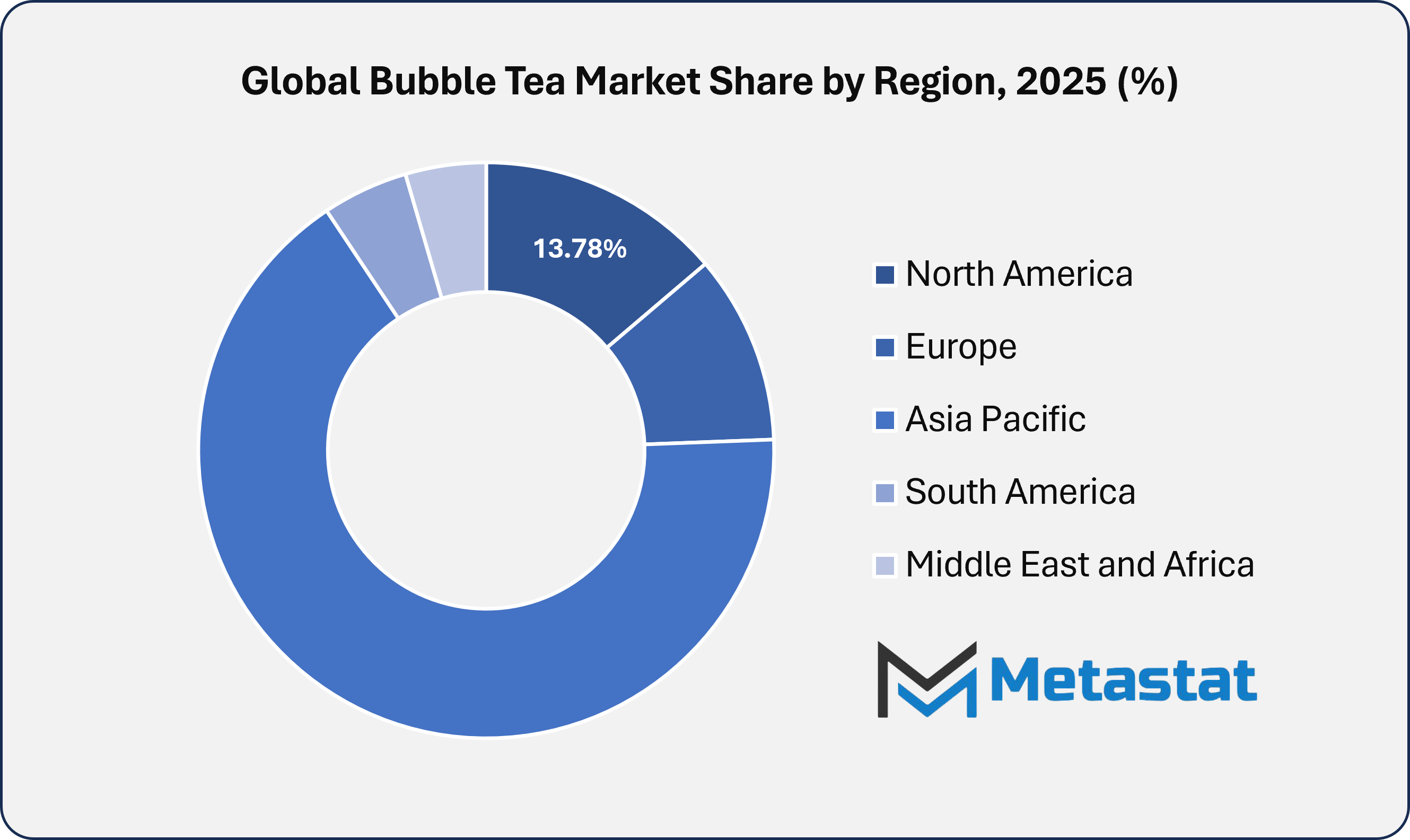
North America Bubble Tea Market is set to expand at a CAGR of 7.7% within the forecast period, reaching a market size (TAM) of USD 786.4 million by the end of 2033.
The Health and Wellness Megatrend is a major force in the North America market, with a majority of people opting for healthier drink options. People who care about their health, especially Millennials and Gen Z, have begun to shift from sugary drinks. The result has led to a rise in reformulated and healthier products. This factor has led to a rise in reformulated products within North America region. It also shows up in the widespread use of low-calorie and low-sugar foods, sugar-free natural sweeteners like stevia, and plant-based milk substitutes like oat and almond milk.
Brands like Gong Cha have taken advantage of this trend by providing bubble teas that are ready to drink and sugar level options like less sweet or no sugar. The movement is also making green and black tea bases more popular owing to the health benefits perception such as increased metabolism and reduced free radicals.
The North American market is growing through social media marketing and experienced based growth. The deeply rooted in digital social networks and beverage culture has leads to discovery and repeat purchases in bubble tea market.
Bright colors, customizable toppings, and photogenic presentation is the primary aspect that makes the bubble tea products social media worthy in US. The increased appeal on sites like TikTok and Instagram, where #bubbletea has millions of posts, drives viral trends and peer-to-peer marketing. The Younger customers are increasingly driving the purchases in bubble tea. As per Metastat analysis, around 94% of U.S. consumers aged 20 to 29 had recently bought buddle tea and related products. As a result, brands are shifting towards influencer marketing and digital campaigns to reach younger audience.
The product diversification and premiumization lead opportunity focuses on growing the bubble tea brand and flavor profile beyond the usual drink cup into new product categories and high-end experiences. The strategy is to use the drink's famous flavors to make snacks, desserts, and retail items which have been inspired by bubble tea. These product range includes ice cream, mochi, instant noodles, and beauty products.
The room for premiumization in the beverage segment through limited-edition flavors, high-quality artisanal ingredients, and unique culinary collaborations such as cheese foam toppings, seasonal fruit infusions is providing key expansion opportunities across the globe.
Digital integration and hyper-local franchise growth by using technology and flexible business models to reach a large number of customers in a wide range of bubble tea markets. Advanced digital platforms for mobile ordering, delivery app partnerships, and customer loyalty programs is a key factor propelling the market growth within Asia Pacific region.
The aggressive franchising, especially through flexible formats like kiosks and cloud kitchens, is helping a quick market growth into busy urban and suburban areas. Hyper-localization is the key to success. The master franchises and local partners are innovating flavors such as ube in Philippines or saffron in the Middle East to fit with the tastes of specific cultures. This two-pronged approach of tech-enabled service and localized, asset-light growth is key to getting growth in both mature and new markets.
The bubble tea is becoming more popular within Middle East, Africa, and South America regions. The growing brands are entering the new market and young people are becoming more interested in bubble tea. The early-stage growth of the market is marked by the planned entry of international franchises like Gong Cha and KOI Thé into major cities like Dubai, São Paulo, and Johannesburg to establish a first-mover presence. Growth is driven by rising cross-cultural food trends, increased cities population, and young, digitally connected consumers with increased disposable income.
The global bubble tea market features intense competition divided between multi-thousand-unit international franchise systems and agile independent tea lounges. High consumer trial rates and low barriers to regional entry have produced a crowded operating field. Market leadership concentrates around established chains with proprietary ingredient pipelines and established franchise development networks.
Market share splits along distinct operational philosophies. Large-scale franchisors operate high-volume networks prioritizing speed, standardized drink assembly, and aggressive territorial development. Brands such as Gong Cha, Chatime, and Quickly command extensive distribution footprints across Asia, North America, and Europe. These operators utilize centralized ingredient contracts and automated prep stations to maximize gross margins across high-footfall retail hubs. Specialty regional players compete on quality differentiation rather than sheer unit count. Concepts such as Boba Guys in North America and The Alley globally focus on house-made syrups, loose-leaf tea cultivars, and premium dairy substitutes. While global franchise chains win on physical convenience and aggressive price tiering, boutique brands capture higher average ticket sizes through craft positioning and premium beverage customization.
Asia-Pacific remains the primary center of market volume and product innovation. Taiwan functions as the global center for research, development, and brand intellectual property. Southeast Asian markets, particularly Malaysia, Indonesia, and the Philippines, support massive store footprints for chains like Chatime and Gong Cha due to high per-capita tea consumption. In Western markets, consolidation is accelerating. The North American market is transitioning from fragmented neighborhood tea shops to multi-unit franchise systems. Kung Fu Tea leads footprint density across the United States, expanding via strip-mall and suburban retail formats. European cities show strong double-digit annual unit growth, with operators securing prime high-street and university-adjacent real estate to establish consumer brand loyalty.
The global bubble tea market is highly fragmented and regionally concentrated, with Taiwan- and China-origin brands exerting strong influence across Asia-Pacific and increasingly in North America, Europe, and the Middle East. Leading chains such as Gong Cha, Chatime, CoCo Fresh Tea & Juice, Kung Fu Tea, and KOI Thé anchors the organized segment supported by extensive franchise networks, standardized quality systems, and strong brand recall. Heritage players like Chun Shui Tang, TP Tea, and Ten Ren’s Tea Time reinforce the category’s authenticity by leveraging deep roots in Taiwanese tea culture, while newer lifestyle-oriented brands like The Alley, Tiger Sugar, Heytea, and Mixue Ice Cream & Tea compete through experiential retail concepts, social media visibility, and highly differentiated flavor formats.
Competitive intensity is driven by rapid outlet expansion, menu innovation, and localization of products to suit country-specific tastes, price points, and health preferences. Chains such as KOI Thé, Tealive, LiHO TEA, and Mixue Ice Cream & Tea have aggressively grown their footprints in Southeast Asia and beyond, often using master-franchise or regional partnership models supported by structured training and quality-assurance programs documented in corporate and regulatory filings. Furthermore, brands like Boba Guys, Teaspoon, and Happy Lemon focus on premium positioning in Western markets, emphasizing higher-quality ingredients, transparent sourcing, and curated in-store experiences to differentiate against both local independents and imported Asian chains.
Product strategies across competitors increasingly converge around three themes, which are authenticity of tea, indulgent signatures, and health-oriented customisation. Established tea companies such as Ten Ren’s Tea Time and Chun Shui Tang build on their expertise in loose-leaf tea and traditional recipes, while trend-led chains like Tiger Sugar, Xing Fu Tang, Truedan, and OneZo compete on visually distinctive brown-sugar or handmade toppings that command premium pricing and drive viral demand.
Barriers to entry at scale are rising as leading players invest in upstream sourcing, proprietary recipes, digital ordering ecosystems, and brand-led communities. Larger groups rely on centralized procurement and, in some cases, dedicated manufacturing plants for tea, toppings, and syrups which will support consistency and cost control across hundreds of global outlets. However, competition from local specialty cafés and emerging regional brands remains intense, forcing the major chains such as Kung Fu Tea, Sharetea, Royaltea, Presotea, Wushiland Boba, and others to continuously refresh menus, collaborate with delivery platforms, and adopt loyalty programs to sustain traffic and defend market share.
Market size is forecast to rise from USD 3,191.6 million in 2025 to over USD 5,774.0 million by 2033.
The bubble tea market is expected to grow steadily over the decade that follows overall rise in global tea consumption. The rising incomes in developing countries, a continued shift toward flavored and specialty teas, and the rapid spread of Asian beverage formats around the world is propelling the market growth by 2033. Format innovation such ready-to-drink, retail kits, and home-preparation packs combined with digital ordering and delivery integration will all help the market to grow in the future. Stricter sugar-reduction policies and public health concerns in places like Singapore, Malaysia, the EU, and North America are likely to push operators toward lower-sugar formulations, portion control, and clear nutritional labeling. These factors will favor brands that can change their recipes without losing taste and texture. Bubble tea is likely to grow from a niche treat into a more diverse category that includes high-end artisanal brands, mass-market franchises, and products sold in stores. The competitive edge will go to companies that can find a balance between indulgence, health, and sustainability in their sourcing and store networks.
System-wide sales performance across 2025 illustrates how consumer reach, unit growth, and supply chain control define category revenue. The leading brands operate across multiple continents, leveraging distinct value propositions ranging from value-focused mass retail to luxury lifestyle branding.
The highest revenue generators in the sector rely on massive multi-market franchise footprints: Gong Cha: Operating thousands of locations across more than twenty countries, Gong Cha generates leading system-wide revenues through rapid franchise expansion, airport kiosks, and premium beverage offerings. Chatime: A pioneer in standardized automated brewing, Chatime maintains a dominant presence across Southeast Asia, Australasia, and Canada, driving revenue via suburban drive-thrus and mall storefronts. CoCo Fresh Tea & Juice: With a massive retail footprint across mainland Asia and major global metropolises, CoCo captures significant market share via affordable fruit and classic milk tea formats. Kung Fu Tea: Recognized as America's largest bubble tea chain by unit count, the company captures top-tier domestic sales through expansive delivery integration and strategic retail partnerships. Mixue Bingcheng: Dominating the value-priced segment globally, Mixue generates multi-billion-dollar system-wide turnover through extreme supply chain vertical integration and tens of thousands of storefronts.
Mid-sized and specialty chains command substantial revenues through dedicated brand followings and premium menu pricing: Tiger Sugar: Known globally for popularizing the brown sugar milk tea movement, the brand generates strong retail volume through visually distinctive syrup-marbled beverages. The Alley: Positioning itself as an aesthetic lifestyle cafe, The Alley commands premium average order values by focusing on hand-crafted tapioca pearls and experiential store design. Quickly: One of the earliest global chain pioneers, Quickly retains a substantial market footprint in North America and Asia, focusing on low overhead, high-speed beverage and snack service. Boba Guys: Operating as a benchmark for third-wave craft boba in the United States, this operator drives elevated average ticket sizes by championing clean-label ingredients and domestic dairy sourcing. Happy Lemon: Backed by publicly traded hospitality groups, Happy Lemon derives steady global sales through fresh lemon teas and the commercialization of salted cheese foam topping formulations.
The economics of a bubble tea store depend directly on raw material access, ingredient stability, and overseas logistics. Most primary ingredients—including specialized tea leaves, flavored powders, and starch bases—originate in Asia. This geographical concentration creates distinct inventory management challenges for international operators.
Raw tapioca pearls represent the core cost-of-goods component across retail tea menus. Tapioca starch derives from cassava root, cultivated predominantly in Southeast Asia and South America. Supply chain shocks, shipping container backlogs, and regional droughts periodically trigger price spikes for retail operators. To mitigate import vulnerability, enterprise franchisors are dual-sourcing starch inputs and exploring regional manufacturing facilities. Domestic manufacturing initiatives in North America and Europe help stabilize inventory lead times, insulating store operators from trans-Pacific freight volatility.
Demand for textural beverage toppings extends beyond traditional cassava pearls. Popping boba—liquid-filled alginate spheres created via spherification—has surged in popularity, particularly in Western markets. Unlike cooked tapioca, which hardens after several hours, popping boba offers shelf stability and requires zero in-store cooking time. Suppliers have scaled production of fruit-juice-infused bursting pearls, aloe vera cubes, coconut jellies, and custard puddings. These ready-to-use toppings simplify kitchen workflow, reduce store-level labor overhead, and expand cross-selling options across digital ordering menus.
Transitioning toward fresh ingredients places heavy demands on cold chain infrastructure. Early retail models relied on ambient storage powders, artificial creamers, and shelf-stable syrups. Modern consumer preferences mandate real dairy, plant-based milks, and frozen fruit purees. Distributors must manage refrigerated trucking networks to supply franchise clusters weekly. Brands unable to secure cold-storage distribution routes face higher spoilage rates and inconsistent in-cup flavor profiles across distant regional stores.
Bubble tea operators face an increasingly complex regulatory landscape. Municipal health agencies, national trade boards, and international customs regulators now scrutinize sugar density, ingredient safety, and packaging waste.
Health regulators worldwide target sugar-sweetened beverages with fiscal and operational mandates. In Singapore, the mandatory Nutri-Grade labeling scheme forces beverage outlets to display nutritional grades based on sugar and saturated fat levels on menus and digital ordering kiosks. Drinks receiving lower grades face strict advertising bans. In the United Kingdom and portions of Europe, sugar taxes penalize pre-packaged and prepared beverages that exceed set sweetness thresholds. Across the United States, local calorie posting mandates require chains with twenty or more units to display detailed caloric information. In response, brands configure their point-of-sale systems to highlight standard, half, and zero-sugar modification choices at checkout.
The bubble tea sector has historically depended on single-use polypropylene cups, film seals, and oversized plastic straws required to consume tapioca pearls. Environmental regulations have disrupted these packaging standards: European Union: The Single-Use Plastics Directive bans non-recyclable plastic drinkware and single-use plastic straws, requiring operators to transition to certified paper, bamboo, or reusable cups. North America: Numerous coastal cities and Canadian provinces mandate compostable drinkware and fee-based paper bags, penalizing operators that deploy conventional non-recyclable plastics. Asia: Urban hubs across Taiwan and South Korea restrict disposable cups for dine-in guests, accelerating the adoption of reusable tumbler programs and deposit-return cup networks.
International trade authorities maintain strict import rules for food additives, colorants, and preservatives common in Asian tea exports. The European Food Safety Authority (EFSA) enforces strict limits on synthetic food dyes used in flavored syrups, requiring suppliers to replace petroleum-derived colorants with plant-based extracts such as beet powder and spirulina. The United States Food and Drug Administration (FDA) monitors imported shelf-stable toppings for unauthorized preservatives. Brands importing directly from overseas must maintain rigorous third-party laboratory testing to clear port customs without shipment seizures.
Bubble tea functions as both a refreshment and an experiential snack. Purchasing patterns reflect strong demographic concentration, visual social media dynamics, and demand for customizable indulgence.
Beverage personalization is the cornerstone of consumer engagement in the bubble tea segment. Customers expect complete control over their drink's sensory composition. Ordering touchpoints permit granular modifications, including sweetness level (from 0% to 100%), ice volume, tea base choice, milk format, and multi-topping selection. Textural contrast—known in consumer sensory research as "mouthfeel" or the Taiwanese concept of "QQ" chewiness—drives purchase frequency. Consumers treat drinks containing tapioca pearls or bursting boba as mid-afternoon dessert snacks rather than plain hydration. Rich, creamy toppings such as cheese foam topping create an indulgent visual and flavor contrast against cold-brewed tea bases.
Visual marketing strongly influences brand equity in the tea sector. Signature preparations such as brown sugar milk tea gained viral consumer adoption through social media platforms. The distinct tiger-stripe appearance created by dripping caramelized syrup down the inner walls of the cup provides built-in visual marketing. Beverages featuring vibrant natural colors—such as the pale purple tones of taro flavor or the deep green of ceremonial matcha—command high visual appeal among Gen Z shoppers. Operators design store interiors, product packaging, and limited-time offerings specifically to encourage peer-to-peer digital sharing.
Operational bottlenecks in bubble tea retail traditionally stemmed from manual tea brewing, slow topping preparation, and complex drink assembly. Store operators increasingly adopt commercial automation to compress order fulfillment times and lower labor expense.
Consistency across multiple locations requires precise temperature and extraction control. Automated commercial tea brewers utilize algorithmic extraction curves tailored to specific cultivars, including green, oolong, and black teas. These systems prevent the bitterness associated with over-steeping and ensure flavor uniformity across every franchise unit. Countertop mechanical shakers have largely replaced manual hand-shaking behind the counter. These automated devices blend tea, ice, and flavor components evenly in seconds. By automating the shaking process, stores reduce repetitive strain injuries for staff while accelerating peak-hour drink throughput.
Speed of service during peak rush periods depends on topping measurement accuracy. Connected liquid dispensers allow kitchen teams to dispense exact fructose and flavor syrup dosages with the press of a touchscreen button. This eliminates manual measurement errors and stabilizes nutritional and flavor consistency. Automated tapioca pearl cookers have also modernized back-of-house operations. These self-contained boiling units stir, simmer, and rinse tapioca automatically on programmed schedules. Staff no longer need to monitor open stovetops continuously, cutting store-level kitchen labor by hours per day.
Modern bubble tea stores operate digital-first counter workflows. Self-service ordering kiosks handle the majority of walk-in foot traffic, relieving staff from order entry. These kiosks display every customization variable clearly, which measurably raises average order values through automated topping and upsell suggestions. Digital POS hardware links directly into delivery aggregators, unifying in-store orders and remote pickup tickets onto unified kitchen display screens (KDS). Real-time inventory tracking deducts toppings and syrups automatically, warning managers before items run out.
Retail unit economics vary widely between independent boutique shops and established franchise chains. While independent owners maintain full creative control, franchise operations benefit from lower ingredient acquisition costs and recognizable brand equity.
Store buildout costs vary according to operating format and footprint: Mall Kiosks and Transit Hubs: Requiring 200 to 500 square feet, these compact footprints carry lower initial capital expenditures, averaging $120,000 to $250,000. They focus purely on high-volume takeaway. In-Line Retail and Strip Malls: Traditional units spanning 800 to 1,500 square feet require $250,000 to $450,000 in upfront capital. They feature limited customer seating and comprehensive back-of-house cooking equipment. Flagship Lounges: Expansive 2,000+ square foot destinations require $500,000 or more in initial capital. They prioritize cafe seating, elaborate interior design, and extensive snack menus.
Bubble tea stores operating on a standard QSR (Quick Service Restaurant) model target gross profit margins between 65% and 75% on beverage sales. High gross margins reflect the modest raw cost of brewed tea leaves, water, and ice. However, net margins typically compress to 12% to 22% once labor, prime commercial rent, and utilities are deducted. Franchisees face ongoing overhead burdens. Royalty fees typically range from 4% to 6% of gross sales, with an additional 1% to 3% allocated to national brand marketing funds. Independent operators avoid these ongoing fees. However, independents pay 15% to 30% more for imported ingredients because they lack the collective bargaining leverage of corporate supply networks.
Off-premise sales generate substantial order volume for urban bubble tea shops. Store operators cultivate DoorDash delivery partnerships to capture remote residential and office demand. Delivery sales can account for 25% to over 40% of total unit revenue. However, third-party delivery platforms extract 15% to 30% in order commissions. Because high commission fees compress store margins, operators implement differentiated delivery pricing, charging $0.50 to $1.50 more per drink on delivery menus. Stores also incentivize direct ordering through proprietary mobile apps that offer customized loyalty rewards.
Rising consumer awareness regarding dietary wellness, calorie counts, and diabetes prevention has placed traditional bubble tea recipes under scrutiny. A standard milk tea with brown sugar and chewy pearls can contain 40 to 60 grams of simple carbohydrates. Brands are reformulating core menus to prevent losing health-conscious consumers.
Beverage developers are replacing industrial high-fructose corn syrups with natural and zero-calorie sweetening agents. Stores now offer liquid stevia, erythritol blends, and monk fruit extracts as sweetening options. Carbohydrate reduction also extends to toppings. Operators feature agar-derived jelly pearls, konjac-based noodles, and chia seeds as low-calorie substitutes for conventional tapioca pearls. These ingredients offer the familiar chewiness consumers enjoy while containing a fraction of the caloric density.
Traditional bubble tea formulas rely on non-dairy creamers formulated from hydrogenated palm oils, corn syrup solids, and sodium caseinate. Consumers increasingly reject these processed ingredients due to concerns regarding trans fats and clean-label purity. Coffee shop trends have crossed into the tea sector, establishing oat milk alternatives as the leading plant-based substitute. Oat milk's neutral flavor profile, natural sweetness, and rich viscosity blend smoothly with delicate green and oolong tea bases without masking the tea's floral notes. Soy, almond, and coconut milks serve secondary roles, meeting dietary requirements for lactose-intolerant and vegan consumers.
Modern tea formulations highlight wellness-oriented functional ingredients. Drink menus increasingly feature adaptogenic mushrooms, hydrolyzed collagen peptides, ceremonial-grade matcha, and probiotic-rich kombucha tea bases. Artificial powdered flavors are steadily losing menu share. Operators are switching to real fruit purees made from passion fruit, mango, and lychee, sweetened with minimal cane sugar. Real-food inclusions satisfy consumer demand for transparency and clean nutritional labels.
Analyzing successful market entries reveals clear strategic patterns. Brands that succeed internationally adapt their operational and cultural frameworks to local consumer behaviors rather than copying domestic models directly.
The most scalable market entry mechanism remains the master franchise model. Gong Cha used master franchising to scale across North America, Australasia, and Europe. By partnering with experienced regional QSR multi-unit franchise groups, the parent company secured premier real estate, managed local labor compliance, and navigated local supply chains efficiently. Master franchisees assume capital expenditure risk for regional expansion while corporate headquarters provides brand playbooks, centralized marketing assets, and proprietary ingredient access. This division of responsibility allows chains to achieve scale faster than company-owned expansion models allow.
Brands entering Western markets must bridge cultural unfamiliarity with chewable beverage toppings. Successful operators position the drink as an interactive, customizable indulgence rather than an exotic specialty item. Retailers frequently offer entry-level fruit teas alongside classic milk teas, giving first-time consumers approachable flavor options. In colder climates, menus expand hot beverage categories and comfort flavors, including spiced teas, cocoa blends, and warm taro beverages. In regions with high lactose intolerance, plant milks are promoted as core menu options rather than hidden substitutions.
Boutique entrants have achieved substantial brand equity through community-centered marketing and grassroots digital buzz. Boba Guys built an enthusiastic following across San Francisco, Los Angeles, and New York by engaging local creative communities and publishing transparent sourcing narratives. Collaborations with streetwear brands, independent artists, and digital creators help bubble tea companies transcend the food and beverage category to become lifestyle brands. Strategic pop-ups, limited-edition merchandise, and interactive store grand openings generate the social media visibility needed to sustain long-term retail traffic.
Between 2023 and 2025, the bubble tea sector transitioned from entrepreneurial fragmentation to institutional investment maturity. Private equity sponsors and corporate holding groups deployed significant capital to consolidate regional chains and modernize supply chain infrastructure.
Institutional buyout funds view bubble tea franchisors as attractive high-margin, asset-light platforms. Private equity firm TA Associates managed Gong Cha through substantial international store expansion, setting the stage for institutional sponsor acquisitions and ownership recapitalizations. Sponsors target bubble tea networks displaying consistent franchise unit economics, recurring royalty income, and scalable supply chain distribution. Investment capital is primarily allocated to upgrading digital customer ecosystems, standardizing back-of-house automated equipment, and acquiring regional master franchise rights.
Capital market activity accelerated in East Asia, where high-volume tea franchisors filed for initial public offerings on the Hong Kong Stock Exchange. Enterprise chains, including Sichuan Baicha Baidao (ChaPanda), Guming Holdings, and market leader Mixue Bingcheng, pursued public listings to finance supply infrastructure and global expansion. These stock offerings provided investors with transparent operational data, highlighting that system profitability in mass-market tea retail stems primarily from wholesale ingredient distribution, packaging supply, and equipment sales to franchisees, rather than retail drink markups.
Early-stage venture and private growth capital targeted emerging regional concepts innovating in product formulation and supply security. Investors funded brands establishing domestic tapioca pearl factories in North America, automated robotic brewing kiosks, and omnichannel RTD (ready-to-drink) canned boba product lines. Strategic food conglomerates have also made minority investments in regional tea chains to monitor Gen Z and Millennial beverage consumption habits. These corporate investments often include distribution agreements that help emerging tea concepts gain access to national grocery and retail channels.
This research report categorizes the Bubble Tea market based on key segments and regions, forecasts revenue growth, and analyses trends in each submarket. The report analyses the key growth drivers, opportunities, and challenges influencing the Bubble Tea market. Recent market developments and competitive strategies such as expansion, type launch, development, partnership, merger, and acquisition have been included to draw the competitive landscape in the market.
The report strategically identifies and profiles the key market players and analyses their core competencies in each sub-segment of the Bubble Tea market.
|
Report Attributes |
Details |
|
Study Period |
2021-2033 |
|
Base Year |
2025 |
|
Estimated Year |
2026 |
|
Forecast Period |
2026-2033 |
|
Historical Period |
2021-2025 |
|
Growth Rate |
CAGR 7.7% from 2026 to 2033 |
|
Revenue Unit |
USD Million |
|
Segmentation |
By Type, Flavor, Distribution Channel, and Region |
|
By Type |
|
|
By Flavor |
|
|
By Distribution Channel |
|
|
By Region |
North America (By Type, Flavor, Distribution Channel, and Country) |
|
|
|
Europe (By Type, Flavor, Distribution Channel, and Country) |
|
|
|
|
Asia Pacific (By Type, Flavor, Distribution Channel, and Country) |
|
|
|
|
South America (By Type, Flavor, Distribution Channel, and Country) |
|
|
|
|
Middle East and Africa (By Type, Flavor, Distribution Channel, and Country) |
|
|
Find answers to common questions about this report
The Metastat Insights study shows that the global Bubble Tea market size was USD 3,191.6 million in 2025.
The global Bubble Tea market is likely to grow at a CAGR of 7.7% over the forecast period (2026-2033).
The Metastat Insights analysis shows that the North America Bubble Tea market size is estimated to be USD 786.4 million by 2033.
The Black Tea is the leading type segment in the global market.
Asia Pacific region dominates the market.
Top players operating in the Bubble Tea industry includes Gong Cha, Chatime, CoCo Fresh Tea & Juice, Kung Fu Tea, Sharetea, The Alley, Tiger Sugar, and Others.
Launching a branded bubble tea franchise typically requires a total initial capital investment between $150,000 and $450,000, depending heavily on location, store format, and municipal permitting requirements. Initial costs include an upfront franchise fee ($25,000 to $50,000), specialized commercial equipment like automated sealers and shakers ($30,000 to $60,000), store leasehold buildouts ($80,000 to $250,000), opening inventory, and working capital reserves. Compact mall kiosks fall toward the lower end of this capital range, whereas standalone street-front stores occupy the higher end.
Gen Z consumers represent the demographic with the highest consumption frequency, driven by visual social media discovery, beverage customizability, and afternoon social outings. They show strong receptivity to innovative toppings like popping boba and visually distinctive seasonal drinks. Millennial consumers display similar purchase frequency but lean more heavily toward clean-label credentials, premium whole-leaf teas, reduced sweetness levels, and plant-based milk alternatives.
Online delivery channels account for approximately 25% to 45% of total sales volume for typical urban bubble tea shops, with the remainder driven by walk-in foot traffic and mobile order-ahead pickup. In dense metropolitan markets and university districts, delivery penetration frequently exceeds 40%. Because third-party aggregator commissions compress operator margins, retailers frequently charge premium prices on delivery platforms while using digital loyalty apps to convert delivery customers into direct pickup regulars.
Switching from conventional non-dairy powders or dairy milk to premium oat milk alternatives and other plant milks increases beverage-level ingredient costs by approximately 15% to 30%. Because plant milks carry higher purchase and cold-storage distribution expenses, most bubble tea retailers charge an additional retail modification fee of $0.50 to $1.00 per cup. This upcharge protects the retailer's gross margins while catering to vegan, lactose-intolerant, and health-focused beverage consumers.
Sugar taxes, nutritional labeling rules like Singapore's Nutri-Grade, and caloric disclosure laws have prompted bubble tea brands to redesign their base recipes and digital ordering flows. Store menus now prominently display sugar customization tiers, encouraging consumers to choose reduced sweetness levels (such as 30% or 50% sugar). Formulators are also incorporating natural, zero-calorie sweetening agents like stevia and monk fruit, alongside low-carbohydrate topping alternatives like konjac and agar jellies.
Gong Cha and Chatime remain among the fastest-expanding international bubble tea chains, opening hundreds of new franchise units across North America, Europe, Latin America, and the Middle East through enterprise master franchise partnerships. Value-oriented market leader Mixue is simultaneously building out an extensive international presence across Southeast Asia and global urban centers. Established regional franchisors like Kung Fu Tea continue to expand their store footprints across suburban and commercial real estate in the United States.
Artificially flavored fruit powders and heavily sweetened melon flavors have seen declining consumer demand as shoppers turn away from synthetic ingredients. Conversely, earthy and botanically complex flavors-such as roasted hojicha, ceremonial matcha, jasmine green tea, and floral oolong bases-are expanding rapidly. Dessert-inspired profiles like brown sugar milk tea and salted cheese foam toppings maintain high volume, while authentic taro flavor prepared with real root puree is displacing artificial purple powders.
Standard in-line bubble tea shops generally achieve gross margins between 65% and 75% on beverage sales, with net profit margins typically settling between 12% and 22% after deducting labor, retail occupancy, and overhead costs. Compact mall kiosks and transit kiosks often deliver higher net margins-sometimes reaching 18% to 25%-because they operate with reduced square footage, minimal seating, and smaller front-of-house labor requirements. Full-service experiential cafes and flagship storefronts face greater overhead from interior fit-outs and staffing, usually producing net margins in the 10% to 15% range.
Choose Your License
Bubble Tea Market
The analysts below cover Food and Beverages research at Metastat Insights.
LEAD ANALYST
Utkarsh Khirodkar is a Lead Market Research Analyst at MetaStat Insight, specializing in market intelligence, technology sector assessments, and competitive strategy.

LEAD PRINCIPAL ANALYST, PHARMA AND HEALTHCARE
Food and Beverages · Healthcare · Healthcare IT · Medical Devices
Ajay Devgire is the Lead Healthcare Analyst at MetaStat Insight, leading strategic research and market intelligence initiatives across the global healthcare domain.

SENIOR RESEARCH ANALYST
Biotechnology · Food and Beverages · Medical Devices · Packaging
Snehal Pasalkar is a Research Analyst at MetaStat Insight, operating at the intersection of life sciences research, competitive strategy, and market intelligence.
Last Updated: September 2026
Assessing 200mm wafer transition schedules and substrate supply bottlenecks requires precise technical intelligence. MetaStat Insight supplied an actionable breakdown comparing planar and trench MOSFET architectures across automotive and industrial drive markets. The regional capacity estimates for Asia-Pacific foundries helped clarify lead-time uncertainties during our strategic planning session. When we needed additional clarification on high-purity raw material sourcing, their analyst team responded with helpful context within twenty-four hours.
Tracking maintenance cycle demand for secondary flight display units and terrain collision avoidance systems across regional jet fleets involves complex aftermarket dynamics. MetaStat Insight provided practical analysis separating airline retrofit programs from OEM forward-fit production schedules in North America and Southeast Asia. The supplier matrix highlighted component obsolescence timelines without resorting to vague generalizations. The dataset served as a dependable reference during our annual program review meetings.
Evaluating secondary resin quality across post-consumer packaging streams requires reliable technical segmentation. MetaStat Insight delivered an objective assessment that distinguished between extrusion-grade flake pricing and optical sorting throughput limitations across Western Europe. The competitive positioning breakdown for licensed depolymerization technology providers answered several questions during our feedstock feasibility audit. Their team clarified regional trade restrictions on mixed plastic scrap quickly when our team submitted follow-up requests.
Explore related market intelligence reports worth reading alongside this one.