Global Body Adhesive and Tape Market Size, Share, By Product Type (Body Adhesives, Medical Adhesive Tapes, Elastic Adhesive Tapes, Silicone Adhesive Tapes, Acrylic Adhesive Tapes, Hydrocolloid Adhesive Tapes, Waterproof Adhesive Tapes, Paper Adhesive Tapes, and Others), By Application (Ostomy Care, Wound Dressing Fixation, Securement of Medical Devices, Wearable Medical Devices, Surgical Fixation, Scar Management, and Others), By Distribution Channel (Direct Sales, Hospital Pharmacies, Retail Pharmacies, Online Channels, and Medical Distributors), By End User (Hospitals, Ambulatory Surgical Centers, Clinics, Home Healthcare, Long-Term Care Facilities, Rehabilitation Centers, and Specialty Care Centers), Industry Analysis, Growth, Trends, and Forecast, 2026-2033
Report ID
MSI-4697
Published
April 30, 2026
Pages
314 Pages
Format
Report Details
Comprehensive Market Analysis And Insights
Market Overview
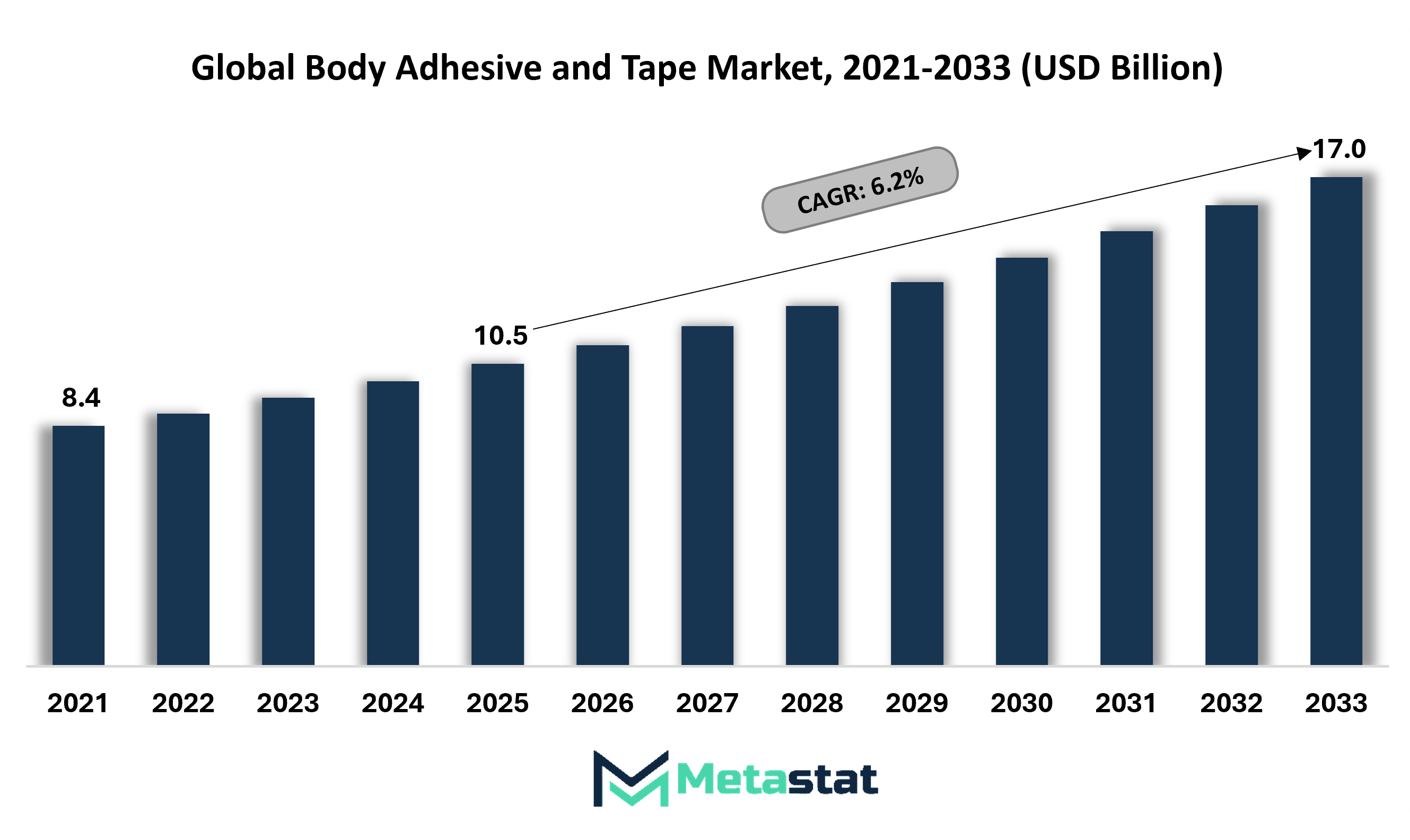
Global Body Adhesive and Tape market size is valued at USD 10.5 billion in 2025 and projected to grow at a CAGR of 6.2% during the forecast period, reaching USD 17.0 billion by 2033.
Global Body Adhesive and Tape Market: Comprehensive Data-Driven Market Analysis and Strategic Outlook
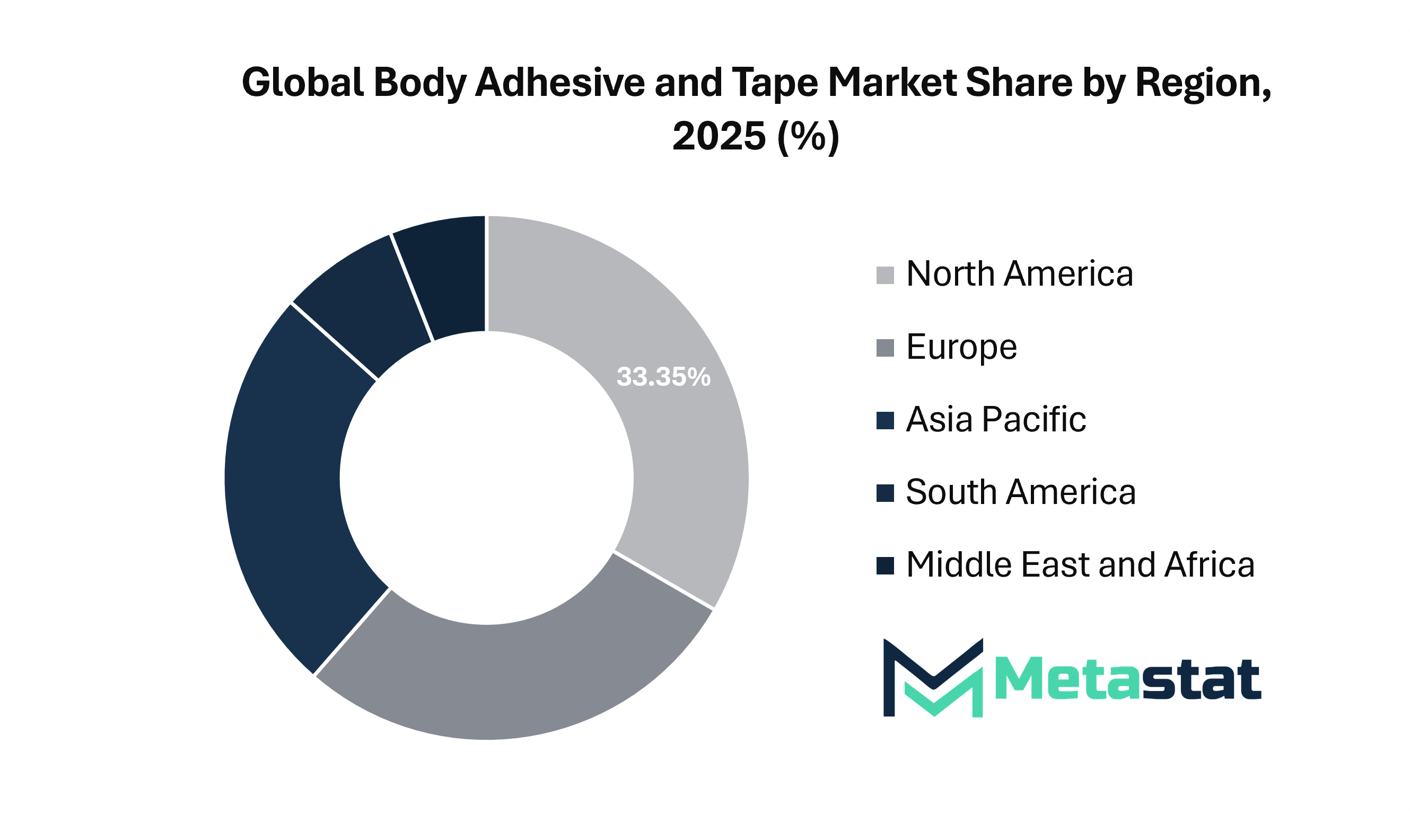
North America holds 33.4% share in 2025, with the U.S. leading the regional market.
Body Adhesives segment accounts for a market share of 13.8% in 2025.
Key trends driving growth: Increasing adoption of wearable medical devices and remote patient monitoring solutions propels demand for skin-friendly adhesive systems, along with growing surgical procedures and wound care applications enhance usage of medical-grade tapes and adhesives.
Opportunities include development of advanced hypoallergenic, breathable, and long-wear adhesives supports expansion in healthcare and consumer wearable applications.
Key insight: The Global Body Adhesive and Tape market is expanding steadily owing to personal care trends, fashion utility demand, healthcare usage, and product innovation.
The Global Body Adhesive and Tape market is emerging as an important category across medical care, wound management, wearable devices, personal care, and selected apparel-support applications. These products are widely used for dressing fixation, medical device securement, ostomy care, scar management, prosthetic attachment, athletic support, and skin-contact applications. End users are increasingly prioritizing skin comfort, residue-free removal, breathability, moisture resistance, and long-lasting hold.
Over the coming years, manufacturers will focus on dermatologically tested materials, hypoallergenic formulations, breathable substrates, sweat-resistant performance, and sustainable packaging formats. Product differentiation will increasingly depend on skin compatibility, secure adhesion, painless removal, and multi-application use, enabling the market to expand across hospitals, pharmacies, home healthcare, online channels, and professional care settings.
Market Dynamics
Growth Drivers:
Increasing adoption of wearable medical devices and remote patient monitoring solutions propels demand for skin-friendly adhesive systems.
Rising healthcare digitization, increasing home diagnostics, and stronger preventive care models are increasing the need for reliable skin-contact attachment materials. Comfortable bonding surfaces, sweat resistance, and gentle removal features support wider adoption across hospitals, clinics, health monitoring, and elder care applications. The market gains momentum through growing use of wearable sensors, remote monitoring patches, and long-duration patient care solutions.
Growing surgical procedures and wound care applications enhance usage of medical-grade tapes and adhesives.
Higher procedure volumes, ageing populations, and broader access to treatment services are increasing the consumption of secure fixation materials. Post-operative dressing support, catheter stabilization, wound dressing fixation, and scar management applications create stable product usage across emergency care, surgical care, and recovery settings. The market benefits from recurring procurement by hospitals, clinics, and long-term care facilities.
Restraints and Challenges:
Skin irritation and allergic reactions associated with prolonged use limit product acceptance among sensitive users.
Concerns related to redness, discomfort, irritation, and recurring sensitivity will reduce repeat purchases in selected categories. Healthcare providers often prefer clinically tested alternatives for vulnerable patients, placing pressure on manufacturers to improve material quality, comfort performance, and long-duration skin compatibility. Stronger product validation remains essential for use among elderly patients, infants, and users with sensitive skin.
Strict regulatory requirements for biocompatibility and safety increase product development timelines and costs.
Detailed testing protocols, documentation requirements, and approval processes will extend launch schedules for new products. Manufacturers need higher budgets for biocompatibility testing, certification, clinical validation, and compliance management. These requirements will delay commercialization cycles for innovative medical tapes, wearable adhesive patches, and long-wear skin-contact solutions.
Opportunities:
Development of advanced hypoallergenic, breathable, and long-wear adhesives supports expansion in healthcare and consumer wearable applications.
Material innovation will open new sales channels across smart patches, sports sensors, beauty devices, wound care products, and chronic care monitoring solutions. Breathable construction, residue-free removal, and durable hold improve user comfort and product acceptance. The market will expand through premium offerings, specialized performance formats, and application-specific adhesive technologies.
Market Segmentation Analysis
The Global Body Adhesive and Tape market is classified based on Product Type, Application, Distribution Channel, and End User.
By Product Type, the market is further segmented into:
Body Adhesives
Body Adhesives segment is valued at USD 1.5 billion in 2026 and is projected to reach USD 2.1 billion by 2033, at a CAGR of 4.8% during the forecast period.
The Body Adhesives segment will gain traction through advanced skin-safe bonding solutions that support longer wear duration. Product development will focus on comfort, sweat resistance, residue-free removal, and gentle detachment. Healthcare facilities will prefer reliable fixation materials for continuous patient support and efficient clinical workflows.
Medical Adhesive Tapes
Medical Adhesive Tapes segment is valued at USD 2.5 billion in 2026 and is projected to reach USD 3.9 billion by 2033, at a CAGR of 6.7% during the forecast period.
The Medical Adhesive Tapes segment will benefit from rising treatment volumes, stronger hygiene standards, and frequent usage in wound care and device fixation. Manufacturers will introduce breathable surfaces, residue-free removal, and improved holding strength. Expanded usage across routine care will support broad commercial opportunities across healthcare networks globally.
Elastic Adhesive Tapes
Elastic Adhesive Tapes segment is valued at USD 1.5 billion in 2026 and is projected to reach USD 2.1 billion by 2033, at a CAGR of 5.4% during the forecast period.
The Elastic Adhesive Tapes segment will expand with growing need for flexible support during movement. Product innovation will target stretch recovery, skin comfort, stable grip, and breathable performance. Sports recovery units, clinics, and rehabilitation centers will generate wider consumption during the forecast period.
Silicone Adhesive Tapes
Silicone Adhesive Tapes segment is valued at USD 1.1 billion in 2026 and is projected to reach USD 1.9 billion by 2033, at a CAGR of 8.1% during the forecast period.
The Silicone Adhesive Tapes segment will strengthen through rising preference for gentle skin contact and low-trauma removal. Sensitive skin applications will encourage adoption across wound care, scar management, and medical device securement. Premium product positioning and recurring clinical use will support long-term revenue expansion.
Acrylic Adhesive Tapes
Acrylic Adhesive Tapes segment is valued at USD 1.3 billion in 2026 and is projected to reach USD 1.8 billion by 2033, at a CAGR of 4.8% during the forecast period.
The Acrylic Adhesive Tapes segment will expand through strong adhesion performance, moisture tolerance, and reliable fixation. Hospitals will favor durable fastening during extended procedures and long-wear applications. Manufacturers will improve the balance between holding strength and painless removal, creating stronger acceptance across varied care environments.
Hydrocolloid Adhesive Tapes
Hydrocolloid Adhesive Tapes segment is valued at USD 1.2 billion in 2026 and is projected to reach USD 2 billion by 2033, at a CAGR of 7.9% during the forecast period.
The Hydrocolloid Adhesive Tapes segment will improve with rising chronic wound management needs. Moisture-balancing properties will attract healthcare buyers seeking better healing support and skin protection. Advanced dressing combinations and broader product availability will create sustained growth across institutional purchasing channels.
Waterproof Adhesive Tapes
Waterproof Adhesive Tapes segment is valued at USD 1.0 billion in 2026 and is projected to reach USD 1.5 billion by 2033, at a CAGR of 5.8% during the forecast period.
The Waterproof Adhesive Tapes segment will rise with growing need for bathing-safe and sweat-resistant protection. Home healthcare users and active patient groups will prefer reliable sealing performance. Future product designs will combine breathable layers with stronger durability, comfort, and water resistance.
Paper Adhesive Tapes
Paper Adhesive Tapes segment is valued at USD 0.7 billion in 2026 and is projected to reach USD 0.9 billion by 2033, at a CAGR of 4.2% during the forecast period.
The Paper Adhesive Tapes segment will develop through rising demand for lightweight, breathable, and gentle alternatives. Frequent dressing changes will support wider clinical use. Cost efficiency, easy tearing, and skin-friendly surfaces will support regular procurement across hospitals and clinics.
Others
Others segment is valued at USD 0.5 billion in 2026 and is projected to reach USD 0.8 billion by 2033, at a CAGR of 8.1% during the forecast period.
The Others segment will include niche solutions designed for specialty treatments, pediatric care, cosmetic recovery, sports support, and customized device attachment. Innovation will focus on targeted performance benefits, comfort improvement, and premium application-specific formats. Smaller segments will create profitable opportunities through specialized use cases and differentiated product positioning.
By Application, the market is divided into:
Ostomy Care
Ostomy Care segment is projected to reach USD 1.9 billion by 2033, at a CAGR of 4.4% during the forecast period.
The Ostomy Care application will expand with growing awareness of quality-of-life support products. Secure sealing, odor-control support, leakage prevention, and skin comfort remain key purchasing factors. Product refinement will create stronger confidence among healthcare providers, caregivers, and ostomy patients.
Wound Dressing Fixation
Wound Dressing Fixation segment is projected to reach USD 4.1 billion by 2033, at a CAGR of 5.8% during the forecast period.
The Wound Dressing Fixation application will expand through rising surgical procedures and chronic wound treatment needs. Reliable dressing placement will reduce disruption during recovery. Advanced tapes with breathable surfaces and gentle removal properties will gain preference across hospitals, clinics, and home care services.
Securement of Medical Devices
Securement of Medical Devices segment is projected to reach USD 3.3 billion by 2033, at a CAGR of 7% during the forecast period.
The Securement of Medical Devices application will strengthen with wider use of tubes, catheters, sensors, and monitoring equipment. Strong fixation with skin comfort will remain essential for longer treatment durations. Smart material development will support safer placement across hospitals, clinics, and home healthcare settings.
Wearable Medical Devices
Wearable Medical Devices segment is projected to reach USD 2.4 billion by 2033, at a CAGR of 9% during the forecast period.
The Wearable Medical Devices application will grow through the expansion of remote monitoring technologies and connected health platforms. Adhesives used in sensors and patches require comfort, sweat resistance, breathable substrates, and long wear cycles. Consumer health adoption will create strong recurring product demand globally.
Surgical Fixation
Surgical Fixation segment is projected to reach USD 2.4 billion by 2033, at a CAGR of 5.4% during the forecast period.
The Surgical Fixation application will grow with higher procedure volumes and faster recovery goals. Dependable closure support, secure dressing hold, and reduced skin trauma remain key priorities. Product improvements will enhance operating room efficiency and patient comfort after procedures.
Scar Management
Scar Management segment is projected to reach USD 1.4 billion by 2033, at a CAGR of 6.5% during the forecast period.
The Scar Management application will rise with expanding cosmetic care and post-surgery recovery awareness. Silicone-based formats will gain traction for appearance improvement and scar reduction support. Premium care preferences will create attractive margins for specialized product suppliers.
Others
Others segment is projected to reach USD 1.5 billion by 2033, at a CAGR of 5.3% during the forecast period.
The Others application segment will include dermatology care, pediatric support, temporary fixation needs, sports support, and cosmetic body adhesive uses. Customized solutions for targeted treatment areas will encourage product diversification. Emerging clinical practices will open new revenue streams across regional healthcare markets.
By Distribution Channel, the market is further divided into:
Direct Sales
Direct Sales segment is projected to reach USD 3.7 billion by 2033.
The Direct Sales channel will expand through bulk purchasing by healthcare institutions and large care networks. Supplier relationships will support pricing advantages, faster supply planning, and tailored contracts. Stronger manufacturer presence in major regions will improve channel performance and repeat procurement volumes.
Hospital Pharmacies
Hospital Pharmacies segment is projected to reach USD 4.8 billion by 2033.
The Hospital Pharmacies channel will remain a major supply point due to immediate clinical demand. Consistent inventory access supports urgent treatment needs, surgical care, and dressing changes. Broader formulary inclusion and procurement modernization will strengthen future purchasing volumes across large hospital networks.
Retail Pharmacies
Retail Pharmacies segment is projected to reach USD 3.0 billion by 2033.
The Retail Pharmacies channel will gain momentum through convenient access for home care users. Product visibility, pharmacist guidance, and neighborhood reach will support regular purchases. Rising self-care trends will further increase sales through organized pharmacy chains.
Online Channels
Online Channels segment is projected to reach USD 2.5 billion by 2033.
The Online Channels segment will grow rapidly through digital convenience, wider product availability, and easier product comparison. Subscription models for repeat-use products will improve customer retention. Faster logistics and expanding healthcare e-commerce platforms will create strong future sales momentum.
Medical Distributors
Medical Distributors segment is projected to reach USD 3.0 billion by 2033.
The Medical Distributors channel will play a crucial role through wide regional coverage and inventory management support. Smaller clinics, rehabilitation centers, and care facilities will depend on distribution networks. Distributor consolidation will improve delivery speed, purchasing scale, and product availability.
By End User, the Global Body Adhesive and Tape market is divided as:
Hospitals
Hospitals segment is projected to grow at a CAGR of 5.2% during the forecast period.
Hospitals will lead consumption through high patient inflow and large treatment requirements. Continuous use across surgery, wound care, dressing fixation, and device securement will sustain purchasing levels. Procurement improvements will favor trusted manufacturers with consistent supply quality.
Ambulatory Surgical Centers
Ambulatory Surgical Centers segment is projected to grow at a CAGR of 6.2% during the forecast period.
Ambulatory Surgical Centers will record strong growth with rising outpatient procedures. Fast-turnover environments will prefer efficient and reliable adhesive solutions. Expanding day-care surgery models will support stronger long-term consumption across urban healthcare hubs.
Clinics
Clinics segment is projected to grow at a CAGR of 5.9% during the forecast period.
Clinics will generate steady product consumption through routine treatments, dressing changes, and minor procedures. Affordable and flexible products will gain preference among small and mid-sized healthcare providers. Growth of neighborhood healthcare services will widen repeat purchases across developed and developing regions.
Home Healthcare
Home Healthcare segment is projected to grow at a CAGR of 9.4% during the forecast period.
Home Healthcare will rise through ageing populations and growing preference for recovery in residential settings. Easy-to-use products with skin comfort, clear instructions, and safe removal will gain traction. Remote care expansion will create lasting opportunities for patient-focused packaging formats.
Long-Term Care Facilities
Long-Term Care Facilities segment is projected to grow at a CAGR of 5.7% during the forecast period.
Long-Term Care Facilities will require consistent adhesive materials for ongoing patient management. Skin-friendly materials remain important for frequent-use cases involving elderly and sensitive patients. Rising elder care infrastructure will support reliable future procurement volumes worldwide.
Rehabilitation Centers
Rehabilitation Centers segment is projected to grow at a CAGR of 5% during the forecast period.
Rehabilitation Centers will increase purchases for mobility support, therapy care, athletic recovery, and repeated dressing needs. Elastic and comfortable formats will gain preference. Expanding recovery programs will create stronger channel demand over the coming years.
Specialty Care Centers
Specialty Care Centers segment is projected to grow at a CAGR of 5.8% during the forecast period.
Specialty Care Centers will drive niche demand through targeted treatments requiring precision fixation. Oncology, dermatology, advanced wound care, and scar management units will seek high-performance products. Customized solutions will create premium growth opportunities for manufacturers.
By Region:
Based on geography, the Global Body Adhesive and Tape market is divided into North America, Europe, Asia-Pacific, South America, Middle East, and Africa.
North America is witnessing rising Body Adhesive and Tape adoption owing to advanced healthcare infrastructure, high surgical volumes, strong wound care utilization, wearable medical device penetration, and established hospital procurement networks.
Europe Body Adhesive and Tape market is expected to expand steadily owing to advanced wound care adoption, strong hospital procurement systems, rising elderly population, and increasing use of skin-friendly medical tapes across surgical care, home healthcare, and long-term care settings.
Asia-Pacific presents significant opportunities through expanding healthcare access, rising medical procedure volumes, increasing chronic wound care needs, growing wearable health adoption, and expanding online healthcare retail access.
Across the Middle East, Africa, and South America, the market progresses through healthcare infrastructure development, wider hospital access, rising wound care needs, expanding retail pharmacies, and improving product availability.
Competitive Landscape and Strategic Insights
The Global Body Adhesive and Tape Market is supported by growing need for secure wound care, medical device fixation, scar management, ostomy support, and skin-friendly products used across hospitals and home settings. Leading manufacturers focus on comfort, strong hold, easy removal, lower irritation risk, and reliable supply. Buyers evaluate product quality, pricing, clinical suitability, distribution reach, and brand trust before placing large orders. Innovation remains important as users expect tapes and adhesives to remain stable during movement while allowing gentle removal during replacement.
Active companies include Solventum Corporation, 3M Company, Essity AB, Cardinal Health, Inc., Medline Industries, LP, and Mölnlycke Health Care AB. These companies have large distribution networks and long-standing relationships with clinics, hospitals, and care centers. Paul Hartmann AG, B. Braun SE, Smith & Nephew plc, and Kenvue Inc. also hold strong positions through recognized brands, medical product portfolios, and regular product launches.
Regional and specialist providers add competitive intensity. Beiersdorf AG, NICHIBAN Co., Ltd., Nitto Denko Corporation, Avery Dennison Corporation, and H.B. Fuller Company bring material science capabilities that improve adhesion, skin feel, breathability, and removal performance. Lohmann & Rauscher GmbH & Co. KG, Lohmann GmbH & Co. KG, Mativ Holdings, Inc., Berry Global Group, Inc., and Adhesives Research, Inc. serve multiple clinical requirements through customized formats, converting support, and specialty adhesive technologies.
Ostomy and wound care-focused companies such as ConvaTec Group Plc, Coloplast A/S, Hollister Incorporated, Nu-Hope Laboratories, Inc., and Torbot Group Inc. remain important for specialized demand. McKesson Corporation, DeRoyal Industries, Inc., Gentell, Inc., Dynarex Corporation, and Winner Medical Co., Ltd. help widen product access through sourcing capabilities, private-label lines, and broad distribution reach.
Future expansion will be shaped by ageing populations, higher surgical volumes, home treatment adoption, infection control awareness, and wearable health monitoring. Companies that balance price, performance, comfort, and reliable supply will gain share. Customers increasingly prefer greener packaging, consistent stock availability, clear user education, and responsive after-sales support. Competitive intensity will remain high as hospitals and care providers prioritize clinically reliable and patient-friendly adhesive solutions.
Many hospitals prefer suppliers with training teams that guide nurses on correct usage, storage, and product selection. Online channels are also expanding, helping smaller clinics order faster and compare alternatives more easily. In the coming years, companies investing in research, local manufacturing, responsive service, and patient comfort will build stronger customer loyalty and steadier revenue streams.
Forecast and Future Outlook
Market size is forecast to rise from USD 10.5 billion in 2025 to over USD 17.0 billion by 2033.
The Global Body Adhesive and Tape market is expected to increasingly integrate with healthcare, wearable medical devices, wound care, home healthcare, and selected personal care ecosystems. Future growth will be supported by skin-friendly innovation, hypoallergenic materials, breathable substrates, long-wear performance, and premium medical-grade product positioning. Regulatory focus on biocompatibility, ingredient safety, and sustainability will shape next-generation product development.
Body Adhesive and Tape Market Key Segments:
By Product Type:
Body Adhesives
Medical Adhesive Tapes
Elastic Adhesive Tapes
Silicone Adhesive Tapes
Acrylic Adhesive Tapes
Hydrocolloid Adhesive Tapes
Waterproof Adhesive Tapes
Paper Adhesive Tapes
Others
By Application:
Ostomy Care
Wound Dressing Fixation
Securement of Medical Devices
Wearable Medical Devices
Surgical Fixation
Scar Management
Others
By Distribution Channel:
Direct Sales
Hospital Pharmacies
Retail Pharmacies
Online Channels
Medical Distributors
By End User:
Hospitals
Ambulatory Surgical Centers
Clinics
Home Healthcare
Long-Term Care Facilities
Rehabilitation Centers
Specialty Care Centers
Key Global Body Adhesive and Tape Industry Players
This research report categorizes the Body Adhesive and Tape market based on key segments and regions, forecasts revenue growth, and analyses trends in each submarket. The report analyses the key growth drivers, opportunities, and challenges influencing the Body Adhesive and Tape market. Recent market developments and competitive strategies such as expansion, product launch, partnership, merger, and acquisition have been included to draw the competitive landscape in the market.
The report strategically identifies and profiles the key market players and analyses their core competencies in each sub-segment of the Body Adhesive and Tape market.
Report Attributes
Details
Study Period
2021-2033
Base Year
2025
Estimated Year
2026
Forecast Period
2026-2033
Historical Period
2021-2025
Growth Rate
CAGR 6.2% from 2026 to 2033
Revenue Unit
USD billion
Sales Volume Unit
Million Units
Segmentation
By Product Type, Application, Distribution Channel, End User, and Region
By Region
North America (By Product Type, Application, Distribution Channel, End User, and Country)
United States
Canada
Mexico
Europe (By Product Type, Application, Distribution Channel, End User, and Country)
Germany
France
UK
Italy
Spain
Russia
Rest of Europe
Asia Pacific (By Product Type, Application, Distribution Channel, End User, and Country)
China
Japan
India
South Korea
Australia
Southeast Asia
Rest of Asia Pacific
South America (By Product Type, Application, Distribution Channel, End User, and Country)
Brazil
Argentina
Rest of South America
Middle East and Africa (By Product Type, Application, Distribution Channel, End User, and Country)
Saudi Arabia
UAE
South Africa
Rest of Middle East and Africa
WHAT REPORT PROVIDES
Key Company Market Share, Revenue, and Position/Ranking
Key Market Leaders
Full In-Depth Analysis of the Parent Industry
Industry Statistics
Important Changes in Market and Its Dynamics
Segmentation Details of the Market
Historical, On-Going, and Projected Market Analysis
Assessment of Niche Industry Developments
Market Share Analysis
Key Strategies of Major Players
Company Profiles of Key Players
Unique Selling Propositions of Leading Market Players
Emerging Segments and Regional Growth Potential
Key Strategic Recommendations
Competitive Benchmarking
Import Export Trade Statistics
End of Report Overview
Frequently Asked Questions
Find answers to common questions about this report
Top players operating in the Body Adhesive and Tape industry includes Solventum Corporation, 3M Company, Essity AB, Cardinal Health, Inc., Medline Industries, LP, Mölnlycke Health Care AB, PAUL HARTMANN AG, Lohmann & Rauscher GmbH & Co. KG, B. Braun SE, Dynarex Corporation, Smith & Nephew plc, Kenvue Inc., Beiersdorf AG, NICHIBAN Co., Ltd., Nitto Denko Corporation, Mativ Holdings, Inc., Avery Dennison Corporation, Lohmann GmbH & Co. KG, Adhesives Research, Inc., Berry Global Group, Inc., H.B. Fuller Company, ConvaTec Group Plc, Coloplast A/S, Hollister Incorporated, Nu-Hope Laboratories, Inc., Torbot Group Inc., McKesson Corporation, DeRoyal Industries, Inc., Gentell, Inc., and Winner Medical Co., Ltd.
Skin irritation and allergic reactions associated with prolonged use limit product acceptance among sensitive users. will hamper the market growth within the forecast period.
Global Body Adhesive and Tape market is estimated to reach USD 17.0 billion by 2033.
The Metastat Insights study shows that the Global Body Adhesive and Tape market size was USD 10.5 billion in 2025.
Increasing adoption of wearable medical devices and remote patient monitoring solutions propels demand for skin-friendly adhesive systems and growing surgical procedures and wound care applications enhance usage of medical-grade tapes and adhesives. are key driving factors, boosting the market.
North America region dominates the market.
Medical Adhesive Tapes is the leading product type segment in the global market.
The Metastat Insights analysis shows that the North America Body Adhesive and Tape market size is estimated to be USD 5.2 billion by 2033.
The Global Body Adhesive and Tape market is expected to grow at a CAGR of 6.2% over the forecast period (2026-2033).
Lubricants Manufacturing market size is valued at USD 151.1 billion in 2025 and projected to reach USD 208.4 billion by 2033, growing at a CAGR of 4.1%.
Vapor Degreasing Solvent market size is valued at USD 1,004.1 million in 2025 and projected to reach USD 1,576.4 million by 2033, growing at a CAGR of 5.8%.
Bangladesh Flavours and Fragrances Market Size, Share, Trends, 2033
Bangladesh Flavours and Fragrances market size is valued at USD 793.9 million in 2025 and is projected to reach USD 1,447.9 million in 2033, at a CAGR of 7.8% from 2026 to 2033
Bangladesh Flavours and Fragrances Market, Bangladesh Flavours and Fragrances Market Size, Bangladesh Flavours and Fragrances Market Share, Bangladesh Flavours and Fragrances Market Analysis, Bangladesh Flavours and Fragrances Market Growth, Bangladesh Flavours and Fragrances Market Trends, Bangladesh Flavours and Fragrances Market Research Report, Bangladesh Flavours and Fragrances Market Forecast, Bangladesh Flavours and Fragrances, Bangladesh Flavours and Fragrances Market Research, Bangladesh Flavours and Fragrances Industry, Bangladesh Flavours and Fragrances Industry Report, Bangladesh Flavours and Fragrances Market Data, Bangladesh Flavours and Fragrances Statistics, Bangladesh Flavours and Fragrances Market Statistics, Bangladesh Flavours and Fragrances Industry Trends, Bangladesh Flavours and Fragrances Market Report, Bangladesh Flavours and Fragrances Market Trends, Bangladesh Flavours and Fragrances Market News, Bangladesh Flavours and Fragrances Forecasts, Bangladesh Flavours and Fragrances Market Intelligence Report
Biocatalysis and Enzyme Biocatalysts Market Size, Share, Trends, 2033
Biocatalysis and Enzyme Biocatalysts market size is valued at USD 737.8 million in 2025 and is projected to reach USD 1,221.0 million in 2033, at a CAGR of 6.5% from 2026 to 2033.
Biocatalysis and Enzyme Biocatalysts Market, Biocatalysis and Enzyme Biocatalysts Market Size, Biocatalysis and Enzyme Biocatalysts Market Share, Biocatalysis and Enzyme Biocatalysts Market Analysis, Biocatalysis and Enzyme Biocatalysts Market Growth, Biocatalysis and Enzyme Biocatalysts Market Trends, Biocatalysis and Enzyme Biocatalysts Market Research Report, Biocatalysis and Enzyme Biocatalysts Market Forecast, Biocatalysis and Enzyme Biocatalysts, Biocatalysis and Enzyme Biocatalysts Market Research, Biocatalysis and Enzyme Biocatalysts Industry, Biocatalysis and Enzyme Biocatalysts Industry Report, Biocatalysis and Enzyme Biocatalysts Market Data, Biocatalysis and Enzyme Biocatalysts Statistics, Biocatalysis and Enzyme Biocatalysts Market Statistics, Biocatalysis and Enzyme Biocatalysts Industry Trends, Biocatalysis and Enzyme Biocatalysts Market Report, Biocatalysis and Enzyme Biocatalysts Market Trends, Biocatalysis and Enzyme Biocatalysts Market News, Biocatalysis and Enzyme Biocatalysts Forecasts, Biocatalysis and Enzyme Biocatalysts Market Intelligence Report