AI Diagnostics in Ophthalmology Market Size, Share, By Solution Type (AI-Integrated Diagnostic Imaging Systems, Clinical Decision Support Software, Autonomous Screening Platforms, Surgical Planning, Workflow AI Tools, Post-operative Outcome Prediction, and Others), By Deployment Model (On-Premise, Cloud-Based, and Hybrid), By Application (Diabetic Retinopathy Detection, Glaucoma Diagnosis and Management, Age-Related Macular Degeneration (AMD), Cataract Assessment, Surgical Planning, Retinal Vein Occlusion, Retinal Artery Occlusion, and Other Ocular Disease Screening), By End User (Hospitals, Clinics, Diagnostic Centers, Academic, Research Institutions, Primary Care Facilities, Optical Retail Chains, and Others), Industry Analysis, Growth, Trends, and Forecast, 2026-2033
Report ID
MSI-4575
Published
April 7, 2026
Pages
298 Pages
Format
Report Details
Comprehensive Market Analysis And Insights
Market Overview
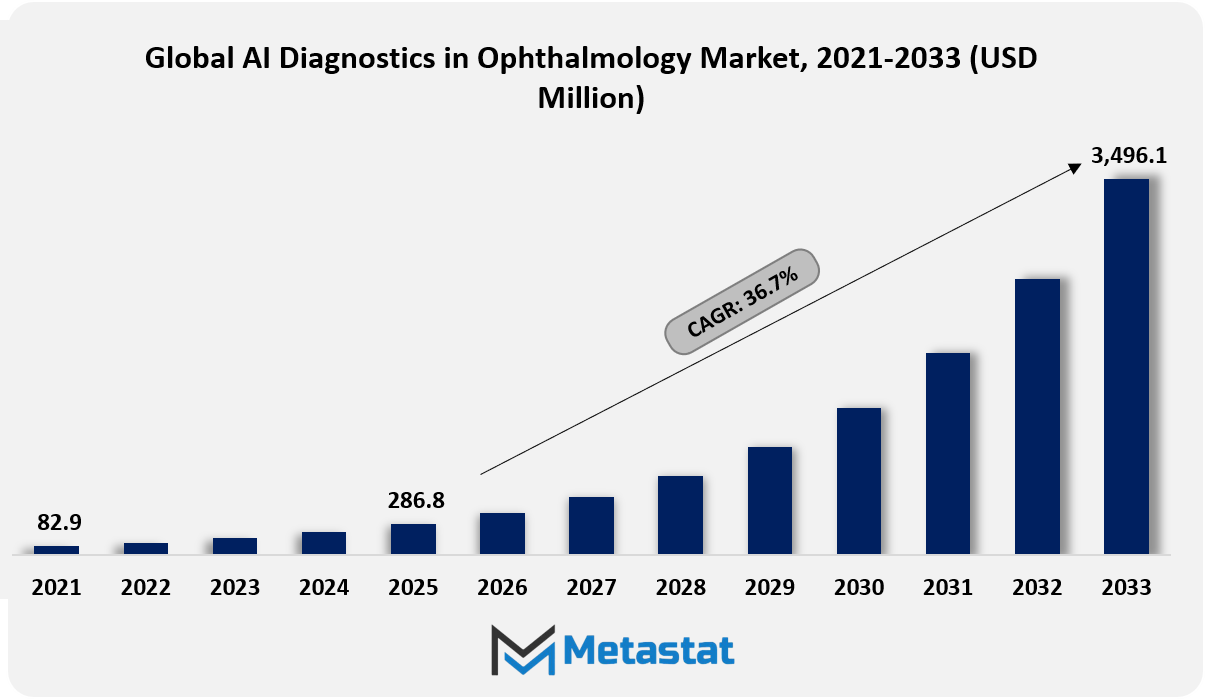
The Global AI Diagnostics in Ophthalmology market size is valued at USD 286.8 million in 2025. The market is projected to grow from USD 391.8 million in 2026 to USD 3,496.1 million by 2033, exhibiting a CAGR of 36.7% during the forecast period.
Global AI Diagnostics in Ophthalmology Market: Comprehensive Data-Driven Market Analysis and Strategic Outlook
Global AI Diagnostics in Ophthalmology market valued at USD 286.8 million in 2025, growing at a CAGR of 36.7% through 2033, with potential to exceed USD 3,496.1 million.
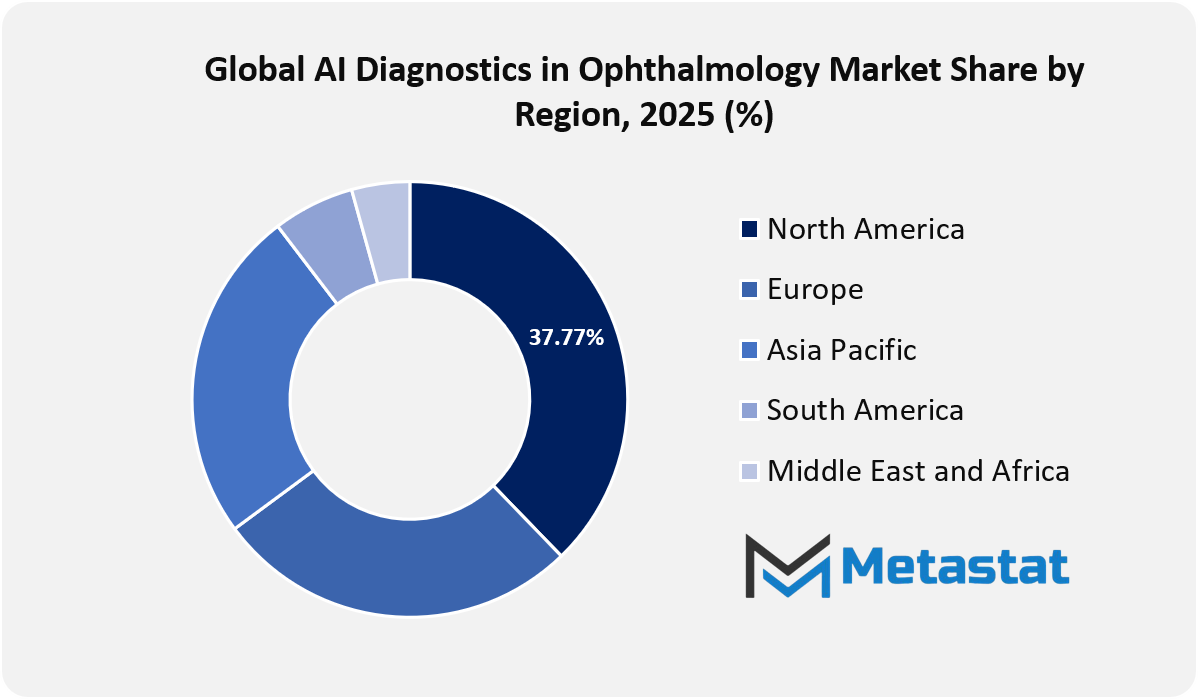
North America holds 37.8% in 2025 with United States leading the market share in 2026.
AI-Integrated Diagnostic Imaging Systems segment accounted for a market share of 34.0% in 2025.
Key trends driving growth: Rising prevalence of eye diseases and increased focus on early detection, integration with digital health and telemedicine expansion.
Key opportunities include scalable AI-enabled screening across primary care, retail clinics, and teleophthalmology networks.
Key insight: Clinical screening pressure, automation gains, and remote care momentum position AI ophthalmic diagnostics for sustained growth despite regulatory friction.
The Global AI Diagnostics in Ophthalmology market within the healthcare technology industry is expanding beyond decision-support tools into scalable clinical workflows that improve screening throughput, diagnostic consistency, and referral accuracy. Future deployments will extend beyond image interpretation into longitudinal disease modeling, where systems predict disease trajectories rather than flagging isolated abnormalities.Such systems will synthesize historical imaging, genetic markers, treatment adherence data, and lifestyle indicators, enabling earlier intervention and stronger clinical confidence.
Clinical workflows will shift in the direction of adaptive diagnostic environments. AI systems will be embedded into optical devices, outpatient clinics, and mobile screening units, enabling real-time interpretation without dependence on centralized reading centers. Diagnostic outputs will evolve from static reports into dynamic clinical narratives that update recommendations as new patient data enters the system. Over time, regulatory bodies will mandate transparent audit trails, making sure algorithmic selections remain explainable and medically defensible.
Market Dynamics
Growth Drivers:
Rising Prevalence of Eye Diseases & Demand for Early Detection.
Diabetic retinopathy, glaucoma, cataracts, and age-related macular degeneration remain a growing challenge for ophthalmic care delivery across major health systems. The AI diagnostics in ophthalmology market is positioned for accelerated adoption, supported by increased screening volumes, image analysis requirements, and clinical decision-support needs.
Integration with Digital Health & Telemedicine Expansion
Increased adoption of electronic health records, remote consultation platforms, and cloud infrastructure for imaging is strengthening diagnostic scalability and workflow integration. Globally, integration with telemedicine platforms is supporting real-time screening, remote expert validation, and continuity of ophthalmology care across underserved and remote locations.
Restraints and Challenges:
High Cost of AI Ophthalmic Diagnostic Systems
Advanced imaging gadgets, proprietary algorithms, infrastructure enhancements, and ongoing maintenance charges create financial stress for healthcare vendors. Global AI Diagnostics in Ophthalmology market expansion faces obstacles linked to affordability constraints across small clinics and public hospitals, slowing adoption despite strong clinical value and long-term cost-efficiency potential.
Regulatory & Compliance Challenges
Stringent medical device approvals, data privacy mandates, and clinical validation requirements extend commercialization timelines. Global AI diagnostics market participants in ophthalmology should pay attention to the evolving regulatory framework, regional compliance standards, and ethical data usage policies as the operational complexity increases while ensuring diagnostic accuracy and patient safety.
Opportunities:
Scalable AI-Enabled Screening in Primary Care, Retail Clinics, and Teleophthalmology Networks
Decentralized screening models offer strong expansion pathways for eye diagnostics. The market potential of global AI diagnostics in ophthalmology will grow through scalable deployment in primary care centers, retail health clinics, and teleophthalmology networks to support early detection, referral optimization, and population-level eye health management through automated intelligence.
Market Segmentation Analysis
The Global AI Diagnostics in Ophthalmology market is segmented by Solution Type, Deployment Model, Application, and End User.
By Solution Type, the market is further segmented into:
AI-Integrated Diagnostic Imaging Systems
AI-Integrated Diagnostic Imaging Systems segment was valued at USD 133 Million in 2026 and is projected to reach USD 1,151.3 Million by 2033, at a CAGR of 36.1% during the forecast period.
Under solution type, the ophthalmology market will experience accelerated progress through global AI diagnostics, imaging systems combining artificial intelligence with retina scanners and fundus cameras. Such systems will already enable earlier disease visibility, higher diagnostic accuracy, and reduce the burden on physicians. Continuous learning algorithms will support consistent interpretation across different patient segments.
Clinical Decision Support Software
Clinical Decision Support Software segment was valued at USD 107.6 Million in 2026 and is projected to reach USD 938 Million by 2033, at a CAGR of 36.3% during the forecast period.
Clinical decision support software within the global AI diagnostics in ophthalmology market will guide ophthalmic professionals through data-driven recommendations generated from large clinical datasets. Advanced analytics will support risk stratification, treatment prioritization and follow-up scheduling. Future adoption will strengthen standardized care delivery while supporting evidence-based decisions in complex clinical scenarios.
Autonomous Screening Platforms
Autonomous Screening Platforms segment was valued at USD 120.9 Million in 2026 and is projected to reach USD 1,171.9 Million by 2033, at a CAGR of 38.3% during the forecast period.
Autonomous screening platforms under Global AI Diagnostics in the Ophthalmology Market will transform ophthalmology screening on a large scale through minimal human intervention. Such platforms would work in community settings and primary facilities, allowing rapid identification of sight-threatening conditions. The expanded deployment will improve access, reduce delays in diagnosis and support preventive eye health care models.
Other (Surgical Planning & Workflow AI Tools, Post-operative Outcome Prediction)
Other (Surgical Planning & Workflow AI Tools, Post-operative Outcome Prediction) segment was valued at USD 30.3 Million in 2026 and is projected to reach USD 234.9 Million by 2033, at a CAGR of 34% during the forecast period.
Other solution categories within the global AI diagnostics in ophthalmology market will focus on surgical planning, workflow optimization and post-operative outcome prediction. Predictive modeling will assist surgeons during procedural preparation while operational tools will streamline clinical efficiency.
By Deployment Model, the market is divided into:
On-Premise
On-Premise segment is projected to reach USD 1,361.7 Million by 2033, at a CAGR of 34.4% during the forecast period.
On-premises deployment under Global AI Diagnostics in the Ophthalmology market will remain relevant for institutions requiring direct data control and local infrastructure. Hospitals with strict compliance requirements will support internal servers supporting the diagnostic system. Continued hardware investment will ensure stable performance, improved data security and uninterrupted clinical operations.
Cloud-Based
Cloud-Based segment is projected to reach USD 1,521.5 Million by 2033, at a CAGR of 37.9% during the forecast period.
Cloud-based deployment within the global AI diagnostics in ophthalmology market will boost scalability and remote access across healthcare networks. Cloud infrastructure will support faster software updates, centralized data analysis, and cross-location collaboration. The increase in adoption will align with the expansion of teleophthalmology services and cost-efficient clinical expansion strategies.
Hybrid
Hybrid segment is projected to reach USD 612.9 Million by 2033, at a CAGR of 39.4% during the forecast period.
The hybrid deployment model in the global AI diagnostics in ophthalmology market will balance local processing with cloud connectivity. Such configurations will support flexible data management while maintaining performance reliability. Healthcare organizations will prefer hybrid structures for adaptive scaling, regulatory alignment, and integration across different clinical environments.
By Application, the market is further divided into:
Diabetic Retinopathy Detection
Diabetic Retinopathy Detection segment accounted for a share of 40.7% in 2025 and is projected to reach USD 1,660.3 million by 2033.
Owing to the increasing occurrence of diabetes, applications that detect diabetic retinopathy will gain prominence in worldwide AI diagnostics within the ophthalmology market. Artificial intelligence algorithms will examine retinal pixels with precision, permitting early intervention. Expanding preventive screening will reduce the chance of vision loss while lowering long-time period remedy prices inside the population.
Glaucoma Diagnosis and Management
Glaucoma Diagnosis and Management segment accounted for a share of 20.0% in 2025 and is projected to reach USD 654.8 million by 2033.
Glaucoma prognosis and control within the global AI diagnostics in ophthalmology market will benefit from predictive analytics monitoring of optic nerve changes. Continuous evaluation models will guide development, tracking, and treatment adjustments. Future solutions will beautify long-term sickness control at the same time as lowering irreversible vision loss rates.
Age-Related Macular Degeneration (AMD)
Age-Related Macular Degeneration (AMD) segment accounted for a share of 17.4% in 2025 and is projected to reach USD 571.3 million by 2033.
Age-related macular degeneration programs in international AI diagnostics within the ophthalmology market will support early detection and prediction of the development of the lesion. Image-based learning structures will be able to generate well-timed healing plans. The aging demographics will increase the demand for accurate diagnostics, helping sustain visible characteristics and stepped forward great of life.
Cataract Assessment and Surgical Planning
Cataract Assessment and Surgical Planning segment accounted for a share of 11.7% in 2025 and is projected to reach USD 277.6 million by 2033.
Cataract assessment and surgical planning under global AI diagnostics in the ophthalmology market will depend on automated measurements and predictive surgical modeling. Artificial intelligence will aid in lens selection and procedural accuracy. Such advances will enhance surgical outcomes while supporting a high-volume eye care environment.
Other Ocular Disease Screening (Retinal Vein Occlusion, Retinal Artery Occlusion)
Other Ocular Disease Screening (Retinal Vein Occlusion and Retinal Artery Occlusion) segment accounted for a share of 10.3% in 2025 and is projected to reach USD 332.1 million by 2033.
Other ophthalmic disease screening applications in the global AI diagnostics market will address complex vascular retina conditions. Automated detection models will improve the identification of serious incidents requiring immediate intervention. The expanded screening scope will strengthen comprehensive eye health management strategies in health care systems.
By End User, the Global AI Diagnostics in Ophthalmology market is divided as:
Hospitals and Clinics
Hospitals and Clinics segment is projected to grow at a CAGR of 35% during the forecast period.
Hospitals and clinics will continue to be the primary adopters of global AI diagnostics in the ophthalmology market owing to their integrated care delivery model. Artificial intelligence tools will increase diagnostic throughput and clinical confidence. The institutional investment will support improved patient outcomes and optimized ophthalmology department performance.
Diagnostic Centers
Diagnostic Centers segment is projected to grow at a CAGR of 37.9% during the forecast period.
Diagnostic centers in the Global AI Diagnostics in Ophthalmology marketplace will leverage artificial intelligence for excessive-quantity photograph analysis and reporting efficiency. Automated workflows will reduce turnaround time at the same time as preserving accuracy. Competitive differentiation will emerge via stepped forward diagnostic reliability and multiplied carrier functionality.
Academic and Research Institutions
Academic and Research Institutions segment is projected to grow at a CAGR of 30.7% during the forecast period.
Academic and research institutions underneath Global AI Diagnostics in Ophthalmology market will sell algorithm development and scientific validation. Research-focused adoption will help innovation thru information modeling and medical trials. Advances in expertise will impact destiny business answers and evidence-based ophthalmic practices.
Others (Primary Care Facilities, Optical Retail Chains)
Others (Primary Care Facilities, Optical Retail Chains) segment is projected to grow at a CAGR of 41.9% during the forecast period.
Other end users of global AI diagnostics in the ophthalmology market will include primary care facilities and optical retail chains expanding eye screening services. Adoption of artificial intelligence will help in early referral and regular assessment. Widespread use will increase community-level vision care access and preventive health outreach.
By Region:
Based on geography, the Global AI Diagnostics in Ophthalmology market is divided into North America, Europe, Asia-Pacific, South America, Middle East, and Africa.
North America AI Diagnostics in Ophthalmology Market is set to expand at a CAGR of 36.7% within the forecast period, reaching a market size (TAM) of USD 1,290.4 million by the end of 2033.
North America benefits from sturdy adoption of AI diagnostics in ophthalmology driven via superior healthcare infrastructure and early integration of AI into scientific eye care workflows.
Adoption of AI-based ophthalmology diagnostics is increasing owing to the high incidence of diabetic retinopathy and age-associated eye issues along with supportive regulatory pathways in North America.
Asia Pacific presents large opportunities for AI diagnostics in ophthalmology because of its big, underserved patient population and increasing consciousness on early eye disorder detection.
Asia Pacific gives growth capacity for AI ophthalmology solutions supported with the aid of speedy digital fitness adoption and growing funding in hospital modernization.
Across the Middle East, Africa, and South America, improved access to eye care services and gradual uptake of cost-efficient AI screening equipment in emerging healthcare structures are driving the worldwide AI diagnostics in ophthalmology marketplace.
Competitive Landscape and Strategic Insights
Global AI diagnostics in the ophthalmology marketplace are shaping how eye care is provided in medical and community settings. Artificial intelligence tools are increasingly getting used for early detection of eye problems, lowering delays in analysis, and improving accuracy throughout screening. These solutions will assist ophthalmologists and optometrists in controlling the increasingly wide variety of patients whilst maintaining the quality of care. By combining imaging systems with a shrewd software program, carriers will be able to become aware of conditions such as diabetic retinopathy, glaucoma, and age-related macular degeneration at in advance ranges, leading to better treatment results and reduced lengthy-time period vision loss.
Technology-focused competitors play a vital role in shaping product performance, imaging quality, and workflow integration across this market. Topcon Healthcare, Heidelberg Engineering, NIDEK, Canon Medical Systems, Optos, and iCare Finland Oy are strengthening AI adoption by integrating advanced analytics into retinal imaging and diagnostic gadgets. Their structures will help with quicker photo interpretation and improve workflow efficiency in hospitals, clinics, and cell screening gadgets. These players' recognition of mixing hardware precision with software program intelligence ensures that AI gear integrates well into present eye care practices without disrupting habitual operations.
Pure-play AI and health technology firms are accelerating innovation through specialized diagnostic systems. Digital Diagnostics, AEYE Health, RetinAI, Optomed, Toku Eyes, Retmarker, RetinaLyze, DIAGNOS, RetinAI Medical AG, iHealthScreen, Remidio, Mediwhale, Eyenuk, OphtAI, Retina-AI Health, Altris AI, and EyRIS are developing software to automate photograph grading, chance assessment, and disease progression monitoring. These organizations frequently work carefully with clinics and public fitness programs, allowing AI-based totally screening to reach underserved regions wherein get admission to eye professionals remains constrained.
Large era and studies-pushed organizations similarly guide market increase with the aid of providing computing strength, facts technology knowledge, and worldwide outreach. NVIDIA and IBM Corporation provide AI infrastructure to allow quicker version education and actual-time analysis, even as Orbis International supports awareness and access through global eye-care programs. Together, those enterprise participants will power constant development across the Global AI Diagnostics in Ophthalmology Market, supporting shift eye care closer to preventive, information-driven decision-making that benefits each patient and healthcare structures.
Forecast and Future Outlook
Market size is forecast to rise from USD 286.8 million in 2025 to over USD 3,496.1 million by 2033.
Global AI diagnostics in the ophthalmology market will also impact health care equity strategies. Remote and underserved areas will benefit from decentralized diagnostic intelligence, where primary care settings will gain access to expert-level assessment without physical referral. Cross-border collaboration between hospitals, insurers and research institutions will establish shared clinical frameworks, improving consistency in disease classification and outcome benchmarking.
AI Diagnostics in Ophthalmology Market Key Segments:
By Solution Type:
AI-Integrated Diagnostic Imaging Systems
Clinical Decision Support Software
Autonomous Screening Platforms
Other (Surgical Planning & Workflow AI Tools, Post-operative Outcome Prediction)
By Deployment Model:
On-Premise
Cloud-Based
Hybrid
By Application:
Diabetic Retinopathy Detection
Glaucoma Diagnosis and Management
Age-Related Macular Degeneration (AMD)
Cataract Assessment and Surgical Planning
Other Ocular Disease Screening (Retinal Vein Occlusion, Retinal Artery Occlusion)
By End User:
Hospitals and Clinics
Diagnostic Centers
Academic and Research Institutions
Others (Primary Care Facilities, Optical Retail Chains)
Key Global AI Diagnostics in Ophthalmology Industry Players
This research report categorizes the AI Diagnostics in Ophthalmology market based on key segments and regions, forecasts revenue growth, and analyses trends in each submarket. The report analyses the key growth drivers, opportunities, and challenges influencing the AI Diagnostics in Ophthalmology market. Recent market developments and competitive strategies such as expansion, product launch, development, partnership, merger, and acquisition have been included to draw the competitive landscape in the market.
Report Attributes
Details
Study Period
2021-2033
Base Year
2025
Estimated Year
2026
Forecast Period
2026-2033
Historical Period
2021-2025
Growth Rate
CAGR 36.7% from 2026 to 2033
Revenue Unit
USD million
Segmentation
By Solution Type, Deployment Model, Application, End User, and Region
By Region
North America (By Solution Type, Deployment Model, Application, End User, and Country)
United States
Canada
Mexico
Europe (By Solution Type, Deployment Model, Application, End User, and Country)
Germany
France
UK
Italy
Spain
Russia
Rest of Europe
Asia Pacific (By Solution Type, Deployment Model, Application, End User, and Country)
China
Japan
India
South Korea
Australia
Southeast Asia
Rest of Asia Pacific
South America (By Solution Type, Deployment Model, Application, End User, and Country)
Brazil
Argentina
Rest of South America
Middle East and Africa (By Solution Type, Deployment Model, Application, End User, and Country)
Saudi Arabia
UAE
South Africa
Rest of Middle East and Africa
The report strategically identifies and profiles the key market players and analyses their core competencies in each sub-segment of the AI Diagnostics in Ophthalmology market.
WHAT REPORT PROVIDES
Full In-Depth Analysis of the Parent Industry
Important Changes in Market and Its Dynamics
Segmentation Details of the Market
Historical, ongoing, and projected market analysis in terms of volume and value
Assessment Of Niche Industry Developments
Market Share Analysis
Key Strategies of Major Players
Company Profiles of Key Players
Unique Selling Propositions of Major Market Players
US Healthcare Payment Solutions Market Size, Share, Trends, 2033
US Healthcare Payment Solutions market size is valued at USD 34.2 million in 2025 and is projected to reach USD 56.9 million in 2033, at a CAGR of 6.6% from 2026 to 2033
US Healthcare Payment Solutions Market, US Healthcare Payment Solutions Market Size, US Healthcare Payment Solutions Market Share, US Healthcare Payment Solutions Market Analysis, US Healthcare Payment Solutions Market Growth, US Healthcare Payment Solutions Market Trends, US Healthcare Payment Solutions Market Research Report, US Healthcare Payment Solutions Market Forecast, US Healthcare Payment Solutions, US Healthcare Payment Solutions Market Research, US Healthcare Payment Solutions Industry, US Healthcare Payment Solutions Industry Report, US Healthcare Payment Solutions Market Data, US Healthcare Payment Solutions Statistics, US Healthcare Payment Solutions Market Statistics, US Healthcare Payment Solutions Industry Trends, US Healthcare Payment Solutions Market Report, US Healthcare Payment Solutions Market Trends, US Healthcare Payment Solutions Market News, US Healthcare Payment Solutions Forecasts, US Healthcare Payment Solutions Market Intelligence Report
Electronic Medical Records market Size, Share, Trends, 2033
Global Electronic Medical Records market size is valued at USD 20.1 billion in 2025 and is projected to reach USD 32.5 billion in 2033, at a CAGR of 6.2% from 2026 to 2033
Electronic Medical Records Market, Electronic Medical Records Market Size, Electronic Medical Records Market Share, Electronic Medical Records Market Analysis, Electronic Medical Records Market Growth, Electronic Medical Records Market Trends, Electronic Medical Records Market Research Report, Electronic Medical Records Market Forecast, Electronic Medical Records, Electronic Medical Records Market Research, Electronic Medical Records Industry, Electronic Medical Records Market Data, Electronic Medical Records Statistics, Electronic Medical Records Market Statistics, Electronic Medical Records Industry Trends
US Newborn Screening Technologies Market Size Report, 2032
US Newborn Screening Technologies market is estimated to reach $407.3 million in 2025 with a CAGR of 7.7% from 2025 to 2032
US Newborn Screening Technologies Market, US Newborn Screening Technologies Market Size, US Newborn Screening Technologies Market Share, US Newborn Screening Technologies Market Analysis, US Newborn Screening Technologies Market Growth, US Newborn Screening Technologies Market Trends, US Newborn Screening Technologies Market Research Report, US Newborn Screening Technologies Market Forecast, US Newborn Screening Technologies, US Newborn Screening Technologies Market Research, US Newborn Screening Technologies Market Industry