
The global aviation sector’s ongoing transition toward decarbonization is marking a monumental shift, with the global Sustainable Aviation Fuel (SAF) Market projected to hit USD 604.6 million by the year 2030. According to the latest comprehensive industry analysis by MetaStat Insight, this represents a staggering compound annual growth rate (CAGR) of 26.4% across the 2023 to 2030 forecast window, escalating from its initial market valuation of USD 92.8 million recorded in 2022.
As commercial airlines, military operations, and federal entities face intensifying structural pressure to mitigate greenhouse gas emissions, SAF has emerged as a frontline technological solution. Unlike traditional petroleum-derived options, sustainable aviation fuel is synthesized utilizing renewable feedstocks including forestry residues, agricultural waste, and plant oils. This biological composition significantly minimizes the overall environmental footprint of air transit while maintaining seamless infrastructure compatibility, functioning perfectly as a standalone solution or blended into existing traditional jet fuel.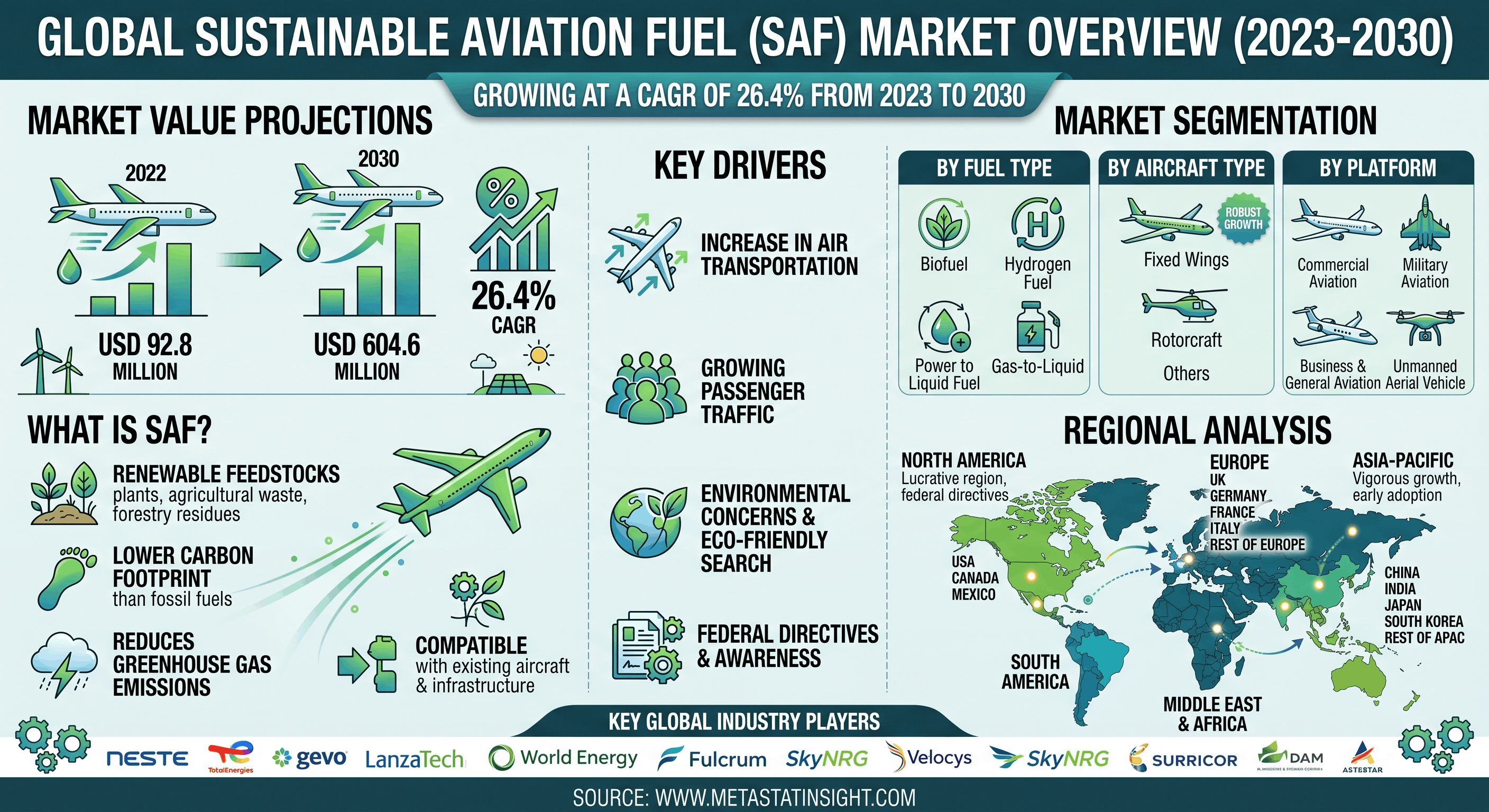
Primary Market Catalysts and Restraints
The upward trajectory of the SAF landscape is fundamentally anchored to a robust expansion in air transportation networks and swelling global passenger volumes. The proliferation of low-cost carriers combined with rising travel affordability has created an unprecedented demand for air travel, which directly translates to an elevated need for alternative, eco-friendly variants. Furthermore, escalating environmental regulations and a universal shift toward greener alternatives are compelling commercial operators to embed these clean energy options into their core fleets early on.
However, the industry analysis notes specific market constraints that could temporarily temper this rapid rollout. The elevated cost of production relative to conventional fossil fuels remains a primary adoption barrier. Additionally, macro-economic vulnerabilities, specifically intense fluctuations in crude oil pricing and localized contamination risks within associated lubricants, pose operational challenges to the fluid growth of the marketplace.
Regional Outlook: North America and Asia-Pacific Lead the Curve
From a geographic perspective, North America is positioned to remain a highly lucrative epicenter for SAF commercialization and deployment. This dominance is driven by dense regional passenger traffic, rapid route network expansions, and stringent federal directives governing greenhouse gas outputs from local carriers.
Concurrently, the Asia-Pacific region is anticipated to exhibit vigorous, accelerating demand. This momentum is fueled by a sharp rise in regional individuals choosing air travel and a proactive tendency among Asia-Pacific airline operators to adopt eco-friendly fuel blends early in their developmental lifecycles.
Competitive Landscape
The global arena is characterized by aggressive technological innovation and rapid engineering cycles as companies race to commercialize effective products and lock down early market share. Prominent industry leaders driving these advancements include Neste, TotalEnergies, Gevo, LanzaTech, World Energy, Fulcrum Bioenergy, SkyNRG, Velocys, Sasol, Preem AB, Aemetis Inc., Avfuel Corporation, Red Rock Biofuels, and Northwest Advanced Biofuels.
About MetaStat Insight
MetaStat Insight is a premier global market research and consulting firm specializing in high-impact industry reporting. Our specialized publications offer exhaustive parent industry tracking, strategic evaluations of niche developments, evolving competitive share assessments, and detailed value-and-volume projections designed to help enterprise leaders identify high-potential regional markets.